
(▼scroll down for English version)
Concetta Modica
C come Carato /Carat
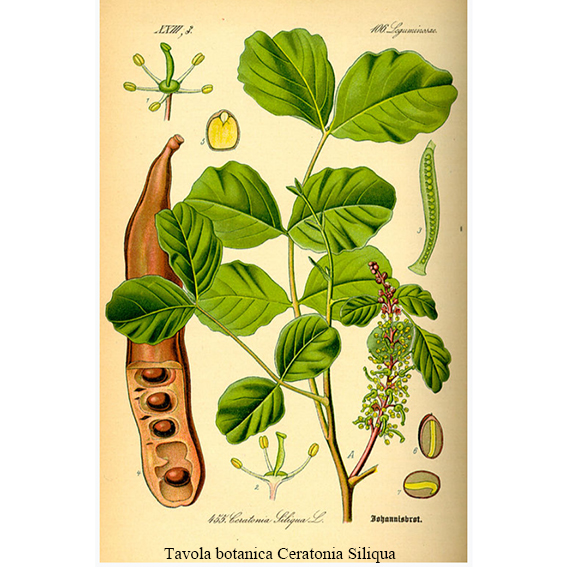
Carato. Passo le mie estati sotto un carrubo. A fine agosto si litiga per chi deve raccogliere le carrube. Questo albero custodisce nei suoi frutti una misura antica. I suoi semi, straordinariamente regolari per peso e dimensione, furono utilizzati per secoli come riferimento per valutare oro e pietre preziose. Da questa pratica deriva il termine carato, che conserva nella lingua la memoria dell’albero. È sorprendente pensare che una delle misure del valore abbia origine da un seme: una forma naturale la cui precisione non nasce dal calcolo, ma dalla crescita. Ogni seme di carrubo ci ricorda che la natura, prima ancora degli strumenti umani, sapeva già misurare. Da anni vorrei fare un’opera con questi semi, ma poi guardo la carruba e mi sembra talmente compiuta che ha già detto tutto.
(English version)
Concetta Modica
C come Carato /Carat
Carat. I spend my summers beneath a carob tree. At the end of August, we argue over who gets to harvest the carob pods. This tree holds an ancient unit of measurement within its fruit. Its seeds—extraordinarily uniform in weight and size—were used for centuries as a standard for weighing gold and precious stones. The term “carat” derives from this practice, preserving the memory of the tree within the language itself. It is remarkable to think that a measure of value originates from a seed: a natural form whose precision stems not from calculation, but from growth. Every carob seed reminds us that nature knew how to measure long before human instruments existed. For years, I have wanted to create an artwork using these seeds, but then I look at the carob pod and it seems so complete—as if it has already said everything there is to say.
 paroladartista.com