(▼Scroll down for English text)
#paroladartista #intervistaartista #artistinterview #kristiansturi
Parola d’Artista: Per la maggior parte degli artisti, l’infanzia rappresenta il periodo d’oro in cui iniziano a manifestarsi i primi sintomi di una certa propensione ad appartenere al mondo dell’arte. È stato così anche per te? Racconta.
Kristian Sturi: Se penso alla mia infanzia e vado indietro nel tempo non ho ricordi nei quali non abbia un foglio e sto cercando di disegnare, fin dall’asilo cercavo di riprodurre qualsiasi cosa mi capitasse sotto agli occhi. Ero in preda ad una grande voracità nell’imparare qualsiasi tecnica legata al disegno, dapprima i chiaro-scuri, le sfumature, successivamente la prospettiva e la rappresentazione dello spazio. Ricordo che avevo una fissa per i disegni a penna Bic, compravo pacchi da 10 o 50 e sceglievo solo quelle in cui la sfera non operasse bene, creavano delle sfumature più morbide e meno marcate di quelle correttamente funzionanti. Poi è cominciata l’adolescenza e con essa la cultura hip-hop e il writing; sono passato da un foglio di carta e una penna, chiuso nella camera da letto, alle grandi superfici parietali, gli spray e tutto ciò che concerne la rapidità d’esecuzione, con “il pepe al culo” poiché era ed è un elemento connaturato al writing stesso, l’illegalità. Sono molto grato al quel periodo perché oltre a far crescere molte persone attorno a me, ci ha fornito gli strumenti per criticare o prendere le giuste distanza dal panorama dell’arte “ufficiale” di allora. Ho studiato i grandi maestri della pittura e mi sono avvicinato all’arte contemporanea, ho scoperto che la materia pittorica poteva essere sostituita da altre materie fino a diventare esse stesse il soggetto dell’opera: e da qui la mia predisposizione alla scultura e all’installazione.
Pd’A: Anche tu, come tanti, hai avuto un primo amore artistico?
KS: Allora come ora sono ossessionato dal Medioevo e dalle opere medievali, Kells e i primi manoscritti miniati, i primitivi fiamminghi, Memling, Van der Wyden, Petrus Christus ma anche le architetture e la statuaria delle grandi cattedrali gotiche, Reims, Beauvais, Amiens, Worchester, Wells. Dürer è stato importantissimo nello studio dell’arte incisoria ma soprattutto è stato fondamentale nello sviluppo personale di quella propensione all’alchimia, alla mistica e la possibilità di celare questi temi all’interno di un lavoro.
Puoi descrivere il tuo processo di lavoro?
KS: Lascio sedimentare le idee per un tempo variabile e diversificato poi passo a fissarle visivamente in un taccuino, è qui che ci si rende conto compositivamente se funzionano o se ci sono dei cambiamenti e solitamente, sempre in questa fase, mi rendo conto se i materiali prefissati si accordano tra loro. Successivamente avviene il lavoro in studio e anche in questa fase possono avvenire dei cambiamenti, anche radicali rispetto all’idea di partenza. È un processo che avviene in diverse fasi a seconda dei materiali utilizzati: per la ceramica ci sono regole e tempistiche ben precise ma come ripeto spesso, una volta infornato il pezzo, devi lasciare sempre aperta la possibilità all’inaspettato, non hai più il controllo del processo: ed è questo aspetto ad interessarmi maggiormente, deviare o lasciarsi guidare dal materiale, spesso in antitesi con le procedure più ortodosse.
Il disegno ha una qualche importanza nel tuo processo di lavoro?
KS: Il disegno è da sempre lo strumento fondamentale per concretizzare un’idea, supporta la freschezza e l’incisività del segno, manifesta perfettamente l’idea di possibilità, restando in bilico tra idea e realizzazione. Per me è scultura in potenza, traccia di una forma in divenire, bozzetto in previsione di un’opera o semplice divertissement che non vedrà mai una conclusione. Può avere una sua autonomia ma è anche funzionale alla progettazione, ci sono disegni che non credo abbiano una valenza estetica interessante ma sono decisivi a risolvere un’idea o a metterla in discussione.
Come scegli la materia che impieghi per realizzare le tue sculture?
KS: Ci sono materiali che nel corso degli anni sono diventati una consuetudine, come la ceramica, la resina epossidica, i glitter, e altri, chiamiamoli satelliti, che si aggiungono a questi diventando essi stessi, nel tempo, una consuetudine. È come la creazione di un catena, potenzialmente infinita, a cui si aggiungono sempre nuovi anelli. Immagina un pezzo musicale suonato dal vivo, questo viene arrangiato, “strechato”, rimasticato a seconda dell’ambiente, del pubblico, dei musicisti, senza per questo perdere mai la melodia di partenza, si crea un mood che potenzialmente ha un’infinità di variabili. Pensando a questa modalità, a questo flusso, da svariati anni intitolo le opere “in the mood version” seguito da un numero seriale.
Che importanza ha la luce in quello che fai?
KS: Credo che la luce sia la componente preponderante della mia ricerca, penso ai glitter, alle pellicole dicroiche, ai lustri nelle ceramiche, sono tutti materiali e superfici che vibrano di luce riflessa, emanata, mai diretta e invitano lo spettatore a non avere un punto di vista univoco rispetto all’opera. Forse l’utilizzo di tali materiali è esso stesso il riflesso della tematica che mi interessa maggiormente, quella fascinazione per l’abbaglio e la tendenza, quella tendenza senza mai raggiungere quel ”motore immobile”poiché una volta raggiunta la fonte della Luce, si ha solo la possibilità di “vedere” le tenebre e restare ciechi. Al contrario l’abbaglio del glitter suggerisce quella mancanza di collegamento momentaneo, mette in discussione e fa riflettere, anzi, riflette ma non emana. È forse quella volontà di cominciare a parlare di profondità attraverso la superficie?
La dimensione pittorica ha una sua importanza nel tuo lavoro?
KS: Questa domanda è strettamente collegata a quella di prima, luce cromia e materia sono inscindibili. Fin da quando ero bambino ho sempre avuto difficoltà a rispondere all’inevitabile domanda: “Quale il tuo colore preferito?” Come fare a pensare un colore in astratto, appunto, astraendolo dalla luce o dalla materia. Pensa alla profondità che emana il velluto nero o come fare a definire cromaticamente l’alluminio tralasciando i riflessi della luce. Inoltre sono da considerare tutte quelle materie per le quali una scelta risulta impossibile poiché come disse un mio amico artista “il colore lo sceglie il mio ferramenta”, spetta all’artista cercare di armonizzate ed esaltare questi aspetti sui quali non ha e non deve avere il controllo. E la sperimentazione deve accompagnare questo processo per testare ogni volta i limiti di questa triade complementare e aprirsi alla possibilità dell’inatteso. Pertanto l’aspetto prettamente pittorico è relativo.
Che importanza hanno le categorie di tempo e spazio in quello che fai?
KS: Così fondamentali da dimenticarmele.
Quando devi fare una mostra ti interessa l’idea di messa in scena del lavoro?
KS: Se intendi qualcosa che derivi dal barocchismo o prettamente per suscitare un’effetto “wow” sono molto distante da questa affermazione. Chiaramente ci sono opere e materiali che giocano di più sia in relazione a cortocircuiti semantici sia in contrapposizione alla forma unita al materiale di realizzazione; ad esempio alla vista può sembrare una forma “morbida” mentre il materiale di cui è composto è “duro”. E poi ci sono opere che hanno una connotazione più ieratica, austera o solenne e proprio per questo hanno bisogno di spazio e lo spazio stesso deve accoglierle e farle sussistere assieme.
Che importanza ha la relazione che si viene a creare fra i vari lavori che decidi di esporre insieme?
KS: Non non avuto mai troppa affinità con le voci soliste, credo che un accordo armonico e corale possa esprimere al meglio l’idea di immersione visiva e sensoriale con le opere.
Quando lavori realizzi più opere insieme o ti concentri su un lavoro alla volta?
KS: Lavoro a più opere in contemporanea.
Che idea hai della leggerezza?
KS: Istintivamente risponderei che non è sempre in antitesi con pesantezza. Ragionandoci meglio da scultore trovo che l’idea di leggerezza sia strettamente collegata alla contingenza e alla sue leggi, ed esempio la gravità. Tralasciando l’oggettività del telaio e della materia pittorica, all’interno dello spazio intelaiato non si ha bisogno di tener conto del concetto di leggerezza o pesantezza, si ha una libertà espressiva slegata da questi concetti, che a loro volta vengono utilizzati in maniera alternativa; al contrario un’opera scultorea o installativa dipende totalmente da quest’ordine e le scelte compositive e materiali sono dettate da questi fattori. Direi che leggerezza ha più a che fare con uno stato d’animo.
Che idea hai della bellezza?
KS: Beautiful is like a butterfly, if you touch it, you destroy it! Trovo questa frase di Jan Fabre estremamente pertinente. L’idea di tendenza e non di raggiungimento è fondamentale ma se si tratta di bellezza addirittura distruttiva.
Che importanza ha l’ironia nel tuo modo di lavorare?
KS: Alterazione spesso paradossale, allo scopo di sottolineare la realtà di un fatto mediante l’apparente dissimulazione della sua vera natura o entità.
Se intendi con ironia il significato appena descritto allora ha notevole importanza nel modo di lavorare. Se la definizione è diversa, allora direi piuttosto che che alcuni lavori sono decisamente ironici.
Quando non c’è nessuno che le osserva le opere d’arte esistono?
KS: Permettimi ma trovo più interessante la domanda: sono effettivamente tutte opere d’arte quelle che vengono osservate?
Qual è la sua posizione rispetto al suo lavoro?
KS: Qualcuno un giorno chiese a Picasso come fosse il suo rapporto con Dio ed egli rispose: “Ci salutiamo ma non ci parliamo”. È un rapporto molto simile, le opere sono dei figli e spesso illegittimi con la madre puttana Arte, nati da un rapporto fugace e clandestino o accompagnati per mano fino a che l’idea di indipendenza non li accoglie. Mi sento schiavo e servo di qualcosa di più “grande” e proprio per questo una disciplina nel quotidiano e nel lavoro è necessaria a superare questa condizione di ingordigia e bramosia. Un piacere inquieto, un’acqua che non disseta. Ma inevitabile.
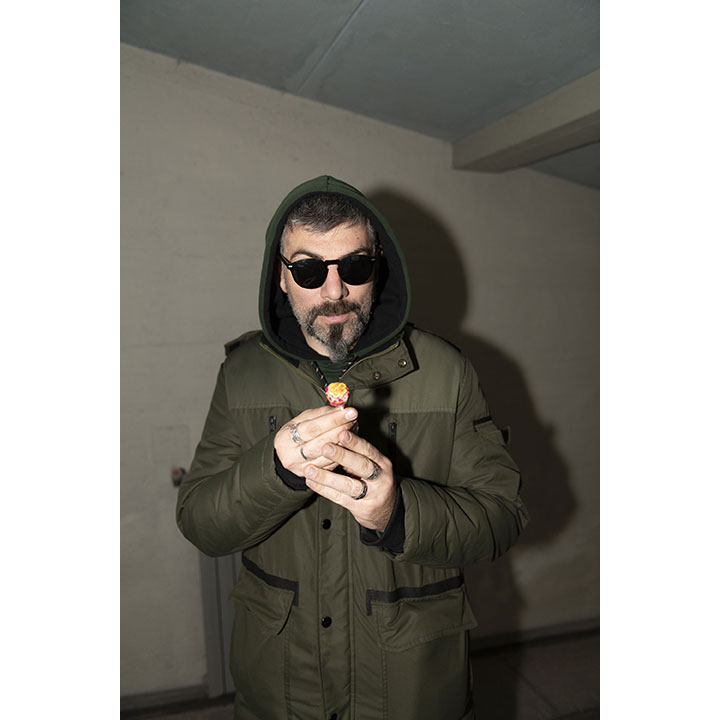
Kristian Sturi (Gorizia, 1983). Vive e lavora a Cormons (GO).
I suoi lavori mettono lo spettatore nell’impossibilità di una visione statica e definitiva, da cui percepire/leggere le superfici: è solo cambiando posizione, osservando, muovendosi, spezzando l’unità dello sguardo, che la materia ed i volumi si manifesto nella loro totalità, in un gioco di sfida in cui non si presentano mai le medesime condizioni. Sturi passa infatti con agilità dalla produzione di oggetti tridimensionali, in ceramica smaltata con forme tribali ed erotiche, a una produzione più prettamente visiva, per la quale utilizza glitter, fumogeni e pellicole colorate che evidenziano i limiti stessi della superficie bidimensionale.
Dopo aver conseguito il diploma all’Istituto d’Arte “Max Fabiani”, consegue la Laurea in Storia dell’Arte presso l’Università degli Studi di Trieste. Mood, Plain Gallery, Milano, 28 novembre 2024 – 19 gennaio 2025. Le fogge delle rocce, a cura di G. D’Incà Levis, Nuovo spazio di Casso, Erto e Casso (PN), 24 luglio – 31 dicembre 2024. Who killed Bamby?, a cura di G. D’Incà Levis, Nuovo Spazio di Casso, Casso (PN), 6 agosto – 31 dicembre 2022. Turn on the bright lights, a cura di D. De Chirico, Galleria Nicola Pedana, Caserta. 29 ottobre – 31 dicembre 2020. From the light to delight, NAM project, Milano, 21 novembre – 20 dicembre 2018. (solo show). Crëp, a cura di S. Gamper, Galleria Doris Ghetta, Ortisei (BZ), 2 agosto – 30 settembre 2018. Paintings regarding the present, a cura di A. Hemer, The Composing Rooms, Berlino (D), 9 dicembre 2016 – 31 gennaio 2017. Intervallo di confidenza, a cura di D. Capra, GC.AC., Monfalcone (GO), 25 marzo – 1 maggio 2016. Less is gold, NAM project, Milano, 19 novembre 2015 – 30 dicembre 2015. (solo show).
English text
Interview to Kristian Sturi
#paroladartista #intervistaartista #artistinterview #kristiansturi
Parola d’Artista: For most artists, childhood is the golden age when the first symptoms of a certain propensity to belong to the art world begin to appear. Was that the case for you too? Tell us.
Kristian Sturi: If I think back to my childhood and go back in time, I have no memories in which I don’t have a sheet of paper and I’m trying to draw, ever since kindergarten I was trying to reproduce whatever came under my eyes. I was in the grip of a great voracity to learn any technique related to drawing, first chiaroscuro, shading, then perspective and the representation of space. I remember that I had a fixation with Bic pen drawings, I would buy packs of 10 or 50 and choose only those in which the ball did not work properly, they created softer and less pronounced shadings than those that worked properly. Then adolescence began and with it hip-hop culture and writing; I went from a sheet of paper and a pen, locked in the bedroom, to large wall surfaces, sprays and everything related to speed of execution, with ‘the pepper on the ass’ because it was and is an inherent element of writing itself, illegality. I am very grateful to that period because not only did it raise many people around me, but it also gave us the tools to criticise or distance ourselves from the ‘official’ art scene of the time.
I studied the great masters of painting and approached contemporary art, I discovered that the pictorial material could be replaced by other materials until they themselves became the subject of the work: hence my predisposition to sculpture and installation.
Pd’A: Did you, like many, have a first artistic love?
KS: Then as now I am obsessed with the Middle Ages and medieval works, Kells and the early illuminated manuscripts, the Flemish primitives, Memling, Van der Wyden, Petrus Christus, but also the architecture and statuary of the great Gothic cathedrals, Reims, Beauvais, Amiens, Worchester, Wells. Dürer was very important in the study of the art of engraving but above all he was fundamental in the personal development of that propensity for alchemy, mysticism and the possibility of concealing these themes within a work.
Pd’A: Can you describe your working process?
KS: I let the ideas settle for a variable and varied amount of time, then I go on to fix them visually in a notebook, it is here that I realise compositionally whether they work or whether there are changes, and usually at this stage I realise whether the pre-determined materials fit together. Then comes the studio work and also at this stage changes can occur, even radical changes from the initial idea. It is a process that takes place in different stages depending on the materials used: for ceramics there are precise rules and timings, but as I often repeat, once you have fired the piece, you always have to leave the possibility open to the unexpected, you no longer have control over the process: and it is this aspect that interests me the most, deviating or letting yourself be guided by the material, often in antithesis to more orthodox procedures.
Pd’A: Does drawing have any importance in your working process?
KS: Drawing has always been the fundamental tool to concretise an idea, it supports the freshness and incisiveness of the sign, it perfectly manifests the idea of possibility, hovering between idea and realisation. For me it is sculpture in potential, a trace of a form in the making, a sketch in anticipation of a work or a simple divertissement that will never see a conclusion. It can have its own autonomy but is also functional to the design, there are drawings that I don’t think have an interesting aesthetic value but are decisive in resolving an idea or questioning it.
Pd’A: How do you choose the materials you use to make your sculptures?
KS: There are materials that over the years have become a habit, such as ceramics, epoxy resin, glitter, and others, let’s call them satellites, that are added to these, becoming themselves, over time, a habit. It is like the creation of a chain, potentially infinite, to which new links are always being added. Imagine a piece of music played live, this is arranged, ‘stretched’, rehashed depending on the environment, the audience, the musicians, without ever losing the starting melody, a mood is created that potentially has an infinity of variables. Thinking about this mode, this flow, for several years now I have entitled my works ‘in the mood version’ followed by a serial number. It is like the creation of a chain, potentially infinite, to which new links are always being added. Imagine a piece of music played live, this is arranged, ‘stretched’, rehashed depending on the environment, the audience, the musicians, without ever losing the starting melody, a mood is created that potentially has an infinity of variables. Thinking about this mode, this flow, for several years now I have entitled my works ‘in the mood version’ followed by a serial number.
Pd’A: What importance does light have in what you do?
KS: I believe that light is the predominant component of my research, I am thinking of glitter, dichroic films, lustres in ceramics, they are all materials and surfaces that vibrate with reflected, emanated, never direct light and invite the viewer to not have a single point of view of the work. Perhaps the use of such materials is itself a reflection of the theme I am most interested in, that fascination with glare and tendency, that tendency without ever reaching that ‘motionless motor’ because once one has reached the source of Light, one has only the possibility of ‘seeing’ darkness and remaining blind. On the contrary, the glare of the glitter suggests that momentary lack of connection, it questions and makes one reflect, indeed, it reflects but does not emanate. Is it perhaps that desire to begin to speak of depth through the surface?
Pd’A: Does the pictorial dimension have an importance in your work?
KS: This question is closely related to the one before, light colour and matter are inseparable. Ever since I was a child, I have always had difficulty answering the inevitable question: ‘What is your favourite colour?’ How do you think of a colour in the abstract, in fact, abstracting it from light or matter. Think of the depth that black velvet exudes or how to chromatically define aluminium by leaving out the reflections of light. Also to be considered are all those materials for which a choice is impossible because as an artist friend of mine said, ‘the colour is chosen by my hardware store’, it is up to the artist to try to harmonise and enhance these aspects over which he does not and should not have control. And experimentation must accompany this process in order to test the limits of this complementary triad each time and open up to the possibility of the unexpected. Therefore, the purely pictorial aspect is relative.
Pd’A: What importance do the categories of time and space have in what you do?
KS: So fundamental that I forget them.
Pd’A: When you have to make an exhibition, are you interested in the idea of staging the work?
KS: If you mean something derived from baroque or purely to create a ‘wow’ effect, I am very far from that. Clearly there are works and materials that play more in relation to semantic short-circuits as well as in opposition to the form combined with the material of realisation; for example to the eye it may seem a ‘soft’ form while the material of which it is made is ‘hard’. And then there are works that have a more hieratic, austere or solemn connotation and for this very reason they need space and the space itself must accommodate them and make them exist together.
Pd’A: How important is the relationship that is created between the various works that you decide to exhibit together?
KS: I have never had too much affinity with solo voices, I believe that a harmonious and choral arrangement can best express the idea of visual and sensory immersion with the works.
Pd’A: When you work do you create several works together or do you concentrate on one work at a time?
KS: I work on several works at the same time.
Pd’A: What is your idea of lightness?
KS: Instinctively I would answer that it is not always in antithesis with heaviness. Thinking about it more as a sculptor, I find that the idea of lightness is closely related to contingency and its laws, e.g. gravity. . Leaving aside the objectivity of the frame and the pictorial material, within the framed space there is no need to take into account the concept of lightness or heaviness, there is an expressive freedom unrelated to these concepts, which in turn are used in an alternative manner; on the contrary, a sculptural or installation work is totally dependent on this order and the compositional and material choices are dictated by these factors. I would say that lightness has more to do with a state of mind.
Pd’A: What is your idea of beauty?
KS: Beautiful is like a butterfly, if you touch it, you destroy it! I find this phrase by Jan Fabre extremely pertinent. The idea of trend and not achievement is fundamental, but if it is beauty, even destructive.
Pd’A: How important is irony in the way you work?
KS: Often paradoxical alteration, in order to emphasise the reality of a fact through the apparent concealment of its true nature or entity.
If you mean by irony the meaning just described, then it has considerable importance in the way you work. If the definition is different, then I would rather say that some works are definitely ironic.
Pd’A: When there is no one observing them do works of art exist?
KS: Allow me, but I find the question more interesting: are all works of art actually works of art that are observed?
Pd’A: What is your position in relation to your work?
KS: Someone once asked Picasso what his relationship with God was like, and he replied: ‘We greet each other but we don’t talk to each other. It is a very similar relationship, the works are children and often illegitimate children with the whore mother Art, born from a fleeting and clandestine relationship or accompanied by the hand until the idea of independence takes them in. I feel like a slave and servant of something ‘bigger’ and that is why a discipline in daily life and work is necessary to overcome this condition of greed and lust. A restless pleasure, a water that does not quench thirst. But inevitable.
Kristian Sturi (Gorizia, 1983). He lives and works in Cormons (GO).
His works place the viewer in the impossibility of a static and definitive vision, from which to perceive/read the surfaces: it is only by changing position, by observing, by moving, by breaking the unity of the gaze, that matter and volumes are manifested in their totality, in a game of challenge in which the same conditions never arise. Indeed, Sturi moves with agility from the production of three-dimensional objects, in glazed ceramic with tribal and erotic forms, to a more purely visual production, for which he uses glitter, smoke and coloured films that highlight the very limits of the two-dimensional surface.
After graduating from the ‘Max Fabiani’ Art Institute, he obtained a degree in Art History at the University of Trieste.
Mood, Plain Gallery, Milan, 28 November 2024 – 19 January 2025. Le fogge delle rocce, curated by G. D’Incà Levis, Nuovo spazio di Casso, Erto e Casso (PN), 24 July – 31 December 2024. Who killed Bamby?, curated by G. D’Incà Levis, Nuovo Spazio di Casso, Casso (PN), 6 August – 31 December 2022. Turn on the bright lights, curated by D. De Chirico, Galleria Nicola Pedana, Caserta. 29 October – 31 December 2020. From the light to delight, NAM project, Milan, 21 November – 20 December 2018. (solo show). Crëp, curated by S. Gamper, Galleria Doris Ghetta, Ortisei (BZ), 2 August – 30 September 2018. Paintings regarding the present, curated by A. Hemer, The Composing Rooms, Berlin (D), 9 December 2016 – 31 January 2017. Confidence Interval, curated by D. Capra, GC.AC., Monfalcone (GO), 25 March – 1 May 2016. Less is gold, NAM project, Milan, 19 November 2015 – 30 December 2015. (show only).
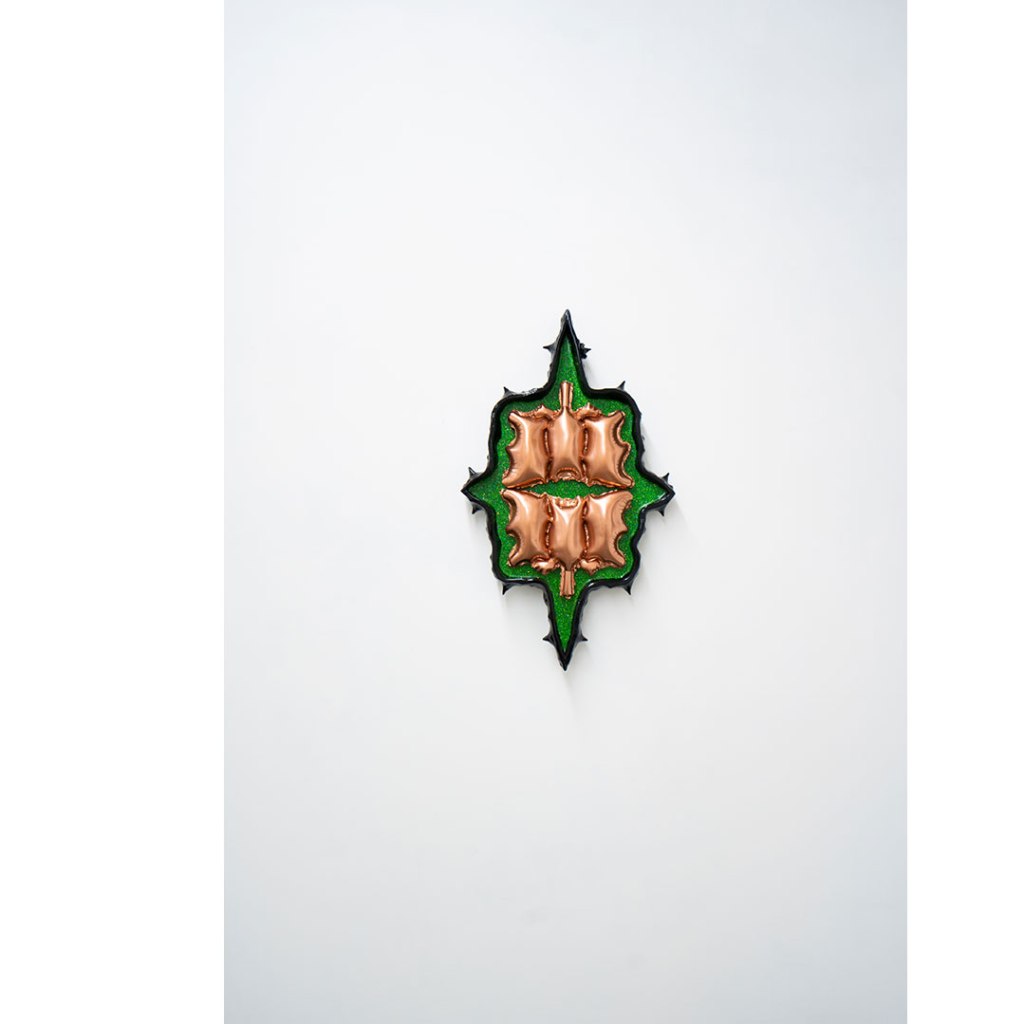
Ceramica smaltata, resina epossidica, polvere di rame e glitter. 80x46x8cm. Courtesy l’artista e PLAIN Gallery, Milano. (Ph. Credit Kiralevstudio)
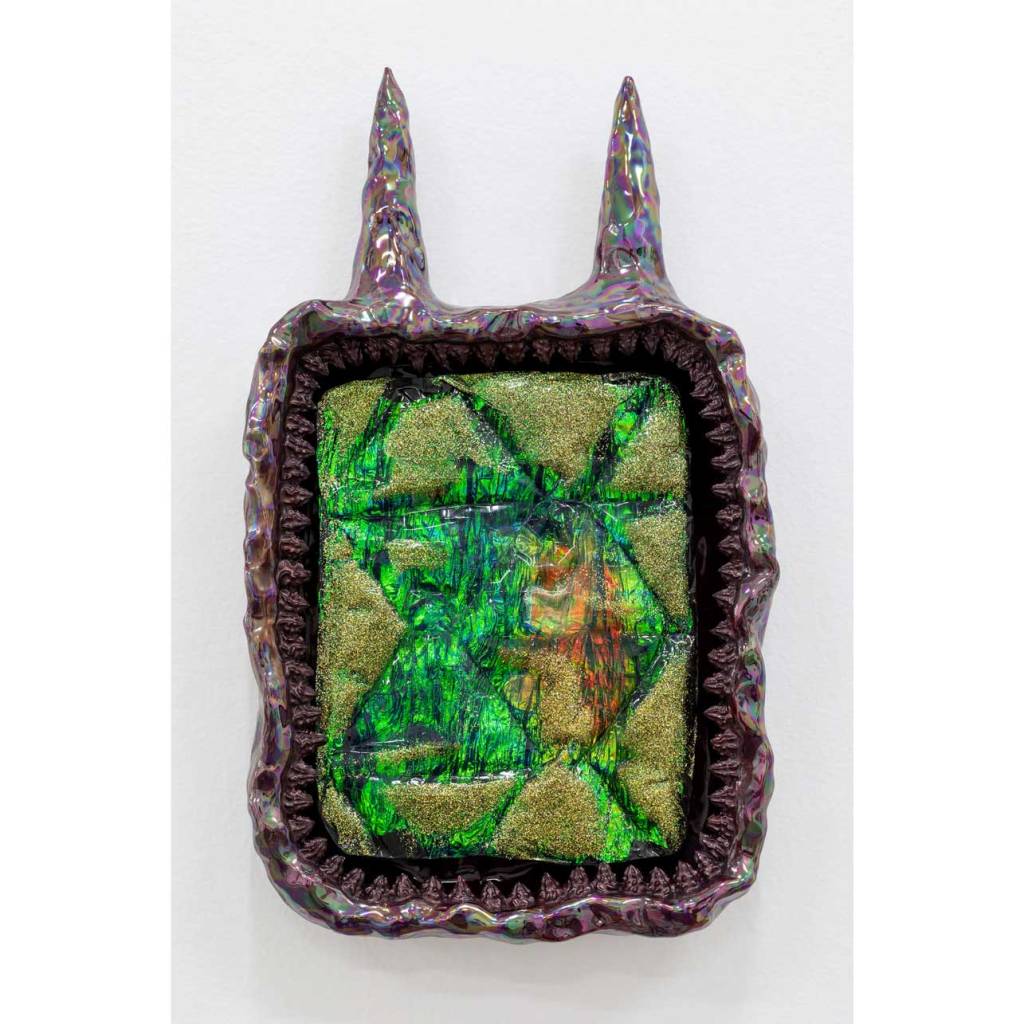
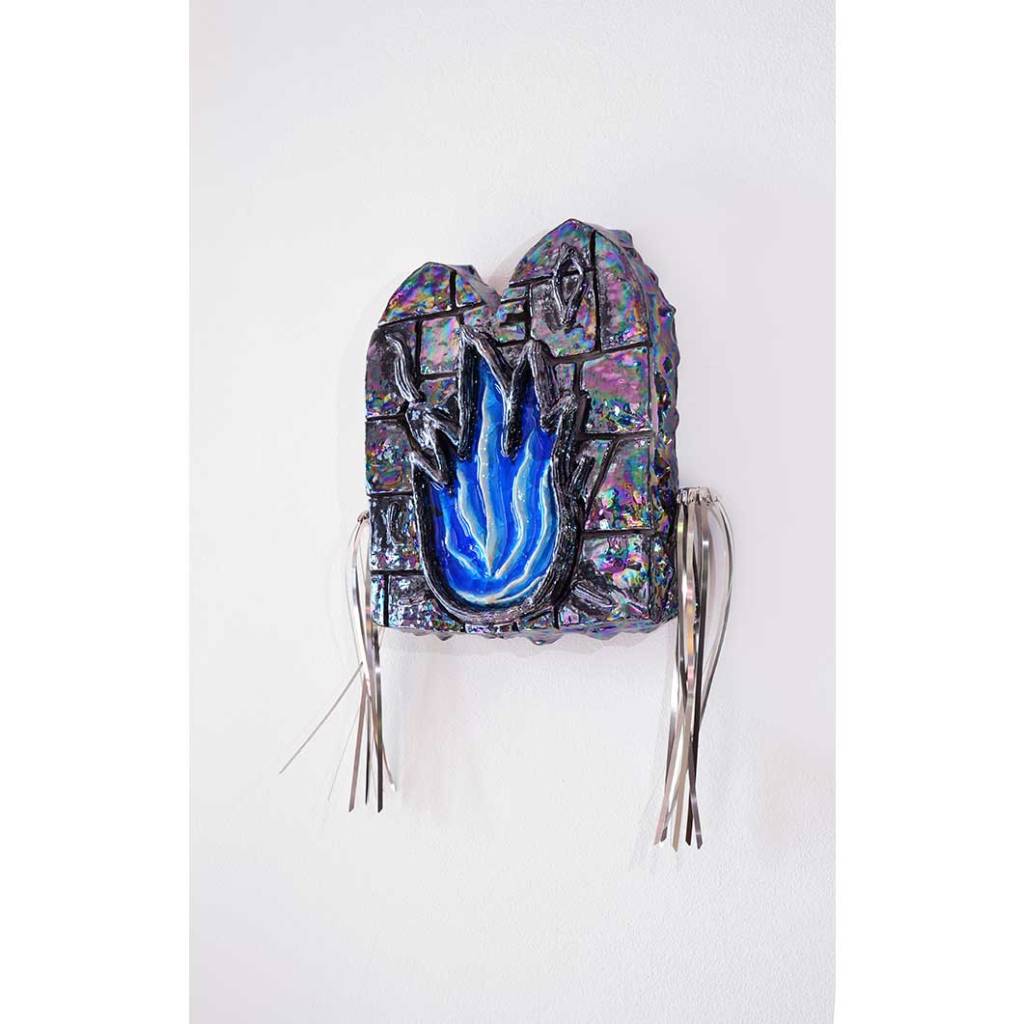
Ceramica smaltata, lustri, vetro e acciaio. 46x23x7cm. Courtesy l’artista.
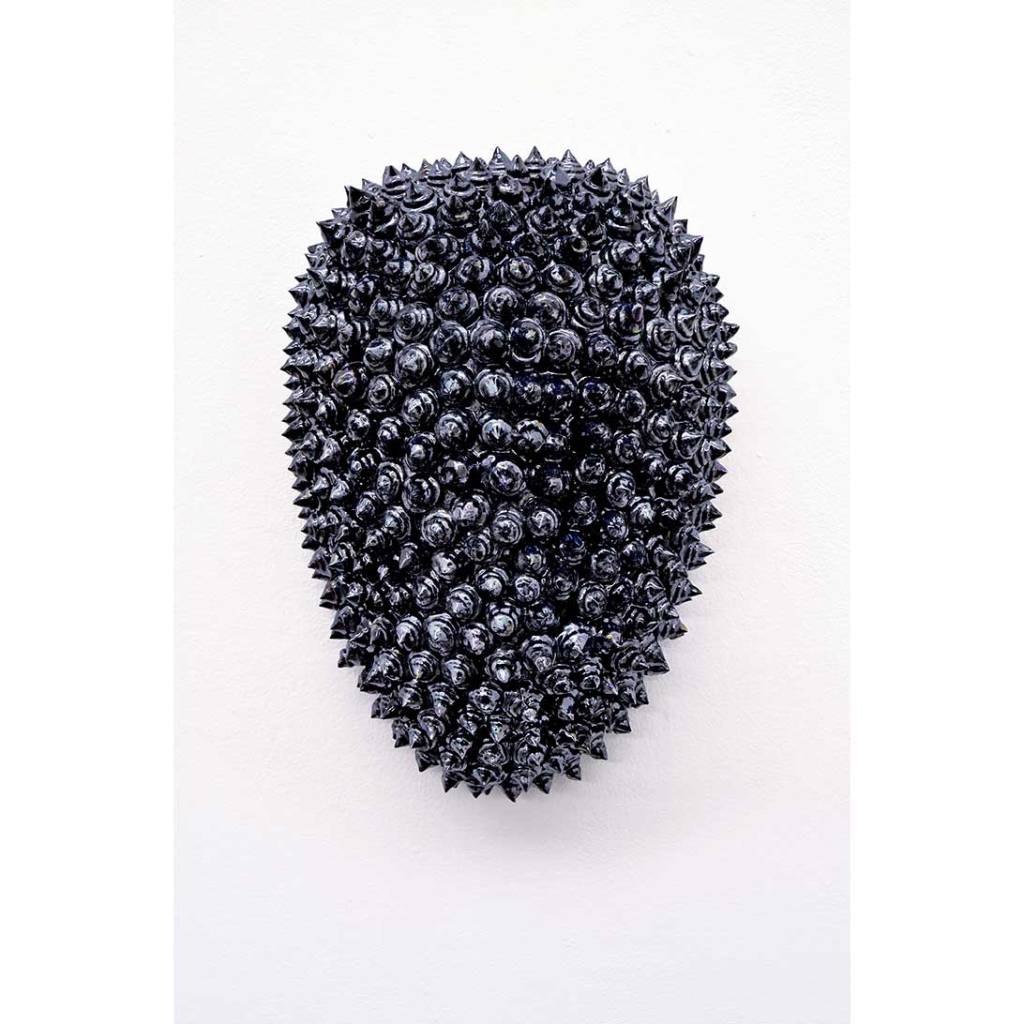
Ceramica smaltata e lustri iridescenti. 20x32x12 cm. Courtesy l’artista.
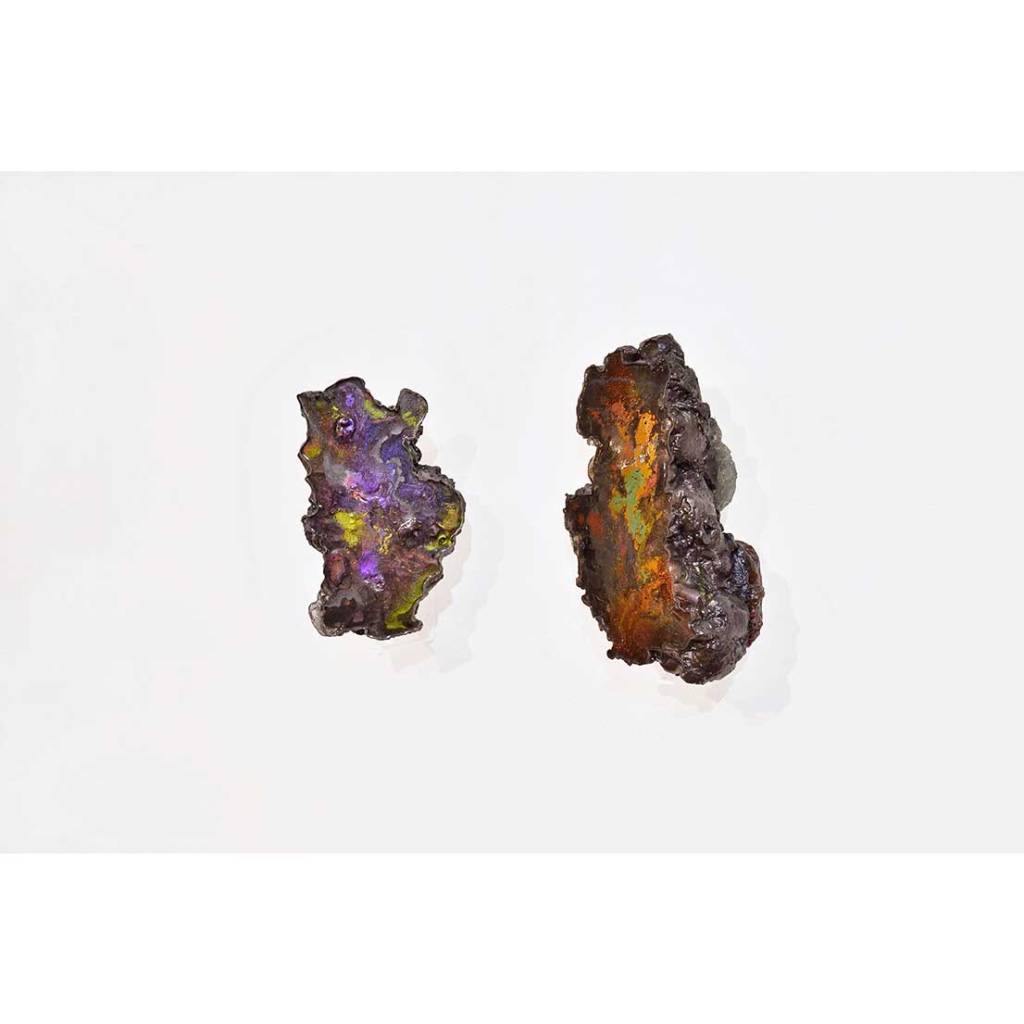
Resina epossidica, grafite, pigmenti iridescenti e olografici, glitter. Dimensioni variabili. Courtesy l’artista.
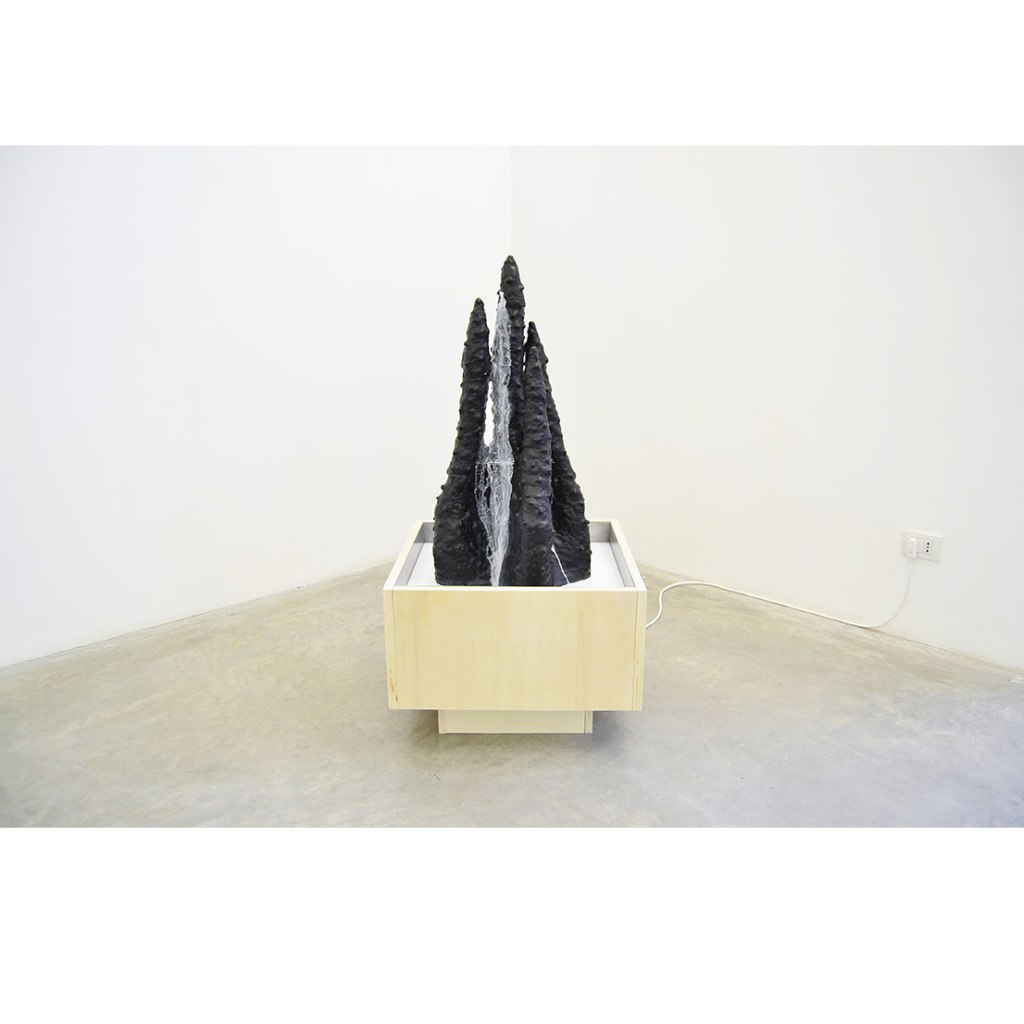
Ceramica smaltata, ossido di titanio, acqua, pompa elettrica, acciaio, legno e cavo elettrico. 168x50x50 cm. Courtesy l’artista.