
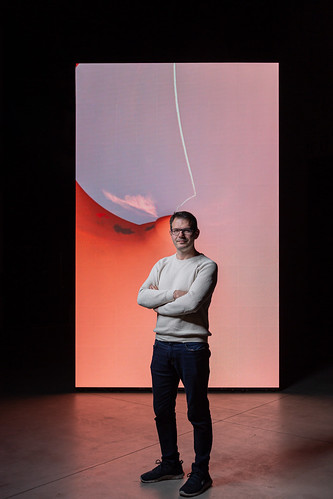
(▼scroll down for English text)
#paroladartista #intervistacritico #artcrticinterview #domenicoquaranta
Parola d’Artista: Come nasce il tuo interesse per l’arte e in particolar modo quello per l’arte contemporanea?
Domenico Quaranta: Dall’interesse per le immagini e dal piacere di produrle, e riprodurle, credo. A dodici anni passavo ore sui pochi libri d’arte che avevo in casa, ma anche sulle riviste illustrate che trovavo, più osservando che leggendo, e disegnavo molto. Alla fine delle medie ho iniziato a dipingere, e ho continuato a farlo con grande costanza fino ai primi anni di università. Mi ero fatto persino uno studio, in una soffitta arredata della casa dei miei nonni, dove passavo giorni interi in una imbarazzante reinterpretazione adolescenziale dello stereotipo di vita bohémienne. Vivevo in provincia e non sapevo molto di arte contemporanea. Imparare a conoscerla ha voluto anche dire maturare quel distacco che ti consente di non confondere l’amore per l’arte con l’ambizione di farla. Gradualmente ho abbandonato il pennello per la penna, e la tastiera del computer.
Pd’A: Che studi hai fatto?
D.Q.: Lettere moderne con indirizzo artistico all’Università, seguito a stretto giro da un master per curatori a Torino e da un dottorato in Digital Humanities a Genova. Ma questo vuol dire poco. Negli anni dell’università ho imparato molto, ma le mie idee restavano confuse e ingenue. A un certo punto, mosso da alcuni stimoli disordinati che venivano da incontri e letture – la passione per la patafisica e la letteratura combinatoria, la curiosità per alcune tendenze sottoculturali come la mail art e Luther Blissett – e da una sorta di pulsione allo svecchiamento e alla sprovincializzazione, mi sono detto: voglio studiare l’arte su internet. Era una decisione d’istinto, presa senza sapere molto in proposito; ma grazie alla guida attenta dei miei relatori – Luciano Caramel e Francesco Tedeschi – e alla loro apertura mentale e disponibilità al rischio, la mia tesi finì per essere uno dei primi studi storici sull’argomento mai prodotti in Italia, e fu pubblicata nel 2004 con il titolo Net art 1994-1998. La vicenda di Ada’web. Quella scelta, e la mia ostinazione nel coltivare questi argomenti, hanno segnato tutto il mio percorso successivo. Dedicai il master ad approfondire le questioni della curatela online e dei musei virtuali; il dottorato ad analizzare le ragioni del difficile rapporto tra arte e nuove tecnologie. Parallelamente, cominciai a pubblicare e a curare qualche mostra. Era un territorio relativamente vergine, pieno di possibilità.
Pd’A: Ci sono stati degli incontri importanti durante gli anni della tua formazione che hanno in qualche modo avuto un influsso sullo sviluppo del tuo lavoro?
D.Q.: Quando stai in qualche modo plasmando la tua identità, non c’è incontro che non sia formativo. Ma certo, alcuni influssi sono più forti di altri. Dai miei riferimenti in ambito accademico ho imparato che la pratica militante del critico deve sempre radicarsi nello studio paziente della storia. Scoprire una sintonia di vedute con Fabio Paris – un gallerista e catalizzatore di idee attivo nella mia città di origine, Brescia – mi ha dato l’energia e la convinzione necessaria per perseguire un’idea che oggi sembra ovvia, ma che nei primi anni Duemila era condivisa da pochi: che l’arte contemporanea dovesse aprirsi a un confronto con le culture e le tecnologie digitali emergenti, e che la cosiddetta “media art” dovesse uscire dalla riserva indiana in cui era stata relegata. E poi ci sono stati, ovviamente, gli incontri con gli artisti, alcuni dei quali hanno avuto un impatto durevole sul mio mio modo di vedere.
Pd’A: Come intendi il tuo lavoro?
D.Q.: Come un pescare nel flusso informe e magmatico della contemporaneità alla ricerca di linee di senso da portare alla luce. Viviamo un momento disordinato e confuso, in cui non esistono narrazioni dominanti, regole e valori condivisi, griglie moderniste e piani cartesiani con cui mettere ordine fra le cose, a tutti i livelli: culturale, estetico, politico, economico, sociale. L’arte migliore è quella che accende un barlume di intuizione, un lume di comprensione in questa oscurità: non la disperde, non spiega nulla, ma ci consente, insieme alle altre luci, di aggiungere una tessera al puzzle personale che ciascuno di noi va componendo. Ho sempre visto il lavoro del critico e del curatore come quello di qualcuno che l’arte non la fa, ma la accompagna e la serve, con umiltà, attenzione e rispetto. Non mi interessa imporre un punto di vista, una chiave di lettura, ma ritengo importante provare a desumerla da quello che vedo: unire i puntini, renderli più visibili, farli brillare attraverso l’accostamento o il conflitto, far perdurare le luci che, lasciate a se stesse, si spegnerebbero nell’oblio.
Pd’A: Nella babele dei linguaggi visivi della contemporaneità c’è qualcosa che prediligi e che cosa ti attrae di questi linguaggi?
D.Q.: Quando ho iniziato ad occuparmi di arte contemporanea, mi è stato subito ben chiaro che la tecnologia era una delle forze principali che contribuivano a plasmare, nel bene e nel male, la nostra realtà. Non l’unica, certamente, ma una delle principali, e in stretta relazione con le altre: non si può parlare di globalizzazione senza parlare di villaggio globale, non si può parlare di vittoria del capitalismo liberale senza prendere in considerazione l’infrastruttura tecnologica a cui deve la velocità dei suoi flussi, non si può parlare di liquefazione delle relazioni, di crisi delle istituzioni o di collasso della famiglia senza tirare in ballo le reti di comunicazione, non si può parlare di guerra senza parlare del complesso militare-spettacolare, ecc. Nel corso degli anni, siamo stati esposti come cavie da laboratorio a innovazioni che non potevamo controllare, e che hanno stravolto il nostro modo di vivere e di lavorare, di amare e di fare cultura. Per tutto questo, penso che affrontare con spirito critico la tecnologia sia uno dei modi principali con cui l’arte, oggi, assolve la funzione di cui parlavo sopra: produrre una scintilla di comprensione del mondo.
Questo, lo voglio dire molto chiaramente, non implica necessariamente che l’arte debba adottare le tecnologie come linguaggi, come media – anzi, a volte un certo livello di distacco è liberatorio, e la confidenza che un artista può acquisire negli anni con un medium stabile come la pittura, la scultura o il disegno spesso consente un’autonomia di linguaggio e una capacità espressiva che media più effimeri e soggetti a una continua evoluzione e all’influenza di dinamiche esterne rende impossibile. Tuttavia, non significa nemmeno che le tecnologie vadano evitate: la storia ci insegna che una comprensione più profonda di un mezzo si raggiunge mettendoci sopra le mani, anche in maniera irriverente, violenta o giocosa: stressandone i limiti, sabotandolo, rompendolo per vedere come è fatto dentro.
Con questa premessa, posso rispondere: non ho dei linguaggi prediletti, ma temi e attitudini che preferisco ad altre. Sono probabilmente più disponibile di molti altri critici e curatori ad occuparmi di opere e artisti che fanno uso delle tecnologie digitali, ma ritengo che sia molto importante come queste ultime vengono usate. Nessun medium è neutro, ma i media digitali sono prodotti, servizi, sistemi complessi con una ideologia incorporata, e un uso critico e consapevole è fondamentale per non correre il rischio di diventarne promotori, agenti, venditori – cortigiani delle Big Tech.
Pd’A: In che modo ti avvicini al lavoro di un’artista?
D.Q.: Dipende molto dal lavoro, dall’artista, dalla circostanza. Come chiunque altro in un’epoca di sovraccarico, sono costretto a fidarmi molto, quando incontro un lavoro per la prima volta in una mostra o su internet, del colpo d’occhio – l’attrazione, ripulsa o indifferenza immediata e istintiva. Dell’indifferenza generalmente mi fido; sui lavori che mi attraggono o mi respingono invece ci torno, per capire se l’attrazione sia infatuazione superficiale e se la repulsione non nasconda la mia incapacità di accettare qualcosa di radicalmente nuovo. Con quello che sopravvive a questa prima fase “investigativa” cerco di costruire un rapporto che a un certo punto può portare all’incontro con l’artista, all’inserimento in una mostra, a un lavoro critico. Come è facile immaginare, mi piace molto scoprire nuovi artisti e nuove proposte, ma tendo anche ad essere “fedele” ad alcuni artisti con cui ho collaborato in passato. La fiducia che si instaura con gli artisti col passare del tempo, la crescente sicurezza che il loro approccio al lavoro è rigoroso e le loro scelte motivate dalla necessità, mi porta spesso a seguirli anche quando si incamminano su strade per me impervie o non immediatamente condivisibili. Occasionalmente, questo ha prodotto delle svolte anche nel mio lavoro. Seguire gli artisti, con attenzione e umiltà: questo credo che definisca, alla fine, il lavoro del critico e del curatore.
Pd’A: Ti volevo chiedere di parlare della dimensione didattica nel tuo lavoro?
D.Q.: L’insegnamento è una costante nella mia vita, praticamente da quando ho iniziato a lavorare. All’inizio il gap generazionale con i miei studenti era minimo, quasi nullo, ora naturalmente sta diventando più consistente. Credo che ogni professore impari qualcosa dai propri studenti, ma occupandomi di arte contemporanea e culture digitali la circolarità dello scambio sta diventando sempre più chiara per me. Gli studenti hanno spesso un approccio immediato, istintivo, nativo ai media e ai prodotti culturali del proprio tempo, ma mancano degli strumenti critici necessari per vederli da fuori, per capire quali idee e quali storie hanno contribuito a plasmarli; d’altra parte, noi vecchi diamo troppa importanza alla storia e siamo poco disponibili a capire l’originalità e la novità del presente. Una volta, un amico artista mi ha detto: “cosa me ne frega se questa cosa l’ha già fatta qualcuno trent’anni fa? Io non l’ho ancora fatta.” Ho imparato molto da questa frase, così come dalla storiella sui pesci raccontata una volta da David Foster Wallace: imbattendosi in due giovani pesci, un pesce più anziano che nuota in direzione opposta chiede “ragazzi, com’è l’acqua?” I due giovani pesci continuano a nuotare per un po’, e poi uno dei due guarda l’altro e gli chiede “ma cosa diavolo è l’acqua?”
Pd’A: Quali progetti hai per il prossimo futuro?
D.Q.: Scrivere cose, vedere gente, sopravvivere a questo estremo presente con l’aiuto di un’arte che lo indaghi criticamente e che suggerisca strade per un suo possibile superamento.
English text
Interview to Domenico Quaranta
#paroladartista #intervistacritico #artcrticinterview #domenicoquaranta
Parola d’Artista: How did your interest in art, and particularly in contemporary art, come about?
Domenico Quaranta: From an interest in images and the pleasure of producing them, and reproducing them, I think. When I was twelve I spent hours on the few art books I had at home, but also on the illustrated magazines I found, more observing than reading, and I drew a lot. At the end of middle school I started to paint, and I continued to do so with great constancy until my first years at university. I had even made myself a studio, in a furnished attic of my grandparents’ house, where I spent whole days in an embarrassing adolescent reinterpretation of the bohemian life stereotype. I lived in the provinces and did not know much about contemporary art. Learning about it also meant maturing that detachment that allows you not to confuse the love of art with the ambition to make it. Gradually I abandoned the paintbrush for the pen, and the computer keyboard.
Pd’A: What studies did you do?
D.Q.: Modern literature with a focus on art at university, followed closely by a master’s degree for curators in Turin and a PhD in Digital Humanities in Genoa. But that means little. During my university years I learnt a lot, but my ideas remained confused and naive. At a certain point, moved by some messy stimuli that came from meetings and readings -my passion for pataphysics and combinatorial literature, my curiosity for certain subcultural trends such as mail art and Luther Blissett – and from a sort of urge to rejuvenate and de-provincialise, I said to myself: I want to study art on the Internet. It was an instinctive decision, taken without knowing much about it; but thanks to the careful guidance of my lecturers – Luciano Caramel and Francesco Tedeschi – and their open-mindedness and willingness to take risks, my thesis ended up being one of the first historical studies on the subject ever produced in Italy, and was published in 2004 under the title Net art 1994-1998. The Ada’web affair. That choice, and my persistence in cultivating these topics, marked my entire subsequent path. I dedicated my master’s degree to investigating the issues of online curatorship and virtual museums; my doctorate to analysing the reasons for the difficult relationship between art and new technologies. At the same time, I started publishing and curating a few exhibitions. It was relatively virgin territory, full of possibilities.
Pd’A: Were there any important encounters during your formative years that somehow had an influence on the development of your work?
D.Q.: When you are in some way shaping your identity, there is no encounter that is not formative. Of course, some influences are stronger than others. From my references in academia, I learnt that the militant practice of the critic must always be rooted in the patient study of history. Discovering a harmony of views with Fabio Paris – a gallery owner and catalyst of ideas active in my hometown of Brescia – gave me the energy and conviction necessary to pursue an idea that today seems obvious, but which in the early 2000s was shared by few: that contemporary art should open up to a confrontation with emerging digital cultures and technologies, and that so-called ‘media art’ should leave the Indian reservation to which it had been relegated. And then there were, of course, the encounters with artists, some of which had a lasting impact on my way of seeing.
Pd’A: How do you understand your work?
D.Q.: As fishing in the formless and magmatic flow of contemporaneity in search of lines of meaning to bring to light. We live in a disordered and confused moment, in which there are no dominant narratives, shared rules and values, modernist grids and Cartesian plans with which to put things in order, at all levels: cultural, aesthetic, political, economic, social. The best art is that which lights up a glimmer of insight, a light of understanding in this darkness: it does not disperse it, it does not explain anything, but allows us, together with the other lights, to add a tile to the personal jigsaw puzzle that each of us is putting together. I have always seen the work of the critic and curator as that of someone who does not make art, but accompanies and serves it, with humility, attention and respect. I am not interested in imposing a point of view, a key to interpretation, but I think it is important to try to deduce it from what I see: to connect the dots, to make them more visible, to make them shine through juxtaposition or conflict, to make lights last that, left to themselves, would fade into oblivion.
Pd’A: In the babel of contemporary visual languages, is there anything you favour and what attracts you to these languages?
D.Q.: When I started working in contemporary art, it was immediately clear to me that technology was one of the main forces shaping, for better or worse, our reality. Not the only one, of course, but one of the main ones, and closely related to the others: you cannot talk about globalisation without talking about the global village, you cannot talk about the victory of liberal capitalism without taking into account the technological infrastructure to which it owes the speed of its flows, you cannot talk about the liquefaction of relationships, the crisis of institutions or the collapse of the family without bringing up communication networks, you cannot talk about war without talking about the military-spectacular complex, etc. Over the years, we have been exposed like lab rats to innovations that we could not control, and that have disrupted the way we live and work, love and culture. For all this, I think that approaching technology with a critical spirit is one of the main ways in which art today fulfils the function I mentioned above: to produce a spark of understanding of the world.
This, I want to state very clearly, does not necessarily imply that art must adopt technologies as languages, as media – on the contrary, sometimes a certain level of detachment is liberating, and the confidence an artist can acquire over the years with a stable medium such as painting, sculpture or drawing often allows for an autonomy of language and an expressive capacity that more ephemeral media subject to continuous evolution and the influence of external dynamics makes impossible. However, this does not mean that technologies should be avoided either: history teaches us that a deeper understanding of a medium is achieved by getting one’s hands on it, even in an irreverent, violent or playful manner: stressing its limits, sabotaging it, breaking it to see what it looks like inside.
With this premise, I can answer: I do not have favourite languages, but themes and attitudes that I prefer to others. I am probably more willing than many other critics and curators to deal with works and artists that make use of digital technologies, but I think it is very important how these are used. No medium is neutral, but digital media are products, services, complex systems with an embedded ideology, and a critical and conscious use of them is crucial in order not to run the risk of becoming promoters, agents, sellers – courtiers of Big Tech.
Pd’A: How do you approach the work of an artist?
D.Q.: It depends a lot on the work, the artist, the circumstance. Like everyone else in an age of overload, I am forced to rely a lot, when I first encounter a work in an exhibition or on the internet, on the glance – the immediate and instinctive attraction, repulsion or indifference. I generally trust indifference; I return to works that attract or repel me to see if the attraction is superficial infatuation and if the repulsion does not hide my inability to accept something radically new. With what survives this first ‘investigative’ phase, I try to build a relationship that at some point may lead to a meeting with the artist, to inclusion in an exhibition, to critical work. As you can imagine, I really enjoy discovering new artists and new proposals, but I also tend to be ‘loyal’ to some artists with whom I have collaborated in the past. The trust that is established with artists over time, the growing confidence that their approach to their work is rigorous and their choices motivated by necessity, often leads me to follow them even when they take paths that are impervious or not immediately agreeable to me. Occasionally, this has also produced breakthroughs in my work. Following artists, with attention and humility: this I believe ultimately defines the work of the critic and curator.
Pd’A: I wanted to ask you about the teaching dimension in your work?
D.Q.: Teaching is a constant in my life, practically since I started working. In the beginning the generation gap with my students was minimal, almost nil, now of course it is becoming more substantial. I believe that every professor learns something from his or her students, but dealing with contemporary art and digital cultures the circularity of the exchange is becoming increasingly clear to me. Students often have an immediate, instinctive, native approach to the media and cultural products of their time, but they lack the critical tools needed to see them from the outside, to understand what ideas and histories have helped to shape them; on the other hand, we old-timers give too much importance to history and are unwilling to understand the originality and novelty of the present. An artist friend once said to me: ‘what do I care if someone has already done this thirty years ago? I haven’t done it yet.’ I learnt a lot from this sentence, as well as from the fish story once told by David Foster Wallace:” There are these two young fish swimming along and they happen to meet an older fish swimming the other way, who nods at them and says “Morning, boys. How’s the water?” And the two young fish swim on for a bit, and then eventually one of them looks over at the other and goes “What the hell is water?”
Pd’A: What plans do you have for the near future?
D.Q.: To write things, to see people, to survive this extreme present with the help of an art that critically investigates it and suggests ways to overcome it.


 paroladartista.com