
(▼Scorri verso il basso per la versione Italiana)
#paroladartista #artistinterview #intervistaartista # bensleeuwenhoek
Parola d’Artista: For most artists childhood represents the golden age when the first symptoms of a certain propensity to belong to the art world begin to appear. Was that the case for you too?
Ben Sleeuwenhoek: As a child I drew and painted a lot and I had an inexplicable fascination with Asian art. Interest in the art world didn’t come until I was growing up and became interested in sub cultures. These were the nineteen-sixties !
I was still very young when admitted to the Art Academy, seventeen.
Pd’A: What studies have you done?
B.S.: After completing the Academy of fine Art in Rotterdam, the Netherlands, I did some additional studies but my work was already exhibited. I was immediately involved in an art world. Soon I also started to travel. Japan, China, India. Asia became a life time inspiration. The following years I was often in India.
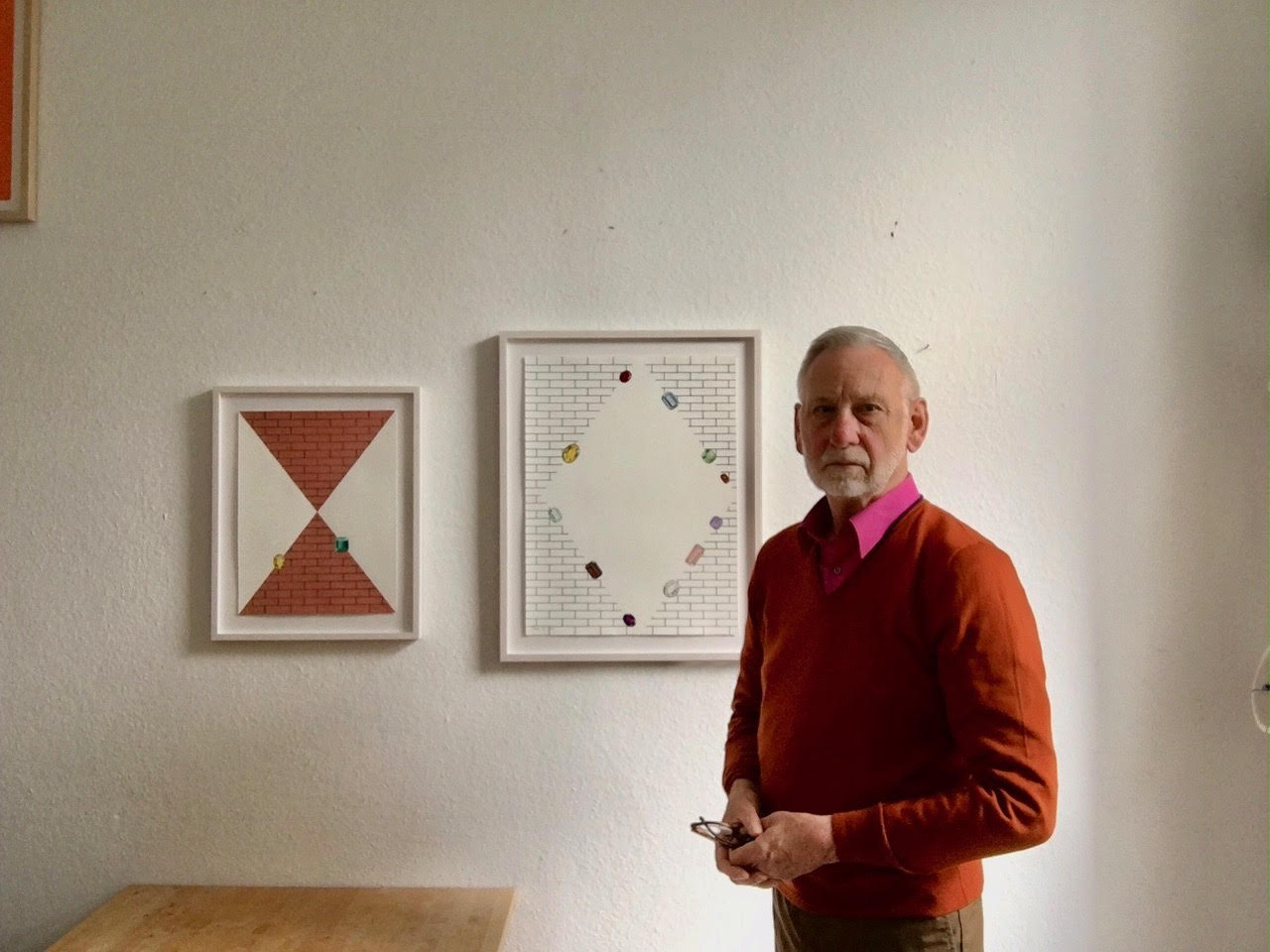
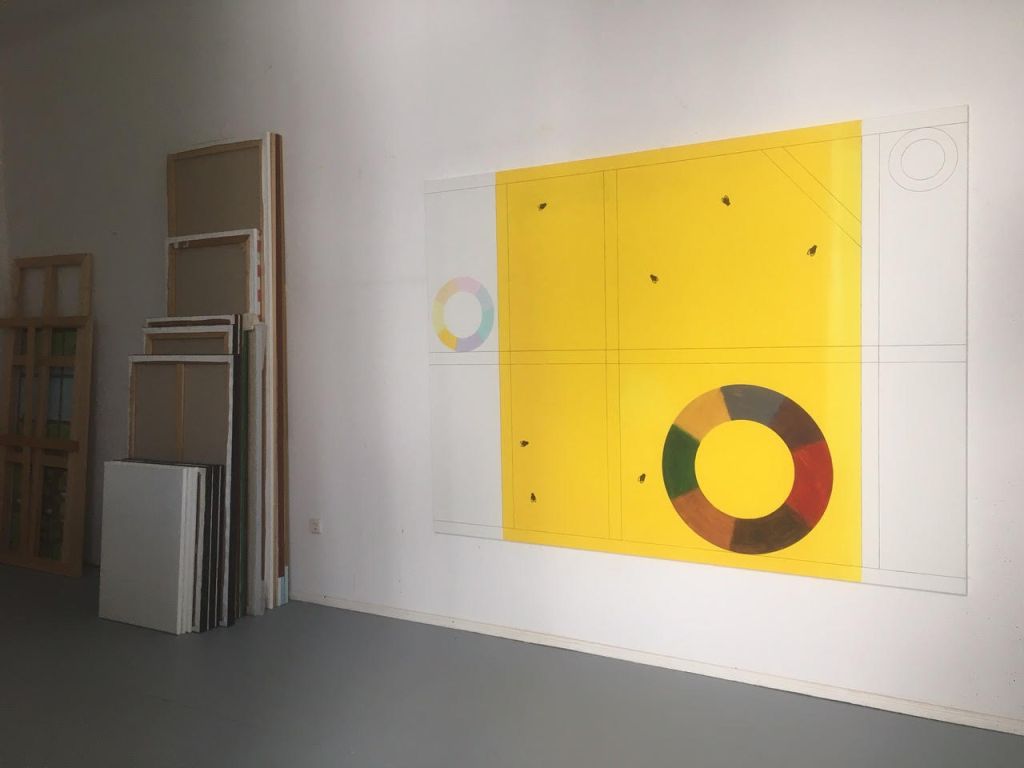
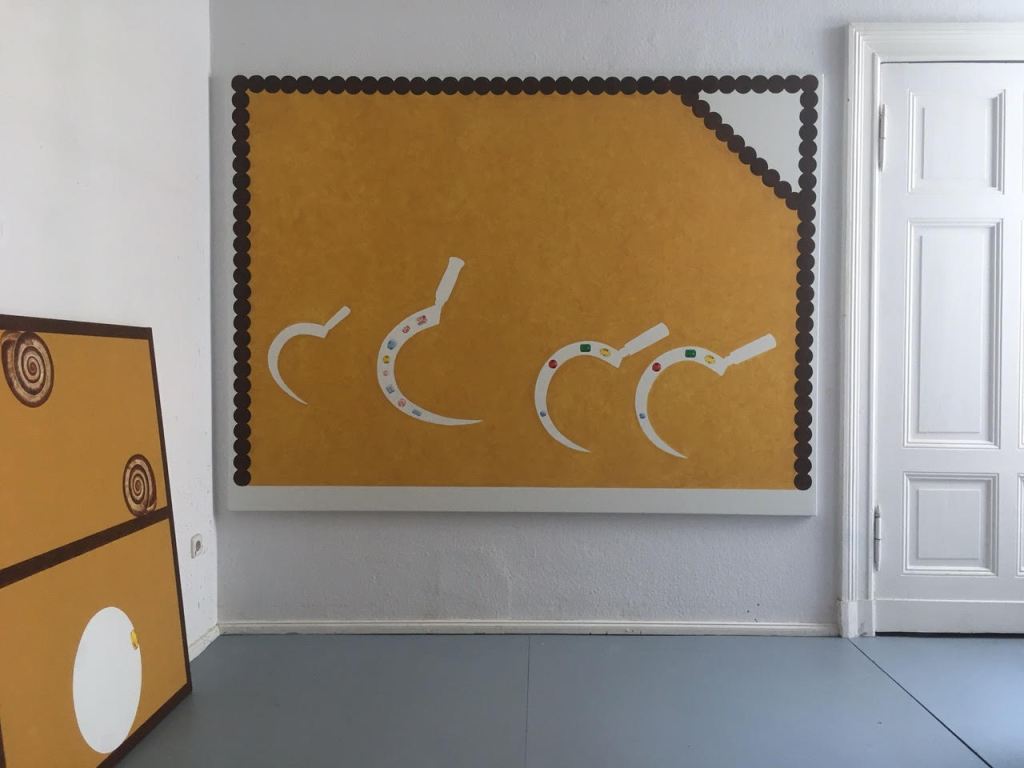
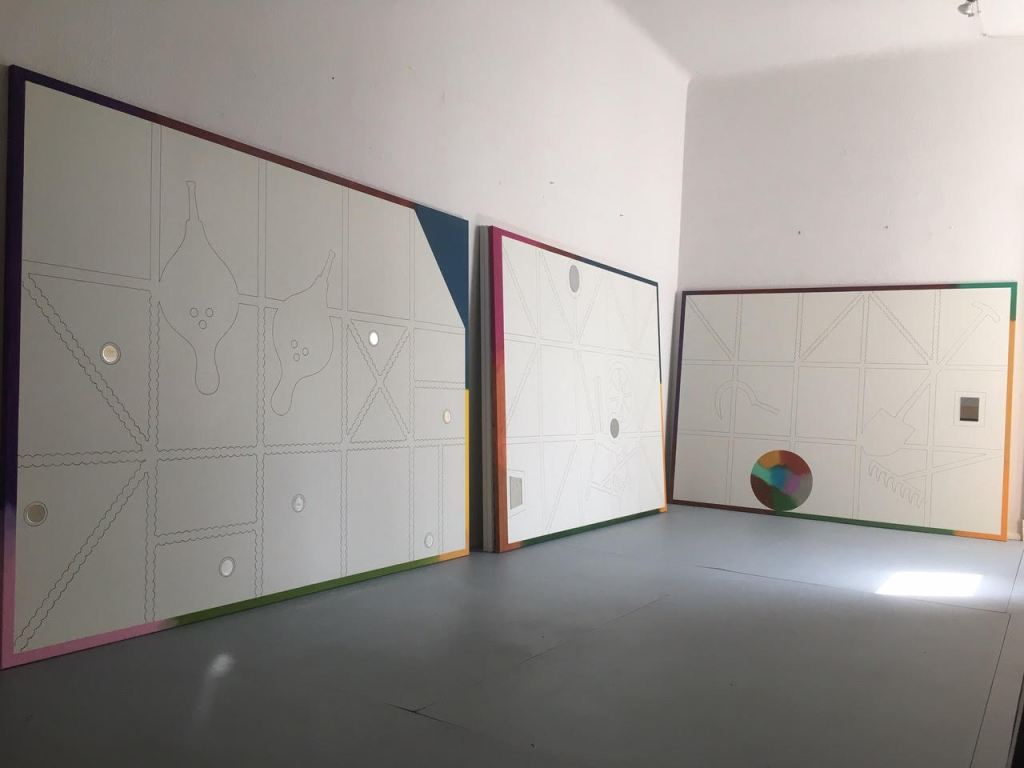
Pd’A: A geometric grid always returns in your paintings that seems to bring the architectural dimension into play. (The wooden ribs left exposed in medieval buildings in much of Northern Europe) What role does geometry play in your work?
B.S.: You will be surprised to hear that the grid in my paintings didn’t come from being inspired by Northern European medieval buildings but from being inspired by Roman wallpaintings in Italy. In particular the paintings of the so called Fourth Style in which a certain spatial game often plays a role and not a perspective as we know it.
The association with medieval buildings only came later, when I moved my studio to Germany. Moreover, being a Dutch painter, there is always a link with Piet Mondrian who invented the grid in paintings in order to express ideas about a cosmic order.
I am not interested in implementing or further developing geometry as a visual principle. In fact I am more interested in the limits of our rational thinking and how, for example, we tend to project spiritual meanings in geometry.
Pd’A: Are you interested in collecting and cataloguing images, stimuli and objects that then find place in your work? Are you interested in the idea of Wunderkammer?
B.S.: Collecting images is part of the artistic activity. Either in the artist’s head or as a material archive.
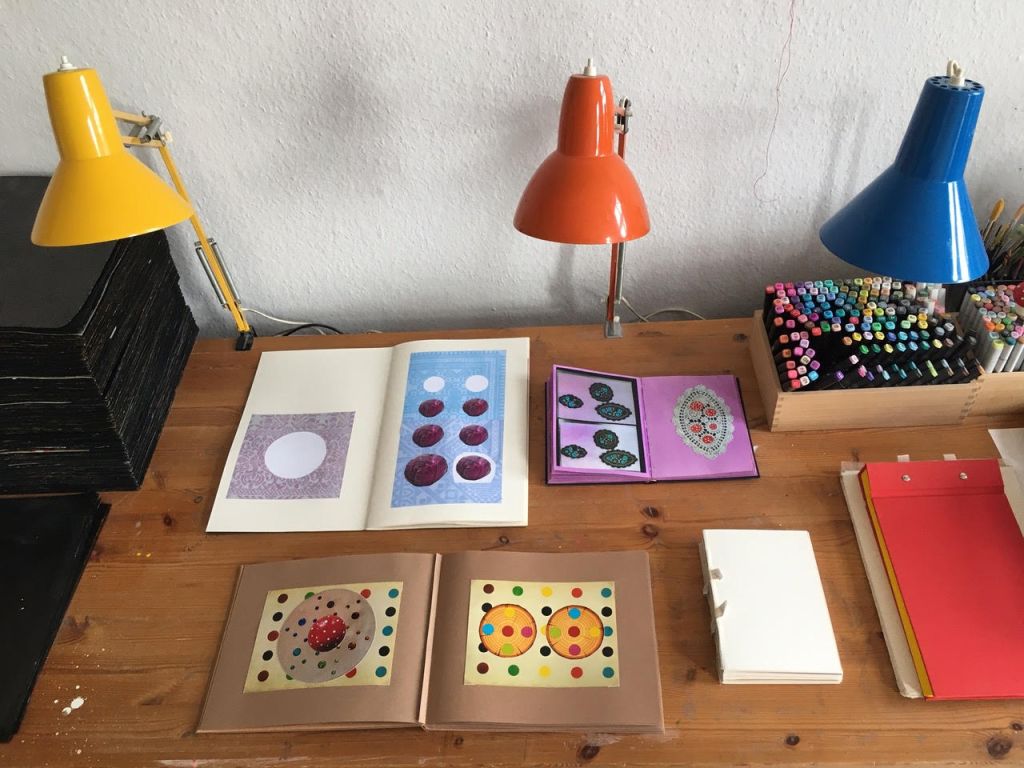
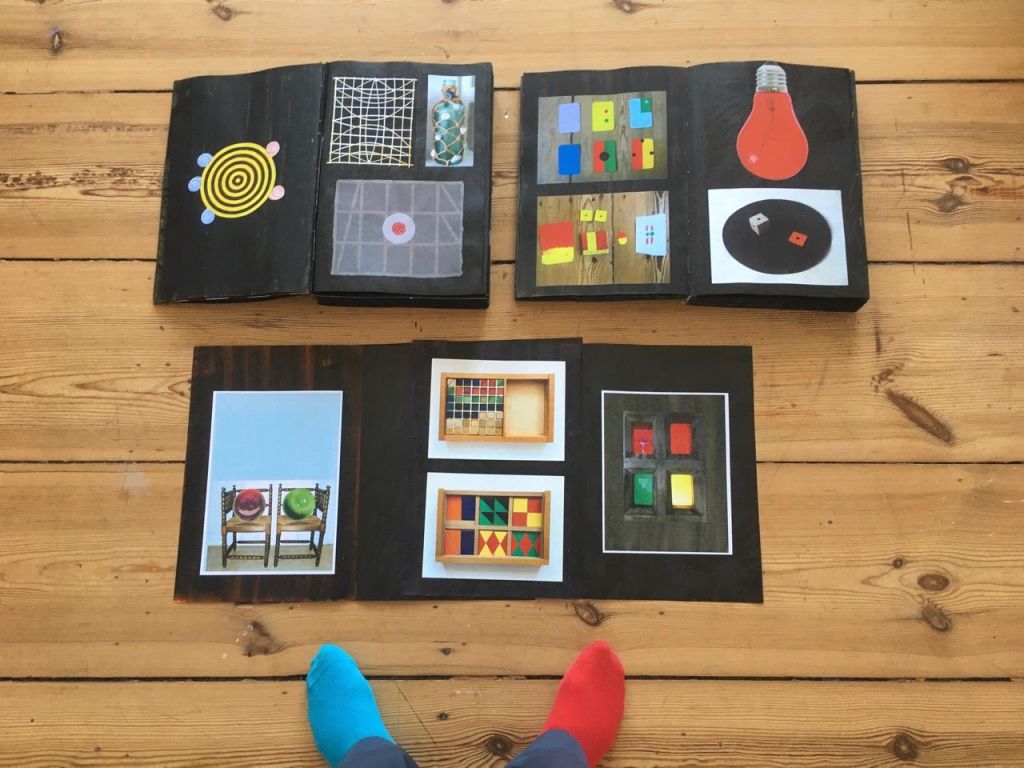
Perhaps I must first tell you that my art does not only consist of paintings. In fact a large part of my work consist of installations, ceramics and artist’ books. For the past ten years artist’ books have become again an important part of this.
I make collages and bind them into books. For these collages I use found images and pictures from my artist archive.
Often the images I collect have a relationship with symbols I have previously used in my work, but they are different and expand my view and take me in another direction.
Making new combinations of certain pictures may also result in a change of direction and shift of meaning.
The process of making art interests me at least as much as the final results.
Pd’A: Are you interested in the combinatorial logic in the construction of your images?
B.S.: Logic in art is a very personal thing and any piece of art has his own logic. Some images may not be popular or not easy comprehensable.
In daily life it seems that more than ninety percent of what we think we know, we only suspect. Our brains present these suspicions to us as reality.
Now It is a privilege of art to visualize and materialize different levels of understanding
In fact it is an advantage for an artist not to know too much in the process of creating, because knowing leads to imitation. And art is definitely not about imitation.
In my work I am very interested in what is intuitively chosen or created. My work is largely about trying to follow the nature of thought.
Pd’A: Does the playful aspect have any importance in your work?
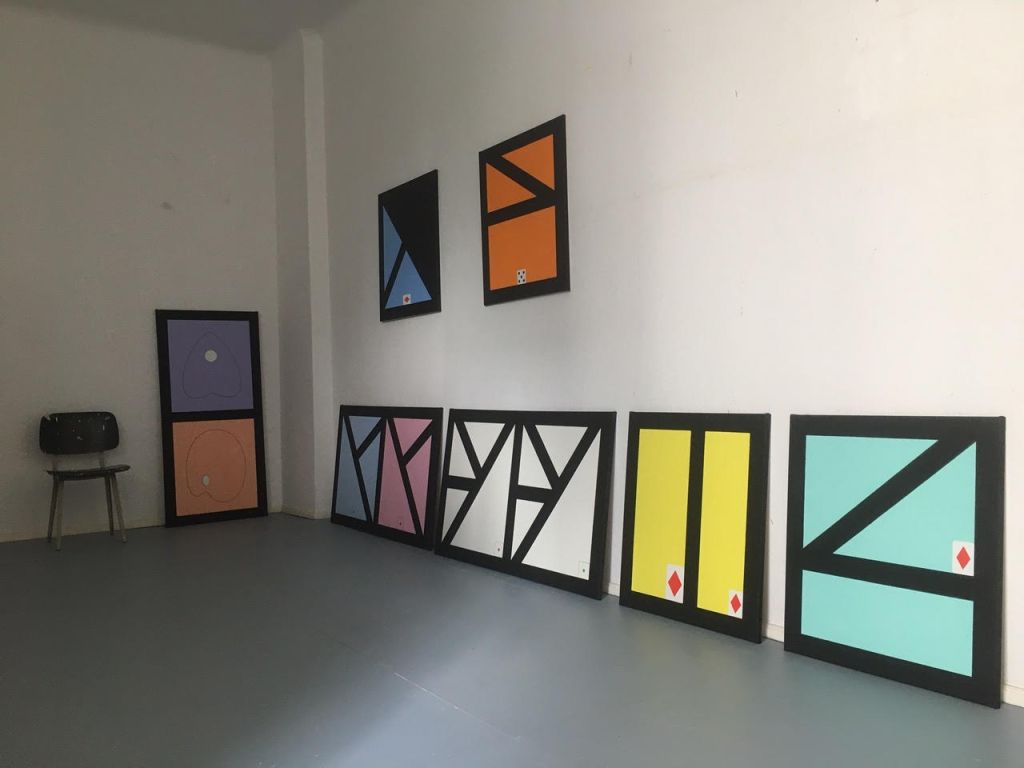
B.S.: My paintings primarily refer to a constructivist, minimalist tradition with colour, line and surface, into which I like to “project” elements that may seem visually confusing at first glance.. Elements that are somewhere between a concrete object and an emblem or symbol. These objects are always placed in a playful way but they are never random.
Pd’A: Do you work on several paintings together or do you concentrate on one painting at the time?
B.S.: Working on an artist’ book takes time. It takes time to find the right images for collages to complete 50 or 100 pages. So I am working on several books at the same time.
A large painting takes time too as oil paint often needs to be dry, to be able to add another layer. In the mean time I work on paper, gouaches especially.
Versione Italiana
Ben Sleeuwenhoek Intervista artista
#paroladartista #artistinterview #intervistaartista # bensleeuwenhoek
Parola d’Artista: Per la maggior parte degli artisti l’infanzia rappresenta il periodo d’oro in cui iniziano a manifestarsi i primi sintomi di una certa propensione ad appartenere al mondo dell’arte. È stato così anche per lei?
Ben Sleeuwenhoek: Da bambino disegnavo e dipingevo molto e avevo un’inspiegabile attrazione per l’arte asiatica. L’interesse per il mondo dell’arte è arrivato solo quando sono cresciuto e mi sono interessato alle subculture. Erano gli anni Sessanta!
Ero ancora molto giovane quando fui ammesso all’Accademia d’Arte, a diciassette anni.
Pd’A: Che studi ha fatto?
B.S.: Dopo aver terminato l’Accademia di Belle Arti di Rotterdam, in Olanda, ho fatto altri studi, ma il mio lavoro era già esposto. Sono stato subito coinvolto nel mondo dell’arte. Presto ho iniziato anche a viaggiare. Giappone, Cina, India. L’Asia divenne un’ispirazione per tutta la vita. Negli anni successivi sono stato spesso in India.
Pd’A: Nei suoi quadri ritorna sempre una griglia geometrica che sembra mettere in gioco la dimensione architettonica. (Le nervature in legno lasciate a vista negli edifici medievali di gran parte del Nord Europa) Che ruolo ha la geometria nel suo lavoro?
B.S.: Sarà sorpreso di sapere che la griglia nei miei dipinti non nasce dall’ispirazione per gli edifici medievali del Nord Europa, ma dall’ispirazione per le pitture murali romane in Italia. In particolare i dipinti del cosiddetto Quarto Stile, in cui spesso gioca un certo gioco spaziale e non la prospettiva come la conosciamo noi.
L’associazione con gli edifici medievali è arrivata solo in seguito, quando ho trasferito il mio studio in Germania. Inoltre, essendo un pittore olandese, c’è sempre un legame con Piet Mondrian, che ha inventato la griglia nei dipinti per esprimere idee su un ordine cosmico.
Non mi interessa implementare o sviluppare ulteriormente la geometria come principio visivo. In realtà sono più interessato ai limiti del nostro pensiero razionale e a come, ad esempio, tendiamo a proiettare significati spirituali nella geometria.
Pd’A: È interessato a raccogliere e catalogare immagini, stimoli e oggetti che poi trovano posto nel suo lavoro? È interessato all’idea di Wunderkammer?
B.S.: La raccolta di immagini fa parte dell’attività artistica. Sia nella testa dell’artista che come archivio materiale.
Forse devo prima dirle che la mia arte non consiste solo in dipinti. In effetti, gran parte del mio lavoro consiste in installazioni, ceramiche e libri d’artista. Negli ultimi dieci anni i libri d’artista sono tornati a essere una parte importante del mio lavoro.
Realizzo collage e li rilego in libri. Per questi collage utilizzo immagini trovate e fotografie del mio archivio d’artista.
Spesso le immagini che raccolgo hanno una relazione con i simboli che ho usato in precedenza nel mio lavoro, ma sono diverse e ampliano la mia visione e mi portano in un’altra direzione.
Anche la creazione di nuove combinazioni di certe immagini può portare a un cambiamento di direzione e di significato.
Il processo di creazione dell’arte mi interessa almeno quanto i risultati finali.
Pd’A: Le interessa la logica combinatoria nella costruzione delle opere?
B.S.: La logica nell’arte è una cosa molto personale e ogni opera d’arte ha una sua logica. Alcune immagini possono non essere popolari o non facilmente comprensibili.
Nella vita quotidiana sembra che più del novanta per cento di ciò che pensiamo di sapere, lo sospettiamo soltanto. Il nostro cervello ci presenta questi sospetti come realtà.
Ora, è un privilegio dell’arte visualizzare e materializzare diversi livelli di comprensione.
In effetti è un vantaggio per un artista non sapere troppo nel processo di creazione, perché sapere porta all’imitazione. E l’arte non è assolutamente imitazione.
Nel mio lavoro sono molto interessato a ciò che viene scelto o creato intuitivamente. Il mio lavoro è in gran parte un tentativo di seguire la natura del pensiero.
Pd’A: L’aspetto ludico ha una certa importanza nel suo lavoro?
B.S.: I miei dipinti si rifanno principalmente a una tradizione costruttivista e minimalista con il colore, la linea e la superficie, in cui mi piace “proiettare” elementi che a prima vista possono sembrare visivamente confusi. Elementi che si collocano a metà strada tra un oggetto concreto e un emblema o un simbolo. Questi oggetti sono sempre collocati in modo giocoso, ma non sono mai casuali.
Pd’A: Lavora a diversi quadri insieme o si concentra su un quadro alla volta?
B.S.: Lavorare a un libro d’artista richiede tempo. Ci vuole tempo per trovare le immagini giuste per i collage e completare 50 o 100 pagine. Quindi lavoro a diversi libri contemporaneamente.
Anche un dipinto di grandi dimensioni richiede tempo, perché spesso la pittura a olio deve essere asciutta per poter aggiungere un altro strato. Nel frattempo lavoro su carta, soprattutto con le gouache.

 paroladartista.com