
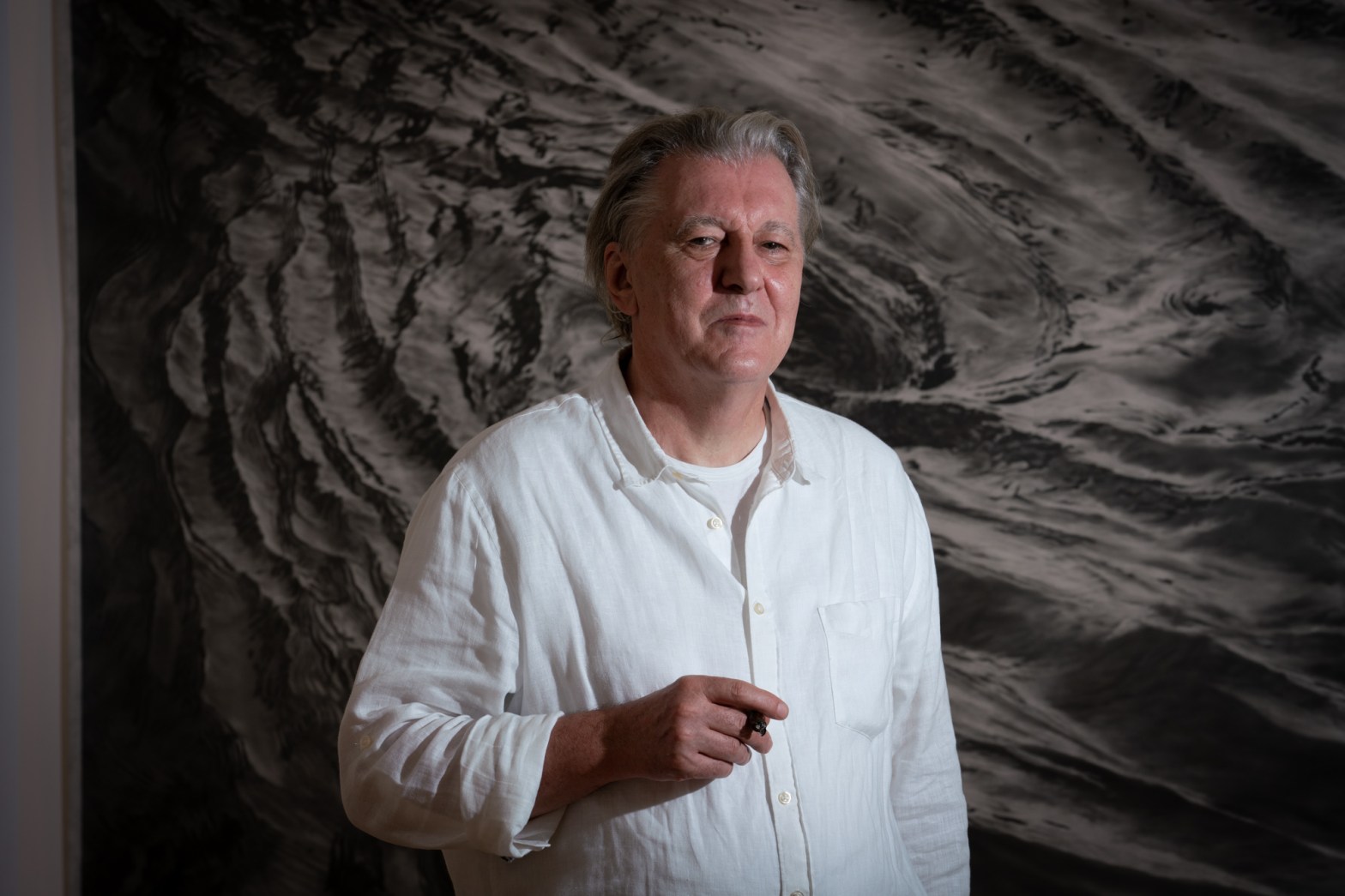
(▼Scroll down for Eglish text)
#paroladartista #disegno #drawing #serse
Parola d’Artista: Che importanza e che ruolo ha il disegno nel tuo lavoro?
Serse: Ho cominciato a disegnare utilizzando la sola grafite nell’anno 1988.
Stava scadendo il millennio e l’arte figurativa era pervasa da vertigini di colore , eseguita con pennellate che erano sciabolate in un duello di natura neo espressionista.
La pittura era riconosciuta come l’unica depositaria della pratica eroica dell’arte.
Dentro questa concezione della pittura come luogo arcaico vivevano i profeti del ritorno degli dei per mezzo di fascinosi richiami al mito, esemplare l’opera di Anselm Kiefer.
Tutto questo mi provocava uno sfocamento nel vedere, uno stordimento, una perdita di senso e un metaforico strabismo.
Sentivo urgente il bisogno di rappresentare il mondo con un linguaggio più analitico e intimo che rappresentasse al meglio la mia visione del mondo, vale a dire l’adozione del puro disegno.
Concepivo il disegno come Laicorum Litteratura, letteratura per laici ,ovvero un disegno paziente e riflessivo, mai disgiunto dell’abilità manuale, dove la mano testimonia l’ultimo residuo di corporeità dell’immagine.
Osservavo,anche, che il disegno conferisce all’occhio una domanda di volontà, tanto da poter affermare che bisogna volere per vedere e questa “vista voluta” ha il disegno come fine e mezzo.
Non vi sono dubbi che la pittura sia una meraviglia di difficoltà, ma constato che necessita di procedere in stretta relazione con se stessa cercando il modellato attraverso e mediante l’azione della propria materia , che è Il colore. Purtroppo la pittura è costretta a adottare liturgie ripetute: la pulizia dei pennelli, della tavolozza , i tempi lunghi di asciugatura ecc ..
Vive pertanto un rapporto indivisibile con un piacere del fare che assomiglia a una felicità passiva, che ti fa riposare nella certezza del rimedio e del ritocco.
Agisce come la natura nel far crescere una pianta, l’alleva insensibilmente in un susseguirsi di equilibri di caldi e freddi ,di piogge e siccità, nell’attesa dell misterioso rigoglio e vigore della chioma .Diversamente, l’artista che agisce nel disegno , distingue i suoi gesti dal supporto materiale, ne ha coscienza distinta, e non confonde la propria opera con la materia di cui è fatta.
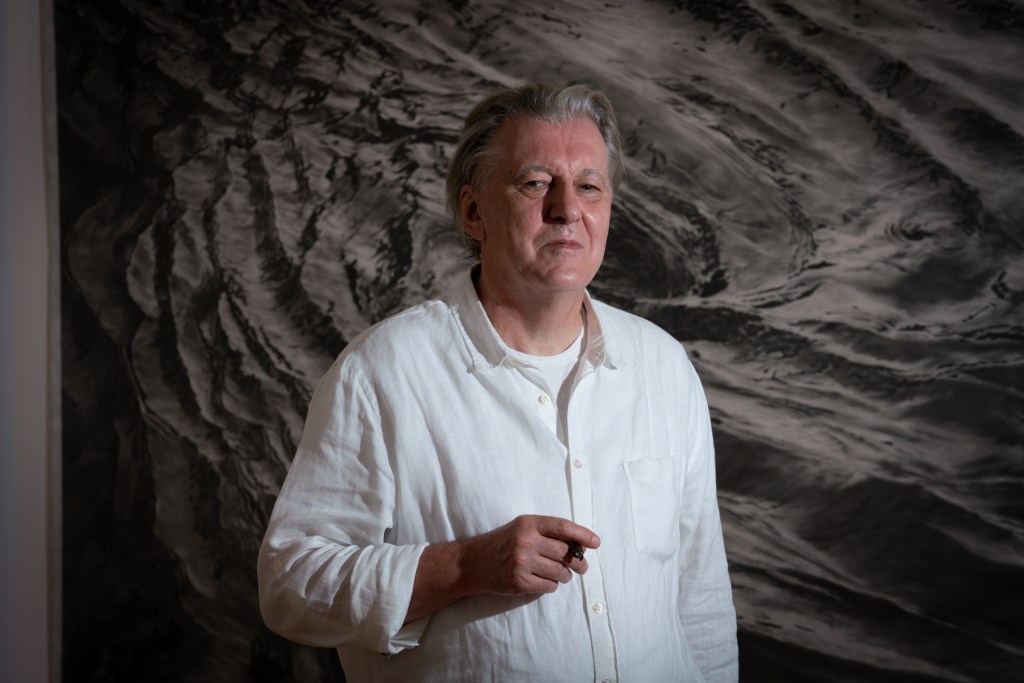
Ho scelto quindi di usare come strumento un materiale come la grafite, anche perchè è un elemento impiegato in ambito industriale come fluidificante, quindi gli si può attribuire un significato di stretta correlazione con le immagini che realizzo, che spesso fanno riferimento all’acqua, materiale fluido per eccellenza.
In virtù di questa relazione ho scelto di eseguire i miei disegni esclusivamente con grafite su carta.
Osserviamo che nella scala di durezza dei materiali alla grafite viene conferito un valore tra i più bassi.
La sua composizione è il carbonio che per le sue proprietà allotropiche trasforma le sue caratteristiche fisiche nel più alto grado di durezza, nella più preziosa e nobile forma che è il diamante.
Dal punto di vista strettamente geologico la grafite e il diamante costituiscono una sorta di alfa e omega, non solo nei valori di durezza ma anche nella scala del colore: nero profondo per la grafite, trasparenza incolore per il diamante; ovvero ombra e luce, che sono i fondamentali del disegno.
Concludo con una riflessione di Paul Valery “…che se l’arte è partecipa dello spirito, quello spirito la cui durata è intessuta di atti senza materia, l’arte più vicina allo spirito è dunque quella che ci rende il massimo delle nostre impressioni o delle intenzioni col minimo dei mezzi sensibili”… ..” Bastano pochi tratti, poche incisioni, perché un viso o una campagna non soltanto ci siano dati nelle loro sembianze, ma suggeriti al punto che il colore assente e la luce più ricca non manchino affatto. Paul Valery- piccolo discorso ai pittori incisori-
English text
On drawing Serse
#paroladartista #disegno #drawing #serse
Parola d’Artista: What importance and role does drawing play in your work?
Serse: I started drawing using graphite alone in the year 1988.
The millennium was passing and figurative art was pervaded by vertigo of colour, executed with brushstrokes that were sabre-rattling in a neo-expressionist duel.
Painting was recognised as the sole repository of the heroic practice of art.
Within this conception of painting as an archaic place lived the prophets of the return of the gods by means of fascinating references to myth, exemplary the work of Anselm Kiefer.
All this caused a blurring in my vision, a dizziness, a loss of sense and a metaphorical squinting.
I felt an urgent need to represent the world in a more analytical and intimate language that would best represent my view of the world, namely the adoption of pure drawing.
I conceived of drawing as Laicorum Litteratura, literature for laymen, that is, a patient and reflective drawing, never divorced from manual dexterity, where the hand bears witness to the last residue of corporeity in the image.
I also observed that drawing confers on the eye a demand for will, so much so that it can be said that one must want to see, and this “willed sight” has drawing as its end and means.
There is no doubt that painting is a marvel of difficulty, but I note that it needs to proceed in close relation to itself by seeking modelling through and by means of the action of its own material, which is colour. Unfortunately, painting is forced to adopt repeated liturgies: cleaning of brushes, palette, long drying times, etc..
It therefore lives an indivisible relationship with a pleasure of doing that resembles a passive happiness, which makes you rest in the certainty of remedy and retouching.
It acts like nature in making a plant grow, it nurtures it insensibly in a succession of balances of hot and cold, of rain and drought, waiting for the mysterious luxuriance and vigour of the foliage. In contrast, the artist who acts in drawing, distinguishes his gestures from the material support, has a distinct consciousness of it, and does not confuse his work with the material of which it is made.
I therefore chose to use a material such as graphite as a tool, also because it is an element used in industry as a fluidiser, so it can be attributed a meaning of close correlation with the images I create, which often refer to water, a fluid material par excellence.
Because of this relationship, I have chosen to execute my drawings exclusively with graphite on paper.
We observe that on the hardness scale of materials, graphite is given one of the lowest values.
Its composition is carbon, whose allotropic properties transform its physical characteristics into the highest degree of hardness, into the most precious and noble form that is diamond.
From a strictly geological point of view, graphite and diamond constitute a sort of alpha and omega, not only in hardness values but also in the colour scale: deep black for graphite, colourless transparency for diamond; in other words, shadow and light, which are the fundamentals of drawing.
I conclude with a reflection by Paul Valery “…that if art participates in the spirit, that spirit whose duration is interwoven with acts without matter, the art closest to the spirit is therefore that which renders us the maximum of our impressions or intentions with the minimum of sensible means… ..” It only takes a few strokes, a few engravings, for a face or a countryside to be not only given to us in their likeness, but suggested to the extent that the absent colour and the richest light are not lacking at all. Paul Valery- little speech to the engraving painters-
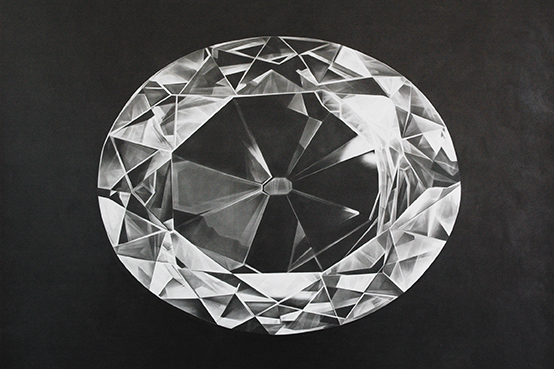
DIAMANTE 2007
100 x 140 grafite su carta su alluminio.
courtesy Galleria Continua
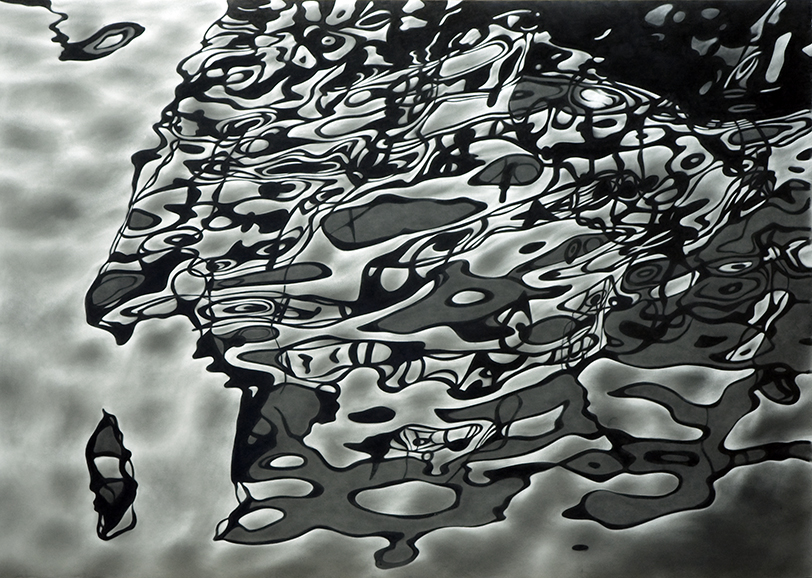
100 X 142 grafite su carta su alluminio Courtesy Galleria Continua
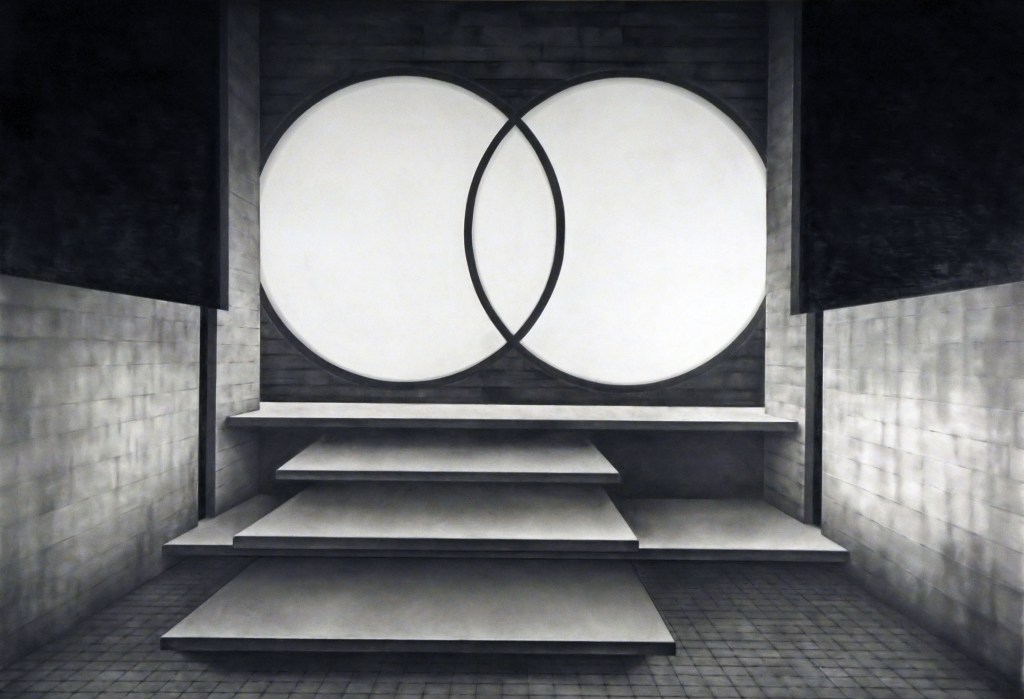
FOTOGRAFITE 2008
100 x140 grafite su carta su alluminio
courtesy Galleria Continua
 paroladartista.com