
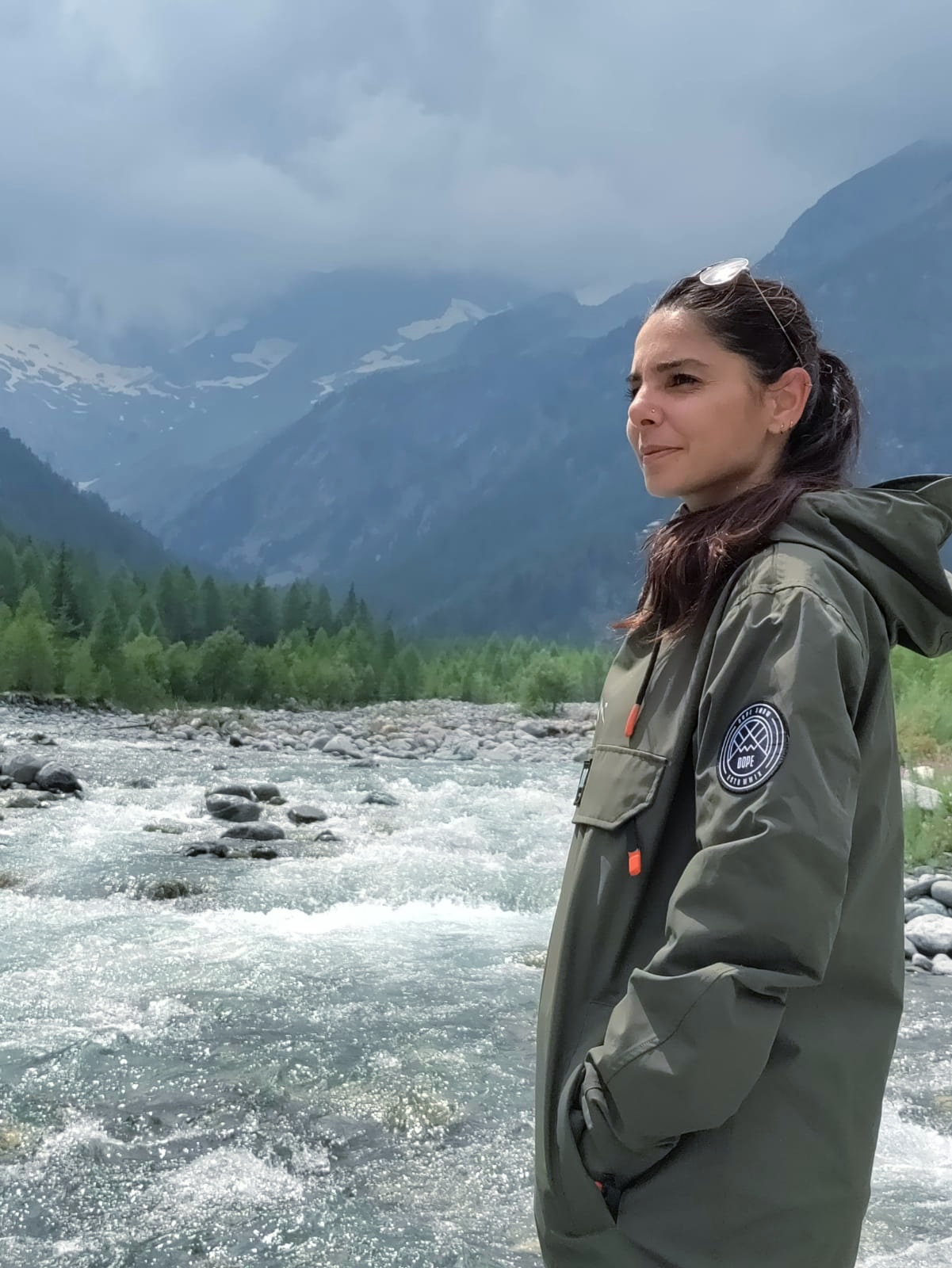
(▼Scroll down for English version)
#paroladartista #nellostudiodi #artiststudio #silvianegrini
Un sogno ricorrente è quello di ritrovarmi in un appartamento con diverse stanze tra cui poter scegliere la più comoda e funzionale salvo avere continui ripensamenti.
Come spesso accade nei sogni, una volta delineata la mia scelta, mi accorgo che l’altra stanza è migliore, più luminosa, meglio disposta o semplicemente più accogliente. In questa realtà arbitraria, la mia scelta condizionerà inevitabilmente il mio modo di vivere e di lavorare, determinato dall’ambiente.
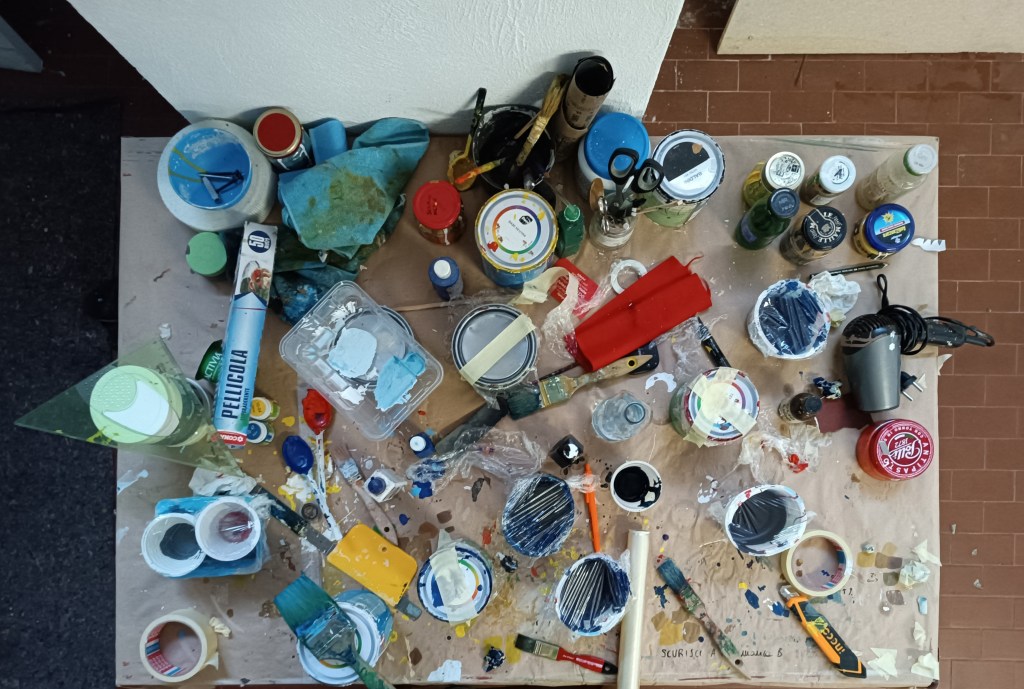
Non nego che mi è capitato di provare imbarazzo quando mi sono stati chiesti degli studio visit. Ho condiviso appartamenti con alte persone e le case, per molto tempo, sono state il mio studio: altre opzioni non erano praticabili. Ho dipinto in camera, in cucina, in sala, ovunque i miei coinquilini mi permettessero di lavorare, ammassando barattoli, macchiando le pareti e intasando i lavandini, eppure sono sempre riuscita a fare ciò che volevo, a trovare soluzioni alle mie urgenze, proseguendo nella mia ricerca. L’ambiente domestico è diventato il mio ambiente di lavoro e questo ha condizionato e consolidato, come presupposto nel sogno, una maniera di lavorare. Sappiamo infatti che il lavoro non si riduce alla fase operativa, che spesso risponde alle strette esigenze della contingenza, ambienti puliti, colori e pennelli ordinati… ma la genesi di un’opera è anche altro, sono altri tempi e altri spazi, per me vissuti nelle più o meno intime case che ho abitato.
Con il passare degli anni ho avuto la necessità di disporre di maggiore spazio e mi sono resa conto che, determinante nella scelta degli appartamenti, è stata la possibilità che mi è stata offerta, in termini di spazio, di poter fare il mio lavoro, ancor prima dell’arredamento e delle funzionalità casalinghe.
Questo fragile equilibrio è però quello che mi ha permesso di rimanere sempre concentrata sul mio lavoro, di intervenire in ogni momento, apportando modifiche immediate, di lavorare con velocità e di sfruttare ogni momento proficuo.
Al mio ennesimo trasferimento, per cercare di avere una condizione più conforme alle aspettative che si riservano agli adulti, questo equilibrio è venuto meno costringendomi a cercare uno studio. Un’amica scultrice cercava un compagno, preferibilmente un pittore, con cui condividere lo studio così mi sono proposta.
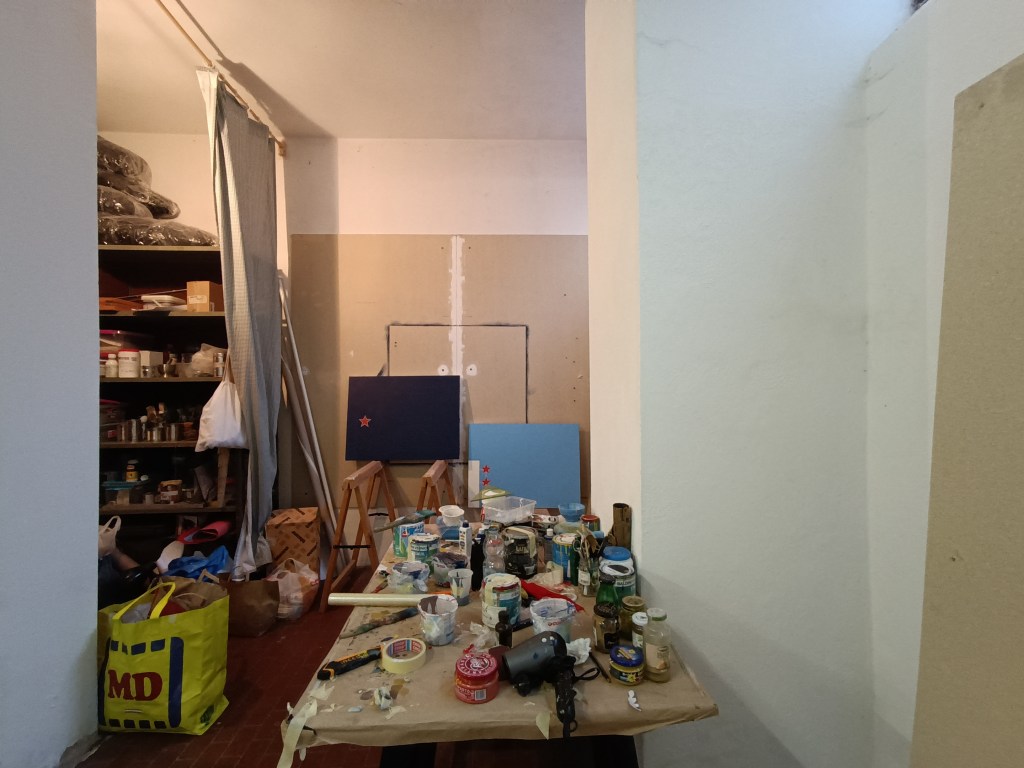
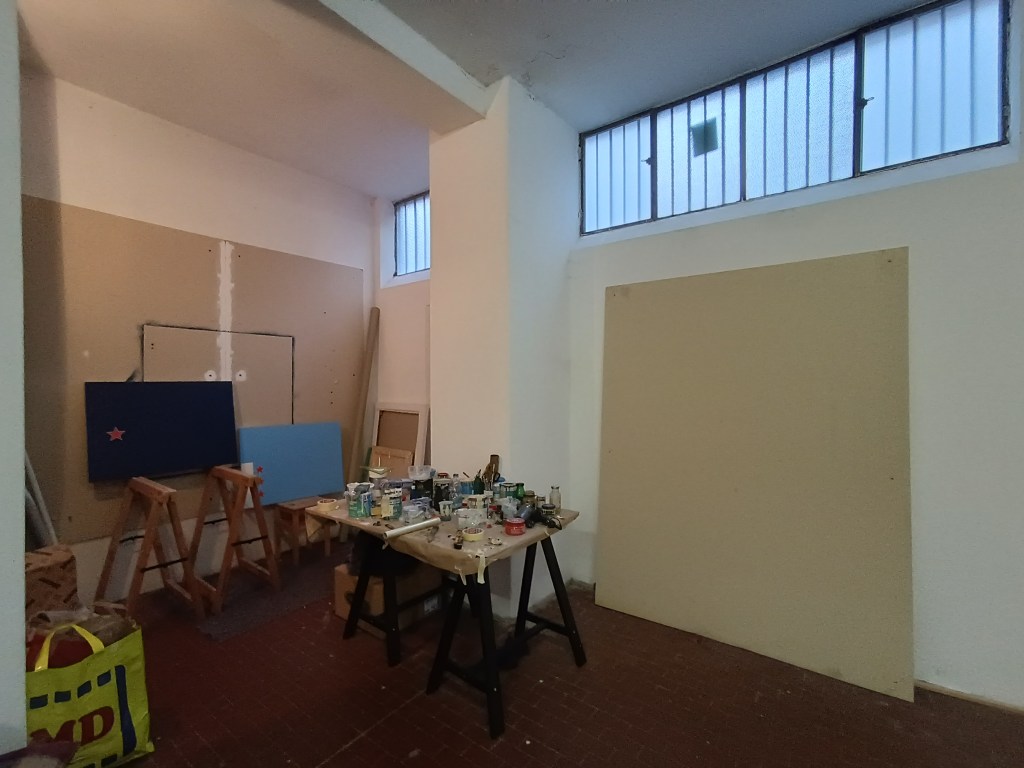
Lo studio è grande e, tutto sommato, non troppo distante da casa, tuttavia mi manca quell’equilibrio precario.
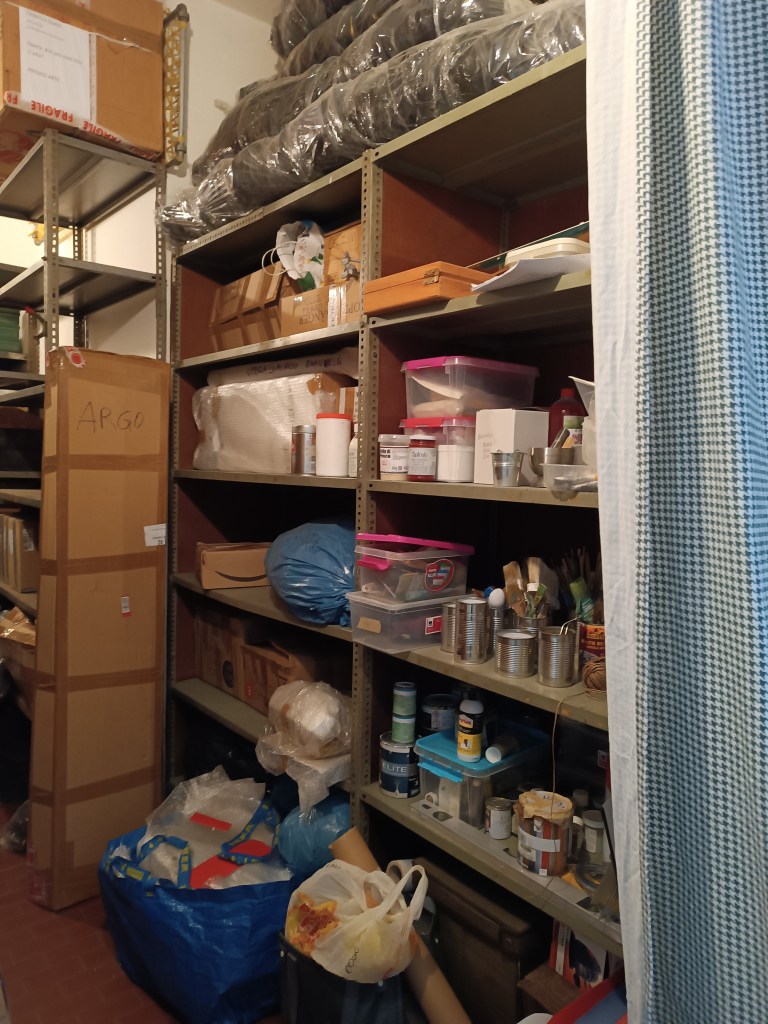
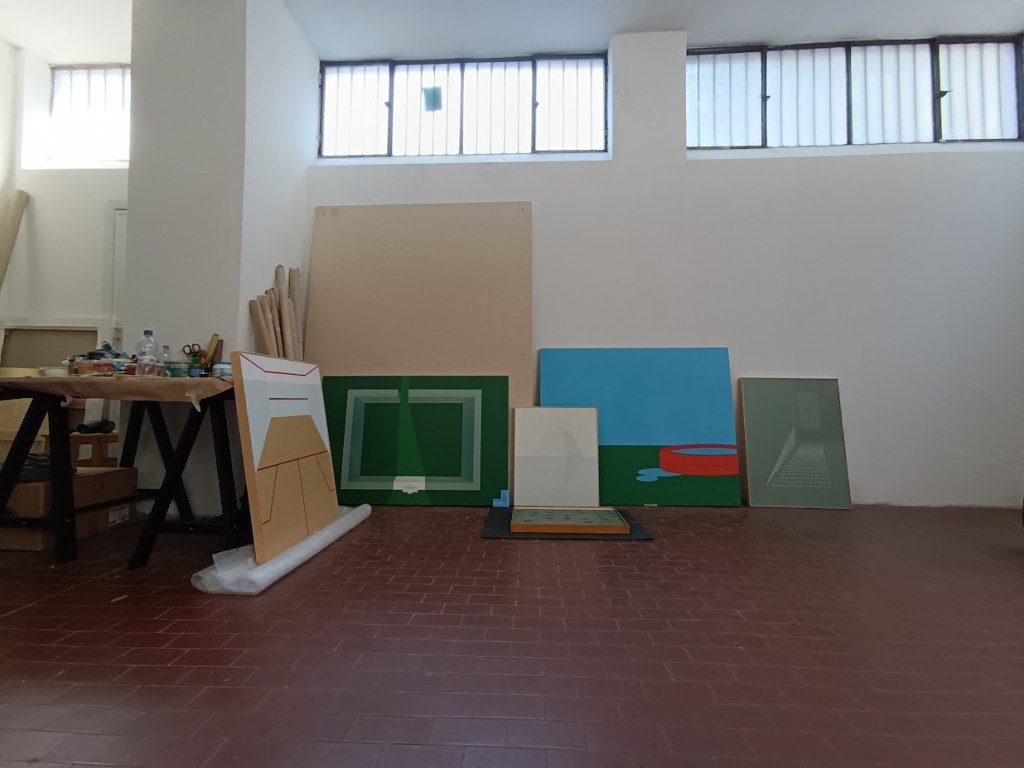
Lo studio per me dev’essere casa, un’ambiente intimo e domestico, quanto di più distante da un cubo bianco si possa immaginare. Quasi per contrapposizione, all’interno di quella confusione, propria del vivere quotidiano, riesco a creare quello spazio asettico e quell’estrema sintesi che caratterizza i miei lavori, a ritagliarmi un angolo di ordine per agire in pulizia. L’esigenza di avere uno studio è prerogativa soltanto di alcuni artisti, non di tutti. Io lavoro sulla pittura e, al momento, ho bisogno di un luogo operativo in cui realizzare i miei lavori. Per la fase esecutiva non ho grandi necessità, ho invece problemi di stoccaggio una volta conclusi i lavori. Potrei evitare l’incombenza del supporto mobile per lavorare su supporti fissi, senza che questo snaturi il mio lavoro, ma richiederebbe la disponibilità di terzi. Tuttavia, in assenza di uno studio, potrei pensare di cambiare prospettive per dirigerle in direzioni inaspettate.
Artisti importanti si sono scontrati con l’atelier e il loro successo è dovuto in parte anche all’idea di ridiscussione degli spazi. Daniel Buren diceva:
“tutte le messe in discussione del sistema dell’arte passeranno dunque ineluttabilmente per una ridiscussione tanto dell’atelier come unico luogo in cui si compie il lavoro quanto del museo come unico luogo in cui si vede il lavoro compiuto” (“October”, 1980)
Dal momento in cui, spesso, avere uno studio presuppone una certa disponibilità economica, è forse ora di ricominciare a scendere a patti con la realtà e chiederci se abbiamo davvero ancora bisogno di uno studio per svolgere il nostro lavoro o se siamo troppo ancorati all’idea che il nostro lavoro abbia esigenza di essere compiuto in uno spazio predefinito.
English text
Artist studio Silvia Negrini
#paroladartista #nellostudiodi #artiststudio #silvianegrini
A recurring dream is to find myself in an apartment with several rooms from which I can choose the most comfortable and functional one except having constant second thoughts.
As often happens in dreams, once I outline my choice, I realize that the other room is better, brighter, better laid out or simply more welcoming. In this arbitrary reality, my choice will inevitably condition the way I live and work, determined by the environment.
I do not deny that I have been embarrassed when asked about studio visits. I shared apartments with other people and the houses, for a long time, were my studio: other options were not viable. I painted in the bedroom, in the kitchen, in the living room, wherever my roommates allowed me to work, piling cans, staining walls and clogging sinks, yet I always managed to do what I wanted to do, to find solutions to my urgencies, continuing in my quest. The home environment became my work environment and this conditioned and consolidated, as assumed in the dream, a way of working. Indeed, we know that work is not reduced to the operational phase, which often responds to the strict requirements of contingency, clean rooms, neat colors and brushes… but the genesis of a work is also something else, it is other times and other spaces, for me experienced in the more or less intimate homes I have inhabited.
As the years went by, I needed more space, and I realized that decisive in my choice of apartments was the opportunity I was given, in terms of space, to be able to do my work, even before the home furnishings and functionality.
However, this fragile balance is what allowed me to stay focused on my work at all times, to take action at any time, making immediate changes, to work with speed, and to take advantage of every profitable moment.
On my umpteenth move, to try to have a condition more in keeping with the expectations set for adults, this balance broke down forcing me to look for a studio. A sculptor friend was looking for a partner, preferably a painter, with whom to share the studio so I proposed.
The studio is large and, all things considered, not too far from home, yet I miss that precarious balance.
The studio for me must be home, an intimate and domestic environment, as far from a white cube as one can imagine. Almost by contrast, within that confusion, proper to daily living, I manage to create that aseptic space and that extreme synthesis that characterizes my works, to carve out a corner of order to act in cleanliness. The need to have a studio is the prerogative of only some artists, not all. I work on painting and, at the moment, I need an operational place in which to make my works. For the execution phase, I do not have great needs; instead, I have storage problems once the work is completed. I could avoid the burden of mobile support to work on fixed supports, without distorting my work, but it would require the availability of a third party. However, in the absence of a studio, I might consider changing perspectives to direct them in unexpected directions.
Important artists have struggled with the atelier, and their success is partly due to the idea of redesigning spaces. Daniel Buren said:
“all questioning of the art system will therefore inevitably pass through a re-discussion of both the atelier as the only place where work is done and the museum as the only place where work is seen to be done” (“October”, 1980)
Since, often, having a studio presupposes a certain amount of money, it is perhaps time to start coming to terms with reality again and ask ourselves whether we really still need a studio to do our work or whether we are too anchored in the idea that our work needs to be accomplished in a predefined space.


 paroladartista.com