(▼Scroll down for English version)
#paroladartista #intervistaartista #artistinterview #fabiomarullo
Parola d’Artista: Per la maggior parte degli artisti l’infanzia rappresenta l’età dell’oro quella in cui cominciano a manifestarsi i primi sintomi di una certa propensione ad appartenere al mondo dell’arte. E’ stato così anche per te? Racconta
Fabio Marullo: La pittura e i suoi odori hanno accompagnato la mia infanzia, ma solo intorno ai venti anni ne ho avuto davvero coscienza. Esiste un luogo, Noto Antica, dove io e la mia famiglia trascorrevamo una parte delle estati che ha lasciato in me ricordi indelebili. Qui ho passato un tempo meraviglioso, fra piante rigogliose e uniche, edicole votive post terremoto, l’Eremo e la chiesa di Santa Maria della Provvidenza: dentro gli stucchi e i dipinti restaurati dallo zio Claudio e l’odore insistente di trementina, fuori una natura prepotente e stimolante.
P.d’A.: che studi hai fatto, e quali se ci sono stati incontri importanti hai avuto negli anni della tua formazione?
F.M.: La mia non è stata una formazione artistica canonica. Intendo dire che dopo gli studi in Architettura e Storia e Conservazione dei Beni Architettonici e Ambientali presso l’Università degli studi “ Mediterranea” IUSA Reggio Calabria, sono arrivato allo IUAV – Facoltà di Arti e Design – di Venezia dove ho concluso un’altra parte della mia formazione. Nella città lagunare ho incontrato diversi artisti, vivendo di infatuazioni momentanee, ma tenendo sempre come riferimento la dimensione della conoscenza e dello studio.
P.d’A.: Chi erano questi artisti?
F.M.: Tanti, ma tra questi mi piace ricordare le esperienze con Olafur Eliasson e il suo team, Rirkrit Tiravanija, GraziaToderi,Cesare Pietroiusti, Marepe, il fotografo Guido Guidi che ho ritrovato dopo a Cesena, sua città natale, durante la mia esperienza con la didattica presso la Facoltà di Architettura “Aldo Rossi”.
P.d’A.: Il tuo lavoro d’artista come si è evoluto nel tempo?
F.M.: All’inizio del mio percorso, essendo parte attiva dei collaboratori veneziani di Guido Guidi, assorbito completamente da quell’atmosfera, sentivo più congeniale l’utilizzo della fotografia. Gradualmente me ne sono allontanato rispondendo a quel richiamo della pittura così profondamente radicato in me. In realtà ho solo cambiato medium, rimanendo fedele ad uno sguardo che nel tempo si è ampliato e arricchito degli apporti di saperi specifici in ambito scientifico.
La mia ricerca affonda le sue radici nel terreno fertile delle scienze, in cui non solo trovo linfa per il mio sguardo, ma in cui mi immergo per partecipare di un più grande ecosistema di pensieri interdipendenti. Per ogni nuovo lavoro non posso prescindere da questo coinvolgimento in una visione del mondo di cui sono parte innanzitutto come osservatore ammaliato e grato.
Le parole della poetessa Chandra Livia Candiani rendono perfettamente questo mio pensiero quando scrive: «Esercitarsi a non sapere e a meravigliarsi […] guardarsi attorno e lasciare andare il concetto di albero, strada, casa mare e guardare con sguardo che ignora il risaputo.
G.L.: In quest’ottica va letto anche il progetto Alpina? Puoi parlarne?
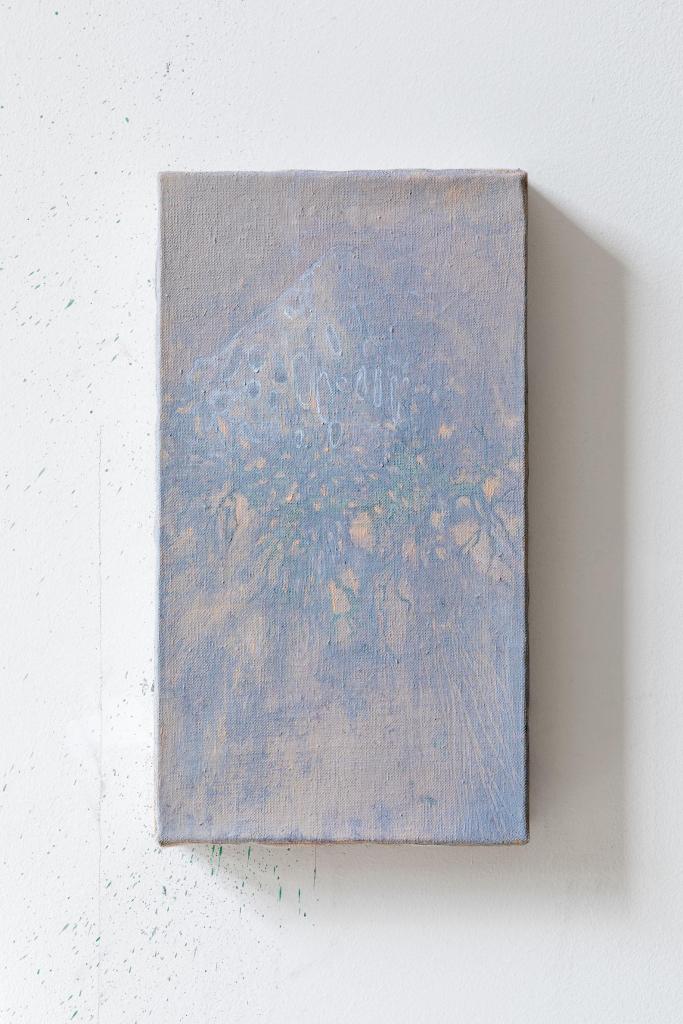
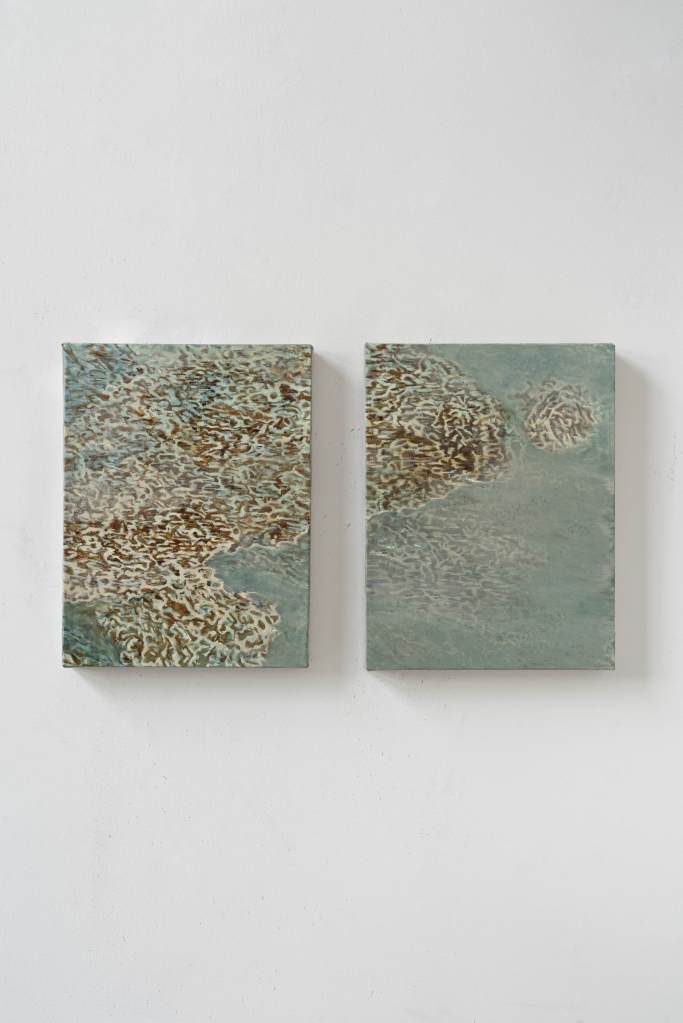
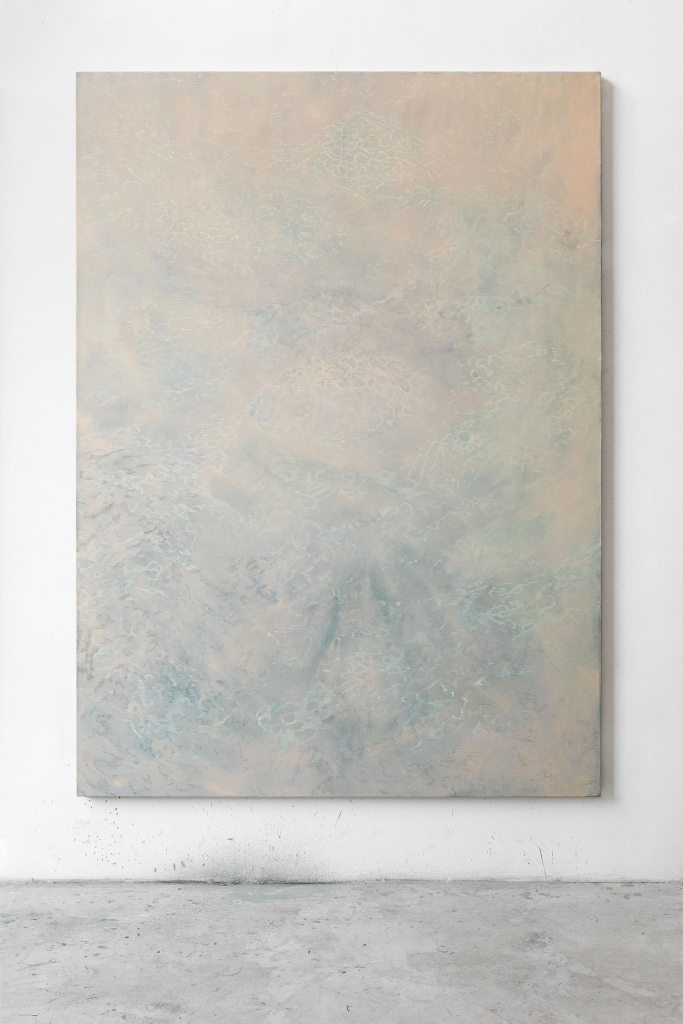
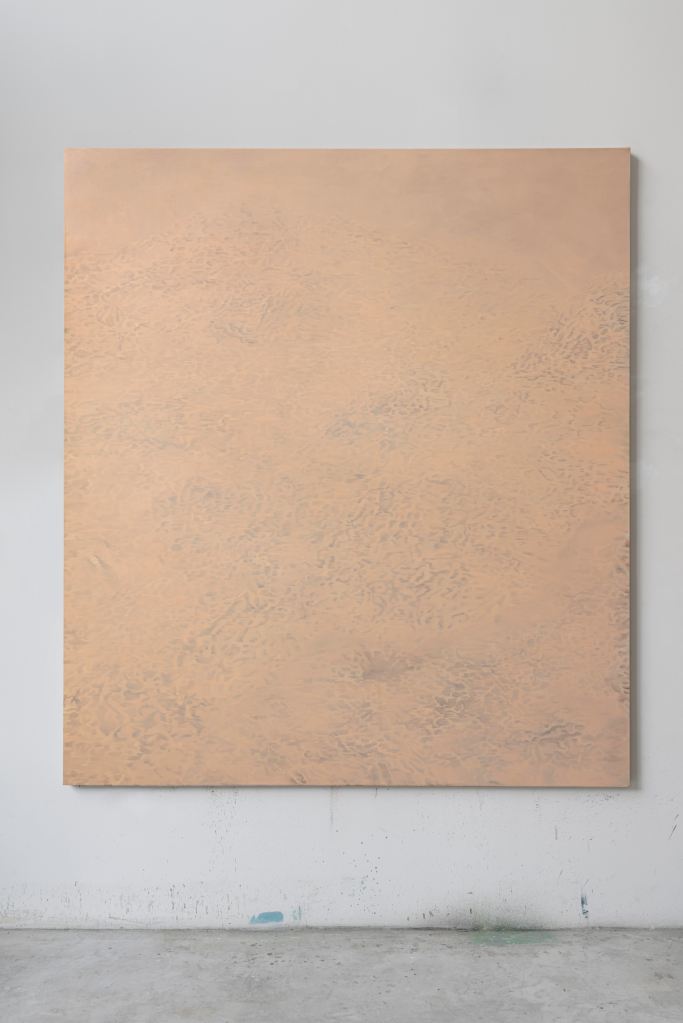
F.M.: Si, il progetto ALPINA afferisce proprio a quell’interferenza tra saperi: nasce dall’incontro con l’artista Barbara De Ponti. Mossi da una comune visione – per cui il dialogo con varie discipline scientifiche possa creare relazioni germinative – abbiamo collaborato e ideato Alpina. Il progetto è iniziato con il sorvolo e la spedizione al Ghiacciaio dei Forni, nell’Agosto 2021 presso il campo Glaciologico sotto la guida del professor Roberto Ambrosini, docente di Ecologia del Dipartimento di Scienze e Politiche Ambientali dell’Università degli studi di Milano; è approdato poi a Bologna presso la Galleria Otto Gallery e successivamente nel 2022 viene selezionato dalla commissione artistica internazionale del MuSe di Trento per la mostra We Are the Flood presso lo Spazio Archeologico Sotterraneo del Sas di Trento.
P.d’A.: Al di là delle ricadute espositive, operativamente che obiettivi si propone il progetto?
F.M.: Si propone di essere uno stimolo alla riflessione sull’impatto che l’uomo ha nei confronti degli esseri viventi e sulle loro strategie di adattamento.
E in ultima analisi vuole inscriversi in una più generale rilettura dell’antropocentrismo che da molto, troppo tempo, ha dominato la cultura, innanzitutto scientifica.
P.d’A.: Sul piano della pittura come procedi?
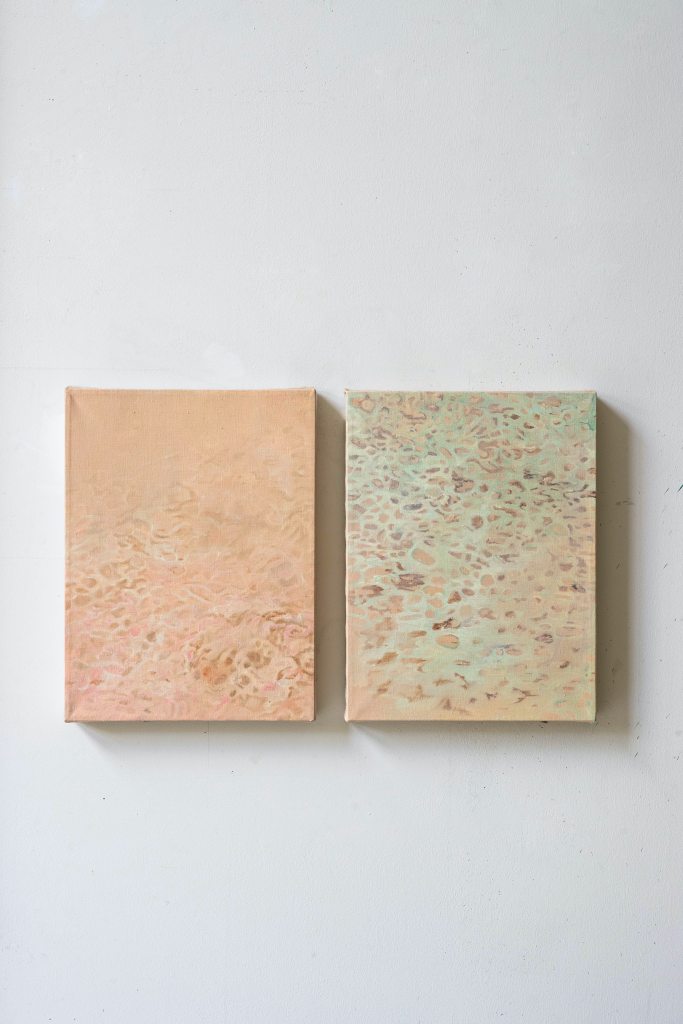
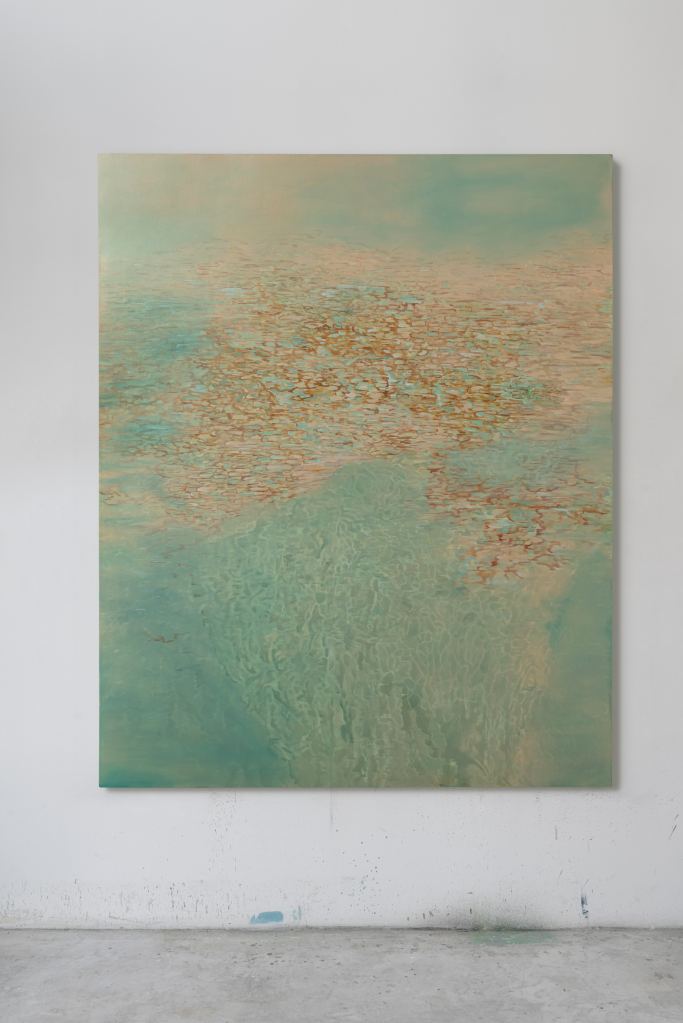
F.M.: Dipingendo ad olio su tela di lino, il lavoro di preparazione del supporto della tela per le sue caratteristiche di composizione richiede tempo che permette dunque di ragionare su come procedere ed eseguire le fasi successive.
P.d’A.: Quindi per ogni lavoro che realizzi fai degli approfondimenti specifici?
F.M.: Si, leggo in special modo testi che fanno da rimando coerentemente con ciò che ipotizzo dopo di dipingere…non è sempre detto però che quello che ho pensato di dipingere si palesi veramente sul supporto della tela…un continuo cambiamento di direzione dunque…
P.d’A.: Parti sempre da un’idea precisa o l’idea prende corpo col farsi del lavoro?
F.M.: Le opere che compongono la narrazione di un progetto condensano la dimensione materica e le suggestioni visive percepite da un luogo o da un accadimento vissuto o narrato.
Dunque, parto da un’idea che, in corso d’opera, non è mai quella che inizialmente avevo immaginato come accennato poco prima…
P.d’A.: È corretto parlare di un processo lavorativo?
F.M.: Direi fasi interconnesse in cui esistono legami inscindibili che compongono uno scenario personale per garantire un risultato ricercato.
P.d’A.: Che importanza ha il disegno nel tuo lavoro?
F.M.: il Disegno è correlato al lavoro pittorico ma non è propedeutico a esso.
Si sposta e viaggia come se avesse una sua identità che gli permette di vivere una vita a se stante atta a generare opere autonome.
P.d’A.: Che tipo di relazione cerchi di instaurare con chi si trova davanti al tuo lavoro?
F.M.: Si dice che Matisse abbia detto << quando un dipinto è finito è come un bambino appena nato. L’artista stesso ha bisogno di tempo per comprenderlo>>[1] Tale affermazione sottende, secondo la tesi del filosofo e pedagogista statunitense John Dewey che, l’opera d’arte vada accolta come si accoglie un neonato, per comprenderne il vero significato. Essa, una volta creata, ha innanzi a sè un suo processo di comprensione e di conclusione quando intercetta l’esperienza, seppur diversificata, di chi la guarda.
P.d’A.: Che cosa succede alle opere quando non c’è nessuno che le osserva, l’esistenza di un’opera d’arte può prescindere dalla presenza di un osservatore?
F.M.: Non credo ciò sia possibile. Le opere d’arte hanno, a mio modo di vedere, la necessità di andare al di là dei desideri del proprio creatore per diventare universali, per aspirare ad una critica dipendente dalla conoscenza e dalla sensibilità dello spettatore.
P.d’A.: D’artista dove ti poni nei confronti delle tue opere?
F.M.: Trovo salutare difendere il proprio operato lasciando libertà di interpretazione e giudizio di valore a chi, con un nuovo sguardo, continua a restituire all’opera, rinascita e durata nel tempo.
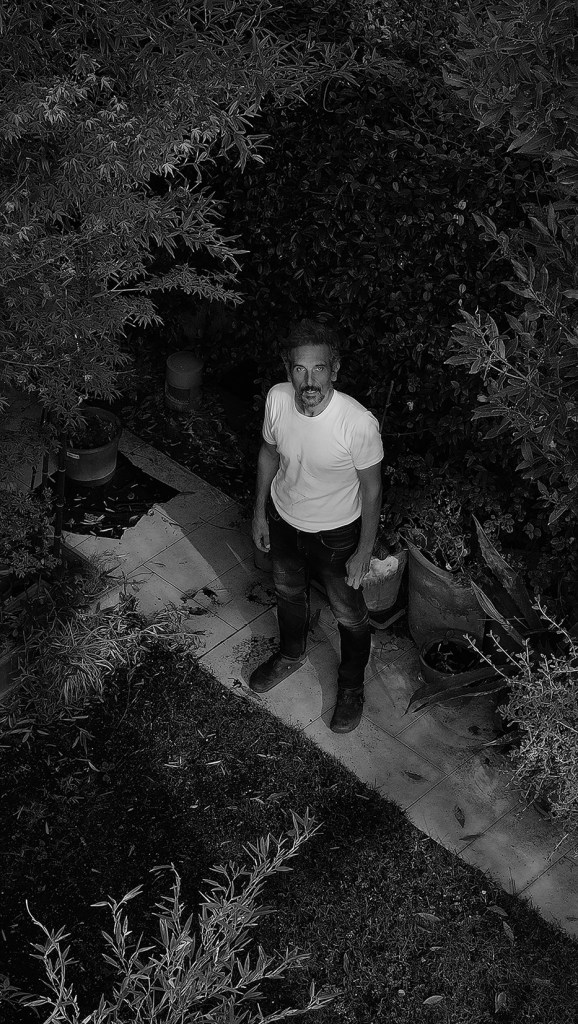
Fabio Marullo è un artista visivo. Dopo aver conseguito la laurea in Architettura, Storia e Conservazione dei Beni Culturali presso la Facoltà di Architettura, IUSA Reggio Calabria, è stato ammesso con borsa di studio al master di II livello in Progettazione e Produzione delle Arti Visive presso la Facoltà di Arti e Design, IUAV Venezia. Ha inoltre collaborato alla didattica per il laboratorio di Fotografia della Facoltà d’Architettura “Aldo Rossi”, Università di Bologna e della Facoltà di Arte e Design IUAV, Venezia. La sua pratica multidisciplinare con studi in ambito scientifico e collaborazioni con diverse professionalità in altri ambiti del sapere, è stata esposta in musei e istituzioni, tra le quali: Pittura Italiana oggi, Fondazione La Triennale di Milano (2023), Equorea (di mari, ghiacci, nuvole e altre acque ancora) Galleria Bulding di Milano (2023); Archaelogy alla Galleria Effearte di Milano (2015); The Wisdom of Light allo Spazio Plus P di Milano (2014); The Aid of a Leaf Enriches a Gem al Lab-Yit di Pechino (2012). Ha partecipato inoltre a numerose mostre collettive presso istituzioni pubbliche e private tra cui: We Are the Flood/ Noi siamo il diluvio allo S.A.S.S – Spazio Archeologico Sotterraneo del Sas di Trento (2022); Fabula Experita a Palazzo Serbelloni di Milano (2021); Tetraedro alla Otto Gallery di Bologna (2021); Ein Ausflug in Den Wald / Una gita nel bosco alla Haarmann Bloedow Haus di Berlino e al MAC – Museo d’Arte Contemporanea di Lissone (2015). Marullo ha partecipato alle residenze d’artista presso: CPH AIR – Copenhagen International Visiting Artist a Copenhagen (2015); VIR viafarini in-residence a Milano (2013); Red Gate Residency a Pechino (2012). È stato invitato inoltre come Visiting Lecturer dalle Università: IUAV di Venezia, IED di Milano, NABA di Milano, Royal Danish Academy of fine Art di Copenaghen.
English text
Artist interview Fabio Marullo
#paroladartista #intervistaartista #artistinterview #fabiomarullo
Parola d’Artista: For most artists, childhood represents the golden age when the first symptoms of a certain propensity to belong to the art world begin to appear. Was that the case for you too? Tell us
Fabio Marullo: Painting and its smells accompanied my childhood, but it was only around the age of twenty that I really became aware of it. There is a place, Noto Antica, where my family and I used to spend part of the summers that has left indelible memories in me. I spent a wonderful time here, among lush and unique plants, post-earthquake votive shrines, the Hermitage and the church of Santa Maria della Provvidenza: inside the stuccoes and paintings restored by Uncle Claudio and the insistent smell of turpentine, outside an overpowering and stimulating nature.
P.d.A.: What studies did you do, and what, if any, important encounters did you have in your formative years?
F.M.: Mine was not a canonical artistic education. I mean that after my studies in Architecture and History and Conservation of Architectural and Environmental Heritage at the Università degli studi ‘Mediterranea’ IUSA Reggio Calabria, I came to the IUAV – Faculty of Arts and Design – in Venice where I completed another part of my training. In the lagoon city I met several artists, living on momentary infatuations, but always keeping the dimension of knowledge and study as a reference.
P.d.A.: Who were these artists?
F.M.: Many, but among them I like to remember my experiences with Olafur Eliasson and his team, Rirkrit Tiravanija, GraziaToderi,Cesare Pietroiusti, Marepe, and the photographer Guido Guidi, whom I met again later in Cesena, his hometown, during my teaching experience at the ‘Aldo Rossi’ Faculty of Architecture.
P.d’A.: How has your work as an artist evolved over time?
F.M.: At the beginning of my career, being an active part of Guido Guidi’s Venetian collaborators, completely absorbed by that atmosphere, I felt the use of photography was more congenial. Gradually I moved away from it, responding to that call of painting so deeply rooted in me. In reality, I have only changed medium, remaining faithful to a gaze that has expanded and enriched itself over time with the contributions of specific knowledge in the scientific field.
My research is rooted in the fertile soil of science, in which I not only find sap for my gaze, but in which I immerse myself to participate in a larger ecosystem of interdependent thoughts. For each new work, I cannot disregard this involvement in a worldview of which I am first and foremost a part as a captivated and grateful observer. The words of the poet Chandra Livia Candiani render this thought perfectly when she writes: ‘Exercise in not knowing and wonder […] look around and let go of the concept of tree, road, sea house and look with a gaze that ignores the known.
G.L.: Is the Alpina project also to be read in this light? Can you talk about it?
F.M.: Yes, the ALPINA project relates precisely to that interference between knowledge: it was born out of a meeting with the artist Barbara De Ponti. Moved by a common vision – that dialogue with various scientific disciplines can create germinating relationships – we collaborated and conceived Alpina. The project began with an overflight and expedition to the Forni Glacier, in August 2021 at the Glaciological Field under the guidance of Professor Roberto Ambrosini, lecturer in Ecology at the Department of Environmental Sciences and Policies of the University of Milan; it then landed in Bologna at the Otto Gallery and was subsequently selected in 2022 by the international art commission of the MuSe in Trento for the exhibition We Are the Flood at the Sas Underground Archaeological Space in Trento.
P.d’A.: Beyond the exhibition effects, operationally what objectives does the project have in mind?
F.M.: It aims to be a stimulus for reflection on the impact that man has on living beings and their adaptation strategies.
And in the final analysis, it wants to be part of a more general reinterpretation of the anthropocentrism that has dominated culture, especially scientific culture, for a long, long time.
P.d’A.: In terms of painting, how do you proceed?
F.M.: When painting in oil on canvas, the work of preparing the canvas support due to its compositional characteristics takes time to reason about how to proceed and carry out the subsequent steps.
P.d’A.: So for each work you do, do you make specific in-depth studies?
F.M.: Yes, I especially read texts that act as a coherent reference to what I hypothesise I will paint afterwards… however, it is not always certain that what I thought I would paint will actually be revealed on the canvas support… a continuous change of direction, therefore…
P.d.A.: Do you always start from a precise idea or does the idea take shape as the work unfolds?
F.M.: The works that make up the narrative of a project condense the material dimension and visual suggestions perceived by a place or an event experienced or narrated.
So, I start from an idea that, in the course of the work, is never the one I had initially imagined as mentioned earlier…
P.d’A.: Is it correct to speak of a working process?
F.M.: I would say interconnected phases in which there are inseparable links that make up a personal scenario to guarantee a desired result.
P.d’A.: How important is drawing in your work?
F.M.: Drawing is related to pictorial work but is not preparatory to it. It moves and travels as if it had its own identity that allows it to live a life of its own capable of generating autonomous works.
P.d’A.: What kind of relationship do you try to establish with those who are in front of your work?
F.M.: It is said that Matisse said << when a painting is finished it is like a newborn child. The artist himself needs time to understand it>> This statement implies, according to the thesis of the American philosopher and pedagogue John Dewey, that a work of art should be welcomed as one welcomes a newborn child, in order to understand its true meaning. It, once created, has before it its own process of understanding and conclusion when it intercepts the experience, albeit diverse, of the beholder.
P.d’A.: What happens to works of art when there is no one there to observe them, can the existence of a work of art be independent of the presence of an observer?
F.M.: I do not think this is possible. Works of art have, in my view, the need to go beyond the wishes of their creator to become universal, to aspire to a criticism dependent on the knowledge and sensitivity of the viewer.
P.d’A.: Where do you stand as an artist in relation to your works?
F.M.: I find it healthy to defend one’s work, leaving freedom of interpretation and value judgement to those who, with a new look, continue to restore the work, rebirth and durability.
Fabio Marullo is a visual artist. After graduating in Architecture, History and Conservation of Cultural Heritage from the Faculty of Architecture, IUSA Reggio Calabria, he was admitted with a scholarship to the Master’s degree level in Design and Production of Visual Arts at the Faculty of Arts and Design, IUAV Venice. He has also collaborated in teaching for the Photography workshop at the Faculty of Architecture ‘Aldo Rossi’, University of Bologna and the Faculty of Art and Design IUAV, Venice.
His multidisciplinary practice with studies in science and collaborations with different professionals in other fields of knowledge, has been exhibited in museums and institutions including: Pittura Italiana oggi, Fondazione La Triennale di Milano (2023), Equorea (of seas, ice, clouds and other waters again) Galleria Bulding in Milan (2023); Archaelogy at Galleria Effearte in Milan (2015); The Wisdom of Light at Spazio Plus P in Milan (2014); The Aid of a Leaf Enriches a Gem at Lab-Yit in Beijing (2012). He has also participated in numerous group exhibitions at public and private institutions including: We Are the Flood/ Noi siamo il diluvio at S.A.S.S – Spazio Sas Subterranean Archaeological Space in Trento (2022); Fabula Experita at Palazzo Serbelloni in Milan (2021); Tetraedro at the Otto Gallery in Bologna (2021); Ein Ausflug in Den Wald / An Outing in the Woods at the Haarmann Bloedow Haus in Berlin and at the MAC – Museum of Contemporary Art in Lissone (2015). Marullo has participated in artist residencies at: CPH AIR – Copenhagen International Visiting Artist in Copenhagen (2015); VIR viafarini in-residence in Milan (2013); Red Gate Residency in Beijing (2012). He has also been invited as Visiting Lecturer by the Universities: IUAV of Venice, IED of Milan, NABA in Milan, Royal Danish Academy of fine Art in Copenhagen.
[1] Referenza non reperibile. La fonte potrebbe essere la viva voce del pittore incontrato dall’autore nel dicembre del 1930.