
Progetto Aurelia→SUD (▼Scoll down for English text)
#paroladartista #aureliasud #danielebacci #artistinterview #intervistaartista
Parola d’Artista: Ciao Daniele, come nasce questo lavoro che hai pensato per il progetto Aurelia→SUD?
Daniele Bacci: Ciao. Per prima cosa vorrei ringraziarti per la nuova opportunità che mi hai dato.
Il lavoro che ho pensato per l’installazione Aurelia→SUD affonda le sue radici in un progetto di vent’anni fa che realizzai in un una mia mostra personale. In quel caso adottai una scrittura in linguaggio Morse che si palesava attraverso una sequenza di colori. Le persone, entrando nello spazio, venivano inondate da luci intermittenti colorate che ripetevano in maniera ossessiva la parola “consuma”.
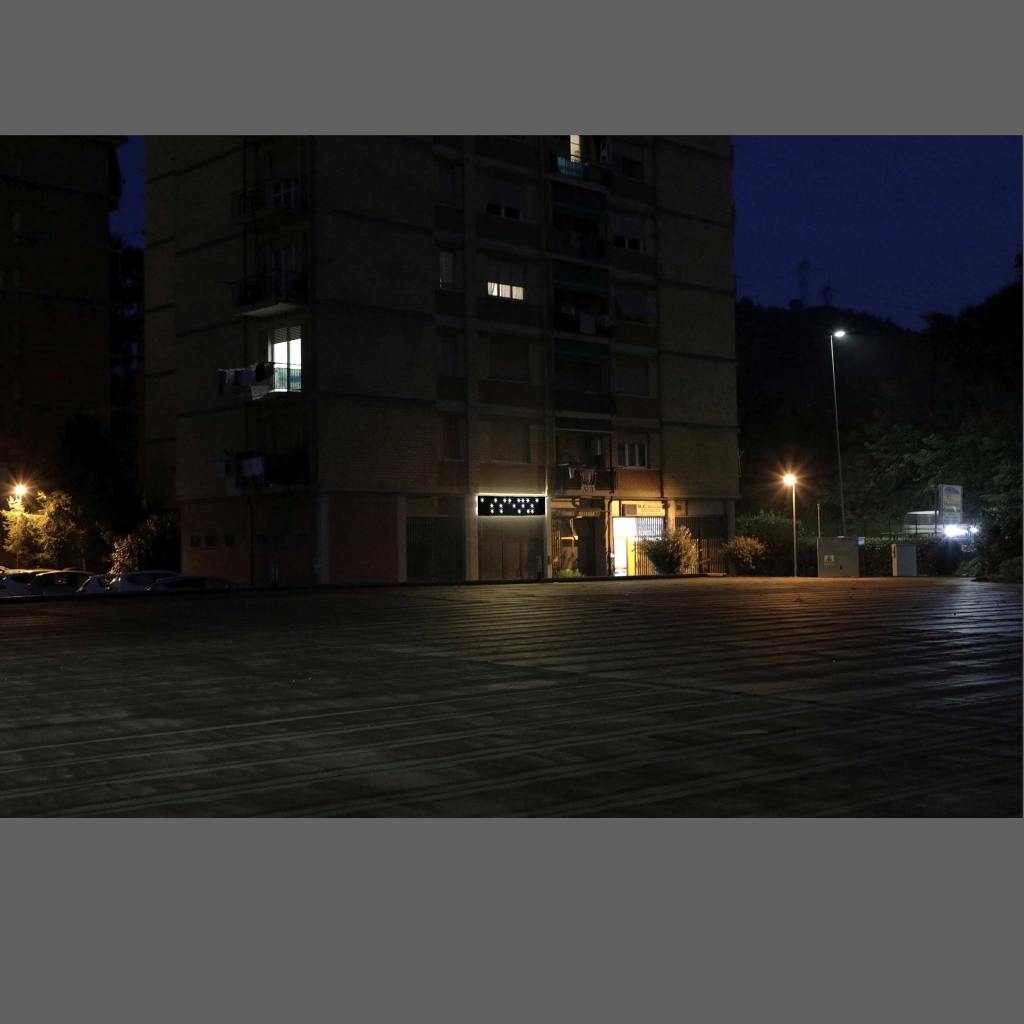
Per il progetto Aurelia→SUD ho immaginato una cosa simile. Per l’insegna del tuo studio ho però pensato di utilizzare la scrittura Braille.
Una scritta in Braille che però non può essere letta. Un’Assenza. ASSENZA come la parola che è scritta.
Dal momento che in questo ultimo periodo sto riflettendo sul tempo e lo spazio e particolarmente su quello personale; questo progetto germoglia da un pensiero intimo del tempo trascorso dalla perdita e dall’assenza di mio padre.
Poi, ho anche ricordato una citazione di Confucio sulle stelle che sono buchi nel cielo da cui filtra la luce dell’infinito. Mettendo insieme questi due stimoli e l’idea di una insegna, di una scritta che in qualche modo non lo fosse e creasse un cortocircuito, ho immaginato l’installazione: un cielo Blu di Prussia punteggiato di stelle.
Pd’A: L’idea delle stelle con 8 punte che origine ha e come questo progetto si inserisce nel tuo lavoro?
DB: L’immagine della stella a 8 punte è quella di Giotto alla Cappella Scrovegni a Padova. E’ un motivo classico nella rappresentazione degli astri nel cielo che ritroviamo anche precedentemente. Nel primissimo bozzetto le stelle erano quelle classiche a 5 punte: ma non funzionavano. C’erano troppi rimandi e non era quello che volevo. Ho quindi pensato all’altra, a quella ad 8 punte. Ho avuto conferma che fosse la scelta giusta in una discussione avvenuta poche ore dopo con la mia amica artista Silvia Papucci.
Credo che questo progetto si inserisca perfettamente nel mio lavoro perché riflette su tutte quelle tematiche che sono sempre state al centro della mia ricerca.
Pd’A: Ti è mai successo in precedenza di lavorare in una situazione come quella di Aurelia→SUD, dove il lavoro viene esposto alla mercé di inconsapevoli passanti che lo vedono dalla loro vettura per pochi istanti?
Credi che l’arte, presentata in contesti del genere, riesca a mantenere la sua forza di segno e ad essere letta nella sua complessità?
DB: Non mi è mai capitato di lavorare in una situazione del genere ed è anche per questo che quando me l’hai proposto ho subito accettato. Penso però che ogni qualvolta un lavoro concepito esca dallo studio ed è esposto, sia sempre messo di fronte alla mercé delle persone. Ci sono sempre dei rischi. Credo tuttavia che l’arte sia arte sempre; deve far scaturire delle domande; deve catturare l’attenzione, non con un senso di trovata bensì attivando delle riflessioni. Quindi credo che qualsiasi contesto sia adeguato.
English text
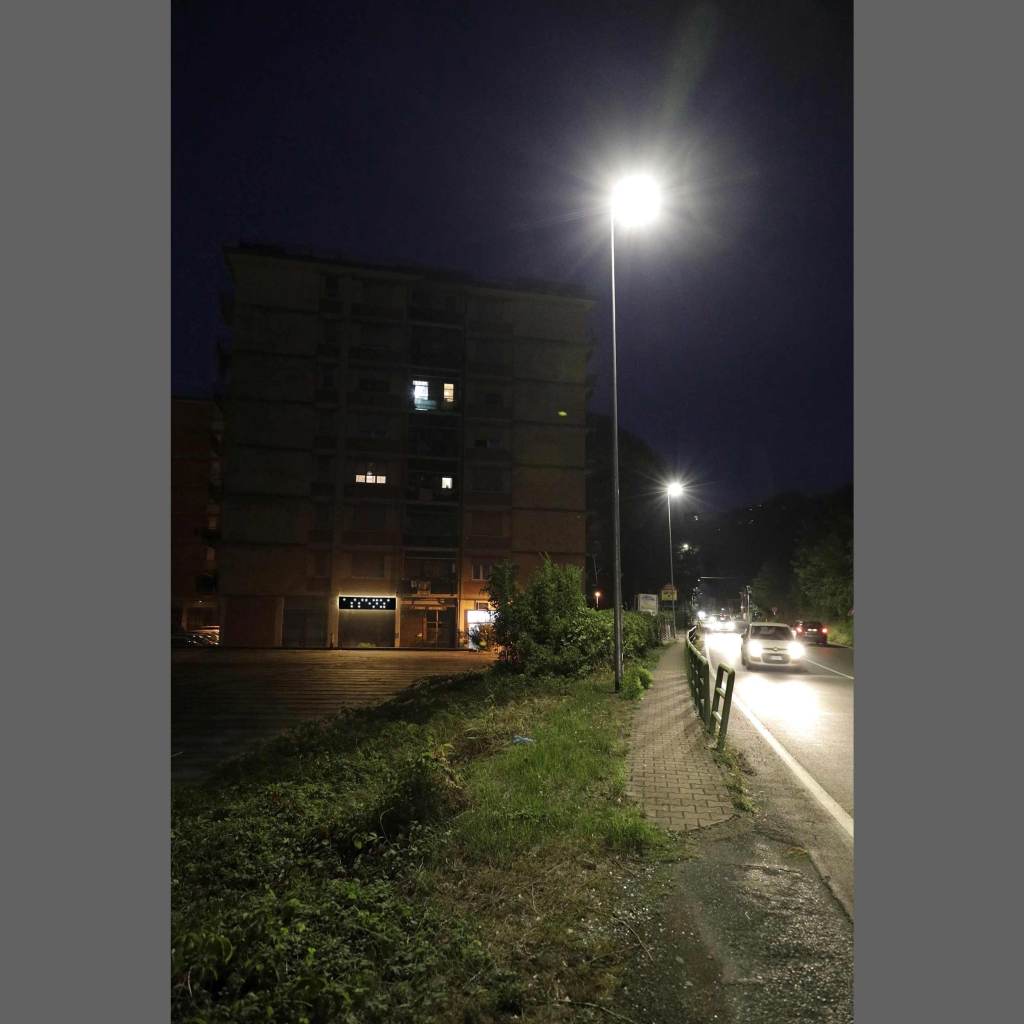
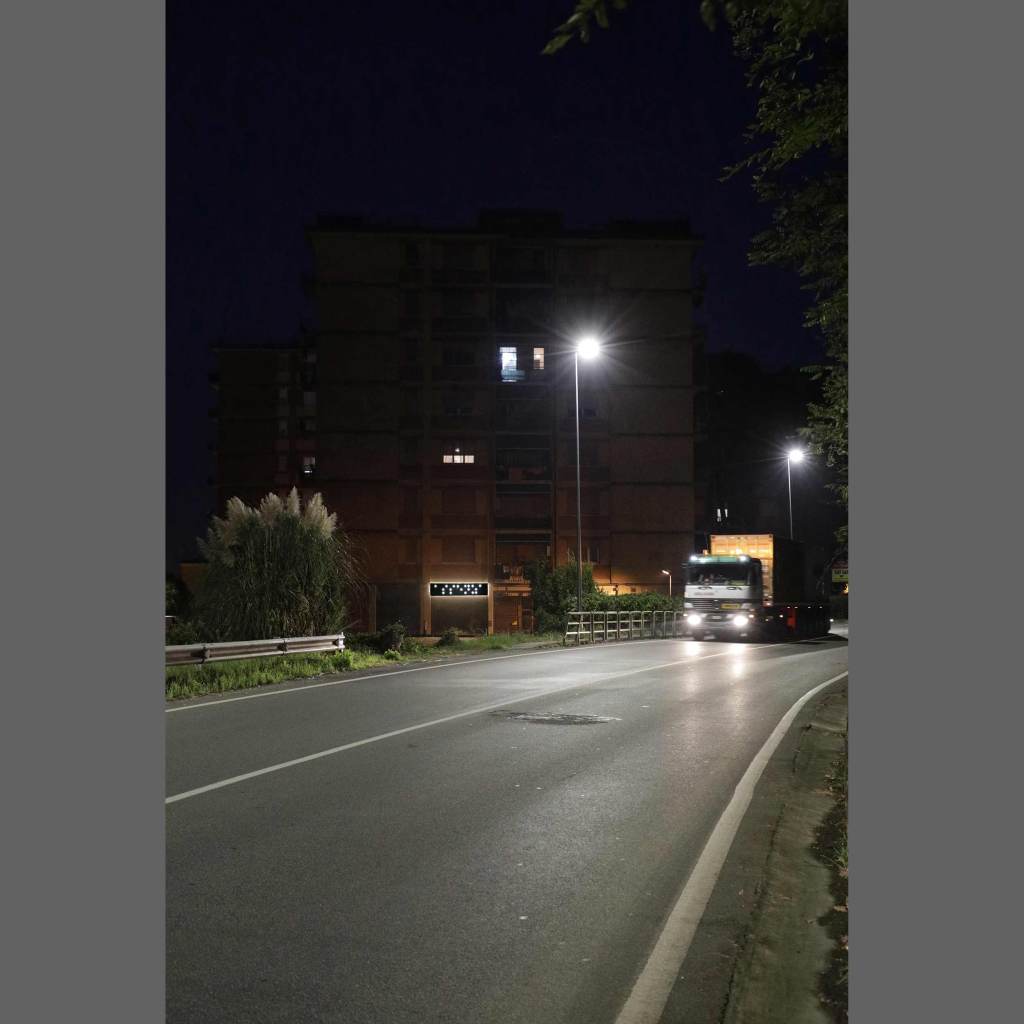
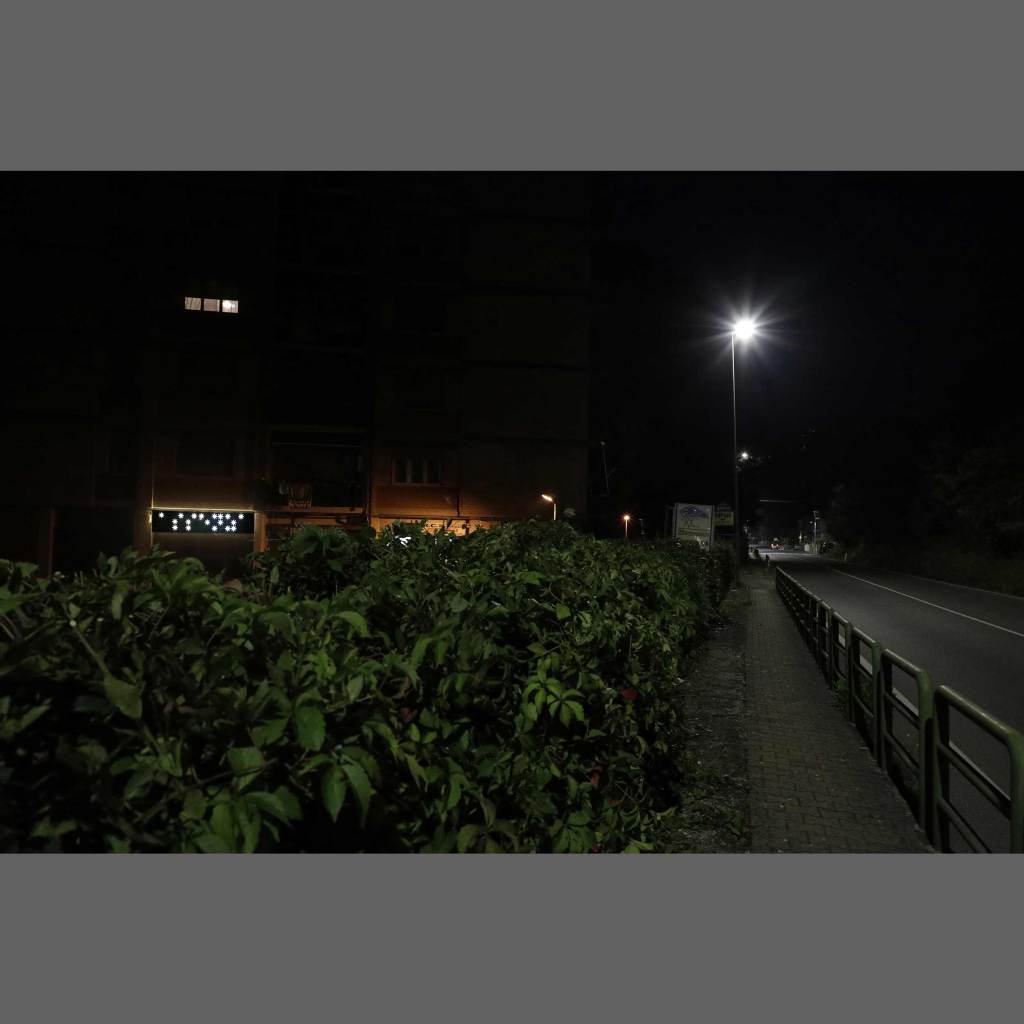
Daniele Bacci, La notte sperde le lontananze, 2025.
Progetto Aurelia→SUD
#paroladartista #aureliasud #danielebacci #artistinterview #intervistaartista
Parola d’Artista: Hi Daniele, how did you come up with this piece you designed for the Aurelia→SUD project?
Daniele Bacci: hi. First of all, I’d like to thank you for this new opportunity you’ve given me.
The work I designed for the Aurelia→SUD installation is rooted in a project I did twenty years ago for a solo exhibition. In that case, I used Morse code writing which was revealed through a sequence of colors. When people entered the space, they were flooded with intermittent colored lights that obsessively repeated the word “consuma” (consume).
For the Aurelia→SUD project, I imagined something similar. However, for the sign for your studio, I decided to use Braille writing. A Braille script that, however, cannot be read. An Absence. ABSENCE as the word that is written.
Since I’ve been reflecting on time and space lately, and especially on personal time, this project grew from an intimate thought about the time that has passed since the loss and absence of my father.
Then, I also remembered a quote from Confucius about stars being holes in the sky through which the light of infinity filters. By putting these two ideas together with the concept of a sign, of a script that in some way wasn’t one and created a short circuit, I imagined the installation: a Prussian blue sky dotted with stars.
Pd’A: What is the origin of the idea of the 8-pointed stars, and how does this project fit into your work?
DB: The image of the 8-pointed star is the one from Giotto at the Scrovegni Chapel in Padua. It’s a classic motif in the representation of celestial bodies in the sky that we also find from earlier periods. In the very first sketch, the stars were the classic 5-pointed ones, but they didn’t work. There were too many references, and that’s not what I wanted. So, I thought of the other one, the 8-pointed one. I had confirmation that it was the right choice in a discussion I had a few hours later with my artist friend Silvia Papucci.
I believe this project fits perfectly into my work because it reflects on all the themes that have always been at the heart of my research.
Pd’A: Have you ever worked in a situation like Aurelia→SUD before, where the work is exposed to unaware passers-by who see it from their car for only a few moments? Do you think art, presented in such contexts, can maintain its power as a sign and be read in its complexity?
DB: I’ve never had the chance to work in a situation like this before, which is also why I immediately accepted when you proposed it. However, I think that whenever a conceived work leaves the studio and is exhibited, it is always at the mercy of people. There are always risks. Nevertheless, I believe that art is always art; it must trigger questions; it must capture attention, not with a sense of novelty but by activating reflections. So, I think any context is appropriate.

 paroladartista.com