
(Scroll down for English text)
#paroladartista #matteonuti #intervistaartista #artistinterview
Parola d’Artista: Ciao Matteo che importanza ha nel tuo lavoro l’idea di paesaggio?
Matteo Nuti: Ciao, ho pensato al titolo Parola d’Artista, può essere una frase detta a garanzia di quanto affermato da un artista (dare la propria parola), ma anche semplicemente essere riconosciuta per quel che è, la parola detta da un artista. Le parole sono importanti, si dice che siano esse a formare il pensiero e non viceversa perciò cerco di limitarne alcune, tipo
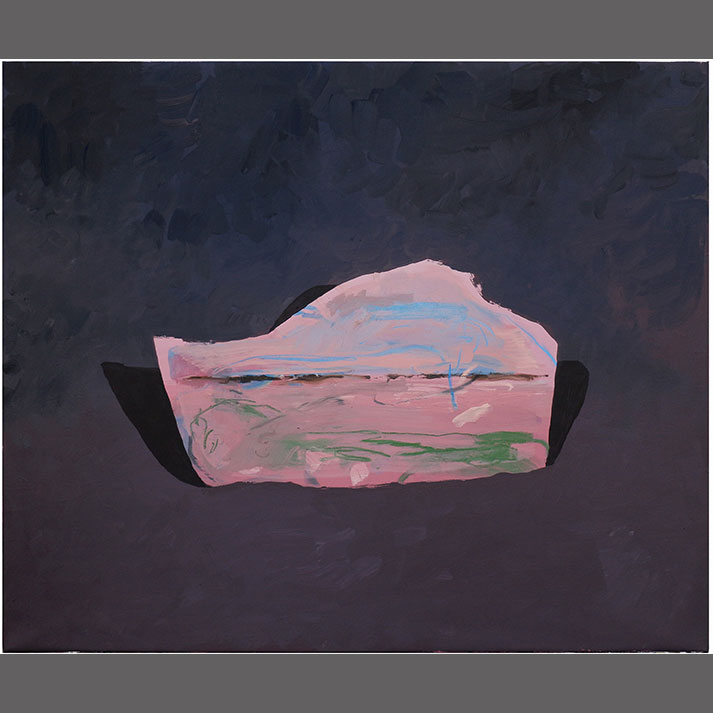
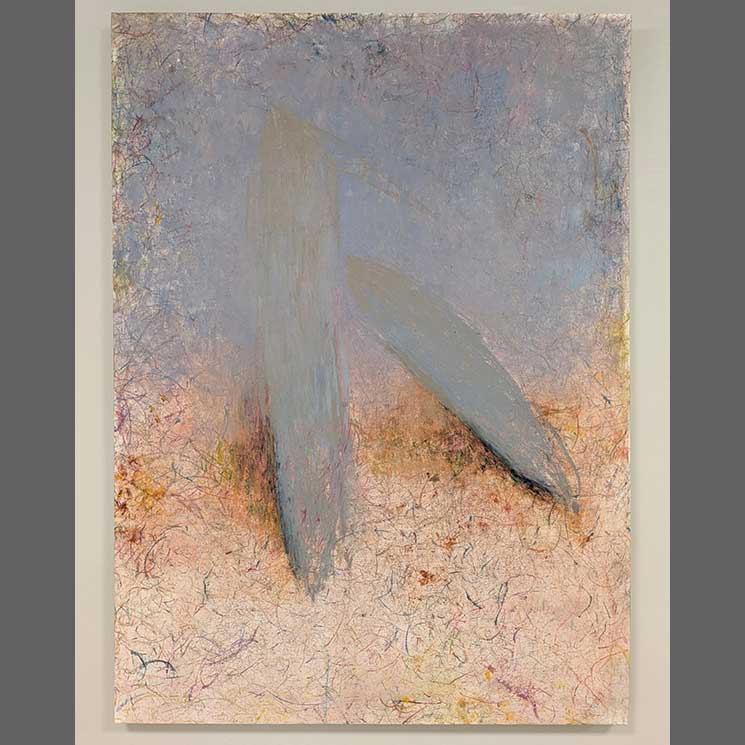
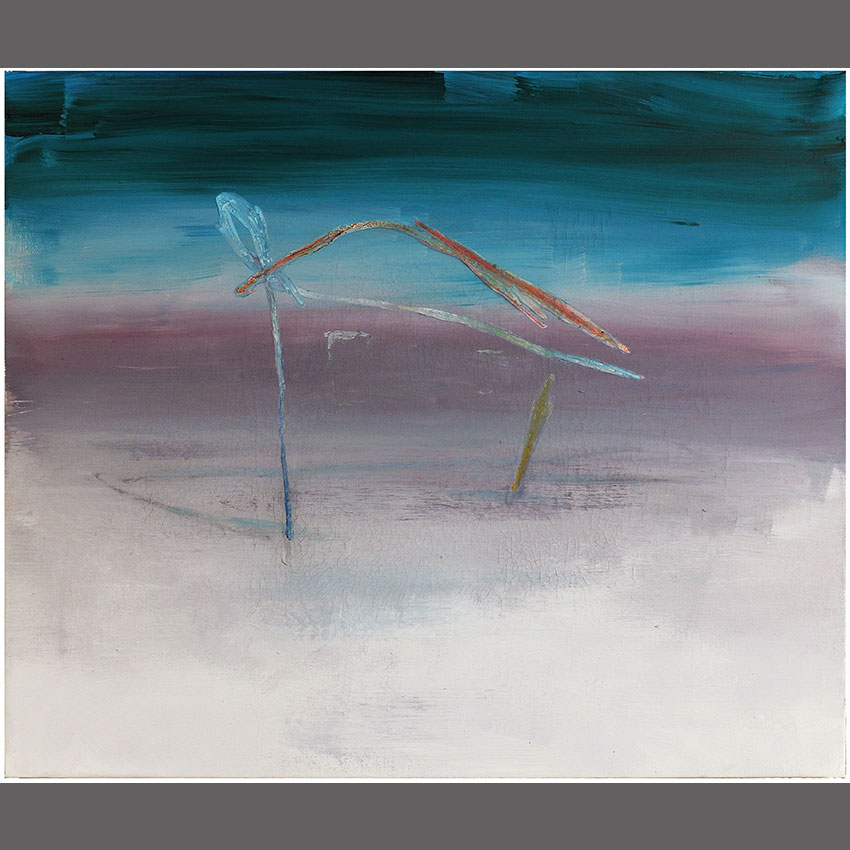
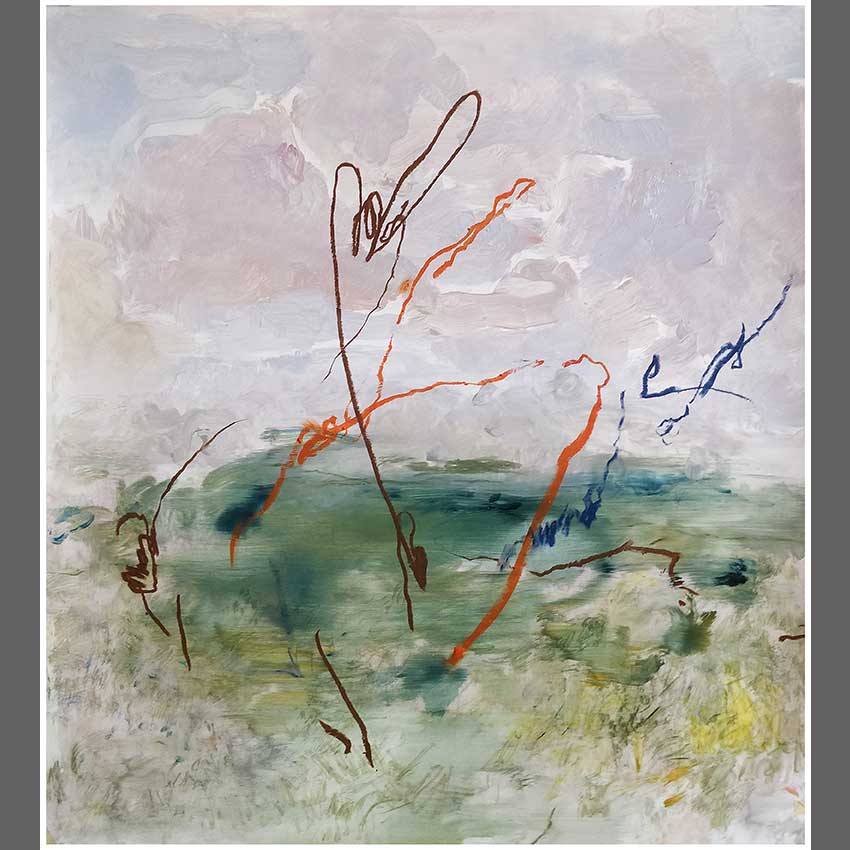
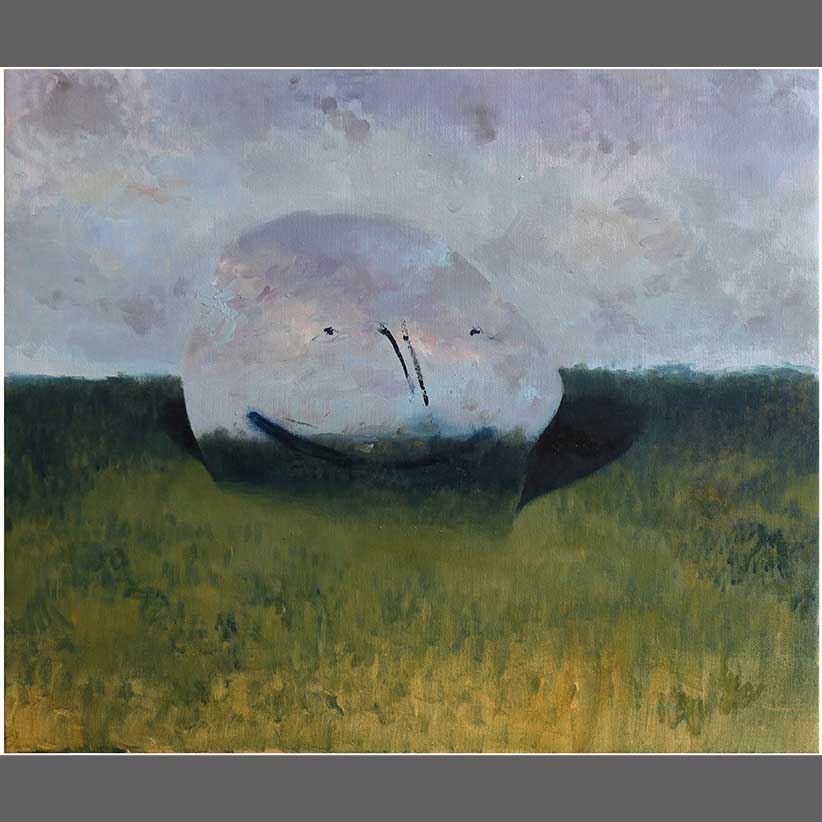
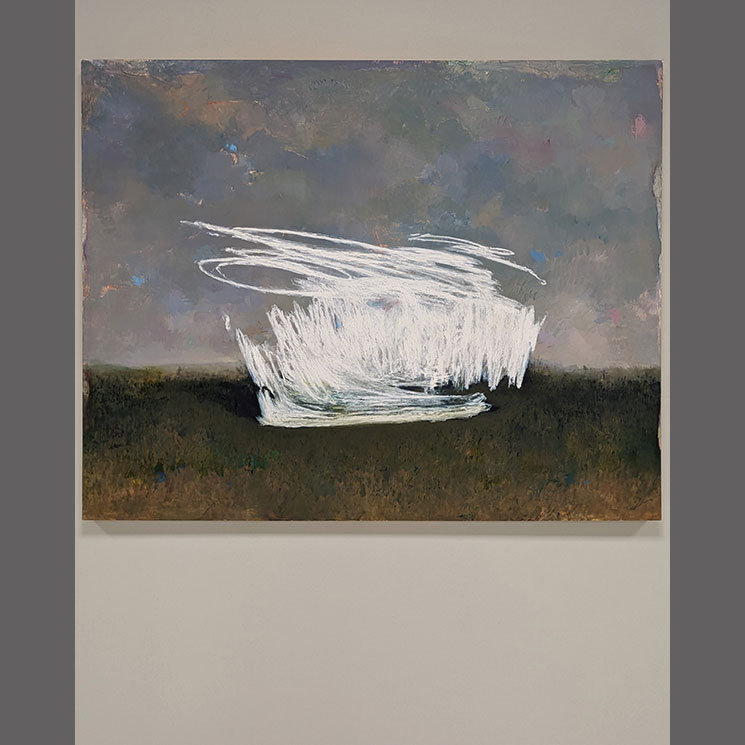
tutte quelle che abbiamo introdotto nell’uso comune e che hanno una connessione con il capitale (costa fatica…, ho speso tempo..,non conviene passare da là…,) raramente mi riferisco alla pittura come lavoro, in primis perchè questo ne evidenzia esclusivamente un aspetto, secondo perchè come detto in precedenza definendola tale ne limito il riverbero. Nella sua accezione il paesaggio è quella porzione di ambiente che viene circoscritto dalla vista, non possiamo vedere tutto perciò quello che rientra nel nostro campo visivo è il paesaggio. Può essere di varia natura, geografico, mentale, virtuale e via dicendo, il paesaggio è anche uno dei generi pittorici figurativi. L’aspetto che mi attrae di più è che si manifesta in presenza dei suoi limiti, che esiste solo in relazione con essi. Credo che ogni supporto sia un paesaggio, la tela per me lo è sempre, è il paesaggio in cui la pittura si manifesta, che accoglie ciò che accade in esso. A volte lo può rappresentare in maniera esplicita, altre no, ma è la natura della tela o del foglio o della tavola, quella di circoscrivere ciò che contiene e di metterla in relazione con quel che resta fuori dal suo perimento, sia esso l’osservatore o lo spazio in cui è inserito. Se è evidente riconoscere il valore del paesaggio nell’opera di Ghirri o Segantini, allo stesso modo lo trovo centrale in artisti come Giorgio Morandi o Thomas Bayrle, dal paesaggio come dai limiti non si prescinde.
Pd’A: Che idea hai della natura?
M.N.: Non ho un’idea della natura, non mi sono mai fatto un’idea dell’acqua, del sole, degli alberi o del respiro, di sicuro ho un rapporto esperienziale con la natura, è una connessione inevitabile. Vivo in una piccola casa di pietra in mezzo ad una collina di ulivi. Cammino nei boschi, faccio la potatura e in autunno la frangitura delle olive, vivere direttamente il rapporto con la terra mi fa sentire la giustezza del fare, toglie i dubbi di altre possibilità, la natura è così com’è e non potrebbe essere in un altro modo, per me è accettazione e sorpresa, una fatica che non stanca, ma rigenera.
Pd’A: Sei interessato alla dimensione del sacro?
M.N.: Ho simpatia per il 19° precetto del Dokkōdō “Rispetta gli dei, ma non fermarti a pregarli”.Certamente ho una dimensione del trascendente, ed alcuni aspetti dell’atto di
fede li ritrovo nella pittura, nelle arti e nella natura, l’intangibile è forse una delle forme più
alte di limite, sia nel suo rispetto che nel suo superamento, di nuovo siamo chiamati a scegliere dove stare. Freud definiva l’ombelico del sogno quella parte della psiche verso cui convergono tutte le componenti di una determinata sfera, ma che non potendo essere risolta, doveva restare celata. C’è bisogno dell’incomprensibile, tuttavia non ho un particolare rapporto con il sacro, anzi credo che tale definizione stabilisca una distanza che determina la passività di chi lo contempla.
Pd’A: Come nascono le immagini che dipingi?
M.N.: Ho un approccio eterogeneo, a volte può essere innescato da qualcosa che ho percepito in un dipinto fatto in precedenza, altre completamente svincolato da ogni causale. Inizio sempre dalla tela bianca senza avere immagini o idee già formulate, lascio andare la mano segnando e cancellando, finchè qualcosa inizia a prendere forma, un’epifania che si manifesta sulla tela. A volte mi ripeto delle domande, Perchè dipingo? o Che cosa sto facendo? come un mantra che mi aiuti a trascendere. Attivo un dispositivo, lo seguo e lo guido in alternanza.
Pd’A: Lavori a più dipinti simultaneamente o ti concentri su un quadro alla volta?
M.N.: Uno alla volta.
Pd’A: Lavori solo in studio o ti capita di lavorare anche in altri luoghi?
M.N.: Prevalentemente dipingo in studio, materialmente lì ho quasi tutto quello che mi serve e che negli anni si è stratificato, è un pò come dormire nel proprio letto, non è solo una questione pratica, nel tempo si stabilisce una specie di appartenenza. Certo mi capita anche di dipingere o disegnare in altri luoghi, nelle residenze ad esempio, la scorsa estate ho partecipato al Simposio di pittura alla Fondazione Lac o Le Mon, c’erano spazi comuni, ma ognuno
poteva scegliere il proprio posto dove allestire un intimo studio temporaneo. Quando riesco prendo parte agli incontri della Scuola di Santa Rosa di Luigi Presicce e Francesco Lauretta, mi piace disegnare nei bar fiorentini. Allo stesso modo frequento una classe di nudo a Pisa, così come mi piace andare a camminare nei boschi intorno casa, fermarmi e dipingere un acquerello en plain air. Per alcune mostre mi è capitato di realizzare dei progetti site specific, in quel caso le opere vengono realizzate in loco o comunque iniziate in studio e terminate lì.
Pd’A: Che importanza ha il disegno per te?
M.N.: Il disegno è fondamentale, per me è stato sicuramente il primo approccio e continua ad avere una presenza consistente in quello che faccio oggi. Ci sono tipi di pittura che possiamo definire pittura disegnata o disegni pitturati tanta è la connessione fra le due sfere che spesso tendono a fondersi. Molte delle forme o dei segni che traccio sulle mie tele sono dei veri e propri disegni, scarabocchi, mi piace quando il disegno viene dal polso ed un pochino meno dal palmo e dalle falangi. Guardo con ammirazione i bambini che scarabocchiando sul foglio, con totale sicurezza affermano che quei segni sono un ritratto della mamma o del papà. La mia ultima mostra presso Cittadella degli Archivi di Milano, curata da Rossella Farinotti e con la collaborazione della galleria Cardelli & Fontana, ha una presenza di disegni consistenti, tra cui Viva l’Italia antifascista un disegno su carta delle dimensioni di 4,50 per 2,70 metri.
Pd’A: Ti chiederei di entrare nel merito di quest’ultimo lavoro?
M.N.: La mostra in Cittadella degli Archivi fa parte del circuito I marmi della Scala, in quel contesto mi è stato chiesto di pensare ad un’opera che dialogasse con il Teatro della Scala. Ho immaginato quasi subito un disegno di grandi dimensioni che indagasse l’opera come corpo, come forma, come spazio occupato. I disegni si ispirano a vecchie planimetrie ed elementi architettonici, costumi di scena, un insieme di elementi che
portano con se una parte della storia della Scala, ed è proprio pensando alla sua storia recente che ho voluto ricordare la frase gridata dal loggionista durante la prima del 2023. Sono realizzati su più fogli che si sovrappongono fra essi, frammentandosi e componendosi nuovamente, per certi aspetti mi ricorda una quinta teatrale che circoscrive e decide cosa mandare in scena e cosa celare.
Pd’A: Quando allestisci una mostra sei interessato all’idea di messa in scena delle opere che presenti?
M.N.: No, non direi. Sto attento alla relazione tra le opere e l’ambiente nel senso di pieni e di vuoti, ma niente di più.
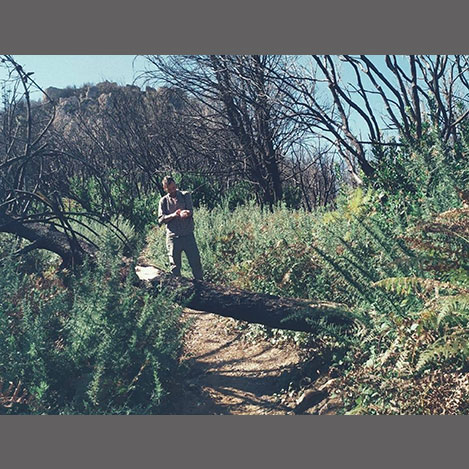
Matteo Nuti 1979, Bientina, Pisa.
Matteo è pittore autodidatta, dopo molti anni passati tra Milano e Roma, oggi vive e lavora nella campagna toscana . La sua pittura è un dispositivo di ricognizione del limite, inteso come spazio di occupazione. “La tela è il paesaggio dove la pittura si manifesta”. Negli anni il suo lavoro è stato promosso da: BJCEM Contemporary Art Museum Skopje, Family Business NY, Palais de Tokyo Paris, Macro Museo Roma, Museo del Tessuto Prato, Contemporary Art Museum Taizhou, Museo Marino Marini Firenze, Viafarini Milano.
Interview to Matteo Nuti
English text
#paroladartista #matteonuti #intervistaartista #artistinterview
Parola d’Artista: Hi Matteo what importance does the idea of landscape have in your work?
Matteo Nuti: Hi, I thought of the title Parola d’Artista, it can be a sentence said to guarantee what an artist says (give your word), but also simply be recognized for what it is, the word said by an artist. Words are important, they are said to form thought and not vice versa so I try to limit some of them, like all those that we have introduced into common usage and that have a connection to capital (it costs effort…, I spent time..,it is not worthwhile to go through there…,) I rarely refer to painting as work, first because this highlights exclusively one aspect of it, second because as mentioned earlier by defining it as such I limit its reverberation. In its meaning landscape is that portionof the environment that is circumscribed by sight, we cannot see everything so what falls within our field of vision is landscape. It can be of various nature, geographical, mental, virtual and so on, landscape is also one of the figurative pictorial genres. The aspect that attracts me most is that it manifests itself in the presence of its limitations, that it exists only in relation to them. I believe that every medium is a landscape, the canvas for me always is, it is the landscape in which painting manifests itself, which accommodates what happens in it. Sometimes it may represent it explicitly, sometimes it may not, but it is the nature of the canvas or sheet or panel to circumscribe what it contains and to relate it to what remains outside its perimento, be it the viewer or the space in which it is placed. If it is obvious to recognize the value of landscape in the work of Ghirri or Segantini, in the same way I find it central in artists like Giorgio Morandi or Thomas Bayrle, from landscape as well as from limits one does not prescind.
Pd’A: What is your idea of nature?
M.N.: I don’t have an idea of nature, I’ve never had an idea of water, sun, trees or breath, I certainly have an experiential relationship with nature, it’s an inevitable connection. I live in a small stone house in the middle of a hill of olive trees. I walk in the woods, do the pruning and in the fall the pressing of olives, directly experiencing the relationship with the earth makes me feel the rightness of doing, takes away the doubts of other possibilities, nature is the way it is and could not be any other way, for me it is acceptance and surprise, a toil that does not tire, but regenerates.
Pd’A: Are you interested in the dimension of the sacred?
M.N.: I have sympathy for the 19th precept of Dokkōdō “Respect the gods, but do not stop to pray to them”.Certainly I have a dimension of the transcendent, and some aspects of the act of faith I find in painting, the arts and nature.The intangible is perhaps one of the highest forms of limitation, both in its respect and in its overcoming, again we are called upon to choose where to stand. Freud defined the navel of the dream as that part of the psyche toward which all the components of a given sphere converge, but which, since it could not be resolved, had to remain concealed. There is a need for the incomprehensible, yet I have no particular relationship with the sacred, rather I believe that such a definition establishes a distance that determines the passivity of those who contemplate it.
Pd’A: How do the images you paint come about?
M.N.: I have a heterogeneous approach, sometimes it can be triggered by something I perceived in a painting I did previously, others completely untethered from any causality. I always start with the blank canvas without having images or ideas already formulated, I let my hand go by marking and erasing, until something begins to take shape, an epiphany that manifests itself on the canvas. Sometimes I repeat questions to myself, Why am I painting? or What am I doing? as a mantra to help me transcend. I activate a device, follow it and guide it in alternation.
Pd’A: Do you work on multiple paintings simultaneously or do you focus on one painting at a time?
M.N.: One at a time.
Pd’A: Do you work only in the studio or do you happen to work in other places as well?
M.N.: Predominantly I paint in the studio, materially I have almost everything there that I need and that has been layered over the years, it’s a bit like sleeping in your own bed, it’s not just a practical matter, over time you establish a kind of belonging. Of course I also happen to paint or draw in other places, in residences for example, last summer I participated in the Painting Symposium at the Lac o Le Mon Foundation, there were common spaces, but everyone
could choose their own place to set up an intimate temporary studio. When I can I take part in Luigi Presicce and Francesco Lauretta’s Scuola di Santa Rosa meetings, I like to draw in Florentine bars. Likewise I attend a nude class in Pisa, just as I like to go walking in the woods around the house, stop and paint a watercolor en plain air. For some exhibitions I happened to make site-specific projects, in which case the works are made on site or at least started in the studio and finished there.
Pd’A: How important is drawing to you?
M.N.: Drawing is fundamental, for me it was definitely the first approach and it continues to have a consistent presence in what I do today. There are types of painting that we can call drawn painting or painted drawings such is the connection between the two spheres that often tend to merge. Many of the shapes or marks I draw on my canvases are actual drawings, doodles, I like it when the drawing comes from the wrist and a little bit less from the palm and phalanges. I watch with admiration as children doodle on the paper, with total confidence claiming that those marks are a portrait of their mother or father. My latest exhibition at Cittadella degli Archivi in Milan, curated by Rossella Farinotti and with the collaboration of the Cardelli & Fontana gallery, has a consistent presence of drawings, including Viva l’Italia antifascista a drawing on paper measuring 4.50 by 2.70 meters.
Pd’A: Would I ask you to go into the merits of this latest work?
M.N.: The exhibition in the Cittadella degli Archivi is part of the I marmi della Scala circuit, and in that context I was asked to think of a work that would dialogue with the Teatro della Scala. I imagined almost immediately a large-scale drawing that would investigate the work as a body, as a form, as an occupied space. The drawings were inspired by old floor plans and architectural elements, stage costumes, a set of elements that carry with them a part of La Scala’s history, and it is precisely with its recent history in mind that I wanted to recall the phrase shouted by the loggionist during the 2023 premiere. They are made on several sheets that overlap each other, fragmenting and composing again, in some ways reminding me of a theatrical backdrop that circumscribes and decides what to send on stage and what to conceal.
Pd’A: When you set up an exhibition are you interested in the idea of staging the works you present?
M.N.: No, I wouldn’t say that. I pay attention to the relationship between the works and the environment in the sense of solids and voids, but nothing more.
Matteo Nuti 1979, Bientina, Pisa.
Matteo is a self-taught painter, after many years spent between Milan and Rome, he now lives and works in the Tuscan countryside . His painting is a device of reconnaissance of the limit, understood as a space of occupation. “The canvas is the landscape where painting manifests itself.” Over the years his work has been promoted by: BJCEM Contemporary Art Museum Skopje, Family Business NY, Palais de Tokyo Paris, Macro Museo Roma, Museo del Tessuto Prato, Contemporary Art Museum Taizhou, Museo Marino Marini Firenze, Viafarini Milano.
 paroladartista.com