
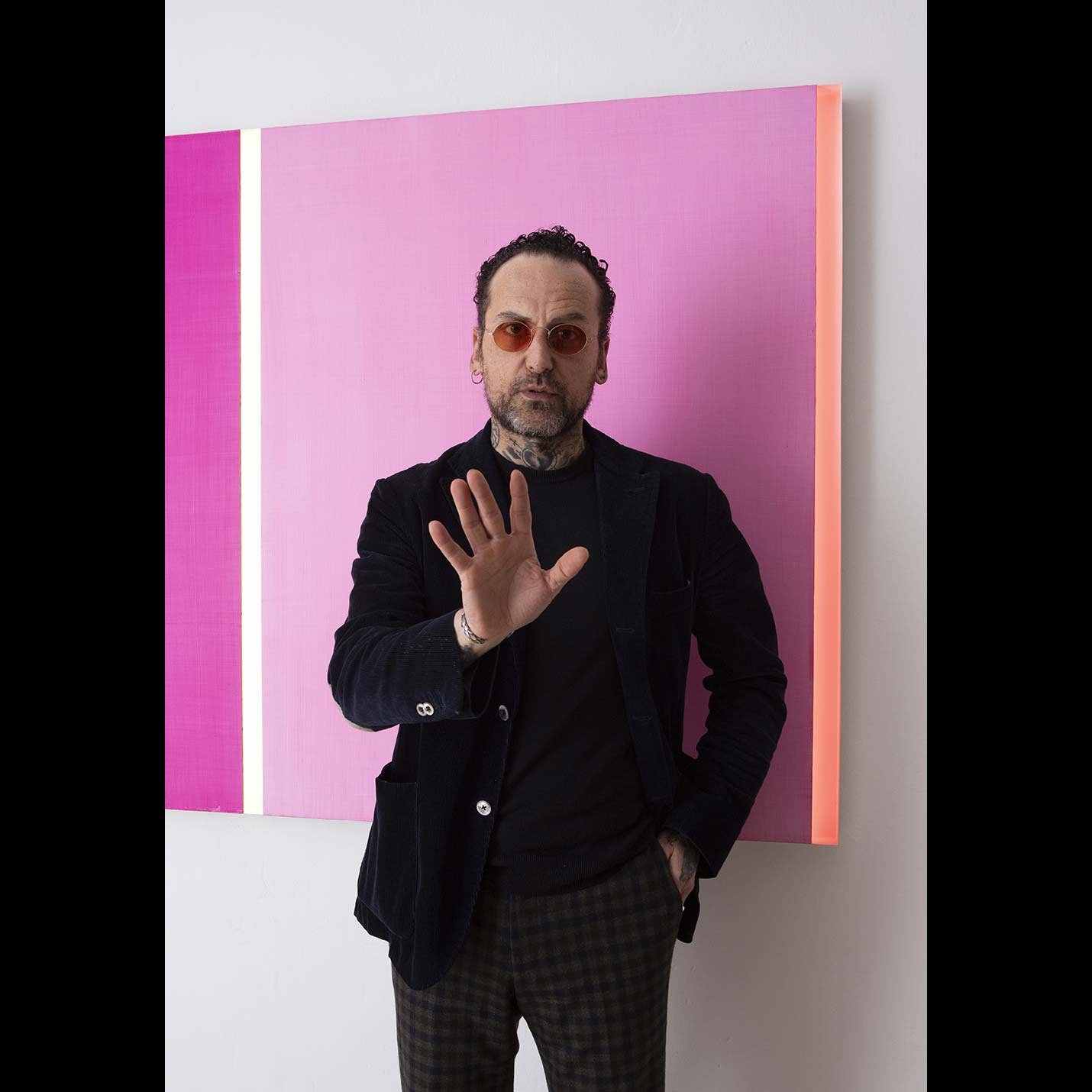
(▼Scroll down for English text)
#paroladartista #intervistagallerista #artgalleryinterview #giacomoguidi #contemporarycluster
Parola d’Artista: Quando è e perché hai iniziato ad interessarti d’arte?
Giacomo Guidi: Esattamente ormai 25 anni fa, quando io giovane diciassettenne, ho avuto l’onore e la fortuna, ovviamente bussando alla porta di alcuni artisti importanti che lavoravano nella mia città, Roma, fra cui: Fabio Mauri, Sergio Lombardo, Renato Mambo, Carla Accardi… iniziando così a frequentare i loro studi per molto tempo. Questa era per me la possibilità di vivere tramite le loro parole una Roma che non esisteva più, una Roma magica era un po’ sentirmi in connessione con quella parte di storia. Sicuramente poi la grande possibilità di viaggiare che avevo quando ero molto giovane ed ero un atleta, mi ha permesso di crearmi un gusto abbastanza internazionale sin rapidamente ed è stata sicuramente un’esperienza molto formativa.
Pd’A: Questi personaggi, li hai incontrati in che modo è stato un incontro casuale oppure è una cosa che è avvenuta?
G.G.: No io verso i 15/16 anni incominciavo a leggermi biografie, di artisti operanti a Roma. La cosa più facile poi era quella di chiamarli e chiedergli se in qualità di giovane studente avevano voglia di scambiare con me due parole sul loro lavoro e quello che la città rappresentava per loro.
Pd’A: Sono gli studi che ti hanno spinto verso un interesse per il mondo dell’arte, che studi facevi? E che cosa poi ti ha ti ha incuriosito di questo mondo? Oppure c’era un contesto in casa in cui in qualche modo queste cose circolavano?
G.G.: No, la mia famiglia non ha avuto mai una tradizione che proveniva dal mondo dell’arte.
Io trascorrevo fin da molto giovane molto tempo nei musei, andavo a vedere tanta arte. Eh che amavo sempre stare molto da solo e passare molto tempo a fare ricerca.
E poi questo mi ha dato il coraggio e la voglia diciamo di andare a trovare quelli che erano ancora gli artisti viventi che facevano parte di una storia e entrarci in contatto.
Pd’A: E questo chiaramente poi ti ha spinto, insomma, verso la parte contemporanea, questi artisti di cui mi hai fatto i nomi erano artisti intorno agli anni 2000 ormai ultra storici.
G.G.: Sì, esatto, però sono stati anche un po’ loro che mi hanno un po’ spinto a fare il lavoro che faccio, come lo faccio, soprattutto e sono stati anche loro che mi hanno fatto vedere figure che potevano essere interessanti per il lavoro di galleria e con cui strutturare un lavoro.
Pd’A: Quindi tu avevi un’idea, diciamo così, che ti muoveva a fare il gallerista sostanzialmente, oppure è qualcosa che è venuta fuori parlando con loro?
G.G.: Ma guarda, io non c’avevo mai pensato cioè Io ho fatto storia dell’arte filosofia, quindi figurati. Per me la galleria la vedevo come il modo per poter frequentare e stare nell’arte e starne dentro. Mi ha affascinato sempre questa possibilità della fase creativa, progettuale del dialogo con l’artista e dello spostamento dell’esperienza
Pd’A: Quindi sostanzialmente ti interessava creare un clima di comune condivisione in qualche modo, insomma, un modo per entrare più dentro le cose sostanzialmente sentirti parte di un mondo. Senti tu in quegli anni poi hai di fatto aperto una tua prima attività di galleria che appunto portava poi il tuo nome e che ha avuto un suo primo episodio a Roma, poi a Milano, insomma, diversi episodi e abbiamo detto diverse collaborazioni con parecchi artisti in quel momento.
G.G.: Sì, assolutamente sì.
Pd’A: E Contemporary Cluster in qualche modo si inserisce all’interno di questa c’è qualcosa c’è una sorta di svolta, ecco, rispetto a quello che avevi fatto in in precedenza?
G.G.: Allora io rappresentavo una anomalia fin dal principio. Avevo 23, 24, 25 anni e lavoravo già con artisti molto maturi. Questa è stata sempre vista come un po’ una forma anomala, no?
Perché c’era questa, un po’ banale, usanza locale che diceva che il gallerista giovane doveva parlare coi giovani Invece per me l’arte si basava innanzitutto, e continua a essere così anche ora, su una forma di apprendimento e di capacità e chiaramente c’è più da apprendere dalla vicinanza a un’esperienza superiore alla tua.
E quindi il fatto della vicinanza agli artisti con cui io avevo fin da subito avuto la fortuna di intrecciarmi e che mi hanno in qualche modo forgiato, mi ha dato un’esperienza gigante, immane.
Quindi Contemporary Cluster era è un atteggiamento che a un certo punto doveva essere necessariamente di rottura perché percepivo il concetto di galleria per come è sempre stato visto come troppo statico, troppo determinato, per cui non c’era più una fase creativa, progettuale ma era diventato esclusivamente un susseguirsi di nomi che ogni quattro settimane si avvicendavano in galleria senza quindi parlare più del concetto di galleria come luogo in cui si determinassero situazioni estetiche e fenomenologie, ma facendolo diventare un mero contenitore commerciale.
Cluster inizialmente è stato un tentativo molto squassante relativamente al concetto di Galleria. La prima fase di questa avventura è stata quella di allargare fortemente gli ambiti disciplinari, perché secondo me le gallerie erano sempre luoghi dove si riversavano elementi artistici provenienti da varie modalità rifacendomi all’idea di arte totale portata avanti dalla avanguardie quindi suono, design, architettura, moda… Un’apertura più ampia che chiaramente nel mondo dell’arte che di contemporaneo da un certo punto di vista aveva ben poco, veniva visto come una sorta di tradimento del concetto di galleria canonico, però a me questa cosa piaceva perché penso di aver sdoganato questo concetto in cui le gallerie hanno poi inizialmente, adesso lo vedi anche te facilmente, gallerie d’arte che si sono aperte al design e viceversa, alla musica, il live, il video, il DJ set, la sfilata…
Per me era più stimolante attivare forme di comunicazione diverse che cercare invece di pensare ad un pubblico diverso.
Poi chiaramente, come un po’ tutte quante le cose, quando ho visto che questa dinamica “Cluster” era diventata ormai omologata, giustamente ho sentito la necessità radicale di tornare a una forma di galleria molto severa sui linguaggi e sulla metodologia.
Pd’A: Con l’avvio della prima fase di Cluster hai cominciato a interessarti ad artisti di altre generazioni rispetto a quelli che avevi frequentato inizialmente.
G.G.: Assolutamente sì perché ho pensato che il nuovo corso di Cluster dovesse basarsi anche su un grosso scouting e progettazione con artisti giovani, contemporanei per dare comunque una ventata di freschezza a e di proposta. Cercando di far lavorare gli artisti giovani con un atteggiamento e una messa in opera progettuale e di come io invece ho sempre affrontato le mostre con i grandi maestri quindi esortandoli a una progettazione forte a lavorare sullo spazio per lo spazio, quindi iniziando a trasformare le esperienze fatte con i grandi in un’ atteggiamento da usare verso i più giovani.
Ora invece sto riinserendo una generazione per me fondamentale e fondativa perché per me non c’è più grande soddisfazione un po’ come il concetto di samurai di unire la vecchia via alla nuova via ricreando una galleria dove c’è un tessuto generazionale più ampio ma con delle affinità linguistiche lessicali e soprattutto di atteggiamento espressivo.
Pd’A: Quindi quando individui un artista che in qualche modo accendi il tuo interesse, le cose come vanno avanti?
G.G.: Innanzitutto io, diciamo, il giovane lo tengo sott’occhio un bel po’ di tempo, cioè cerco di osservarlo da una certa distanza per vedere la sua dinamica, il suo atteggiamento, il suo sviluppo.
Quando ritengo che abbia una, chiamiamola così, prima forma di maturità a quel punto intervengo. E manifesto un interesse nell’approfondire una possibilità progettuale. .
Pd’A: Qual è secondo te la differenza fra un gallerista e un mercante d’arte?
G.G.: Guarda c’è una differenza fondamentale. Il gallerista innanzitutto può essere anche mercante, ma il mercante non può essere galleria.
Il gallerista è tramite, è una persona che cerca di connettere il lavoro dell’artista all’interno di una dinamica di percezione visiva ambientale e dovrebbe poi determinare una volontà di acquisto.
Come diceva Luciano Pistoi, l’atto finale della critica è l’acquisto!
Quindi il mercante invece è un posizionatore. Il galerista può anche fare il mercante il mercante non può fare gallerista, il gallerista è secondo me anche quella una forma d’arte perché lavorare in forma di costante ricerca di costante progettualità intensa, vera, profonda, costante, quotidiana, metodologica, incessante è un esercizio anche intellettuale e fisico, psicologico abbastanza faticoso. Ogni artista è un mondo e ogni mostra per me deve avere un atteggiamento di posizionamento verso un qualcosa che fino a quel momento quell’artista non aveva fatto.
Pd’A: Ascolta, tornando in qualche modo alla domanda precedente, quella sugli sul rapporto con gli artisti, in un primo approccio, in un primo avvicinarsi al lavoro di qualcuno, i social hanno una qualche importanza, secondo te, oppure hanno altre finalità rispetto a quello che poi è il sistema?
G.G.: Allora, il social è uno strumento che rappresenta un’arma bifronte importante. I social in generale hanno fatto si che forse mai come in questo momento ci sia mai stata così tanta arte riversata su ogni forma di canale mediatico.
Il social ha determinato una velocità di assimilamento, ma allo stesso tempo di digestione e quindi anche di ipotetica combustione di un lavoro che prima non c’era, per esempio attraverso la creazione di epigoni. Il social accorcia anche le distanze perlomeno sul piano percettivo…
Ma come tutte le cose, purtroppo il 90% delle persone utilizza il social o per far vedere che è un artista o per creare un immaginario che poi fondano non esiste.
Sì, se fai dei bei quadretti e ti fai delle foto fatte bene, sponsorizzi la tua pagina con € 2000 settimana e vendi, cioè, ormai purtroppo è così.
Quindi il problema è che per un certo tipo di pubblico il social è una finalità.
Per me è uno strumento conoscitivo esplorativo. Sì, cioè, tu considera, ogni settimana mediamente ci sono almeno due tre fiere da qualche parte del mondo.
Eh Poi le fiere sono state talmente intelligenti che si sono anche cannibalizzate con se stesse, facendo anche tutte le azioni, appunto, online e social, così invece di aiutarti a portare pubblico lo tengono a distanza. Questo è comunque un momento in cui molti artisti potrebbero anche non avere bisogno più di una galleria per il motivo che ti dicevo sopra, Ho un bello studio, faccio delle belle foto, mi metto a fare la storiella che dipingo i quadri ci metto sopra 2000 dollari e viaggio.
Però ecco questo che viene definito come uno strumento di contemporaneità invece col contemporaneo non ha nulla a che fare questa fenomenologia dell’ estemporaneità più totale, è proprio fuori dal tempo perché non ha un passato, non ha una storia, cioè è un ex tempo completo, non è nulla partendo dal principio che per me il contemporaneo è ciò che è legato alla tradizione, alla storia, come diceva Sant Agostino il passato lo pensi dal presente, altrimenti non esisterebbe, quindi presente presente, presente passato e presente futuro.
E l’artista realmente contemporanea è quello che ha tracciato la tradizione. E il parvenu è una estemporaneità che alla velocità con cui è arrivato magari a costare dal nulla 50.000 € e 1000 gallerie fenomenali hanno speculato alla stessa velocità della luce sparisce. Cioè questo lavoro non è uno sprint, tutti pensano che siano i 100 m, invece è una maratona.
Pd’A: Quindi quello del gallerista è un mestiere complicato difficile…
G.G.: Si molto complicato…Io comunque ormai ho quasi 20 anni di galleria alle spalle e penso di aver fatto più di 120 mostre. Ho prodotto 35-40 libri e ho sviluppato, organizzato e progettato 35 mostre istituzionali.
Con un mio modo, con un mio atteggiamento che può essere o può non essere simpatico a tutti, ma per me la condizione del mio lavoro non è quella di essere simpatico, ma di essere bravo. I termini di valutazione di un lavoro devono essere necessariamente ed esclusivamente basati sulla qualità di quello che viene messo in atto, cioè il gallerista ha una grande responsabilità è quella di compiere, diciamo il miracolo di rendere visibile un’apparizione che per un preciso momento apparteneva solamente all’artista cioè, l’ artista giustamente nel suo studio o nel suo atelier crea l’opera, e il gallerista rende visibile l’epifania del tutto, cioè l’apparizione di tutto quello che è stato pensato dentro allo studio. Sono due fasi completamente diverse ma che hanno una magia incredibile.
Pd’A: Mi dicevi prima che hai organizzato diverse volte mostre in sedi istituzionali. Ricordo per esempio quella di Maurizio Donzelli a Palazzo Altemps di qualche anno fa. Ma eh è possibile ancora oggi creare sinergie fra pubblico e privato nell’arte contemporanea?
G.G.: Ma, quella, per esempio, per me è stato un motivo di grande soddisfazione, perché quella eh è stata la prima mostra d’arte contemporanea fatta a Palazzo Altemps. E secondo me, io lì fui folgorato da questa grande idea, di fare delle mostre che stimolassero un atteggiamento comparativo fra arte contemporanea e arte antica.
Oltre all’esperienza con Donzelli a Palazzo Altemps, io ho fatto una mostra strepitosa al Museo delle Navi di Nerni, al Museo di Palestrina e ho adesso in corso una mostra del Museo Diocesano di San Sinerino. tra arte contemporanea e arte antica, archeologia. Questo secondo me è meraviglioso. Sì, tratta sicuramente un terreno molto fertile.
Pd’A: Questa è ancora oggi una realtà possibile in qualche modo praticabile o è diventato tutto più difficile?
G.G.: Guarda, io mediamente di progetti “Out Cluster”, come vengono definiti da me, ne faccio mediamente uno due all’anno, continuo a cercare, ma devo dirti anche con molta fierezza inizio anche a essere cercato.
Per questa sensibilità che ormai si è un po’ profusa di questo atteggiamento progettuale che porta poi i riscontri soprattutto ai musei che vedono così un modo per essere un pò animati, di pubblico, di visione, di attenzione e di scoperta.
Pd’A: Ti volevo chiedere c’è un fenomeno, diciamo così, che esiste ormai da tanti anni che negli spazi indipendenti. Magari spesso e volentieri nati dal lavoro di alcuni artisti o dall’intraprendenza di alcuni curatori. È un fenomeno questo che segui in qualche modo che guardi?
G.G.: Allora, io ammiro sempre quando gli artisti hanno coraggio di mettersi insieme, per creare una loro coralità.
Certo che se tu pensi a livello filologico la motivazione per cui uno spazio nasce determinandosi indipendente è sicuramente una denuncia che fa perché non si sente annesso o attenzionato da un mondo di riferimento più canonico, no?
Allora, dici, io mi creo il mio. E questo è meraviglioso, perché è radicale, perché vuol dire fare sistema, perché vuol dire non piegarsi a delle regole e a delle determinazioni.
Il problema è che i fatti indipendenti dovrebbero durare di più perché purtroppo nascono indipendenti ma nell’arco di qualche anno finiscono velocemente invece pienamente intrappolati nel sistema da cui invece prima volevano essere indipendenti. Allora indipendente da cosa? Da un sistema?
Eh allora poi non puoi andare a lavorare se tu sei veramente un artista che lavora in un posto indipendente e credi in questa cosa non puoi andare a lavorare con una galleria commerciale che fa fiere, non puoi essere presente in una fiera se sei indipendente. E quindi se accetto questa cosa come un errore di gioventù. Però a Roma ha avuto una primavera meravigliosa, fatta di grandi tante esperienze come questa, penso a Spazio Mensa, penso a Postex che è ancora in essere per esempio che hanno creato un movimento, hanno creato visione, hanno creato un nuovo panorama. Eh Non è un caso che lo sviluppo degli spazi indipendenti è stata un post Covid, Perché chiaramente quella è fenomenologia del sociale e anche le persone che non hanno più potuto mettere il culo sull’aereo per farsi il bicchierino la fiera di Miami e far finta di essere dei collezionisti hanno dovuto necessariamente cominciare a girare in città e quindi finalmente dare attenzione a qualche cosa che se non ci fosse stata quella criticità non sarebbe minimamente salita agli onori della critica.
Quindi io non solo Spero che gli spazi indipendenti continuino a esserlo, ma che siano più indipendenti. Poi è chiaro a un certo punto affacciarsi verso il mercato, verso le dinamiche normali, ma mi piacerebbe vedere un muro un’architettura ideologica che riparte, ecco.
Pd’A: L’ultima domanda che volevo farti è secondo te oggi come oggi ha senso ancora parlare di sistema dell’arte inteso come lo si intendeva magari qualche anno fa?
G.G.: Ma allora, guarda.
Sto cercando di pesare le parole perché Partiamo dalla parola in sé io purtroppo sono di Scuola Lacaniana, quindi il sistema in teoria non è qualcosa che per definizione si autoriconosce.
Il sistema è un funzionamento che viene riconosciuto da un’osservazione dall’esterno. Ecco. Partendo da questo, io non ho mai sopportato questa spochia eh questo atteggiamento del autoproclamarsi sistema.
Perché quando tu ti autoproclami sistema, vuol dire che tu ti prendi un onore intellettuale eh di dire cosa è nel sistema e cosa non è nel Gran parte di ciò che si dichiara essere sistema non sa di che cosa appunto invece è l’antisistema.
Quindi quello che tu chiami sistema è un atteggiamento di crearsi dei piccoli stati di potere, di controllo delle cose. Per cui ci devono essere, diciamo, delle filiere che sono più autorizzate di altre. Sì. Una specie di prima linea.
Ma la prima linea già per me è un termine che c’è una storia e diciamo un qualcosa che mi riporta una quasi a una militanza che non esiste. Questo sistema dell’arte non ha più la militanza, ha la conformazione sistematica di un cliché di mercato ripetitivo.
La cultura è un’altra cosa. Se c’è un sistema, c’è un antisistema. Capito? Ma loro l’antisistema non sanno nemmeno che cos’è. Cioè quando Lino Ferretti diceva “Chi c’è c’è e chi non c’è non c’è, chi è stato è stato…” Era una chiarissima affermazione di presenza sul dire “Io sono qui, tu sei là”.
Il sistema dell’arte, quello che si definisce come tale, pensa solo che lui è là. Sì. Ma non ha un pensiero forte, è un atteggiamento propedeutico combustibile a un’idea di finanza.
English text
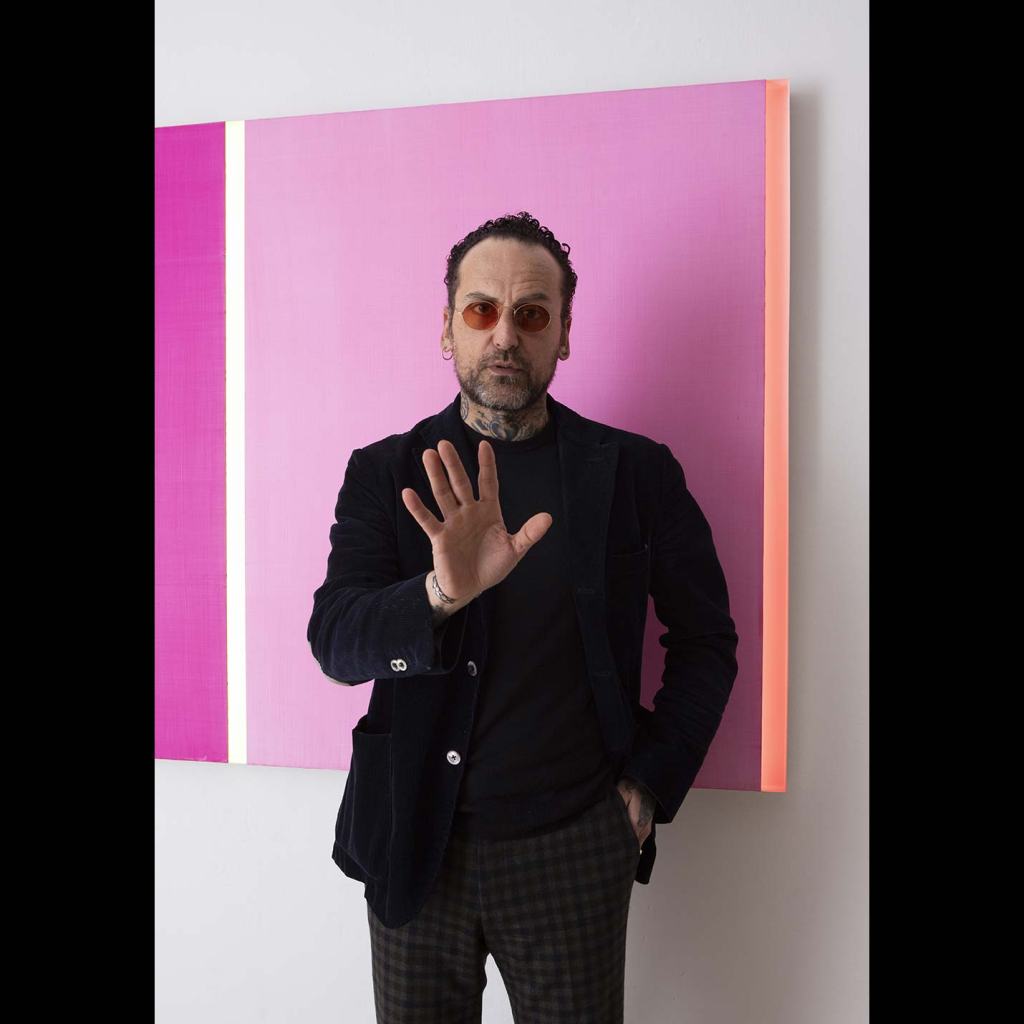
Intervista a Giacomo Guidi
#paroladartista #intervistagallerista #artgalleryinterview #giacomoguidi #contemporarycluster
Parola d’Artista: When did you start being interested in art and why?
Giacomo Guidi: Exactly 25 years ago now, when I was a young 17-year-old, I had the honour and the luck, obviously knocking on the door of some important artists who were working in my city, Rome, including: Fabio Mauri, Sergio Lombardo, Renato Mambo, Carla Accardi… thus starting to frequent their studios for a long time. This was for me the chance to experience through their words a Rome that no longer existed, a magical Rome was a bit of a connection with that part of history.part of history. Certainly then the great opportunity to travel that I had when I was very young and an athlete, allowed me to create a fairly international taste very quickly and it was definitely a very formative experience.
Pd’A: These characters, did you meet them in what way was it a chance encounter or was it something that happened?
G.G.: No, around 15/16 years old, I started reading biographies of artists working in Rome. The easiest thing was to call them and ask them if as a young student they wanted to talk to me, young student they wanted to have a word with me about their work and what the city represented for them, and what the city represented to them.
Pd’A: Did your studies push you towards an interest in the art world, what studies did you do? And what then made you curious about this world? Or was there a context at home in which these things somehow circulated?
G.G.: No, my family never had a tradition that came from the art world. From a very young age I spent a lot of time in museums, I went to see a lot of art. I always loved being alone a lot and spending a lot of time doing research.
And then that gave me the courage and the desire let’s say to go and find those who were still living artists who were part of a history and get in touch with them.
Pd’A: And this clearly then pushed you, in short, towards the contemporary part, these artists whose names you gave me were artists around the 2000s who were now ultra-historical.
G.G.: Yes, exactly, but it was also they who pushed me a little bit to do the work that I do, how I do it, above all, and it was also they who made me see figures that could be interesting for gallery work and with whom I could structure a work.
Pd’A: So did you have an idea, let’s say, that moved you to basically be a gallery owner, or was it something that came up talking to them?
G.G.: But look, I had never thought about it, that is, I did art history philosophy, so go figure. For me, I saw the gallery as the way to be in art and to be in it. I was always fascinated by this possibility of the creative, design phase of the dialogue with the artist and the displacement of experience
Pd’A: So basically you were interested in creating a climate of common sharing in some way, in short, a way to get more inside things basically feeling part of a world. Listen, in those years you actually opened your first gallery activity, which then bore your name and which had its first episode in Rome, then in Milan, in short, several episodes and we said several collaborations with several artists at that time.
G.G.: Yes, absolutely.
Pd’A: And Contemporary Cluster somehow fits into this is there something of a turning point, here, with respect to what you had done previously?
G.G.: So I was an anomaly right from the start. I was 23, 24, 25 years old and I was already working with very mature artists. This was always seen as a bit of an anomaly, wasn’t it?
Because there was this, somewhat banal, local custom that said that the young gallerist had to talk to the young Instead for me, art was based first and foremost, and continues to be so even now, on a form of learning and ability, and clearly there is more to learn from being close to an experience superior to your own.
And so the fact of the proximity to artists with whom I had been fortunate enough to intertwine from the very beginning and who somehow forged me, gave me a giant, immense experience.
So Contemporary Cluster was an attitude that at a certain point had to necessarily be a break, because I perceived the concept of the gallery as it had always been seen as too static, too determined, so that there was no longer a creative, planning phase but had become exclusively a succession of names that every four weeks came and went in the gallery without therefore talking any more about the concept of the gallery as a place in which aesthetic situations and phenomenologies were determined, but making it a mere commercial container.
Cluster was initially a very jaw-dropping attempt at the concept of the gallery. The first phase of this adventure was to strongly broaden the disciplinary spheres, because in my opinion galleries were always places where artistic elements from various modalities were poured in, referring me to the idea of total art brought forward by the avant-garde, so sound, design, architecture, fashion… A broader opening that clearly in the art world, which from a certain point of view had very little that was contemporary, was seen as a sort of betrayal of the canonical gallery concept, but I liked it because I think I cleared this concept in which the galleries then initially – you can easily see it now – opened up to design and vice versa, to music, live, video, DJ sets, fashion shows…
For me it was more stimulating to activate different forms of communication than to try to think of a different audience.
Then clearly, like all things, when I saw that this ‘Cluster’ dynamic had become homologated, I rightly felt the radical need to return to a very strict gallery form on languages and methodology.
Pd’A: With the start of the first phase of Cluster, you began to take an interest in artists from other generations than those you had initially been involved with.
G.G.: Absolutely yes, because I thought that the new course of Cluster should also be based on a great deal of scouting and design with young, contemporary artists to give a breath of fresh air to and proposal. Trying to get young artists to work with an attitude and a design approach and how I have always approached exhibitions with the great masters, therefore urging them to design strongly, to work on space for space, therefore starting to transform the experiences made with the greats into an attitude to be used towards the youngest.
Now instead I am re-introducing a generation that for me is fundamental and foundational because for me there is no longer any great satisfaction a bit like the samurai concept of joining the old way to the new way by recreating a gallery where there is a broader generational fabric but with linguistic lexical affinities and above all expressive attitude.
Pd’A: So when you find an artist that somehow sparks your interest, how do things move forward?
G.G.: First of all, I, let’s say, keep an eye on the young person for quite some time, that is, I try to observe them from a certain distance to see their dynamic, their attitude, their development. When I feel that I have a, let’s call it, first form of maturity at that point I intervene. And I express an interest in exploring a design possibility. .
Pd’A: What do you think is the difference between a gallery owner and an art dealer?
G.G.: Look there is a fundamental difference. First of all, the gallery owner can also be a dealer, but the dealer cannot be a gallery.
The art dealer is an intermediary, a person who tries to connect the artist’s work within a dynamic of environmental visual perception and should then determine a will to buy.
As Luciano Pistoi said, the final act of criticism is purchase!
So the dealer, on the other hand, is a positioner. The gallerist can also be a merchant the merchant cannot be a gallerist, the gallerist is in my opinion also a form of art because working in the form of constant research of intense, true, profound, constant, daily, methodological, incessant planning is also a fairly tiring intellectual and physical, psychological exercise. Every artist is a world, and every exhibition for me has to have a positioning attitude towards something that until that moment that artist had not done.
Pd’A: Listen, going back somewhat to the previous question, the one about the relationship with artists, in a first approach, in a first approach to someone’s work, do social networks have any importance, in your opinion, or do they have other purposes compared to what is then the system?
G.G.: So, social is a tool that represents an important two-faced weapon. Social in general has meant that perhaps never before has there been so much art poured into every form of media channel.
Social has brought about a speed of assimilation, but at the same time of digestion and therefore also of hypothetical combustion of work that was not there before, for example through the creation of epigones. Social also shortens distances at least on a perceptual level….
But like all things, unfortunately 90 per cent of people use social either to show that they are artists or to create an imagery that then fundamentally does not exist.
Yes, if you make pretty pictures and you take good pictures, you sponsor your page with €2000 a week and you sell, I mean, that’s how it is now unfortunately.
So the problem is that for a certain type of audience, social is a purpose.
For me it’s an exploratory cognitive tool. Yes, I mean, you consider, every week on average there are at least two three fairs somewhere in the world.
Eh Then the fairs have been so clever that they have also cannibalised themselves, doing all the online and social actions as well, so instead of helping you bring an audience they keep it at a distance. This is however a time when many artists might not even need a gallery anymore for the reason I mentioned above, I have a nice studio, I take nice pictures, I do the little story that I paint pictures I put $2000 on it and I travel.
But this, which is defined as an instrument of contemporaneity, has nothing to do with the contemporary, this phenomenology of total extemporaneity, it is really out of time because it has no past, it has no history, that is, it is a complete ex-times, it is nothing, starting from the principle that for me the contemporary is what is tied to tradition, to history, as St. Augustine said, the past you think of from the present, otherwise it would not exist, therefore present present, present past and present future.
And the truly contemporary artist is the one who has traced the tradition. And the parvenu is an extemporaneous artist who at the speed with which he has come to cost perhaps €50,000 out of nothing and 1,000 phenomenal galleries have speculated at the speed of light disappears. That is, this work is not a sprint, everyone thinks it’s 100 m, instead it’s a marathon.
Pd’A: So the job of the gallery owner is a complicated one, difficult…
G.G.: Yes very complicated…I however now have almost 20 years of gallery work behind me and I think I have done more than 120 exhibitions. I have produced 35-40 books and developed, organised and designed 35 institutional exhibitions.
With my own way, with my own attitude that may or may not be liked by everyone, but for me the condition of my work is not to be liked, but to be good. The terms of evaluation of a work must necessarily and exclusively be based on the quality of what is put into practice, that is, the art dealer has a great responsibility is to perform, let’s say the miracle of making visible an apparition that for a precise moment belonged only to the artist, that is, the artist rightly in his studio or atelier creates the work, and the art dealer makes visible the epiphany of the whole, that is, the apparition of everything that was thought up inside the studio. They are two completely different phases, but they have an incredible magic.
Pd’A: You told me earlier that you have organised exhibitions in institutional venues several times. I remember, for example, the one by Maurizio Donzelli at Palazzo Altemps a few years ago. But eh is it still possible today to create synergies between public and private in contemporary art?
G.G.: But, that, for example, was a source of great satisfaction for me, because that eh was the first contemporary art exhibition done at Palazzo Altemps. And in my opinion, I was thunderstruck there by this great idea, to do exhibitions that stimulated a comparative attitude between contemporary art and ancient art.
In addition to the experience with Donzelli at Palazzo Altemps, I did an amazing exhibition at the Museo delle Navi di Nerni, at the Museo di Palestrina, and I now have an exhibition at the Museo Diocesano di San Sinerino. between contemporary art and ancient art, archaeology. This I think is wonderful. Yes, it is certainly very fertile ground.
Pd’A: Is this still somehow a viable reality today or has it become more difficult?
G.G.: Look, on average I do one or two ‘Out Cluster’ projects, as I call them, a year, I keep looking, but I have to tell you with great pride I am also starting to be looked for.
Because of this sensibility that is now somewhat profuse of this project attitude that then brings feedback especially to museums, which thus see a way to be a bit animated, of public, of vision, of attention and discovery.
Pd’A: I wanted to ask you about a phenomenon, let’s say, that has existed for many years now in independent spaces. Perhaps often born out of the work of some artists or the initiative of some curators. Is this a phenomenon that you follow in some way?
G.G.: Well, I always admire when artists have the courage to get together, to create their own chorus.
Of course, if you think on a philological level, the reason why a space comes into being by determining itself to be independent is surely a complaint it makes because it does not feel annexed or attentive by a more canonical world of reference, no?
So, you say, I create my own. And this is wonderful, because it is radical, because it means making a system, because it means not bending to rules and determinations.
The problem is that independent facts should last longer because unfortunately they are born independent but within a few years they quickly end up instead fully trapped in the system from which they previously wanted to be independent. Independent from what then? From a system?
Eh then you cannot go to work if you are really an artist working in an independent place and you believe in this thing you cannot go to work with a commercial gallery that does fairs, you cannot be in a fair if you are independent. And so if I accept that as a youthful mistake. But Rome has had a wonderful springtime, made up of great experiences like this, I think of Spazio Mensa, I think of Postex, which is still in existence for example, which created a movement, created vision, created a new panorama. Eh It’s no coincidence that the development of independent spaces has been a post Covid, Because clearly that’s phenomenology of the social and also the people who could no longer put their asses on the plane to get the shot of the Miami fair and pretend to be collectors necessarily had to start going around the city and then finally give attention to something that if there hadn’t been that criticality would not have risen to the honours of the critics.
So I not only hope that independent spaces continue to be independent, but that they are more independent. Then it’s clear at a certain point to look towards the market, towards the normal dynamics, but I’d like to see a wall an ideological architecture that starts again, that’s it.
Pd’A: The last question I wanted to ask you is, in your opinion, does it still make sense today to talk about the art system as it was understood perhaps a few years ago?
G.G.: But then, look.
I am trying to weigh the words because we start from the word itself I am unfortunately of the Lacanian School, so the system in theory is not something that by definition is self-recognising.
The system is a functioning that is recognised by an observation from outside. Here. Starting from this, I have never put up with this spochia eh this attitude of the self-proclaimed system.
Because when you proclaim yourself a system, it means that you take the intellectual honour of saying what is in the system and what is not in the system.
So what you call a system is an attitude of creating small states of power, of controlling things. So there must be, let’s say, some chains that are more empowered than others. Yes. A kind of front line.
But the front line already for me is a term that there is a history and let’s say something that brings me back almost to a militancy that does not exist. This art system no longer has militancy, it has the systematic conformation of a repetitive market cliché. Culture is something else. If there is a system, there is an anti-system. Understand? But they don’t even know what the anti-system is. That is, when Lino Ferretti said ‘Chi c’è c’è e chi non c’è non c’è, chi è stato è stato…’ It was a very clear statement of presence about saying ‘I am here, you are there’.
The art system, the one that defines itself as such, only thinks that he is there. Yes. But it does not have a strong thought, it is a combustible propaedeutic attitude to an idea of finance.
 paroladartista.com