
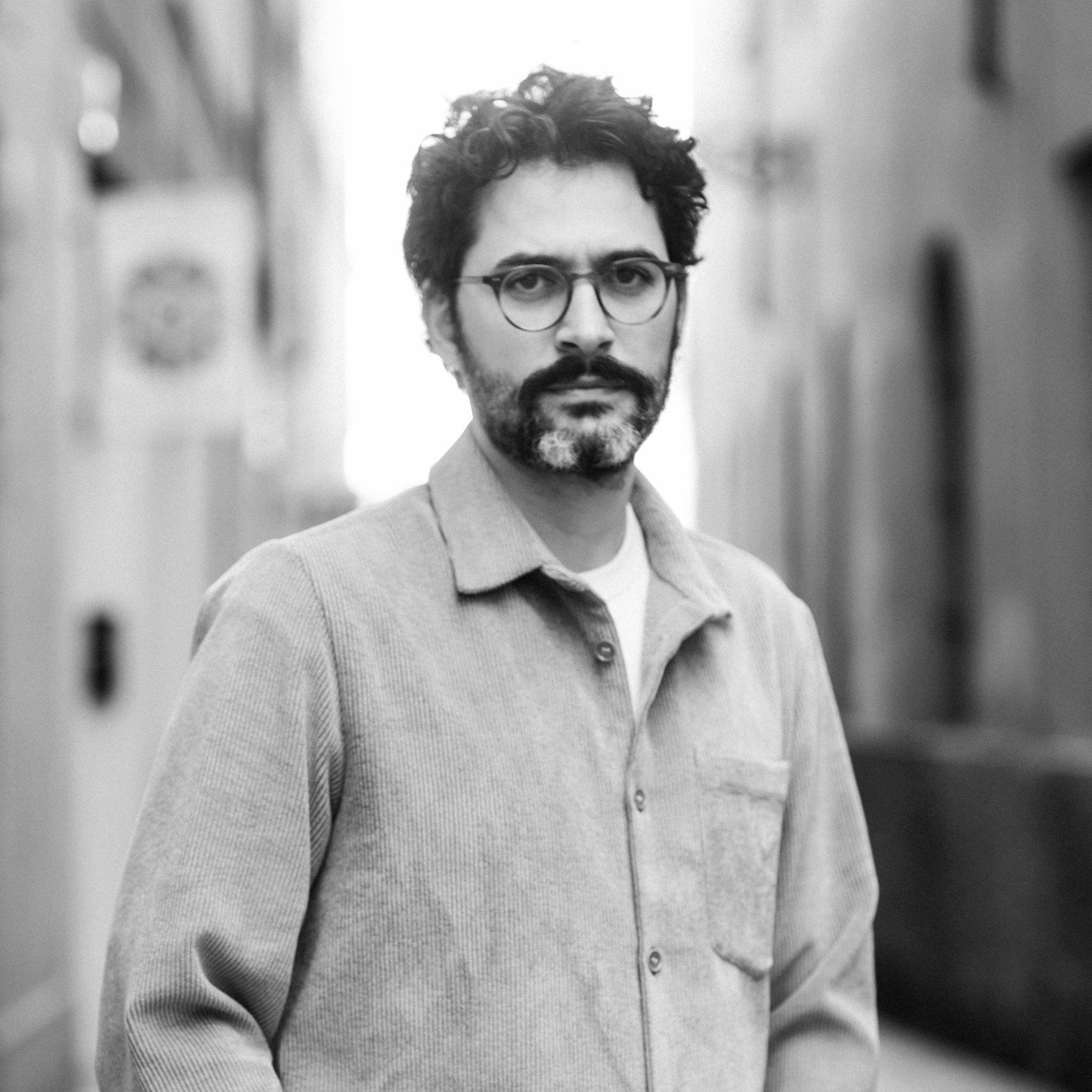
(▼Scroll down for English text)
#paroladartista #intervistaartista #artistinterview # meletiosmeletiou
Parola d’Artista: Per la maggior parte degli artisti, l’infanzia rappresenta il periodo d’oro in cui iniziano a manifestarsi i primi sintomi di una certa propensione ad appartenere al mondo dell’arte. È stato così anche per te? Racconta.
M.M.: Il mio primo ricordo legato all’ arte è un cavallo che disegnai matite colorate. Mi piacque tanto e volevo continuare a disegnare seguendo delle lezioni, e cosi fu, i miei mi portarono in una scuola privata dove per anni frequentò di pomeriggio. Fu un puro divertimento che durò più di 8 anni.
Pd’A: Anche tu, come tanti, hai avuto un primo amore artistico?
M.M.: No non avevo preferenze ero solo affamato di imparare più tecniche possibili facendo il compito di copiare i lavori di artisti dai libri che mi passavano tra le mani. Volevo imparare a fare tutto, di esercitare più tecniche possibili e stranamente ero sempre lontano dalla scultura. Mi faceva paura, in quella età le cose che non sapevo fare mi mettevano ansia. Meno male con il tempo impari ad affrontare tutto.
Pd’A: Puoi descrivere il tuo processo di lavoro?
M.M.: Il mio lavoro è fortemente influenzato dal contesto socio-politico mondiale. Vedo la città contemporanea come un luogo che stratifica epoche diverse e che rispecchia l’identità di un luogo, la sua storia e il suo presente. Il mio processo creativo segue un immaginario che prende spunto dal mio vissuto quotidiano. La decorazione urbana, l’architettura ostile e l’architettura classica diventano fattori importanti per lo studio del mio lavoro e il punto di partenza per una lettura dell’opera, più approfondita. In questo incide anche la particolare sensibilità che ho per i luoghi non luoghi, le barriere e i confini.
Di seguito dopo L’ attrito costante con le tematiche in riferimento trovo il mio equilibrio laddove l’infanzia e il gioco contrastano argomenti cosi complessi. Per me sono i mezzi di comunicazione per eccellenza con una simbologia potente capace a superare un mondo cosi complesso pieno di ostacoli sia mentali che verbali.
È così quindi che le mie opere tendono ad includere nel loro linguaggio una serie di elementi contrastanti, sia materialmente che concettualmente. Ogni lavoro è una discussione tra mondi diversi, codificato attraverso il concetto di decoro, inteso da un lato come decorazione e dall’altro come decenza.
Pd’A: Il disegno ha una qualche importanza nel tuo processo di lavoro?
M.M.: Il disegno è uno dei mezzi utilizzati per il procedimento e la comprensione nel mio lavoro. A volte può essere un bozzetto ma anche l’opera finale.
Pd’A: Come scegli i materiali con cui lavori e quali sono le loro qualità che ti attraggono ?
M.M.: La scelta dei materiali è concettualmente collegata alle tematiche del lavoro. L’utilizzo del fil di ferro, del cemento, della spugna, del PVC etc., avviene in quando sono materialmente legati ad un percorso narrativo e all’ idea. Dopodiché ci sono alcuni materiali che seguono un ragionamento estetico o tecnico che permettono la r dell’opera.
Pd’A: Ti interessa l’idea l’aspetto tattile delle tue sculture?
M.M.: Certo. Penso che le varie forme nei miei lavori provocano allo spettatore la voglia di toccare. In più alcune opere hanno delle parti muovibili quindi l’interazione avviene naturale. L’aspetto tattile è uno dei punti importanti che mi hanno portato ad amare la scultura e l’elemento tridimensionale. Provo sempre una grandissima soddisfazione nel rispondere “si” alla domanda “posso toccare” davanti i miei lavori.
Pd’A: La geometria ha una qualche importanza nel tuo lavoro?
M.M.: Le mie sculture spesso risultano con delle forme geometriche. Mi interessa di più però l’interpretazione dell’ornamento o del pattern, il loro significato storico e il legame visivo con il mondo contemporaneo.
Pd’A: Che ruolo ha la luce nel tuo lavoro?
M.M.: Lo stesso ruolo che ha l’ombra. Sono elementi visivi che negli ultimi anni provo a darli un ruolo maggiore in quello che faccio. Un esempio recente è l’ultima mostra personale “Sinodós” a cura di Ilaria Monti presso DISLAY a Parma conclusa lo scorso gennaio. Si tratta di una mostra con due aspetti visivi diversi di giorno e di notte, dove la luce e l’ombra hanno un’importanza diversa rispetto alle mostre precedenti, lavorando anche sulla trasparenza.
Pd’A: Che importanza hanno le categorie di tempo e spazio in quello che fai?
M.M.: Si relazionano spesso, sono componenti che a volte delineano l’idea stessa.
Pd’A: Quando devi fare una mostra ti interessa l’idea di messa in scena del lavoro?
M.M.: Quello che mi interessa è comunicare il mio punto di vista, spesso in un’atmosfera estranea, quasi alienante. Le installazioni su grande scala, per esempio, penso che condizionano lo spettatore a vivere dentro l’idea provocando esperienze diverse, a volte scomode o imponenti.
Pd’A: Che importanza ha la relazione che si viene a creare fra i vari lavori che decidi di esporre insieme?
M.M.: Dipende dal progetto ma in generale cerco una convivenza funzionale, coerente con l’idea e le necessità logistiche che impone lo spazio.
Pd’A: Che idea hai della bellezza?
M.M.: In una domanda cosi generica mi limito solo a dire che amo il mondo contemporaneo perché la bellezza si può trovare anche in situazioni brutte e complicate.
Pd’A: Ti interessa l’idea di leggerezza nel tuo lavoro?
M.M.: Il divertimento attraverso le finiture pittoriche del mio lavoro è la mia interpretazione di leggerezza. Diventa per me un gioco, una meditazione che si oppone alla serietà degli argomenti affrontati nel mio lavoro. Fare installazioni di queste misure a volte impone un’immersione totale sull’aspetto tecnico, e purtroppo il lavoro “istintivo” si perde nella parte logistica di una mostra. La pittura quindi, porta tutto in un equilibrio in quello che faccio e assume il ruolo più intimo più spontaneo e più divertente.
Pd’A: Un opera d’arte esiste se non c’è nessuno che la guarda?
M.M.: L’ opera d’arte si limita solo alla vista?
Pd’A: Qual è la tua posizione rispetto al tuo lavoro?
M.M.: L’unica cosa che mi viene da dire e che mi interessa il confronto sincero, la critica anche quella negativa, soprattutto quella negativa! Penso che se è in buona fede potrebbe essere la parte più costruttiva di un confronto.
English text
Intervista a Meletios Meletiou
#paroladartista #intervistaartista #artistinterview # meletiosmeletiou
Parola d’Artista: For most artists, childhood is the golden age when the first symptoms of a certain propensity to belong to the art world begin to appear. Was that the case for you too? Tell us.
M.M.: My first memory related to art is a horse I drew with coloured pencils. I liked it so much and wanted to continue drawing by taking lessons, and so it was, my parents took me to a public school where I attended in the afternoons for years. It was pure fun that lasted more than eight years.
Pd’A: Did you, like many, have a first artistic love?
M.M.: No, I had no preference I was just hungry to learn as many techniques as possible by copying the works of artists from the books that passed through my hands. I wanted to learn to do everything, to practice as many techniques as possible, and strangely enough I was always away from sculpture. It frightened me, at that age things I didn’t know how to do made me anxious. Good thing with time you learn to cope with everything.
Pd’A: Can you describe your working process?
M.M.: My work is strongly influenced by the global socio-political context. I see the contemporary city as a place that stratifies different eras and reflects the identity of a place, its history and its present. My creative process follows an imaginary that takes its cue from my daily experience. Urban decoration, hostile architecture and classical architecture become important factors in the study of my work and the starting point for a deeper reading of the work. The particular sensitivity I have for non-places, barriers and boundaries also plays a role in this.
After the constant friction with the themes in reference I find my balance where childhood and play contrast such complex topics. For me they are the means of communication par excellence with a powerful symbolism capable of overcoming such a complex world full of both mental and verbal obstacles.
It is thus that my works tend to include in their language a number of contrasting elements, both materially and conceptually. Each work is a discussion between different worlds, codified through the concept of decorum, understood on the one hand as decoration and on the other as decency.
Pd’A: Does drawing have any importance in your working process?
M.M.: Drawing is one of the means used for process and understanding in my work. Sometimes it can be a sketch but also the final work.
Pd’A: How do you choose the materials you work with and what are their qualities that attract you?
M.M.: The choice of materials is conceptually linked to the themes of the work. The use of iron wire, cement, sponge, PVC, etc., occurs when they are materially linked to a narrative path and to the idea. Then there are certain materials that follow an aesthetic or technical reasoning that allow the r of the work.
Pd’A: Are you interested in the idea the tactile aspect of your sculptures?
M.M.: Of course. I think the various forms in my works provoke the viewer’s desire to touch. In addition, some works have movable parts so the interaction occurs naturally. The tactile aspect is one of the important points that led me to love sculpture and the three-dimensional element. I always take great satisfaction in answering ‘yes’ to the question ‘can I touch’ in front of my works.
Pd’A: Does geometry have any importance in your work?
M.M.: My sculptures often result in geometric shapes. However, I am more interested in the interpretation of the ornament or pattern, their historical significance and the visual connection to the contemporary world.
Pd’A: What role does light play in your work?
M.M.: The same role that the shadow plays. These are visual elements that in recent years I have been trying to give a greater role to in what I do. A recent example is my latest solo exhibition ‘Sinodós’ curated by Ilaria Monti at DISLAY in Parma, which ended last January. It is an exhibition with two different visual aspects, day and night, where light and shadow have a different importance compared to previous exhibitions, also working on transparency.
Pd’A: How important are the categories of time and space in what you do?
M.M.: They often relate, they are components that sometimes delineate the idea itself.
Pd’A: When you have to make an exhibition, are you interested in the idea of staging the work?
M.M.: What interests me is communicating my point of view, often in a foreign, almost alienating atmosphere. Large-scale installations, for example, I think condition the viewer to live inside the idea by provoking different, sometimes uncomfortable or imposing experiences.
Pd’A: How important is the relationship that is created between the various works that you decide to exhibit together?
M.M.: It depends on the project but in general I look for a functional coexistence, consistent with the idea and the logistical needs that the space imposes.
Pd’A: What is your idea of beauty?
M.M.: In such a general question I would just say that I love the contemporary world because beauty can also be found in ugly and complicated situations.
Pd’A: Are you interested in the idea of lightness in your work?
M.M.: The fun through the pictorial finishes in my work is my interpretation of lightness. It becomes a game for me, a meditation that opposes the seriousness of the subjects addressed in my work. Making installations of this size sometimes requires total immersion in the technical aspect, and unfortunately the ‘instinctive’ work is lost in the logistical part of an exhibition. Therefore, painting brings everything into balance in what I do and takes on the more intimate, more spontaneous and more fun role.
Pd’A: Does a work of art exist if there is no one looking at it?
M.M.: Is a work of art limited only to the sight?
Pd’A: What is your position on your work?
M.M.: The only thing I can say is that I am interested in sincere confrontation, criticism, even negative criticism, especially negative criticism! I think if it’s in good faith it could be the most constructive part of a confrontation.
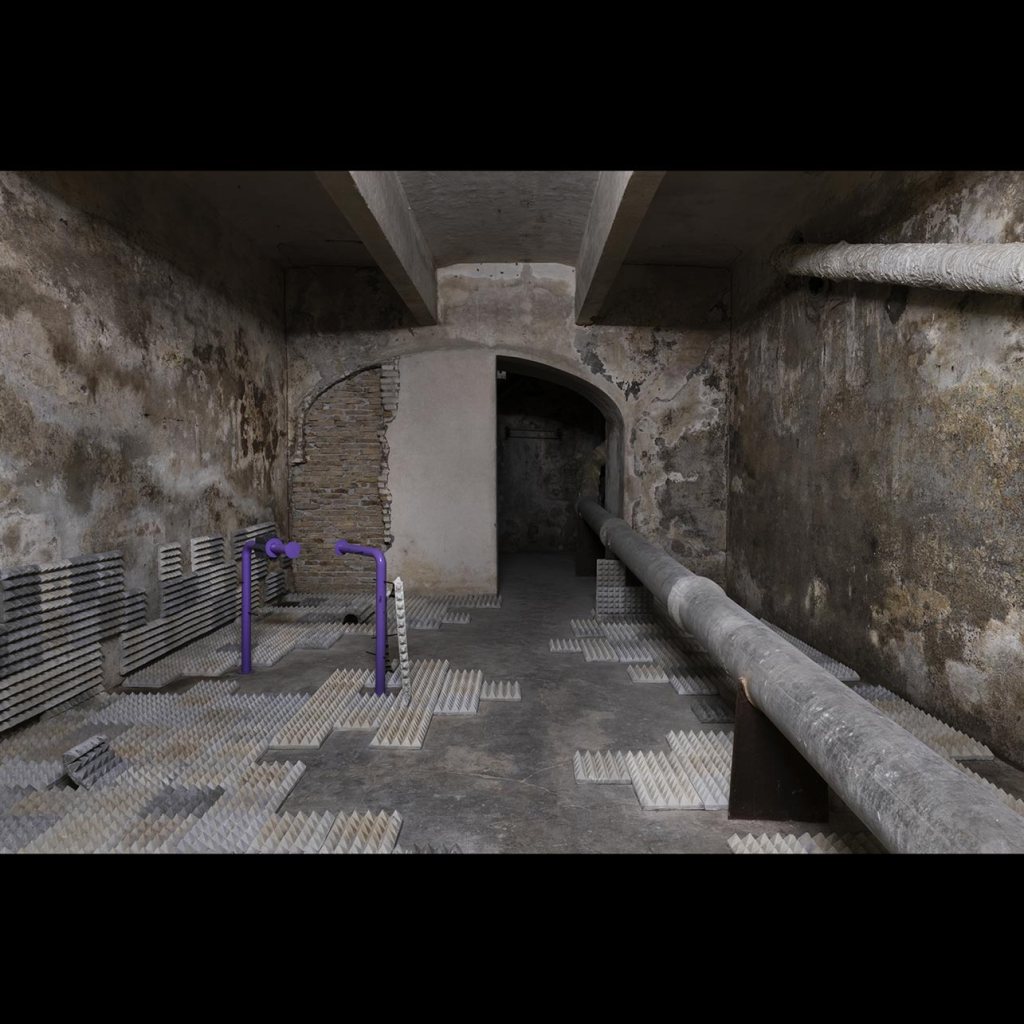
buffer zone 2022
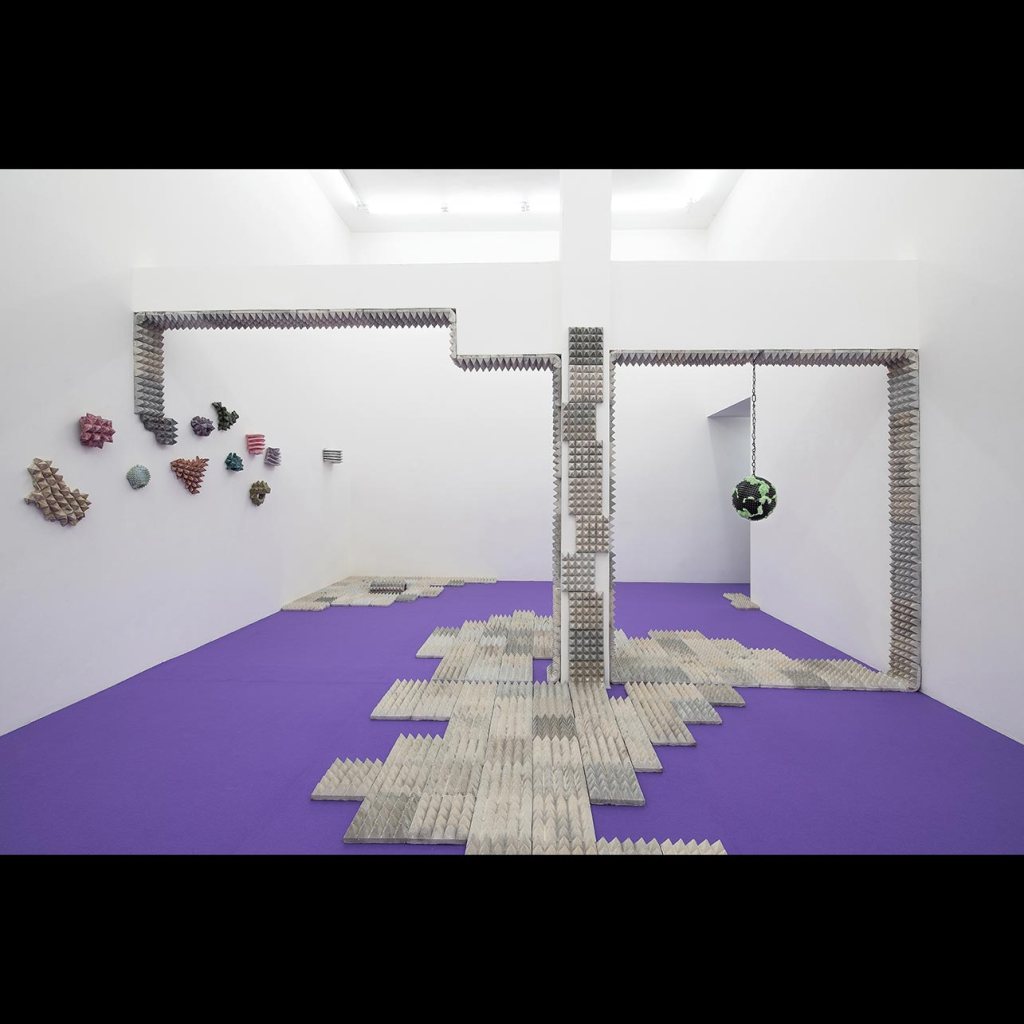
playground 2023
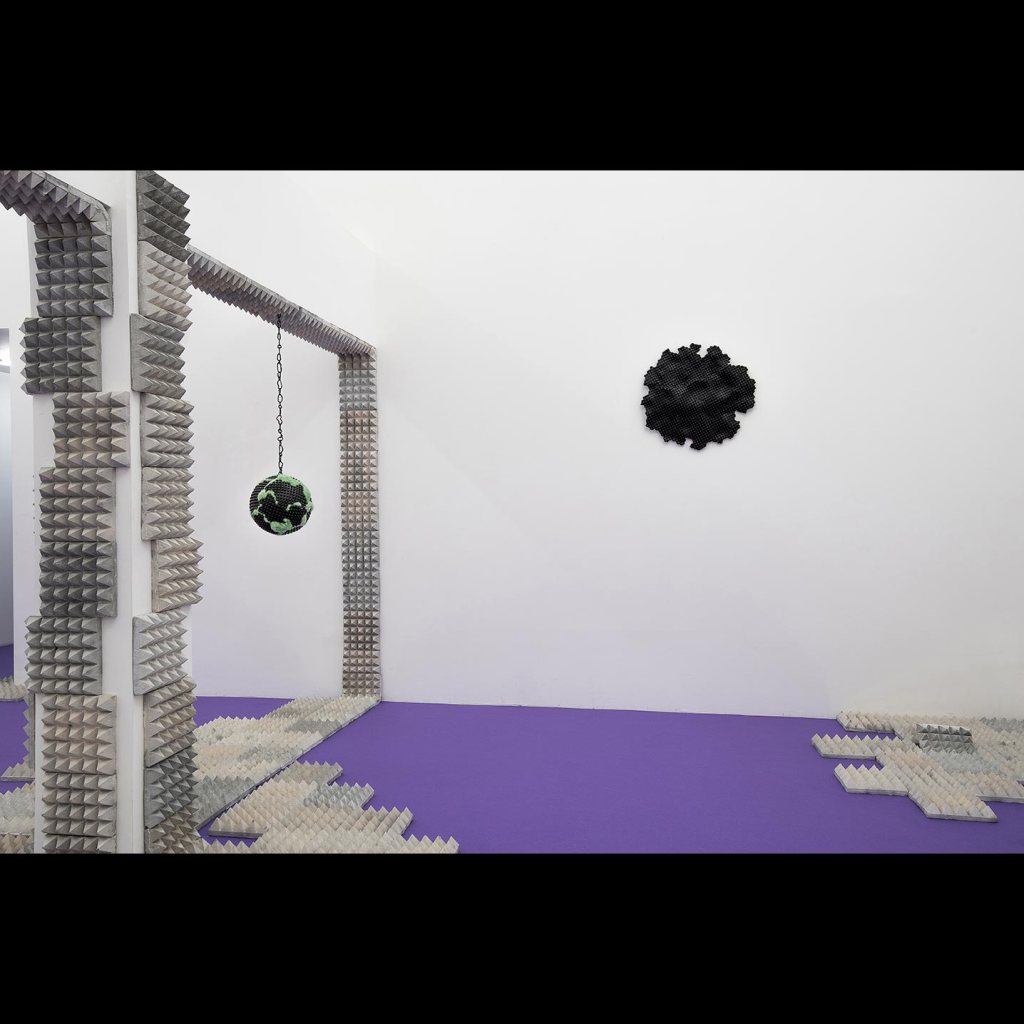
playground 2023
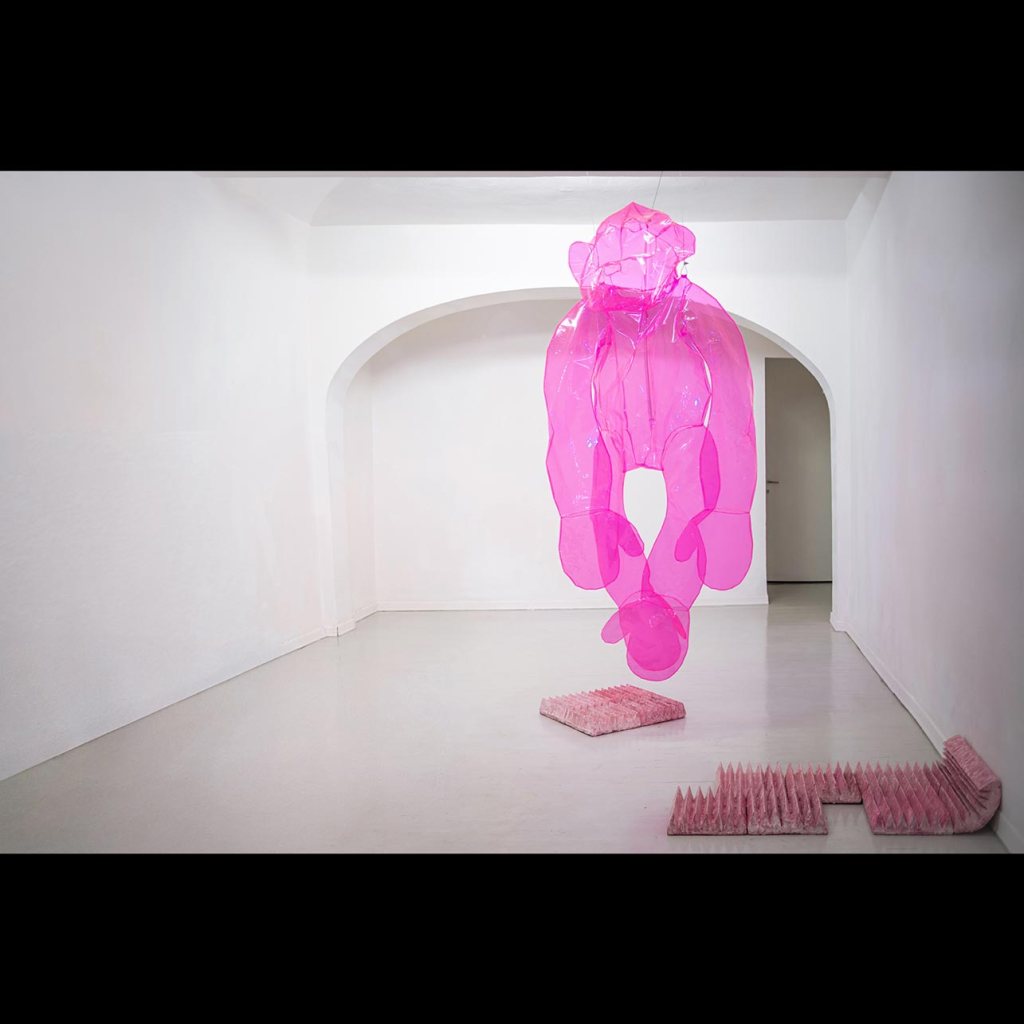
Sinodós 2024
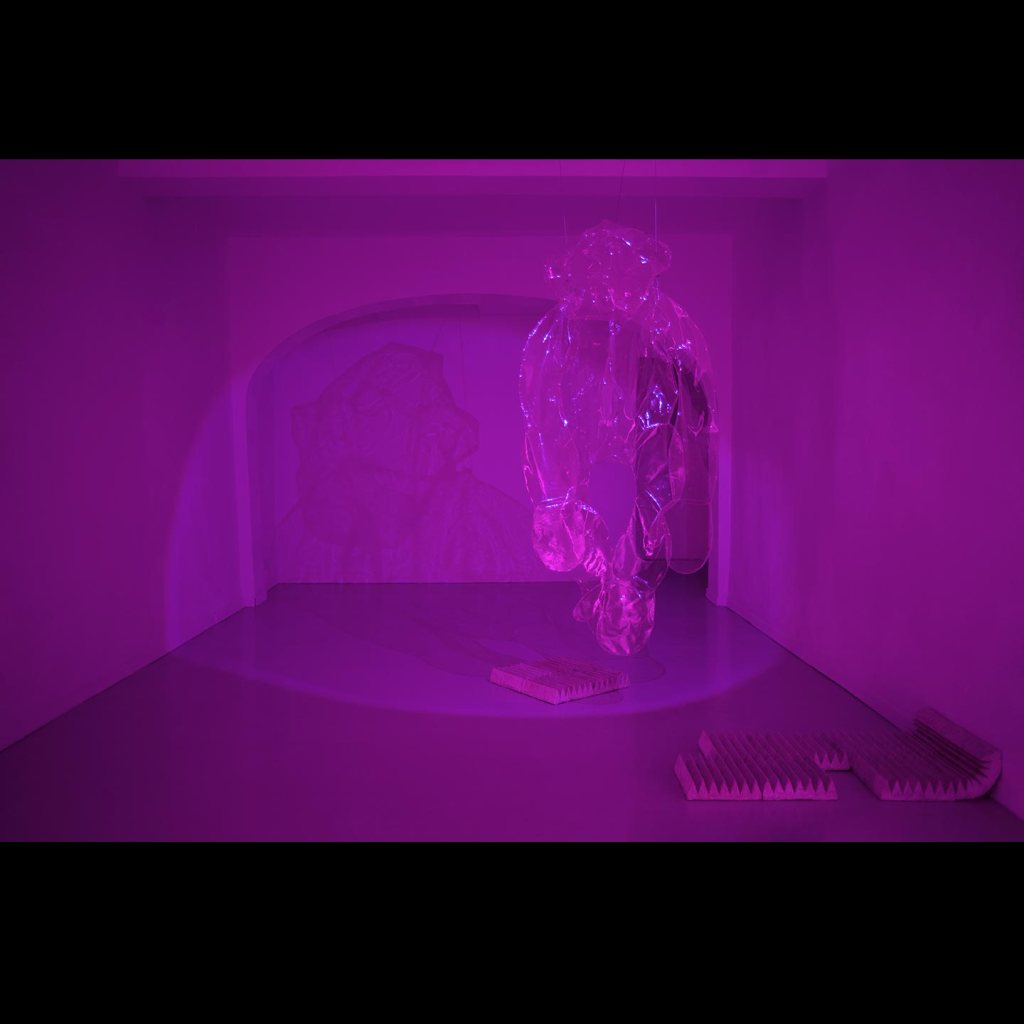
Sinodós 2024
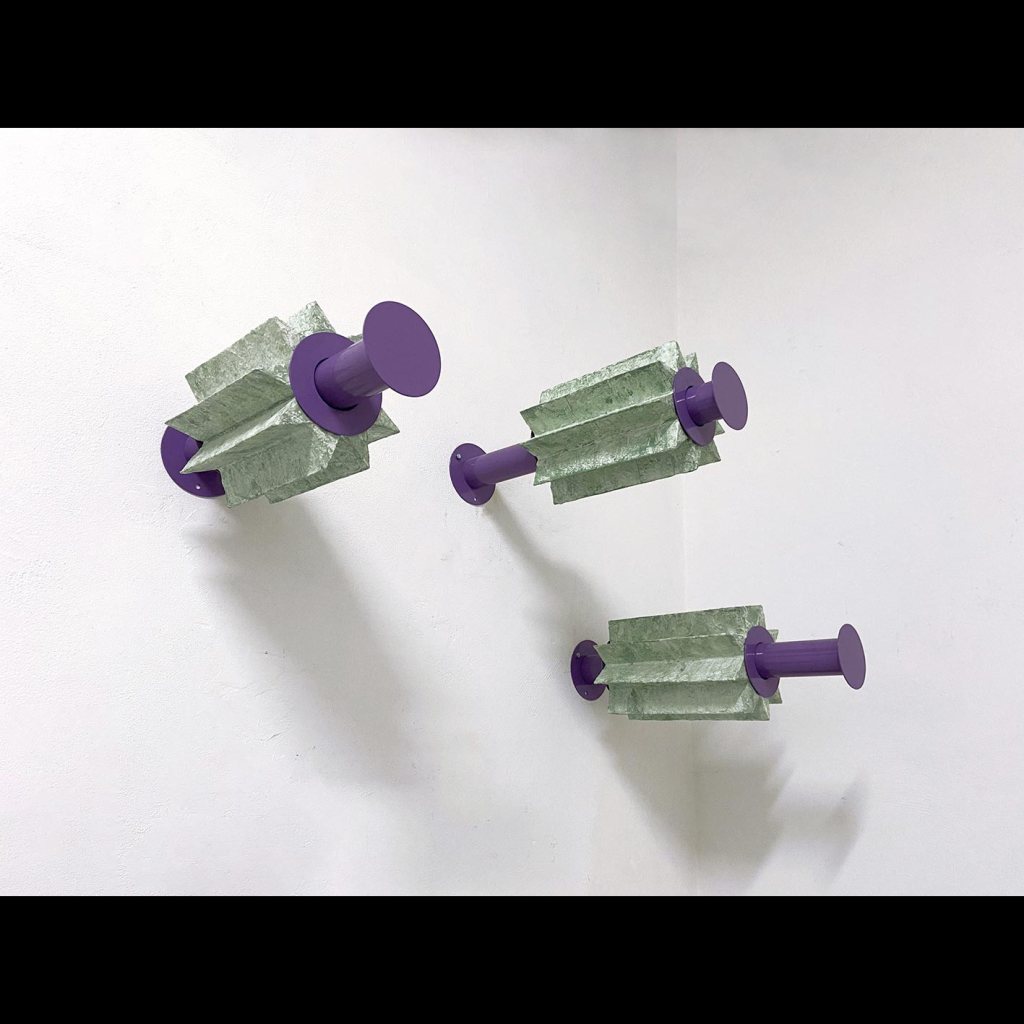
Resize To Fit 33
 paroladartista.com