
(▼Scroll down for English text)
#paroladartista #intervistaartista #artistinterview #mariangelazabatino
Parola d’Artista: Per la maggior parte degli artisti, l’infanzia rappresenta il periodo d’oro in cui iniziano a manifestarsi i primi sintomi di una certa propensione ad appartenere al mondo dell’arte. È stato così anche per te? Racconta.
Mariangela Zabatino: Si, sin da piccola amavo appartarmi e abbandonarmi al disegno: attraverso questa attività assecondavo la mia natura provando una gran gioia perché sentivo, soprattutto, di poter essere libera.
Pd’A: Anche tu, come tanti, hai avuto un primo amore artistico?
M.Z.: Tanti: i dipinti rupestri, l’arte bizantina, Piero Della Francesca, Afro, Rothko, Morandi. Ma potrei citarne tantissimi. Nel contemporaneo continuo ad amare Mario Raciti. Ma anche Luiso Sturla e Tino Repetto.
Pd’A: Che ruolo e che importanza ha Il disegno nel tuo processo di lavoro?
M.Z.: Ha molta importanza. Intendo il disegno non tanto come studio preparatorio ma come di-segno che vive di luce propria e autonomamente si prende lo spazio, imprimendo una dimensione di profondo dialogo con il resto della superficie sia essa pittorica o scultorea. Il disegno è il graffito ancestrale dell’esistenza.
Quando disegno mi sento un po’ una donna preistorica che lascia il suo segno da codificare.
Pd’A: Puoi descrivere il tuo processo di lavoro?
M.Z.: Indipendentemente dalla tecnica utilizzata, ritrovo il contatto con la mia forza arcaica sottraendo peso al corpo e alla testa, arrivando a sentire il solo impulso che genera il gesto artistico.
Questo gesto iniziale può consistere in un tratto seguito da una campitura di colore o viceversa. Questi, intersecandosi, si evolvono in un dialogo tra masse e segni. Mi interessa che questo contrappunto tra segno e colore generi una certa profondità, non scevra da leggerezza.
Pd’A: Che ruolo ha la luce nel tuo lavoro?
M.Z.: La luce ha un ruolo fondamentale: è lo sguardo del quadro che ti osserva. Un po’ come guardare negli occhi una persona, entrando in contatto con la sua anima e i suoi sentimenti. Così fa la luce: a seconda della sua qualità si può capire che stato d’animo vuole trasmettere un’opera.
Pd’A: Ti interessa la dimensione pittorica?
M.Z.: La pittura è un appuntamento erotico, un concerto privato tra me e gli strumenti: direi di sì. Lo sfregare un pastello o un pennello sulla carta, il loro ritmo, le sospensioni, sono una partitura sensoriale irrinunciabile nella mia vita.
Pd’A: Nei tuoi lavori il corpo femminile con la sua fisicità che suggerisce una dimensione ancestrale è sicuramente uno dei soggetti che ricorre con più frequenza come mai?
M.Z.: Nell’anno appena trascorso ho iniziato un ciclo di lavoro dove indago in chiave contemporanea il concetto di “Forme della Dea Madre”. La dimensione ancestrale è data dal mio forte legame con la terra, la Madre di tutte le Madri. Così, visto il mio profondo rapporto con l’argilla, oltre alle carte ad olio, sono nati piccoli idoletti di ceramica ispirati agli antichi manufatti dell’area mediterranea. La varietà delle forme e dei colori di tali idoletti rispecchia la vitalità della natura e della donna nelle loro molteplici manifestazioni.
Pd’A: La dimensione vitale e la pulsione erotica delle tue immagini è molto presente puoi parlarne?
M.Z.: Negli ultimi tre anni ho osservato molto la natura, soprattutto i fiori, lavorando dapprima sul mito dei Giardini di Adone (Adone è un simbolo di rinascita primaverile, di eterna rigenerazione attraverso l’effimera bellezza) e successivamente ad una poesia di Emily Dickinson, “Essere un fiore”, di cui riporto qui sotto il capoverso finale:
[…] Non deludere la grande Natura
che quel giorno l’attenderà
essere un fiore, è una profonda
responsabilità.
Portando poi l’osservazione su un piano più strettamente umano, mi sono interrogata sul senso del nostro fiorire come individui per raggiungere la nostra massima espressione. Ecco quindi che nella mia ricerca pittorica certi fiori con un’essenza primordialmente erotica sono gradualmente “sbocciati” in forme femminili dalla fisicità esplicita e dirompente.
Pd’A: Che importanza hanno le categorie di tempo e spazio in quello che fai?
M.Z.: “CHI fa è UN CORPO che è UN TEMPO che attraversa uno SPAZIO”
Durante il processo di creazione il lavoro raggiunge un punto in cui tempo e spazio divengono sospensione, silenzio… è in questo spazio-tempo che io mi muovo, dove provo l’eternità del mio presente.
Pd’A: Quando dipingi lavori ad un quadro alla volta o ne lavori più di uno simultaneamente?
M.Z.: Non ho una regola ben recisa, dipende. Mi lascio trasportare dall’energia che ho in quel momento. Negli anni si è delineata però una certa tendenza a lavorare per cicli pittorici.
Ci sono giorni, ma anche settimane in cui cerco costantemente ma i tempi non sono maturi [Ah, le frustrazioni! Ah, quanta carta buttata!], ma quando lo divengono, vivo periodi intensissimi di super lavoro [Ah, la gioia!].
Pd’A: Che idea hai della bellezza?
M.Z.: Eraclito disse: “La natura delle cose ama celarsi”.
Io penso che quando riesci ad arrivare all’essenza delle cose, il tuo cuore è stato raggiunto dalla bellezza.
La bellezza è un mistero da decifrare. Non ha codici o ricette, proprio per questo bisogna spogliarsi completamente dalle sovrastrutture e avere l’audacia di affrontarla, in quanto a volte ti sconvolge proprio perché inquietante o malinconica o addirittura le due cose allo stesso tempo.
Pd’A: Qual è la sua posizione rispetto al suo lavoro?
M.Z.: Aperta. Mi interessa il processo pittorico, lo sviluppo e le infinite trasformazioni che può assumere un’opera. Non so mai dove mi porterà il primo segno sulla superficie pittorica, cerco di mantenere vivo il lavoro, nutrendo così la mia immaginazione che di ciclo in ciclo approda ed evolve su diversi scenari.
Nasce a Milano nel 1972 dove vive e lavora. Si diploma nel 1991 al II IPS Kandinsky come graphic designer e nel 1996 alla Scuola di Illustrazione Editoriale del Castello Sforzesco di Milano. Scopre il teatro, per aggiungere movimento al dialogo tra grafica, disegno e pittura e per condividere con lo spettatore la magia della creazione, avviando con il teatro Linguaggi creativi di Milano “Teatro d’Artista”, progetto in cui pittura, musica, azione, danza, parole e tecnologia creano una “scenografia sentimentale”. Il movimento, appunto, è la chiave della sua poetica, il dare forma all’archè (in greco «origine», punto da cui tutto proviene e a cui tutto torna).
Tra le mostre personali si menzionano:
2018 “Quasi invisibile ai nostri occhi”, a cura di Maria Rosa Pividori in collaborazione con 10.2!, Spazio Dolomiti, Milano. 2020 “Africa su carta”, a cura di Marina Spinelli e Roberto Casiraghi con un testo di Alberto Pellegatta, Atelier Cartesio, Milano. 2022 I giardini di Adone, a cura di Claudio Cerritelli, Studio Masiero, Milano. 2023 “Essere un fiore”, a cura di cristina Sissa con un testo in catalogo di Alberto Pellegatta, Studio d’Arte del Lauro di Milano.
Tra le mostre collettive:
2018 “Kokin”, a cura di Matteo Galbiati e Raffaella Nobili presso Paraventi Giapponesi a Milano. 2017 “Chimere”, a cura di Donatella Airoldi presso la Galleria Quintocortile di Milano. Tornare a Itaca – Attraversamenti, a cura di Mimma Pasqua e Maria Rosa Pividori presso il Palazzo Comunale di Grimaldi (CS) e in Lineacontinua – Potere alla pittura, a cura di Pino Diecidue e Roberto Borghi presso la Villa Borletti di Origgio (VA). Nel 2015 ha partecipato alla collettiva Figuraqua, a cura di Maria Rosa Pividori presso il Museo d’Arte Moderna Ugo Carà di Muggia (TS) e a Tornare a Itaca, a cura di Maria Rosa Pividori e Mimma Pasqua presso 10.2! di Milano. Nel 2021 con la realizzazione del cortometraggio scritto da Ivan Bonasia per la regia di Davide Cipolat prende parte alla mostra Ritratto d’Artista allo Studio d’Arte del Lauro di Milano.
È stata selezionata in diversi concorsi di ceramica in Italia e all’estero, tra i quali la XIV Biennale Internazionale di Ceramica di Aveiro (Portogallo) e il XXVI Concorso Mediterraneo di Ceramica Contemporanea (2019 Grottaglie). Ha vinto il premio Koryukai 2019, promosso da Arteraku.
http://www.mariangelazabatino.it
English text
Interview to Mariangela Zabatino
#paroladartista #intervistaartista #artistinterview #mariangelazabatino
Parola d’Artista: For most artists, childhood is the golden age when the first symptoms of a certain propensity to belong to the art world begin to appear. Was that the case for you too? Tell us.
Mariangela Zabatino: Yes, ever since I was a child, I loved to withdraw and abandon myself to drawing: through this activity, I indulged my nature, feeling a great joy because I felt, above all, that I could be free.
Pd’A: Did you, like many, have a first artistic love?
M.Z.: So many: cave paintings, Byzantine art, Piero Della Francesca, Afro, Rothko, Morandi. But I could mention so many. In contemporary art, I continue to love Mario Raciti. But also Luiso Sturla and Tino Repetto.
Pd’A: What role and importance does drawing play in your work process?
M.Z.: It has a lot of importance. I understand drawing not so much as a preparatory study but as a di-sign that lives by its own light and autonomously takes up space, imprinting a dimension of profound dialogue with the rest of the surface, be it pictorial or sculptural. Drawing is the ancestral graffito of existence.
When I draw, I feel a bit like a prehistoric woman leaving her mark to be encoded.
Pd’A: Can you describe your working process?
M.Z.: Regardless of the technique I use, I regain contact with my archaic strength by subtracting weight from my body and head, coming to feel the sole impulse that generates the artistic gesture.
This initial gesture may consist of a stroke followed by a colour field or vice versa. These, intersecting, evolve into a dialogue between masses and signs. I am interested that this counterpoint between sign and colour generates a certain depth, not without lightness.
Pd’A: What role does light play in your work?
M.Z.: Light plays a fundamental role: it is the painting’s gaze that observes you. A bit like looking into a person’s eyes, getting in touch with their soul and feelings. This is what light does: depending on its quality, you can understand what mood a work wants to convey.
Pd’A: Are you interested in the pictorial dimension?
M.Z.: Painting is an erotic rendezvous, a private concert between me and the instruments: I would say so. The rubbing of a pastel or brush on paper, their rhythm, the suspensions, are an indispensable sensory score in my life.
Pd’A: In your works, the female body with its physicality that suggests an ancestral dimension is certainly one of the subjects that recurs most frequently, why is that?
M.Z.: In the past year I have started a cycle of work where I investigate the concept of ‘Mother Goddess Forms’ in a contemporary key. The ancestral dimension is given by my strong bond with the earth, the Mother of all Mothers. Thus, given my deep relationship with clay, small ceramic idols inspired by the ancient artefacts of the Mediterranean area were created in addition to the oil papers. The variety of shapes and colours of these idols reflects the vitality of nature and women in their many manifestations.
Pd’A: The vital dimension and erotic drive of your images is very present can you talk about it?
M.Z.: Over the last three years I have observed nature a lot, especially flowers, working first on the myth of Adonis’ Gardens (Adonis is a symbol of springtime rebirth, of eternal regeneration through ephemeral beauty) and then on a poem by Emily Dickinson, “Being a Flower”, of which I quote the final paragraph below:
[…] Do not disappoint the great Nature
that that day awaits her
To be a flower,
is a deep responsibility.
Taking the observation then to a more strictly human level, I wondered about the meaning of our blossoming as individuals in order to reach our highest expression. Hence, in my pictorial research, certain flowers with a primordially erotic essence have gradually ‘blossomed’ into female forms with an explicit and disruptive physicality.
Pd’A: How important are the categories of time and space in what you do?
M.Z.: ‘WHAT I DO is A BODY that is A TIME going through a SPACE’.
During the process of creation, the work reaches a point where time and space become suspension, silence… it is in this space-time that I move, where I experience the eternity of my present.
Pd’A: When you paint, do you work on one painting at a time or do you work on more than one simultaneously?
M.Z.: I don’t have a clear-cut rule, it depends. I let myself be carried away by the energy I have at that moment. Over the years, however, there has been a tendency to work in pictorial cycles.
There are days and even weeks when I am constantly trying but the time is not ripe [Ah, the frustrations! Ah, how much paper thrown away!], but when it becomes so, I experience very intense periods of super work [Ah, the joy!].
Pd’A: What is your idea of beauty?
M.Z.: Heraclitus said: ‘The nature of things loves to conceal itself’.
I think that when you can get to the essence of things, your heart has been reached by beauty.
Beauty is a mystery to be deciphered. It has no codes or recipes, which is why you have to completely strip yourself of superstructures and have the audacity to face it, because sometimes it upsets you precisely because it is disturbing or melancholic or even both at the same time.¬
Pd’A: What is your position on your work?
M.Z.: Open. I am interested in the painting process, the development and the infinite transformations a work can take on. I never know where the first mark on the pictorial surface will take me, I try to keep the work alive, thus nourishing my imagination that from cycle to cycle lands and evolves into different scenarios.
Born in Milan in 1972 where he lives and works. He graduated in 1991 from the II IPS Kandinsky as a graphic designer and in 1996 at the School of Editorial Illustration at the Castello Sforzesco in Milan. He discovered theatre, to add movement to the dialogue between graphics, drawing and painting and to share with the spectator the magic of creation, starting with the theatre Linguaggicreativi in Milan ‘Teatro d’Artista’, a project in which painting, music, action, dance, words and technology create a ‘sentimental scenography’. Movement, indeed, is the key to his poetics, the shaping to the archè (in Greek ‘origin’, the point from which everything comes and to which everything returns).
Solo exhibitions include:
2018 ‘Almost invisible to our eyes’, curated by Maria Rosa Pividori in collaboration with 10.2! Spazio Dolomiti, Milan. 2020 ‘Africa on paper’, curated by Marina Spinelli and Roberto Casiraghi with a text by Alberto Pellegatta, Atelier Cartesio, Milan. 2022 The Gardens of Adonis, curated by Claudio Cerritelli, Studio Masiero, Milan. 2023 Being a Flower, curated by Cristina Sissa with a text in the catalogue by Alberto Pellegatta, Studio d’Arte del Lauro, Milan.
Group exhibitions include:
2018 ‘Kokin’, curated by Matteo Galbiati and Raffaella Nobili at Paraventi Giapponesi in Milan. 2017 ‘Chimere’, curated by Donatella Airoldi at the Quintocortile Gallery in Milan. Return to Itaca – Attraversamenti, curated by Mimma Pasqua and Maria Rosa Pividori at Palazzo Comunale di Grimaldi (CS) and in Lineacontinua – Potere alla pittura, curated by Pino Diecidue and Roberto Borghi at Villa Borletti di Origgio (VA). In 2015 he took part in the collective Figuraqua, curated by Maria Rosa Pividori at the Ugo Carà Museum of Modern Art in Muggia (TS) and in Tornare a Itaca, curated by Maria Rosa Pividori and Mimma Pasqua at 10.2! in Milan. In 2021, she took part in the Ritratto d’Artista exhibition at Studio d’Arte del Lauro in Milan with the production of the short film written by Ivan Bonasia and directed by Davide Cipolat. She was selected in several ceramics competitions in Italy and abroad, including the 14th Biennial International Biennial of Ceramics in Aveiro (Portugal) and the XXVI Mediterranean Competition of Contemporary Ceramics Contemporary (2019 Grottaglie). He won the 2019 Koryukai Prize, promoted by Arteraku.
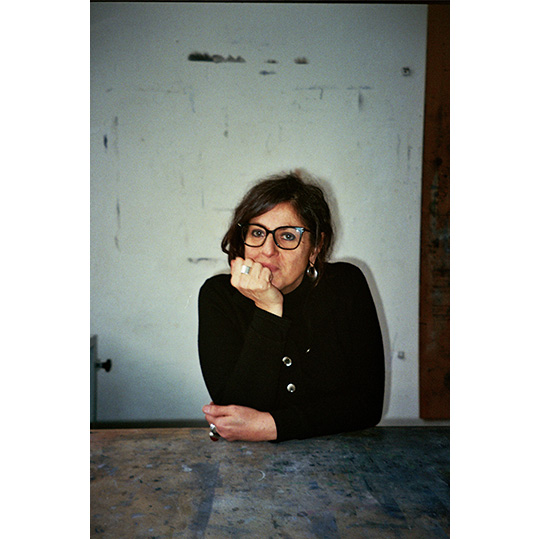
Ph Fabio Tridenti

2013 pastello ad acqua su carta intelata, 70 x 100 cm

libertà 2021, mista su carta, 19,5 x cm 13,5

2023, mista su carta, 35 x 25 cm
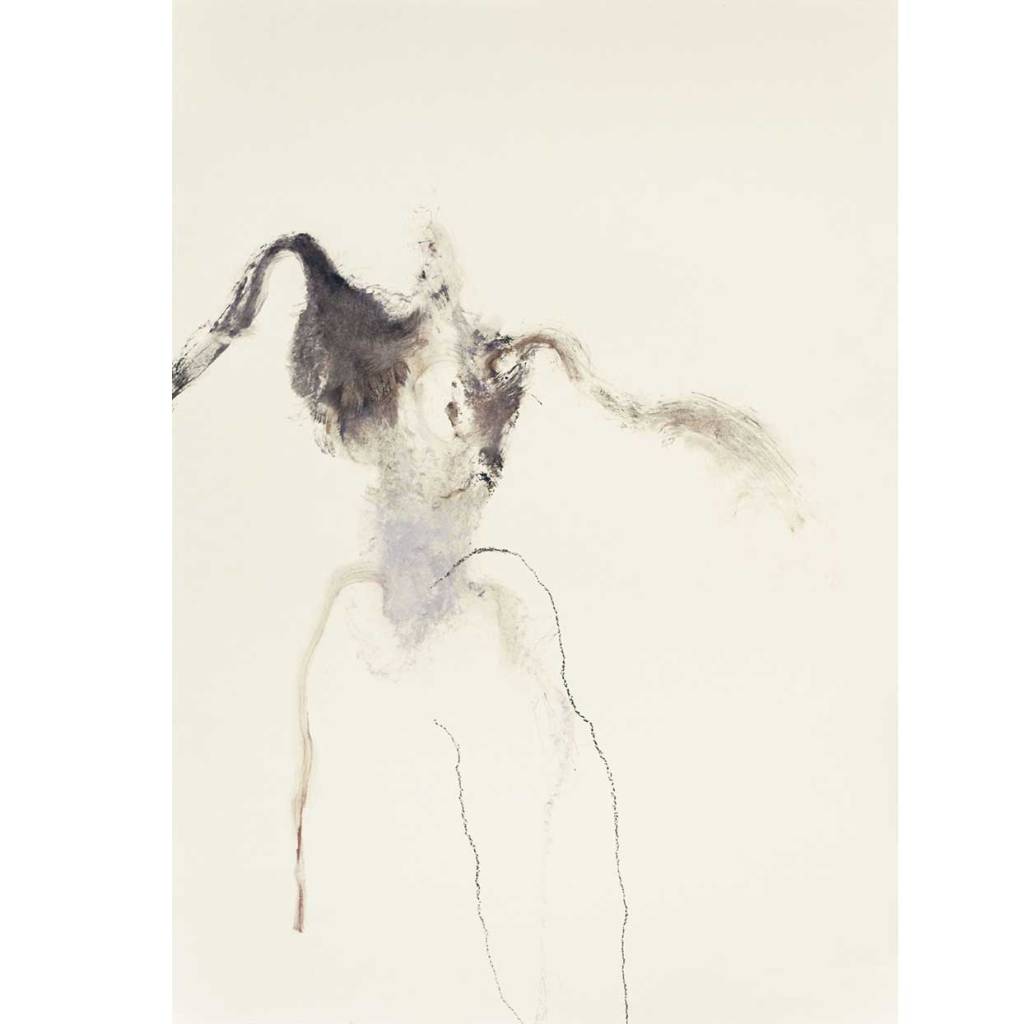
2023, pastello ad olio su carta, 70 x 50 cm

pastello ad olio su carta, 35 x 25 cm
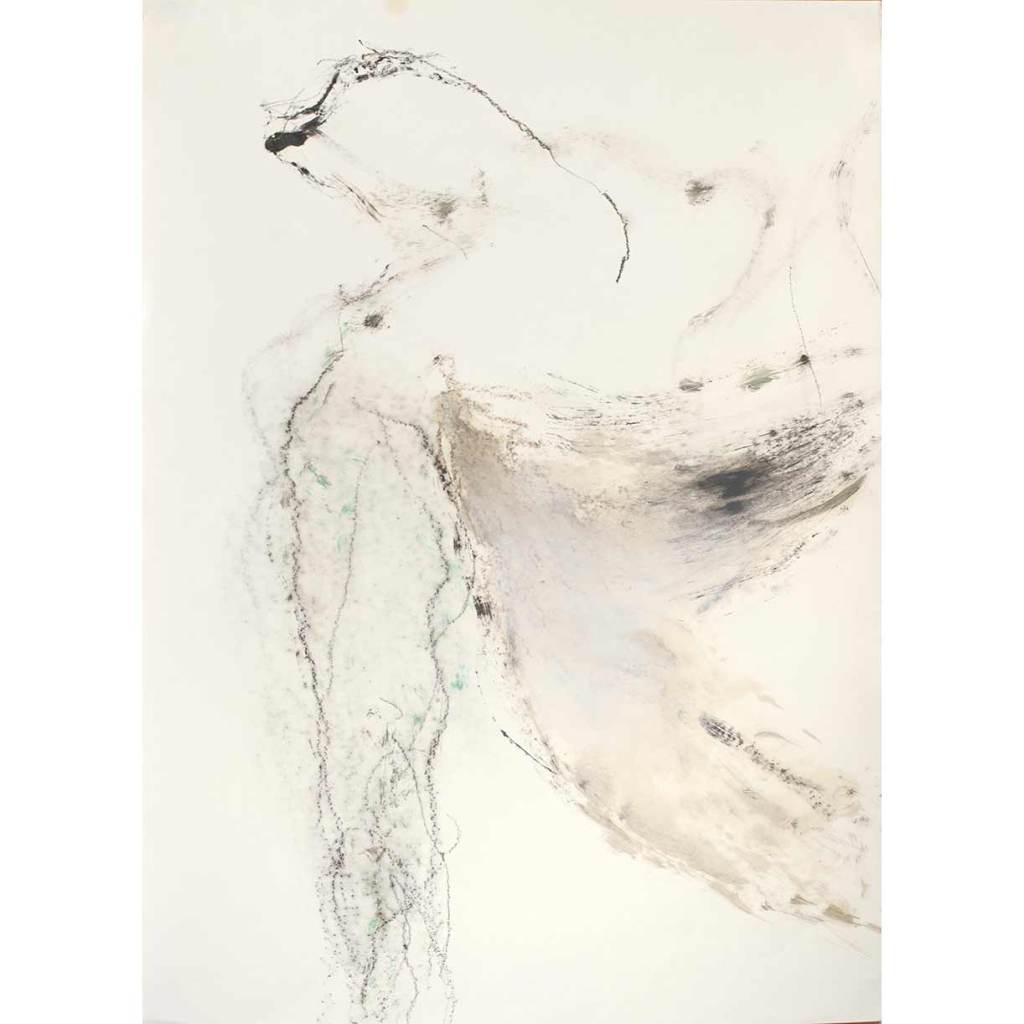
2021, mista su carta intelata, 70 x 50 cm
 paroladartista.com