
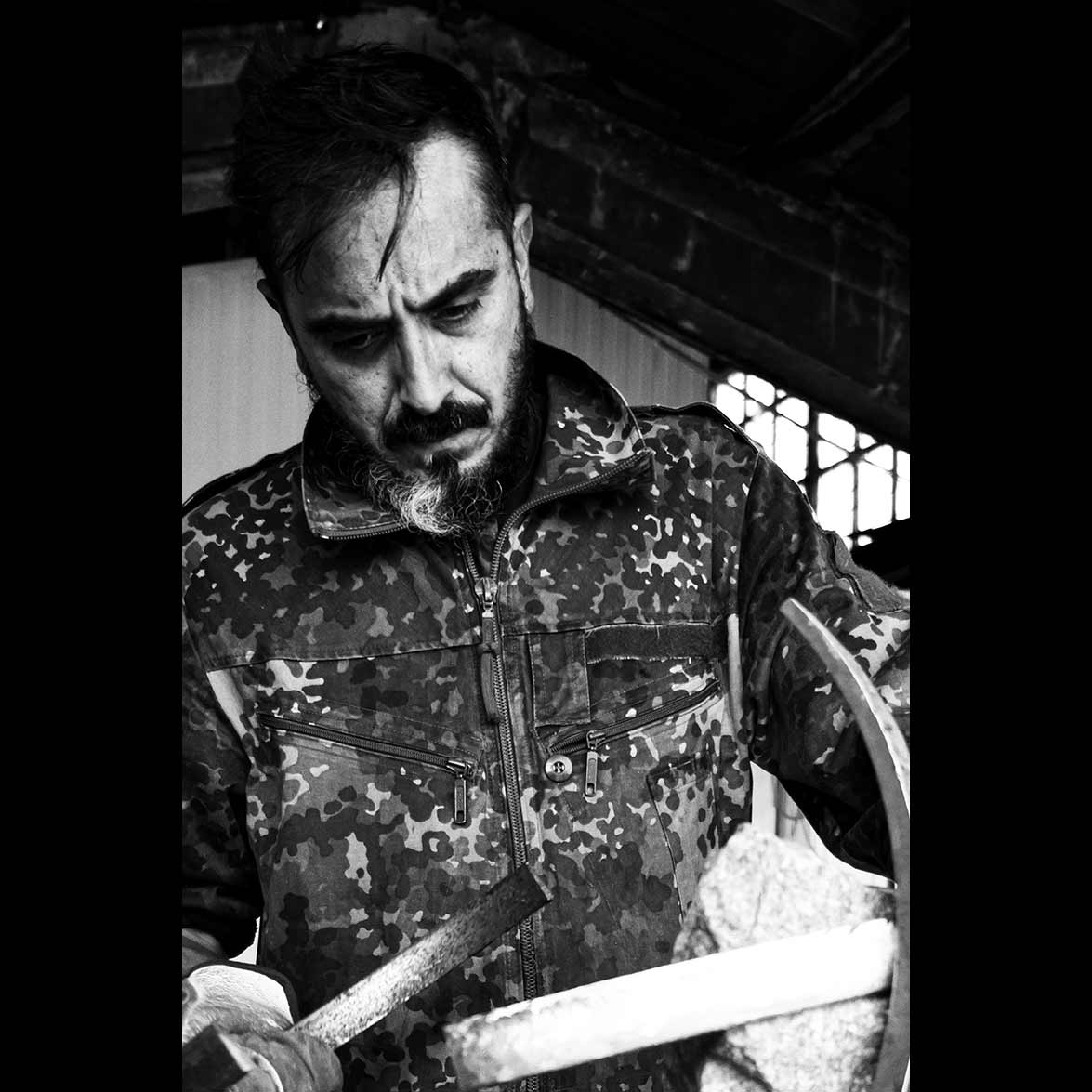
(▼Scoll down for English text)
#paroladartista #intervistaartista #artistinterview #daniellenittisotres
Parola d’Artista: Per la maggior parte degli artisti, l’infanzia rappresenta il periodo d’oro in cui iniziano a manifestarsi i primi sintomi di una certa propensione ad appartenere al mondo dell’arte. È stato così anche per te? Racconta.
Daniele Nitti Sotres: Sin da quando ne ho memoria, ho amato profondamente disegnare. Da bambino ho passato moltissimo tempo tra fogli e matite, essendo figlio unico e avendo avuto molto tempo a disposizione in solitaria, il disegno è stato un compagno molto importante nella mia infanzia. Inoltre, venendo da una famiglia completamente estranea al mondo dell’arte, il mio avvicinamento a questo ambito è stato graduale ed è stato scandito inizialmente dalle scoperte scolastiche.
Pd’A: Anche tu, come tanti, hai avuto un primo amore artistico?
DNS: Sono innamorato della scultura e potrei stilare una lista molto lunga di scultori che mi hanno aperto le porte di questo ambito artistico meraviglioso. Però c’è un incontro che ha fatto da spartiacque nel mio percorso artistico. Nel 1998 durante un viaggio nei Paesi Baschi, ho visitato una mostra antologica di Eduardo Chillida al Museo Guggenheim di Bilbao. All’epoca studiavo scenografia all’accademia di belle arti e nei miei progetti c’era un fil rouge che li collegava ed era l’utilizzo di metalli. Ricordo come fosse ieri lo stupore e l’ammirazione nella visita di quella mostra e quando uscì misi a fuoco quello che volevo fare nella vita: lo scultore. Il lavoro di Chillida mi ha aperto gli occhi, mi ha spinto a pormi delle domande e da li in poi iniziai a studiare la scultura “costruita”, artisti come Naum Gabo, Julio Gonzales, Jorge Oteiza, David Smith o Anthony Caro sono stati per diversi anni al centro di studio e di approfondimenti nella mia prima fase di ricerca di un’identità artistica.
Pd’A: Puoi descrivere il tuo processo di lavoro?
DNS: Negli ultimi anni il mio lavoro ha raggiunto una libertà che trovo molto stimolante, vivo un periodo molto intenso dove posso analizzare e sviluppare idee e fasi scultoree differenti. Per questo motivo fatico a descrivere in maniera univoca il mio processo di ricerca. Quello che sto sviluppando sono ipotesi scultoree che partono da diverse problematiche. Nelle sculture di piccole e medie dimensioni cerco un approccio molto intimo e fisico, che partendo da schizzi molto indicativi e veloci, mi porta a scoprire e realizzare dialoghi con i materiali che divengono generatori di oggetti tridimensionali. Nelle installazioni e nelle sculture su scala ambientale, le problematiche di partenza sono ideative e progettuali, con particolare attenzione ai contesti espositivi e alle tematiche specifiche delle mostre. Nella ricerca su e con carta mi pongo problematiche ancora differenti, legate al supporto bidimensionale e al tema della leggerezza.
Pd’A: Che cosa vuol dire per te leggerezza?
DNS: La leggerezza è un concetto fisico e mentale. Nel mio lavoro di scultore uno degli aspetti che mi affascina è la ricerca della leggerezza tramite il peso, rendere apparentemente leggero qualcosa che ha un peso fisico, è una possibilità di ricerca che mi interessa molto. Lavorando con materiali come il ferro, la pietra, le terre o il legno è possibile interpretare questo aspetto in modi molto diversi. D’altro canto quando lavoro con la carta l’approccio al tema della leggerezza è molto diverso, trattandosi di un materiale leggero, e il mio interesse si sposta sulle possibilità liriche e poetiche del materiale stesso.
Pd’A: Il disegno ha una qualche importanza nel tuo processo di lavoro?
DNS: Il disegno è un compagno di viaggio imprescindibile. Disegno tanto e spesso, la fase di schizzo è un momento di riflessione imprescindibile in tutte le strade scultoree che percorro. Talvolta utilizzo anche la copia dal vero, soprattutto quando sono in viaggio, per fissare su carte degli stimoli, che hanno la valenza di veri e propri appunti di viaggio.
Pd’A: Spesso nelle tue sculture coesistono materiali diversi metallo, creta, pietra…come scegli i materiali con cui lavori ?
DNS: Le mie sculture si sviluppano dalla ricerca di possibilità di relazione tra materiali e spazio. Partendo da materiali antichi e cercando un dialogo tra essi ho iniziato a determinare quello che definisco il mio alfabeto plastico. La mia scelta di campo è l’utilizzo di materiali naturali (pietra, legno e terre) o di origine naturale (metalli, vetri e carte), i quali possiedono caratteristiche molto diverse, sia dal punto vista dell’approccio scultoreo che in termini di specificità proprie. I materiali naturali portano con loro quello che è il logo genus loci, una propria energia intrinseca che varia e che rende unico ogni elemento, ogni pezzo. Ad esempio utilizzo moltissime tipologie di pietra, dal marmo al granito, dalle arenarie agli alabastri, e ogni pezzo anche se di materiale affine ma con una differente provenienza, possiede un energia unica che determina e stimola ogni singola opera. Quello che caratterizza il mio lavoro è proprio la ricerca del dialogo con il materiale, non mi reputo uno scultore che imprime la propria visione univoca e formale sul materiale, anzi, la mia volontà e quella di arrivare alla forma tramite uno scambio energetico, generatore di stimoli, di ipotesi e di soluzioni.
Pd’A: Che ruolo ha la luce nel tuo lavoro?
DNS: La luce è un elemento centrale per qualsiasi scultura e per qualsiasi scultore. La luce può far vivere o morire un lavoro tridimensionale. Inoltre è fondamentale come interagisce con i materiali, le finiture e le texture.
Pd’A: Che importanza hanno le categorie di tempo e spazio in quello che fai?
DNS: Lo spazio è sempre al centro del mio lavoro, ci sono diversi tipologie di spazio che indago, da quello intimo che posso controllare e interrogare con le mani a quello ambientale che mi porta a sviluppare installazioni o sculture monumentali. Il tempo è un concetto che mi interessa molto. Credo sia fondamentale rendersi conte del tempo in cui viviamo, dell’oggi, senza però dimenticare il passato, la storia, ciò che è avvenuto sia a livello di storia dell’arte che di vissuto, sia come individuo che come essere umano.
Pd’A: Quando devi fare una mostra ti interessa l’idea di messa in scena del lavoro?
DNS: Avendo un percorso professionale alle spalle come scenografo, la messa in scena è un aspetto che prendo sempre in considerazione. Ma anche in questo caso non mi interessa una strada univoca di esposizione del mio lavoro. Ogni esposizione è un’ occasione che determina e indirizza la fase realizzativa di una mostra.
Pd’A: Che importanza ha la relazione che si viene a creare fra i vari lavori che decidi di esporre insieme?
DNS: Quando realizzo una mostra personale, solitamente, cerco di sviluppare un resoconto di momenti salienti della mia ricerca. Cerco di mettere in relazionare i lavori tra loro e con il contesto, in modo da poter svelare un determinato momento del mio percorso. Poi entrano in gioco anche altri aspetti, come i materiali, le finiture e le texture che possono generare delle scelte espositive di tipo associativo, o generatrici di contrasti.
Pd’A: Che idea hai della bellezza?
DNS: La bellezza è un concetto assolutamente personale ed individuale. Nell’ambito artistico dalle avanguardie in avanti abbiamo ampiamente capito che vale tutto ed il contrario di tutto. Non esiste un’idea di bellezza univoca come poteva essere nel passato. Non esistono più canoni di bellezza e per certi aspetti questa è una fortuna. E’ una grande libertà. La bellezza è riscontrabile nell’armonia ma anche nei contrasti, nell’equilibrio o nel disequilibrio, nella composizione o nei dettagli.
Pd’A: Qual è la sua posizione rispetto al suo lavoro?
DNS: Nel mio lavoro è presente una ricerca di bellezza, intesa come ricerca di armonia o di contrasto tra elementi divergenti e lo spazio che viene coinvolto da essi.
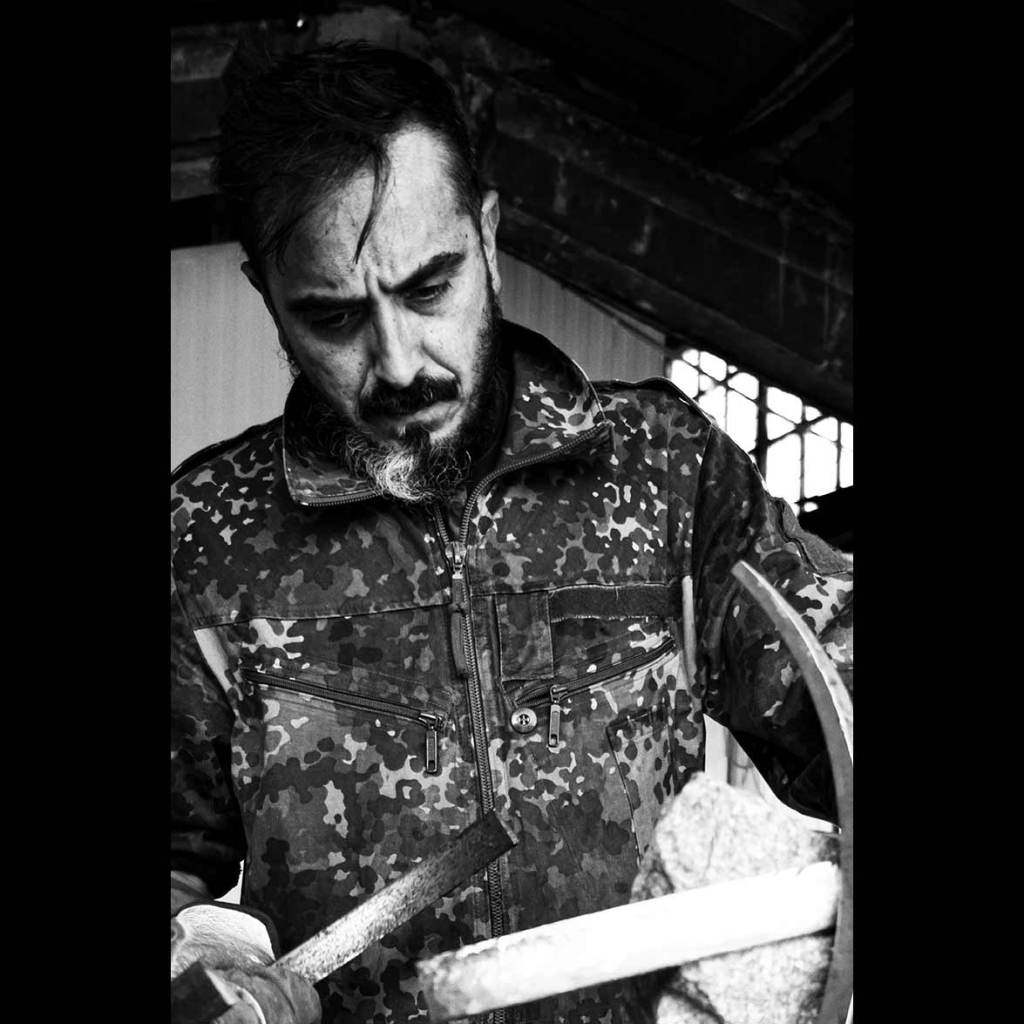
Daniele Nitti Sotres, scultore italo-spagnolo, nasce a Milano nel 1977. Diplomato con lode in Scenografia e Scultura all’Accademia di Belle Arti di Brera dove consegue un ulteriore Master in Landscape Design. Durante gli studi accademici scopre un forte richiamo verso la materia e l’energia emanata da essa, in particolare verso i metalli e le pietre. Questo richiamo lo spinge gradualmente ad allontanarsi dalla finzione scenografica per instaurare un dialogo sempre più intimo e stretto con l’energia primaria del fare scultoreo e i materiali di origine naturale. Dagli esordi ad oggi indaga le differenti possibilità d’intervento scultoreo e le relazioni possibili con lo spazio, da quello intimo e di piccole dimensioni dove poter dialogare ed interrogare i materiali, passando allo sviluppo di installazioni temporanee ambientali sino alla realizzazione di sculture permanenti di scala monumentale.
Inizia l’attività espositiva nel 2004 e partecipa a esposizioni collettive e personali in Italia e all’estero. Tra le principali mostre personali si segnalano “Dualismi” e “Trino” presso Grosseti Arte a Milano, “Generazioni a colloquio” con Giovanni Campus al Museo della Permanente e “Crocevia” presso Studio Museo Francesco Messina. Ha realizzato installazioni temporanee e sculture permanenti in spazi pubblici e privati. Ha ricevuto premi e segnalazioni in concorsi nazionali ed internazionali di scultura. Parallelamente alla ricerca scultorea, svolge l’attività di docente di scultura e scenografia. Ha collaborato con architetti, scenografi e registi per allestimenti teatrali e cinematografici, con studi d’architettura specializzati in progettazione di paesaggio ed organizzazione di eventi. Del suo lavoro hanno scritto, tra gli altri, Giovanni Maria Accame, Claudio Cerritelli, Angela Madesani, Luca Pietro Nicoletti e Francesco Poli.
English text
Intervista a Daniele Nitti Sotres
#paroladartista #intervistaartista #artistinterview #daniellenittisotres
Parola d’Artista: For most artists, childhood is the golden age when the first symptoms of a certain propensity to belong to the art world begin to appear. Was that the case for you too? Tell us.
Daniele Nitti Sotres: Ever since I can remember, I have deeply loved drawing. As a child, I spent a lot of time between sheets of paper and pencils, being an only child and having had a lot of time alone, drawing was a very important companion in my childhood. Moreover, coming from a family that was completely unfamiliar with the world of art, my approach to this field was gradual and was initially marked by my school discoveries.
Pd’A: Did you, like many, have a first artistic love?
DNS: I am in love with sculpture and I could draw up a very long list of sculptors who have opened the doors to this wonderful field of art for me. However, there is an encounter that was a watershed in my artistic journey. In 1998, during a trip to the Basque Country, I visited an anthological exhibition by Eduardo Chillida at the Guggenheim Museum in Bilbao. At the time, I was studying set design at the Academy of Fine Arts and there was a common thread connecting them in my projects, and that was the use of metals. I remember as if it were yesterday my amazement and admiration when I visited that exhibition and when it came out I focused on what I wanted to do in life: sculptor. Chillida’s work opened my eyes, prompted me to ask myself questions, and from there on I began to study ‘constructed’ sculpture. Artists such as Naum Gabo, Julio Gonzales, Jorge Oteiza, David Smith or Anthony Caro were the focus of study and investigation for several years in my first phase of searching for an artistic identity.
Pd’A: Can you describe your working process?
DNS: In recent years, my work has achieved a freedom that I find very stimulating, I experience a very intense period where I can analyse and develop different sculptural ideas and phases. This is why I find it difficult to describe my research process in a univocal way. What I am developing are sculptural hypotheses that start from different issues. In small and medium-sized sculptures, I seek a very intimate and physical approach, which starts with very indicative and quick sketches and leads me to discover and realise dialogues with materials that become generators of three-dimensional objects. In installations and sculptures on an environmental scale, the starting issues are ideational and design-oriented, with a focus on exhibition contexts and specific themes. In the research on and with paper, I pose even different problems, related to the two-dimensional support and the theme of lightness.
Pd’A: What does lightness mean to you?
DNS: Lightness is a physical and mental concept. In my work as a sculptor, one of the aspects that fascinates me is the search for lightness through weight, to make something that has a physical weight seem light, this is a research possibility that interests me a lot. When working with materials such as iron, stone, earth or wood, it is possible to interpret this aspect in very different ways. On the other hand, when I work with paper, the approach to the theme of lightness is very different, as it is a lightweight material, and my interest shifts to the lyrical and poetic possibilities of the material itself.
Pd’A: Does drawing have any importance in your working process?
DNS: Drawing is an indispensable travelling companion. I draw a lot and often, the sketching phase is an indispensable moment of reflection in all the sculptural paths I travel. Sometimes I also use copying from life, especially when I am travelling, to fix stimuli on paper, which have the value of real travel notes.
Pd’A: Different materials often coexist in your sculptures: metal, clay, stone…how do you choose the materials you work with?
DNS: My sculptures develop from research into the possibilities of the relationship between materials and space. Starting with ancient materials and seeking a dialogue between them, I began to determine what I call my plastic alphabet. My choice of field is the use of natural materials (stone, wood and earth) or materials of natural origin (metals, glass and paper), which possess very different characteristics, both in terms of their sculptural approach and in terms of their own specificities. Natural materials carry with them what is the genus loci, their own intrinsic energy that varies and makes each element, each piece, unique. For example, I use many types of stone, from marble to granite, from sandstones to alabasters, and each piece, even if it is made of a similar material but with a different origin, possesses a unique energy that determines and stimulates each individual work. What characterises my work is precisely the pursuit of dialogue with the material. I do not consider myself a sculptor who imprints his own univocal and formal vision on the material; on the contrary, my will is to arrive at the form through an energetic exchange, a generator of stimuli, hypotheses and solutions.
Pd’A: What role does light play in your work?
DNS: Light is a central element for any sculpture and for any sculptor. Light can make a three-dimensional work live or die. Also, how it interacts with materials, finishes and textures is crucial.
Pd’A: How important are the categories of time and space in what you do?
DNS: Space is always at the centre of my work, there are different types of space I investigate, from the intimate one that I can control and interrogate with my hands to the environmental one that leads me to develop installations or monumental sculptures. Time is a concept that interests me a lot. I think it is essential to be aware of the time in which we live, of today, but without forgetting the past, history, what has happened both in terms of art history and experience, both as an individual and as a human being.
Pd’A: When you do an exhibition, are you interested in the idea of staging the work?
DNS: Having a professional background as a set designer, staging is something I always take into consideration. But even in this case, I am not interested in a single way of exhibiting my work. Each exhibition is an occasion that determines and directs the realisation phase of an exhibition.
Pd’A: How important is the relationship that is created between the various works that you decide to exhibit together?
DNS: When I realise a solo exhibition, I usually try to develop an account of salient moments of my research. I try to relate the works to each other and to the context, so that I can reveal a certain moment in my journey. Then other aspects come into play, such as materials, finishes and textures that can generate associative or contrasting display choices.
Pd’A: What is your idea of beauty?
DNS: Beauty is an absolutely personal and individual concept. In the artistic sphere from the avant-garde onwards, we have largely understood that everything and the opposite of everything applies. There is no univocal idea of beauty as there could have been in the past. There are no longer canons of beauty and in some respects this is fortunate. It is a great freedom. Beauty can be found in harmony but also in contrasts, in balance or imbalance, in composition or in details.
Pd’A: What is your position in relation to your work?
DNS: In my work there is a search for beauty, understood as a search for harmony or contrast between divergent elements and the space that is affected by them.
Daniele Nitti Sotres, Italian-Spanish sculptor, was born in Milan in 1977. He graduated with honours in Scenography and Sculpture at the Brera Academy of Fine Arts, where he obtained a further Master’s degree in Landscape Design. During his academic studies, he discovered a strong attraction towards matter and the energy emanating from it, in particular towards metals and stones. This attraction gradually pushed him away from scenographic fiction to establish an increasingly intimate and close dialogue with the primary energy of sculpture-making and materials of natural origin. From his beginnings to the present day, he has been investigating the different possibilities of sculptural intervention and possible relationships with space, from the intimate, small-scale space where he can dialogue and question materials, to the development of temporary environmental installations and the creation of permanent sculptures on a monumental scale.
He started his exhibition activity in 2004 and took part in group and solo exhibitions in Italy and abroad. Major solo exhibitions include ‘Dualismi’ and ‘Trino’ at Grosseti Arte in Milan, ‘Generazioni a colloquio’ with Giovanni Campus at the Museo della Permanente and ‘Crocevia’ at Studio Museo Francesco Messina. He has created temporary installations and permanent sculptures in public and private spaces.
He started exhibiting in 2004 and took part in group and solo exhibitions in Italy and abroad. His main solo exhibitions include ‘Dualismi’ and ‘Trino’ at Grosseti Arte in Milan, ‘Generazioni a colloquio’ with Giovanni Campus at Museo della Permanente and ‘Crocevia’ at Studio Museo Francesco Messina. He has created temporary installations and permanent sculptures in public and private spaces. He has received prizes and mentions in national and international sculpture competitions. Parallel to his sculptural research, he works as a lecturer in sculpture and set design. He has collaborated with architects, set designers and directors for theatre and film productions, with architectural firms specialising in landscape design and event organisation. Giovanni Maria Accame, Claudio Cerritelli, Angela Madesani, Luca Pietro Nicoletti and Francesco Poli, among others, have written about his work.
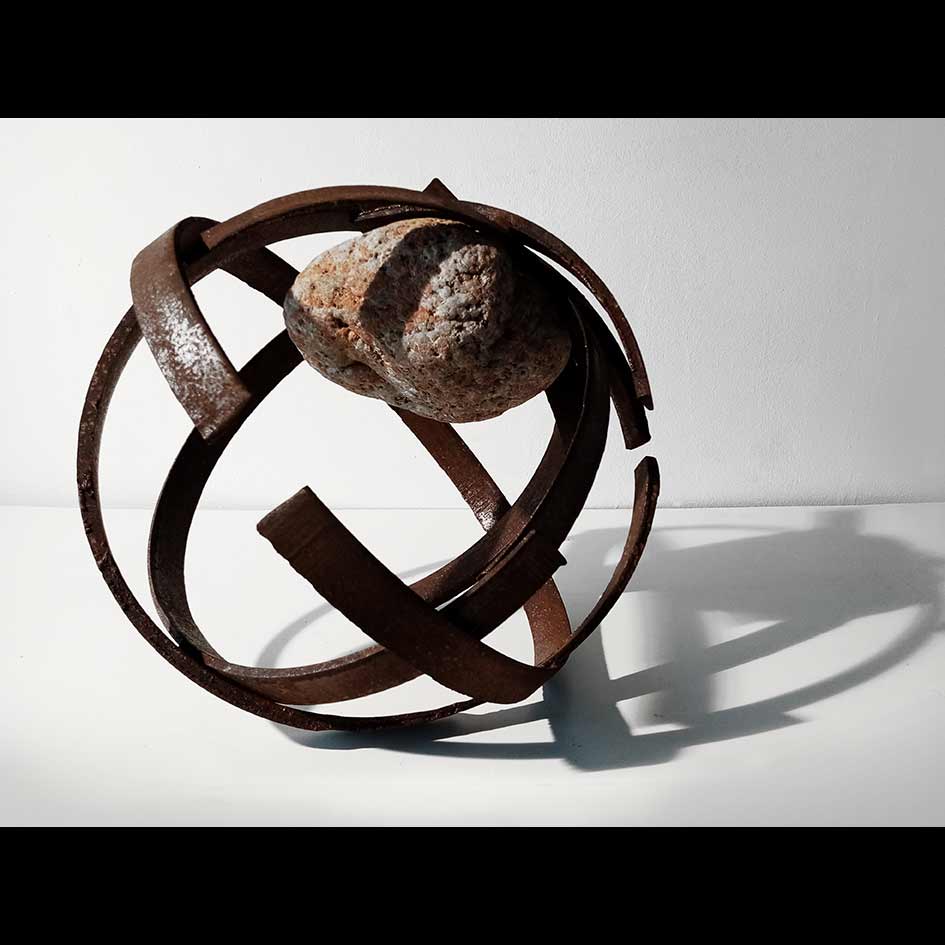
granito sardo e acciaio patinato
31x31x31 cm
2021
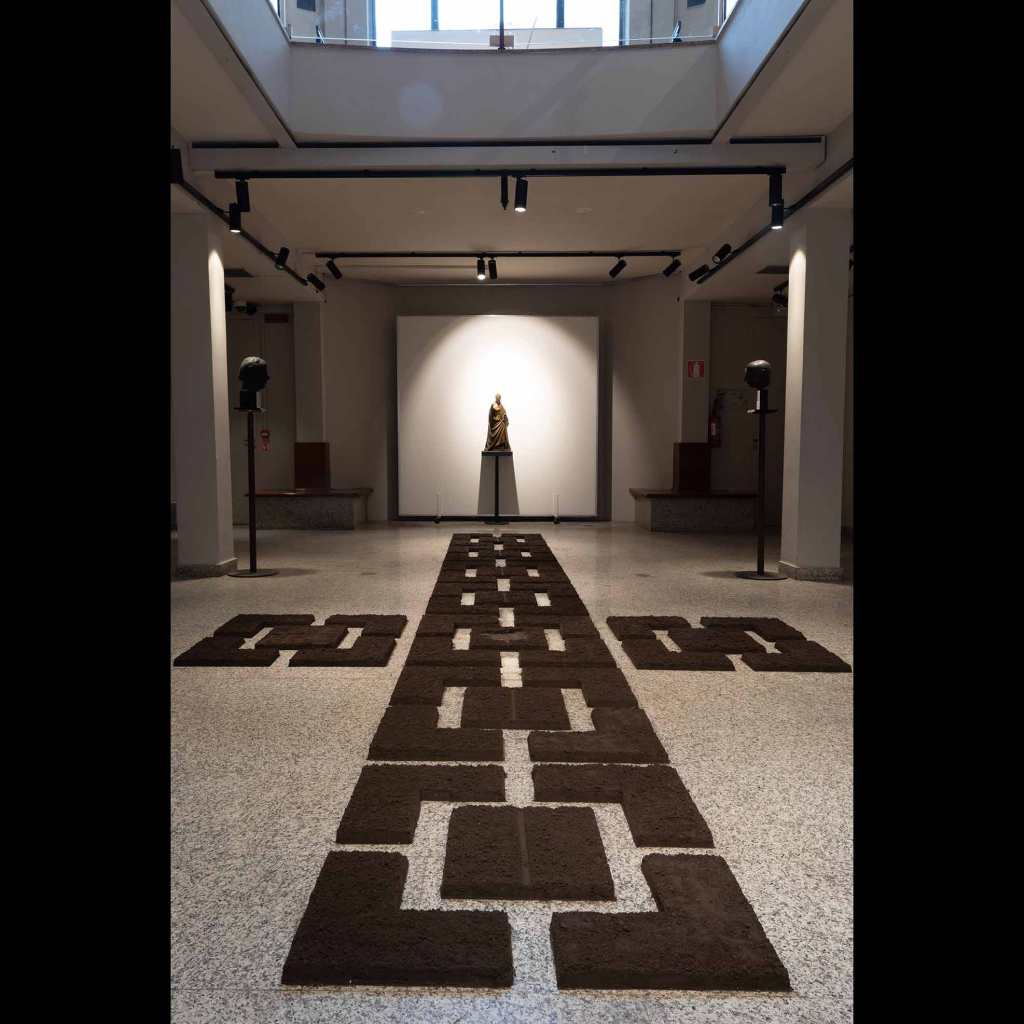
Terra di fonderia
9 elementi. Site specific
2019
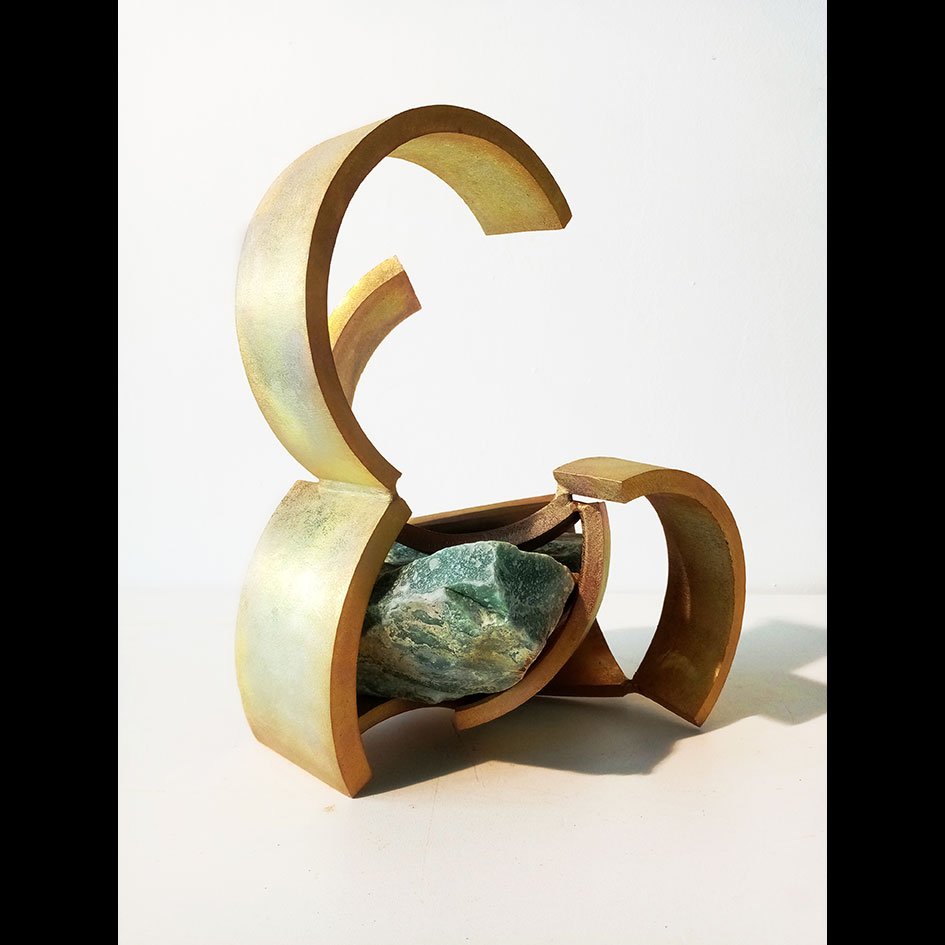
quarzo verde e acciaio zincato
30x15x23 cm
2021
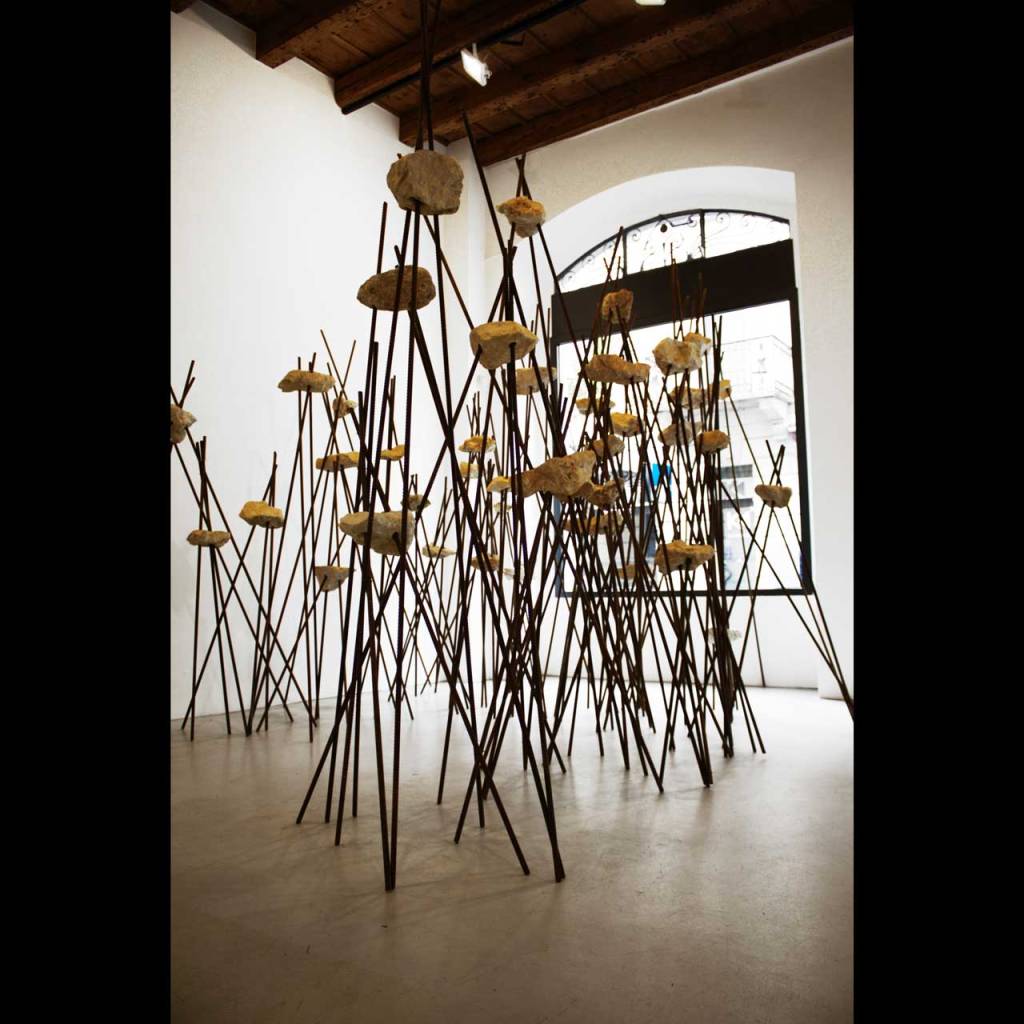
Marmo di Zandobbio e acciaio nervato
Sitespecific
2023
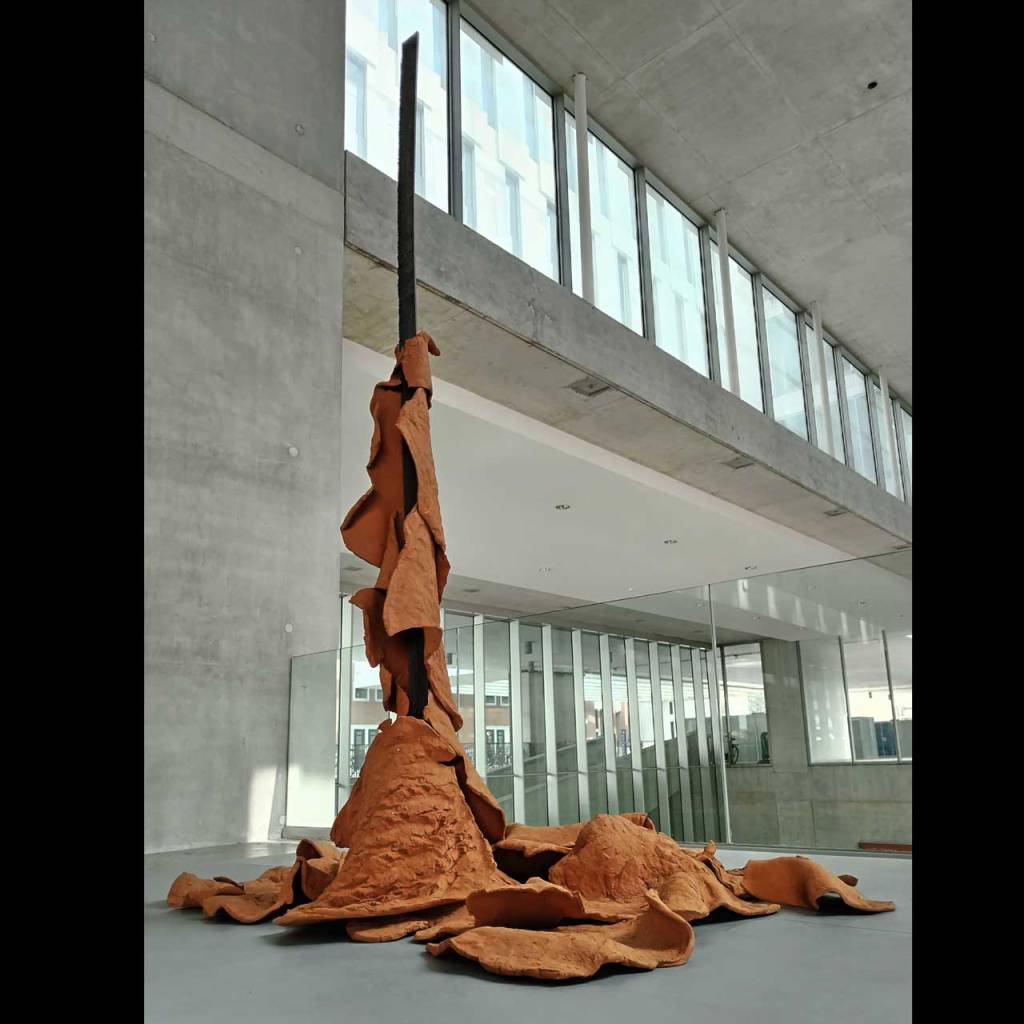
Terracotta e acciaio
201x112x157 cm
2022
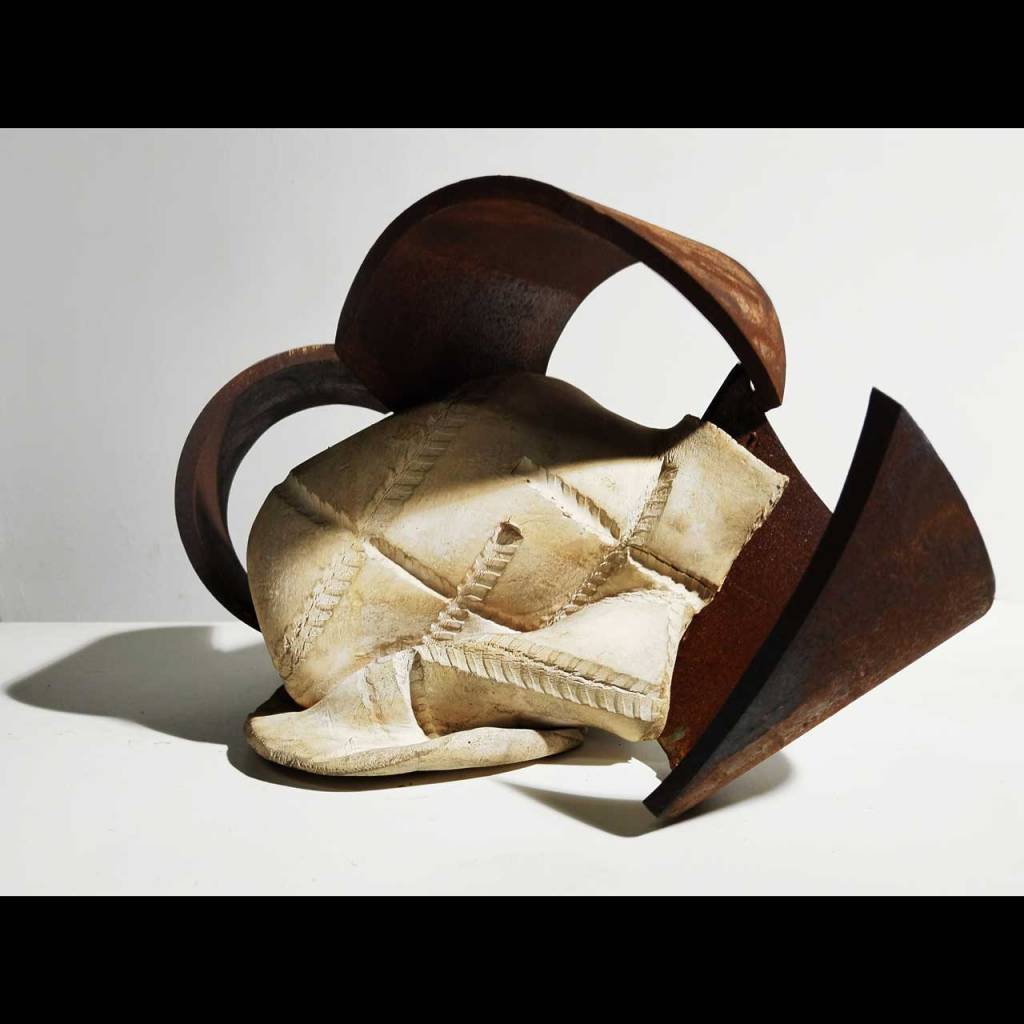
Terraglia e acciaio patinato
31x20x18cm
2024
 paroladartista.com