
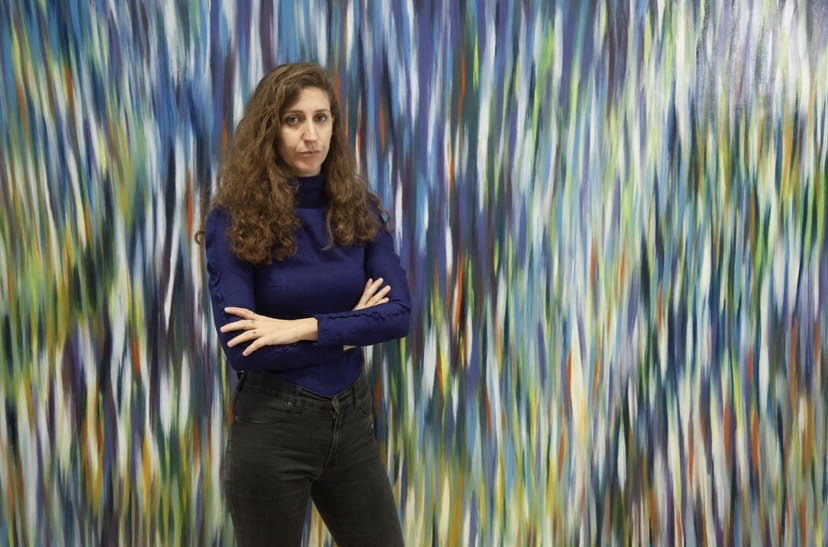
(▼Scroll down for English text)
#paroladartista #federikafumarola #artistinterview #itervistaartista
Parola d’Artista: Per la maggior parte degli artisti, l’infanzia rappresenta il periodo d’oro in cui iniziano a manifestarsi i primi sintomi di una certa propensione ad appartenere al mondo dell’arte. È stato così anche per te? Racconta.
Federika Fumarola: Ricordo che ho iniziato a disegnare verso i tre anni e per me era il gioco preferito. Disegnavo soprattutto le scene che osservavo direttamente, vita domestica, scenari naturali. Sicuramente ricordo che disegnavo moltissimo. Mi piaceva colorare, anche alle scuole elementari disegnavano molto, la maestra ci teneva a farci decorare i quaderni con cornicette a pattern e sorte di vignette illustrative dei racconti. Verso i 6/7 anni ho iniziato a disegnare delle modelle con abiti sfavillanti in linea con la moda di quegli anni, gli anni ‘80, dicevo che volevo diventare una stilista. Sicuramente il disegno era per me un modo di leggere il mondo circostante, lo utilizzavo come un diario quotidiano ed ho continuato a farlo per il resto della vita.
Pd’A: Anche tu, come tanti, hai avuto un primo amore artistico?
FF: Certo ho avuto un primo amore artistico durante il liceo, mi innamorai del lavoro di Paul Klee. Lessi la sua teoria della forma e della figurazione, rimasi incantata da tutto il suo lavoro sulla percezione della forma e di conseguenza del colore. Ricordo ancora quando vidi dal vivo una sua opera per la prima volta, era la raffigurazione astratta di un giardino dopo la pioggia. Rimasi colpita perché le piante nel giardino erano rappresentate in modo astratto ma comunque si leggeva la loro figura, in più, sembrava che avesse rappresentato il fatto che fossero state bagnate dalla pioggia, infatti le foglie apparivano “scure” “cadenti” “appassite”. Osservare quel piccolo dipinto fu per me una vera rivelazione.
Pd’A: Puoi descrivere il tuo processo di lavoro?
FF: Innanzitutto tengo a precisare che sto parlando del lavoro vero e proprio, non quello progettuale molto più lungo e complesso ed in esso c’è da differenziare tre momenti principali, l’inizio, il corso d’opera e la fine. Rispetto questa differenziazione inizialmente studio la dimensione della tela che è il limite del mio campo d’azione. Durante questa fase mi pongo in due modi principali, in un processo di mimesi, ossia di fusione totale con l’opera, con il supporto, con il soggetto che comprende tutti i suoi componenti, dal pennello alla luce, dai suoni circostanti al colore. Ultimamente sto sondando un altro processo, quello di antitesi, ossia di contrasto con il supporto, con l’oggetto, che tende ad una maggiore chiarezza del colore e lentezza del segno, dove appunto questi due soggetti principali emergono maggiormente dal fondo dell’opera. Finita questa fase centrale del processo e finito il lavoro pratico, mi ritrovo sempre e comunque di fronte ad una nuova evidenza e non posso che constatare ogni volta il bisogno di iniziare un altro lavoro, in attesa della prossima rivelazione.
Pd’A: L’idea di tessitura visiva ha una qualche importanza per te?
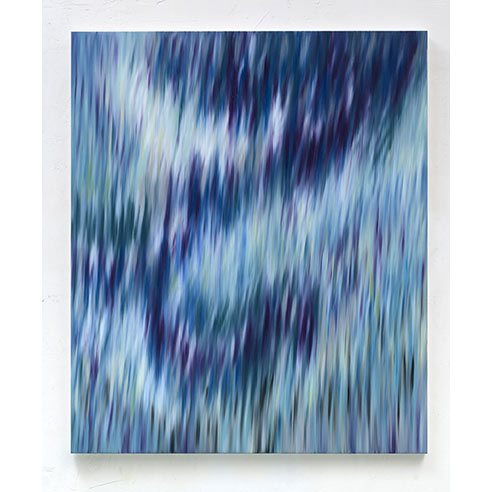
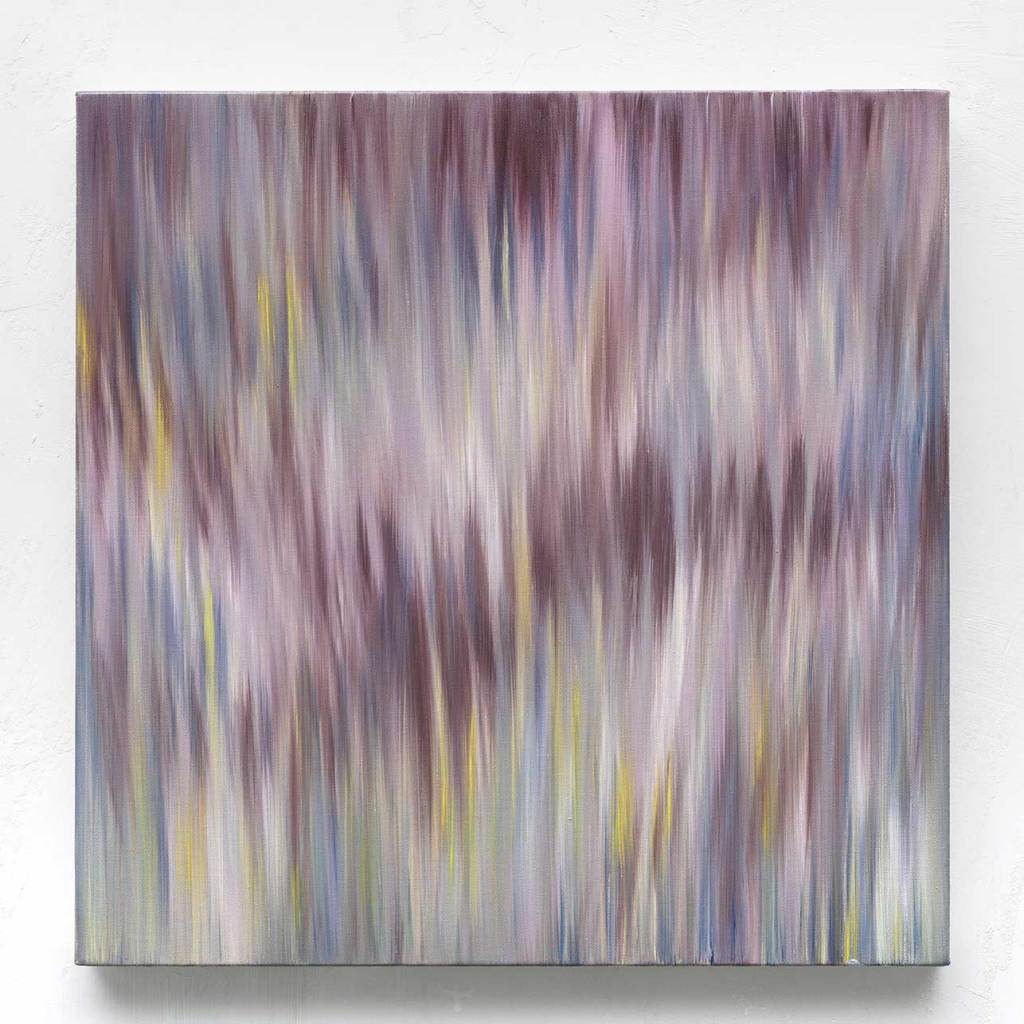
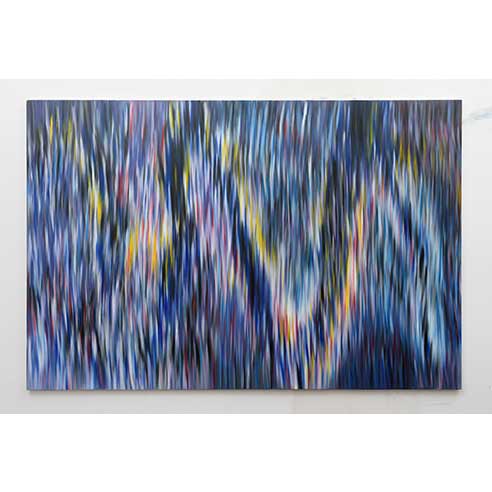
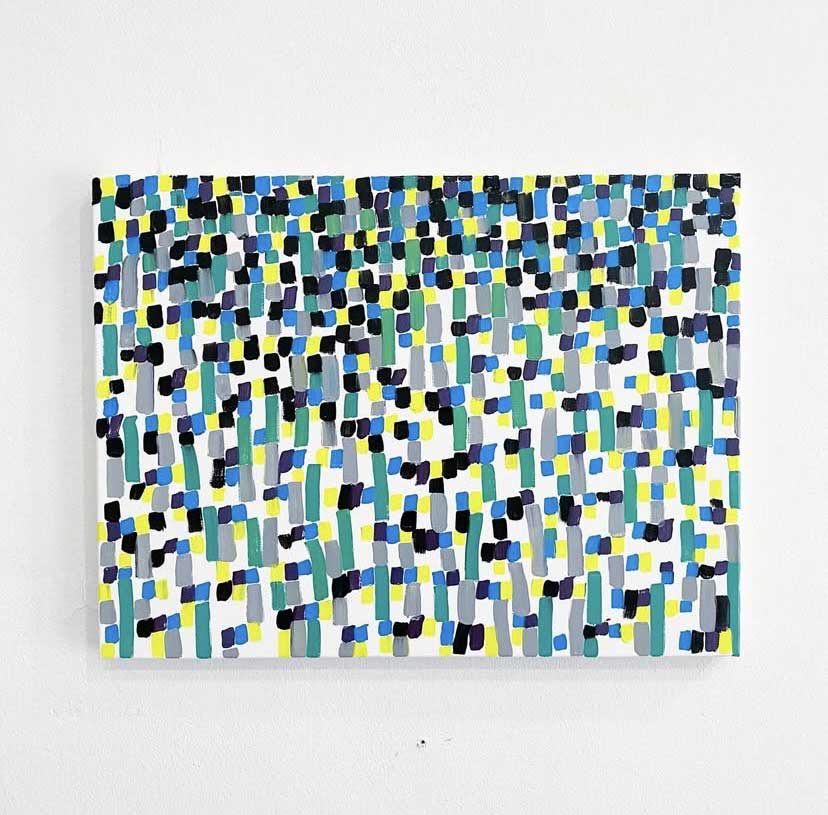
FF: Viviamo in un mondo dove siamo sovraesposti ad una quantità di immagini digitali inimmaginabile prima. Per me Il pixel ha sicuramente rivoluzionato il nostro modo di guardare anche se noi ancora non ce ne rendiamo conto, ed il pixel mi appare proprio come una tessitura visiva, tessitura che nella mia ricerca trovo interesse a far emergere. Partiamo dal presupposto che per me il supporto dell’opera vive di vita propria, in quanto ha un proprio “ritmo” visuale che si definisce con lo sguardo percettivo di chi interagisce con lui. La pittura risulta più o meno aderente ad esso quindi al campo visivo nel quale si opera, nel mio caso quello della tela. Utilizzo la pittura ad olio per dipingere quindi seguo una serie di dettami rispetto alle asciugature del colore e questo mi guida molto nella struttura compositiva. Per il resto dell’opera spesso ho un’ idea cromatica guida ma alcune aree le lascio diciamo aperte all’improvvisazione compositiva e cromatica. Nella mia pittura il segno è protagonista tanto quanto il colore, e’ un segno che nella mia ricerca attuale va dall’alto al basso volutamente, sottolineando la caducità della materia come a sottolineare quella della natura delle cose. Questo “moto pittorico” costituisce la struttura della tessitura.
Pd’A: Che ruolo gioca la luce in quello che fai?
FF: Nel mio lavoro ha un ruolo fondamentale la luce che permea lo spazio che vivo mentre dipingo. La luce per me e’ un altro materiale con il quale lavorare alla stregua dei pennelli e dei colori. La luce fonde o meno il colore ed il segno, e’ limite e nello stesso tempo oltrepassare il limite della forma.
Pd’A: Sei interessata alla dimensione pittorica ?
FF: Certo. La dimensione pittorica per me è qualcosa che travalica il mondo come lo vediamo oggi, e’ entrare in una visione che cerca di rilegare nuovamente lo sguardo ad una percezione perduta, in questa epoca in cui siamo sottoposti a stimoli visivi continui, impulsi sonori incessanti, per me la dimensione pittorica può in qualche modo mediare tutto questo over, iper, ultra.
Pd’A: Che importanza hanno le categorie di tempo e spazio in quello che fai?
FF: Lo spazio ed il tempo sono fondamentali strumenti del mio lavoro. Mi interessa soprattutto materializzare visivamente un tempo e dare un’idea di spazio in quanto campo d’azione cognitivo.
Pd’A: Quando lavori realizzi più opere insieme o ti concentri su un lavoro alla volta?
FF: Dipende. Quando lavoro progettualmente mentalmente a volte il progetto da uno passa facilmente all’essere due, a volte tre, ma poi solitamente li isolo con degli appunti che restano appunti guida e li realizzo uno per volta.
Pd’A: Quando devi fare una mostra ti interessa l’idea di messa in scena del lavoro?
FF: Fin’ora non mi e’ mai capitato ad esempio di forzare molto lo spazio di allestimento di una mostra. Di solito lo assecondo per una naturale narrazione del luogo, a volte lavoro con opere site specific. Più che messinscena forse lo dichiarerei un insieme di lavori che tende a sottolineare i dettami del contenitore con l’intento di valorizzarne le peculiarità .
Pd’A: Che importanza ha la relazione che si viene a creare fra i vari lavori che decidi di esporre insieme?
FF: Nella mia ricerca attuale tendo a considerare ogni opera come a se stante. Anche se nell’insieme di una mia mostra il corpo di opere potrebbe risultare piuttosto omogeneo, cerco di valorizzare al massimo il rapporto 1 a 1 tra opera e osservatore.
Pd’A: Che idea hai della leggerezza?
FF: Nel lavoro per me è importante la distribuzione dei pesi compositivi e cromatici al fine di distribuire lo sguardo in maniera da esaltare l’aderenza tra esso e l’opera. Questo crea una sorta di campo visivo che probabilmente risulta più o meno leggero alla percezione sensoriale.
Pd’A: Che idea hai della bellezza?
FF: L’idea di bellezza per me e’ semplicemente collegata al concetto di canone estetico. Così come nella società moderna ed ancora di più in quella contemporanea abbiamo subito uno svuotamento del significato, una caduta del simbolo, assistiamo anche ad una inesorabile caduta estetica. Per questo secondo me l’idea del bello è qualcosa da ricostruire, che in qualche modo ha bisogno di ripartire da zero.
Pd’A: Quando non c’è nessuno che le osserva le opere d’arte esistono?
FF: Sì le opere d’arte esistono anche quando non c’e nessuno come resistono al tempo, perché vivono di una vita propria che trascende sia da chi le ha create che da chi le fruisce.
Pd’A: Qual è la sua posizione rispetto al suo lavoro?
FF: Così come Il mio lavoro tende a criticare la velocità dei tempi contemporanei, io mi pongo criticamente rispetto ad esso. Attraverso il mio vissuto nel processo costitutivo dell’immagine che sto creando, lascio emergere più o meno chiaramente una struttura visiva in cui la percezione odierna tende a perdersi, per recuperare un tempo di osservazione attraverso l’esperienza fenomenica dell’oggetto artistico.
Federika Fumarola nata nel 1981. Vive e lavora a Roma.
English text
Interview to Federika Fumarola
#paroladartista #federikafumarola #artistinterview #itervistaartista
Parola d’Artista: For most artists, childhood represents the golden age when the first symptoms of a certain propensity to belong to the art world begin to appear. Was that the case for you too? Tell us.
Federika Fumarola: I remember that I started drawing around the age of three and it was my favourite game. I mainly drew the scenes I observed directly, domestic life, natural sceneries. I definitely remember drawing a lot. I liked to colour, even in primary school I drew a lot, the teacher kept us decorating our notebooks with patterned frames and illustrative vignettes of stories. Around the age of 6/7 I started drawing models with sparkling clothes in line with the fashion of those years, the 80s, I said I wanted to be a fashion designer. Definitely drawing was a way for me to read the world around me, I used it as a daily diary and I continued to do that for the rest of my life.
Pd’A: Did you, like many, have a first artistic love?
FF: Of course I had a first artistic love during high school, I fell in love with the work of Paul Klee. I read his theory of form and figuration, I was enchanted by all his work on the perception of form and consequently of colour. I still remember when I saw one of his works live for the first time, it was an abstract depiction of a garden after rain. I was impressed because the plants in the garden were depicted in an abstract way but nevertheless one could read their figure, moreover, it seemed that it had depicted the fact that they had been wet by rain, in fact the leaves appeared ‘dark’ ‘falling’ ‘withered’. Looking at that little painting was a real revelation for me.
Pd’A: Can you describe your working process?
FF: First of all, I would like to make it clear that I am talking about the actual work, not the much longer and more complex project work, and there are three main moments to differentiate between, the beginning, the course and the end. With respect to this differentiation I initially study the size of the canvas, which is the limit of my field of action. During this phase, I position myself in two main ways, in a process of mimesis, that is, of total fusion with the work, with the support, with the subject that includes all its components, from the brush to the light, from the surrounding sounds to the colour. Lately I have been probing another process, that of antithesis, i.e. of contrast with the support, with the object, which tends towards greater clarity of colour and slowness of sign, where precisely these two main subjects emerge more from the background of the work. Once this central phase of the process is over and the practical work is finished, I always find myself confronted with new evidence and I cannot help but feel the need to start another work each time, waiting for the next revelation.
Pd’A: Does the idea of visual texture have any importance for you?
FF: We live in a world where we are overexposed to an unimaginable amount of digital images before. For me, the pixel has certainly revolutionised the way we look, even if we don’t realise it yet, and the pixel appears to me precisely as a visual texture, a texture that I find interesting to bring out in my research. Let us start from the assumption that for me the support of the work lives a life of its own, as it has its own visual ‘rhythm’ that is defined by the perceptive gaze of those who interact with it. The painting is more or less adherent to it and thus to the visual field in which one operates, in my case that of the canvas. I use oil paint to paint so I follow a series of dictates with regard to the drying of the colour and this guides me a lot in the compositional structure. For the rest of the work, I often have a guiding chromatic idea but some areas I leave open to improvisation, let’s say compositional and chromatic improvisation. In my painting, the sign is as much a protagonist as the colour, and in my current research it goes from top to bottom deliberately, emphasising the transience of matter as if to underline the transience of the nature of things. This ‘pictorial motion’ constitutes the structure of the texture.
Pd’A: What role does light play in what you do?
FF: In my work, light plays a fundamental role, permeating the space I experience while painting. Light for me is another material to work with in the same way as brushes and colours. Light merges colour and sign, it is the limit and at the same time the limit of form.
Pd’A: Are you interested in the pictorial dimension?
FF: Of course. The pictorial dimension for me is something that goes beyond the world as we see it today, it is entering into a vision that tries to re-bind the gaze to a lost perception, in this era in which we are subjected to continuous visual stimuli, incessant sound impulses, for me the pictorial dimension can somehow mediate all this over, hyper, ultra.
Pd’A: How important are the categories of time and space in what you do?
FF: Space and time are fundamental tools in my work. I am mainly interested in visually materialising a time and giving an idea of space as a cognitive field of action.
Pd’A: When you work, do you make several works together or do you concentrate on one work at a time?
FF: It depends. When I work mentally sometimes the project goes from being one easily to being two, sometimes three, but then I usually isolate them with notes that remain guiding notes and realise them one at a time.
Pd’A: When you have to do an exhibition, are you interested in the idea of staging the work?
FF: So far, it has never occurred to me to force the staging space of an exhibition very much. I usually go along with it for a natural narration of the place, sometimes I work with site-specific works. More than staging, I would perhaps declare it a set of works that tends to emphasise the dictates of the container with the intention of enhancing its peculiarities.
Pd’A: How important is the relationship that is created between the various works that you decide to exhibit together?
FF: In my current research, I tend to consider each work as separate. Even if in the whole of one of my exhibitions the body of works might look rather homogeneous, I try to enhance the 1-to-1 relationship between work and viewer as much as possible.
Pd’A: What is your idea of lightness?
FF: In my work, the distribution of compositional and chromatic weights is important to me in order to distribute the gaze in a way that enhances the adherence between it and the work. This creates a kind of visual field that is probably more or less light to the sensory perception.
Pd’A: What is your idea of beauty?
FF: The idea of beauty for me is simply linked to the concept of the aesthetic canon. Just as in modern and even more so in contemporary society we have suffered an emptying of meaning, a fall of the symbol, we are also witnessing an inexorable aesthetic fall. That is why in my opinion the idea of beauty is something to be reconstructed, that somehow needs to start from scratch.
Pd’A: When there is no one to observe them, do works of art exist?
FF: Yes, works of art exist even when there is nobody as they resist time, because they live a life of their own that transcends both those who created them and those who enjoy them.
Pd’A: What is your position regarding your work?
FF: Just as my work tends to criticise the speed of contemporary times, I stand critically in relation to it. Through my experience in the constitutive process of the image I am creating, I let a visual structure emerge more or less clearly in which today’s perception tends to get lost, in order to recover a time of observation through the phenomenal experience of the art object.
Federika Fumarola born in 1981. She lives and works in Rome.



 paroladartista.com