
(▼Scroll down for English text)
#paroladartista #intervistacuratore #ciretorinterview #andratinterri #domenicorusso #laforesta
Parola d’Artista: Chi siete e come mai vi interessate all’Arte Contemporanea?
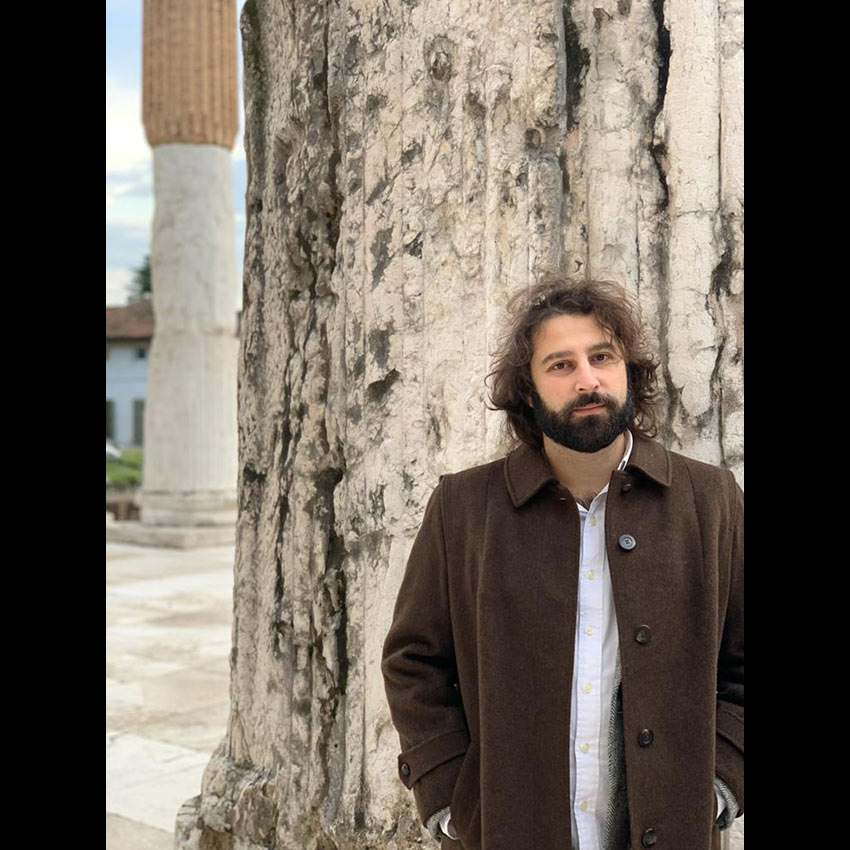
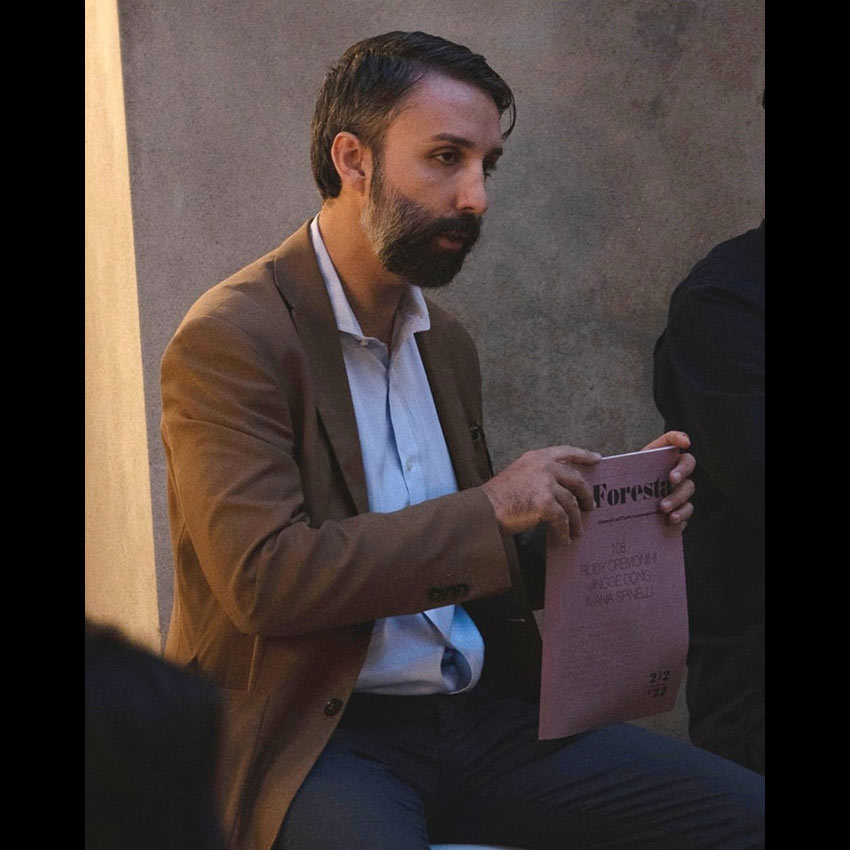
Andrea Tinterri: Ho iniziato ad occuparmi d’arte contemporanea a partire dai miei studi universitari, forse anche prima, e credo sia uno dei tanti modi per porsi qualche domanda e strappare qualche storta sillaba. Mi interessano le immagini nelle loro molteplici accezioni, mi interessa il loro consumo, la loro ricaduta sulla società, la loro violenza e la loro persuasione. E la fotografia, per quanto oggi possa essere limitante come termine, mi perseguita fin da quando ero bambino, retaggi famigliari che ho coltivato e trasformato fino a farli diventare un’ossessione.
Domenico Russo: Ho studiato Beni Artistici a Parma e seguo l’arte contemporanea da tempo. Recentemente ho pubblicato “Scritti per 108” con Silvana Editoriale, una raccolta di testi inediti sull’artista piemontese, 108, alias Guido Bisagni. E lo scorso anno “l’Altra Individualità”, sempre con Silvana Editoriale, un testo manifesto su un gruppo di pittori figurativi italiani, giovani temerari collocati dentro questo movimento peculiare. Guardo al contemporaneo perché cerco nell’arte la lettura profonda del presente, un presente che slitta velocemente in avanti verso un futuro imminente, non particolarmente brillante.
Pd’A: Che cos’è la Foresta e come nasce?
AT: Risponderei riportando l’editoriale del primo numero.
“La foresta è un luogo in cui è facile perdersi, uno straniamento necessario ad una nuova ricerca, un topos con cui confrontarsi, farci i conti, farsi male.
La pubblicazione nasce come spazio di studio e narrazione, ad ogni numero verranno invitati artisti che potranno scrivere senza filtri e censure di sorta, critici, menti pensanti: parola, disegno, fotografia, progetto, pittura, algoritmi, migrazioni aliene, ecc. ecc.
Un punto di riferimento per una lettura non allineata, per una visione affrancata da una logica inserzionista; le pagine de La Foresta non ospiteranno nessun tipo di pubblicità, nessun tipo di ammiccamento marchettaro, nessuna tacita prostituzione. Il sesso va fatto senza controllo, con la necessità di provare piacere, un piacere condiviso, tattile, un piacere da annusare.
La foresta è un luogo autonomo di dispersione e ricomposizione, groviglio denuclearizzato, dove non si viene imboccati e nemmeno presi per mano. È un luogo traumatico, con tutte le conseguenze dei luoghi traumatici, alterazioni comprese.
Non abbiamo nulla da dire se non ciò che non siamo, ciò che non vogliamo”.
DR: Abbiamo dato adito alla voglia di libertà, all’esigenza di veder nascere discorsi senza imbrigliarli in regole editoriali specchio di regole sociali. La Foresta è questo: un luogo disorientante dove il percorso varia di volta in volta e sono l’artista, chi scrive e il lettore a segnare un nuovo sentiero. Ci fa capire che le possibilità ci sono, che i cambiamenti li possiamo ottenere se sappiamo cercare muovendoci nel modo giusto. La Foresta induce all’azione.
Pd’A: Qual è la vostra idea di rivista ?
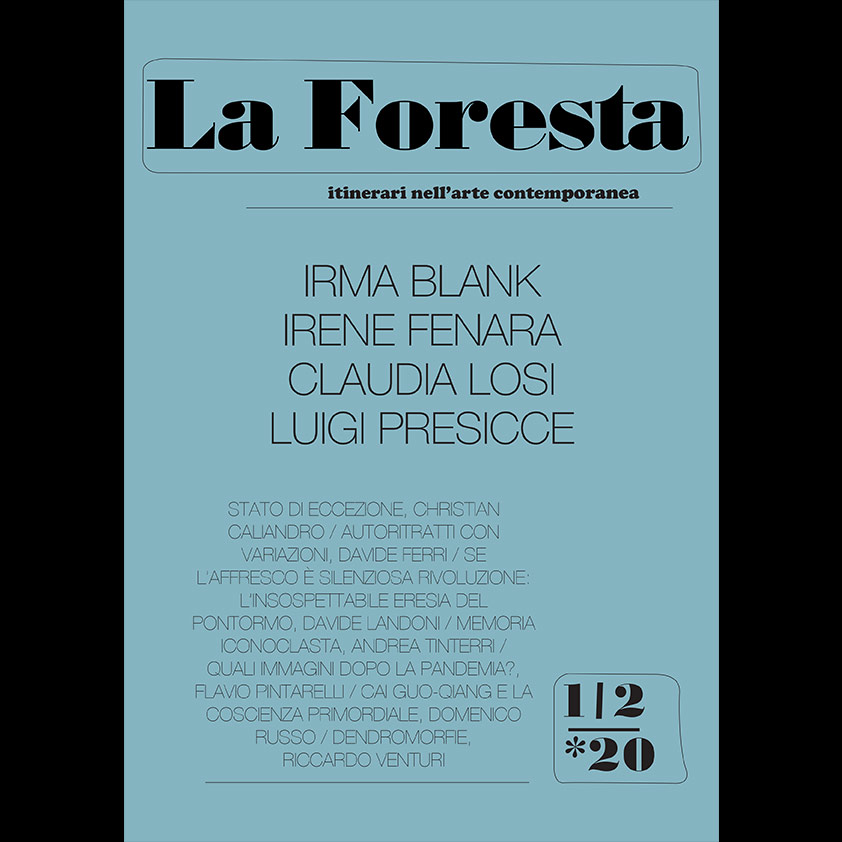
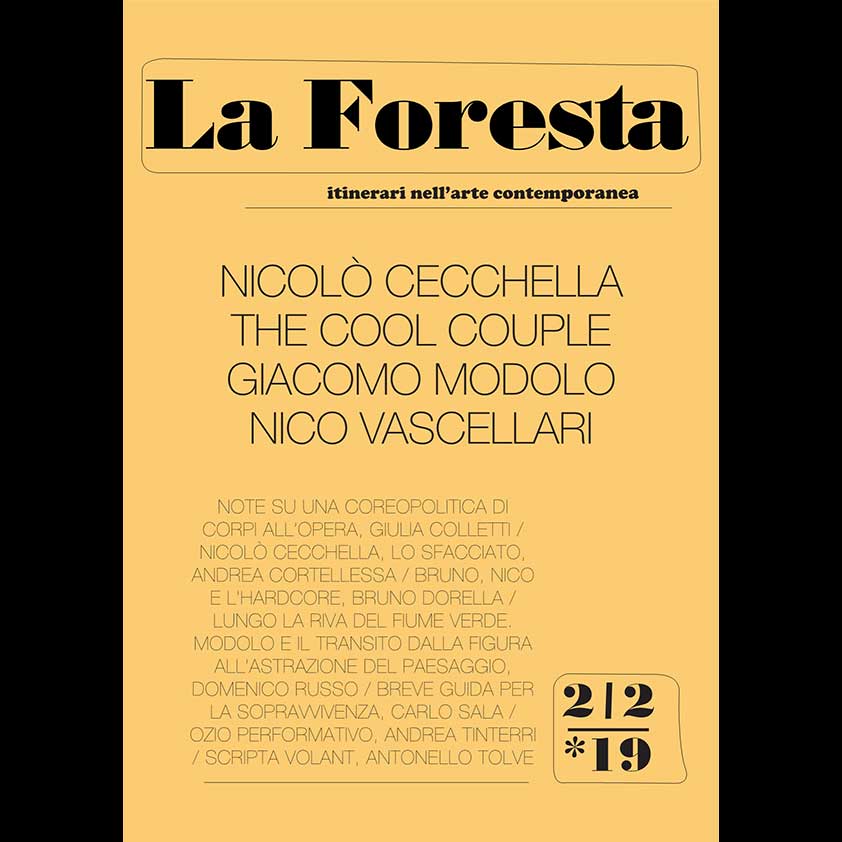
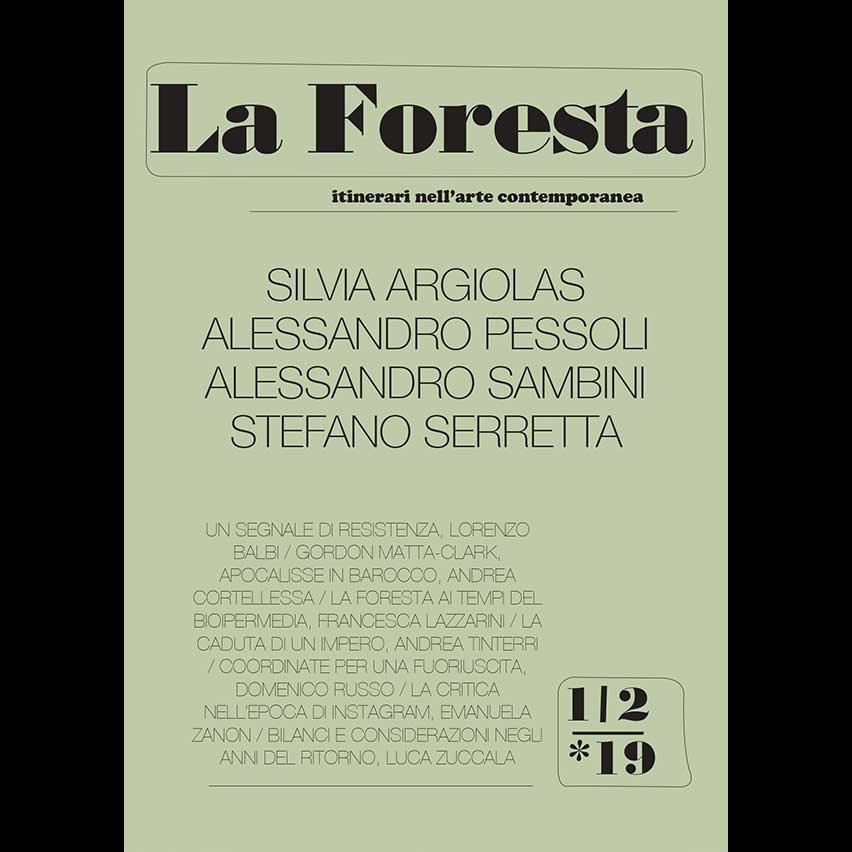
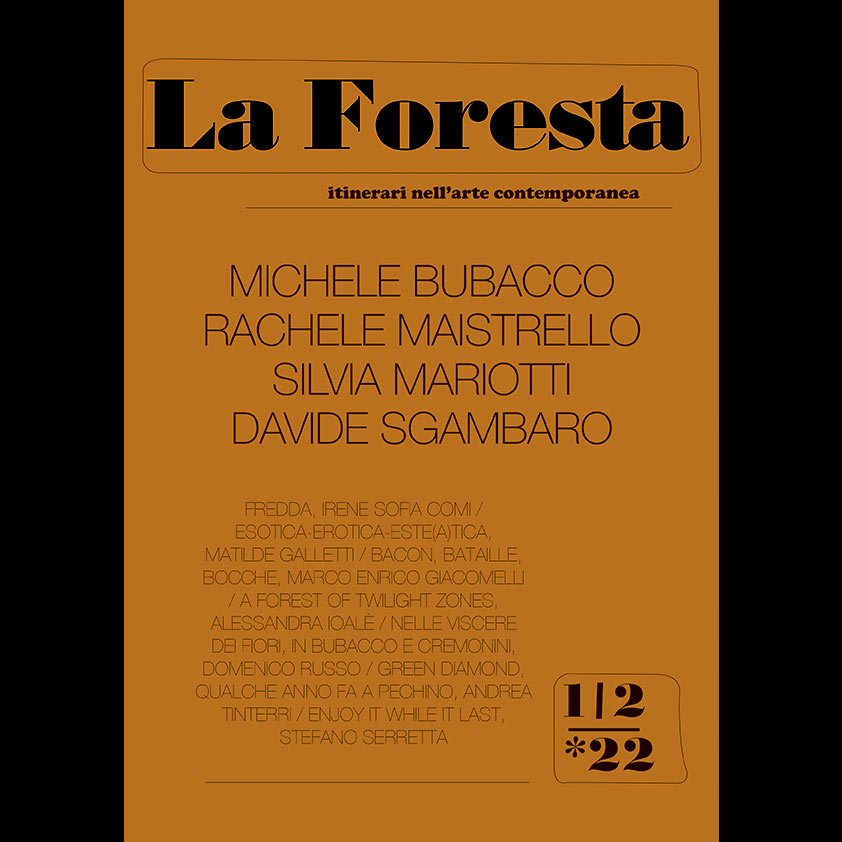
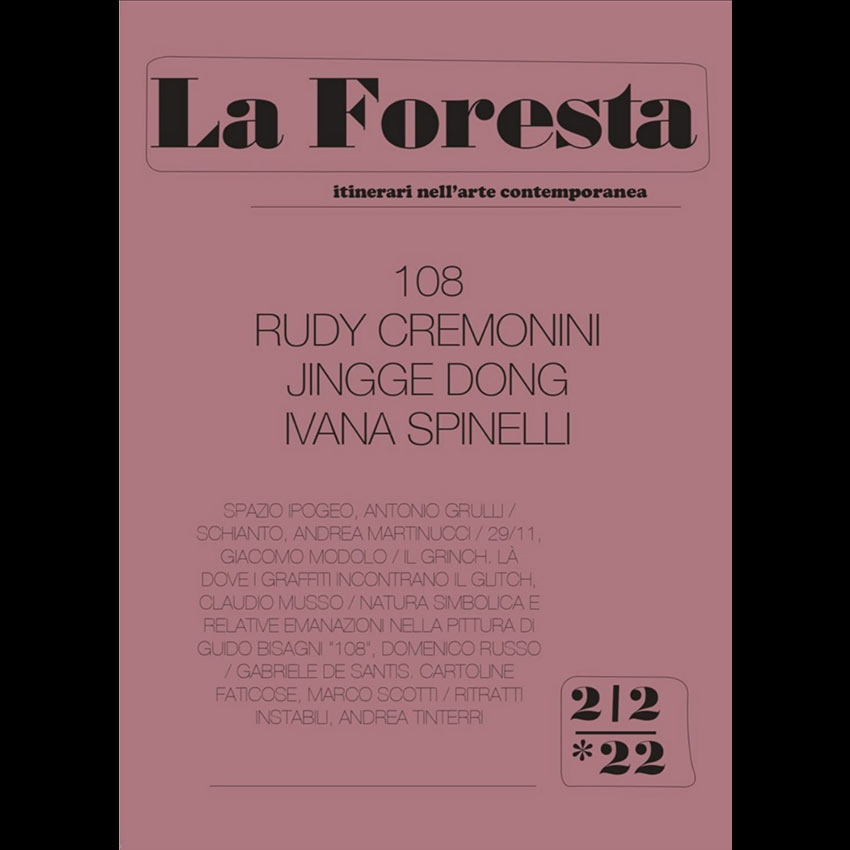
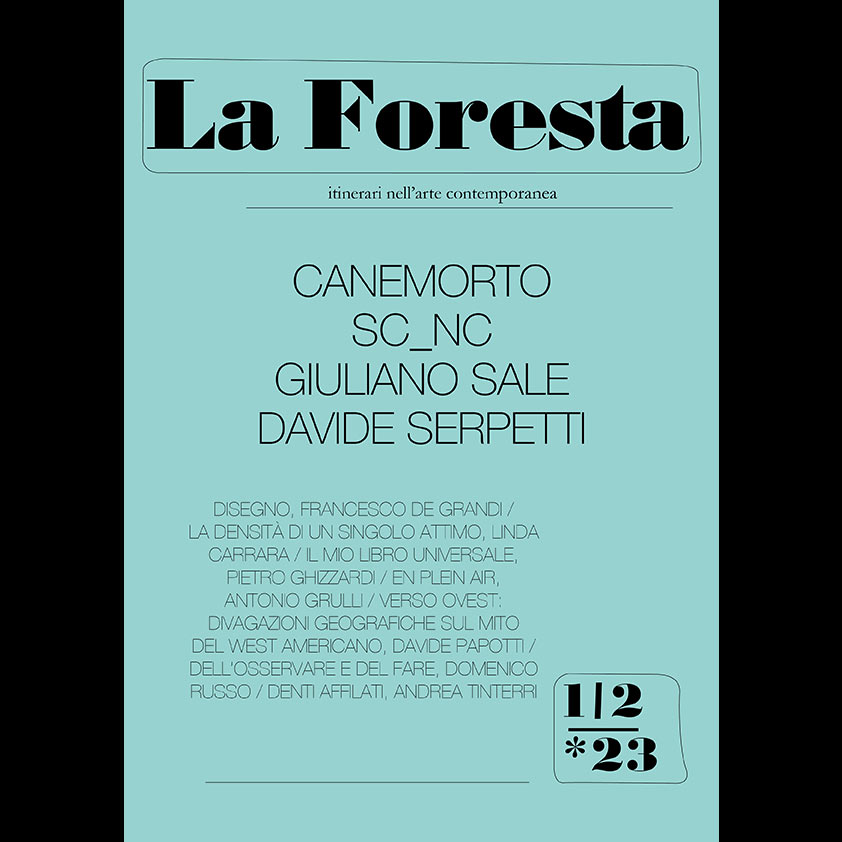
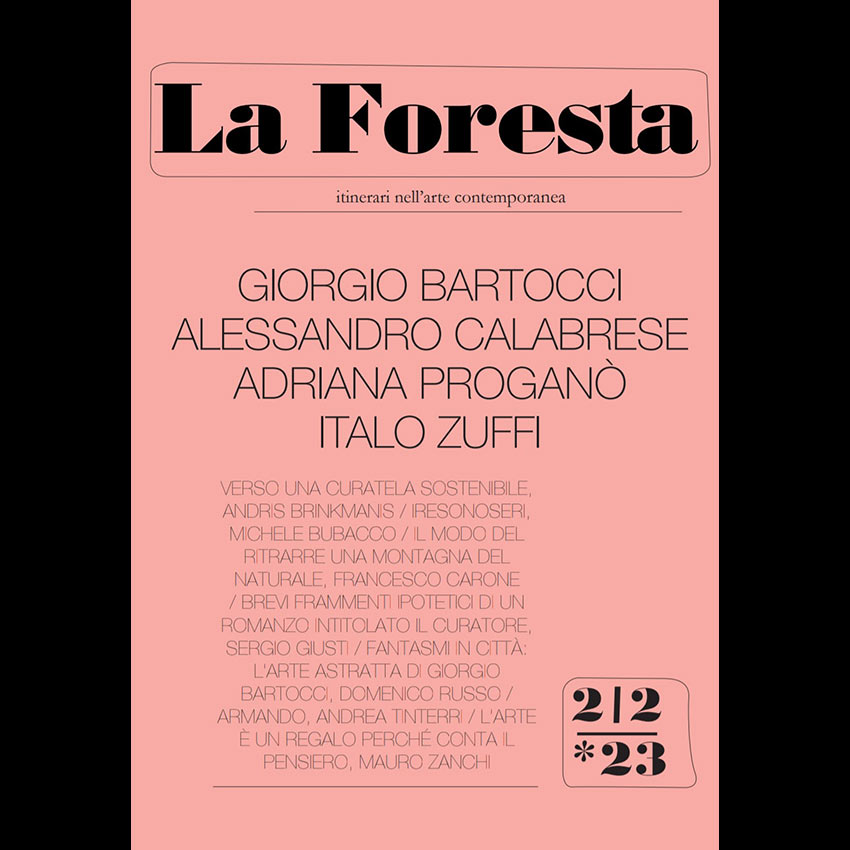
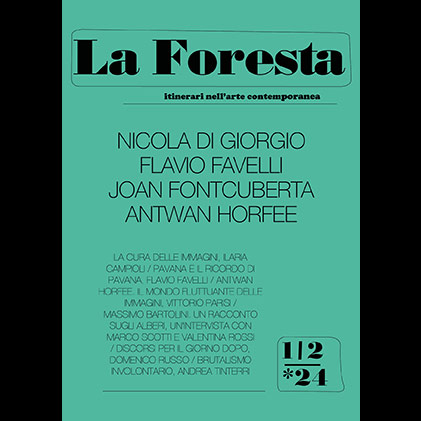
AT: Innanzitutto cartacea, sono un feticista della carta e ho sempre pensato la rivista come un oggetto tattile. E poi come spazio di ricerca il più possibile autonomo. Per questo non vogliamo inserzioni pubblicitarie, solo sette testi e quattro immagini inedite, gli articoli non sono corredati da alcun apparato iconografico, ma lasciati alla parola. Un’ecologia dell’immagine funzionale alla loro lettura. Idea condivisa anche con l’editore, Nuova Berti Editrice, che ha sottolineato questo aspetto disegnando una rivista sintetica, asciutta, essenziale, la cui copertina riporta solo i nomi degli artisti e i titoli degli articoli e dei loro autori. Nulla di superfluo, l’essenziale per sopravvivere.
Questa prospettiva viene supportata da Spazio C21 con cui collaboriamo da quasi due anni e con cui abbiamo innescato una felice contaminazione.
DR: La Foresta è un luogo, come dicevo, non alla portata di tutti. Rifugge da zone di aggregazione. Ma la sua collocazione periferica attrae coraggiosi individui che si avvicinano con profonda circospezione. Loro ne sono i protagonisti.
Pd’A:In che modo vi avvicinate al lavoro degli artisti che coinvolgete nella vostra rivista?
AT: Non esiste un modo specifico, direi facendo ricerca, frequentando mostre, festival, leggendo, sfogliando altre riviste, consolidando conoscenze e rapporti pregressi.
DR: È un incontro a metà strada tra le intenzioni e i desideri.
Pd’A: Come vedete dal vostro punto di vista il panorama artistico contemporaneo?
AT: Affaticato e troppo saturo. Per questo credo che un’ecologia dell’immagine sia necessaria. Troppi artisti, troppi curatori, troppe mostre inutili che probabilmente ho alimentato anch’io. Intanto la Storia farà il suo corso preservando solo il necessario. Ma qualcosa, in tutto questo pantano, continua ad interessarmi. Mi permetto di fare tre nomi con cui ho lavorato e la cui ricerca continuo a seguire, tre artisti della mia generazione, Alessandro Sambini, Stefano Serretta e Nicolò Cecchella.
DR: C’è tanta voglia di comunicare, di prendere posizione, di far sentire nel mondo la propria voce. Cogliere i discorsi, i suoni gutturali, i gesti, le forme e unirli ci procura le linee principali che vanno a formare le peculiarità del nostro futuro prossimo. Non possiamo trascurare di guardarlo.
Pd’A:Nel vostro lavoro vi interessa l’aspetto divulgativo?
AT: Cerchiamo di capire qual è il nostro pubblico di riferimento, ma La Foresta è un contenitore del contemporaneo, autogestito dagli artisti e dai critici, o chi altri, che invitiamo. L’aspetto divulgativo è una conseguenza ma non una priorità.
DR: Forse sì, oppure non particolarmente. Ci interessa creare un’area di scambio, un porto franco intimo dove il messaggio dell’artista possa essere consegnato direttamente nelle mani del lettore
Pd’A: In tutto questo i social che ruolo giocano e con che ottica li usate?
AT: Come detto in precedenza la rivista nasce come esperienza cartacea, i social sono uno strumento che inevitabilmente dobbiamo usare, sono un’appendice sicuramente utile ma non necessaria.
DR: Su Instragram ci siamo solo per far sapere che esistiamo ma, ammetto, ci sentiamo poco a nostro agio. Le pubblicazioni sono tutte cartacee perché La Foresta vuole sfuggire, per quanto possibile, alle dinamiche spersonalizzanti dei social. Vorremmo evitare che le opere decontestualizzate perdano il loro valore dentro il marasma di immagini condivisibili online. Ci piacerebbe mantenessero il loro senso grazie alla struttura da alcova silenziosa di questa pubblicazione atipica e un po’ ribelle.
English text
Interview to Andrea Tinterri e Domenico Russo “La Foresta”
#paroladartista #intervistacuratore #ciretorinterview #andratinterri #domenicorusso #laforesta
Parola d’Artista:Who are you and why are you interested in Contemporary Art?
Andrea Tinterri: I have been interested in contemporary art since my university studies, maybe even before, and I think it is one of the many ways to ask a few questions and tear out a few crooked syllables. I am interested in images in their multiple meanings, I am interested in their consumption, their impact on society, their violence and their persuasion. And photography, as limiting a term as it may be today, has haunted me since I was a child, a family heritage that I have cultivated and transformed until it became an obsession.
Domenico Russo: I studied Artistic Heritage in Parma and have been following contemporary art for some time. I recently published ‘Scritti per 108’ (Writings for 108) with Silvana Editoriale, a collection of unpublished texts on the Piedmontese artist, 108, aka Guido Bisagni. And last year ‘l’Altra Individualità’, again with Silvana Editoriale, a manifesto text on a group of Italian figurative painters, young daredevils placed within this peculiar movement. I look at the contemporary because I search in art for a profound reading of the present, a present that quickly slips forward towards an imminent, not particularly bright future.
Pd’A: What is La Foresta and how did it come about?
AT: I would respond by quoting the editorial from the first issue.
‘La Foresta is a place where it is easy to lose oneself, an estrangement necessary for a new research, a topos to be confronted, reckoned with, hurt.
The publication was created as a space for study and narration, each issue will invite artists who can write without filters or censorship of any kind, critics, thinking minds: words, drawing, photography, design, painting, algorithms, alien migrations, etc. etc.
A point of reference for a non-aligned reading, for a vision freed from an advertiser’s logic; the pages of La Foresta will not host any kind of advertising, any kind of marquis winking, no tacit prostitution. Sex is to be done without control, with the need to experience pleasure, a shared, tactile pleasure, a pleasure to smell.
La Foresta is an autonomous place of dispersion and recomposition, a denuclearised tangle, where one is neither fed nor taken by the hand. It is a traumatic place, with all the consequences of traumatic places, including alterations.
We have nothing to say except what we are not, what we do not want’.
DR: We have given way to the desire for freedom, to the need to see discourses emerge without bridling them in editorial rules that mirror social rules. La Foresta is this: a disorienting place where the path varies from time to time and it is the artist, the writer and the reader who mark a new path.It makes us realise that the possibilities are there, that changes can be achieved if we know how to look for them by moving in the right way. The Forest induces action.
Pd’A: What is your idea of a magazine?
AT: Firstly paper, I am a paper fetishist and have always thought of the magazine as a tactile object. And then as a research space that is as autonomous as possible. That is why we do not want advertisements, only seven texts and four unpublished images, the articles are not accompanied by any iconographic apparatus, but left to the word. An ecology of the image functional to their reading. An idea shared also with the publisher, Nuova Berti Editrice, which has emphasised this aspect by designing a concise, dry, essential magazine, the cover of which shows only the names of the artists and the titles of the articles and their authors. Nothing superfluous, the essential to survive.
This perspective is supported by Spazio C21 with whom we have been collaborating for almost two years and with whom we have triggered a happy contamination.
DR: The Forest is a place, as I said, not for everyone. It shuns areas of aggregation. But its peripheral location attracts brave individuals who approach it with deep circumspection. They are the protagonists.
Pd’A:How do you approach the work of the artists you involve in your magazine?
AT: There is no specific way, I would say by doing research, attending exhibitions, festivals, reading, leafing through other magazines, consolidating previous acquaintances and relationships.
DR: It’s a meeting somewhere between intentions and desires.
Pd’A: How do you see the contemporary art scene from your point of view?
AT: Tired and over-saturated. That is why I believe that an ecology of the image is necessary. Too many artists, too many curators, too many useless exhibitions that I have probably fuelled myself. Meanwhile, history will take its course, preserving only what is necessary. But something, in all this quagmire, continues to interest me. Let me mention three names I have worked with and whose research I continue to follow, three artists of my generation, Alessandro Sambini, Stefano Serretta and Nicolò Cecchella.
DR: There is so much desire to communicate, to take a position, to make one’s voice heard in the world. Capturing speeches, guttural sounds, gestures, forms and uniting them gives us the main lines that form the peculiarities of our near future. We cannot neglect looking at it.
Pd’A:Are you interested in the popular aspect of your work?
AT: We try to understand what our target audience is, but La Foresta is a container of the contemporary, self-managed by the artists and critics, or whoever, we invite. The dissemination aspect is a consequence but not a priority.
DR: Perhaps yes, or not particularly. We are interested in creating an area of exchange, an intimate free port where the artist’s message can be delivered directly into the hands of the reader
Pd’A: In all this, what the role the social media play and with what perspective do you use them?
AT: As I said before, the magazine was born as a paper experience, social networks are a tool that we inevitably have to use, they are certainly a useful but not necessary appendix.
DR: We are on Instragram just to let people know we exist but, I admit, we feel uncomfortable. The publications are all on paper because La Foresta wants to escape, as far as possible, the depersonalising dynamics of social media. We would like to avoid decontextualised works losing their value within the welter of images that can be shared online. We would like them to retain their meaning through the silent alcove structure of this atypical and somewhat rebellious publication.
 paroladartista.com