
(Scroll down for English text)
#paroladartista #intervistaartista #artistinterview #nicolabindoni
Parola d’Artista: Per la maggior parte degli artisti, l’infanzia rappresenta il periodo d’oro in cui iniziano a manifestarsi i primi sintomi di una certa propensione ad appartenere al mondo dell’arte. È stato così anche per te? Racconta.
Nicola Bindoni: Sì, assolutamente. Sin da piccolo ho sempre amato disegnare. Era il mio modo naturale di esprimermi, un modo per raccontare quello che vedevo e dare forma alla mia immaginazione. Per anni il disegno è stato il mio mezzo principale per comunicare e connettermi al mondo intorno a me.
Nonostante questa passione precoce, il mio incontro vero e proprio con la pittura è arrivato solo più tardi, quando ho iniziato a frequentare l’Accademia di Belle Arti. In quel contesto ho potuto esplorare nuove tecniche, scoprire possibilità espressive che non conoscevo e approfondire la mia ricerca artistica. Ciò che mi ha sempre accompagnato, dall’infanzia sino ad ora, è sempre stato l’interesse per il linguaggio visivo come mezzo narrativo ed emotivo. Fin da piccolo ero affascinato dal potere delle immagini. Questo interesse mi ha spinto a sperimentare con diversi mezzi artistici nel corso degli anni: dal disegno alla pittura, fino alla fotografia e al video. Ogni esperienza ha arricchito il mio modo di vedere e mi ha permesso di trasformare la mia passione in un linguaggio più personale e consapevole.
In sintesi, l’infanzia è stata il punto di partenza per sviluppare la mia sensibilità artistica, ma è stato solo con il tempo e lo studio che questa inclinazione è diventata una vera e propria forma di espressione strutturata.
Pd’A: Anche tu, come tanti, hai avuto un primo amore artistico?
N.B.: Si, ed è legato a Picasso. Da bambino, i miei genitori mi fecero conoscere il suo lavoro attraverso un piccolo libriccino che conservo ancora con grande affetto. Al suo interno comparivano le foto di alcune delle sue opere più famose.
Ricordo in particolare il momento in cui mi raccontarono la storia di Guernica: il contesto storico in cui nacque, il dolore e la protesta che racchiude, e l’innovativa potenza espressiva con cui Picasso scelse di rappresentare un evento così tragico. Fu una rivelazione. Lo è per gli adulti, figuriamoci per un bambino. Non era solo il dipinto in sé a colpirmi, ma il fatto che un’opera d’arte potesse farsi veicolo di messaggi tanto universali quanto intimi.
Credo che quell’episodio abbia avuto un ruolo fondamentale nella mia crescita artistica. Mi ha fatto comprendere il potere dell’arte non solo come mezzo estetico, ma anche come strumento di riflessione, denuncia e trasformazione. Da quel momento, ho iniziato a vedere il linguaggio visivo come qualcosa di vivo, capace di dialogare con la storia e con le emozioni di chi lo osserva.
Pd’A: Puoi descrivere il tuo processo di lavoro?
N.B.: La mia attuale ricerca è nata circa quattro anni fa, quando ho deciso di cercare e conoscere persone che stavano attraversando situazioni particolari. È un approccio molto personale, fatto di incontri e conversazioni, che mi porta a creare un legame diretto con i soggetti delle mie opere. Una delle cose che mi ha colpito fin da subito è stata la loro disponibilità, e spesso anche il loro entusiasmo, nel condividere la propria storia. C’è qualcosa di potente in questo: molte di queste persone vogliono davvero raccontarsi, essere testimoni della loro condizione e farlo attraverso il mio lavoro. È un aspetto che non avevo previsto e che continua a sorprendermi ogni volta.
Questo rapporto umano è la base di tutto. Ogni opera nasce da un dialogo sincero che dà un significato profondo a quello che faccio. Non è solo una questione di ritrarre qualcuno, ma di costruire insieme un racconto visivo che parla delle loro vite, e in qualche modo anche della mia esperienza nel conoscerle.
Pd’A: Parti da delle fotografie o dipingi dal vero?
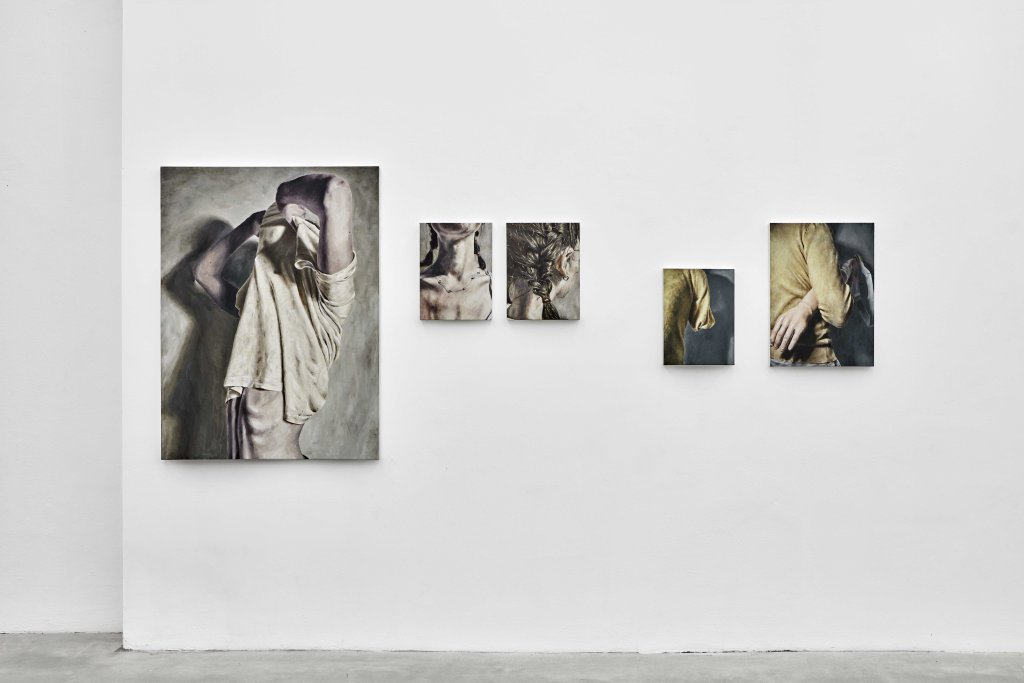
N.B.: Parto dalle fotografie che scatto personalmente ai soggetti scelti. Potremmo definirlo un lavoro a metà tra il reportage fotografico e la pittura. Ogni foto è il risultato di una pianificazione attenta: studio luci e ombre in modo da enfatizzare al massimo gli stati d’animo e le emozioni che voglio suscitare nello spettatore. Non si tratta solo di catturare un’immagine, ma di costruire un’interpretazione visiva che metta in risalto la condizione di ciascun soggetto.
Le foto sono il punto di partenza del mio lavoro, una base su cui poi sviluppo i dipinti.
Pd’A: Che importanza ha per te l’idea di racconto?
N.B.: E’ fondamentale. Ogni opera fa parte di una serie, concepita per formare una narrazione visiva. Solitamente realizzo dai 3 ai 5 quadri per ciascuna serie, un numero che mi permette di esplorare a fondo una storia, mantenendo un forte legame tra le opere. Questo approccio dà maggiore profondità e significato al mio lavoro, trasformandolo in qualcosa che va oltre il singolo pezzo.
Pd’A: Il disegno ha una qualche importanza nel tuo processo di lavoro?
N.B.: È la base di ogni dipinto, il collegamento tra la fotografia e l’opera finale.
Pd’A: Che ruolo ha la luce nel tuo lavoro?
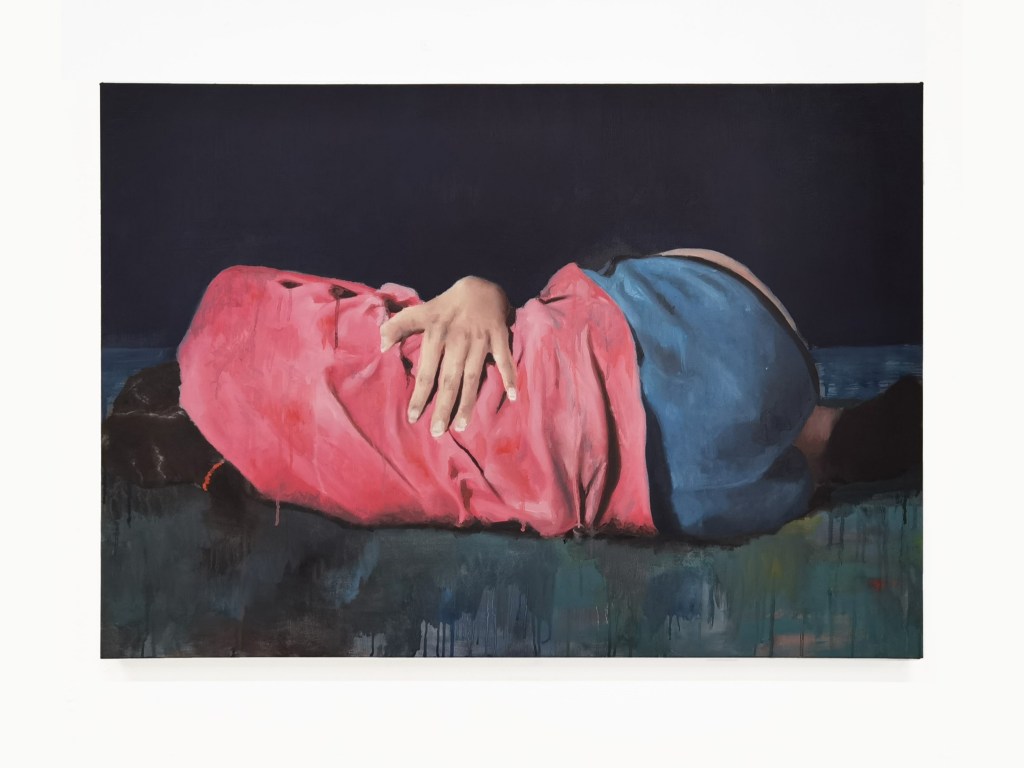
N.B.: La luce è un elemento fondamentale nel mio lavoro. Non è solo uno strumento per illuminare, ma serve a mettere in evidenza e amplificare gli stati d’animo dei soggetti. Attraverso il gioco tra luce e ombra, creo contrasti che non si limitano a definire i dettagli visivi, ma che contribuiscono a costruire l’atmosfera dell’opera.
L’illuminazione racconta: modella le emozioni, crea tensioni. Questo equilibrio tra il chiaro e lo scuro aggiunge mistero e ambiguità, spingendo chi osserva a esplorare quello che rimane nascosto e a riflettere sulle proprie emozioni.
La posizione e l’intensità della luce non sono mai casuali. Ogni ombra e ogni bagliore aggiungono profondità all’opera, lasciando spazio all’interpretazione personale dello spettatore.
Pd’A: Ti interessa la dimensione pittorica?
N.B.: Sebbene i miei dipinti possano avvicinarsi molto ad una resa fotografica, in questo momento credo di riuscire a restituire qualcosa in più con la pittura che, al contrario, non riesco pienamente a fare con la fotografia.
La pittura mi permette di andare oltre la semplice riproduzione del reale, offrendo la possibilità di intervenire sulla materia, sulle pennellate e i toni, conferendo all’opera una qualità più intima e tattile, aggiungendo strati di intensità emotiva che emerge non solo attraverso ciò che viene rappresentato, ma anche attraverso il come viene rappresentato.
È proprio questa dimensione soggettiva e profondamente artigianale che rende la pittura un mezzo espressivo così importante per me. La libertà di manipolare ogni dettaglio, il controllo sulla luce e sul colore, e l’imperfezione stessa del gesto pittorico creano un legame più diretto con le emozioni e con l’interpretazione dello spettatore.
Pd’A: Che importanza hanno le categorie di tempo e spazio in quello che fai?
N.B.: Tempo e spazio sono trattati in modo volutamente ambiguo. Le figure rappresentate emergono in stati e luoghi indefiniti, sospesi in una dimensione che non appartiene né al presente né al passato, né ad un contesto geografico preciso. Questo trattamento dell’indeterminatezza è pensato per creare una sensazione di estraneità e universalità allo stesso tempo.
L’assenza di riferimenti temporali e spaziali concreti consente alle immagini di trascendere i limiti della realtà oggettiva, invitando lo spettatore a concentrarsi sul mondo interiore dei soggetti e sull’atmosfera emotiva che li avvolge. Questo approccio rafforza il senso di mistero, permettendo a ciascuno di proiettare le proprie esperienze e interpretazioni personali.
Mi piace pensare ai miei lavori come delle finestre che aprono a diversi stati d’animo e riflessioni collettive. In questo senso, il tempo e lo spazio diventano non tanto coordinate, quanto strumenti per amplificare la connessione tra l’immagine e chi la osserva, stimolando un dialogo aperto e intimo.
Pd’A: Quando devi fare una mostra ti interessa l’idea di messa in scena del lavoro? / Che importanza ha la relazione che si viene a creare fra i vari lavori che decidi di esporre insieme?
N.B.: Mi interessa l’idea di narrazione. Durante le mostre per me non si tratta solo di esporre le opere come singoli elementi, ma di creare un’esperienza complessiva per il pubblico, in cui tutto contribuisca a raccontare una storia o ad evocare una sensazione specifica.
Mi piace molto giocare con l’allestimento, attraverso cui posso guidare lo spettatore in un piccolo viaggio, suggerendo connessioni tra le opere, suscitando domande o invitandolo a esplorare temi più ampi. La narrazione non è mai imposta, ma emerge dalla relazione tra le opere e l’ambiente in cui vengono inserite, lasciando spazio all’interpretazione personale di chi osserva.
La messa in scena diventa quindi una forma di linguaggio aggiuntivo, che integra e arricchisce il significato delle singole opere.
Pd’A: Quando dipingi lavori ad un quadro alla volta o ne lavori più di uno simultaneamente?
N.B.: Dipende dalla situazione. Solitamente, quando inizio una nuova serie, dedico molto più tempo alla creazione del primo quadro. Questo perché è in quella fase che definisco la palette cromatica e l’impostazione generale dei toni che caratterizzeranno l’intera serie. In questi casi, preferisco concentrarmi esclusivamente su quel singolo quadro, così da poter approfondire ogni dettaglio e stabilire una base solida per il lavoro successivo.
Con i quadri successivi, invece, tendo a lavorare in contemporanea su più tele. Questo mi permette di mantenere una coerenza tra le opere della serie.
Pd’A: Che idea hai della bellezza?
N.B.: Credo sia davvero difficile parlare di bellezza.
Nel mio lavoro direi che la bellezza non è legata ad un’estetica tradizionale o ad una perfezione formale, ma è qualcosa che agisce a livello emotivo, colpendo i sensi in modo diretto. È ciò che ti scuote, che ti fa reagire, generando emozioni che possono essere tanto positive quanto negative. In questo senso, non deve necessariamente essere piacevole o confortante: può essere inquietante, malinconica, o addirittura disturbante, purché riesca a stabilire una connessione profonda con chi osserva.
Definirei quindi un mio lavoro come “bello” non quando arriva a soddisfare un ideale estetico, ma quando riesce a suscitare un’esperienza autentica e personale, lasciando che ogni spettatore trovi la propria interpretazione, senza filtri o mediazioni.
Pd’A: Qual è la sua posizione rispetto al suo lavoro?
N.B.: Direi che è fortemente legata alla mia identità personale. Come disse Roberto Benigni, “per trasmettere la felicità bisogna essere felici e per trasmettere il dolore bisogna essere felici”. Questa frase riflette il mio approccio: il mio lavoro nasce dalla capacità di metabolizzare il dolore, e trasformarlo in qualcosa di significativo.
Ho vissuto momenti di serenità che mi hanno dato equilibrio, ma anche momenti di profondo dolore. La malattia che ha colpito sia me che mia madre nel giro di pochi mesi ha sconvolto ogni certezza, portandomi a riconsiderare il mio percorso. Eppure, è stata proprio quella fase difficile a darmi una nuova prospettiva. Dopo aver realizzato una prima serie di quadri, ho capito che il mio lavoro poteva avere uno scopo più grande: non solo raccontare me e la mia famiglia, ma anche aiutare altre persone a raccontare la propria storia senza paura o vergogna. Di liberarsi, da un certo punto di vista, da un peso.
La mia posizione rispetto al mio lavoro è quella di considerarlo un’estensione profonda della mia persona e delle esperienze che ho vissuto.
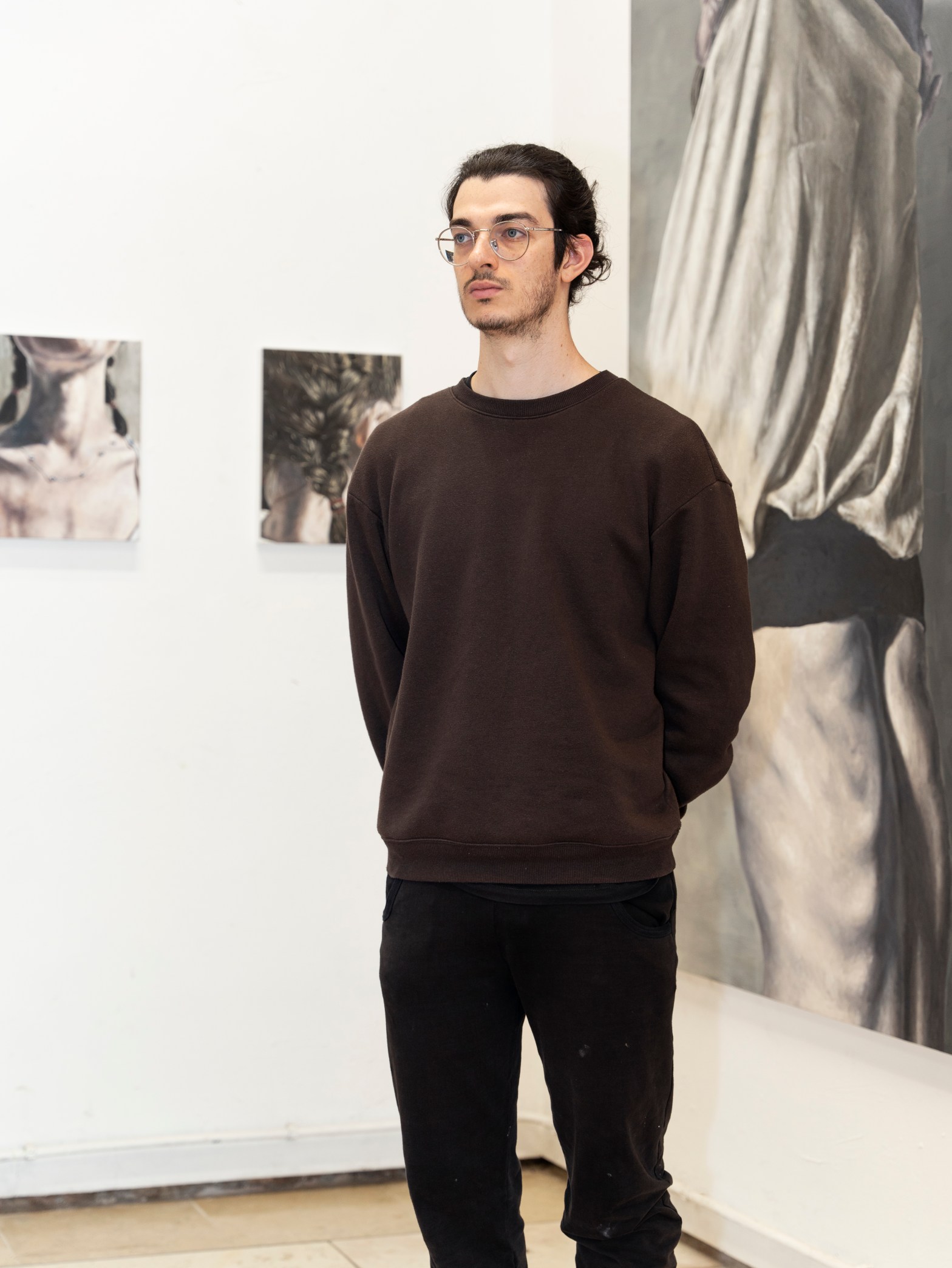
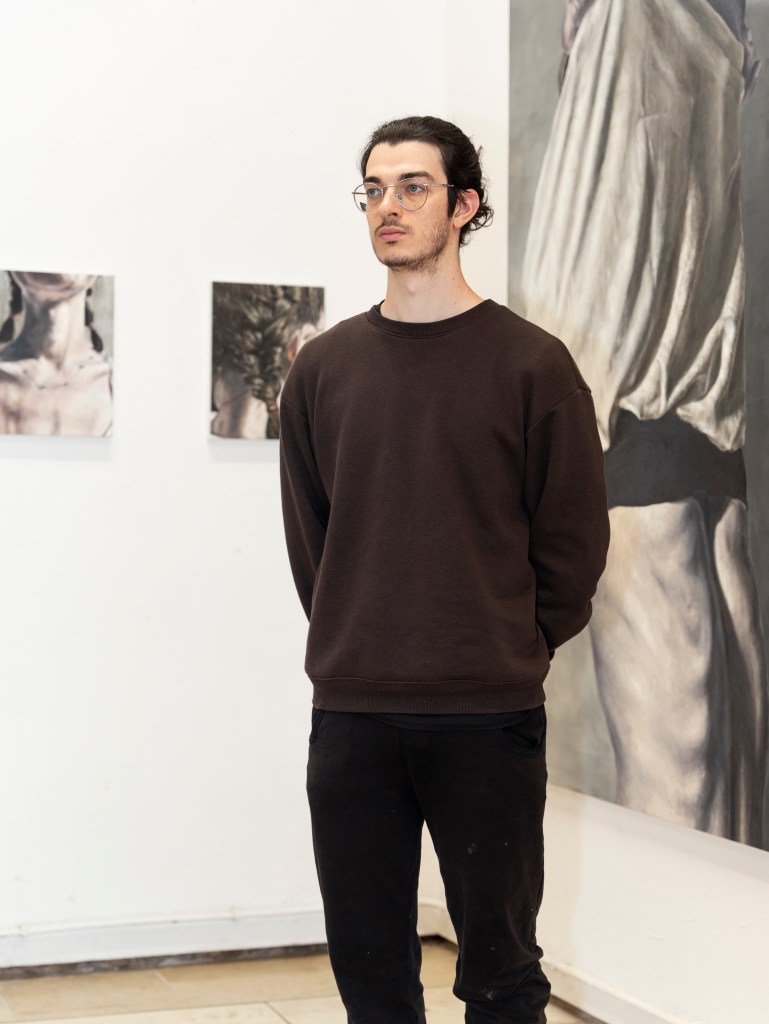
Nicola Bindoni
Nato a Mirano (VE) nel 1999 e residente in provincia di Venezia. Vive e lavora in provincia di Venezia, dopo aver conseguito la Laurea Magistrale in Pittura presso l’Accademia di Belle Arti di Venezia.
English text
Interview to Nicola Bindoni
#paroladartista #intervistaartista #artistinterview #nicolabindoni
Parola d’Artista: For most artists, childhood is the golden age when the first symptoms of a certain propensity to belong to the art world begin to appear. Was that the case for you too? Tell us.
Nicola Bindoni: Yes, absolutely. Ever since I was a child, I have always loved to draw. It was my natural way of expressing myself, a way of telling what I saw and giving shape to my imagination. For years, drawing was my main means of communicating and connecting with the world around me.
Despite this early passion, my real encounter with painting came only later, when I started attending the Academy of Fine Arts. In that context, I was able to explore new techniques, discover expressive possibilities that I did not know and deepen my artistic research. What has always accompanied me, from childhood until now, has always been an interest in visual language as a narrative and emotional medium. Even as a child, I was fascinated by the power of images. This interest led me to experiment with different artistic media over the years: from drawing and painting to photography and video.
Each experience enriched my way of seeing and allowed me to transform my passion into a more personal and conscious language.
In short, childhood was the starting point for developing my artistic sensibility, but it was only with time and study that this inclination became a truly structured form of expression.
Pd’A: Did you, like many, have a first artistic love?
N.B.: Yes, and it is related to Picasso. As a child, my parents introduced me to his work through a small booklet that I still keep with great affection. Inside were pictures of some of his most famous works.
I particularly remember the moment when they told me the story of Guernica: the historical context in which it was born, the pain and protest it contained, and the innovative expressive power with which Picasso chose to represent such a tragic event. It was a revelation. It is for adults, let alone a child. It was not just the painting itself that struck me, but the fact that a work of art could become a vehicle for messages as universal as they are intimate.
I think that episode played a fundamental role in my artistic growth. It made me realise the power of art not only as an aesthetic medium, but also as a tool for reflection, denunciation and transformation.
From that moment, I started to see visual language as something alive, capable of dialoguing with history and the emotions of the viewer.
Pd’A: Can you describe your working process?
N.B.: My current research started about four years ago, when I decided to seek out and get to know people who were going through particular situations. It is a very personal approach, made up of meetings and conversations, which leads me to create a direct connection with the subjects of my works. One of the things that struck me right away was their willingness, and often their enthusiasm, to share their story. There is something powerful in this: many of these people really want to tell their stories, to witness their condition and to do so through my work. This is something I had not foreseen and that continues to surprise me every time.
This human relationship is the basis of everything. Each work is born out of a sincere dialogue that gives deep meaning to what I do. It is not just a question of portraying someone, but of building together a visual narrative that speaks of their lives, and in some way also of my experience of getting to know them.
Pd’A: Do you start from photographs or do you paint from life?
N.B.: I start from the photographs I personally take of my chosen subjects. We could call it a work somewhere between photographic reportage and painting. Each photo is the result of careful planning: I study light and shadow in order to emphasise as much as possible the moods and emotions I want to arouse in the viewer. It is not just a matter of capturing an image, but of constructing a visual interpretation that emphasises the condition of each subject.
The pictures are the starting point of my work, a basis on which I then develop the paintings.
Pd’A: How important is the idea of storytelling for you?
N.B.: It is fundamental. Each work is part of a series, designed to form a visual narrative. I usually make three to five paintings for each series, a number that allows me to explore a story in depth, while maintaining a strong connection between the works. This approach gives more depth and meaning to my work, transforming it into something that goes beyond the single piece.
Pd’A: Does drawing have any importance in your working process?
N.B.: It is the basis of every painting, the link between the photograph and the final work.
Pd’A: What role does light play in your work?
N.B.: Light is a fundamental element in my work. It is not just a tool to illuminate, but serves to highlight and amplify the moods of the subjects. Through the play between light and shadow, I create contrasts that not only define visual details, but also contribute to building the atmosphere of the work.
Lighting tells a story: it shapes emotions, it creates tension. This balance between light and dark adds mystery and ambiguity, prompting the viewer to explore what remains hidden and to reflect on their own emotions.
The position and intensity of the light are never random. Every shadow and glow adds depth to the work, leaving room for the viewer’s personal interpretation.
Pd’A: Are you interested in the pictorial dimension?
N.B.: Although my paintings can come very close to a photographic rendition, at the moment I think I am able to render something more with painting that, on the contrary, I cannot fully do with photography.
Painting allows me to go beyond the simple reproduction of reality, offering the possibility to intervene on the material, brushstrokes and tones, giving the work a more intimate and tactile quality, adding layers of emotional intensity that emerges not only through what is represented, but also through how it is represented. It is precisely this subjective and deeply crafted dimension that makes painting such an important expressive medium for me. The freedom to manipulate every detail, the control over light and colour, and the very imperfection of the pictorial gesture create a more direct link with the emotions and the viewer’s interpretation.
Pd’A: How important are the categories of time and space in what you do?
N.B.: Time and space are treated in a deliberately ambiguous manner. The figures represented emerge in undefined states and places, suspended in a dimension that belongs neither to the present nor to the past, nor to a precise geographical context. This treatment of indeterminacy is designed to create a feeling of foreignness and universality at the same time.
The absence of concrete temporal and spatial references allows the images to transcend the limits of objective reality, inviting the viewer to focus on the inner world of the subjects and the emotional atmosphere surrounding them. This approach reinforces the sense of mystery, allowing everyone to project their own personal experiences and interpretations.
I like to think of my works as windows that open to different moods and collective reflections. In this sense, time and space become not so much coordinates as tools to amplify the connection between the image and the viewer, stimulating an open and intimate dialogue.
Pd’A: When you have an exhibition, are you interested in the idea of staging the work? / How important is the relationship that is created between the various works that you decide to exhibit together?
N.B.: I am interested in the idea of narrative. During exhibitions for me it is not just about displaying the works as individual elements, but about creating an overall experience for the audience, where everything contributes to telling a story or evoking a specific feeling.
I really enjoy playing with the exhibition design, through which I can guide the viewer on a small journey, suggesting connections between the works, raising questions or inviting them to explore broader themes. The narrative is never imposed, but emerges from the relationship between the works and the environment in which they are placed, leaving room for the personal interpretation of the viewer.
The staging thus becomes a form of additional language, which complements and enriches the meaning of the individual works.
Pd’A: When you paint, do you work on one painting at a time or do you work on more than one simultaneously?
N.B.: It depends on the situation. Usually, when I start a new series, I spend much more time creating the first painting. This is because it is at that stage that I define the colour palette and the general tone setting that will characterise the entire series. In these cases, I prefer to focus exclusively on that single painting, so that I can delve into every detail and establish a solid basis for the subsequent work.
With subsequent paintings, on the other hand, I tend to work on several canvases at the same time. This allows me to maintain a coherence between the works in the series.
Pd’A: What is your idea of beauty?
N.B.: I think it is really difficult to talk about beauty.
In my work, I would say that beauty is not linked to traditional aesthetics or formal perfection, but is something that acts on an emotional level, affecting the senses in a direct way. It is what shakes you, what makes you react, generating emotions that can be both positive and negative. In this sense, it does not have to be pleasant or comforting: it can be disturbing, melancholic, or even disturbing, as long as it manages to establish a deep connection with the viewer.
I would therefore define a work of mine as ‘beautiful’ not when it succeeds in satisfying an aesthetic ideal, but when it succeeds in arousing an authentic and personal experience, letting each viewer find their own interpretation, without filters or mediations.
Pd’A: What is your position in relation to your work?
N.B.: I would say it is strongly linked to my personal identity. As Roberto Benigni said, ‘to transmit happiness you have to be happy and to transmit pain you have to be happy’. This phrase reflects my approach: my work stems from my ability to metabolise pain and transform it into something meaningful.
I have experienced moments of serenity that have given me balance, but also moments of deep pain. The illness that struck both my mother and me within a few months shattered every certainty, leading me to reconsider my path. Yet, it was precisely that difficult phase that gave me a new perspective. After making a first series of paintings, I realised that my work could have a greater purpose: not only to tell me and my family, but also to help other people tell their story without fear or shame. To free themselves, from a certain point of view, from a burden.
My position with regard to my work is to consider it a profound extension of who I am and what I have experienced.
Nicola Bindoni
Born in Mirano (VE) in 1999 and lives in the province of Venice. He lives and works in the province of Venice, after obtaining a Master’s Degree in Painting at the Academy of Fine Arts in Venice.



 paroladartista.com