
(▼Scroll down for Enghlish text)
#paroladartista #intervistacuratore #curetorinterview #alessandrobellucci
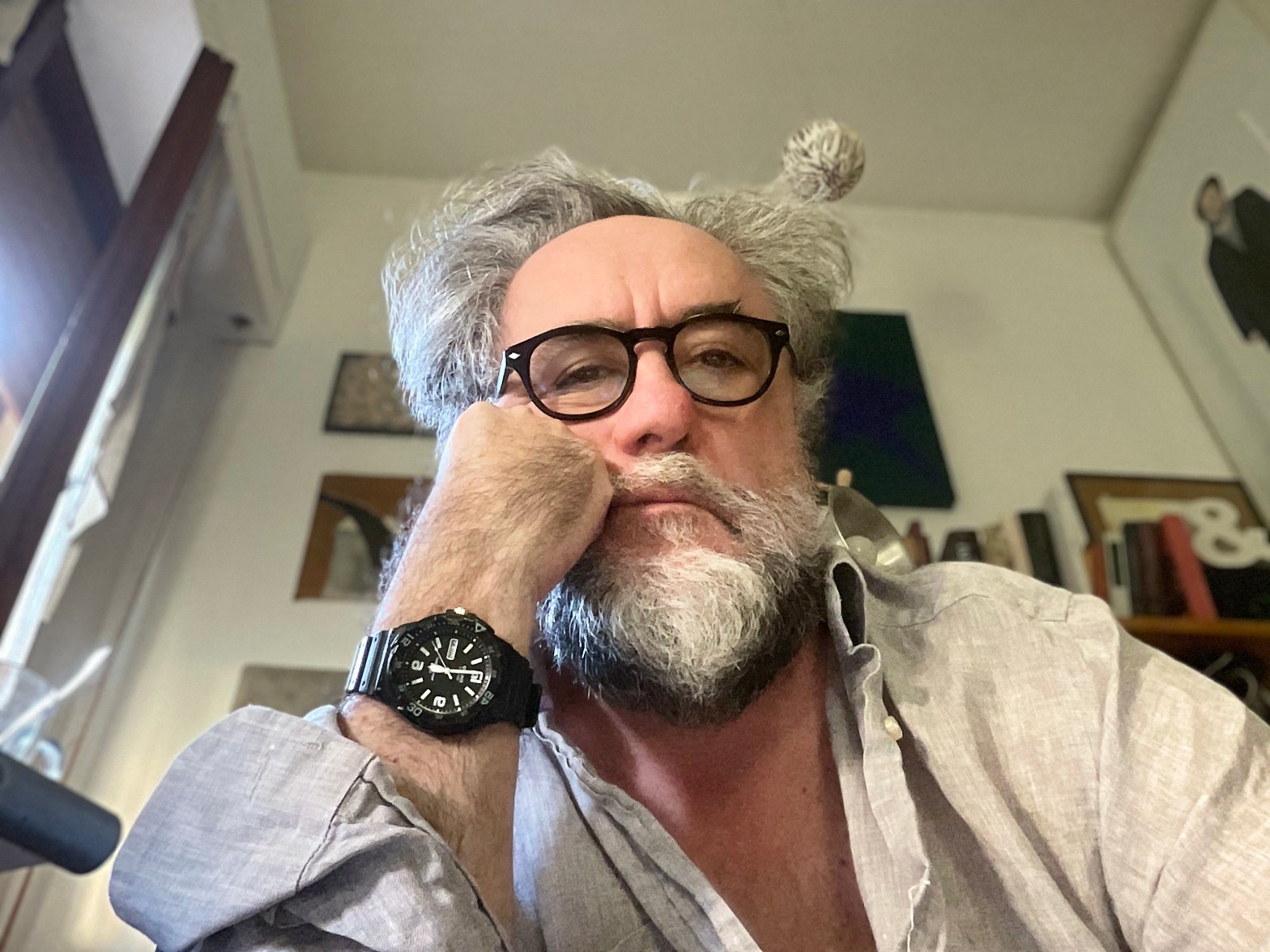
Parola d’Artista: Ciao Alessandro che senso ha fare una mostra a tema?
Alessandro Bellucci: Il tema del gioco assume un valore simbolico di vincolo, una cornice entro cui definire i parametri per sviluppare il tema: un contesto in cui costruire, attorno al soggetto scelto, un’idea da portare alla luce con forza e chiarezza, assicurandosi che l’opera esposta non risulti “fuori tema”. In questo caso, la scelta tematica si configura come una griglia su cui l’artista dovrebbe basare la propria opera, ma anche superarne i confini: trasgredire la geometria, uscire dalla cornice per esplorare nuovi linguaggi, opporsi, combattere e, se necessario, scontrarsi.
A questo proposito, mi piace citarti un passo dal libro di Bartezzaghi, che parla del grande maestro della parodia, il regista Mel Brooks:
“nel film Mezzogiorno e mezzo di fuoco (il regista) mette in scena una rissa che si estende al punto da uscire dal set, invadere il set vicino e uscire anche dal complesso di studi della Warner Bros e dilagare nelle vie di Burbank. L’uso farsesco dell’enunciazione filmica è una buona rappresentazione del salto di livello fra quel che appare e quel che è, nei fatti di agonismo. Il senso comune vede lo scontro; uno sguardo più analitico scorge l’esistenza di una cornice in cui lo scontro avviene”.
Non credo di aver vincolato gli artisti ad una “cornice” straordinariamente stretta e oppressiva proponendo il tema del gioco. Semmai, posso aver offerto un punto di vista “altro” rispetto alle opere che ho selezionato, cercando una mia griglia interpretativa proprio attraverso l’osservazione delle opere stesse.
Pd’A: Perché proprio il gioco?
A.B.: Il gioco è un tema sconfinato, in cui si può introdurre di tutto. Tempo fa avevo acquistato il libro di Johan Huizinga, Homo Ludens. Il volume giaceva a prendere polvere, come molti altri nella mia libreria; spesso si acquistano molti più libri di quanti se ne potrebbero leggere in un’intera vita. Ho iniziato a leggerlo quando Angela Wang mi propose di curare una mostra per Yurta lo scorso anno. Fu un’autentica rivelazione.
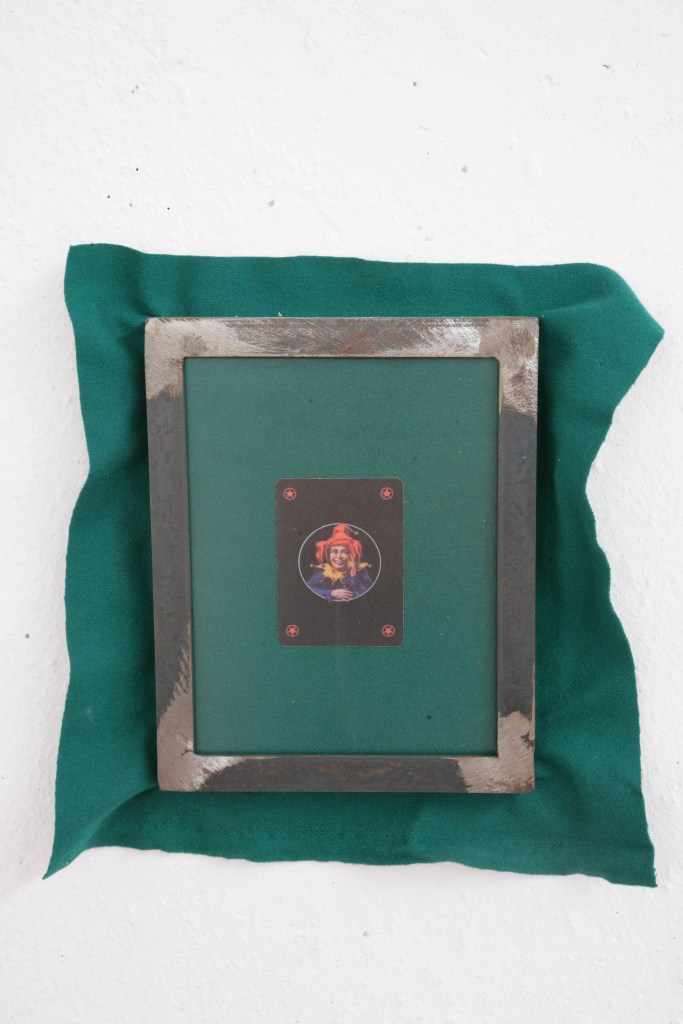
Per la mostra invece sono partito da un altra lettura fondamentale sul tema del gioco, e cioè dai quattro punti che Roger Caillos traccia nel suo libro “Il gioco e gli uomini: la maschera e la vertigine”: l’agon, l’alea, la mimicry, l’ilinx. Sintetizzando i quattro punti: il gioco è un tema che permette a chiunque di immaginare mondi, di travestirsi in qualsiasi forma (MIMICRY); di partecipare a sfide e competizioni (AGON); di liberarsi dalle catene fisiche e mentali, abbandonandosi a giochi sfrenati (ILINX); di intrattenersi in qualcosa che apparentemente non ha alcun senso per la nostra sopravvivenza esponendoci al rischio dell’ebrezza dell’azzardo (ALEA).
Il gioco, a mio parere, si manifesta come una dinamica preservativa per eludere il ridicolo della vita reale. Il ridicolo è sempre presente nella nostra vita quotidiana; lo sperimentiamo ogni giorno e spesso siamo costretti a schivare i suoi schizzi, non sempre riuscendoci e subendone spesso le conseguenze. Gli uomini agiscono troppo spesso come un gregge compatto, seguendo comandi assurdi e comportandosi di conseguenza in maniera sciocca.
Il gioco ci apre a una possibile semplificazione dell’assurdo, coinvolgendoci in sfide più o meno agonistiche dove le regole possono essere chiare, estremamente complesse o addirittura enigmatiche, ma sempre circoscritte al suo ambito d’azione. Tuttavia, c’è sempre la possibilità di uscire da qualsiasi gioco, interrompendo il flusso di piacere o vertigine e ritornando alla realtà. Nel gioco, abbiamo possibilità infinite e possiamo indossare qualsiasi maschera, imitando animali, spiriti, uomini d’affari, assassini, preti, montagne, cristalli, virus, aumentando le nostre facoltà fino all’infinito, con il potere di distruggere o creare, viaggiare nel tempo, diventare invisibili o immortali. L’insieme di regole che si stabiliscono in un gioco permette a chi le accetta di rimanere “in gioco”. La possibilità di barare è sempre presente, forse ricercata, ma a volte non soddisfa l’ego o non diverte, poiché è proprio nell’aderire pienamente e totalmente alle regole che si prova la massima soddisfazione nel giocare. Nella vita reale, barare, imbrogliare, falsificare è spesso considerato un vanto, una medaglia al valore che si sistema sul taschino di chi la fa franca, dell’imbroglione seriale, del mentitore di professione. L’onestà è spesso paragonata alla stupidità.
Il gioco, secondo Johan Huizinga, deriva da rituali ancestrali in cui gli uomini svolgevano cerimonie sacre o amministravano la giustizia in un luogo apposito, come un cerchio, dove chi entrava doveva rispettare delle regole. Nel gioco, così come nel rito e nell’estasi della creazione artistica, si crea una realtà altra, nel mondo ma non del mondo; uno spazio circoscritto e allo stesso tempo infinito, dove poter sperimentare e imparare la vita in tutte le sue manifestazioni. Come sanno bene tutti i bambini del mondo. Anche Jean Baudrillard delimita lo spazio arte-gioco in un ipotetico cerchio e scrive: “Siamo ancora capaci di «notare» la cornice del quadro, ultima differenza tra arte e mondo, ultimo confine tra simulacro e verità” (E.L. Francalanci, p.2). Nel libro Stile moderno, Georg Simmel scrive che “l’attenzione del filosofo, in questo caso, non si focalizza piú sul quadro o sulla statua, ma sulla cornice e il piedistallo, o su altri oggetti-soglia come il manico della brocca o i mobili di arredamento, in cui sfuma l’opposizione netta tra fruizione estetica e uso pratico.”
L’arte, dunque, è tutto ciò che sta intorno e dentro una cornice o in sua prossimità? L’opera, in piena autonomia (forse anche in autonomia da chi la crea), si forma e diventa arte, anche se si trova nell’“orizzonte degli eventi” dove ogni cosa può perdere senso e in cui non sembrano esistere cerchi o limiti, ma solo sfumature, nebbie, ectoplasmi. Chiunque abbia cercato di definire la parola “arte” si è sempre trovato a descrivere i confini in cui essa si materializza attraverso le opere degli artisti, ma nessuno è riuscito a darne una definizione netta, perché l’arte sfugge a ogni definizione.
La cornice nel gioco ha un ruolo fondamentale nella realizzazione della magia che si manifesta quando si “entra in gioco”. Molti bambini, per esempio, giocano a fare finta che una scopa tra le gambe rappresenti un cavallino e che il bastoncino in mano sia una spada. Il bambino entra in questa cornice di gioco sapendo bene che ciò che ha tra le gambe è una scopa e che quello che tiene in mano è un bastoncino, non una spada. Il piacere del gioco risiede tutto in questa sfumatura, in questa ebbrezza di mimetismo, dentro la cornice che delimita il gioco.
Nel contesto del gioco, chiamiamo “cornice” ciò che definisce i confini spaziali e temporali dell’attività ludica. Questa cornice comprende: gli eventi che precedono e seguono il gioco, le regole che lo governano, eventuali sistemi di controllo per il loro rispetto e l’eventuale presenza di spettatori che osservano o interagiscono.
Pd’A: Questa esposizione ha già avuto un suo primo episodio nel corso dell’estate in che cosa è cambiata rispetto alla prima versione?
A.B.: La mostra “Ludus – la maschera e la vertigine” è un’evoluzione della precedente esposizione “Del ludico dunque gioco”, realizzata la scorsa estate presso Yurta-Relazioni Culturali a Serre di Rapolano. Questo innovativo allestimento si arricchisce ulteriormente grazie al contributo e alle opere (alcune inedite) di 17 nuovi artisti oltre ai 20 della precedente mostra con oltre 40 opere esposte e di cui alcune site-specific installate sulle mura della rocca.
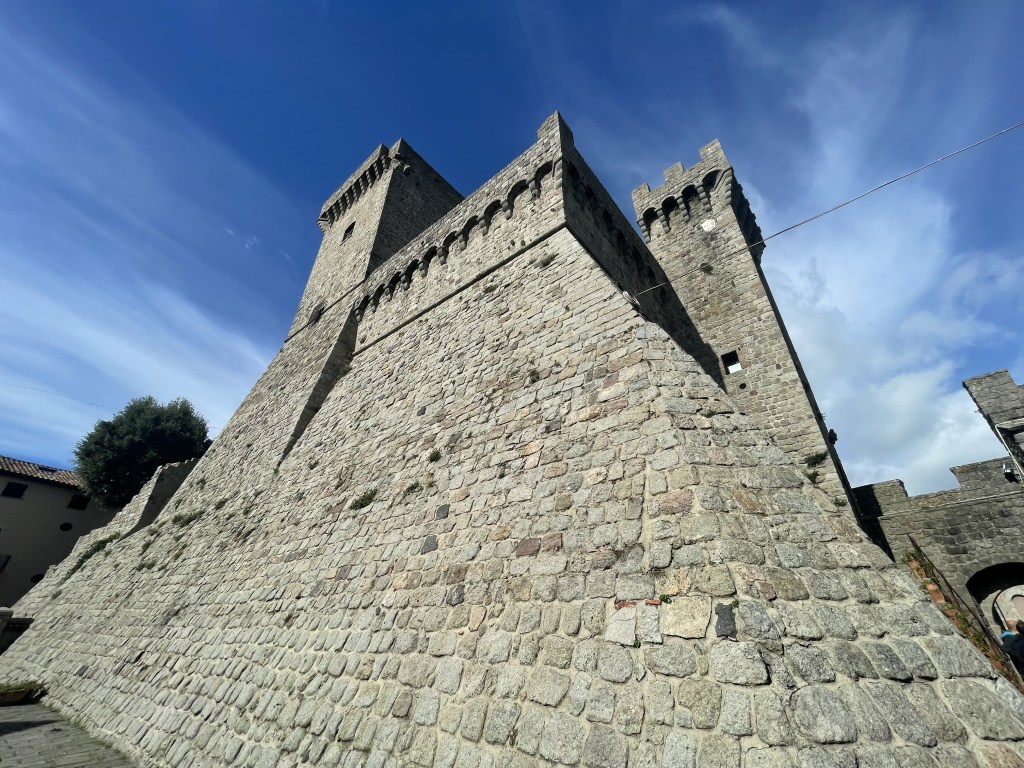
La mostra avrà luogo nei locali della Rocca Aldobrandesca di Piancastagnaio, con inaugurazione venerdì 6 dicembre 2024 e chiusura prevista per il 30 aprile 2025. Lo spazio espositivo si articolerà su dieci vani. L’ultimo piano della torre offrirà al visitatore una suggestiva terrazza panoramica. La mostra si estenderà su circa 350 metri quadrati.
Anche in questa mostra abbiamo esposto le opere dell’artista Vettor Pisani, morto suicida nel 2011. È un piccolo omaggio, una capsula del tempo che ci riporta agli anni ’70-’80 dell’arte del secolo scorso. Vettor era molto legato alla Toscana e in particolare a Serre di Rapolano in cui aveva realizzato, alla fine degli anni novanta, la sua casa-museo nelle cave di travertino: il Virginia Art Theatrum o Museo della Catastrofe.
Pd’A: La Rocca Aldobrandesca che la ospiterà a Piancastagnaio nata con obbiettivi bellici in che modo “entra in gioco” nel tuo progetto curatoriale?
A.B.: Ogni mostra è una sfida, un agone in cui mettere in campo proposte curatoriali complesse, ma soprattutto esporre le opere degli artisti, valorizzarle, contestualizzarle nello spazio espositivo. Una mostra sul gioco, realizzata in una Rocca del Quattrocento, dove il concetto stesso di gioco – inteso come svago, relax e socializzazione – era interdetto o, quantomeno, poco adatto, potrebbe sembrare un’idea assurda. D’altronde, questa rocca era destinata esclusivamente alla prigionia o alla difesa della Val d’Orcia dai continui attacchi degli assalitori. Ogni pietra di questo castello è stata progettata per resistere all’occupazione e alla distruzione di qualsiasi nemico che volesse violarla.
La proposta di una mostra sul gioco potrebbe, quindi, apparire a prima vista poco adatta a questo contesto. Tuttavia, ritengo che questo splendido esempio di architettura bellica senese possa essere reinterpretato come un grande elemento ludico: uno spazio come un gioco di guerra, dove la posta in gioco non è la vita ma l’arte. Purtroppo, la guerra è stata, ed è tuttora, uno dei “giochi” prediletti dall’umanità, come dimostrano i conflitti attuali, dal Medio Oriente ai Paesi slavi (e non solo), con il rischio disastroso dell’uso di armi nucleari. Un gioco tragico, sanguinoso, mortale, inutile.
Credo che sia importante collocare questa mostra in una struttura del genere, non per una scelta casuale, ma perché il luogo stesso invita a una riflessione più complessa. Qui, le opere d’arte trovano una collocazione significativa e contrapposta rispetto al passato bellico del castello. Non fraintendeteci: non ci interessa proporre opere “pacifiste”, ma comprendere il valore universale che è intrinseco nell’opera d’arte, al di là di un messaggio effimero che può manifestarsi ai nostri occhi contemporanei limitati all’orizzonte percettivo del nostro sguardo. Marc Bloch riesce a darci una definizione esatta sulla limitata area del nostro sguardo contemporaneo affermando che
“la storia non è un corteo che si osserva dall’alto e lo storico non è un signore che guarda il corteo dal suo balcone, al fine di descriverlo con esattezza e oggettività. Lo storico è un uomo come gli altri che cammina dentro al corteo, che si chiede che cosa sia accaduto nel corso di un viaggio lungo e accidentato; quale sia dunque la direzione e la meta del corteo stesso; in ultima istanza – se possibile – quale sia il senso definitivo del cammino.” (Caroli, p.12)
Oltre dall’impossibilità di percepire a pieno il nostro tempo contemporaneo se non attraverso una ristretta visione teleologica, c’è anche l’obiettiva difficoltà di comprendere l’arte contemporanea lasciando spesso il riguardante solo di fronte a qualcosa di nuovo, diverso, incomprensibile, fastidioso, estraniante. L’arte è incomprensibile e indigesta? In questo caso ti voglio citare un passaggio del libro di Angela Vettese (arte contemporanea):
«Non resistendo al fenomeno che gli psicologi chiamano «dissonanza cognitiva», molti studiosi sono arrivati a dire che l’arte non esiste più: per chi è schiavo delle proprie certezze, la distanza tra ciò che si vede nei musei d’arte antica e ciò che viene definito «arte contemporanea» crea ansia. Ecco allora che si cerca il colpevole: la speculazione economica, la perdita di valori, la cultura che langue. E come afferma Giorgio Agamben, in parte il sospetto è generato dall’idea stessa di «contemporaneo». In effetti, tutti vorremmo avere una pietra di paragone sulla cui base verificare che cosa ha valore e cosa non lo ha.»
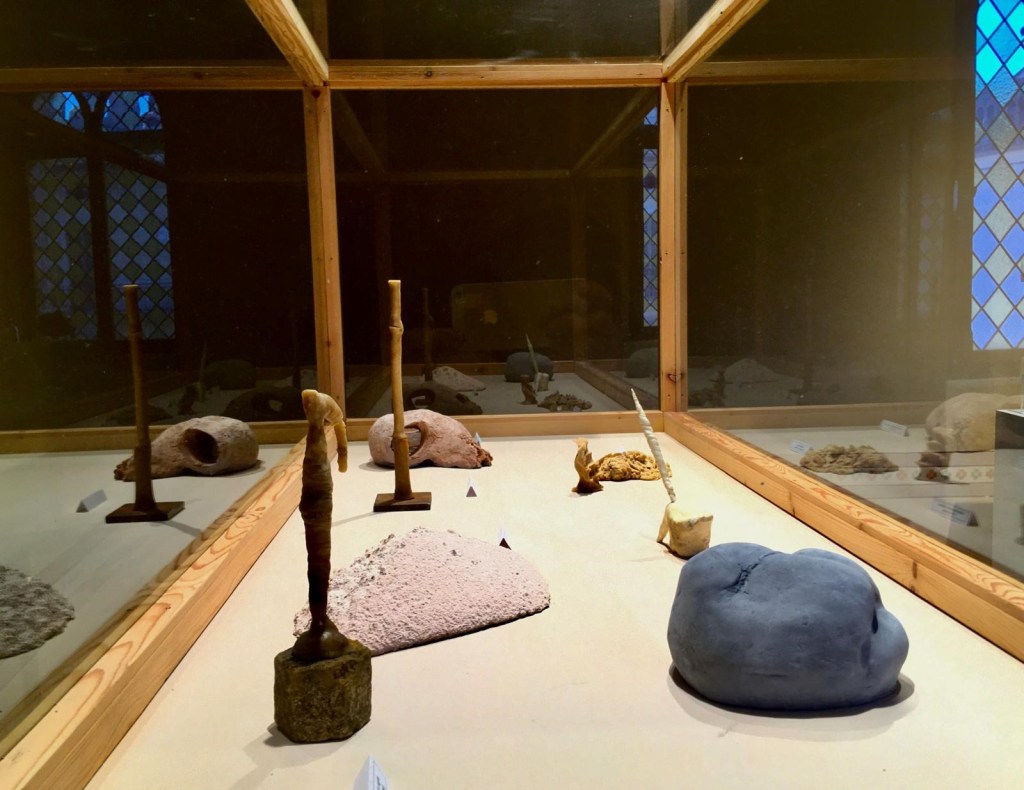
Il mio obiettivo curatoriale è quello di allestire le opere in modo di farle dialogare con l’architettura militare della rocca Aldobrandesca. Vorrei trasformare i locali austeri della fortificazione senese – almeno per la durata della mostra – in una wunderkammer di oggetti che ci parlano di gioco, dello stupore e del giocare, esclusivamente attraverso il linguaggio dell’arte.
Concludendo mi piace ricordare che quest’anno si festeggiano i cento anni della prima edizione del Manifesto surrealista,1924/2024.
Il Manifesto surrealista del 1924 rimane un’opera rivoluzionaria, celebrando la vita, il sogno, l’amore, l’arte, la follia e la libertà contro la guerra e ogni potere oppressivo.
Nel Surrealismo, il gioco diventa forma, e la forma è un gioco che si realizza oltre i singoli partecipanti. Il giocare insieme, abbracciando liberamente regole e segni, genera curiosità in uno spazio-tempo autonomo, capace di accogliere i misteriosi intrecci dell’esistenza e dell’esperienza. Per tutta la sua durata, la stagione surrealista si è prestata a Giochi molteplici. Il più inventivo e produttivo è quello de Cadavres exquis che il Dictionnaire abregé du surréalisme, definisce “gioco con carta piegata che consiste a far comporre una frase o un disegno da parte di parecchie persone senza che nessuna possa tener conto della collaborazione o delle collaborazione delle precedenti.”
Enghlish text
Intervista a Alessandro Bellucci
#paroladartista #intervistacuratore #curetorinterview #alessandrobellucci
Parola d’Artista: Hi Alessandro what is the point of having a theme exhibition?
Alessandro Bellucci: The theme of the game takes on a symbolic value of constraint, a framework within which to define the parameters for developing the theme: a context in which to build, around the chosen subject, an idea to be brought to light with strength and clarity, making sure that the work exhibited is not ‘off-topic’. In this case, the thematic choice takes the form of a grid on which the artist should base his or her work, but also transcend its boundaries: transgress geometry, step outside the frame to explore new languages, oppose, fight and, if necessary, clash.
In this regard, I like to quote a passage from Bartezzaghi’s book about the great master of parody, director Mel Brooks:
‘in the film High Noon (the director) stages a brawl that spreads to the point that it goes off the set, invades the neighbouring set and even exits the Warner Bros. studio complex and sweeps through the streets of Burbank. The farcical use of filmic enunciation is a good representation of the leap between what appears and what is, in the facts of agonism. Common sense sees the clash; a more analytical gaze sees the existence of a frame in which the clash takes place.
I do not believe that I have bound artists to an extraordinarily narrow and oppressive ‘frame’ by proposing the theme of play. If anything, I may have offered a ‘different’ point of view to the works I selected.
Pd’A: Why the game?
A.B.: Play is a boundless subject, where you can introduce anything. Some time ago I bought Johan Huizinga’s book, Homo Ludens. The volume lay gathering dust, like many others in my bookcase; one often buys many more books than one could read in a lifetime. I started reading it when Angela Wang suggested I curate an exhibition for Yurta last year. It was a real revelation.
For the exhibition, however, I started from another fundamental reading on the theme of play, namely the four points that Roger Caillot outlines in his book ‘The Game and Men: Mask and Vertigo’: agon, alea, mimicry, ilinx. To summarise the four points: play is a theme that allows anyone to imagine worlds, to disguise themselves in any form (MIMICRY); to participate in challenges and competitions (AGON); to free themselves from physical and mental shackles, indulging in unbridled games (ILINX); to entertain themselves in something that apparently makes no sense for our survival by exposing themselves to the risk of the thrill of chance (ALEA).
Gaming, in my opinion, manifests itself as a contraceptive dynamic to evade the ridicule of real life. Ridicule is always present in our daily lives; we experience it every day and are often forced to dodge its splashes, not always succeeding and often suffering the consequences. Men too often act as a compact herd, following absurd commands and behaving foolishly as a result.
The game opens us up to a possible simplification of the absurd, involving us in more or less competitive challenges where the rules may be clear, extremely complex or even enigmatic, but always confined to its scope. However, there is always the possibility of getting out of any game, interrupting the flow of pleasure or vertigo and returning to reality. In the game, we have infinite possibilities and can wear any mask, imitating animals, spirits, businessmen, assassins, priests, mountains, crystals, viruses, increasing our faculties to infinity, with the power to destroy or create, travel through time, become invisible or immortal. The set of rules established in a game allows those who accept them to remain ‘in the game’. The possibility of cheating is always present, perhaps sought after, but sometimes it does not satisfy the ego or amuse, since it is in fully and totally adhering to the rules that one feels the greatest satisfaction in playing. In real life, cheating, cheating, falsifying is often considered a boast, a badge of honour placed on the pocket of the person who gets away with it, the serial cheater, the professional liar. Honesty is often compared to stupidity.
The game, according to Johan Huizinga, derives from ancestral rituals in which men performed sacred ceremonies or administered justice in a special place, such as a circle, where those who entered had to abide by rules. In play, as in ritual and in the ecstasy of artistic creation, another reality is created, in the world but not of the world; a circumscribed and at the same time infinite space where one can experience and learn about life in all its manifestations. As all the children of the world know so well. Even Jean Baudrillard delimits the art-play space in a hypothetical circle and writes: ‘We are still able to “notice” the frame of the painting, the last difference between art and the world, the last border between simulacrum and truth’ (E.L. Francalanci, p.2). In the book Modern Style, Georg Simmel writes that ‘the philosopher’s attention, in this case, is no longer focused on the painting or the statue, but on the frame and the pedestal, or on other threshold-objects such as the jug handle or the furniture, in which the sharp opposition between aesthetic fruition and practical use blurs.’
Art, then, is everything around and inside a frame or in its proximity? The work, in full autonomy (perhaps even in autonomy from those who create it), is formed and becomes art, even if it is located in the ‘event horizon’ where everything can lose its meaning and in which there seem to be no circles or limits, but only nuances, mists, ectoplasms. Anyone who has tried to define the word ‘art’ has always found themselves describing the boundaries in which it materialises through the works of artists, but no one has been able to give a clear definition, because art eludes all definition.
The frame in play plays a fundamental role in the realisation of the magic that occurs when one ‘enters into play’. Many children, for example, play at pretending that a broom between their legs represents a horse and that the stick in their hand is a sword. The child enters this play frame knowing full well that what he has between his legs is a broom and that what he is holding is a stick, not a sword. The pleasure of the game lies entirely in this nuance, in this intoxication of mimicry, within the frame that delimits the game.
In the context of play, we call ‘frame’ that which defines the spatial and temporal boundaries of playful activity. This frame includes: the events preceding and following the game, the rules that govern it, any control systems for their observance and the possible presence of spectators observing or interacting.
Pd’A: This exhibition has already had its first episode over the summer in what ways has it changed from the first version?
A.B.: The exhibition ‘Ludus – la maschera e la vertigine’ is an evolution of the previous exhibition ‘Del ludico dunque gioco’, which took place last summer at Yurta-Relazioni Culturali in Serre di Rapolano. This innovative exhibition is further enriched by the contribution and works (some previously unpublished) of 17 new artists in addition to the 20 of the previous exhibition with over 40 works on display, some of which are site-specific and installed on the walls of the Rocca.
The exhibition will take place in the rooms of the Rocca Aldobrandesca in Piancastagnaio, with an opening on Friday 6 December 2024 and closing on 30 April 2025. The exhibition space will consist of ten rooms. The top floor of the tower will offer visitors a suggestive panoramic terrace. The exhibition will extend over approximately 350 square metres.
Also in this exhibition we have exhibited the works of the artist Vettor Pisani, who died by suicide in 2011. It is a small homage, a time capsule that takes us back to the 1970s and 1980s art of the last century. Vettor was very attached to Tuscany and in particular to Serre di Rapolano, where he had created his house-museum in the travertine quarries in the late 1990s: the Virginia Art Theatrum or Catastrophe Museum.
Pd’A: How does the Rocca Aldobrandesca that will host you in Piancastagnaio, born with war aims, ‘come into play’ in your curatorial project?
A.B.: Every exhibition is a challenge, a contest in which to put complex curatorial proposals into play, but above all to display the works of the artists, to enhance them, to contextualise them in the exhibition space. An exhibition on play, held in a 15th-century fortress, where the very concept of play – understood as recreation, relaxation and socialisation – was forbidden or, at the very least, unsuitable, might seem an absurd idea. On the other hand, this fortress was intended exclusively for imprisonment or for the defence of the Val d’Orcia from the constant attacks of assailants. Every stone of this castle was designed to withstand occupation and destruction by any enemy who wished to violate it.
The proposal of an exhibition on the game might, therefore, at first glance appear ill-suited to this context. However, I believe that this splendid example of Sienese war architecture can be reinterpreted as a great playful element: a space as a war game, where the stakes are not life but art. Unfortunately, war has been, and still is, one of mankind’s favourite ‘games’, as demonstrated by current conflicts, from the Middle East to the Slavic countries (and beyond), with the disastrous risk of the use of nuclear weapons. A tragic, bloody, deadly, pointless game.
I believe it is important to place this exhibition in such a structure, not because of a random choice, but because the location itself invites a more complex reflection. Here, the works of art find a meaningful and contrasting place in relation to the castle’s warlike past. Do not misunderstand us: we are not interested in proposing ‘pacifist’ works, but in understanding the universal value that is intrinsic in the work of art, beyond an ephemeral message that may manifest itself to our contemporary eyes limited to the perceptual horizon of our gaze. Marc Bloch manages to give us an exact definition of the limited area of our contemporary gaze by stating that
‘history is not a procession that is observed from above, and the historian is not a gentleman who watches the procession from his balcony in order to describe it accurately and objectively. The historian is a man like any other who walks within the procession, who asks himself what has happened in the course of a long and bumpy journey; what, therefore, is the direction and destination of the procession; ultimately – if possible – what is the ultimate meaning of the journey’. (Caroli, p.12)
In addition to the impossibility of fully perceiving our contemporary times except through a narrow teleological vision, there is also the objective difficulty of understanding contemporary art, often leaving one alone in the face of something new, different, incomprehensible, annoying, alienating. Is art incomprehensible and indigestible? Here I would like to quote a passage from Angela Vettese’s book (Contemporary Art):
‘Unable to resist the phenomenon that psychologists call ‘cognitive dissonance’, many scholars have gone so far as to say that art no longer exists: for those who are slaves to their own certainties, the distance between what is seen in ancient art museums and what is called ‘contemporary art’ creates anxiety. Hence the search for the culprit: economic speculation, loss of values, languishing culture. And as Giorgio Agamben says, the suspicion is partly generated by the very idea of ‘contemporary’. In fact, we would all like to have a touchstone on the basis of which we can verify what has value and what does not.’
My curatorial goal is to set up the works in such a way that they dialogue with the military architecture of the Aldobrandesque fortress. I would like to transform the austere rooms of the Sienese fortification – at least for the duration of the exhibition – into a wunderkammer of objects that speak to us about play, amazement and playfulness, exclusively through the language of art.
In conclusion, I like to mention that this year marks the 100th anniversary of the first edition of the Surrealist Manifesto, 1924/2024.
The Surrealist Manifesto of 1924 remains a revolutionary work, celebrating life, dreams, love, art, madness and freedom against war and all oppressive power.
In Surrealism, play becomes form, and form is play that is realised beyond the individual participants. Playing together, freely embracing rules and signs, generates curiosity in an autonomous space-time, capable of accommodating the mysterious entanglements of existence and experience. Throughout its duration, the Surrealist season has lent itself to multiple games. The most inventive and productive is that of Cadavres exquis, which the Dictionnaire abregé du surréalisme, defines as ‘a game with folded paper that consists of having several people compose a sentence or a drawing without any of them being able to take into account the collaboration or collaborations of the previous ones.’
Ludus
La maschera e la vertigine
A cura di/Cureted by Alessandro Bellucci
Rocca Aldobrandesca di Piancastagnaio
Venerdì 6 dicembre 2024 / 30 aprile 2025
Inaugurazione dalle ore 16:30 – 6 dicembre 2024
FRIDAY DECEMBER 6, 2024 / APRIL 30, 2025
OPENING FROM 16:30 – DECEMBER 6, 2024
Artisti partecipanti / Participating Artists
Giorgia Accorsi, Paolo Angelosanto, Jacopo Bellucci, Dominic Blower, Saverio Bonelli, Stefano Boring, Polly Brooks, Mario Consiglio, Stefano Corti, Luca Costantini, Mirco Denicolò, Bruna Esposito, Liu Feng, Danilo Fiorucci, Gigi Fucchi, Benedetta Galli, Riccardo Gemma, Emanuele Giannetti, Fabio Giorgi Alberti, Gabriele Landi, Gianni Lillo, Irene Lupi, Serenella Lupparelli, Mimmo Manes, Miltos Manetas, Marco Montanari, Rinaldo Novali, Carole Peia, Vettor Pisani, Carlo Pizzichini, Sofia Ricciardi, Stephen Roach, Sophia Ruffini, Alessandro Secci, Yu Wang, Cai Xinmeng, Xu Zhenglong.
La mostra è a cura di / the exhibition is curated by:
Alessandro Bellucci
Con la collaborazione di / With the collaboration of:
Angela Wang, YURTA Relazioni Culturali
Consulenza all’allestimento / Exhibition design consultancy:
Jacopo Bellucci, Emanuele Giannetti, Gianni Lillo
Ente Promotore/ Promoter
Comune di Piancastagnaio Municipality of Piancastagnaio

Orlando
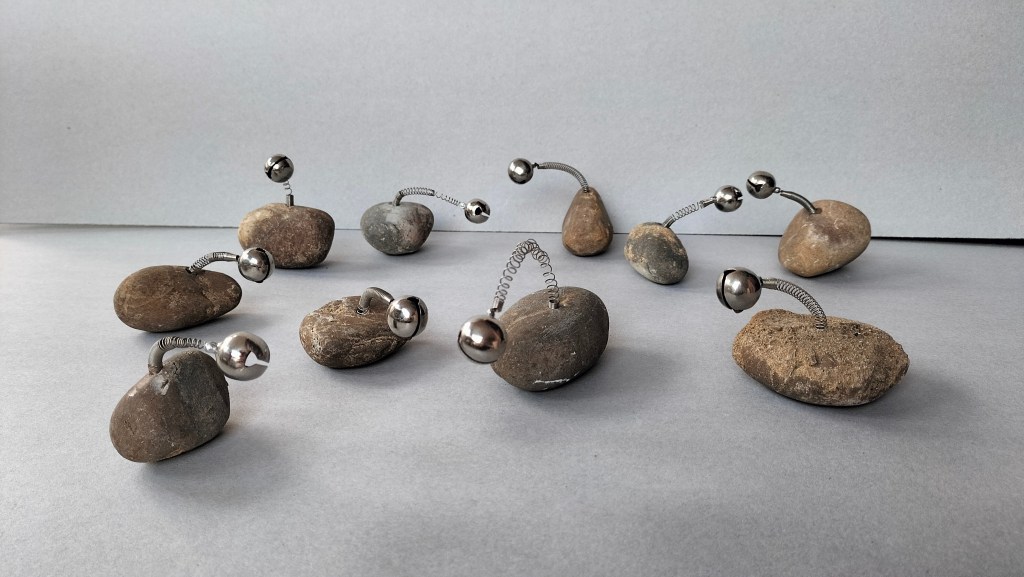
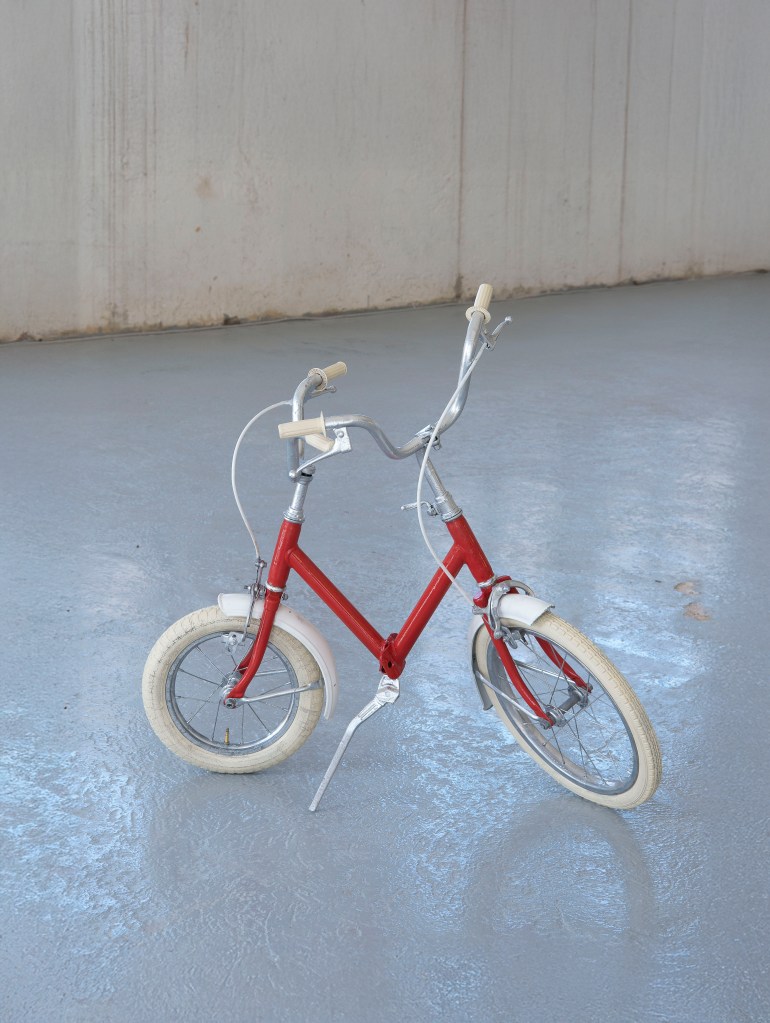
From A to B
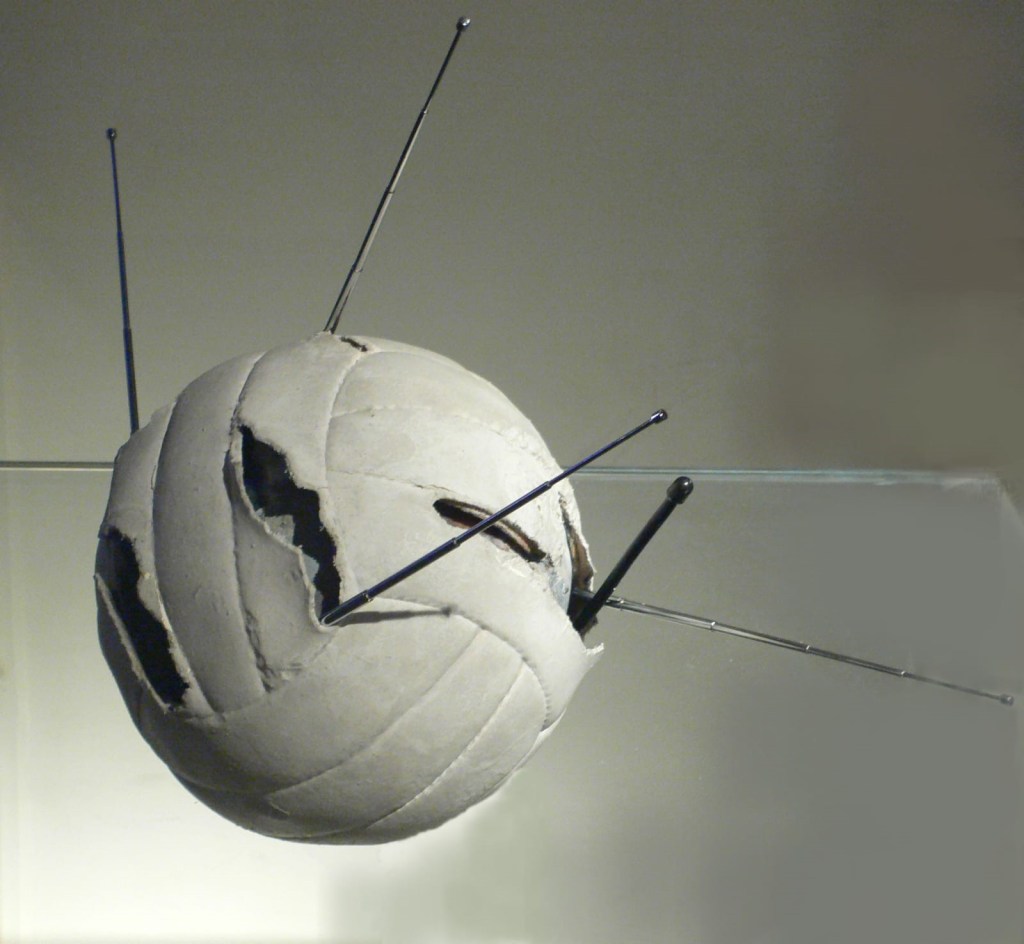
Radio Caos
La rocca
Hazard

Boris Vian, Io non vorrei crepare, 2022
inchiostro e biro su carta, cm25x35
 paroladartista.com