
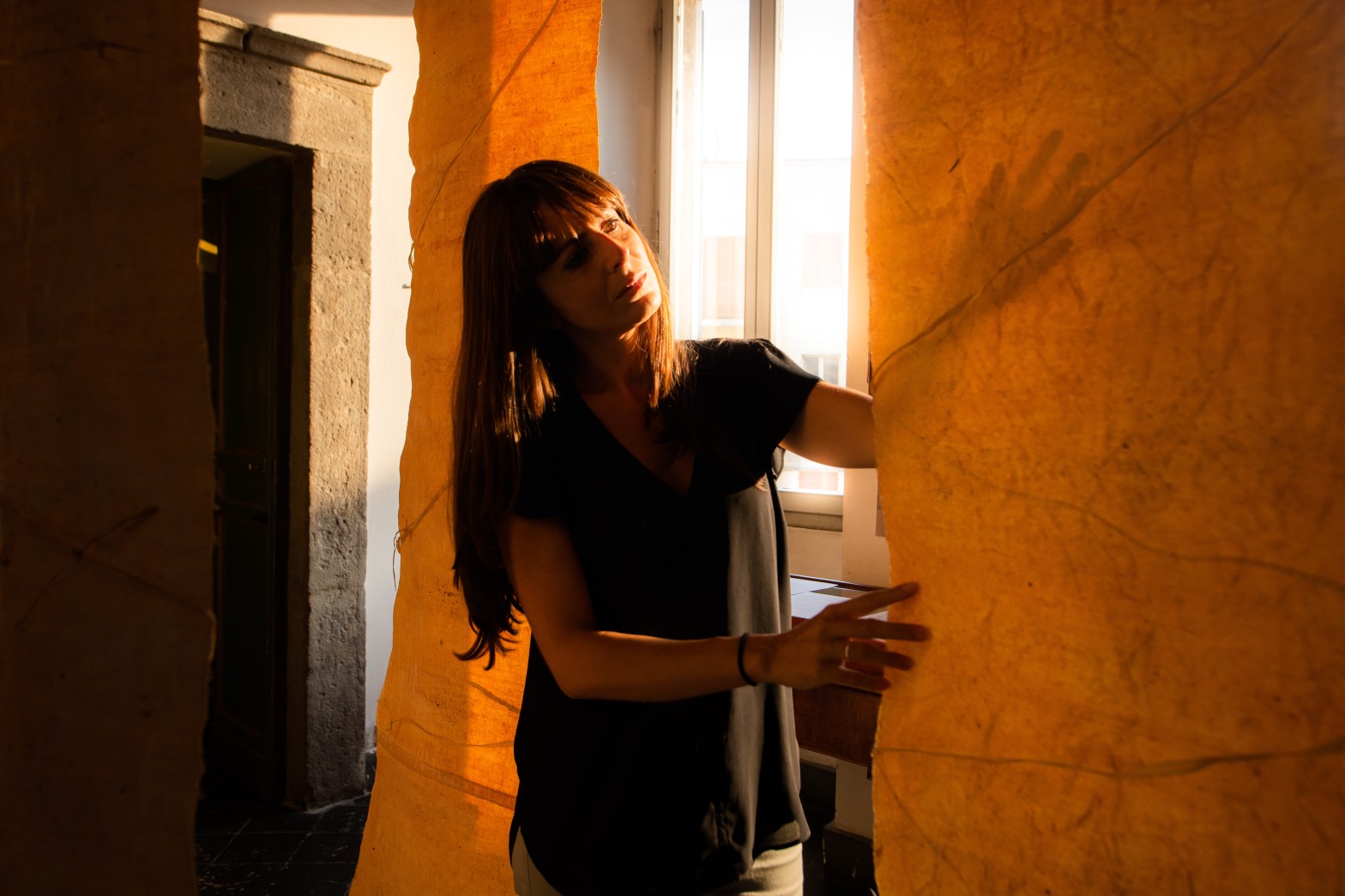
(Scroll down for English text)
#paroladartista #intervistaartista #artistinterview #samanthapassaniti
Parola d’Artista: Ciao Samantha, spesso l’infanzia gioca un ruolo importante nella definizione di quello che è l’immaginario di chi in seguito deciderà di intraprendere il cammino dell’arte è stato così anche per te? Racconta?
Samantha Passaniti: Credo fermamente che l’infanzia sia il momento in cui si delinea e si scopre il percorso che andremo ad intraprendere nel futuro anche se spesso è un processo inconsapevole. Nell’infanzia si piantano i semi di frutti che si raccoglieranno molto più avanti e credo che sia così per molti artisti. Nel mio caso specifico, sono nata e cresciuta in un piccolo paese sul mare a contatto con la natura, passavo gran parte del mio tempo a disegnare con mio nonno o a giocare con i materiali nella falegnameria di mio padre. E’ chiaro che tutto quello che oggi faccio come artista non è altro che il risultato dell’aver vissuto in un determinato ambiente e dell’aver cercato certe esperienze spinta da motivazioni naturali, direi quasi genetiche.
P.d’A.: Quale è stato il tuo “primo amore” artistico?
S.P.: Senza ombra di dubbio Monet anche se oggi lo sento lontano dalla mia ricerca. Già dalle scuole medie quando studiavo gli impressionisti rimasi completamente affascinata dall’uso del colore e dalla resa della luce. Ebbi la conferma che era amore quando durante una gita scolastica a Parigi vidi al Musee d’Orsay lo stagno delle ninfee di Monet. In quel momento capii che volevo dedicare all’arte la mia vita e così è stato.
P.d’A.: Che studi hai fatto?
S.P.: Purtroppo non ho fatto il liceo artistico anche se avrei voluto, un po’ per motivi logistici un po’ perchè deviata nella scelta dalla mia famiglia, ma nel mio istituto superiore per il turismo ho comunque avuto modo di studiare la storia dell’arte e di capire quale sarebbe stato lo step successivo. Negli anni seguenti per non gravare sulla mia famiglia e per avere la libertà di scegliere davvero cosa volevo fare ho lavorato e parallelamente frequentato pittura all’Accademia di Belle Arti di Roma dove poi mi sono diplomata.
P.d’A.: Ci sono stati degli incontri importanti nei tuoi anni di formazione?
S.P.: Subito dopo gli studi accademici ero molto confusa sul mio futuro, sapevo che la strada era complicata, mi sembrava già un miracolo essere riuscita a concludere l’accademia e invece per un caso fortuito ho avuto la possibilità di lavorare per un periodo come assistente di studio per Lawrence Carroll, importantissimo artista americano che in quel periodo viveva in Italia. E’ stata una delle esperienze più belle della mia vita che ricorderò per sempre e che mi ha veramente formata sia a livello professionale che umano. A volte penso che se non avessi fatto questo incontro forse non avrei trovato da sola la spinta, il coraggio e la determinazione per continuare. Mi sento molto fortunata ad aver avuto questa possibilità e gli sarò per sempre grata.
P.d’A.: Che importanza hanno nel tuo lavoro l’idea di fisicità?
S.P.: Anche se il mio lavoro si fonda a livello di significato su tutta una serie di concetti complessi che sono emersi benissimo con le domande di questa intervista, a livello concreto e visivo si presenta attraverso forme semplici che lasciano vedere una forte materialità per mezzo dell’interazione di materiali naturali e di recupero, fibre, frammenti, minerali ecc. Quindi sicuramente l’idea di fisicità è molto presente, ma si tratta di una fisicità legata ad una materialità astratta quasi tattile.
P.d’A.: Che idea hai della natura?
S.P.: La natura è l’ambiente che ci ospita da sempre anche se l’urbanizzazione ci ha tolto la percezione di questo, lei seppur con i suoi cambiamenti ciclici è eterna, noi siamo solo di passaggio. Chi vive ed è nato in città e soprattutto chi vive questo tempo nella cultura occidentale se ne dimentica e ce ne siamo dimenticati per troppo tempo. Si è perso il rispetto e la cura del nostro ambiente, adesso con la crisi climatica c’è un forsennato tentativo di fare un passo indietro e di sensiblizzazione ma forse è troppo tardi. Penso che almeno idealmente dovremmo viverla di più per amarla e quindi per capirla e rispettarla ed è questo il concetto intorno al quale si permea tutto il mio lavoro.
P.d’A.: L’aspetto performativo ti interessa?
S.P.: Mi interessa l’aspetto performativo inteso come esperienza attiva nell’ambiente. La ricerca dei materiali, l’osservazione in natura, il vagare e raccogliere sono di fatto atti performativi e momento preliminare di tutto quello che avverrà dopo, ovvero la produzione. Effettivamente tutta questa fase che potrei definire di registrazione degli elementi della natura è il momento più importante della mia ricerca ed ha sicuramente a che fare con la performance anche se non in senso stretto.
P.d’A.: Che idea hai del tempo e dello spazio?
S.P.: Ho dovuto riflettere molto per dare questa risposta, credo che la mia idea del tempo e dello spazio abbiano a che fare con l’infinito o meglio con la ricerca ideale di un tempo e di uno spazio infiniti attraverso la dimensione dell’arte e in contrapposizione con la consapevolezza realistica dei limiti spaziali e temporali della nostra esperienza umana.
A livello concettuale credo che la mia esigenza espressiava nasca proprio per esorcizzare questo aspetto. Dal punto di vista invece della mia pratica, tempo e spazio sono due aspetti molto importanti, il primo è sempre dilatato quasi meditativo per permettere l’emergere delle forme, il secondo è determinante: mi muovo nello spazio, colloco nello spazio interno o esterno oggetti bidimensionali o oggetti scultorei e installativi che appunto fuoriescono dallo spazio.
P.d’A.: Qual è la tua idea di bellezza?
S.P.: La mia idea di bellezza è legata al concetto di mitezza in contrasto a quello di grandiosità sempre più presente nel nostro tempo e mi riferisco a tutti gli ambiti dell’esistenza. Non mi interessano i materiali preziosi, le opere monumentali che mettono in risalto le abilità tecniche dell’artista o i colori vivaci che catturano l’attenzione. Trovo che sia bello ciò che spesso non si nota al primo sguardo, alcuni dettagli inosservati della natura, i colori tenui e rilassanti, le forme semplici, i sentimenti sinceri e l’errore che ci rende esseri umani. Tutto questo trovo che sia estremamente bello ma anche decontestualizzato rispetto al tempo in cui viviamo che invece corre nella direzione opposta. Questa ovviamente è una mia personalissima visione di bellezza di cui sento il bisogno forse per compensare il vivere in un mondo dove tutti si sentono perfetti e urlano qualcosa.
P.d’A.: Ti interessa la dimensione del sacro?
S.P.: La dimensione del sacro mi interessa molto, credo che sia un aspetto ancestrale che ci appartiene di default e con cui l’artista tendenzialmente dialoga anche attraverso l’arte. Ognuno chiaramente la vive a modo suo e non ha a che fare necessariamente con la religione, credo che sia qualcosa di più legato alla nostra capacità di sentire a livello emotivo e di riflettere sulla vita e quindi sulla morte e di trasformare tali riflessioni in materia visibile e comunicante.
Credo che in questo momento storico ci sia tanto bisogno di riappropiarci di questa dimensione, di porci certe domande perchè la tendenza mi pare quella di una inconsapevolezza generale dove ha preso il sopravvento la distruzione.
Per me l’arte ha anche questo obbiettivo a livello concettuale, trasmettere valori di umanità o sacralità che secondo la mia visione sono la stessa cosa.
P.d’A.: Secondo te un’opera d’arte esiste se non c’è nessuno che la guarda?
S.P.: Questa è una domanda molto difficile. Secondo me un’opera d’arte esiste se almeno una persona la definisce tale, o almeno mi piace pensare così. La mia risposta è da artista, chiaramente un curatore, un gallerista, un collezionista, un filosofo ecc. avranno risposte diverse perchè cambia il punto di vista ed il senso che si da alla parola “opera d’arte”. Questa domanda potrebbe aprire un dibattito destinato a non finire mai…
P.d’A.: Dove ti poni nei confronti del tuo lavoro?
S.P.: Nei confronti del mio lavoro mi pongo sicuramente più come ricercatrice che come artista. Non mi interessa tanto il prodotto finale quanto la ricerca, la sperimentazione dei materiali, lo studio interdisciplinare che tocca non solo le arti visive ma anche le scienze naturali e la chimica, il dialogo attivo e le collaborazioni. Con questo approccio trovo linfa vitale nel mio lavoro e scambi continui nei quali credo fermamente.Da tutto questo chiaramente scaturisce infine la produzione artistica che però non è mai seriale, ogni esperienza o progetto inizia per terminare sempre alla ricerca di nuovi territori da esplorare, artistici e naturali.
Samantha Passaniti Nata a Grosseto nel 1981 vive e lavora tra Monte Argentario e Roma. Diplomata all’Accademia di Belle Arti di Roma, nel 2015 frequenta un corso post laurea alla Slade School of Art di Londra. La sua ricerca artistica è incentrata sulla sperimentazione di materiali naturali raccolti nell’ambiente che diventano oggetto di riflessione e indagine sulla complessità dei rapporti umani e dell’esperienza esistenziale. Le sue opere pittoriche e installative nascono da un continuo dialogo tra mondo intimo e ambiente, tra uomo e natura, tra esperienza esistenziale e cicli naturali, con una particolare attenzione alle simbologie ancestrali e agli archetipi spirituali che collegano sin dai tempi più remoti l’uomo al mondo naturale che lo ospita. Negli ultimi anni la sua ricerca si è focalizzata sullo studio e la raccolta di varie tipologie di terre estratte in vari posti del mondo e con le quali ha realizzato cicli di opere come il suo ultimo progetto “oltreterra” in collaborazione con il Museo di Storia Naturale di Siena.
Nel 2018 è selezionata dall’organizzazione internazionale ReArtiste per una collettiva presso la MC Gallery di New York. È tra i finalisti del premio Arteam Cup nel 2018, nel 2019, nel 2020 e nel 2022. Nel 2020 vince una residenza artistica incentrata sul legame tra arte e natura nel Geopark patrimonio Unesco del Monte Beigua (Savona) ed è selezionata per una residenza presso il centro di arte contemporanea Arteventura in Andalusia, Spagna all’interno del Parco naturale della Sierra di Aracena. In entrambre le residenze realizza installazioni ambientali siete specific. Nel 2021 è stata selezionata per la realizzazione di un’ installazione ambientale all’interno del museo Artenatura Villaga (Vicenza) sui Colli Berici. Nel 2024 è stata scelta dalla fondazione Amedeo Modigliani di Roma tra i finalisti della sezione “installazione” del premio Amedeo Modigliani.
Tra le recenti mostre personali si menziona “Scyricum terra tra materia e arte”, Galleria civica Olmastroni, Siena a cura di Davide Silvioli e Valeria de Serio (Luglio 2023), “Oltreterra” presso il Polo Culturale le Clarisse Museo Luzzetti, Grosseto, a cura di Mauro Papa, Valeria de Siero e Davide Silvioli (Novembre 2023), “Terre la materia della relazione” presso il museo di storia Naturale Accademia dei Fisiocritici, Siena a cura di Davide Silvioli e Valeria de Siero, nel 2022 “Congiunzioni” a cura di Francesca Lissoni presso il Museo Perrando Nuovo Polo Museale, Sassello (SV), “Corrispettivo naturale” del 2018 a cura di Davide Silvioli presso la Art G.A.P. Gallery di Roma, “Rethinking Materials, Rethinking the Place” sempre curata da Davide Silvioli nel 2020 nel palazzo storico Cozza Caposavi di Bolsena (VT) e “Confidence in the uncertain” nel 2021 a cura di Giorgia Basili presso lo spazio indipendente Curva Pura di Roma.
Tra le numerose mostre collettive in Italia e all’estero, si menziona la partecipazione nel 2022 a Humanimal community, mostra della residenza finanziata dalla fondazione Nessling alla Chowning Art Gallery – Campbellsville University Kentucky USA, BACC Biennale arte ceramica contemporanea a cura di Lorenzo Fiorucci presso Scuderie Aldobrandine Frascati (RM), “Lost” Floor Gallery di Seoul Sud Corea, Mostra dei finalisti del concorso “Airland 4.0/Nature, Technology, Energy” a cura dell’associazione Quasi Qadro di Torino presso il Complesso delle ex Officine Ferroviarie di Barge in provincia di Cuneo, “Think Green” a cura di Margaret Sgarra alla casa dell’ambiente Torino, “The creative Room” Venice a cura del collettivo curatoriale Atopos, “Variation Form” a cura di Davide Silvioli all’interno del “festival Diverso Inverso” Centro per l’arte contemporanea Trebisonda Perugia, “Athens Open Art” presso la galleria Art Number 23 di Atene, “Exuperanti Forma” Mostra dei finalisti del premio Adrenalina 6.0. Palazzo velli Roma, “Discovery Session” 2019 presso Trinity Art Gallery, City Island, London (UK), “Venti Contemporanei” festival di arte contemporanea Coreggio (RE), “Beyond the borders” Arsenale, Roncade (Treviso) Mostra collettiva dei finalsti del premio Venice ArtLands Prize, “Transformation” Gallery MC New York curata da RE:ARTISTE organizzazione artistica internazionale, “Straordinaria Bellezza” Pallazzo Collacchioni, capalbio (GR) curata da Davide Sarchioni, “Ten X Ten”, mostra collettiva,”Young Space”, Wisconsin (USA), “Alternative Wax: Layers of facts” curata da Francine D’Olimpio presso la Kobalt Gallery, Provincetown, (MA) USA.
English text
Interview to Samantha Passaniti
#paroladartista #intervistaartista #artistinterview #samanthapassaniti
Parola d’Artista: Hi Samantha, childhood often plays an important role in the
definition of what is the imagination of those who later decide to
embark on the path of art was this also the case for you? Tell us about it?
Samantha Passaniti: I firmly believe that childhood is the moment in which we outline and discover the path we are going to take in the future, even though it is often an unconscious process. In childhood one plant the seeds of fruits that will be harvested much later and I believe that is like that for many artists. In my specific case, I was born and raised in a small seaside town in contact with nature, I spent most of my time drawing with my time drawing with my grandfather or playing with materials in my father’s carpentry workshop. My father’s carpentry shop. It is clear that everything I do today as an artist is nothing more than the result of having lived in a certain environment and having seeking out certain experiences driven by natural, I would say almost genetic motivations.
P.d’A.: What was your ‘first love’ as an artist?
S.P.: Without a shadow of a doubt Monet even though I feel he is far from my research today. Already in secondary school when I was studying the Impressionists, I was completely fascinated by their use of colour and rendering of light. I was confirmed that it was love when on a school trip to Paris I saw Monet’s Water Lily Pond at the Musee d’Orsay. At that moment I realised that I wanted to dedicate my life to art and I did.
P.d’A.: What studies did you do?
S.P.: Unfortunately I did not go to art school even though I would have liked to, partly for logistical reasons and partly because I was diverted in my choice by my family, but at my high school for tourism I still had the opportunity to study art history and to understand what the next step would be. In the following years, in order not to burden my family and to have the freedom to really choose what I wanted to do, I worked and at the same time attended painting at the Academy of Fine Arts in Rome, where I then graduated.
P.d’A.: Were there any important encounters during your formative years?
S.P.: Immediately after my academic studies, I was very confused about my future, I knew that the road was complicated, it already seemed like a miracle that I had managed to finish the academy, and instead, by chance, I had the opportunity to work for a period as a studio assistant for Lawrence Carroll, a very important American artist who was living in Italy at that time. It was one of the most beautiful experiences of my life that I will always remember and that really shaped me both professionally and humanely. Sometimes I think that if I had not had this meeting I might not have found the drive, courage and determination to continue on my own. I feel very lucky to have had this opportunity and I will be forever grateful to him.
P.d’A.: How important is the idea of physicality in your work?
S.P.: Even though my work is based at the level of meaning on a whole series of complex concepts that emerged very well with the questions in this interview, at a concrete and visual level it is presented through simple forms that show a strong materiality through the interaction of natural and recycled materials, fibres, fragments, minerals, etc. So certainly the idea of physicality is very present, but it is a physicality linked to an abstract, almost tactile materiality.
P.d’A.: What is your idea of nature?
S.P.: Nature is the environment that has always been home to us even though urbanisation has taken away our perception of it, she is eternal with her cyclical changes, we are just passing through.
Those who live and were born in cities and especially those who live this time in Western culture forget this and we have forgotten it for too long. We have lost respect and care for our environment, now with the climate crisis there is a frantic attempt to take a step back and sensitise but perhaps it is too late. I think that at least ideally we should live it more in order to love it and therefore to understand and respect it, and this is the concept around which all my work permeates.
P.d’A.: Does the performance aspect interest you?
S.P.: I am interested in the performative aspect as an active experience in the environment. The search for materials, observation in nature, wandering and gathering are in fact performative acts and a preliminary moment of everything that will happen afterwards, i.e. production. In fact, this entire phase that I could define as recording the elements of nature is the most important moment of my research and certainly has something to do with performance, even if not in the strict sense.
P.d’A.: What is your idea of time and space?
S.P.: I had to reflect a lot to give this answer, I think my idea of time and space has to do with infinity or rather with the ideal search for an infinite time and space through the dimension of art and as opposed to the realistic awareness of the spatial and temporal limits of our human experience.
On a conceptual level, I believe my need for expression arises precisely to exorcise this aspect. On the other hand, from the point of view of my practice, time and space are two very important aspects, the first is always dilated, almost meditative, to allow forms to emerge, the second is decisive: I move in space, I place two-dimensional objects or sculptural and installation objects in internal or external space that precisely emerge from space.
P.d’A.: What is your idea of beauty?
S.P.: My idea of beauty is linked to the concept of meekness in contrast to that of grandiosity that is increasingly present in our time, and I refer to all spheres of existence. I am not interested in precious materials, monumental works that highlight the artist’s technical skills or bright colours that catch the eye. I find beautiful what is often not noticed at first glance, some unnoticed details of nature, the soft, soothing colours, simple shapes, sincere feelings and the error that makes us human beings. All this I find extremely beautiful but also decontextualised in relation to the time in which we live, which instead runs in the opposite direction. This is obviously my very personal vision of beauty that I feel the need for perhaps to compensate for living in a world where everyone feels perfect and shouts something.
P.d’A.: Are you interested in the dimension of the sacred?
S.P.: The dimension of the sacred interests me a lot, I think it is an ancestral aspect that belongs to us by default and with which the artist also tends to dialogue through art. Everyone clearly experiences it in their own way and it does not necessarily have to do with religion, I believe it is something more related to our ability to feel on an emotional level and to reflect on life and therefore death and to transform these reflections into visible and communicating matter.
I believe that at this moment in history there is a great need to reappropriate this dimension, to ask ourselves certain questions because the tendency seems to me to be one of general unawareness where destruction has taken over.
For me, art also has this objective on a conceptual level, to transmit values of humanity or sacredness, which in my view are the same thing.
P.d’A.: In your opinion, does a work of art exist if there is no one looking at it?
S.P.: This is a very difficult question. In my opinion, a work of art exists if at least one person defines it as such, or at least I like to think so. My answer is as an artist, clearly a curator, a gallery owner, a collector, a philosopher, etc. will have different answers because the point of view and the meaning given to the word ‘work of art’ changes. This question could open a debate that will never end…
P.d’A.: Where do you position yourself in relation to your work?
S.P.: In relation to my work, I definitely position myself more as a researcher than as an artist. I am not so much interested in the end product as in research, in experimenting with materials, in interdisciplinary study that touches not only the visual arts but also the natural sciences and chemistry, in active dialogue and collaborations. With this approach I find lifeblood in my work and continuous exchanges in which I firmly believe. From all this clearly springs artistic production, which however is never serial, each experience or project begins to end always in search of new territories to explore, artistic and natural.
Samantha Passaniti Born in Grosseto in 1981, she lives and works between Monte Argentario and Rome. Graduated from the Academy of Fine Arts in Rome, in 2015 she attended a postgraduate course at the Slade School of Art in London. Her artistic research focuses on experimenting with natural materials collected from the environment that become the object of reflection and investigation into the complexity of human relationships and existential experience. and natural cycles, with a focus on ancestral symbologies and spiritual archetypes that have linked man to the natural world since the earliest times. In recent years, her research has focused on the study and collection of various types of soils mined in various places around the world and with which she has created cycles of works such as her latest project ‘oltreterra’ (beyond the earth) in collaboration with the Natural History Museum of Siena.
In 2018, she was selected by the international organisation ReArtiste for a group show at the MC Gallery in New York. She is among the finalists for the Arteam Cup award in 2018, 2019, 2020 and 2022. In 2020, she won an artistic residency focused on the link between art and nature in the Monte Beigua Unesco Heritage Geopark (Savona) and was selected for a residency at the Arteventura contemporary art centre in Andalusia, Spain within the Sierra de Aracena Natural Park. In both residencies she realised siete specific environmental installations. In 2021, she was selected to realise an environmental installation inside the Artenatura Villaga (Vicenza) museum in the Berici Hills. In 2024, she was chosen by the Amedeo Modigliani Foundation in Rome as one of the finalists in the ‘installation’ section of the Amedeo Modigliani Award.
Recent personal exhibitions include ‘Scyricum terra tra materia e arte’, Galleria civica Olmastroni, Siena curated by Davide Silvioli and Valeria de Serio (July 2023), ‘Oltreterra’ at Polo Culturale le Clarisse Museo Luzzetti, Grosseto, curated by Mauro Papa, Valeria de Siero and Davide Silvioli (November 2023), ‘Terre la materia della relazione’ at the Natural History Museum Accademia dei Fisiocritici, Siena curated by Davide Silvioli and Valeria de Siero, in 2022 “Congiunzioni” curated by Francesca Lissoni at the Perrando Nuovo Polo Museale, Sassello (SV), 2018 “Corrispettivo naturale” curated by Davide Silvioli at the Art G. A.P. Gallery in Rome, ‘Rethinking Materials, Rethinking the Place’ also curated by Davide Silvioli in 2020 at the historic palazzo Cozza Caposavi in Bolsena (VT) and ‘Confidence in the uncertain’ in 2021 curated by Giorgia Basili at the independent space Curva Pura in Rome.
Among the numerous group exhibitions in Italy and abroad, we would like to mention the participation in 2022 in Humanimal community, exhibition of the residency funded by the Nessling foundation at the Chowning Art Gallery – Campbellsville University Kentucky USA, BACC Biennial of contemporary ceramic art curated by Lorenzo Fiorucci at Scuderie Aldobrandine Frascati (RM), ‘Lost’ Floor Gallery in Seoul South Korea, Exhibition of the finalists of the competition ‘Airland 4.0/Nature, Technology, Energy’ curated by by the Quasi Qadro association of Turin at the Complex of the former Barge Railway Workshops in the province of Cuneo, ‘Think Green’ curated by Margaret Sgarra at the House of the Environment Turin, ‘The creative Room’ Venice curated by the curatorial collective Atopos, ‘Variation Form’ curated by Davide Silvioli as part of the “Diverso Inverso festival” Centre for contemporary art Trebisonda Perugia, “Athens Open Art” at the Art Number 23 gallery in Athens, “Exuperanti Forma” Exhibition of the finalists of the Adrenalina 6 prize. 0. Palazzo velli Rome, ‘Discovery Session’ 2019 at Trinity Art Gallery, City Island, London (UK), ‘Venti Contemporanei’ contemporary art festival Coreggio (RE), ‘Beyond the borders’ Arsenale, Roncade (Treviso) Group exhibition of Venice ArtLands Prize finalists, ‘Transformation’ Gallery MC New York curated by RE: ARTISTE international art organisation, ‘Extraordinary Beauty’ Pallazzo Collacchioni, capalbio (GR) curated by Davide Sarchioni, ‘Ten X Ten’, group exhibition, ‘Young Space’, Wisconsin (USA), ‘Alternative Wax: Layers of facts’ curated by Francine D’Olimpio at Kobalt Gallery, Provincetown, (MA) USA.
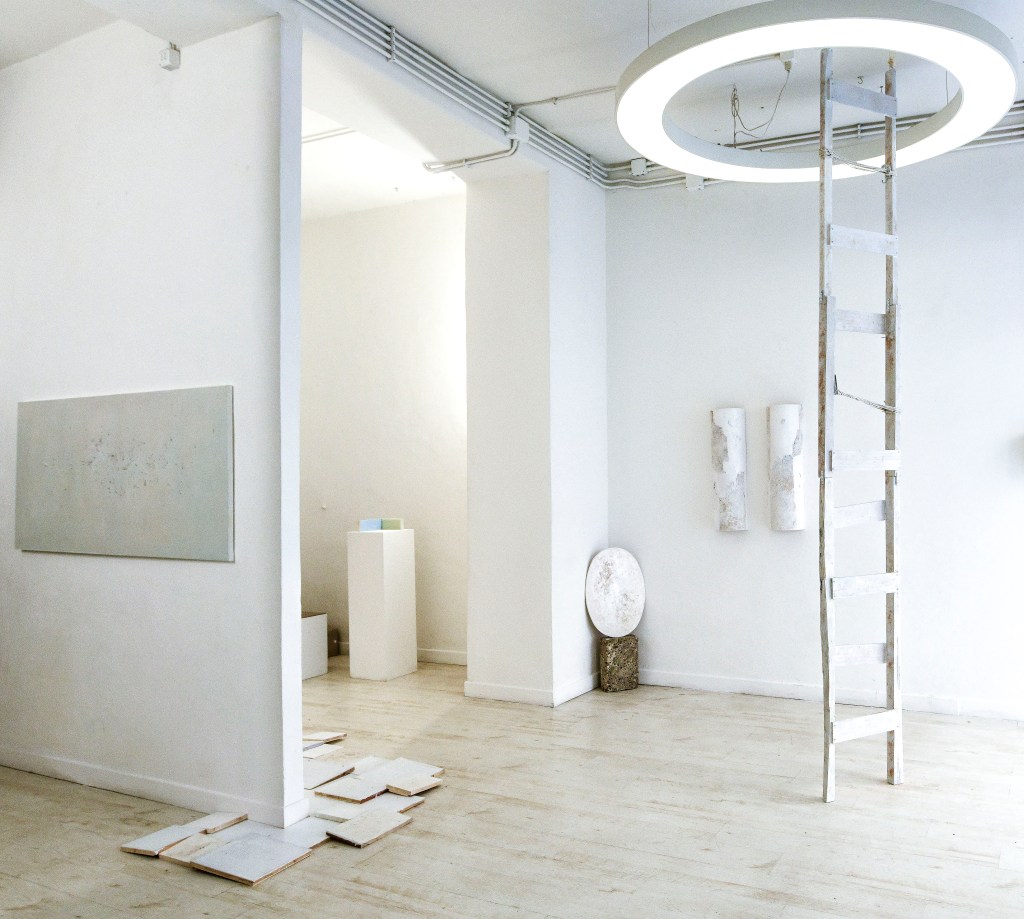
Photocredit Marco Passaniti
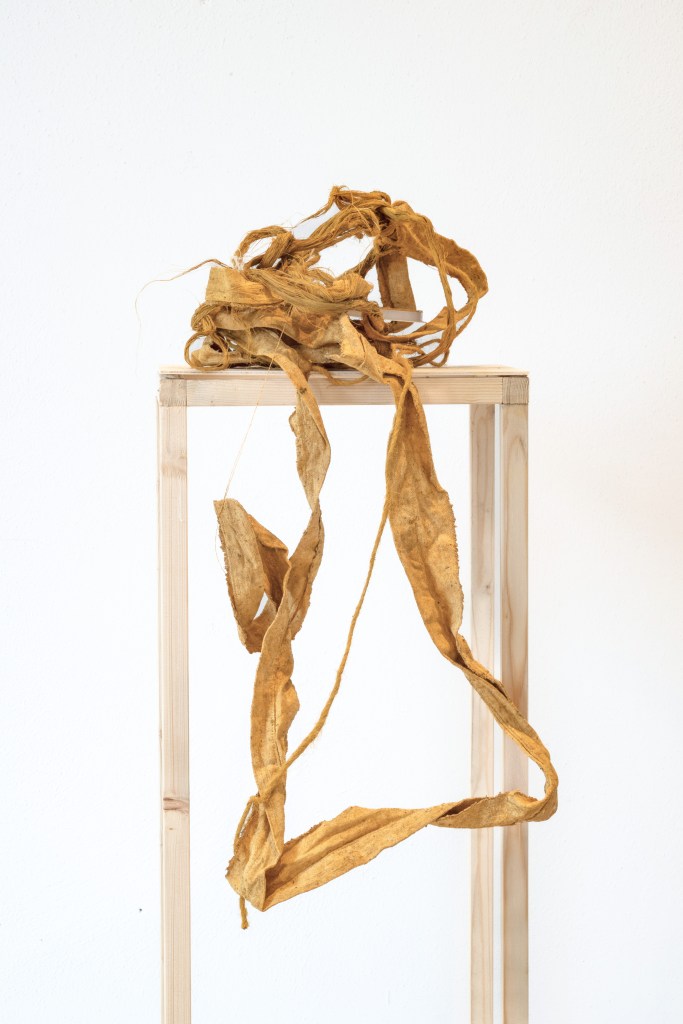
Photocredit Marco Passaniti
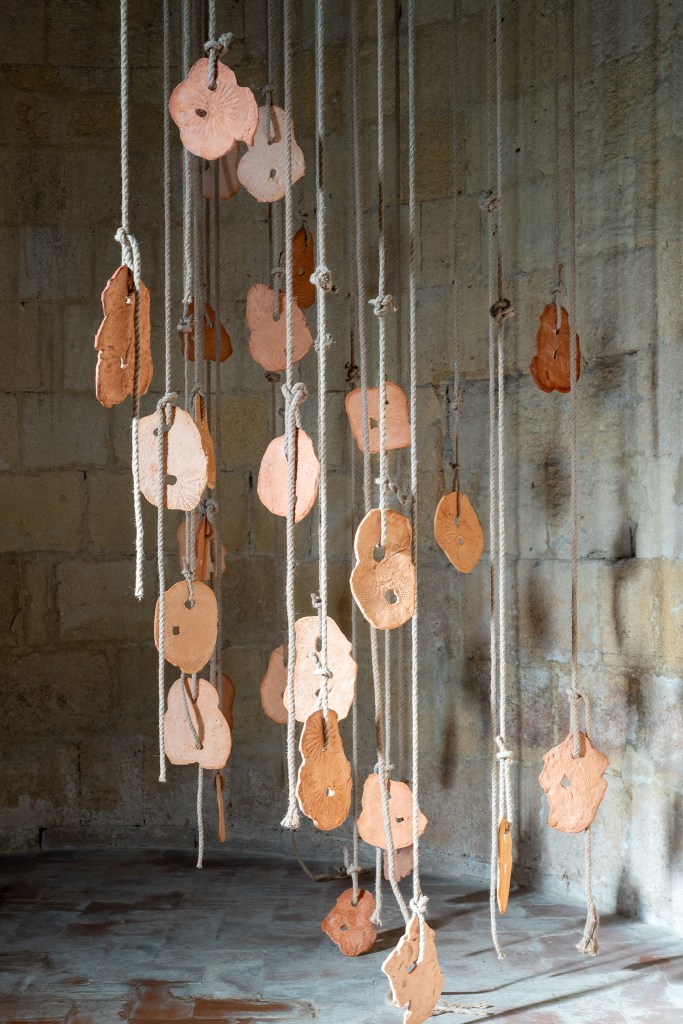
Premio città di Tarquinia, mostra Orizzonte terra a cura di Lorenzo Fiorucci, Chiesa di San Pancrazio, Tarquinia
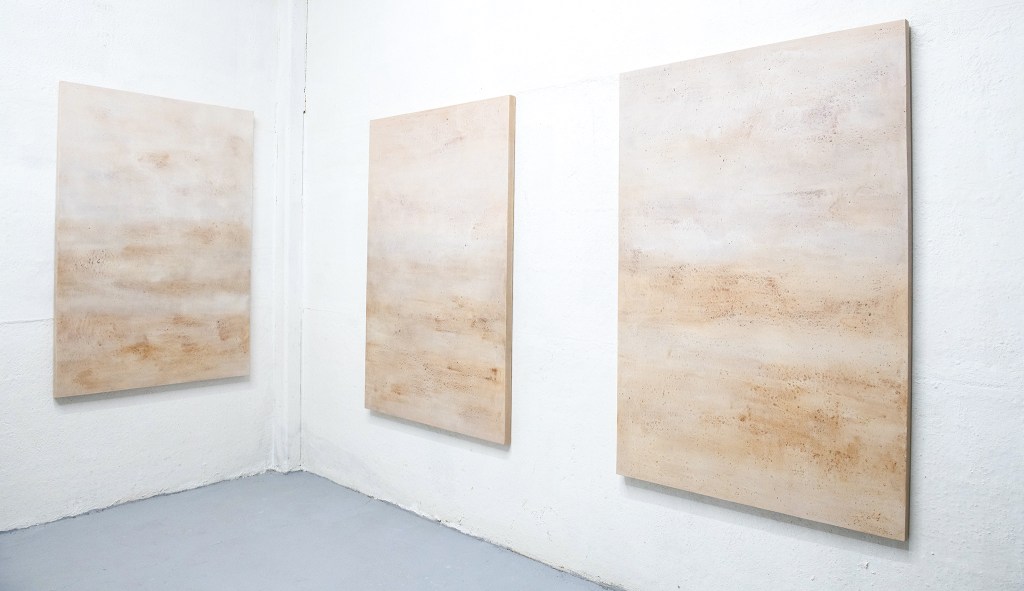
(Provenienza delle terre: Monte Argentario, Toscana; Monte Beigua, Liguria; Sierra di Aracena, Spagna; Monte Atlante, Marocco; Colli Berici, Veneto). 3 elementi cm 145×95
Opere realizzate per la Biennale di Arte Ceramica BACC 2022 curata da Lorenzo Fiorucci, Scuderie Aldobrandini, Frascati.
Photocredit Marco Passaniti
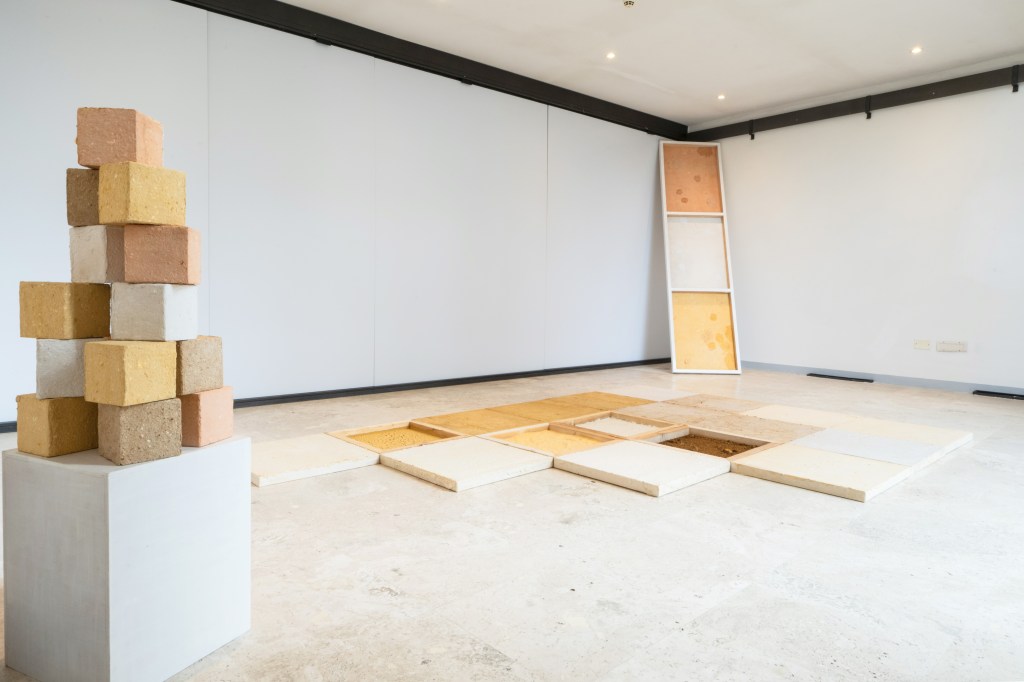
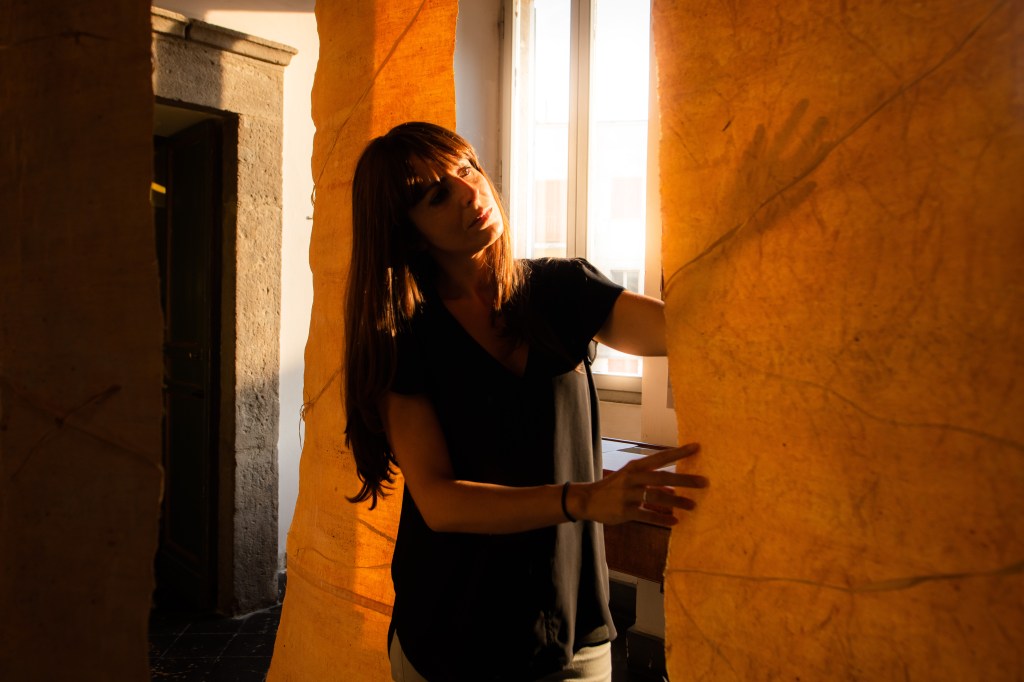
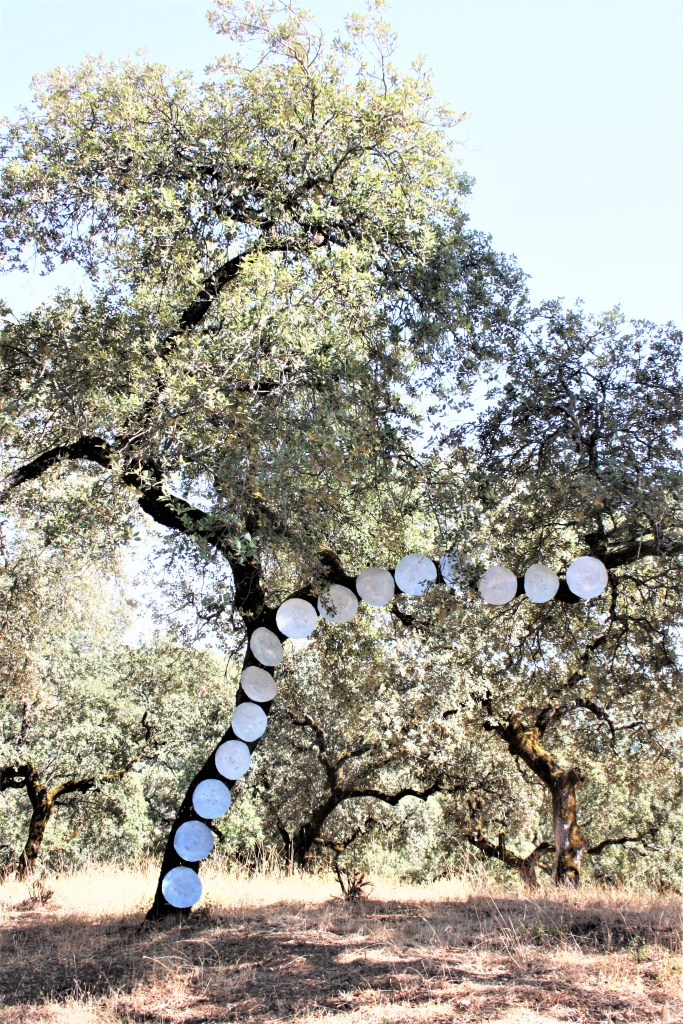
Installazione site specific, minerali raccolti in natura, carta riciclata e pigmenti naturali.
Sierra di Aracena, Spagna
 paroladartista.com