
(Scroll down for English text)
#paroladartista #intervistaartista #artistinterview #arnoldmariodallo
Parola d’Artista: Per la maggior parte degli artisti, l’infanzia rappresenta il periodo d’oro in cui iniziano a manifestarsi i primi sintomi di un certo interesse verso l’arte. È stato così anche per te? Racconta.
Arnold Mario Dall’O: Sono cresciuto nella periferia di un paese in una casa. Un’infanzia felice. I giocattoli ce li inventavamo, costruiti con legni o altri materiali di scarto. Non avevo nè libri d’arte, nè di letteratura in casa. Ci spingeva la curiosità, scavalcando muri per capire cosa c’era dietro. E’ quello che sto faccendo tuttora.
Pd’A: Quali studi hai fatto?
A.M.D.O: Dopo la media una scuola commerciale. E ringrazio ancora gli insegnati che dopo tre anni mi buttarono dalla scuola. Poi incominciai un’apprendistato in una tipografia. Un’azienda piccola, in con tanti macchinari vecchissimi. Restai 7 anni, in questo periodo imparai sia la composizione a piombo sia lla composizione con le prime macchine computerizzate., la stampa su torchio come ad offset.
Contemporanemente feci la scuola serale d’arte. Con la maturità mi licenziai e mi inscrissi all’accademia di belle arti a venezia.
Pd’A: Ci sono statti degli incontri importanti durante la tua formazione?
A.M.D.O: Studiai da Emilio Vedova. Dopo lo studio feci suo assistente a venezia, poi lo seguì come assistente all’accademia estiva di salisburgo.
Vedova era fondamentale per la mia formazione. Sia in modo positivo che negativo. Una formazione dura, autorevole ma anche di stimoli poetici e discussioni.
Pd’A: Che tipo di maestro è stato per te Emilio Vedova?
A.M.D.O: Impaziente. Gesticolante. Puntuale. Un’artista che andò in studio come altri vanno in officina. Con una forte etica per il lavoro, per l’arte.
Nell’aula a Venezia, un’aula pitturata completamente di nero, Vedova con autorevolezza spingeva gli studenti alla pitturea informale.
I pochi non-Vedovini avevano vita dura, anche se, dopo, erano i più amati dall’maestro.
Pd’A: Nel tuo lavoro l’immagine ha sempre avuto una sua importanza?
A.M.D.O: Anche se l’impronta Vedova nell’aula era forte, non seguì mai la pittura informale.
Pd’A: Che valore attribuisci all’idea di tempo in quello che fai?
A.M.D.O: I lavori degli ultimi anni nascono in diretta relazione con il tempo. La tecnica usata, costruendo punto per punto l’opera, necessita non solo di tempo ma viceversa il tempo compare in ogni punto applicato sulla tela. Un lavoro in contrasto con il ritmo del mondo, con la velocità di altre tecniche. Se l’informale è pittura veloce, emotiva, gestuale, attualmente il mio lavoro è il contrario: lento, preciso, ripetitivo.
Pd’A: La dimensione della memoria ha una qualche importanza per te?
A.M.D.O: Come scritto nella prima risposta, come bambino non feci arte. Giocavo, inventai giocattoli, scoprivo il mondo. Siamo tutti fatti di memorie, di esperienze di vita. Penso che nel mio lavoro subbentri questo: la curiosità che ebbi da bambino, le lettere di piombo, Vedova ecc
Pd’A: Il’disegno che ruolo ha nel processo di lavoro?
A.M.D.O: Uso il disegno a seconda dei progetti che seguo. Non disegno mai dal vivo. Il disegno è uno strumento di lavoro.
Pd’A: Quando inizi un lavoro hai già un’idea chiara di come si svilupperà o c’è spazio per delle modifiche in corso d’opera?
A.M.D.O: Ho idee precise. Poi scopro che così precise non erano.
Pd’A: L’idea di messa in scena del lavoro riferita alla sua esposizione ha una qualche importanza?
A.M.D.O: Per ogni mostra studio l’allestimento, che ha la stessa importanza come la scenografia per un teatro.
Pd’A: Molte delle immagini che dipingi sono tratte da fotografie come procedi nella selezione di questo materiale?
A.M.D.O: Mi interessano immagini in cui non è leggibile immediatamente ciò che rappresentano. Per esempio il ciclo delle persone senza nome, si potrebbe pensare anche che rappresentino persone che dormono. Mi interessa questa ambiguità.
Pd’A: Uno dei temi ricorrenti nel tuo lavoro è quello della morte, come ti relazioni a questo aspetto della vita che spesso nella nostra società si preferisce ignorare?
A.M.D.O: Penso che il tema della morte si deve vivere.
Pd’A: Che tipo di dialogo cerchi con lo spettatore che si trova davanti al tuo lavoro?
A.M.D.O: Provando a fare opere che non mostrano mai quello che si pensa di vedere.
Pd’A: Che cosa succede alle opere quando non c’è nessuno che le osserva, l’esistenza di un opera d’arte può prescindere dalla presenza di un osservatore?
A.M.D.O: Il nostro essere è correlato alla presenza di altre persone che ci fanno capire che esistiamo. Penso la stessa cosa valga per opere d’arte.
Pd’A: Secondo te l’artista dove si pone nei confronti della sua opera?
A.M.D.O: L’artista stesso nei confronti a grande arte non è importante. Può essere assassino o poeta. Non importa.
Nato nel 1960. Studia pittura all’Accademia di Belle Arti a Venezia da Emilio Vedova.
Artista dell‘anno 2023 Alto Adige.
Residenza a Vienna (1989), Budapest (1993), Salisburgo (2013).
Vive e lavora a Merano (Bz) ed Skibbereen, Irlanda.
A partire dagli anni `80 mostra in gallerie e musei (selezione): Galleria Goethe, Bolzano (I); Galerie Albert Baumgarten, Freiburg (D); Galerie Thaddaeus Ropac, Salzburg (A), Galleria Paolo Maria Deanesi, Rovereto (I); Galleria Lipanjepuntin, Trieste (I), Galleria Sergio Tossi, Firenze (I), Galerie Epikur, Wuppertal (D), Galerie Museum, Bozen (I), Museion, Museo di Arte Moderna e Contemporanea, Bolzano (I); Mart, Museo d’Arte Moderna e Contemporanea, Rovereto (I); MAG, Museo Alto Garda, Riva (I), MAC, Museo di Arte Contemporanea, Lissone (I); Galleria di Arte Contemporanea, Roma (I); Manifesta 7, Parallelevent, Rovereto (I); Museumsquartier, Wien (A), Merano Arte/Kunst Meran (I), Österreichische Galerie im Belvedere, Wien (A), Galleria Civica di Arte Contemporanea, Trento (I), CER MODERN, Museum of contemporary art, Ankara (TR), Museo Diocesano Massa (I)
English text
Arold Mario Dall’O Artist Interview
#Paroladartista #artistinterview #intervistaartista #arnoldmariodallo
Parola d’Artista: For most artists, childhood is the golden age when the first signs of an interest in art begin to appear. Was that the case for you too? Tell us.
Arnold Mario Dall’O: I grew up on the outskirts of a town in an INA-house. A happy childhood. We invented toys, made out of wood or other discarded materials. I had no art or literature books at home. We were driven by curiosity, climbing over walls to see what was behind them. That’s what I’m still doing today.
Pd’A: What studies did you do?
A.M.D.O: After secondary school, a business school. And I still thank the teachers who threw me out of school after three years. Then I started an apprenticeship in a printing shop. A small company, with lots of very old machinery. I stayed for seven years, during which time I learned both lead typesetting and typesetting with the first computerised machines, printing on presses like offset.
At the same time I went to night school for art. When I graduated from high school, I left and enrolled at the academy of fine arts in venice.
Pd’A: Were there any important encounters during your education?
A.M.D.O: I studied under Emilio Vedova. After studying, I became his assistant in venice, then followed him as an assistant at the summer academy in Salzburg.
Vedova was fundamental to my education. Both in a positive and negative way. A tough, authoritative training but also one of poetic stimulation and discussion.
Pd’A: What kind of teacher was Emilio Vedova for you?
A.M.D.O: Impatient. Gesticulating. Punctual. An artist who went to the studio as others go to the workshop. With a strong ethic for work, for art.
In the classroom in Venice, a room painted completely black, Vedova authoritatively pushed the students into informal painting.
The few non-Vedovini had a hard time, even though they were the teacher’s favourite afterwards.
Pd’A: Has the image always had an importance in your work?
A.M.D.O: Although the Vedova imprint in the classroom was strong, it never followed informal painting.
Pd’A: What value do you place on the idea of time in what you do?
A.M.D.O: The works of recent years are born in direct relation to time. The technique used, constructing the work point by point, requires not only time but vice versa time appears in every point applied on the canvas. A work that contrasts with the rhythm of the world, with the speed of other techniques. If Informal is fast, emotional, gestural painting, my work is currently the opposite: slow, precise, repetitive.
Pd’A: Does the dimension of memory have any importance for you?
A.M.D.O: As written in the first answer, as a child I did not make art. I played, I invented toys, I discovered the world. We are all made of memories, of life experiences. I think that’s what sums up my work: the curiosity I had as a child, the lead letters, Vedova etc.
Pd’A: What role does drawing play in the work process?
A.M.D.O: I use drawing depending on the projects I follow. I never draw live. Drawing is a working tool.
Pd’A: When you start a work, do you already have a clear idea of how it will develop or is there room for changes as you go along?
A.M.D.O: I have precise ideas. Then I discover that they were not so precise.
Pd’A: Does the idea of staging the work in relation to your exhibition have any importance?
A.M.D.O: For each exhibition, I study the staging, which is as important as the set design for a theatre.
Pd’A: Many of the images you paint are taken from photographs, how do you go about selecting this material?
A.M.D.O: I am interested in images in which it is not immediately readable what they represent. For example the cycle of nameless people, one could also think they represent people sleeping. I am interested in this ambiguity.
Pd’A: One of the recurring themes in your work is that of death, how do you relate to this aspect of life that we often prefer to ignore in our society?
A.M.D.O: I think the theme of death has to be lived.
Pd’A: What kind of dialogue do you seek with the spectator who is in front of your work?
A.M.D.O: By trying to make works that never show what you think you see.
Pd’A: What happens to the works when there is no one there to observe them, can the existence of a work of art be independent of the presence of an observer?
A.M.D.O: Our being is related to the presence of other people who make us realise that we exist. I think the same thing applies to works of art.
Pd’A: Where do you think the artist stands in relation to his work?
A.M.D.O: The artist himself in relation to great art is not important. He can be a murderer or a poet. It does not matter.
Born in 1960. Studied painting at the Academy of Fine Arts in Venice under Emilio Vedova.
Artist of the Year 2023 South Tyrol.
Residency in Vienna (1989), Budapest (1993), Salzburg (2013).
Lives and works in Merano (Bz) and Skibbereen, Ireland.
Has exhibited in galleries and museums since the 1980s (selection): Goethe Gallery, Bolzano (I); Galerie Albert Baumgarten, Freiburg (D); Galerie Thaddaeus Ropac, Salzburg (A), Galleria Paolo Maria Deanesi, Rovereto (I); Galleria Lipanjepuntin, Trieste (I), Galleria Sergio Tossi, Florence (I), Galerie Epikur, Wuppertal (D), Galerie Museum, Bozen (I), Museion, Museum of Modern and Contemporary Art, Bolzano (I); Mart, Museum of Modern and Contemporary Art, Rovereto (I); MAG, Museo Alto Garda, Riva (I), MAC, Museo di Arte Contemporanea, Lissone (I); Galleria di Arte Contemporanea, Roma (I); Manifesta 7, Parallelevent, Rovereto (I); Museumsquartier, Wien (A), Merano Arte/Kunst Meran (I), Österreichische Galerie im Belvedere, Wien (A), Galleria Civica di Arte Contemporanea, Trento (I), CER MODERN, Museum of contemporary art, Ankara (TR), Museo Diocesano Massa (I)
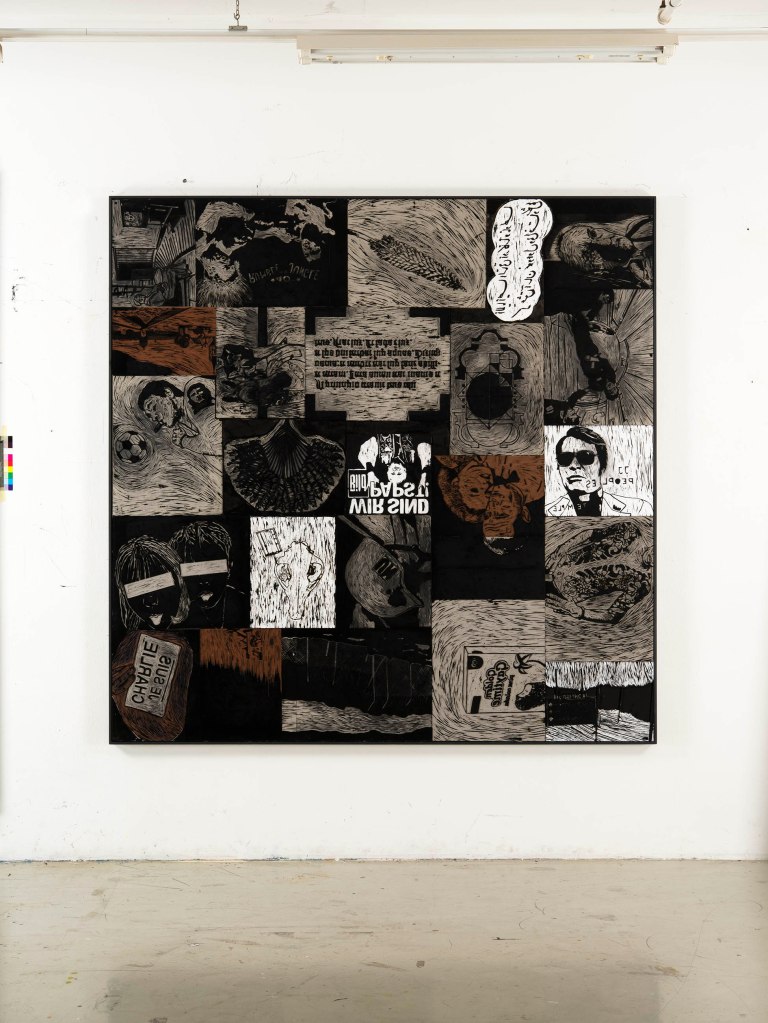
Was bleibt / Ciò che resta (B)
Linoleumschnitte appliziert auf Holz
Incisioni su linoleum, applicati su legno
202 x 202 cm
2022
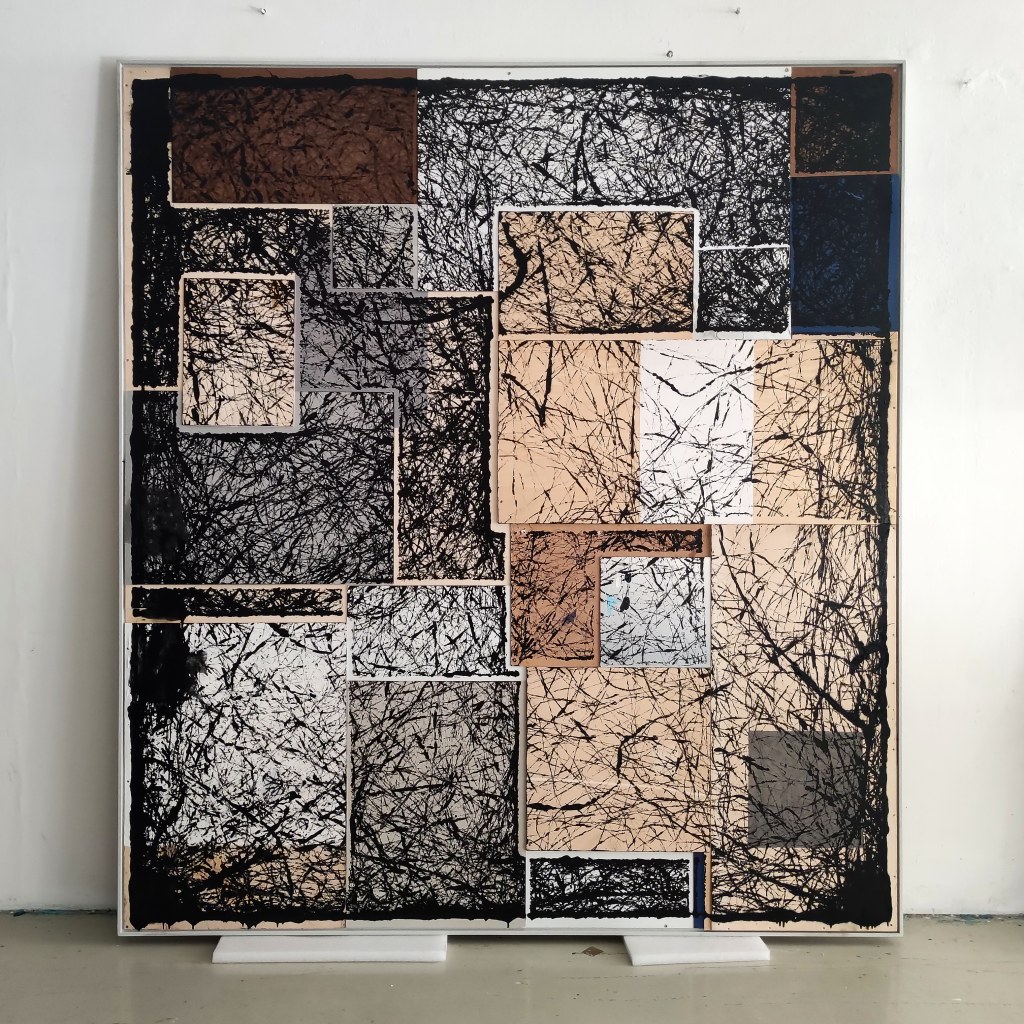
Untitled (14,33)
Ölmalerei auf Holzplatten / pittura a olio su lastre in legno / oil on wood plates
236 x 214 cm
2024
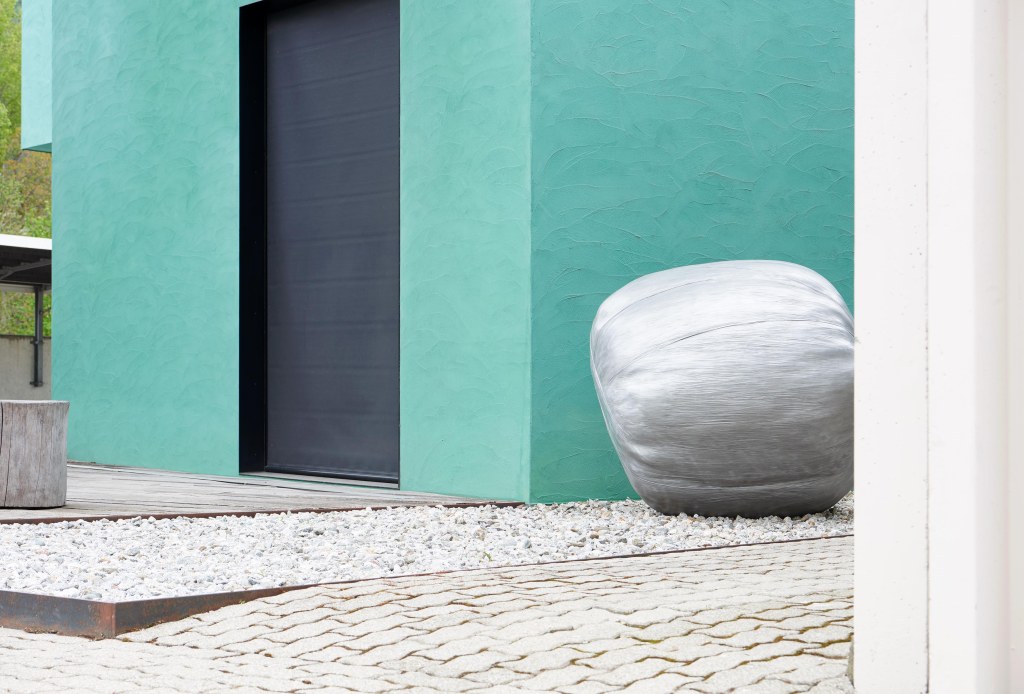
o.t. (siloballen)
Aluminium
120 x 135 x 95 cm
(2024)
edition 1/3

Untitled (nameless 7)
Ölmalerei auf Messingplatte / pittura a olio su lastra di ottone / oil on brass plate
65 x 50 cm
2024
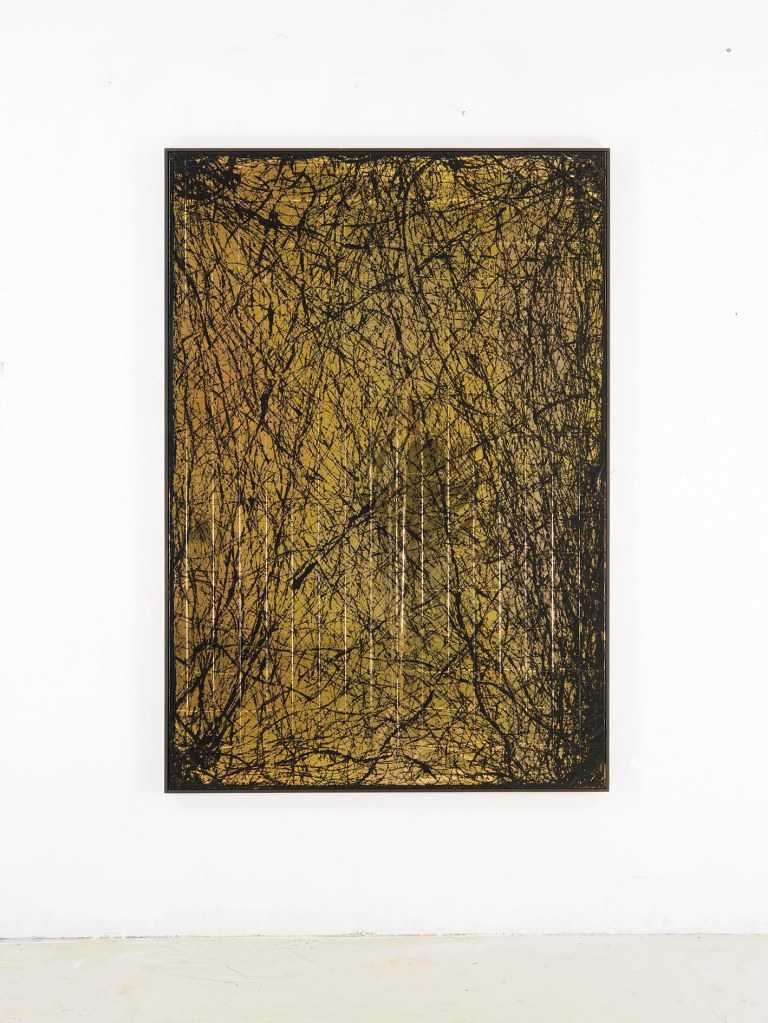
Untitled (00.24.45)
Ölmalerei auf aluminiumbeschichteter Polyesterfolie / pittura a olio su telo
isotermico / oil on aluminium metalized polyester
182,5 x 126,5 cm
2023
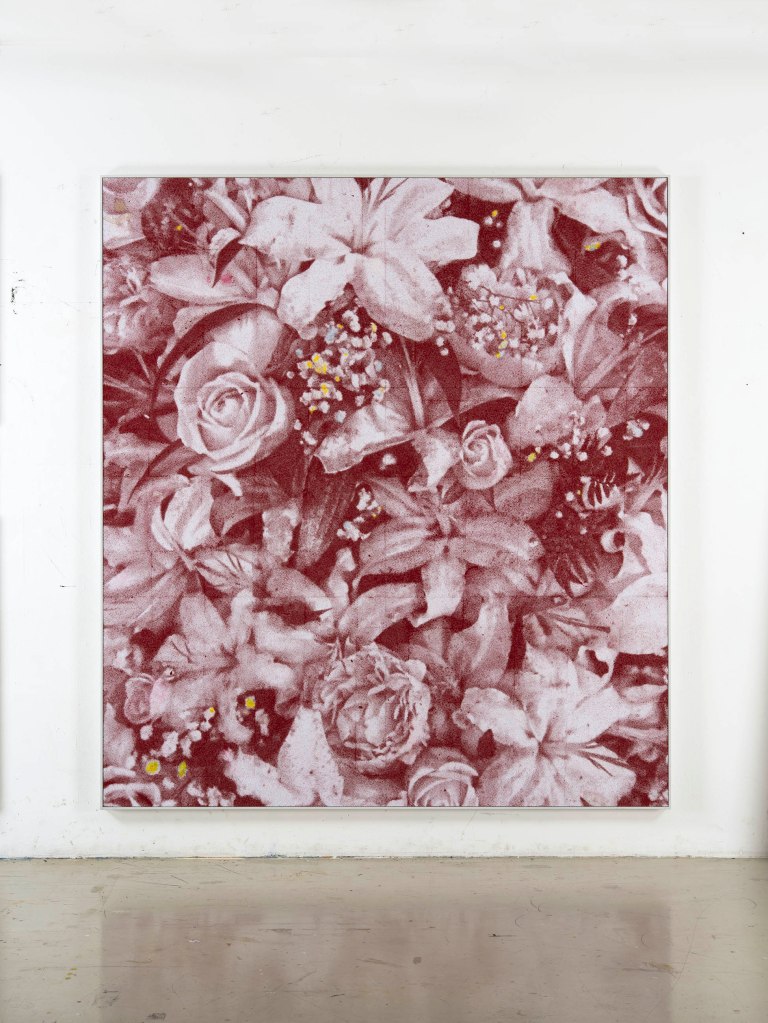
Untitled (flowers, red)
Ölmalerei auf Papier, appliziert auf Holz / pittura a olio su carta applicata su
tavola / oil on paper applied on wood
236 x 214 cm
2021
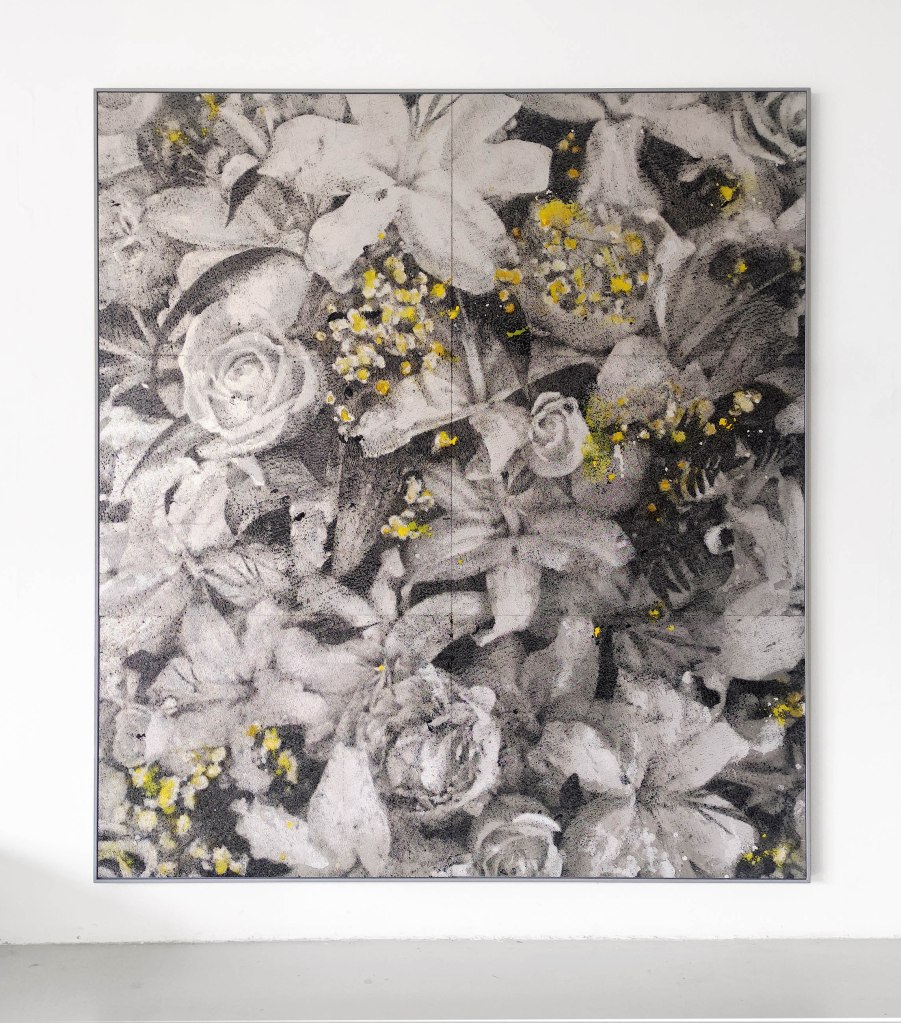
Untitled (flowers, black)
Ölmalerei auf Papier, appliziert auf Holz / pittura a olio su carta applicata su
tavola / oil on paper applied on wood
236 x 214 cm
2023
Arnold
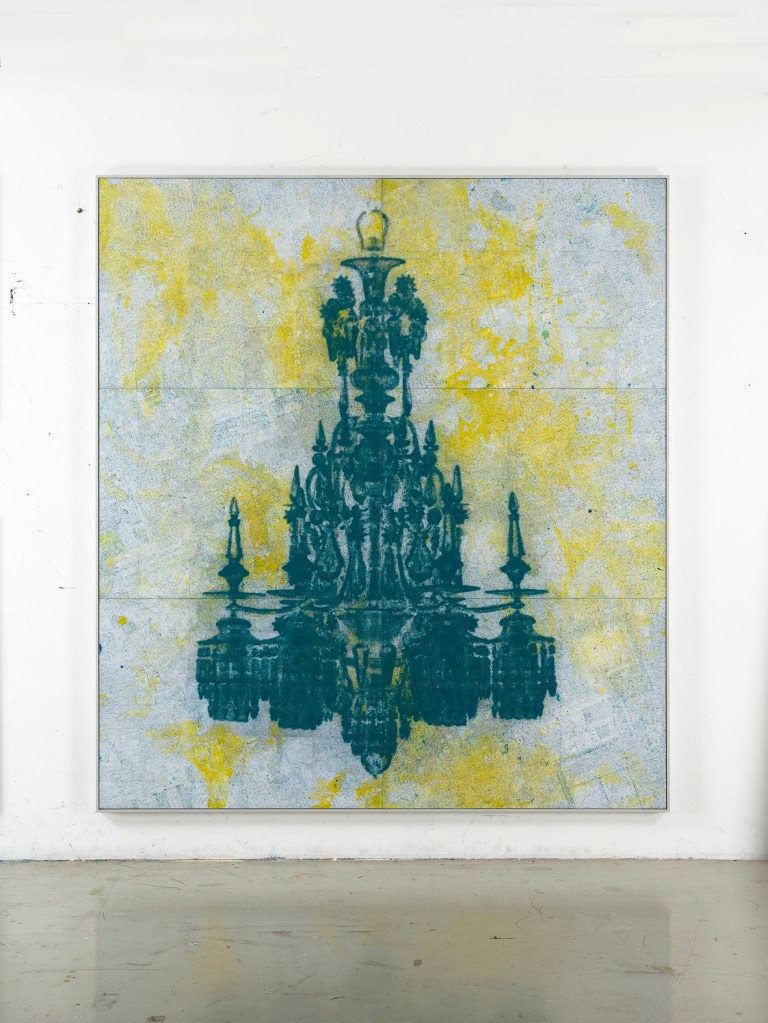
Untitled (Luster, yellow)
Ölmalerei auf Papier, appliziert auf Holz / pittura a olio su carta applicata su
tavola / oil on paper applied on wood
236 x 214 cm
2022
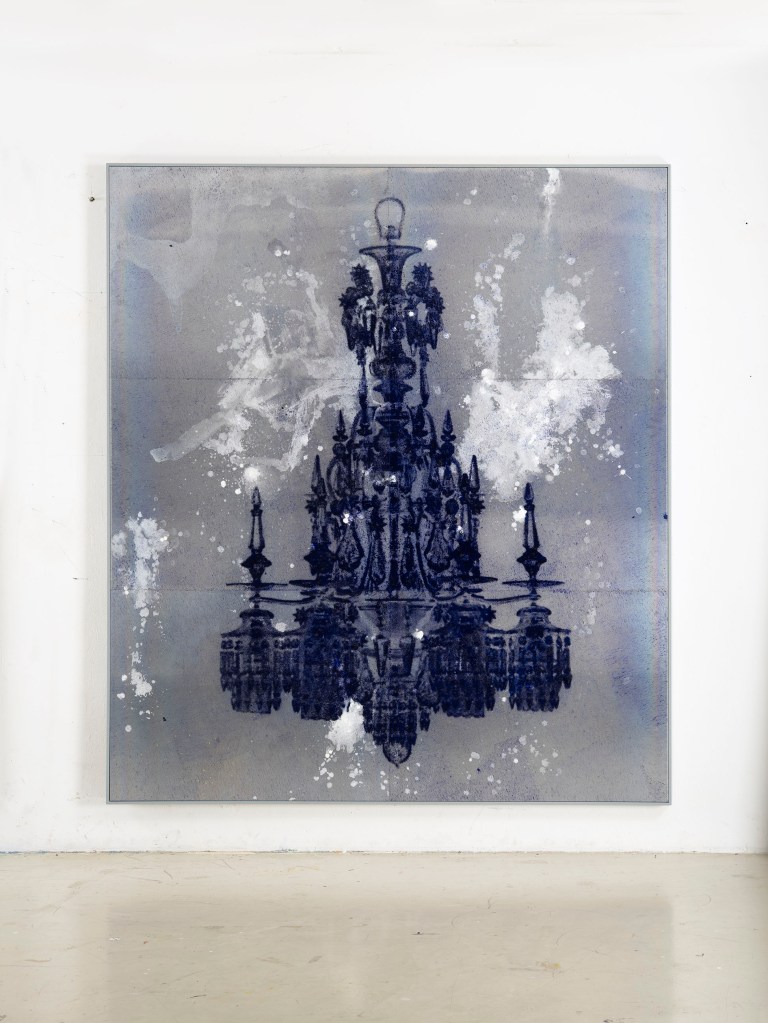
Untitled (luster, blue)
Ölmalerei auf Offsetplatten / pittura a olio su lastre offset / oil on offset plates
236 x 214 cm
2020
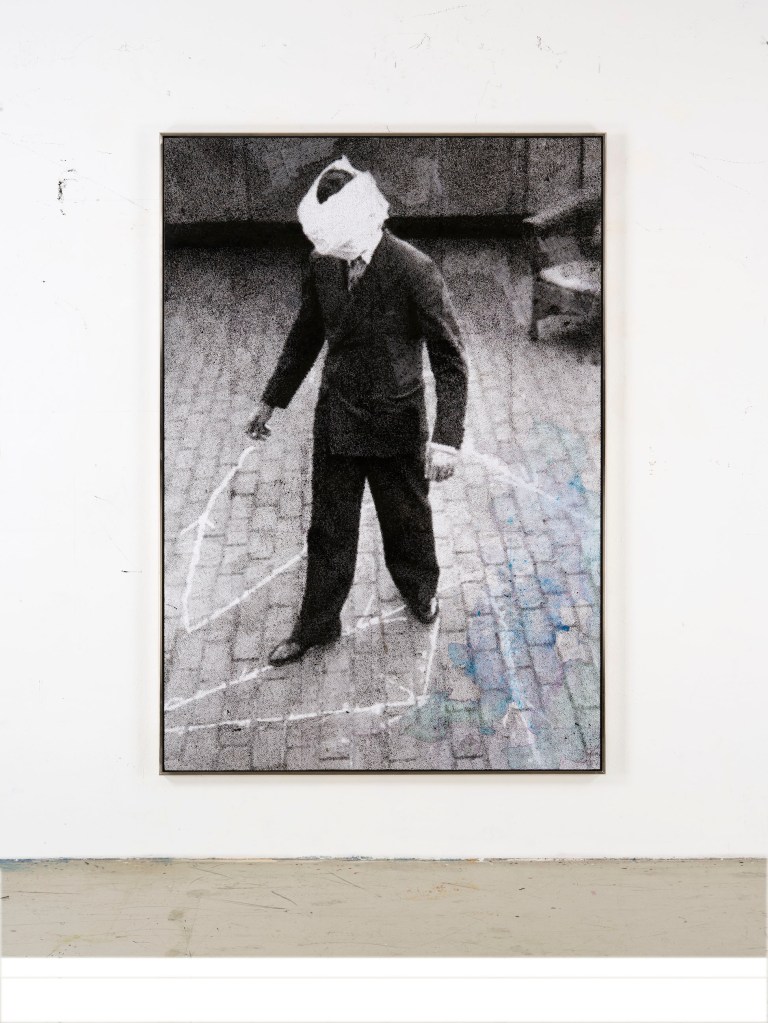
Untitled (mystic A)
Ölmalerei auf Papier, appliziert auf Holz / pittura a olio su carta applicata su
tavola / oil on paper applied on wood
182,5 x 126,5 cm
2020
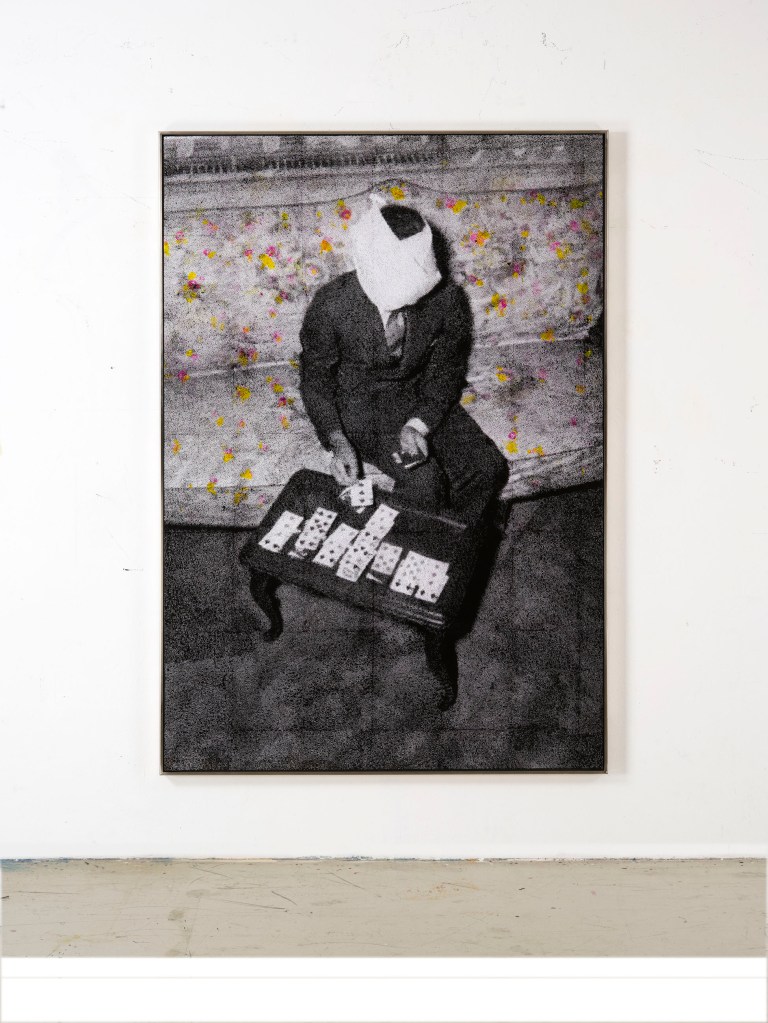
Untitled (mystic B)
Ölmalerei auf Papier, appliziert auf Holz / pittura a olio su carta applicata su
tavola / oil on paper applied on wood
182,5 x 126,5 cm
2020
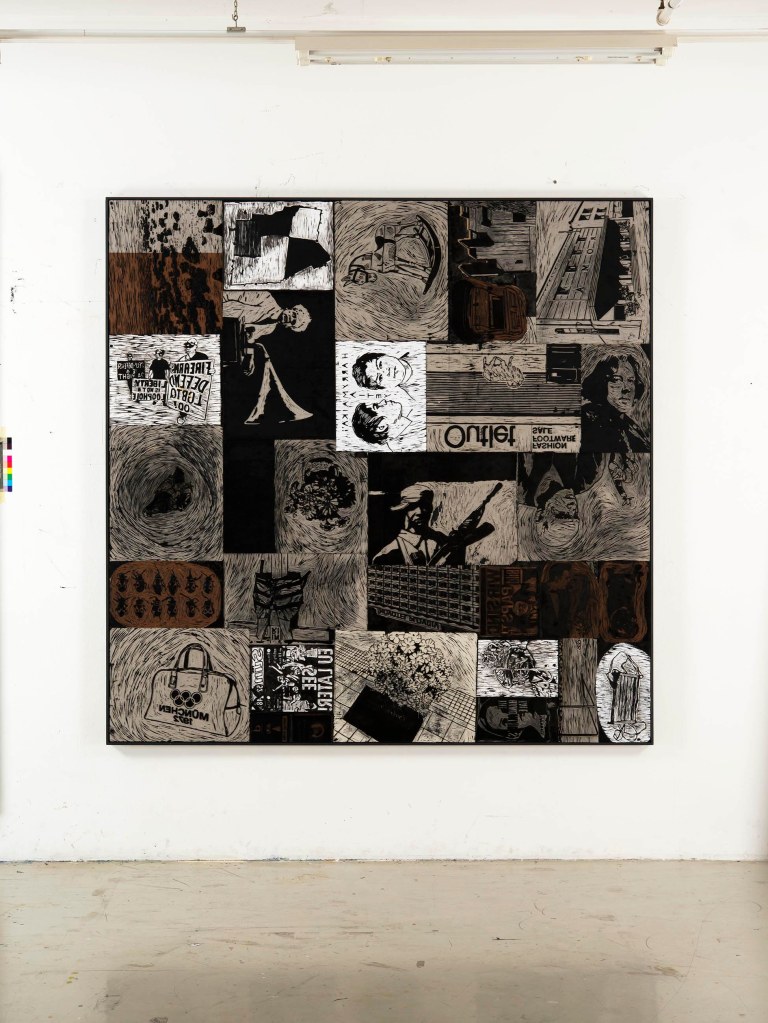
Was bleibt / Ciò che resta (A)
Linoleumschnitte appliziert auf Holz Incisioni su linoleum, applicati su legno
202 x 202 cm
2022
 paroladartista.com