

(▼Scroll down for English text)
#paroladartista #intervistaartista #artistinterview #veronicadegiovanelli
Parola d’Artista: Ciao Veronica, per la maggior parte degli artisti l’infanzia rappresenta l’età dell’oro quella in cui cominciano a manifestarsi i primi “sintomi” di una certa propensione ad appartenere al mondo dell’arte. E’ stato così anche per te? Racconta?
Veronica de Giovanelli: Da piccola, quando mi chiedevano cosa avessi voluto fare da grande, io rispondevo: “voglio suonare e viaggiare il mondo” (probabilmente sull’onda dell’entusiasmo dell’avere iniziato da poco una scuola di musica). Anche se l’arte visiva ha poi prevalso su pianoforte e solfeggio, la propensione per il creare e il voler scoprire il mondo sono dei tratti che mi hanno contraddistinta da sempre.
Nonostante sia cresciuta in un piccolo paesino in Trentino, dove l’arte è piuttosto marginale, i miei genitori hanno sempre fatto il possibile per assecondare la mia vena creativa e la mia curiosità, portandomi a vedere musei, mostre e città d’arte, ma non solo: i materiali per disegnare e creare non mi sono mai mancati. Gliene sarò sempre estremamente grata.
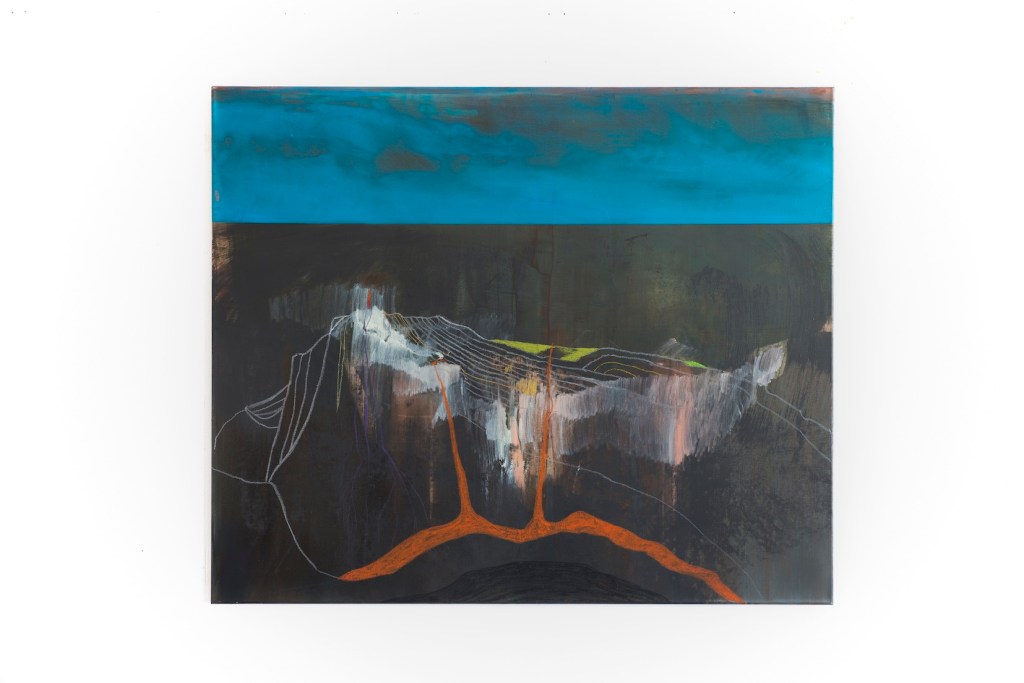
Inoltre, anche se per molto tempo non me ne sono resa conto, è innegabile che il luogo stesso dove sono cresciuta, la Valle di Cembra, abbia avuto un forte impatto nella mia ricerca artistica, che si palesa soprattutto in un aneddoto assai significativo. Era la primavera del 2019 e frequentavo un master all’ENSAV La Cambre a Bruxelles nei luminosissimi atelier di pittura di un edificio progettato da Henry Van de Velde. Un giorno venne a fare studio visit l’artista fiammingo Vincent Geysken, invitato dai miei professori. Gli mostrai i miei dipinti, ne avevo diversi di grande formato, molti non finiti, che evocavano rocce, vulcani e mappe geologiche. Parlammo di pittura, paesaggio, di artisti contemporanei e non. Quasi subito, senza sapere nulla di me, se non che fossi italiana (tradita dal mio accento), mi disse che quei dipinti gli facevano venire in mente degli acquerelli di Dürer. Cercò immediatamente le immagini a cui si riferiva e mi mostrò uno di questi acquerelli e, incredibilmente, l’acquerello rappresentava proprio la Valle di Cembra, il luogo dove sono cresciuta.
Conoscevo bene quegli acquerelli dipinti nel 1494, fatti durante il suo viaggio da Norimberga a Venezia. Infatti Dürer deviò il suo viaggio passando dalla mia valle perché c’era stata un’alluvione nella Valle dell’Adige dove passaggio era complesso. Ma mai avrei pensato che quel paesaggio fosse così presente nei miei dipinti, e che i luoghi della mia infanzia trasparissero in maniera così forte.
P.d’A.: L’attenzione al paesaggio ha segnato anche gli sviluppi successivi del tuo lavoro? Che tipo di relazione si instaura con i luoghi in cui lavori?
V.D.G.:Il paesaggio, inteso nella sua doppia accezione di panorama, veduta interpretata di un luogo, ma anche del luogo stesso, fisico e tangibile, è da sempre al centro della mia ricerca artistica.
Se i paesaggi della mia infanzia hanno plasmato, forse inconsciamente, il mio interesse per la rappresentazione del paesaggio in sé, ogni luogo in cui ho abitato ha dato vita a una diversa interazione tra l’ambiente e le opere che creo. Questa relazione varia e si distingue a seconda dei contesti. In alcuni casi questo rapporto è piuttosto diretto: è accaduto durante i miei anni veneziani e presso residenze d’artista in luoghi dove il paesaggio circostante è piuttosto preponderante, come in Norvegia o nelle Dolomiti. Altre volte invece questa relazione è stata meno stretta. Infatti il mio interesse non è necessariamente quello di parlare di un luogo specifico, ma di creare lavori che possano evocare diversi aspetti di un paesaggio che è sempre mutevole, partendo dal particolare per aspirare ad un discorso più ampio, universale.
Venezia in particolare è stata cruciale nel mio percorso artistico, anzitutto perché è dove mi sono formata come pittrice all’interno dell’Atelier F dell’Accademia di Belle Arti. In secondo luogo, Venezia e la sua laguna sono state centrali perché in quel periodo ho realizzato una serie di lavori che avevano come punto di partenza proprio quei luoghi. Durante i miei anni veneziani infatti, ho realizzato una serie di vedute aeree che rappresentavano le terre emerse e sommerse della laguna, dove l’impronta dell’uomo è particolarmente visibile e dove la natura, ciclicamente, con le sue maree, prende il sopravvento. Ne sono un esempio la serie di dipinti De haruspicibus auguribusque o Ventimila metri cubi d’acqua al secondo; il titolo di quest’ultimo, ad esempio, allude alla portata massima di una marea complessiva di tutte e tre le bocche di porto della laguna di Venezia in fase di sizigie, ovvero il momento in cui l’escursione fra l’alta e la bassa marea è al massimo livello. Venezia rappresenta infatti l’emblema della fragilità del paesaggio, che è una tematica piuttosto ricorrente della mia ricerca. Inoltre, con i suoi cromatismi mutevoli e l’atmosfera unica, Venezia ha plasmato una prospettiva cromatica e fenomenica che si riflette in modo tangibile nei miei lavori di quel periodo.
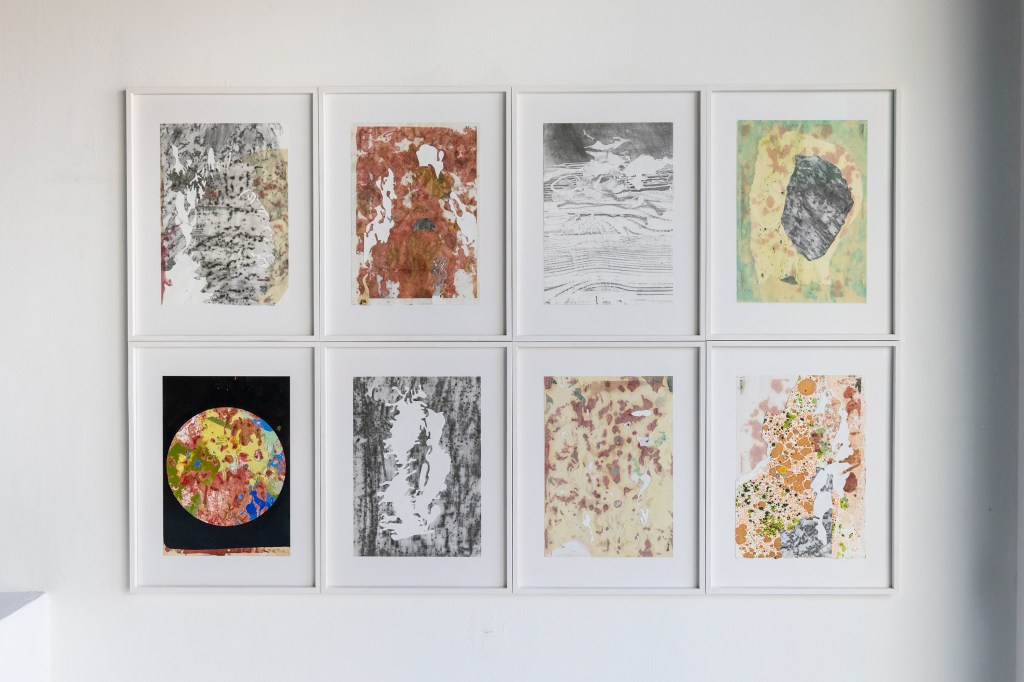
Questa stretta connessione tra la mia produzione artistica e l’ambiente circostante si è manifestata ad esempio nel contesto di una residenza di Dolomiti Contemporanee a Casso (PN). Io e gli altri artisti siamo stati invitati a ragionare su quei luoghi che sono indissolubilmente legati al disastro del Vajont, con l’obiettivo di dare un nuovo sguardo e una nuova vita a quei posti. Abbiamo avuto l’opportunità di fare un’escursione con un geologo sulla frana del Monte Toc che, attraverso i vari strati di roccia sui quali abbiamo camminato, ci ha raccontato l’origine e la storia geologica delle Dolomiti. In queste montagne la trasformazione dei sedimenti in roccia è avvenuta da residui di organismi che hanno ribaltato una situazione sfavorevole: per sopravvivere allo sprofondamento delle placche tettoniche hanno creato le spettacolari vette. In questo contesto ho realizzato una serie di frottages di quelle superfici, in grafite su carta minerale, che ho poi ritagliato ed assemblato, creando una serie di collages che ho chiamato Litogènesi. Nuove opere/rocce che, suggerendo sedimenti, stratificazioni e organismi marini, evocano la rinascita di questi paesaggi spettacolari.
Da quando vivo a Bruxelles invece, la connessione con il paesaggio circostante è divenuta meno immediata, ma piuttosto immaginata, acquisendo un tono forse più astratto, surreale e ambiguo.
In Belgio, passando molto tempo nei musei ad osservare i dipinti di Joachim Patinir ed altri pittori fiamminghi (d’altronde la pittura di paesaggio come genere a sé stante è nata proprio qui) ho assimilato i canoni tradizionali del paesaggio, per poi cercare di allontanarmene il più possibile, ribaltandoli e reinterpretandoli. Ad esempio, nei miei dipinti più recenti, ho deliberatamente evitato di utilizzare il “format paysage”, come viene chiamato in francese il formato orizzontale, che, appunto, è tipico della pittura di paesaggio. I miei colori, inoltre, non si rifanno all’ambiente circostante, ma hanno assunto tonalità più artificiali.
P.d’A.: Sei mai stata tentata dall’idea di usare per dipingere questi paesaggi dei colori minerali che potresti tu stessa prelevare dalla terra per trasformarli in pigmenti e quindi in pittura? Trovando in questo modo un legame ancora più forte con i luoghi.
V.D.G.:Il rapporto fra materiale, opera e territorio è un aspetto che mi interessa solo in parte, in quanto spesso il legame che si instaura fra luogo e opera è per me più che altro uno spunto, un punto di partenza, un pretesto per evocare di qualcosa di più ampio, anche se in alcuni progetti specifici ho effettivamente deciso di utilizzare dei materiali legati al luogo dove mi trovavo.
Ad esempio, Litogènesi è una serie di collage realizzati in grafite su carta minerale, una carta ottenuta dall’80% di carbonato di calcio, ovvero l’elemento caratterizzante della dolomia, la roccia sedimentaria delle Dolomiti. La scelta di utilizzare esclusivamente materiali di origine minerale, con una diretta connessione con quel luogo, l’ho trovata interessante per quel contesto specifico, ma soprattutto il materiale stesso era funzionale alla costruzione dell’opera. Infatti, la sua superficie estremamente liscia della carta minerale consente la realizzazione di frottages più nitidi e definiti rispetto alla carta comune.
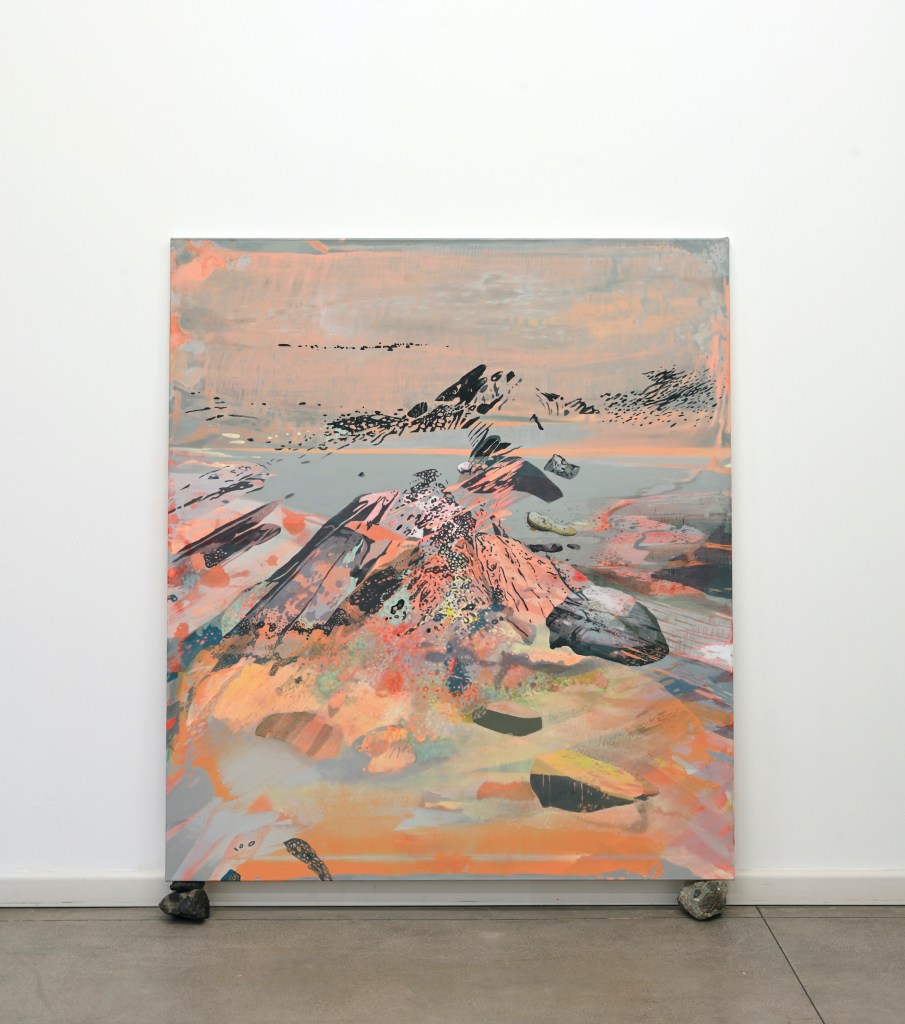
In un’altra sola occasione ho ricercato il legame diretto tra immagine e supporto, quando ho scelto di esporre un dipinto di grande formato realizzato in Norvegia, che rievocava la suggestiva immagine di rocce frastagliate e sgretolate. Infatti, ho scelto di installare il dipinto su pietre provenienti dalle isole Vaerlandet, creando un richiamo visivo fra le rocce e l’immagine dipinta.
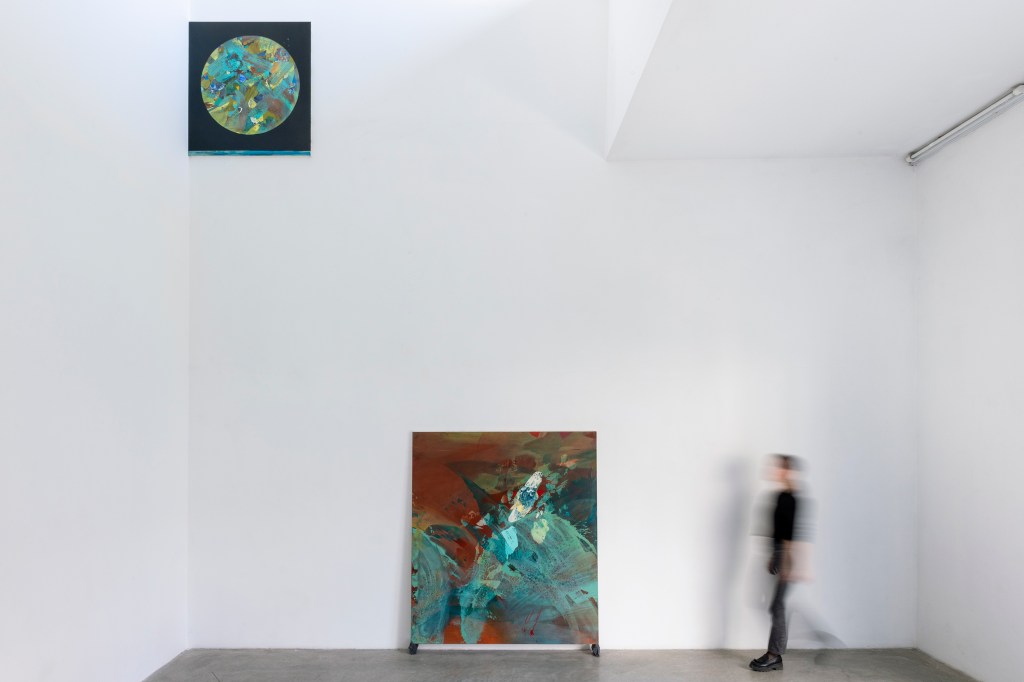
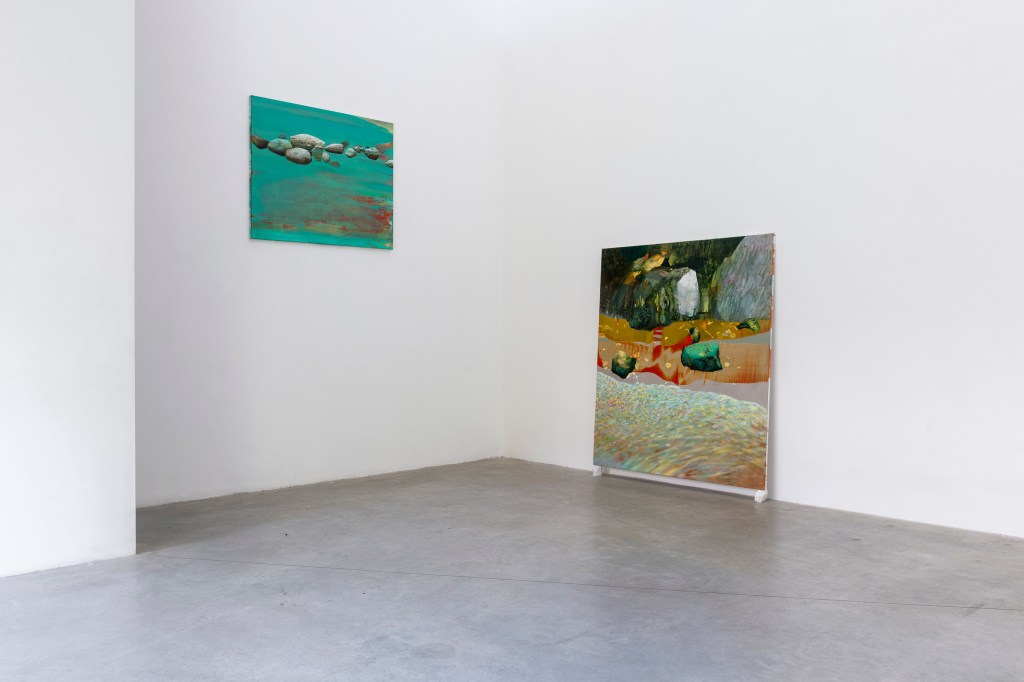
Recentemente, invece, ho realizzato una serie di lavori che evocano il mondo minerale nella sua essenza, ormai piuttosto distaccato da connessioni con luoghi precisi. Nella mia ultima mostra personale, che si intitola appunto “Du monde minéral” presso Boccanera Gallery a Milano, ho esposto delle grandi tele su delle pietre, ma più come rimando alla materia che come richiamo alla loro zona d’origine.
Infatti, con i miei ultimi lavori, alludo al mondo minerale nei suoi processi di costituzione, alterazione e distruzione, come l’erosione, la sedimentazione, la solidificazione, attraverso un fare pittorico che richiama questi processi. Un lento susseguirsi di strati di acrilico, olio, pigmenti puri, collage.
P.d’A.: Il tuo può essere definito un approccio romantico?
V.D.G.:L’interesse nei confronti della natura e il fascino che provo nei suoi confronti, delle sue meraviglie e della sua drammaticità, credo possa essere accostabile, almeno in parte, a quello dei pittori romantici. Ho sempre ammirato come Constable dipingeva i cambiamenti dei fenomeni atmosferici, la raffinatezza delle luci e del movimento nei dipinti di Turner e il senso della sconfinatezza della natura di Friedrich e la sua fascinazione per le rovine.
Tuttavia, il processo con cui creo i miei lavori è caratterizzato da un susseguirsi di tentativi e verifiche, nei quali alterno una pittura “sfuggente” ed incontrollata, ad una più razionale, mentale, misurata. Molto spesso infatti dipingo con la tela a terra, in orizzontale, sulla quale muovo della pittura molto liquida con una spatola, in parte paragonabile a come lavoravano i pittori dell’action painting o all’espressionismo astratto americano. Mi piace il fatto che questa pittura liquida sia difficilmente controllabile, perché regala degli effetti di movimento che rimandano allo stato liquido della natura e ad un’astrazione di matrice informale. A questo tipo di pittura alterno delle fasi in cui, nel processo di creazione, la tela è posizionata in verticale e dipingo in maniera più tradizionale, razionale e pensata, in un lento susseguirsi di strati di materia; un continuo fare e disfare fino a che il risultato non incontra quella che ritengo sia la sua forma finale.
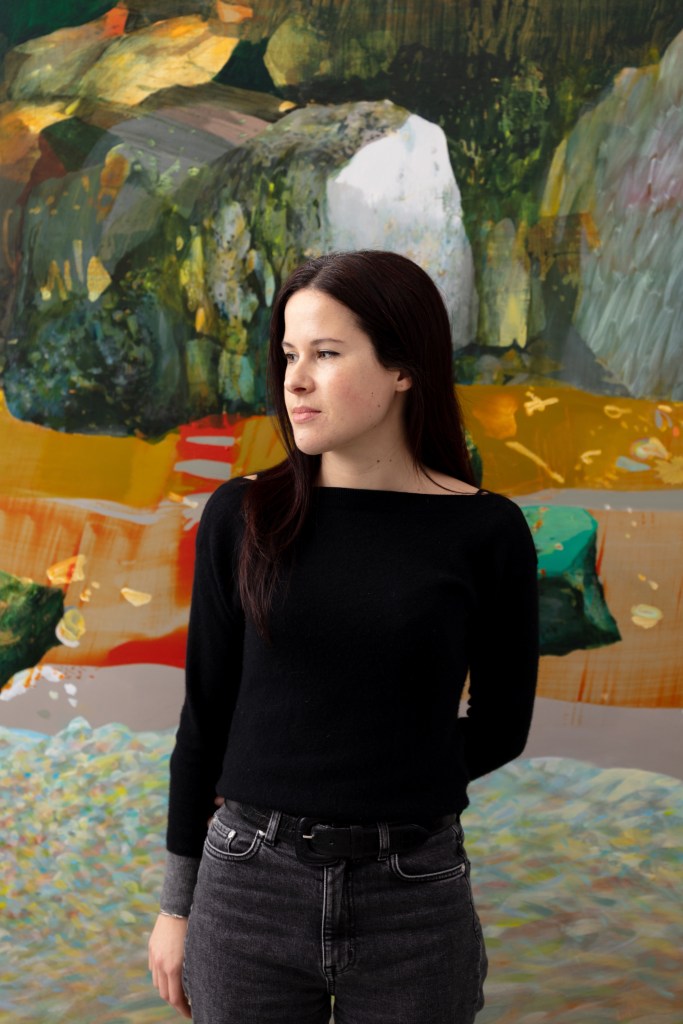
Veronica de Giovanelli
Nata a Trento (IT) nel 1989, vive e lavora a Bruxelles.
Ha conseguito un Diploma di Primo e Secondo Livello presso l’Accademia di Belle Arti di Venezia e un Master all’ENSAV La Cambre. Ha inoltre frequentato il MA Fine Arts Research and Development presso la Middlesex University di Londra nell’ambito di Erasmus+.
Tra le occasioni espositive si ricordano: Du monde minéral, Boccanera Gallery, Milano (2024), La storia non si ripete ma fa rima, Studio La Città, Verona (2023), Ex Post 2, Galleria Civica di Trento (MART Museo di arte moderna e contemporanea di Trento e Rovereto), Trento (2021), Andvake, Boccanera Gallery, Trento (2021), One clover and a bee. And revery, Moonens Foundation, Bruxelles (2020), All in one, KANAL-Centre Pompidou, Bruxelles (2019), L’ombre du zebre n’a pas des rayures, Espace Vanderborght, Bruxelles (2018), If a clod be washed away by the sea, Spazio Thetis, Venezia (2015), The nest builders of the sea, ArtLacuna, Londra (2014), I borsisti della 97ma Collettiva, Palazzetto Tito, Fondazione Bevilacqua La Masa, Venezia (2014). Recentemente è stata selezionata per partecipare al progetto itinerante Venice Time Case ideato da Luca Massimo Barbero, esponendo presso la galleria Tommaso Calabro a Milano, la Galerie italienne a Parigi e Monitor Gallery a Roma, fra le altre.
English text
Interview to Veronica De Giovanelli
#paroladartista #intervistaartista #artistinterview #veronicadegiovanelli
Parola d’Artista: Hi Veronica, for most artists childhood represents the golden age when the first ‘symptoms’ of a certain propensity to belong to the art world begin to appear. Was that the case for you too? Do tell?
Veronica De Giovanelli: When I was a child, when people asked me what I wanted to do when I grew up, I used to answer: ‘I want to play music and travel the world’ (probably on the wave of enthusiasm of having recently started a music school). Although visual art has since prevailed over piano and solfege, the propensity to create and wanting to discover the world are traits that have always distinguished me.
Although I grew up in a small village in Trentino, where art is rather marginal, my parents have always done everything possible to indulge my creative vein and curiosity, taking me to museums, exhibitions and art cities, but not only that: I have never lacked the materials to draw and create. I will always be extremely grateful.
Moreover, even if I did not realise it for a long time, it is undeniable that the very place where I grew up, the Cembra Valley, has had a strong impact on my artistic research, which is most evident in a very significant anecdote. It was spring 2019 and I was attending a master’s course at ENSAV La Cambre in Brussels in the brightly lit painting studios of a building designed by Henry Van de Velde. One day, the Flemish artist Vincent Geysken came for a studio visit, invited by my professors. I showed him my paintings, I had several large-format ones, many unfinished, evoking rocks, volcanoes and geological maps. We talked about painting, landscape, contemporary and other artists. Almost immediately, without knowing anything about me except that I was Italian (betrayed by my accent), he told me that those paintings reminded him of Dürer’s watercolours. He immediately searched for the images he was referring to and showed me one of these watercolours and, incredibly, the watercolour represented the Cembra Valley, the place where I grew up.
I was familiar with those watercolours painted in 1494, done during his journey from Nuremberg to Venice. In fact, Dürer diverted his journey by passing through my valley because there had been a flood in the Adige Valley where passage was difficult. But I never thought that landscape would be so present in my paintings, and that the places of my childhood would shine through so strongly.
P.d.A.: Has this focus on the landscape also marked subsequent developments in your work? What kind of relationship do you establish with the places where you work?
V.D.G.: The landscape, understood in its double meaning of panorama, an interpreted view of a place, but also of the place itself, physical and tangible, has always been at the centre of my artistic research.
If the landscapes of my childhood have shaped, perhaps unconsciously, my interest in the representation of the landscape itself, each place I have lived in has given rise to a different interaction between the environment and the works I create. This relationship varies and differs depending on the contexts. In some cases, this relationship is quite direct: it happened during my Venetian years and at artist residencies in places where the surrounding landscape is quite predominant, such as in Norway or the Dolomites. Other times, however, this relationship has been less close. In fact, my interest is not necessarily to talk about a specific place, but to create works that can evoke different aspects of a landscape that is always changing, starting from the particular to aspire to a broader, universal discourse.
Venice in particular has been crucial in my artistic career, firstly because it is where I trained as a painter in Atelier F at the Academy of Fine Arts. Secondly, Venice and its lagoon were central because during that time I created a series of works that had those very places as their starting point. In fact, during my Venetian years, I made a series of aerial views representing the emerged and submerged lands of the lagoon, where the imprint of man is particularly visible and where nature, cyclically, with its tides, takes over. An example of this is the series of paintings De haruspicibus auguribusque or Twenty thousand cubic metres of water per second; the title of the latter, for example, alludes to the maximum tidal capacity of all three inlets of the Venetian lagoon during the syzygies, i.e. the moment when the range between high and low tide is at its highest level. Venice in fact represents the emblem of the fragility of the landscape, which is a recurring theme in my research. Moreover, with its changing colours and unique atmosphere, Venice has shaped a chromatic and phenomenal perspective that is tangibly reflected in my works from that period.
This close connection between my artistic production and the surrounding environment manifested itself, for example, in the context of a Dolomiti Contemporanee residency in Casso (PN). The other artists and I were invited to think about those places that are inextricably linked to the Vajont disaster, with the aim of giving those places a new look and a new life. We had the opportunity to hike with a geologist on the Monte Toc landslide who, through the various rock layers we walked on, told us about the origin and geological history of the Dolomites. In these mountains, the transformation of sediments into rock occurred from residues of organisms that reversed an unfavourable situation: in order to survive the sinking of the tectonic plates, they created the spectacular peaks. In this context, I made a series of frottages of those surfaces, in graphite on mineral paper, which I then cut out and assembled, creating a series of collages that I called Litogènesi. New works/sculptures that, by suggesting sediments, stratifications and marine organisms, evoke the rebirth of these spectacular landscapes.
Since living in Brussels, however, the connection with the surrounding landscape has become less immediate, but rather imagined, acquiring a tone that is perhaps more abstract, surreal and ambiguous.
In Belgium, I spent a lot of time in museums observing the paintings of Joachim Patinir and other Flemish painters (after all, landscape painting as a genre in its own right was born here), and I assimilated the traditional canons of landscape painting, and then tried to move away from them as much as possible, overturning and reinterpreting them. For example, in my most recent paintings, I have deliberately avoided using the ‘paysage format’, as the horizontal format is called in French, which is typical for landscape painting. Furthermore, my colours do not reflect the surroundings, but have taken on more artificial tones.
P.d’A.: Have you ever been tempted by the idea of using mineral colours that you could take from the earth to paint these landscapes and turn them into pigments and thus into paint? In this way, you would find an even stronger connection with the places.
V.D.G.:The relationship between material, work and territory is an aspect that interests me only in part, as often the link that is established between place and work is for me more of a cue, a starting point, a pretext to evoke something broader, even if in some specific projects I have actually decided to use materials linked to the place where I was.
For example, Litogènesi is a series of collages made of graphite on mineral paper, a paper obtained from 80% calcium carbonate, the characteristic element of dolomite, the sedimentary rock of the Dolomites. The decision to use only materials of mineral origin, with a direct connection to that place, I found interesting for that specific context, but above all the material itself was functional to the construction of the work. In fact, the extremely smooth surface of mineral paper allows the creation of sharper and more defined frottages than ordinary paper.
On only one other occasion did I seek the direct link between image and support, when I chose to exhibit a large-format painting made in Norway, which evoked the evocative image of jagged and crumbling rocks. In fact, I chose to install the painting on stones from the Vaerlandet Islands, creating a visual link between the rocks and the painted image.
Recently, on the other hand, I have created a series of works that evoke the mineral world in its essence, now rather detached from connections to specific places. In my latest solo exhibition, which is entitled ‘Du monde minéral’ at the Boccanera Gallery in Milan, I exhibited large canvases on stones, but more as a reference to the material than as a reminder of their place of origin.
In fact, with my latest works, I allude to the mineral world in its processes of constitution, alteration and destruction, such as erosion, sedimentation, solidification, through a pictorial making that recalls these processes. A slow succession of layers of acrylic, oil, pure pigments, collage.
P.d’A.: Can yours be defined as a romantic approach?
V.D.G.: My interest in nature and my fascination with it, its wonders and drama, I think can be compared, at least in part, to that of the romantic painters. I have always admired the way Constable painted the changing weather phenomena, the refinement of light and movement in Turner’s paintings, and Friedrich’s sense of the boundlessness of nature and his fascination with ruins.
However, the process by which I create my works is characterised by a succession of attempts and verifications, in which I alternate between an ‘elusive’ and uncontrolled painting and a more rational, mental, measured one. Very often, in fact, I paint with the canvas on the floor, horizontally, on which I move very liquid paint with a palette knife, partly comparable to how the painters of action painting or American abstract expressionism worked. I like the fact that this liquid paint is difficult to control, because it gives movement effects that recall the liquid state of nature and an informal abstraction. To this type of painting, I alternate phases in which, in the process of creation, the canvas is placed vertically and I paint in a more traditional, rational and thought-out manner, in a slow succession of layers of matter; a continuous making and unmaking until the result meets what I consider to be its final form.
Veronica de Giovanelli
Born in Trento (IT) in 1989, she lives and works in Brussels.
She holds a First and Second Level Diploma from the Academy of Fine Arts in Venice and a Master’s degree from ENSAV La Cambre. He also attended the MA Fine Arts Research and Development at Middlesex University in London as part of Erasmus+.
Exhibition opportunities include: Du monde minéral, Boccanera Gallery, Milan (2024), La storia non si ripetete ma fa rima, Studio La Città, Verona (2023), Ex Post 2, Galleria Civica di Trento (MART Museo di arte moderna e contemporanea di Trento e Rovereto), Trento (2021), Andvake, Boccanera Gallery, Trento (2021), One clover and a bee. And revery, Moonens Foundation, Brussels (2020), All in one, KANAL-Centre Pompidou, Brussels (2019), L’ombre du zebre n’a pas des rayures, Espace Vanderborght, Brussels (2018), If a clod be washed away by the sea, Spazio Thetis, Venice (2015), The nest builders of the sea, ArtLacuna, London (2014), I borsisti della 97th Collettiva, Palazzetto Tito, Fondazione Bevilacqua La Masa, Venice (2014). She was recently selected to participate in the itinerant project Venice Time Case conceived by Luca Massimo Barbero, exhibiting at the Tommaso Calabro Gallery in Milan, Galerie italienne in Paris and Monitor Gallery in Rome, among others.
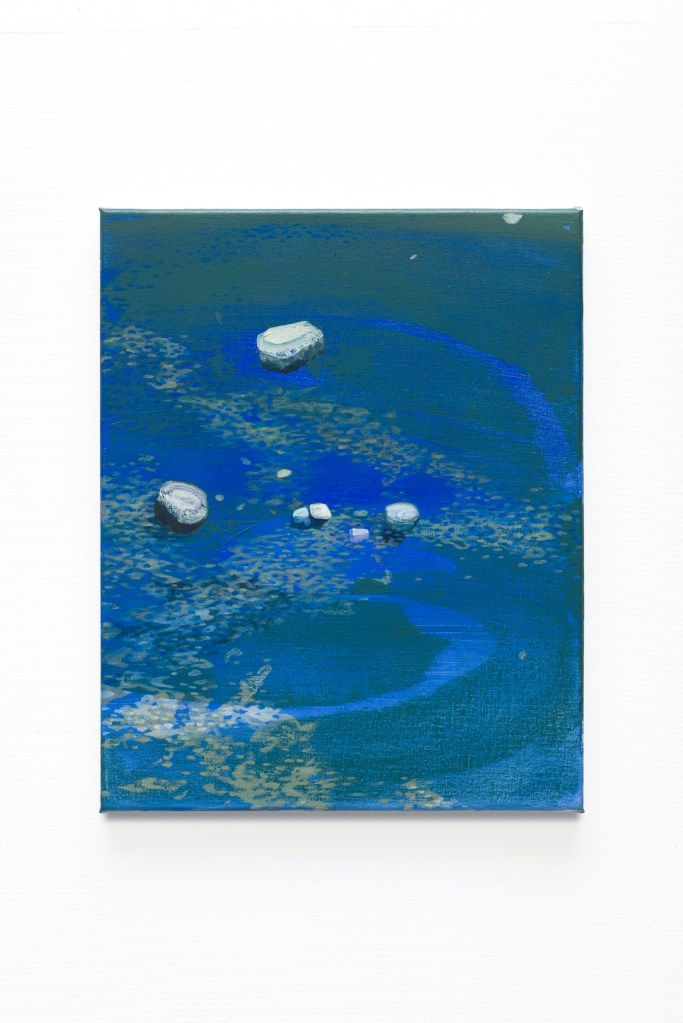
Reflet d’une heure bleue, acrilico e olio su lino, 50 x 40 cm, 2024. Photo credits Silvia Cappellari
 paroladartista.com