
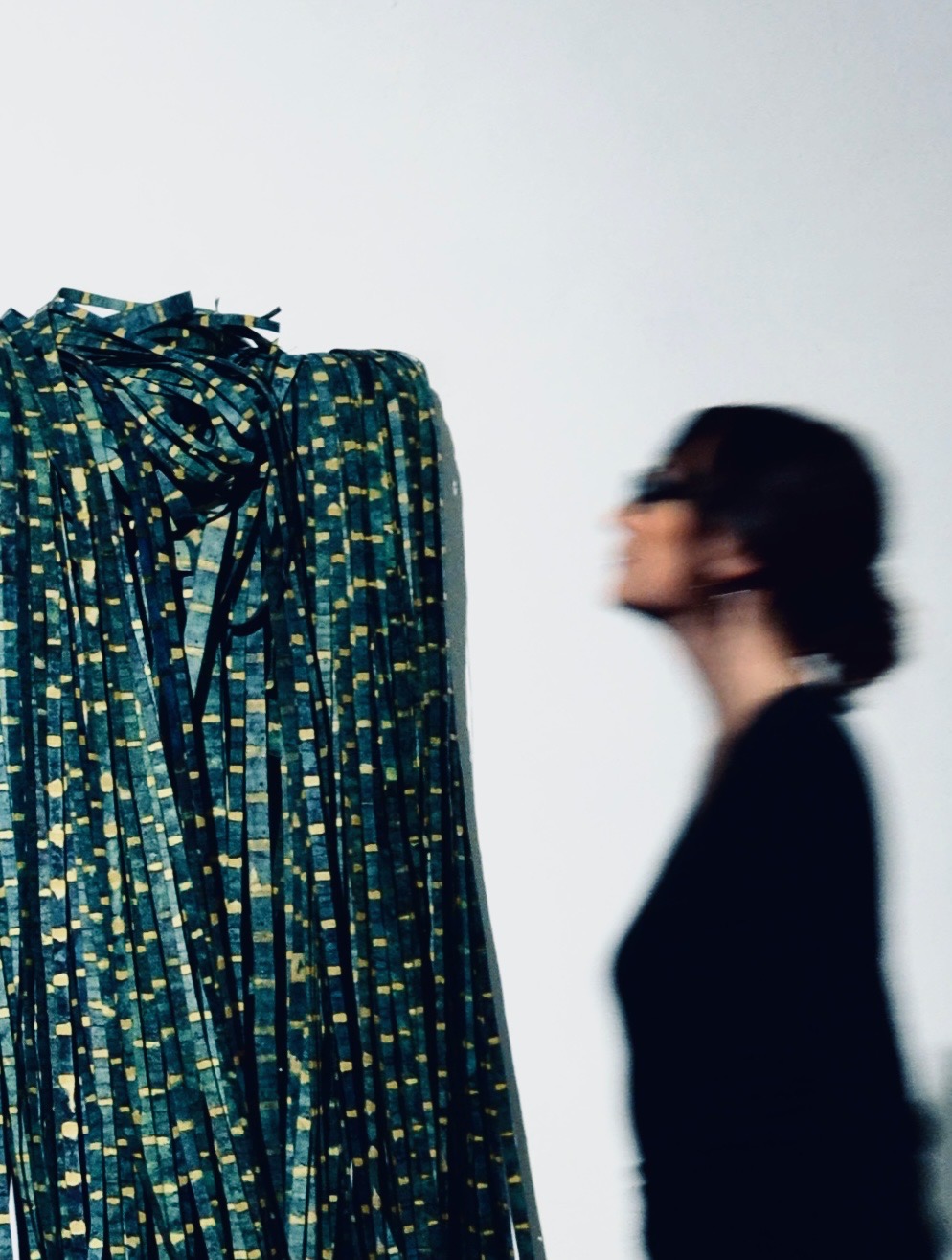
(▼Scoll down for English text)
#paroladartista #intervistartista #artistinterview #letiziacassetta
Parola d’Artista: Che imèportanza hanno nel tuo lavoro l’idea di fisicità e di materia?
Letizia Cassetta: Direi che entrambe le cose sono presenti nella mia pratica, ma più che alla materia, mi piace pensare agli oggetti, alla loro fisicità; circondarmene è da sempre uno dei miei più grandi istinti.
Credo che ogni oggetto, se discostato dalla nostra logica consuetudinaria che gli assegna un determinato luogo, entro il quale sappiamo dove reperirlo secondo il bisogno e l’impiego, abbia infinite probabilità di rigenerarsi, e potrà assumere un’autonomia del tutto nuova, pronto per assorbire nuovi contenuti.
Quello che cerco è restituire una nuova immagine di quell’oggetto, un nuovo significato, in modo da poterlo vedere per la prima volta.
Nel mio lavoro la maggior parte dei materiali proviene dal mondo dell’industria e accade che spesso mi senta attratta verso una direzione, piuttosto che verso un’altra. Pensando alle mie azioni, mi viene spesso in mente la parola “occasione”, una situazione, cioè, particolarmente adatta alla realizzazione di qualcosa, un momento favorevole, una for tuna; è ciò che non rientrava nel progetto, una casualità che ci troviamo davanti, dovendo scegliere sul momento se accoglierla e ricomprenderla nella nostra storia o lasciarla scorrere via.
Gli oggetti si lasciano trovare, e questa grande molteplicità di cose di cui mi piace circondarmi sono come delle possibilità che mi vengono incontro e si depositano come materiale in attesa di elaborazione. Probabilmente non tutte saranno comprese nel mio lavoro, ma re stano lì in attesa di una loro opportunità.
P.d’A.: Che rapporto cerchi con lo spettatore?
L.C.: Questa domanda mi fa pensare al titolo di uno dei miei ultimi lavori : “Dove finiscono gli istanti?”, concepito per essere un invito a ripercorrere tutti quegli attimi che avvengono pri ma dell’esposizione del lavoro.
Mi piacerebbe condurre gli spettatori, attraverso un processo di immedesimazione, o di em patia, in quei momenti dove accade qualcosa prima che il lavoro resti immobile di fronte a loro e in qualche modo suscitare in colui che guarda lo stesso stupore che mi coglie quando l’oggetto si rivela capovolgendo il suo essere in una rivoluzione finale.
Ma sarebbe bello per me se questo avvenisse silenziosamente, poiché il rapporto con lo spettatore è anche un faticoso compromesso tra l’esigenza di intimità da una parte e di con divisione dall’altra, che diventa un punto precario tra chiusura e apertura alla propria inte riorità.
P.d’A.:Ti interessa, nel tuo lavoro, la dimensione spirituale?
L.C.: Credo di no, o meglio non penso a trasporla nel mio lavoro, ma di sicuro è una dimensione non cercata, non voluta necessariamente, ma che resta sottesa nella pratica, come forma di devozione, non religiosa, ma rituale, emotiva.
Inevitabilmente penso ad alcune parole di Kandinskij che mi appaiono adatte a rispondere alla domanda che mi poni “Emozioni sottili inesprimibili a parole”.
Letizia Cassetta (1985, Perugia)
Dopo aver seguito il corso di Decorazione all’accademia di Torino, frequenta il corso di scultura
all’accademia di Perugia, dove successivamente si diploma (luglio 2019).
Attualmente vive e lavora a Perugia dove insieme ad un gruppo di artisti fonda Ma Project , uno
studio condiviso e spazio di ricerca che ha come sede un ex tipografia al centro storico di Perugia.
Nel corso degli anni espone le sue opere in spazi privati e pubblici.
English text
Three dry questions to Letizia Cassetta
#paroladartista #intervistartista #artistinterview #letiziacassetta
Parola d’Artista: WHAT IMPORTANCE DO THE IDEA OF PHYSICALITY AND MATE RIA HAVE IN YOUR WORK?
Letizia Cassetta: I would say that both are present in my practice, but more than matter, I like to think about objects, their physicality; surrounding myself with them has always been one of my greatest instincts.
I believe that every object, if diverted from our customary logic that assigns it a certain place, within which we know where to find it according to need and use, has infinite chances of regenerating itself, and will be able to take on an entirely new autonomy, ready to absorb new content.
What I seek is to restore a new image of that object, a new meaning, so that we can see it for the first time.
In my work, most of the materials come from the world of industry, and it happens that I often feel drawn toward one direction rather than another. Thinking about my actions, the word “occasion” often comes to mind, a situation, that is, particularly suited to the realization of something, a favorable moment, a for tuna; it is that which was not part of the plan, a chance that we find ourselves in front of, having to choose on the spot whether to welcome it and recompose it into our story or to let it flow away.
Objects allow themselves to be found, and this great multiplicity of things that I like to surround myself with are like possibilities that come to me and settle as material awaiting elaboration. Probably not all of them will be included in my work, but re stand there waiting for their opportunity.
P.d’A.: WHAT RELATIONSHIP do you seek with the viewer?
L.C.: This question makes me think of the title of one of my latest works : “Where do the instants end?”, conceived to be an invitation to retrace all those moments that occur before the work is exhibited.
I would like to lead the viewers, through a process of immediacy, or em patia, to those moments where something happens before the work remains motionless in front of them and somehow arouse in the viewer the same astonishment that seizes me when the object reveals itself by reversing its being in a final revolution. But it would be nice for me if this happened silently, since the relationship with the viewer is also a tiring compromise between the need for intimacy on the one hand and con division on the other, which becomes a precarious point between closure and openness to one’s own inte riority.
P.d’A.: DOES THE SPIRITUAL DIMENSION INTEREST YOU?
L.C.: I don’t think so, or rather I don’t think about transposing it into my work, but it is certainly a dimension that is not sought after, not wanted necessarily, but that remains underlying in practice, as a form of devotion, not religious, but ritual, emotional.
Inevitably I think of some of Kandinsky’s words that seem apt to answer the question you pose, “Subtle emotions inexpressible in words.”
Letizia Cassetta (1985, Perugia)
After attending the course of Decoration at the academy of Turin, she attended the course of sculpture at the academy of Perugia, where she later graduated (July 2019).
He currently lives and works in Perugia, where together with a group of artists he founded Ma Project , a shared studio and research space that is based in a former print shop in Perugia’s historic center. Over the years he exhibits his works in private and public spaces.
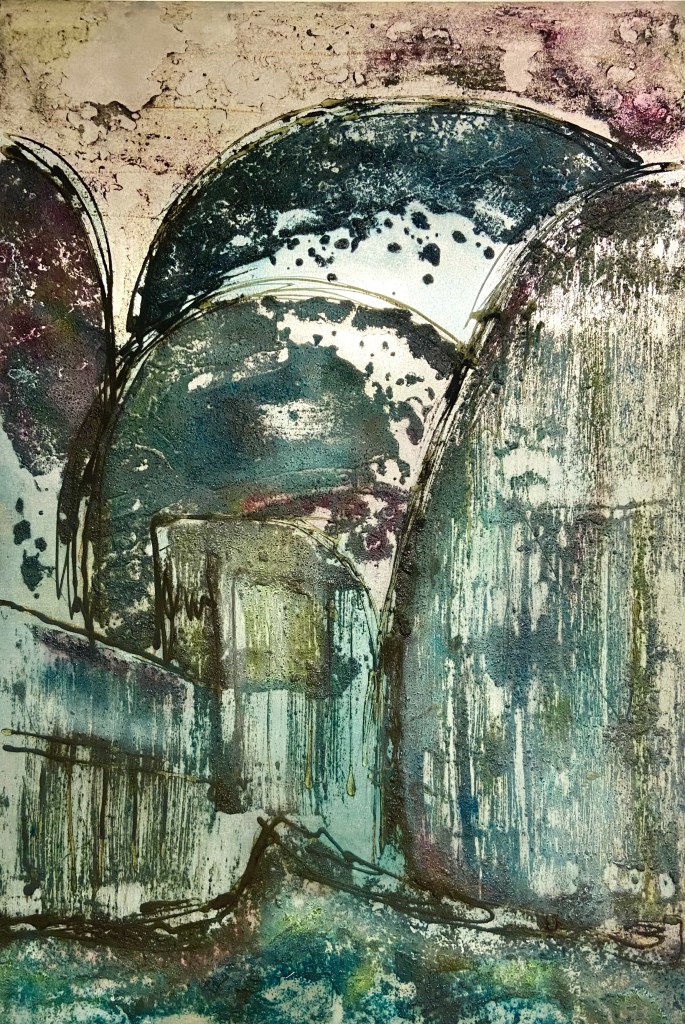
Udivo le foglie verdi sognare lastra zincata, carborundum, inchiostro calcografico, colla vinilica
90 X 70 cm 2023
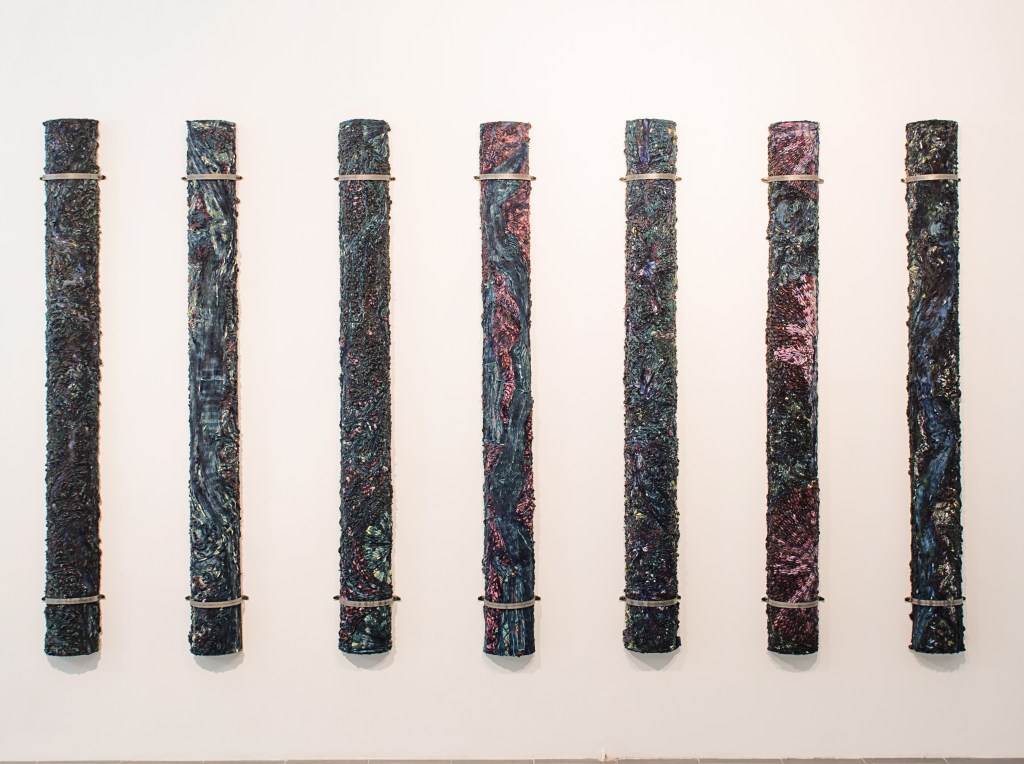
Dove finiscono gli istanti
silicone, pigmento in polvere, grondaie, carta a nido d’ape
200 X 18 cm cada uno 2021
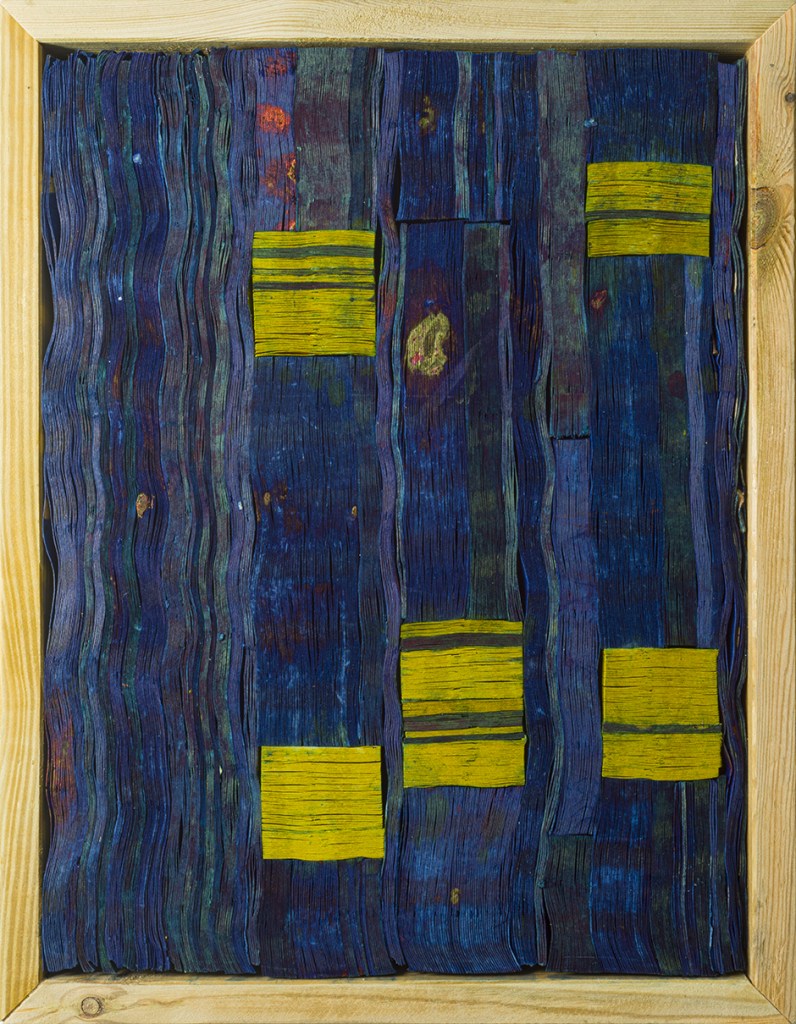
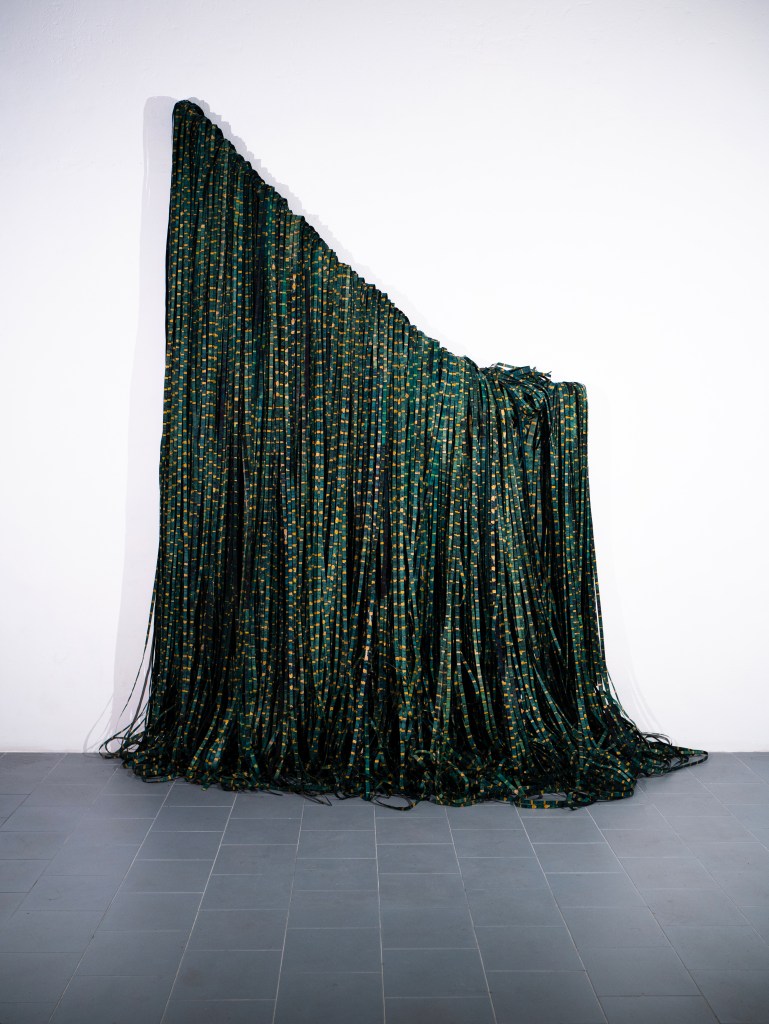
Habitus Abito
carta a nido d’ape, aniline
30 X 40 cm 2019
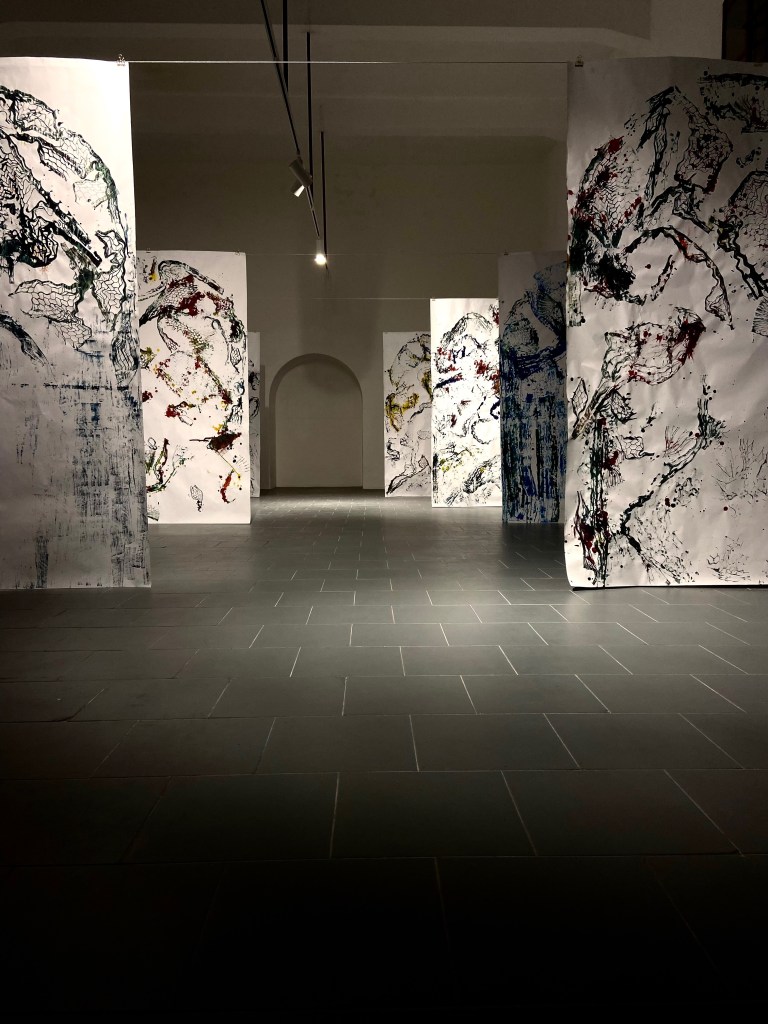
La porta mi fiuta, esita
carta da pacchi, aniline, cavo d’acciaio
installazione 2022
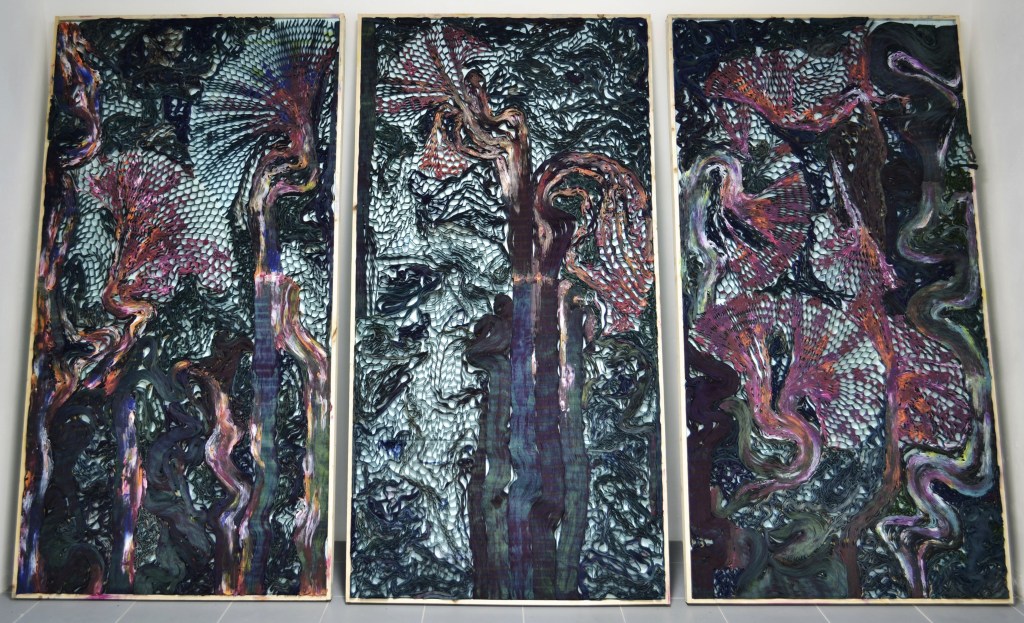
Le cose ci trovano ogni giorno, di nuovo
carta a nido d’ape, aniline, silicone, pigmento in polvere 200 X 150 cm cada uno 2022
 paroladartista.com