
(▼scroll down for English text)
#paroladartista #intervistaartista #artistinterview #lucaluparno
Parola d’Artista: Credi che il paesaggio dipinto abbia ancora un suo interesse nella contemporaneità?
Luca Luprano: Ha molto senso, oggi, discutere di paesaggio, tanto quanto lo ha discutere della pittura come mezzo espres sivo e della sua forte necessità.
Parlare tradizionalmente di paesaggio come “soggetto” circoscritto a sé stesso, limita le possibilità che lo stesso svolge all’interno della scena contemporanea. Vi è un grosso ed importante retaggio che dona al contemporaneo innumerevoli possibilità di espressione. Dipingiamo paesaggio già osservandolo, vivendolo immersi nella sua massima espressione naturale. Quindi l’interesse (nel paesaggio ma vale anche per qualsi asi “forma” si scelga) scaturisce/arriva quando, a mio parere, qualcosa riesce o prova ad andare oltre ciò che si vede, quando genera emozione, un po’ come la magia. Per me il paesaggio è una lingua, fatta di singole parole grazie alle quali si può costruire un concetto, esplorarlo e renderlo semplice o complesso e strutturato, un linguaggio attraverso il quale ci si può esprime e comunicare d’oltre/altro. Oggi più che mai il paesaggio può giocare un ruolo attivo e protagonista, a patto che che emozioni e crei poesia.
P.d’A.: Come funziona il tuo processo di lavoro. Parti da quello che vedi e lo dipingi o procedi diversamente?
L.L.: Il mio processo è molto meditativo. Non cerco una mìmesis, non voglio “competere” con la natura stessa ma esplorarla nelle varie forme, nei vari modi, usandomi come filtro e mediatore tra un mondo che viviamo attraverso il nostro corpo ed un mondo che ci portiamo dentro. Ecco, il paesaggio è quasi un (auto)ritratto, un emozione, un concetto che voglio esprimere, un modo per perdersi nelle infinite possibilità espressive di narrarlo. Dipingo dunque quello che penso, paesaggi che non ho mai visto per poterli osservare ed esplorare nella loro totale immaterialità, dipingo anche quando non lo faccio; quanto è importante per me la pittura. Il mezzo, la tecnica ed il resto, poi, vengono a seconda della mia necessità di comunicare, solitamente inizio disegnando l’idea su di un foglio o prendendo un appunto scritto, avendo già ben in mente cosa voglio otte nere. A volte mi è più facile, altre non ci riesco ma questo processo mi affascina.
P.d’A.: Il colore che ruolo gioca in quello che fai?
L.L.:Il colore è fondamentale nel mio lavoro, che sia con la sua presenza o, tante volte, attraverso la sua assenza. Ogni cosa ha una sua temperatura e ogni temperatura genera cromie, colori attraverso i quali nasce e diviene possibile un dialogo tra gli elementi. Associo questo alla composizione elementare dell’universo, materia che permea lo spazio e crea: così le componenti dei miei lavori, supporto, colore, gesto, spazio, tempo, cercano una sinergia tra loro. Penso a quando il colore nasce dal segno di una matita o quando, altre volte, nasce dal supporto stesso su/con cui dipingo. Parlo del cielo dipingendo la terra, il resto viene fuori tramite la sua “sottrazione”, tramite uno scambio attivo ed alchemico con la natura della superficie che mi dona la sensazione di qualcosa divenendo parte attiva dell’opera e non un semplice supporto passivo. Così il ges to si fa ritmo, metronomo del nostro stesso tempo; provo ad emozionarmi, attraverso il colore, come atto d’amore.
Bio
Luca Luprano, classe 1993, si diploma in Pittura all’Accademia di Belle Arti di Lecce. Conduce la sua ricerca attraverso vari media spaziando tra disegno, pittura, fotografia, musica e video, esplorando il paesag gio nelle sue varie forme ed (ir)realtà. Tra le esperienze principali vi sono esposizioni presso BOOming Art show (Bologna, spazio DumBO, 2022 per Gigi Rigliaco Gallery) e Premio Giuseppe Casciaro (edizioni ‘22 e ’23 Ortelle, Lecce), spaziando anche nel Cinema e nel Teatro con il ruolo di Aiuto Scenografo per il Film Il meglio di te di Fabrizio Maria Cortese (2023, prod. Orange Picture, Sirio Studios, Golden Hour, Rai cinema) e lo spettacolo L’odore di Rocco Familiari, regia di Krysztof Zanussi (2021, prod. Marta Bifano).
Collegamenti link https://www.youtube.com/watch?v=gFjoKy2Ix2g
English text
Three dry questions to Luca Luprano
#paroladartista #intervistaartista #artistinterview #lucaluparno
Parola d’Artista: Do you think the painted landscape still has an interest in the contemporary world?
Luca Luprano: It makes as much sense to discuss landscape today as it does to discuss painting as a medium of expression and its strong necessity.
To traditionally talk about landscape as a ‘subject’ confined to itself limits the possibilities it has within the contemporary scene. There is a large and important legacy that gives the contemporary countless possibilities of expression. We paint landscape already by observing it, by experiencing it at its most natural. So interest (in landscape, but also in whatever ‘form’ one chooses) arises/arises when, in my opinion, something manages or tries to go beyond what is seen, when it generates emotion, a bit like magic. For me, landscape is a language, made up of individual words through which one can construct a concept, explore it and make it simple or complex and structured, a language through which one can express oneself and communicate beyond/beyond. Today more than ever, the landscape can play an active and leading role, provided it excites and creates poetry.
P.d’A.: How does your working process work. Do you start from what you see and paint it or do you proceed differently?
L.L.: My process is very meditative. I don’t seek a mìmesis, I don’t want to “compete” with nature itself but explore it in its various forms, in various ways, using myself as a filter and mediator between a world we experience through our bodies and a world we carry within us. Here, the landscape is almost a (self)portrait, an emotion, a concept I want to express, a way to get lost in the infinite expressive possibilities of narrating it. So I paint what I think, landscapes I have never seen in order to observe and explore them in their total immateriality, I paint even when I do not; how important painting is for me. The medium, the technique and the rest, then, come according to my need to communicate, I usually start by drawing the idea on a sheet of paper or taking a written note, already having well in mind what I want to achieve. Sometimes it is easier for me, sometimes I can’t do it, but this process fascinates me.
P.d’A.: What role does colour play in what you do?
L.L.:Colour is fundamental in my work, whether through its presence or, many times, through its absence. Everything has its own temperature and each temperature generates colours, colours through which a dialogue between elements is born and becomes possible. I associate this with the elementary composition of the universe, matter that permeates space and creates: thus the components of my works, support, colour, gesture, space, time, seek a synergy between them. I think of when colour comes from the mark of a pencil or when, at other times, it comes from the very support on/with which I paint. I speak of the sky by painting the earth, the rest comes out through its ‘subtraction’, through an active and alchemic exchange with the nature of the surface that gives me the feeling of something becoming an active part of the work and not a mere passive support. Thus the ges to becomes rhythm, the metronome of our own time; I try to move myself, through colour, as an act of love.
Bio
Luca Luprano, born in 1993, graduated in Painting at the Academy of Fine Arts in Lecce. He conducts his research through various media ranging from drawing, painting, photography, music and video, exploring the landscape in its various forms and (ir)realities. His main experiences include exhibitions at the BOOming Art show (Bologna, DumBO space, 2022 for Gigi Rigliaco Gallery) and the Giuseppe Casciaro Award (editions ’22 and ’23 Ortelle, Lecce). He also ranged over Cinema and Theatre with the role of Assistant Set Designer for the Film Il meglio di te by Fabrizio Maria Cortese (2023, prod. Orange Picture, Sirio Studios, Golden Hour, Rai cinema) and the show L’odore di Rocco Familiari, directed by Krysztof Zanussi (2021, prod. Marta Bifano).
Link https://www.youtube.com/watch?v=gFjoKy2Ix2g
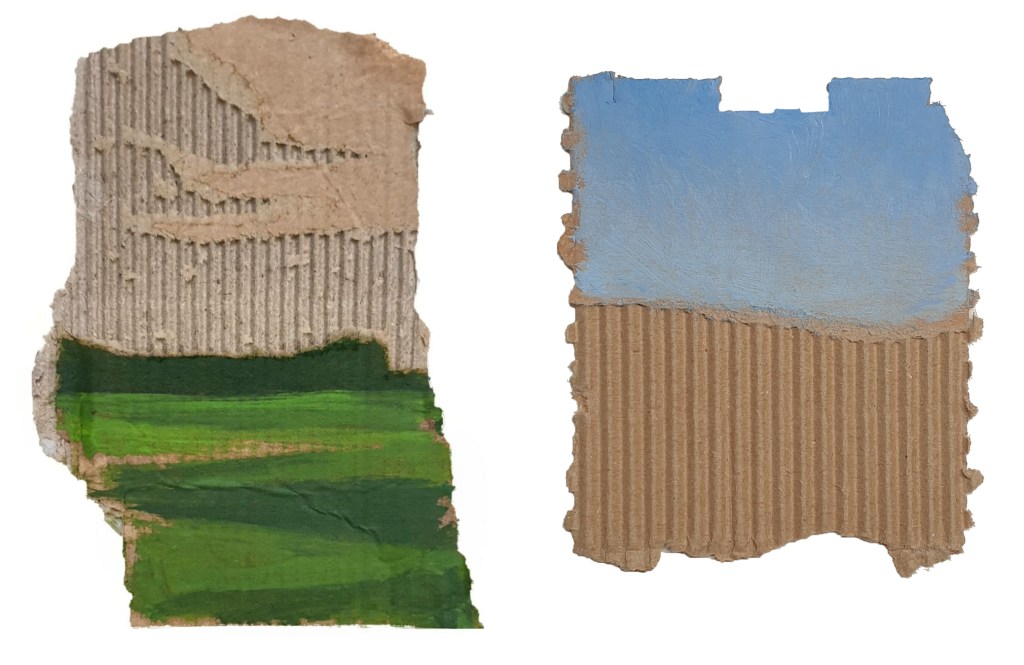
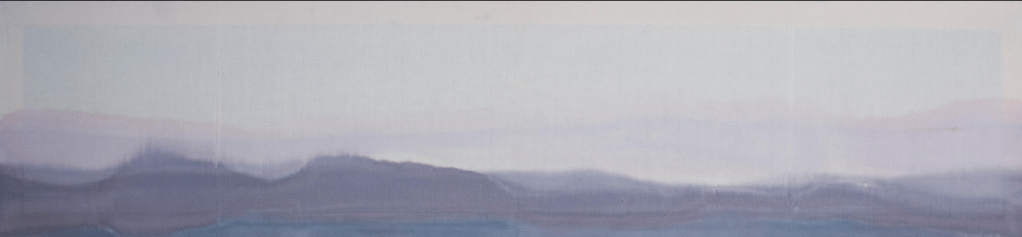
Luca Luprano, Scrap, Mindscape III, Frammenti Serie, 2021, Olio su car
tone corrugato, 4×3 cm circa (dx)
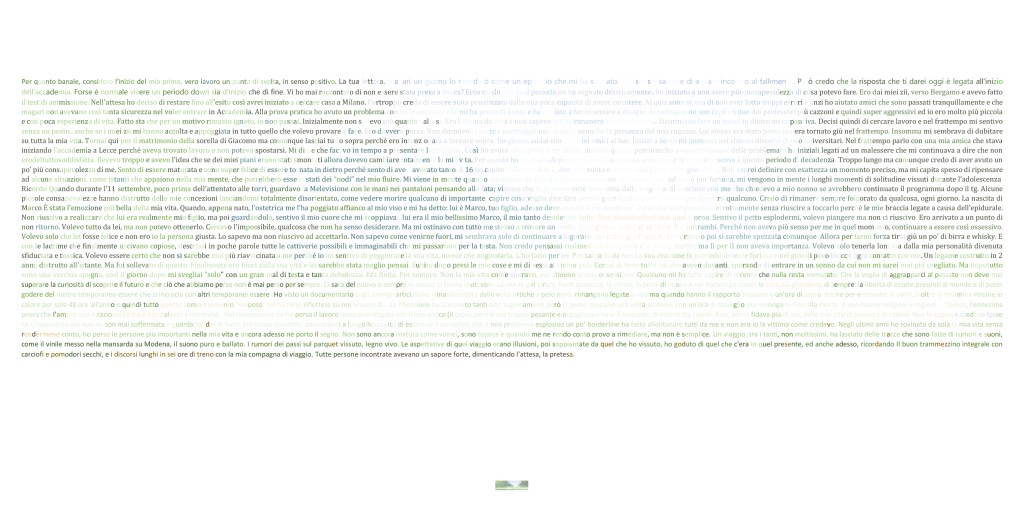
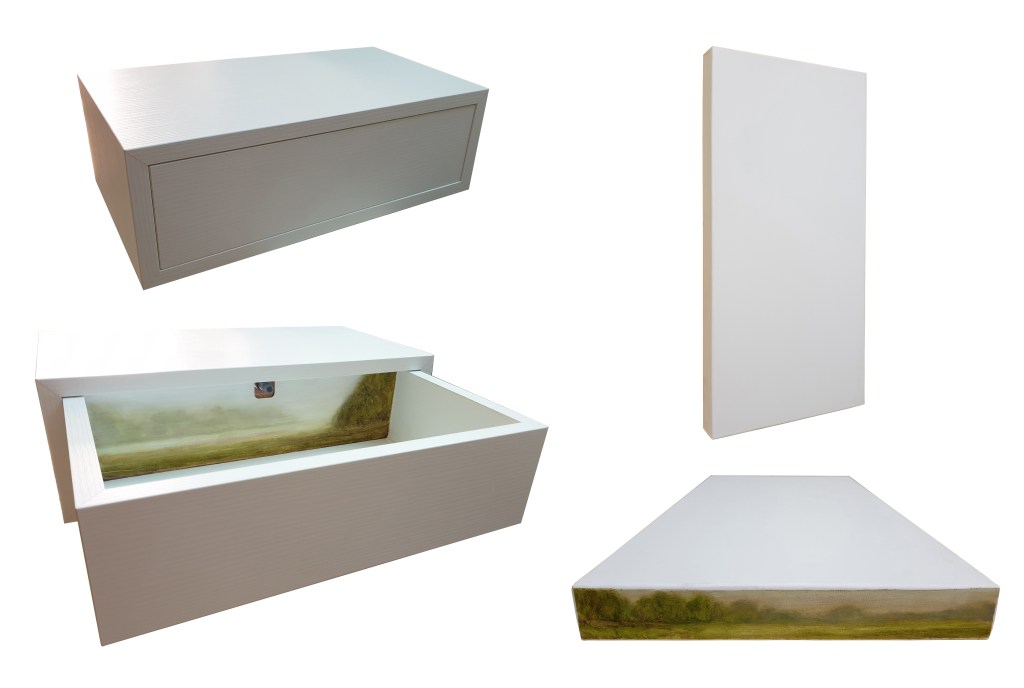
fabbricato di truciolato, oggetto installativo ed interattivo,
30×50 cm
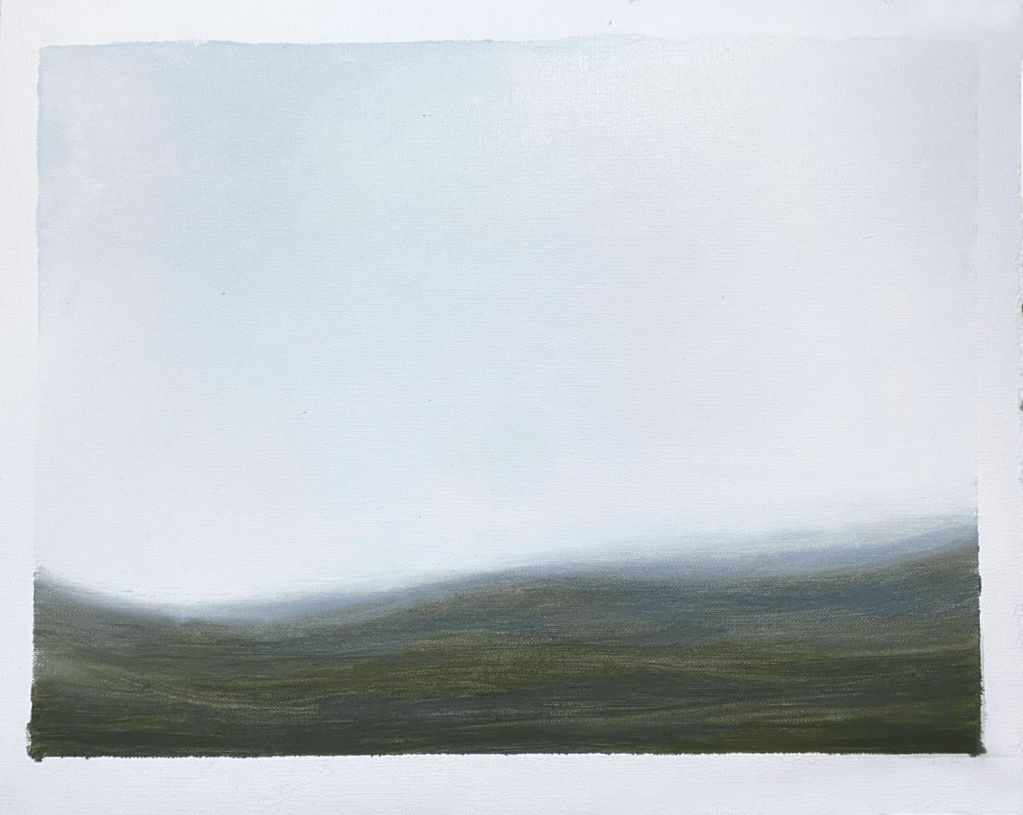
Unconventional Surfaces serie, 2020, olio su tela, 2020,
50x30x4 cm
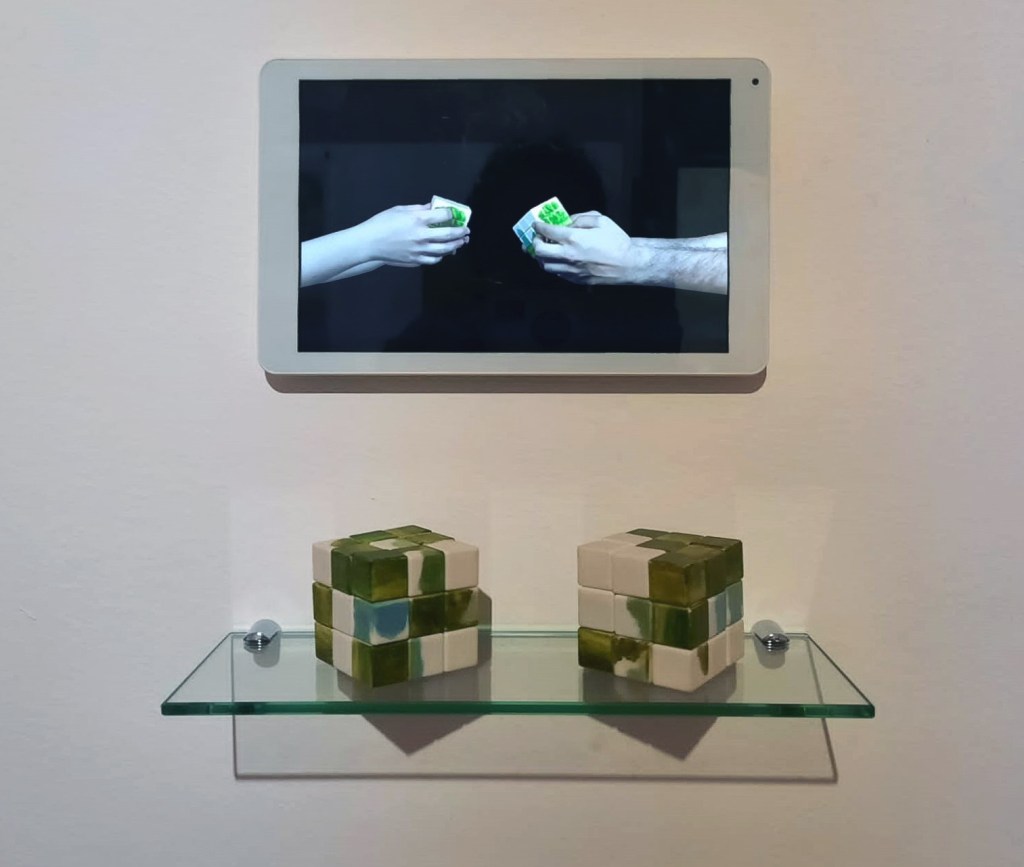
installazione pittorica+performance video+suono, 2022, video, olio su giocattoli, dimensione complessiva 30×30 cm (Parte di Unconventional Surface serie)
[Tablet: 16,1×26.1×1 cm; Mensola: 10x30x0.4 cm; Cubi: 2 esemplari 5.,5×5,5×5,5 cm] (Sx) Installazione completa, (dx) cubi prima e dopo azione+still video.
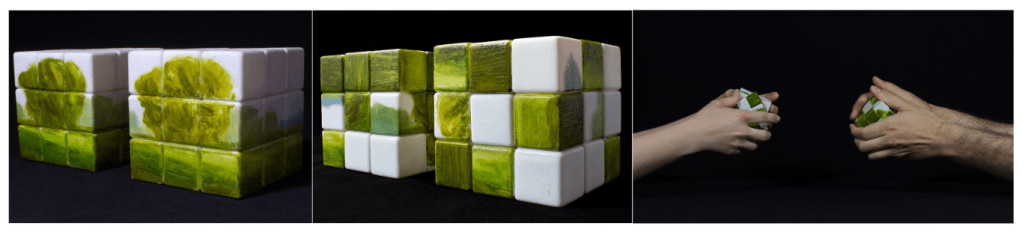
installazione pittorica+performance video+suono, 2022, video, olio su giocattoli, dimensione complessiva 30×30 cm (Parte di Unconventional Surface serie)
[Tablet: 16,1×26.1×1 cm; Mensola: 10x30x0.4 cm; Cubi: 2 esemplari 5.,5×5,5×5,5 cm] (Sx) Installazione completa, (dx) cubi prima e dopo azione+still video.
 paroladartista.com