
(▼Scroll down for English version)
#paroladartista #intervistaartista #artistinterview #paolomigliazza
Parola d’Artista: Per la maggior parte degli artisti l’infanzia rappresenta l’età dell’oro quella in cui cominciano a manifestarsi i primi sintomi di una certa propensione ad appartenere al mondo dell’arte. E’ stato così anche per te? Racconta?
Paolo Migliazza : Il mio apprendistato sensoriale l’ho compiuto come tutti durante l’ infanzia, avendo avuto la fortuna di crescere a cavallo fra i due secoli ( l’inizio della mia adolescenza coincide all’incirca con l’11 settembre) ho potuto sperimentare un modo di vivere a contatto con la natura e con
l’altro che oggi non esiste presso che più, o comunque ha mutato considerevolmente forma. Credo che questo dato esperenziale sia assolutamente fondante nella mia pratica, poichè è proprio in quel periodo che o iniziato a formare le mie prime sculture mischiando direttamente terra e acqua. Vivere le mie giornate all’aria aperta mi ha permesso di nutrire l’ immaginazione in un modo se vogliamo contradditorio; Mi spiego, Crescendo nel sud dell’Italia il paesaggio non è solo natura e distese incontaminate, ma è anche e sopra tutto case, strade e molteplici opere pubbliche non finite o abbandonate, credo che questo come tutto il resto si sedimenti in una coscienza sensibile e che venga poi restituito sotto forma di opera, se non sempre almeno in un buon numero di casi. Per concludere sono convinto che l’infanzia sia quel luogo a cui sotto forme diverse nel corso della nostra vita torniamo sempre.
P.d’A.: Spesso le tue figure rappresentano bambini o adolescenti questo ha a che fare con quello che mi hai detto sopra?
P.M.: Certo, hanno a che fare con quanto detto sopra. Poiché è dal mio bagaglio di esperienze vissute in quel preciso momento che sono ripartito per poter maturare prima, ed ampliare poi, la mia ricerca intorno al linguaggio della scultura.
P.d’A.: Che ruolo ha il disegno nel tuo processo lavorativo?
P.M.: Il disegno nel mio processo creativo ha un attitudine un tantino schizofrenica, se vogliamo usare un termine medico, nel senso che attraverso momenti in cui lo utilizzo in maniera intensa ed altri in cui lo estrometto completamente. Ad ogni modo è finalizzato sempre a idee che faccio maturare nella mia mente e che in essa muovo e modifico prima di fissarle sulla carta.
P.d’A.: L’idea del plasmare con la terra forme umane rimanda al mito della creazione ci sono degli aspetti che ti interessano in questa narrazione della creazione?
P.M.: Non particolarmente, in quanto questo concetto penso sia insito all’interno di ogni tipo di linguaggio artistico.
P.d’A.: Puoi raccontare il tuo processo di lavoro?
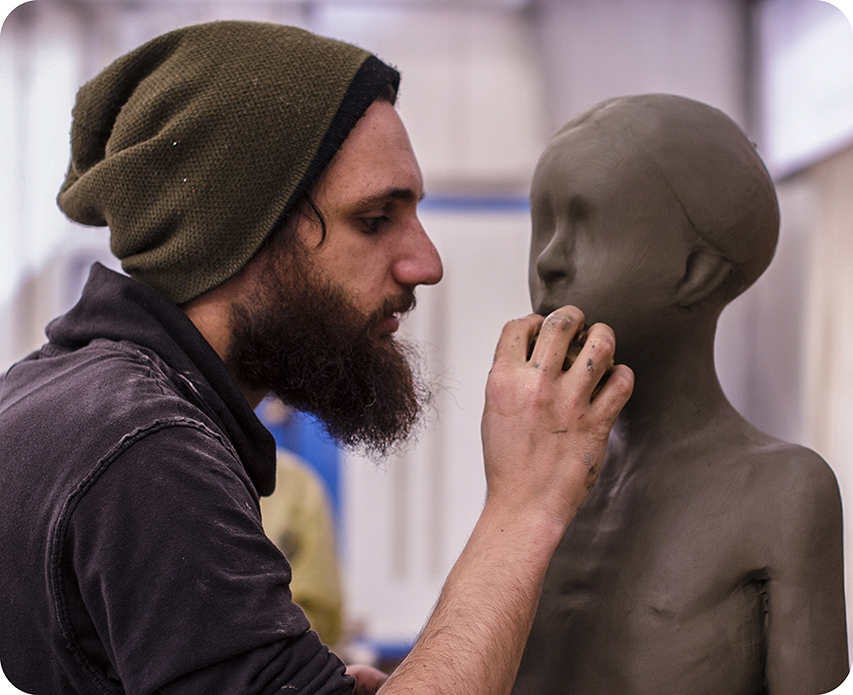
P.M.: Inizio spesso ragionando intorno a delle intuizioni che lascio sedimentare nel mio inconscio, e man mano nel corso del tempo le rimodello finché non giungo a partorire un immagine che ritengo una sintesi delle riflessioni fatte intorno all’intuizione di cui sopra. Nella pratica il processo di lavoro è
legato alla tradizione della scultura nel senso più tradizionale del termine, suddiviso in modellato, calco e opera finale. Nell ultima parte mi soffermo molto sul materiale finale che caratterizza e determina l opera in maniera incontrovertibile.
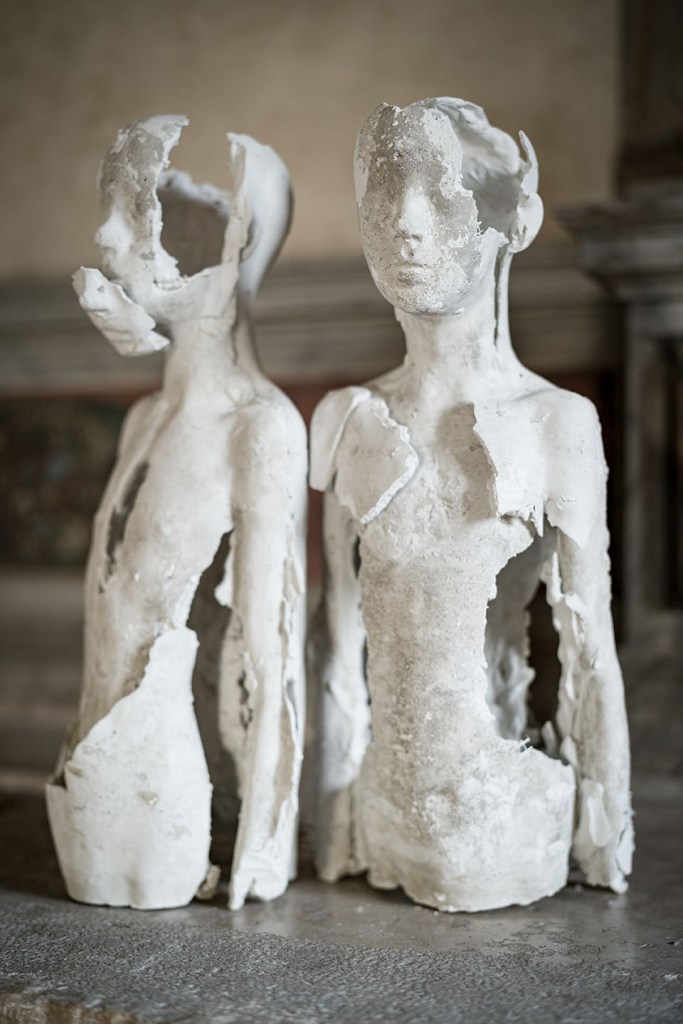
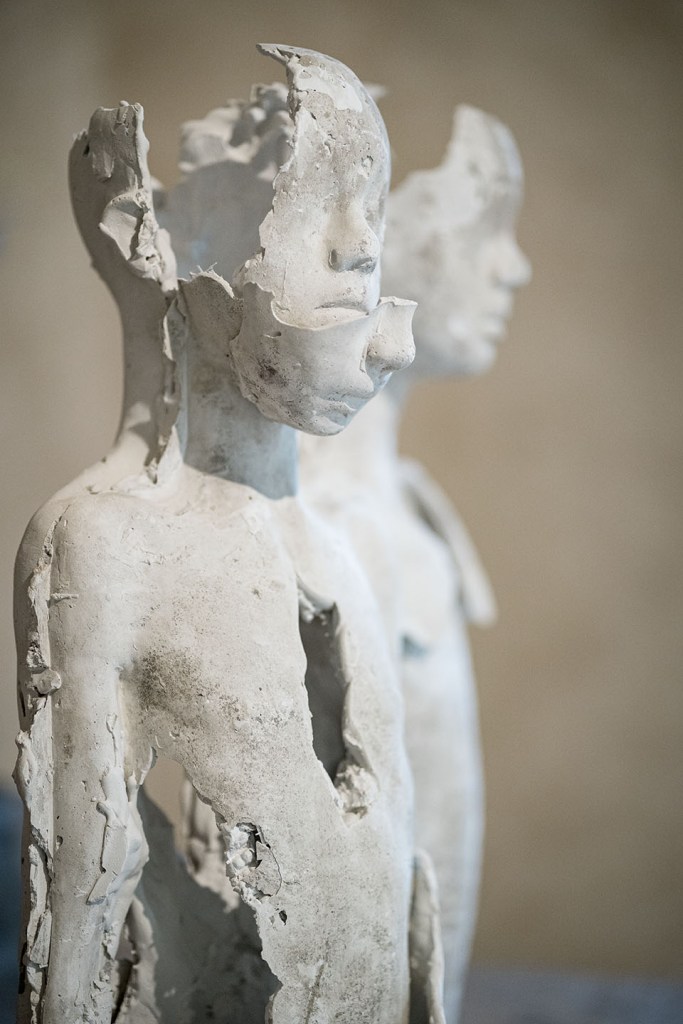
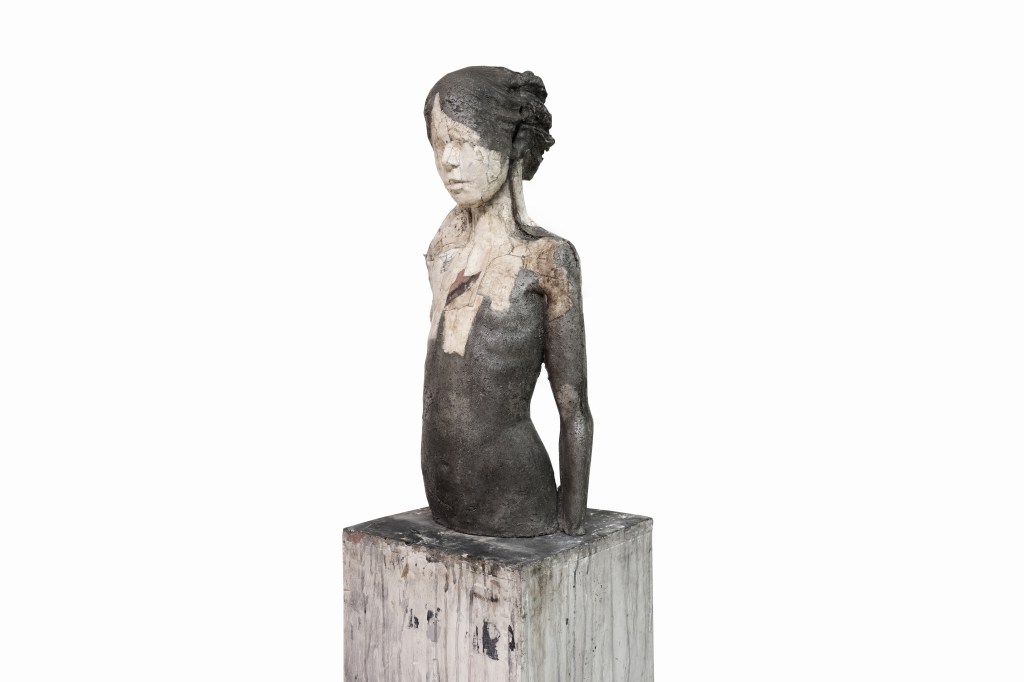
P.d’A.: Spesso le tue figure sono in qualche modo tormentate annerite, parzialmente o totalmente ridotte in frantumi, come mai?
P.M.: Ma è qualcosa che dipende da tanti fattori, ma volendo essere sintetici è qualcosa che riguarda da un lato la mia predisposizione emotiva del momento e dall’ altro una riflessione sulla forma, che cerco di mimetizzare l’una nell’ altra.
P.d’A.: Ti interessa l’idea di narrazione in quello che fai?
P.M.: No, come avrai potuto ben vedere non cè ne è una delle mie figure che compie delle azioni sono tutte ferme, statiche, distanti. Però la loro prossemica suggerisce un’ accadere o un accaduto che spesso sorprende anche me.
P.d’A.: L’idea di messa in scena in quello che fai ha una qualche importanza?
P.M.: La scultura occupando uno spazio diventa automaticamente messa in scena, poi che ha una forma ed un peso specifico proprio come tutto quello di cui siamo circondati. È compito dello scultore capire in quale punti porre accenti, virgole e punti.
P.d’A.: Che dialogo cerchi con chi si trova davanti ai tuoi lavori?
P.M.: Cerco degli sbarramenti, delle delle incongruenze che possano stimolare lo spettatore ad interrogarsi, però sempre senza svelare completamente senza mai dire troppo.
P.d’A.: Che cosa succede alle opere quando non c’è nessuno che le osserva, l’esistenza di un opera d’arte può prescindere dalla presenza di un osservatore?
P.M.: Certo che possono prescindere, l’opera d’arte è un contenitore che custodisce e conserva le intenzioni del suo creatore anche se queste non verranno mai svelate. Esiste perché chi l ha creato è esistito.
P.d’A.: Secondo te l’artista dove si pone nei confronti della sua opera?
P.M.: Dipenda dalla sua poetica alcuni coincidono, per esempio penso ad ai wei wei o l’abramovich perché spesso sono essi stessi l’opera. In Altri casi si può essere completamente scissi e non condizionare minimamente l’opera ed il suo contenuto.
Paolo Migliazza Nasce a Catanzaro il 16 Novembre del 1988. Dopo gli studi presso il Liceo Artistico statale si trasferisce a Bologna, dove s’iscrive all’accademia di Belle arti; nel 2015 si laurea in scultura con una tesi sull’evoluzione della figura all’interno del linguaggio plastico che ha caratterizzato il secolo scorso. Dal 2016 collabora con la galleria l’ Ariete arte contemporanea di Bologna in cui presenta una sua personale dal titolo “we are not super heroes”. E’ presente in diverse fiere Italiane ed europee tra cui Arte Fiera a Bologna, Art Verona e art Karlshrue in Germania. Nel 2016 è finalista al premio nazionale Francesco Fabbri e nel 2023 si aggiudica il primo premio del prestigioso concorso San fedele a Milano. Inoltre Partecipa a diverse residenze internazionali tra cui i Bocs art curati da Alberto Dambruosio. Il suo lavoro appare su diverse riviste specializzate tra le quali Segno, Exbart, Espoarte. La Rai s’interesssa alla sua ricerca, dedicandogli uno speciale su Rai Cultura a cura di Cristina Clausen. Nel corso degli anni hanno scritto del suo lavoro Alberto Mattia Martini, Kevin Mcmanus, Gabriele Salvaterra, Martina Cavallarin ed Eleonora Frattarolo. Molte sue opere inoltre sono presenti in collezioni pubbliche e private.
English text
Interview to Paolo Migliazza
#paroladartista #intervistaartista #artistinterview #paolomigliazza
Parola d’Artista: For most artists, childhood represents the golden age when the first symptoms of a certain propensity to belong to the art world begin to appear. Was that the case for you too? Tell us about it?
Paolo Migliazza : I completed my sensory apprenticeship like everyone else during childhood, having had the good fortune to grow up at the turn of the century (the beginning of my adolescence coincides roughly with 9/11) I was able to experience a way of living in contact with nature and with
with the other that today exists almost no more, or at any rate has changed shape considerably. I believe that this experiential datum is absolutely fundamental to my practice, because it was precisely at that time that I began to form my first sculptures by directly mixing earth and water. Growing up in southern Italy, the landscape is not only nature and uncontaminated expanses, but also and above all houses, roads and numerous unfinished or abandoned public works. I believe that this, like everything else, settles into a sensitive consciousness and is then returned to me in the form of a work of art, if not always at least in a good number of cases. In conclusion, I am convinced that childhood is that place to which in different forms throughout our lives we always return.
P.d’A.: Do your figures often represent children or teenagers this has to do with what you said above?
P.M.: Of course, they have to do with what you said above. Because it is from my baggage of experiences at that precise moment that I started out first to mature and then to expand my research around the language of sculpture.
P.d’A.: What role does drawing play in your working process?
P.M.: Drawing in my creative process has a somewhat schizophrenic attitude, if we want to use a medical term, in the sense that I go through moments in which I use it intensively and others in which I completely exclude it. In any case, it is always aimed at ideas that I mature in my mind and that I move and modify in it before fixing them on paper.
P.d’A.: The idea of shaping human forms with earth harks back to the creation myth Are there aspects of this creation narrative that interest you?
P.M.: Not particularly, as I think this concept is inherent within any kind of artistic language.
P.d’A.: Can you tell us about your working process?
P.M.: I often start by reasoning around intuitions that I let settle in my unconscious, and gradually reshape them over time until I come up with an image that I consider to be a synthesis of the reflections made around the aforementioned intuition. In practice, the working process is
linked to the tradition of sculpture in the most traditional sense, divided into modelling, cast and final work. In the last part I focus a lot on the final material that characterises and determines the work in an incontrovertible way.
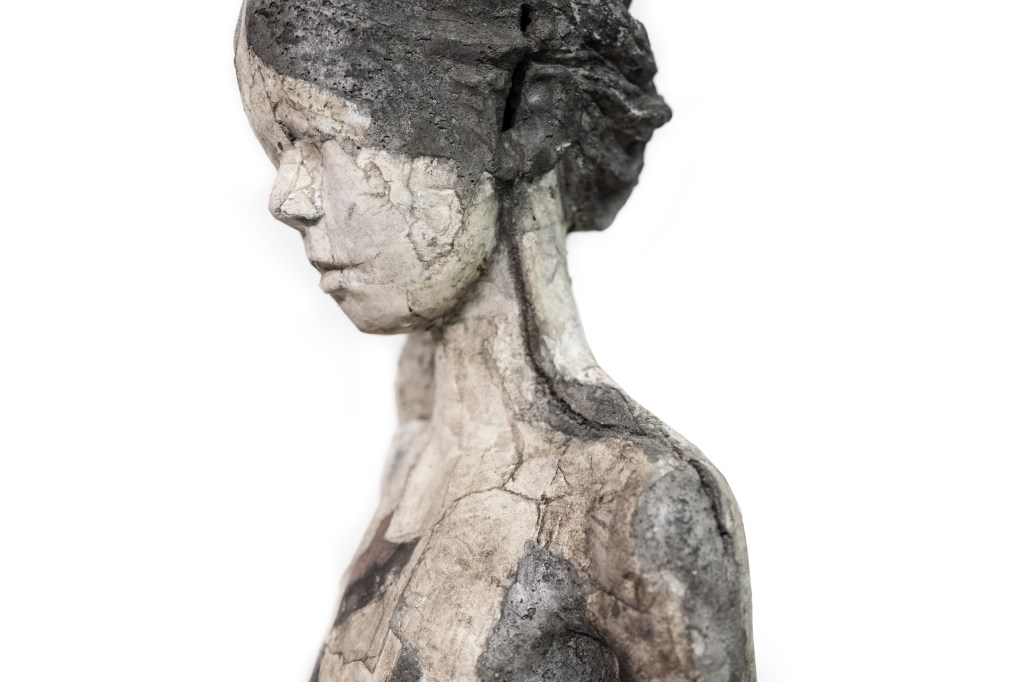
P.d’A.: Often your figures are somehow blackened, partially or totally shattered, how come?
P.M.: It is something that depends on many factors, but to be concise it is something that concerns on the one hand my emotional predisposition of the moment and on the other a reflection on form, which I try to blend one into the other.
P.d’A.: Are you interested in the idea of narrative in what you do?
P.M.: No, as you will have seen, there is not one of my figures that performs actions, they are all still, static, distant. But their proxemics suggest a happening or an incident that often surprises even me.
P.d’A.: Does the idea of staging in what you do have any importance?
P.M.: Sculpture occupying a space automatically becomes staging, then it has a specific form and weight just like everything else we are surrounded by. It is the sculptor’s job to understand where to place accents, commas and dots.
P.d’A.: What kind of dialogue do you seek with those who stand in front of your works?
P.M.: I look for barriers, for inconsistencies that can stimulate the viewer to question themselves, but always without revealing too much.
P.d’A.: What happens to the works when there is no one there to observe them, can the existence of a work of art be independent of the presence of an observer?
P.M.: Of course they can do without it, the work of art is a container that holds and preserves the intentions of its creator even if these are never revealed. It exists because its creator existed.
P.d’A.: Where do you think the artist stands in relation to his work?
P.M.: It depends on his poetics some coincide, for example I am thinking of ai wei wei or abramovich because they are often the work itself. In other cases, one can be completely detached and not affect the work and its content at all.
Paolo Migliazza was born in Catanzaro on 16 November 1988. After studying at the Liceo Artistico statale, he moved to Bologna, where he enrolled at the Academy of Fine Arts. In 2015, he graduated in sculpture with a thesis on the evolution of the figure within the plastic language of the last century. Since 2016, she has collaborated with the l’ Ariete arte contemporanea gallery in Bologna, where she presented her solo exhibition entitled “we are not super heroes”. He is present at several Italian and European fairs, including Arte Fiera in Bologna, Art Verona and art Karlshrue in Germany. In 2016 he was a finalist in the national Francesco Fabbri award and in 2023 he won first prize in the prestigious San fedele competition in Milan. He also participates in several international residencies including Bocs art curated by Alberto Dambruosio. His work appears in several specialised magazines including Segno, Exbart, Espoarte. Rai took an interest in his research, dedicating a special to him on Rai Cultura curated by Cristina Clausen. Over the years, Alberto Mattia Martini, Kevin Mcmanus, Gabriele Salvaterra, Martina Cavallarin and Eleonora Frattarolo have written about his work. Many of his works can also be found in public and private collections.
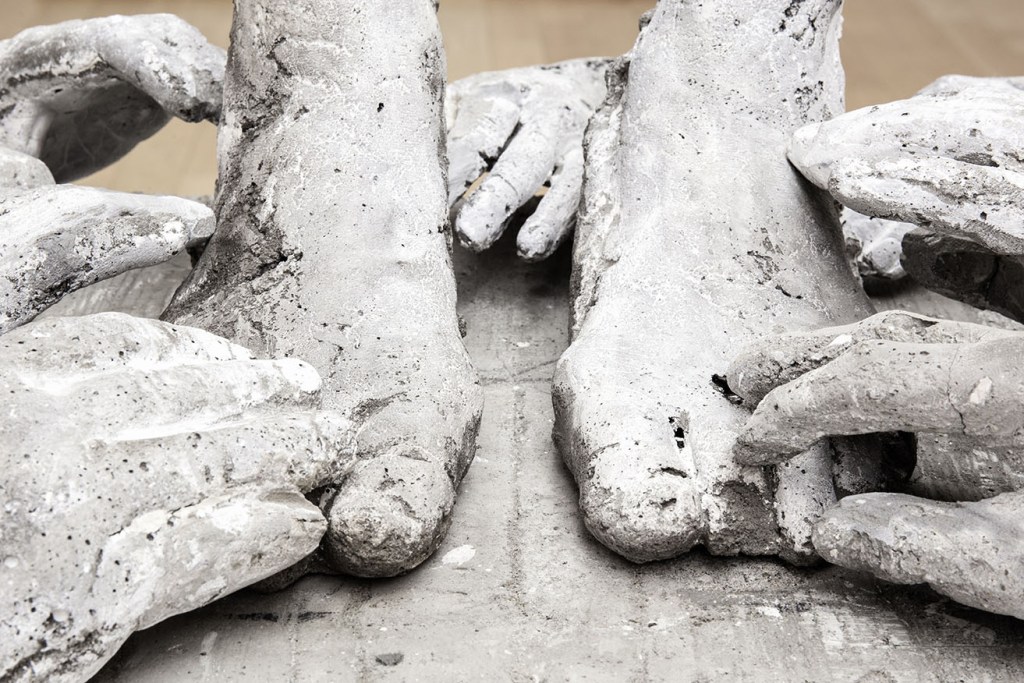
WHEN THE IDOLS GO DOWN-concrete 90x50x50.2023
Ph Rosa Lacavalla
Ph Rosa Lacavalla
 paroladartista.com