
(▼Scorri verso il basso per la versione italiana)
#paroladartista #intervistaartista #artistinterview # keesvandewal
Parola d’Artista: or most artists, childhood represents the golden age when the first symptoms of a certain propensity to belong to the art world begin to appear. Was that the case for you too? Tell me?
Kees van de Wal: In primary school I was a boy who could draw well, and I also drew a lot at home. I remember drawing cartoon characters. At the age of 16, I started a course at the Graphic Lyceum, where I learned everything about the graphic profession (printing) and design. On Friday afternoon I participated in a group that took extra drawing lessons. When I was twenty, I briefly thought about studying at the art academy, but I wasn’t ready for that yet, so I started my first job. In the years that followed I took various courses such as drawing, figure drawing and etching. I exhibited my work for the first time in 2008, when I was 41 years old. I see that as the start of my artistry. A year later I started a part-time course at the art academy.
P.d’A.: What studies have you done?
K.v.d.W.: I followed a part-time course at the Academy of Fine Arts in Arendonk (Belgium). For the first 5 years I followed painting training and then worked freely in the studio for 2 years. It’s a classic painting course where we started every year with drawing, perspective and things like that and then we started working with oil paint. The assignments consisted of painting portraits, models and still lifes. Within these assignments I looked for the opportunity to work abstractly as much as possible.
P.d’A.: What role does drawing play in what you do?
K.v.d.W.: My work is about shapes and surfaces, about matter and color. I hardly draw. Sometimes I sketch something or look for the right shape while drawing. But really drawing, no.
P.d’A.: How important is the object side in your work?
K.v.d.W.: Initially I worked on canvas and my work was limited by the boundaries of that canvas. The ‘thing’ took place within the rectangle of that canvas. When I stuck a piece of cardboard on the canvas that went over the edge, I realized that I didn’t need the canvas. With that, my first wall object was born. A rectangular canvas naturally enters into a relationship with the environment, but a free object becomes more part of the environment, the space between objects plays a greater role.
P.d’A.: What kind of colours do you paint with?
K.v.d.W.: Lately, in addition to acrylic paint, I have also been using alkyd paint, leftover paint from friends and acquaintances. I depend on the colors they bring. That limitation challenges me in looking for solutions. In general I don’t use loud colors but more subdued colors.
P.d’A.: Do your works have a strong spatial relevance have you ever thought of detaching yourself from the wall and making real sculptures?
K.v.d.W.: My works certainly have a spatial relevance. The works enter into a relationship with the space and with each other. The works are almost always flat but have a certain thickness, I call that 2.5 dimensional. Occasionally I make a three-dimensional work, but I notice that I always think in the flat plane. 3D is not really my thing.
P.d’A.: Does the physicality of the material have any importance for you?
K.v.d.W.: That plays a big role. At the moment I am working on corrugated cardboard from used cardboard boxes. The cardboard has a lot of structure in itself and often contains folds, tears and other damage. The cardboard has a cheap and temporary character. Lately I have often been working with alkyd paint, which provides a good contrast with the cardboard. The gloss makes the structure of the cardboard extra striking.
P.d’A.: When you start a work do you already have a clear idea of how it will develop?
K.v.d.W.: No, usually not. I am currently working with cardboard. I take a piece of cardboard and look at the shape, at the surface and look for a balance. I then check whether I want to cut away certain parts or not, and what color the work needs. I sometimes choose the first color at random because I know it will not be the last layer. This way I work step by step towards the end result without knowing in advance where I will end up. Every step is another discovery.
P.d’A.: Does design have any importance in what you do?
K.v.d.W.: I love design, but no, it doesn’t play a role in my work.
P.d’A.: Do you work on several paintings together or do you concentrate on one painting at a time?
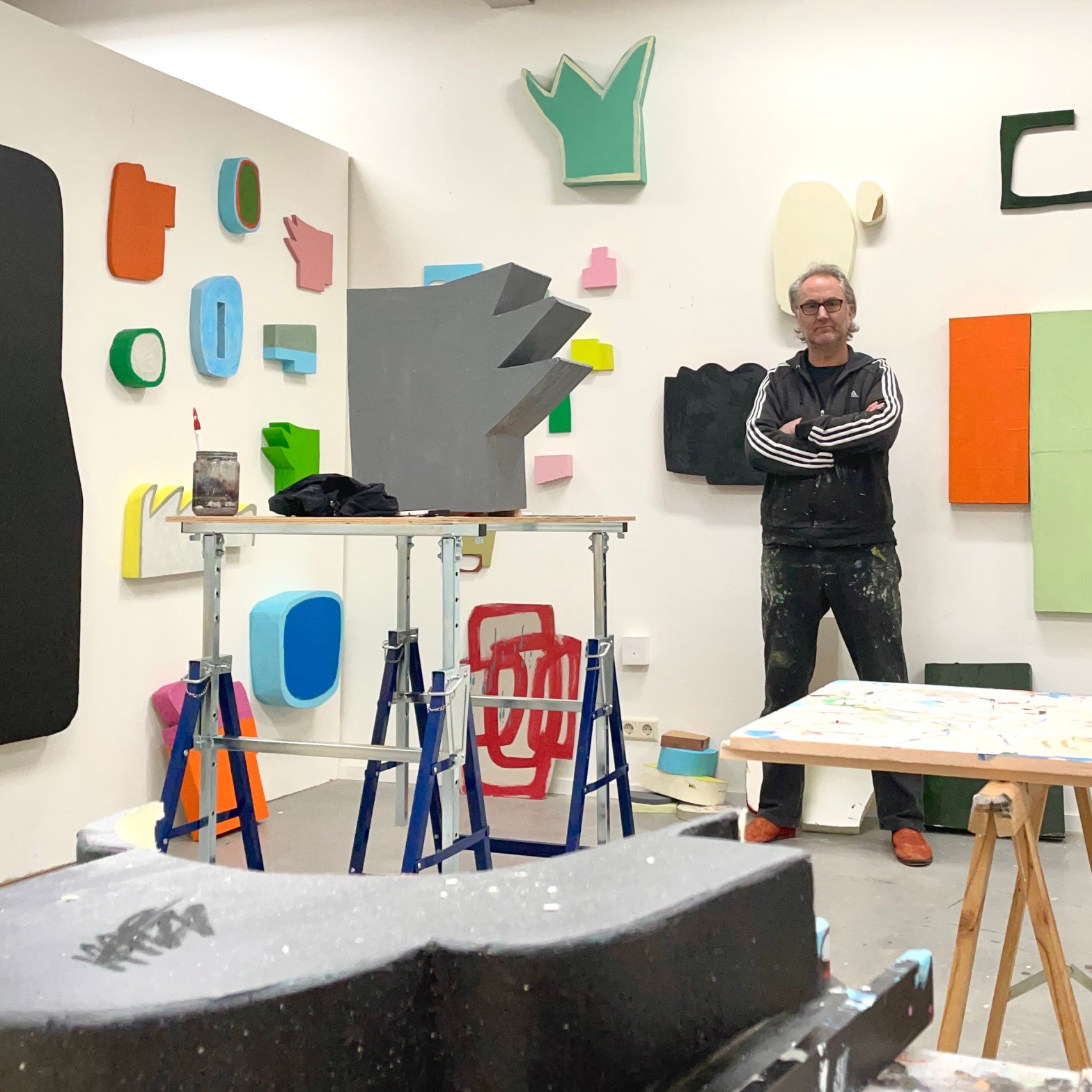
K.v.d.W.: In my studio I have a wall on which I work. There are usually several pieces hanging there that I am working on and are in different stages. Sometimes I focus on one work and sometimes I work on several works at the same time. Sometimes a work is finished and hangs on the wall for a week or more and I decide not to change anything. When the work is really finished, I remove it from the wall so that there is room for something new.
Kees van de Wal Birth: Oirschot, Netherlands, 1967
Living and working in Zaltbommel, Netherlands
What the material gives me
In the n on-figurative minimal work of visual artist Kees van de Wal (Oirschot, Netherlands, 1967) we see shapes. Often as a wall object, solitary in space, sometimes in relation to each other. Shapes, residual shapes and composite shapes, almost always in a certain peace and tranquility.
Since the first exhibition in 2008, the work has evolved from abstract landscapes with the theme of stillness into the visual language that it is today. After the horizon disappeared from the landscapes, suggestions of clouds and vegetation were further abstracted into independent forms with the right combination of tension and balance. When Van de Wal was no longer limited by the edges of the canvas, the first wall objects were a fact.
In search of the ultimate shape,
a shape that represents nothing,
but everything says.
In September 2022, Van de Wal started an experiment with working on corrugated cardboard from used boxes. At first he tried to copy the working method he was used to with other materials to the new material. He glued several layers of cardboard together and sawed out shapes. He soon discovered the specific properties of the cardboard and the experiment faded into the background. The old cardboard offered so many possibilities that new ideas emerged. ‘At first I wanted to use the cardboard as honestly as possible. Don’t make it more beautiful than it is. Show how the work is made and how it is hung. As directly as possible. Later I started cutting more into the material and recently I started using leftover alkyd paint, which gives the material a different look in a nice contrast with the cardboard. In this new series of works, Van de Wal has been guided by the material and has added his own visual language and use of color. The result is – according to others – playful, cheerful and a bit contrary.
Van de Wal has exhibited in Antwerp (Belgium), Paris (France) and in various galleries in the Netherlands.
Website: www.keesvandewal.nl
Instagram: @keesvandewal
Testo in italiano
Intervista a Kees van de Wal
#paroladartista #intervistaartista #artistinterview # keesvandewal
Parola d’Artista: per la maggior parte degli artisti, l’infanzia rappresenta il periodo d’oro in cui iniziano a manifestarsi i primi sintomi di una certa propensione ad appartenere al mondo dell’arte. È stato così anche per lei? Me lo dice?
Kees van de Wal: Alle scuole elementari ero un bambino che sapeva disegnare bene, e disegnavo molto anche a casa. Ricordo che disegnavo personaggi dei cartoni animati. All’età di 16 anni ho iniziato un corso al liceo grafico, dove ho imparato tutto sulla professione grafica (stampa) e sul design. Il venerdì pomeriggio partecipavo a un gruppo che faceva lezioni extra di disegno. A vent’anni ho pensato brevemente di studiare all’accademia d’arte, ma non ero ancora pronto per questo, così ho iniziato il mio primo lavoro. Negli anni successivi ho seguito vari corsi, come disegno, disegno di figura e incisione. Ho esposto i miei lavori per la prima volta nel 2008, quando avevo 41 anni. Lo considero l’inizio della mia attività artistica. Un anno dopo ho iniziato un corso part-time all’Accademia d’arte.
P.d’A.: Quali studi ha fatto?
K.v.d.W.: Ho seguito un corso part-time all’Accademia di Belle Arti di Arendonk (Belgio). Per i primi 5 anni ho seguito una formazione di pittura e poi ho lavorato liberamente in studio per 2 anni. Si tratta di un corso di pittura classico in cui ogni anno si inizia con il disegno, la prospettiva e cose del genere e poi si inizia a lavorare con i colori a olio. Gli incarichi consistevano nel dipingere ritratti, modelli e nature morte. All’interno di questi incarichi ho cercato l’opportunità di lavorare in modo astratto il più possibile.
P.d’A.: Che ruolo ha il disegno nel suo lavoro?
K.v.d.W.: Il mio lavoro riguarda le forme e le superfici, la materia e il colore. Non disegno quasi mai. A volte abbozzo qualcosa o cerco la forma giusta mentre disegno. Ma disegnare davvero no.
P.d’A.: Quanto è importante l’aspetto oggettuale nel suo lavoro?
K.v.d.W.: Inizialmente lavoravo su tela e il mio lavoro era limitato dai confini della tela. La “cosa” si svolgeva all’interno del rettangolo della tela. Quando ho attaccato un pezzo di cartone sulla tela che superava il bordo, ho capito che non avevo bisogno della tela. Così è nato il mio primo oggetto da parete. Una tela rettangolare entra naturalmente in relazione con l’ambiente, ma un oggetto libero diventa più parte dell’ambiente, lo spazio tra gli oggetti gioca un ruolo maggiore.
P.d’A.: Con quali colori dipinge?
K.v.d.W.: Ultimamente, oltre alla vernice acrilica, uso anche la vernice alchidica, avanzi di vernice di amici e conoscenti. Dipendo dai colori che mi portano. Questa limitazione mi mette alla prova nella ricerca di soluzioni. In generale non uso colori forti, ma colori più tenui.
P.d’A.: Le sue opere hanno una forte rilevanza spaziale, ha mai pensato di staccarsi dal muro e realizzare delle vere e proprie sculture?
K.v.d.W.: Le mie opere hanno certamente una rilevanza spaziale. Le opere entrano in relazione con lo spazio e tra loro. Le opere sono quasi sempre piatte ma hanno un certo spessore, che io chiamo bidimensionale. Occasionalmente realizzo un’opera tridimensionale, ma mi accorgo di pensare sempre sul piano piatto. Il 3D non fa per me.
P.d’A.: La fisicità del materiale ha una qualche importanza per lei?
K.v.d.W.: Ha un ruolo importante. Al momento sto lavorando su cartone ondulato ricavato da scatole di cartone usate. Il cartone ha una struttura molto particolare e spesso contiene pieghe, strappi e altri danni. Il cartone ha un carattere economico e temporaneo. Ultimamente lavoro spesso con la vernice alchidica, che crea un buon contrasto con il cartone. La lucentezza rende la struttura del cartone ancora più evidente.
P.d’A.: Quando inizia un lavoro ha già un’idea chiara di come si svilupperà?
K.v.d.W.: No, di solito no. Attualmente sto lavorando con il cartone. Prendo un pezzo di cartone, osservo la forma, la superficie e cerco un equilibrio. Poi verifico se voglio tagliare o meno alcune parti e di quale colore ha bisogno l’opera. A volte scelgo il primo colore a caso perché so che non sarà l’ultimo strato. In questo modo lavoro passo dopo passo verso il risultato finale senza sapere in anticipo dove andrò a finire. Ogni passo è una nuova scoperta.
P.d’A.: Il design ha una qualche importanza nel suo lavoro?
K.v.d.W.: Amo il design, ma no, non ha alcun ruolo nel mio lavoro.
P.d’A.: Lavora a diversi quadri insieme o si concentra su un quadro alla volta?
K.v.d.W.: Nel mio studio ho una parete su cui lavoro. Di solito vi sono appese diverse opere a cui sto lavorando e che si trovano in fasi diverse. A volte mi concentro su un’opera e a volte lavoro su più opere contemporaneamente. A volte un’opera è finita e rimane appesa alla parete per una settimana o più e decido di non cambiare nulla. Quando l’opera è davvero finita, la rimuovo dalla parete per lasciare spazio a qualcosa di nuovo.
Kees van de Wal Nascita: Oirschot, Paesi Bassi, 1967
Vive e lavora a Zaltbommel, Paesi Bassi
Cosa mi dà il materiale
Nel lavoro minimalista e on-figurativo dell’artista visivo Kees van de Wal (Oirschot, Paesi Bassi, 1967) vediamo delle forme. Spesso come oggetti a parete, solitari nello spazio, altre volte in relazione tra loro. Forme, forme residue e forme composte, quasi sempre in una certa pace e tranquillità.
Dalla prima mostra del 2008, il lavoro si è evoluto da paesaggi astratti con il tema della quiete al linguaggio visivo che è oggi. Dopo la scomparsa dell’orizzonte dai paesaggi, le suggestioni di nuvole e vegetazione sono state ulteriormente astratte in forme indipendenti con la giusta combinazione di tensione ed equilibrio.
Quando Van de Wal non è più limitato dai bordi della tela, i primi oggetti da parete sono un dato di fatto.
Alla ricerca della forma definitiva,
una forma che non rappresenta nulla,
ma che dice tutto.
Nel settembre del 2022, Van de Wal ha iniziato a sperimentare la lavorazione del cartone ondulato ricavato da scatole usate. All’inizio ha cercato di copiare il metodo di lavoro a cui era abituato con altri materiali con il nuovo materiale. Incollò diversi strati di cartone e ne ricavò delle forme. Ben presto scoprì le proprietà specifiche del cartone e l’esperimento passò in secondo piano. Il vecchio cartone offriva così tante possibilità che emersero nuove idee. All’inizio volevo usare il cartone nel modo più onesto possibile. Non renderlo più bello di quello che è. Mostrare come viene realizzata l’opera e come viene appesa. Nel modo più diretto possibile. In seguito ho iniziato a incidere maggiormente il materiale e di recente ho iniziato a utilizzare gli avanzi di vernice alchidica, che conferiscono al materiale un aspetto diverso in un piacevole contrasto con il cartone”. In questa nuova serie di opere, Van de Wal è stato guidato dal materiale e ha aggiunto il proprio linguaggio visivo e l’uso del colore. Il risultato è – a detta di altri – giocoso, allegro e un po’ contrario.
Van de Wal ha esposto ad Anversa (Belgio), Parigi (Francia) e in varie gallerie dei Paesi Bassi.
Website: www.keesvandewal.nl
Instagram: @keesvandewal
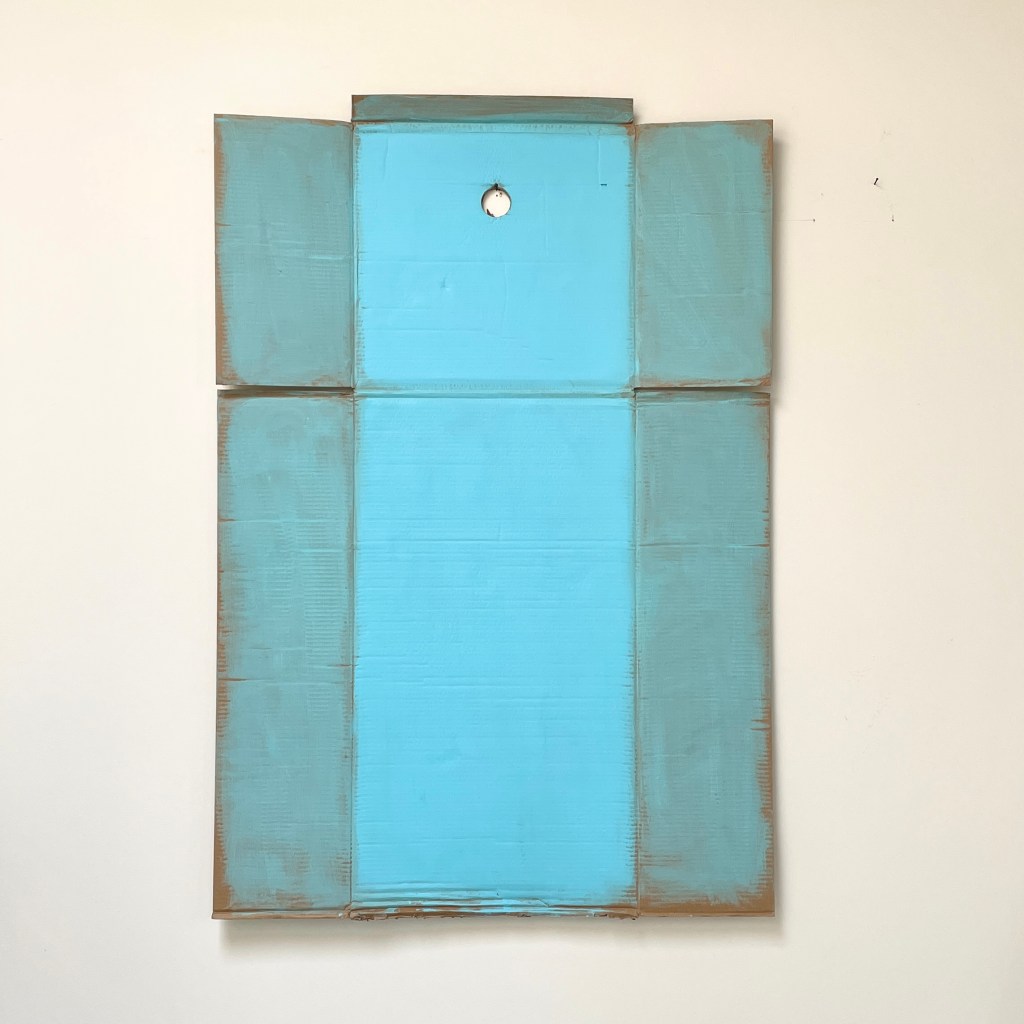
Untitled Acrylic on cardboard, wood glue September 2022
151 x 102 x 5 cm
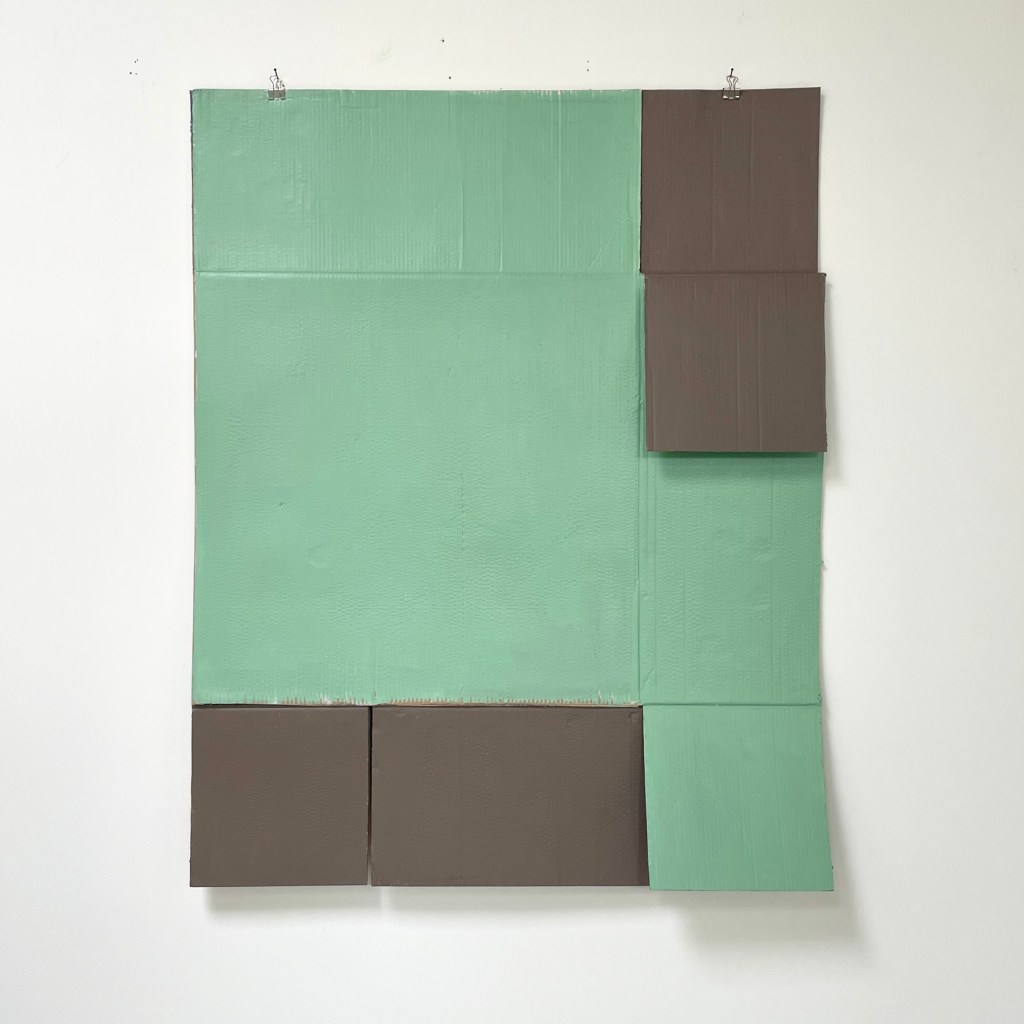
Untitled Acrylic on cardboard, wood glue, clips October 2022 124 x 98 x 10 cm
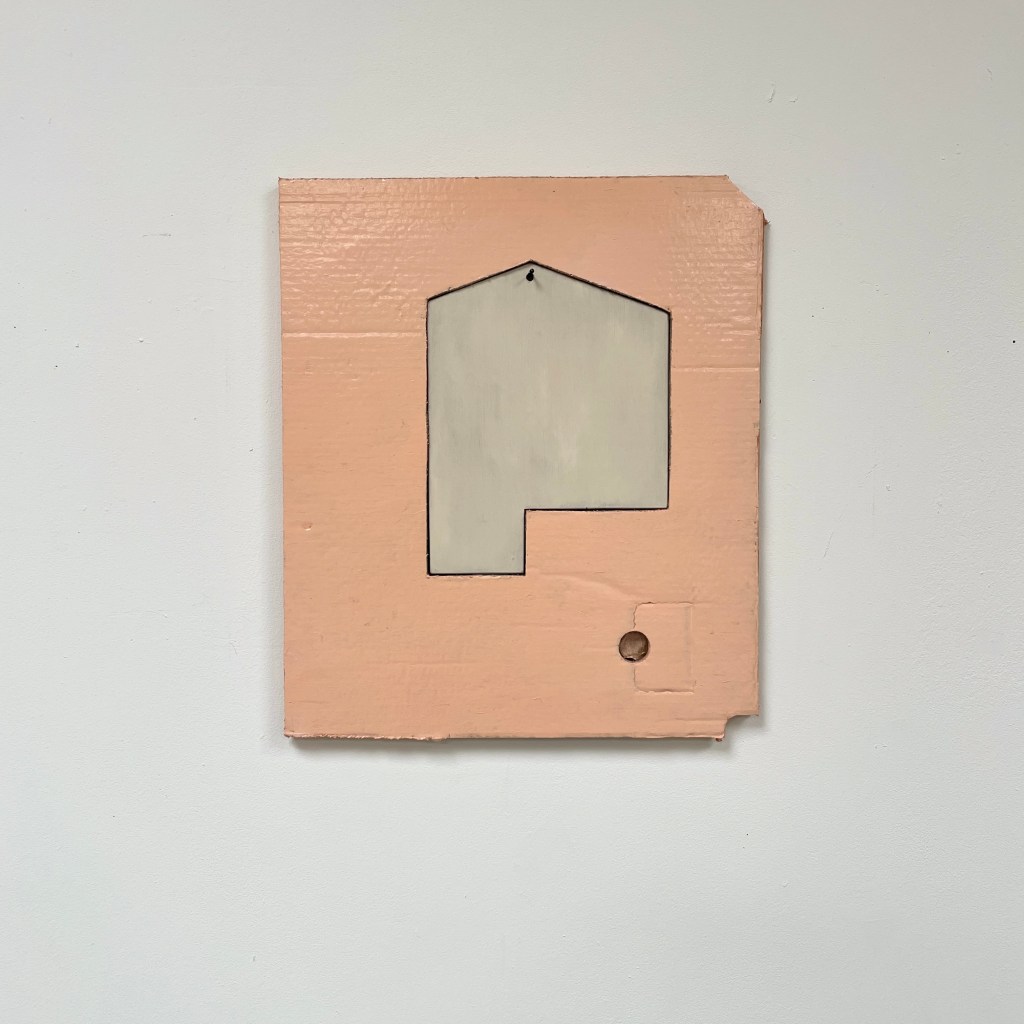
Untitled Acrylic paint and alkyd paint on cardboard and wood, tape, wood glue March 2023 49,5 x 42 x 1,5
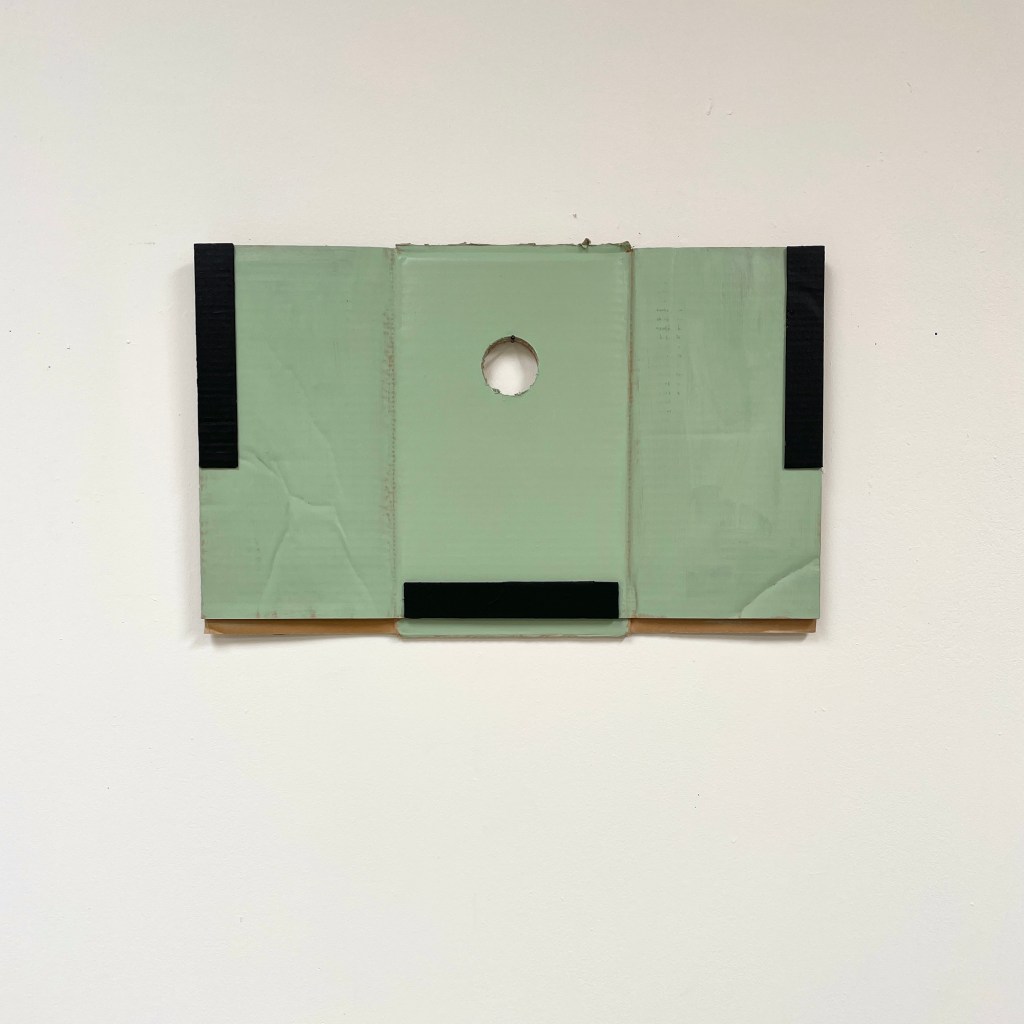
untitled Acrylic and alkyd paint on cardboard, woodglue, nail 2023 37,5 x 59 x 2 cm
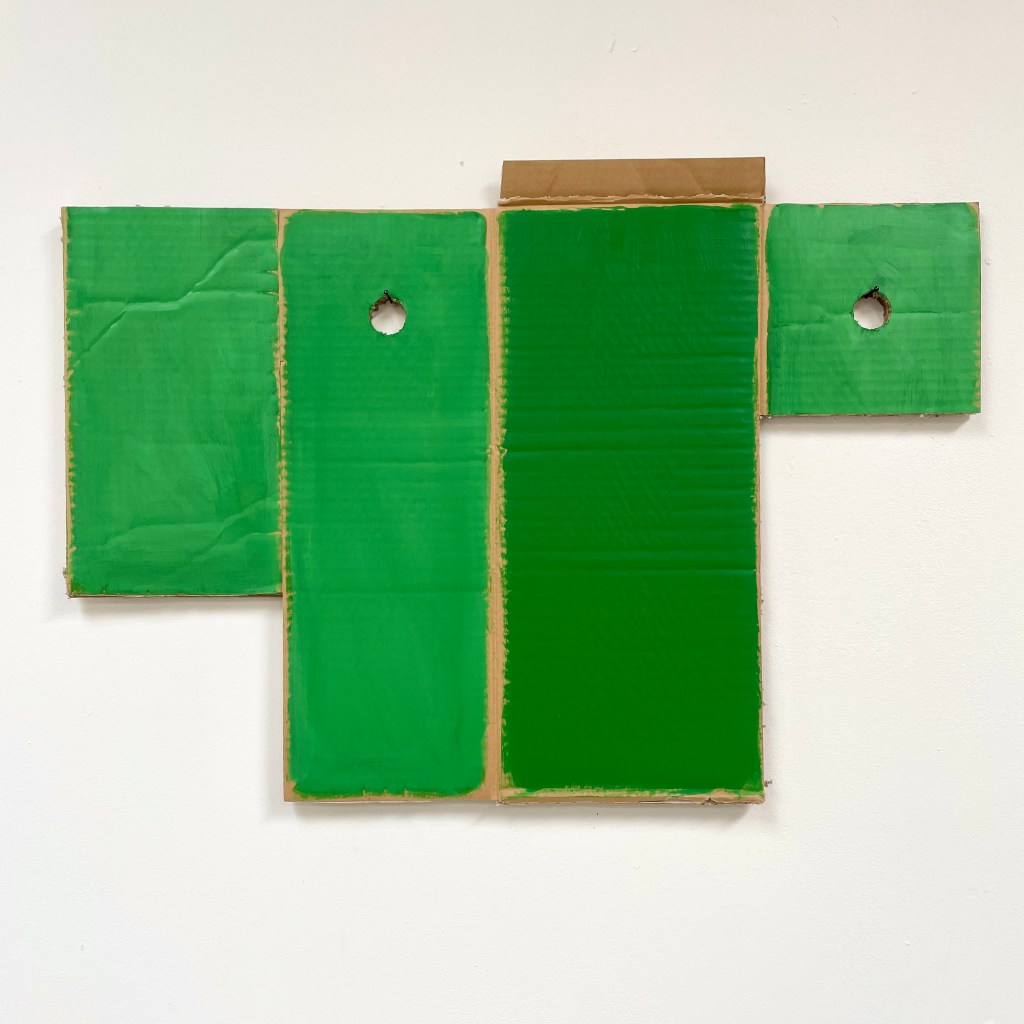
untitled Acrylic paint on cardboard, 2 nails, woodglue 2023 54,5 x 77 x 3 cm

untitled Acrylic and alkyd paint on cardboard, 2 nails 2023 39,5 x 53,5 cm

in is studio/ nel suo studio
 paroladartista.com