
(▼Scroll down for English version)
#paroladartista #intervistaartista #artistinterview #carollaalemandi
Parola d’Artista: Che cosa ti attira del nero?
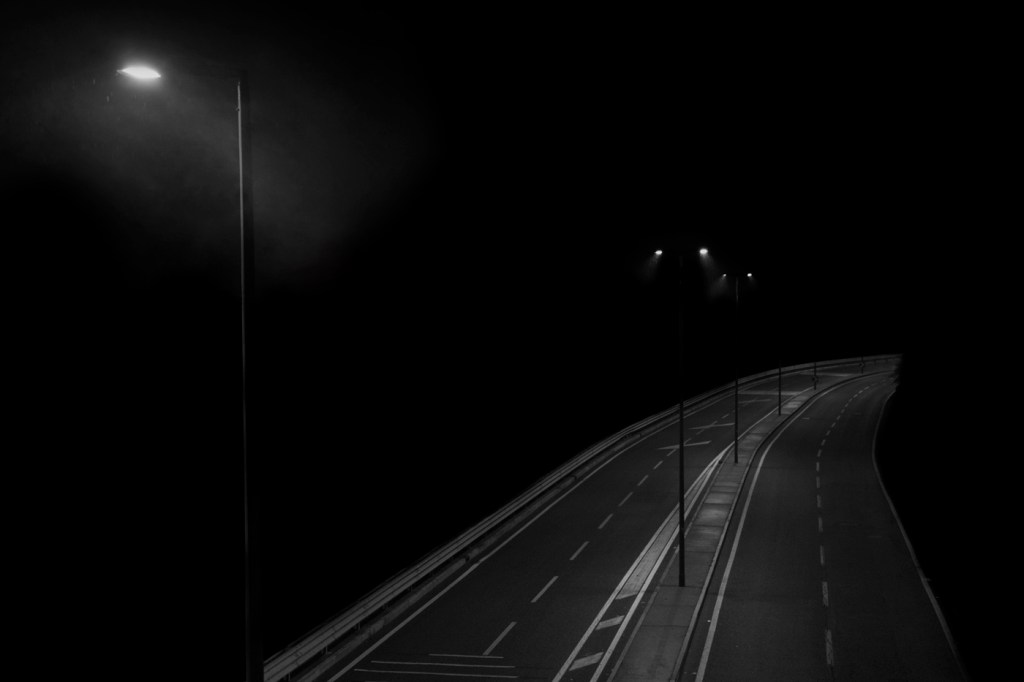
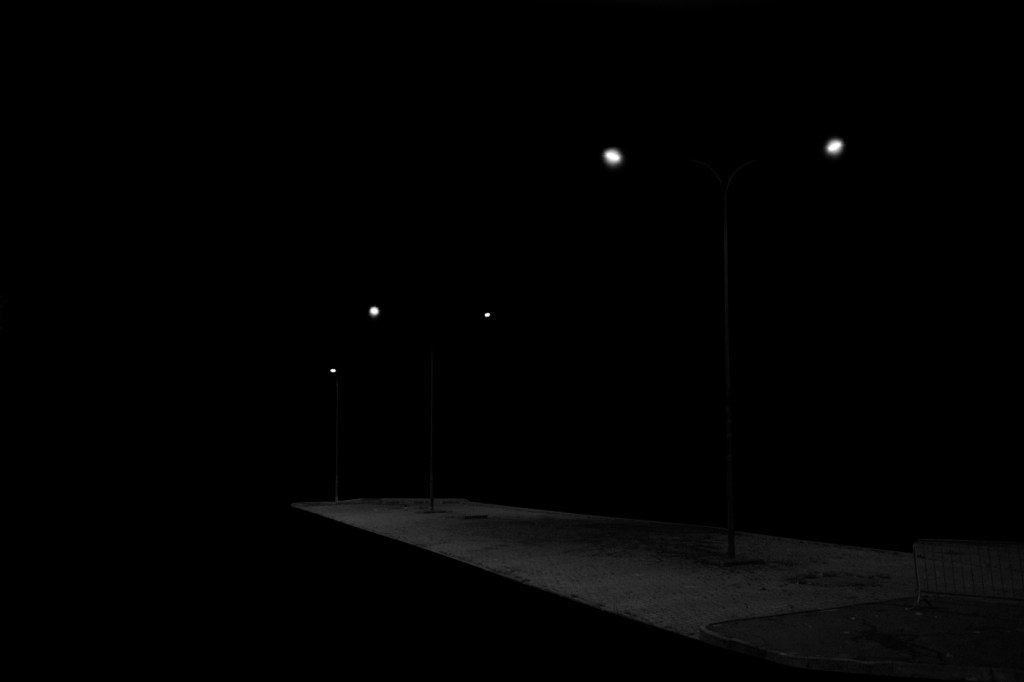
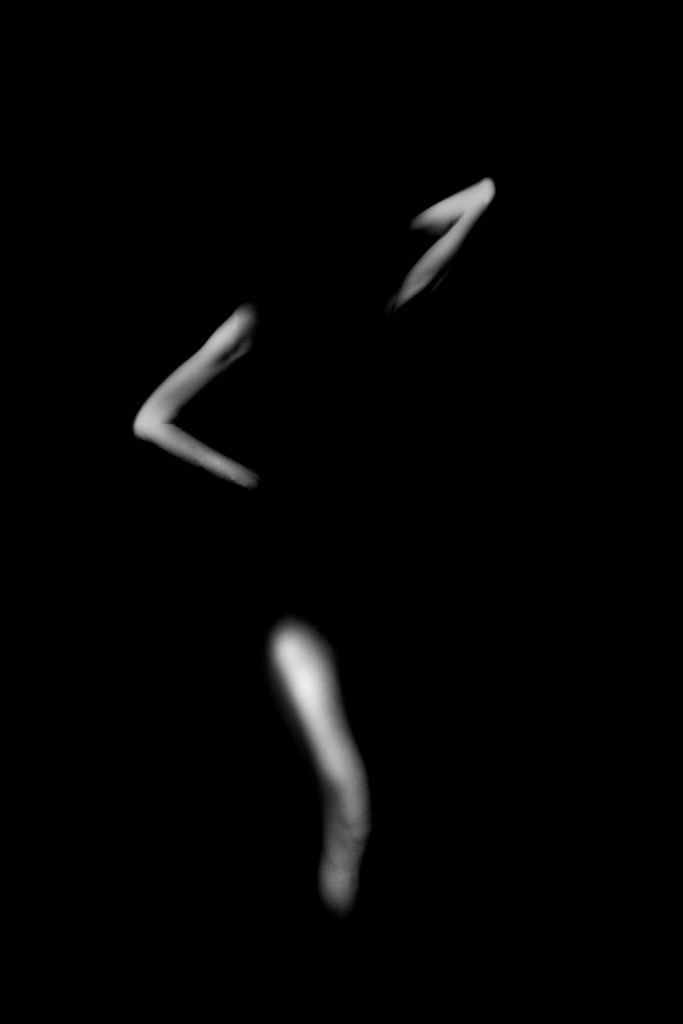
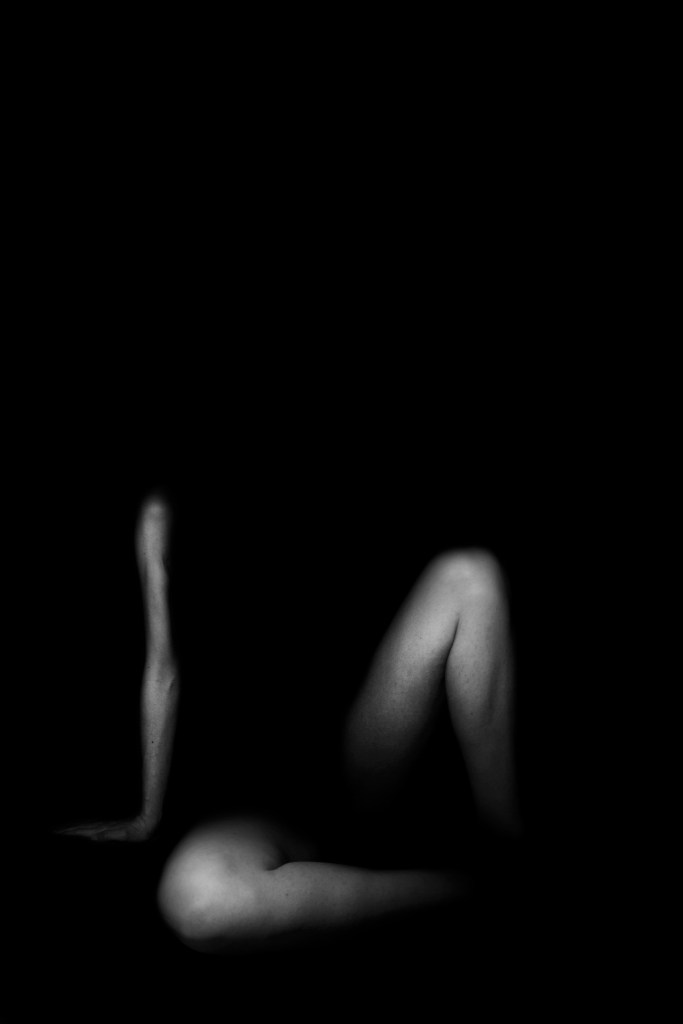
Carola Allemandi: Il nero nel mio lavoro rappresenta un mezzo per la cancellazione, ed è quindi uno strumento di sintesi: il nero va a sottrarre gli elementi che normalmente contraddistinguono o collocano nel mondo un soggetto, che sia un luogo o un corpo. Conduce, così, alla non specificità di ciò che si vede, scollegando il soggetto dalla propria dimensione ordinaria per consegnarlo a quella rarefatta di una contemplazione più universale. Questo accade, per esempio, nel lavoro dei Notturni, o in quello più recente Sul Corpo. Non è un colore dotato di un messaggio emotivo canonico, non è legato all’idea solita di cupezza, per esempio, di dramma o di negatività: è piuttosto una condizione della visione, del proprio stare di fronte a un paesaggio o di fronte a un essere umano e del proprio cercare in quei soggetti quei singoli elementi che ci fanno percepire una corrispondenza, una congruenza istintiva e in cui, dunque, possiamo riconoscerci.
P.d’A.: Che idea ti sei fatta del corpo ?
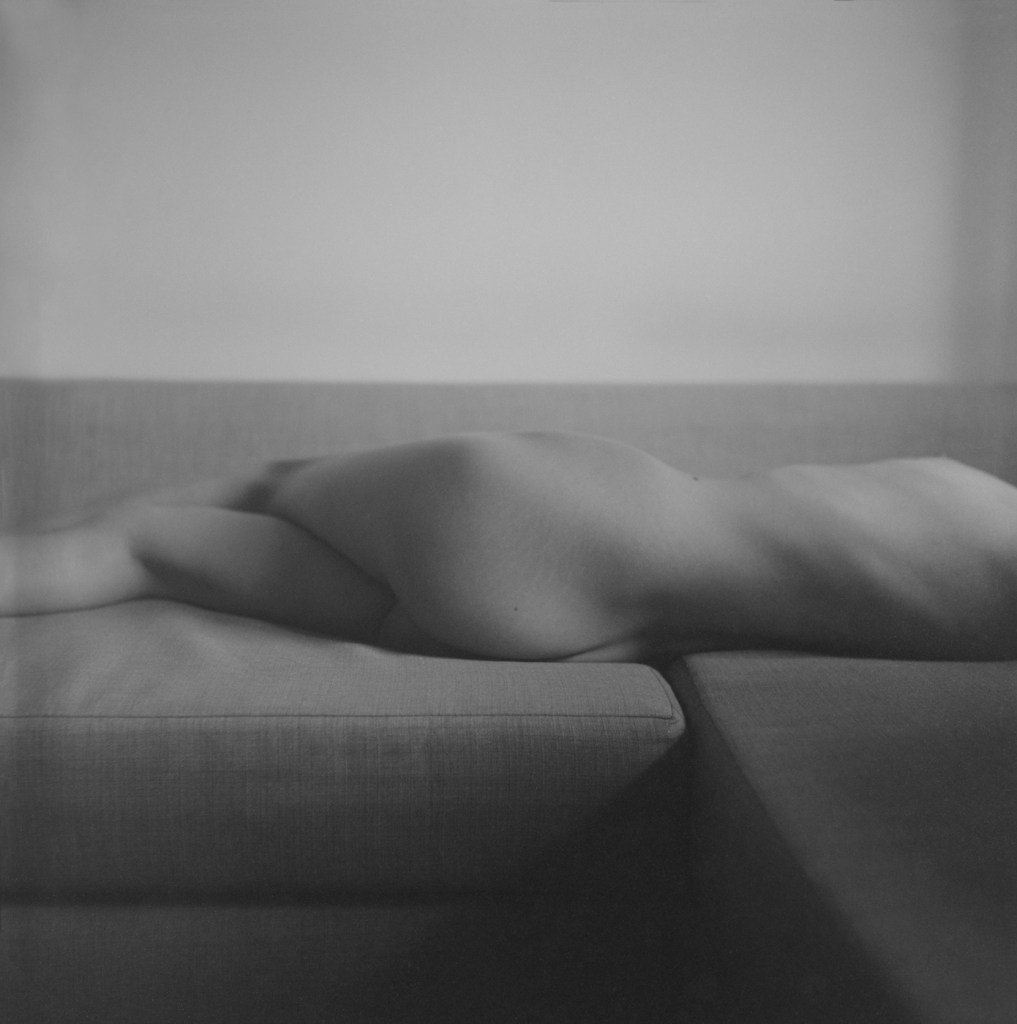
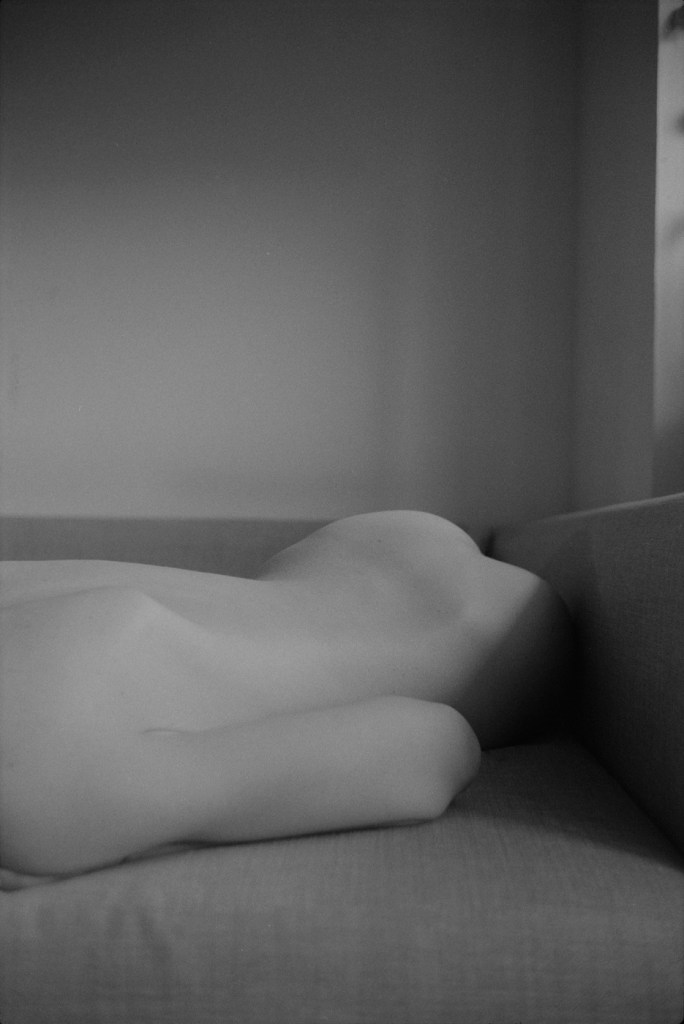
C.A.: Il corpo, così come ce lo hanno mostrato grandi maestri della fotografia, da André Kertész a Carla Cerati, è forma, una scultura che, nonostante sia in grado di muoversi, tremare per il freddo, sudare e contorcersi può assumere una conformazione indefinibile, quasi vegetale. Essenzialmente morbida. Anche nell’approccio al tema del corpo, nel lavoro dei Nudi, solo apparentemente distante da quello del paesaggio urbano, la ricerca è stata rivolta istintivamente alla perdita di coordinate precise in cui poter collocare e considerare il soggetto, sottolineando appunto l’aspetto primario delle sue potenzialità formali. Il corpo, dunque, quando considerato al di là dell’umano e svincolato da una narrazione, senza dover svolgere azioni intenzionali, bensì volte solo al raggiungimento di un equilibrio e un senso autonomi, può diventare vera scoperta, talvolta rivelazione.
P.d’A.: Mi piacerebbe chiederti di parlare della tua idea di spazio e di tempo?
C.A.: La mia idea di spazio e di tempo è principalmente un’idea vicina a quella di spaesamento: lo spazio e il tempo sono condizioni in cui si è consegnati dalla nascita e con cui si deve fare i conti. Vilém Flusser, autore di “Per una filosofia della fotografia” diceva che l’immagine crea relazioni temporali: l’occhio si sofferma su un particolare per un certo periodo di tempo per poi spostarsi su un altro particolare, fino a leggere l’immagine nella sua interezza, procedendo per porzioni, e sulla sua superficie, chiusa e limitata, si genera quello che definiva “l’eterno ritorno dell’uguale”. L’occhio, infatti, dopo essersi soffermato sui vari punti dell’opera, può scegliere se uscire dai suoi confini – guardare altro – o restare ancora lì, e quindi tornare a guardare qualcosa, un dettaglio, che nel frattempo è rimasto identico a se stesso. Ecco, credo che l’occhio che guarda un’immagine sia come l’uomo, che vaga, spaesato, tornando sugli stessi punti di una superficie delimitata, per quanto incomprensibilmente vasta.
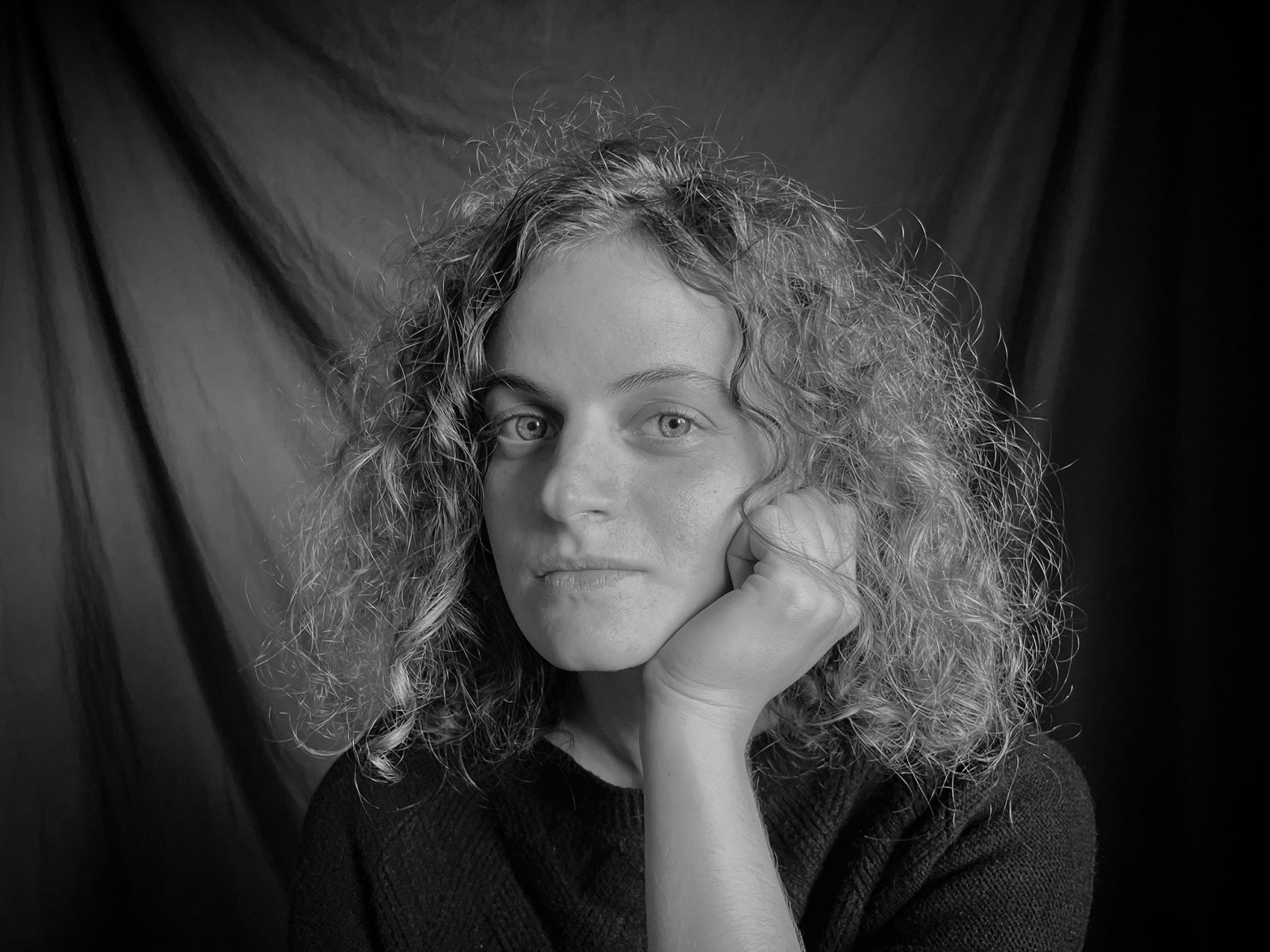
Carola Allemandi (Torino, 1997) è fotografa e autrice.
Dal 2019 espone in mostre personali e collettive in gallerie e musei italiani. Attualmente è rappresentata dalla galleria torinese Dr Fake Cabinet di Marco Albeltaro e Pablo Mesa Capella.
Nel 2021 vince il Premio Zenato Academy ed è finalista al concorso indetto dall’Istituto Italiano di Cultura di Praga, in cui espone nella mostra collettiva Isolation/Et Cetera.
Sempre nel 2021 collabora alla realizzazione del libro d’artista di Salvatore Astore Anatomia Umana curato dalla Galleria Mazzoleni di Torino.
Insegna e scrive di fotografia per alcune testate, tra cui “Doppiozero”, “Snaporaz” e “Siamomine”.
Nel 2022 pubblica il libro fotografico “Presenze” sui suoi primi lavori di ricerca per Atb Associazione Culturale di Torino con testi di Maria Erovereti.
English text
Three dry questions to Carola Allemandi
#paroladartista #intervistaartista #artistinterview #carolaallemandi
Parola d’Artista: What attracts you to black?
Carola Allemandi: Black in my work represents a means of erasure, and is therefore an instrument of synthesis: black subtracts the elements that normally distinguish or place a subject, be it a place or a body, in the world. It thus leads to the non-specificity of what is seen, disconnecting the subject from its ordinary dimension to consign it to the rarefied dimension of a more universal contemplation. This happens, for example, in the work of Notturni, or in the more recent Sul Corpo (On the Body). It is not a colour with a canonical emotional message, it is not tied to the usual idea of gloom, for example, of drama or negativity: it is rather a condition of vision, of one’s being in front of a landscape or in front of a human being and of one’s seeking in those subjects those single elements that make us perceive a correspondence, an instinctive congruence and in which, therefore, we can recognise ourselves.
P.d.A.: What idea have you formed of the body?
C.A.: The body, as it has been shown to us by great masters of photography, from André Kertész to Carla Cerati, is form, a sculpture that, despite being able to move, shiver from the cold, sweat and writhe, can take on an indefinable, almost vegetable conformation. Essentially soft. Even in the approach to the theme of the body, in the work of the Nudes, only apparently distant from that of the urban landscape, the search was instinctively directed towards the loss of precise coordinates in which to place and consider the subject, emphasising precisely the primary aspect of its formal potential. The body, therefore, when considered beyond the human and freed from a narrative, without having to carry out intentional actions, but only aimed at achieving an autonomous balance and meaning, can become a true discovery, sometimes a revelation.
P.d’A.: I would like to ask you about your idea of space and time?
C.A.: My idea of space and time is mainly an idea close to that of disorientation: space and time are conditions to which one is consigned from birth and with which one must come to terms. Vilém Flusser, author of ‘Per una filosofia della fotografia’ (For a Philosophy of Photography) said that the image creates temporal relations: the eye lingers on a detail for a certain period of time and then moves on to another detail, until it reads the image in its entirety, proceeding by portions, and on its surface, closed and limited, what he called ‘the eternal return of the same’ is generated. The eye, in fact, after lingering on the various points of the work, can choose whether to leave its confines – to look at something else – or to stay there again, and thus return to look at something, a detail, which in the meantime has remained identical to itself. Here, I believe that the eye looking at an image is like man, wandering, bewildered, returning to the same points on a delimited surface, however incomprehensibly vast.
Carola Allemandi (Turin, 1997) is a photographer and author.
She has been exhibiting in solo and group exhibitions in Italian galleries and museums since 2019. She is currently represented by the Turin gallery Dr Fake Cabinet of Marco Albeltaro and Pablo Mesa Capella.
In 2021 she won the Zenato Academy Prize and was a finalist in the competition organised by the Italian Cultural Institute in Prague, where she exhibited in the group exhibition Isolation/Et Cetera.
Also in 2021, he collaborated on Salvatore Astore’s artist book Anatomia Umana curated by Galleria Mazzoleni in Turin.
He teaches and writes about photography for several magazines, including “Doppiozero”, “Snaporaz” and “Siamomine”.
In 2022, he published the photographic book “Presenze” on his early research work for Atb Associazione Culturale di Torino with texts by Maria Erovereti.

 paroladartista.com