
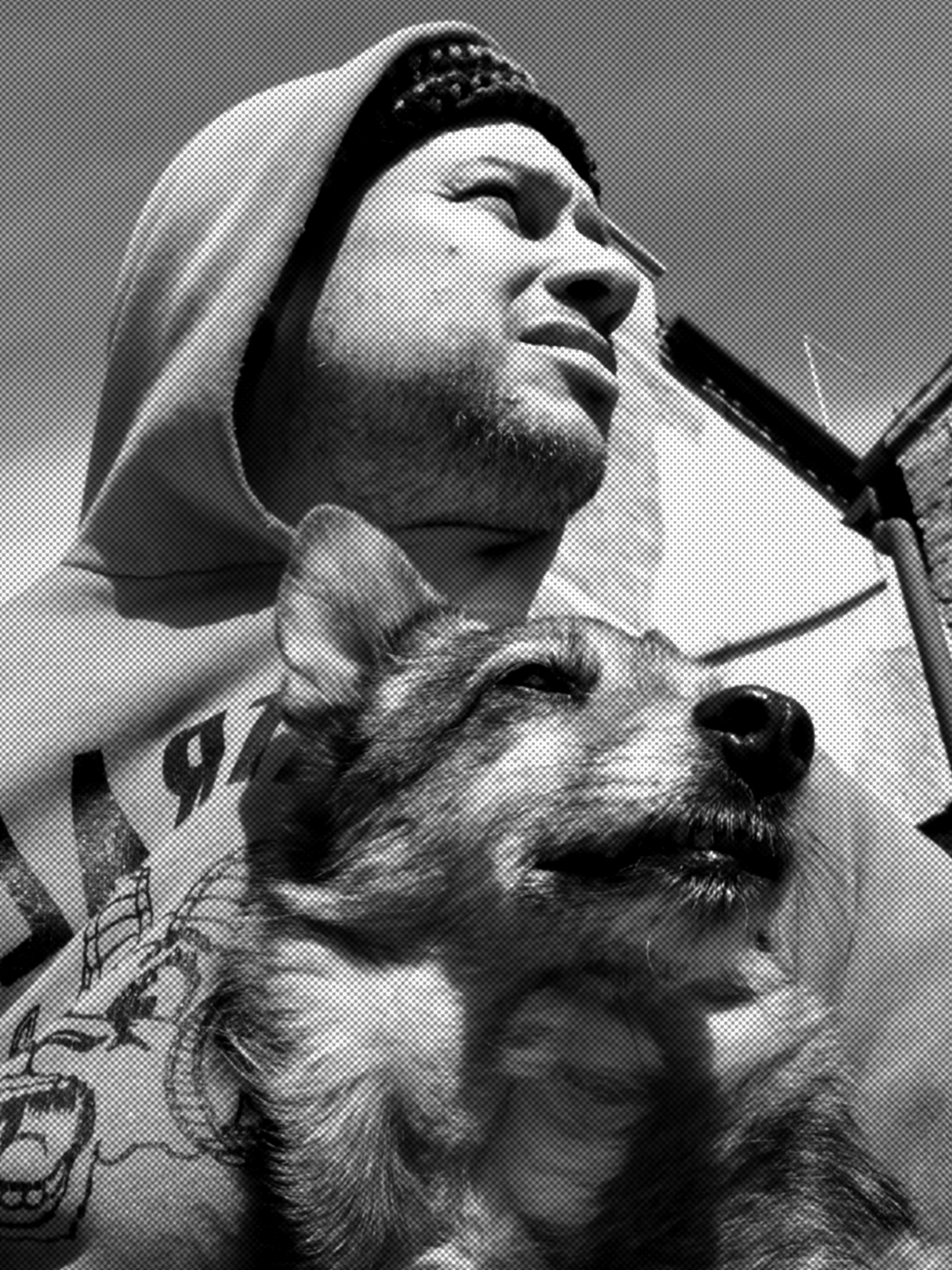
(▼Scroll down for English version)
#paroladartista #intervistaartista #artistinterìview #alessandroneretti
Parola d’Artista: Per la maggior parte degli artisti, l’infanzia rappresenta il periodo d’oro in cui iniziano a manifestarsi i primi sintomi di una certa propensione ad appartenere al mondo dell’arte. È stato così anche per te? Racconta.
Nero/Alessandro Neretti: Penso che l’immaginazione sia stata per me una compagnia in cui rannicchiarmi o con cui volare via. La creatività é sempre stato un aspetto della sopravvivenza.
P.d’A.: Quali studi hai fatto?
N./A.N.: Faenza: Scuola Materna Statale Il Panda, Scuola Primaria Don Milani, Scuola Media Statale Europa, Istituto d’Arte Gaetano Ballardini (Diploma di Maestro d’Arte, Corso di Perfezionamento Tecnologia Ceramiche Tradizionali, Maturità Arte Applicata indirizzo Arte della Ceramica, Corso di Perfezionamento in Arte del Gres e della Porcellana).
P.d’A.:Ci sono statti degli incontri importanti durante la tua formazione?
N./A.N.: Fortunatamente quando mi sono iscritto al Ballardini (1994) la scuola era crocevia di studenti ed artisti di svariate fasce d’età che raggiungevano Faenza da tutto il mondo per frequentare i corsi di perfezionamento in ambito ceramico, in un momento in cui Faenza era il cuore pulsante dell’educazione internazionale. Quindi gesti, sguardi, parole, opere, suoni, lingue, approcci da ovunque nel Mondo attorno ad un ragazzino che assorbiva tutto come una spugna.
A dirla tutta la mia formazione non é ancora terminata e non penso che terminerà a breve, quindi a questi si aggiungono persone che ho incontrato anche in età adulta e fuori dal mondo dell’arte.
P.d’A.:Che ruolo ha il disegno in quello che fai?
N./A.N.: Scarabocchio, poi fantasia, poi valvola di sfogo, poi orrore, poi riflesso, poi progetto, poi opera, poi installazione, poi narrazione postuma del progetto installativo, poi dolore (dopo essermi sbriciolato un polso destro)…
Ora il disegno é un sogno, mi piacerebbe ritornare al disegno, non ti nascondo che ci penso sempre più. D’altronde è stato il primo amore ed é sicuramente difficile da dimenticare.
P.d’A.:Come scegli i materiali con cui lavori?
N./A.N.: La scelta si divide in due tipi/modalità:
Loro vengono da me, mi cadono addosso, li incontro, ci affondo, mi ci rotolo, ci casco dentro.(Objet trouvé).
Io vado da loro, li studio, adatti alle mie esigenze, tecnici, malleabili e sinuosi, solidi, pesanti o leggeri, pensati per lo spazio, per le esigenze installative, gli unici con cui si potrebbe realizzare quel tipo di lavoro, perfetti per quell’architettura … adatti, evocativi, giusti, succinti …
(Ceramica, ferro, legno, pietra…).
P.d’A.:Quanto è importante per te l’idea del racconto legata agli elementi che usi per costruire i tuoi ambienti?
N./A.N.: Intrinseca, necessaria, collettiva, inevitabile, dovuta, preziosa, singolare, unica, antropologica …
P.d’A.:Ti interessa la dimensione della memoria nel tuo lavoro?
N./A.N.: Il mio é un lavoro che analizza una memoria passata e/o presente per indicarne uno sviluppo futuro. Questo dovrebbero fare gli artisti, aprire gli occhi all’osservatore, creare opere per il futuro, adesso.
P.d’A.:Volevo chiederti di spiegare la tua idea di lavoro site-specific?
N./A.N.: Un progetto creato per una spazio specifico che dialoga con l’architettura analizzando fattori geografici, sociali e naturali. Può essere frutto dell’indagine su preesistenti collezioni museali o private, oppure di fattori storici di varia rilevanza.
I progetti site-specific sono sempre tailor-made, sono cuciti sullo spazio e sul contesto che esso rappresenta.
P.d’A.:Quando inizia un lavoro hai già un’idea chiara di come si svilupperà?
N./A.N.: Si. La mia fantasia ha sempre delle note a margine.
Nelle note trovo l’aspetto tecnico della realizzazione (materiali, reperibilità, composizione), é necessario, grazie a questo fattore la materia “sta in piedi”. Le cose devono essere concepite dall’inizio alla fine, altrimenti il tuo lavoro lo deve poi fare qualcun altro.
P.d’A.:Che tipo di dialogo cerchi con lo spettatore che si trova davanti al tuo lavoro?
N./A.N.: Schiaffi in faccia, per poi tranquillizzarlo con un sorriso e un discorsetto.
Invertendo l’ordine degli addendi il risultato non cambia.
Generalmente si ricorda tutti e tre i passaggi.
P.d’A.:L’idea di messa in scena nel tuo lavoro ha una qualche importanza?
N./A.N.: Messa in scena: il complesso delle attività con cui si allestisce un lavoro teatrale, e quindi tutto il processo per cui, dal testo scritto, l’opera dell’autore è portata a vivere sul palcoscenico.
(Cit. Treccani)
Ovviamente. Il processo é importante quanto l’opera. Il processo é la mia vita che accompagna la mia ricerca e le mie creazioni. Il processo é quel disastro che chiamano vita.
P.d’A.:Che cosa succede alle opere quando non c’è nessuno che le osserva, l’esistenza di un opera d’arte può prescindere dalla presenza di un osservatore?
N./A.N.: Come anticipato, si creano opere nel presente e per il futuro. Alcune opere sono in compagnia tutto il giorno, altre giacciono in attesa di essere contemplate nuovamente.
Loro esistono, sono state generate, sono materia e concetto. Mi chiedo se l’osservatore esista a prescindere dalle opere…
P.d’A.:Secondo te l’artista dove si pone nei confronti della sua opera?
N./A.N.: Probabilmente affianco, lui la crea, lei nasce, lei cresce, lui gioisce.
Se lui cade, lei lo raccoglie e lo salva.
L’artista manifesta la sua vita tramite le opere, il suo spirito é impigliato nell’opera d’arte.
Il collezionista compra opera ed anima … e l’opera non morirà.
English text
Artist Interview Nero/Alessandro Neretti
#paroladartista #intervistaartista #artistinterìview #alessandroneretti
Parola d’Artista For most artists, childhood is the golden age when the first symptoms of a certain propensity to belong to the art world begin to appear. Was that the case for you too? Tell us.
Nero/Alessandro Neretti: I think imagination has been for me a company to curl up in or fly away with. Creativity has always been an aspect of survival.
P.d’A.: What studies have you done?
N./A.N.: Faenza: Il Panda State Nursery School, Don Milani Primary School, Europa State Secondary School, Gaetano Ballardini Art Institute (Master of Art Diploma, Advanced Course in Traditional Ceramics Technology, Maturity in Applied Art address Ceramic Art, Advanced Course in Stoneware and Porcelain Art).
P.d’A.:Were there any important encounters during your training?
N./A.N.: Fortunately, when I enrolled at Ballardini (1994), the school was a crossroads for students and artists of various age groups who came to Faenza from all over the world to attend specialisation courses in ceramics, at a time when Faenza was the beating heart of international education. So gestures, looks, words, sounds, languages, approaches from all over the world around a young boy who absorbed everything like a sponge.
To tell you the truth, my education is not yet finished and I don’t think it will be finished any time soon, so there are also people I have met in adulthood and outside the art world.
P.d’A.:What role does drawing play in what you do?
N./A.N.: Doodle, then fantasy, then outlet, then horror, then reflection, then project, then work, then installation, then posthumous narration of the installation project, then pain (after I crushed my right wrist)…
Now drawing is a dream, I would like to return to drawing, I won’t hide the fact that I think about it more and more. After all, it was my first love and it’s certainly hard to forget.
P.d’A.:How do you choose the materials you work with?
N./A.N.: The choice is divided into two types/modes:
They come to me, they fall on me, I meet them, I sink into them, I roll in them, I fall into them.(Objet trouvé).
I go to them, I study them, suitable for my needs, technical, malleable and sinuous, solid, heavy or light, designed for the space, for the installation needs, the only ones with which one could realise that type of work, perfect for that architecture … suitable, evocative, right, succinct …
(Ceramic, iron, wood, stone…).
P.d’A.:How important to you is the idea of storytelling linked to the elements you use to build your environments?
N./A.N.: Intrinsic, necessary, collective, inevitable, due, precious, unique, anthropological…
P.d.A.:Are you interested in the dimension of memory in your work?
N./A.N.: Mine is a work that analyses a past and/or present memory to indicate a future development. This is what artists should do, open their eyes to the observer, create works for the future, now.
P.d’A.:I wanted to ask you to explain your idea of site-specific work?
N./A.N.: A project created for a specific space that dialogues with architecture by analysing geographical, social and natural factors. It can be the result of investigating pre-existing museum or private collections, or historical factors of varying relevance.
Site-specific projects are always tailor-made, they are sewn to the space and the context it represents.
P.d’A.:When you start a work, do you already have a clear idea of how it will develop?
N./A.N.: Yes. My imagination always has notes in the margins.
In the notes I find the technical aspect of the realisation (materials, availability, composition), it is necessary, thanks to this factor the material ‘stands’. Things must be conceived from start to finish, otherwise someone else has to do your work.
P.d’A.:What kind of dialogue do you seek with the viewer who is in front of your work?
N./A.N.: Slap them in the face, then calm them down with a smile and a little talk.
Reversing the order of the addends does not change the result.
He generally remembers all three steps.
P.d.A.:Does the idea of staging have any importance in your work?
N./A.N.: Staging: the complex of activities by which a theatrical work is staged, and thus the whole process by which, from the written text, the author’s work is brought to life on stage.
(Cit. Treccani)
Obviously. The process is as important as the work. The process is my life that accompanies my research and my creations. Process is that disaster they call life.
P.d’A.:What happens to works of art when there is no one there to observe them, can the existence of a work of art be independent of the presence of an observer?
N./A.N.: As mentioned above, works are created in the present and for the future. Some works are in our company all day, others lie in wait to be contemplated again.
They exist, they have been generated, they are matter and concept. I wonder if the observer exists apart from the works?
P.d’A.:Where do you think the artist stands in relation to his work?
N./A.N.: Probably beside it, he creates it, she is born, she grows, he rejoices.
If he falls, she picks him up and saves him.
The artist manifests his life through his works, his spirit is entangled in the work of art.
The collector buys work and soul … and the work will not die.
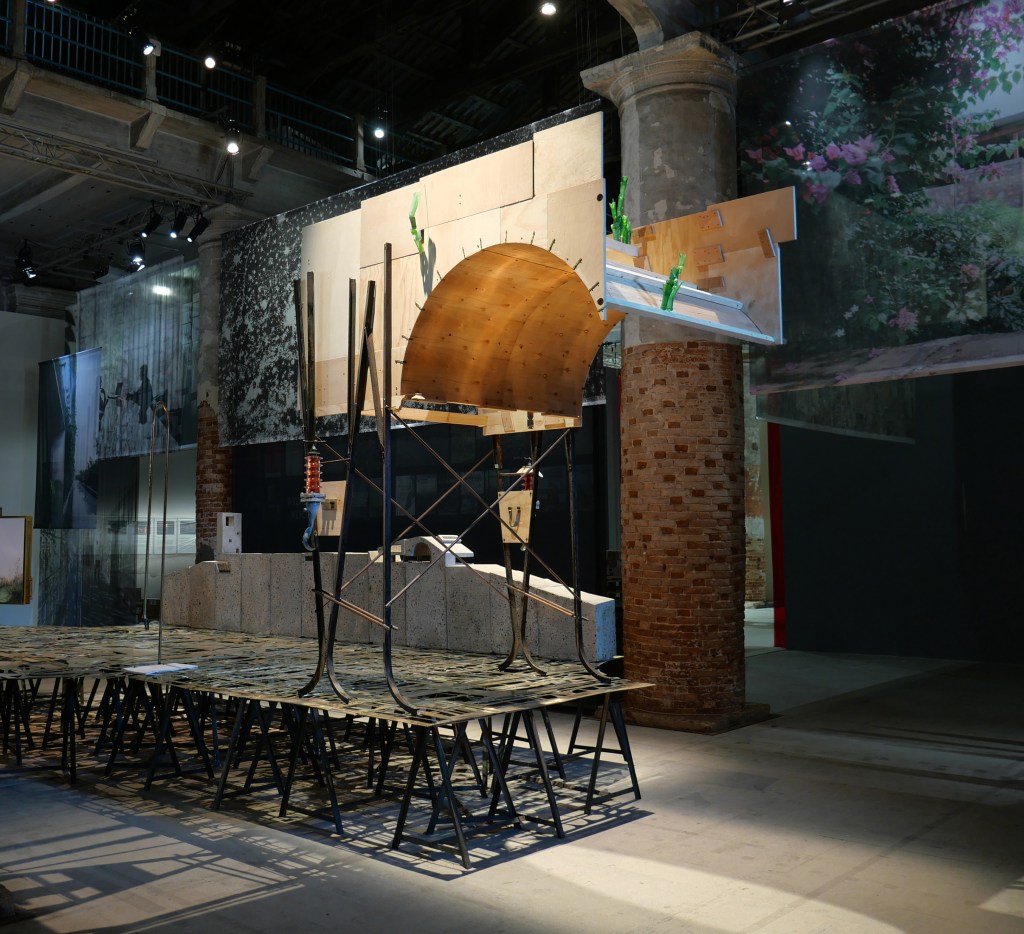
capriccio from ruins (that time the hills dropped into the lagoon), 2023
pali di recinzione rovesciati e isolatori in vetro dalla Base NATO Calvarina, legno di recupero fornito da Rebiennale | R3B dalla precedente edizione della Biennale di Venezia 2022, elementi in ferro dal Padiglione Tedesco – Biennale 2023, antichi frammenti di terracotta e colli di bottiglia in vetro recuperati da una cala di Venezia, ottone da vecchi modelli architettonici di AMAA e dagli scarti della produzione DeCastelli \ reversed fence posts and glass insulators from the NATO Base Calvarina, salvaged wood provided by Rebiennale | R3B from the previous edition of the Venice Biennale 2022, scrap iron from German Pavilion – Biennale 2023, ancient terracotta fragments and glass bottle necks salvaged from a cove in Venice, brass from old architectural models from AMAA and from the discards of DeCastelli’s production
318 x 203,5 x 257,5 cm
Works from “Dangerous liaisons” at 18th International Architecture Exhibition of La Biennale di Venezia (2023), Arsenale, Venezia/Italy
courtesy of the artist and AMAA
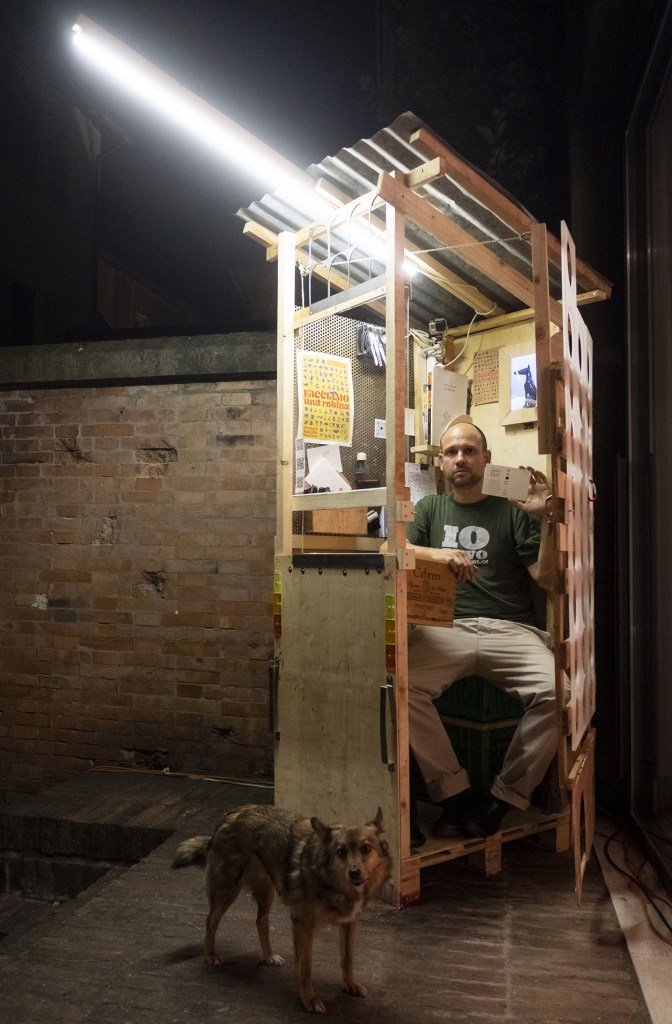
Robinæ (the one man factory), 2022
materiali di recupero (legno, plexiglass, metallo), luce a led, tablet, video in loop 13’04”, materiali misti \ salvaged materials (wood, plexiglass, metal), led light, tablet, looped video 13’04”, mixed materials
243 x 92 x 172 cm
Performance within an installation, Museo Carlo Zauli (2022), Faenza/Italy
courtesy of the artist
ph Marco Piffari
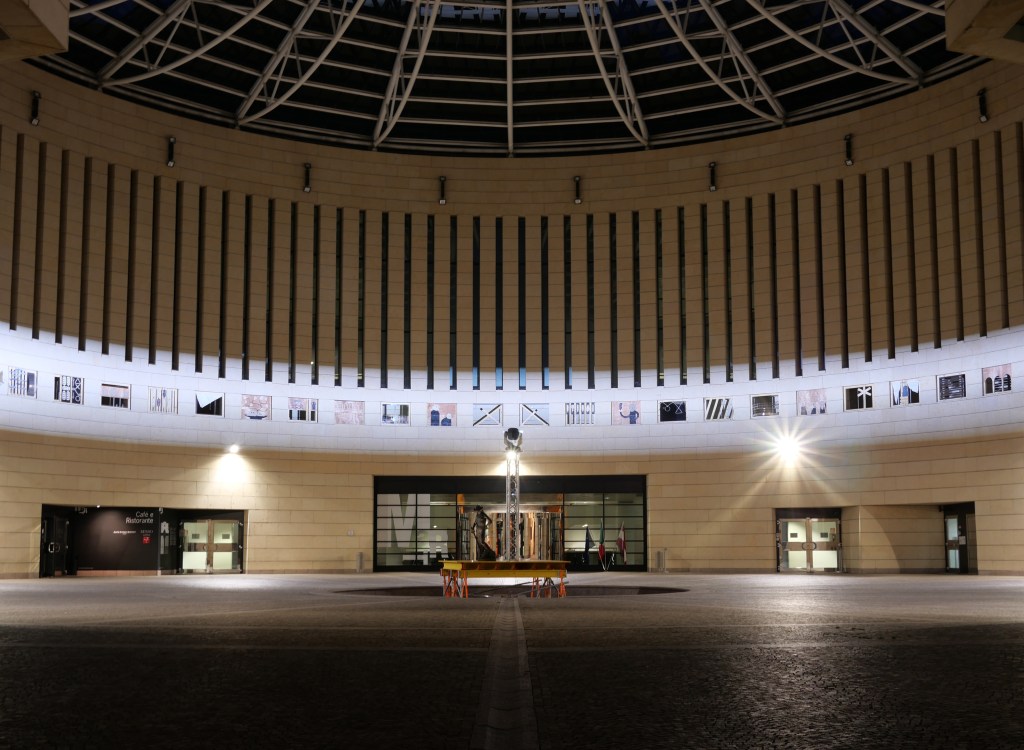
GOLFO MISTICO, 2021
ø 4000 x 730 cm
parte centrale: copia del David di Donatello in bronzo, materiale da costruzione, testa mobile di ROBE \ central part: copy of Donatello’s David in bronze, construction material, movable head by ROBE
535 x 339 x 305 cm
50 pezzi alle pareti: legno di abete grezzo, pannelli di compensato riciclato, acciaio e ferro, semire di Cecchetto, tecnica mista \ 50 pieces on the walls: raw fir wood, recycled plywood panels, steel and iron, semire by Cecchetto, mixed media
spessore variabile, 100 x 130 cm ognuno \ variable thickness, 100 x 130 cm / each
Solo project at Mart – Museo di arte moderna e contemporanea di Trento e Rovereto (2021), Rovereto/Italy
courtesy of the artist
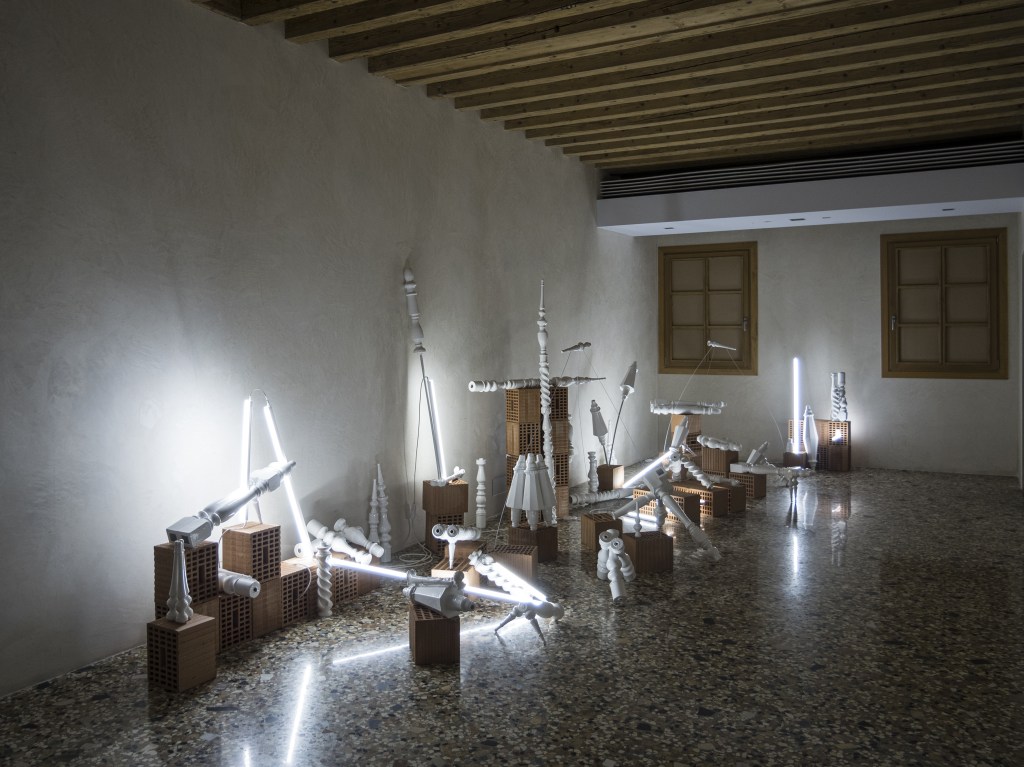
remember to breathe, 2020
terracotta smaltata, mattoni, luci a led, materiali misti \ glazed earthenware, bricks, led lights, mixed materials
185 x 740 x 213 cm
Installation from the solo project “busted bonds and broken bones” at Palazzo Baccin (2020), Nove/Italy
courtesy of the artist

series one bicycle wheel: new world fucker, 2017
terracotta smaltata, copertoni di bicicletta esausti, alluminio, ferro, gomma \ glazed earthenware, worn-out bicycle tires, aluminium, iron, rubber
ø70,5 x 8,5 cm
Work from the solo project “Life is a burning tire” at Museum Beelden aan Zee (2017), Scheveningen/The Netheralnds
courtesy of the artist
ph Andrea Piffari
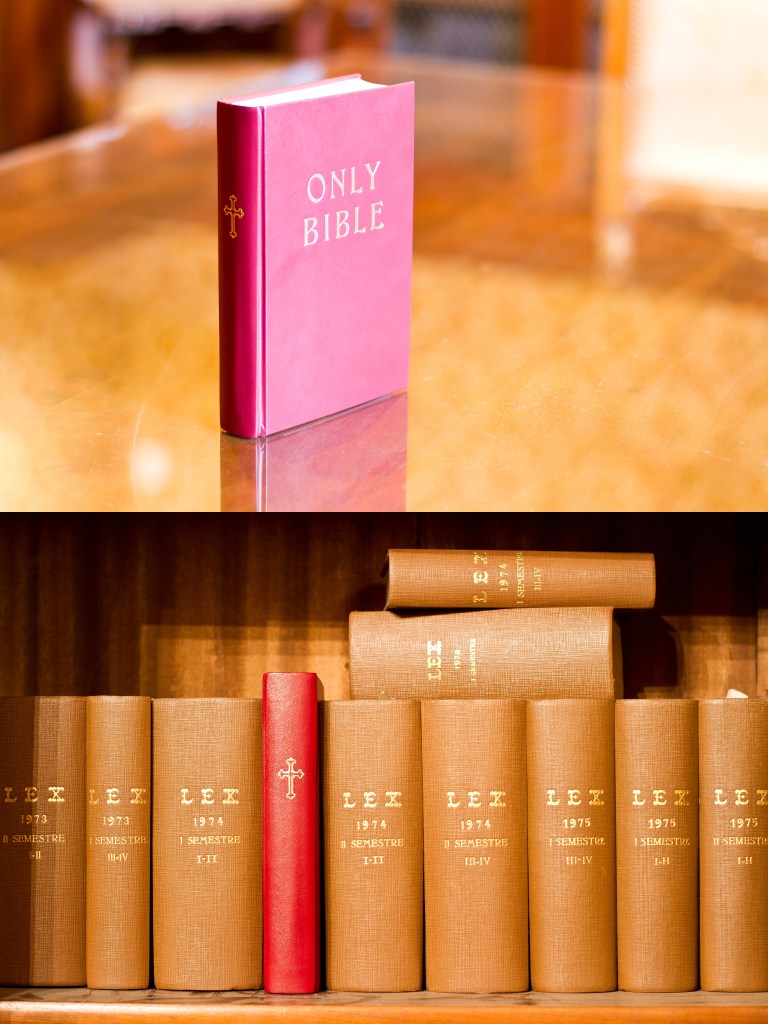
ONLY BIBLE, 2010
libro modificato \ modified book
20,5 x 14 x 3,5 cm
Work from the solo project “hostage/privilege” at Banca di Romagna (2011), Faenza/Italy
courtesy of the artist
ph Marco Piffari
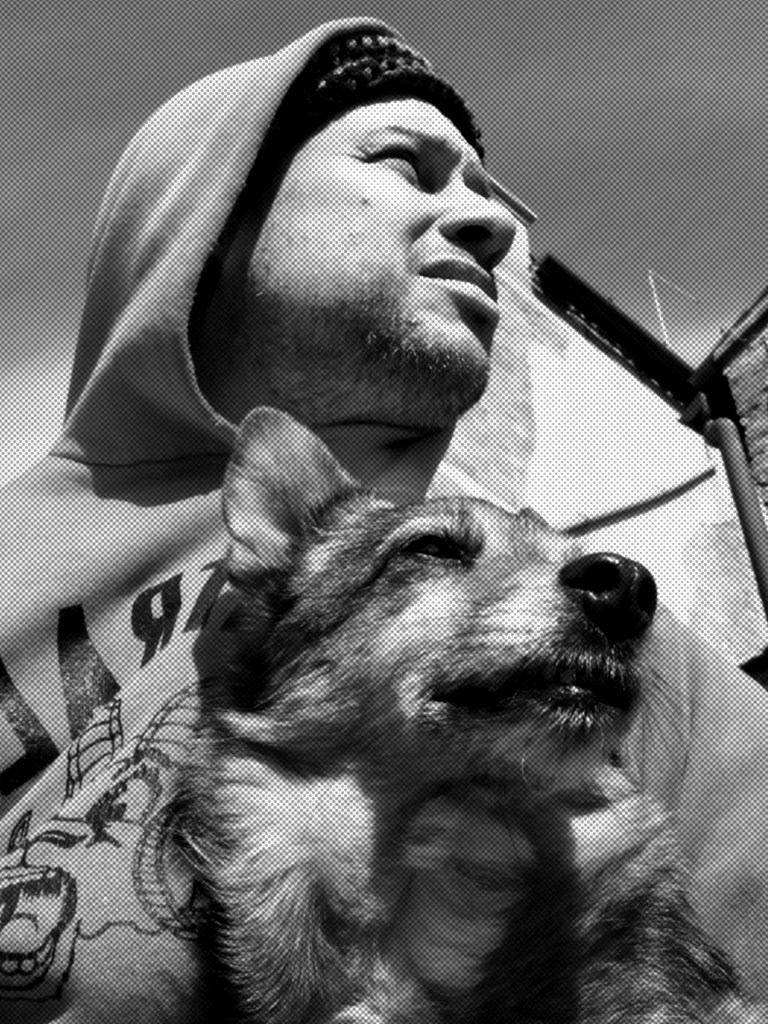
Self portrait
 paroladartista.com