

(▼Scroll down for English version)
#paroladartista #intervistaartista #artistaintervista #antjeguske
Parola d’Artista: Per la maggior parte degli artisti, l’infanzia rappresenta il periodo d’oro in cui iniziano a manifestarsi i primi sintomi di una certa propensione ad appartenere al mondo dell’arte. È stato così anche per lei? Me lo racconta?
Antje Guske: L’arte e la cultura mi hanno accompagnato fin dall’inizio. Sono cresciuta tra quadri, libri d’artista, letteratura, visite a musei e teatri. Anche il talento e l’interesse per il disegno e la pittura sono di famiglia e ho iniziato a praticarli e a provarli fin da piccola. Mi è stato chiaro fin dall’inizio che avrei seguito un percorso artistico. All’età di 12 anni ho iniziato ad approfondire le mie capacità di disegno presso la scuola d’arte giovanile e da allora mi sono concentrato principalmente sullo studio della natura.
P.d’A.: Quali studi ha fatto?
A.G.: Ho completato un anno di studi serali all’Accademia di Belle Arti di Dresda. Allo stesso tempo, ho fatto uno stage di un anno in pittura teatrale alla Semperoper di Dresda per provare la direzione che volevo prendere come artista. In seguito mi sono iscritta alla HfBK di Dresda e ho studiato Belle Arti, specializzandomi in pittura/grafica/scultura. Dopo la laurea, ho completato un programma post-laurea come studente di master.
P.d’A.: Che ruolo e che importanza ha il disegno per lei?
A.G.: Per me il disegno è la base di ogni lavoro artistico. Il disegno apre la comprensione del mondo. Ci insegna a vedere e a capire le cose che ci circondano. Per me è una parte importante del mio lavoro, anche se il disegno in sé non è evidente nel mio lavoro. Nel mio studio si accumulano schizzi di idee e oggetti, che disegno a caso su pezzi di carta, spesso mentre viaggio. Questi schizzi e raccolte di appunti sono sempre il punto di partenza per la realizzazione di un oggetto. Alcune idee vengono abbozzate più volte in diverse varianti e per molti anni. Poi diventano sempre più concrete e si concretizzano in un oggetto o restano un’idea su carta.
P.d’A.: Che importanza ha la geometria nel suo lavoro?
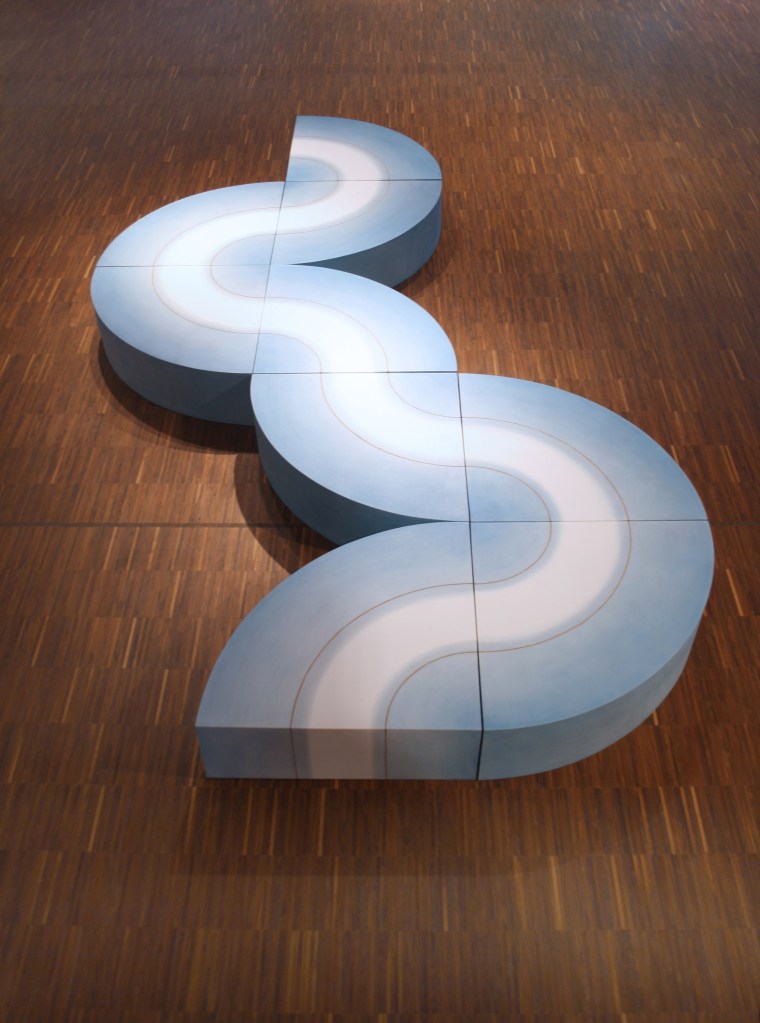
A.G.: Nelle forme geometriche di base – cerchio, triangolo e quadrato – vedo elementi ricorrenti che collegano tutto. Attraverso le forme geometriche di base, rendo tangibile ciò che superficialmente è difficile da afferrare. Cerco una forma per il sentimento, la sensazione e il tempo. La semplificazione permette di rappresentare processi complessi e di catturare l’essenza delle cose senza esagerare.
P.d’A.: Quando lavora a una serie di opere per una mostra, su quali aspetti si concentra?
A.G.: Lo spazio esperienziale è fondamentale per il lavoro sui miei oggetti. Visito sempre in anticipo lo spazio espositivo per decidere quali opere realizzare. Gli oggetti lavorano con lo spazio e con lo spettatore. Per me è particolarmente importante che gli oggetti non siano solo oggetti da contemplare, ma uno spazio di esperienza e un momento in uno. In questo senso, avviene un confronto fisico, ma senza toccare le opere.
P.d’A.: Le interessa la dimensione contemplativa nel suo lavoro? Dove e come pensa che l’artista si collochi rispetto a ciò che fa?
A.G.: La forma geometrica serve alla rappresentazione formale del contenuto. La contemplazione sta nel linguaggio della forma. L’artista è parte della sua opera, l’opera è parte dell’artista e molto altro ancora.
P.d’A.: Ho notato che lei predilige la tecnica del pastello, cosa la spinge a utilizzare questa tecnica? Quanto è importante il colore nel suo lavoro? I suoi colori vivono di sottili vibrazioni, è interessato alle qualità pittoriche del suo lavoro?
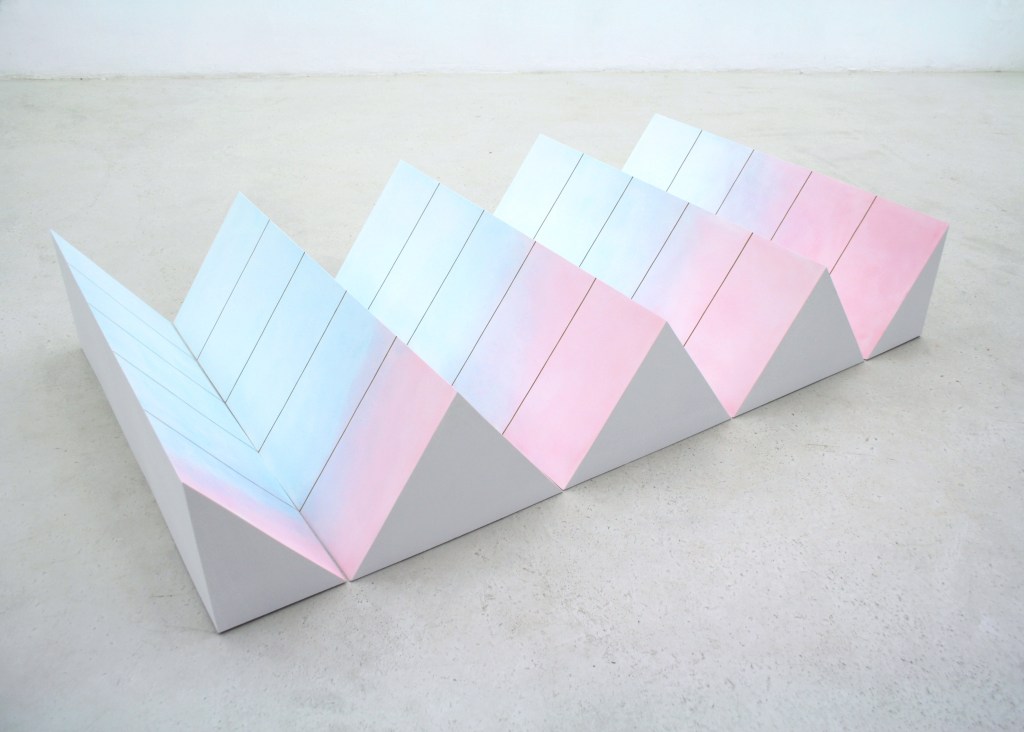
A.G.: L’applicazione dei pigmenti pastello alle forme geometriche conferisce all’oggetto una qualità vivace. Il colore e il gradiente cromatico svolgono un ruolo importante. I pigmenti colorati creano una sorta di colore chiaro. L’oggetto assume una vita propria, per così dire, un bagliore interiore. Spesso combino la pittura acrilica con il pastello o con altre tecniche, a seconda dell’oggetto.
P.d’A.: I suoi colori vivono di sottili vibrazioni, è interessato alle qualità pittoriche del suo lavoro?
A.G.: La rappresentazione dello spazio e del tempo sono il contenuto del mio lavoro. Come possiamo catturare l’attimo fuggente? Un’alba, le onde che si infrangono sulla riva, un cielo stellato? Non vedo il senso di dipingerli nel contesto odierno. Sono alla ricerca di una rappresentazione contemporanea e multistrato dell’esperienza del paesaggio per me stesso. Penso a uno spazio intersoggettivo che assuma un ruolo di sintonia.
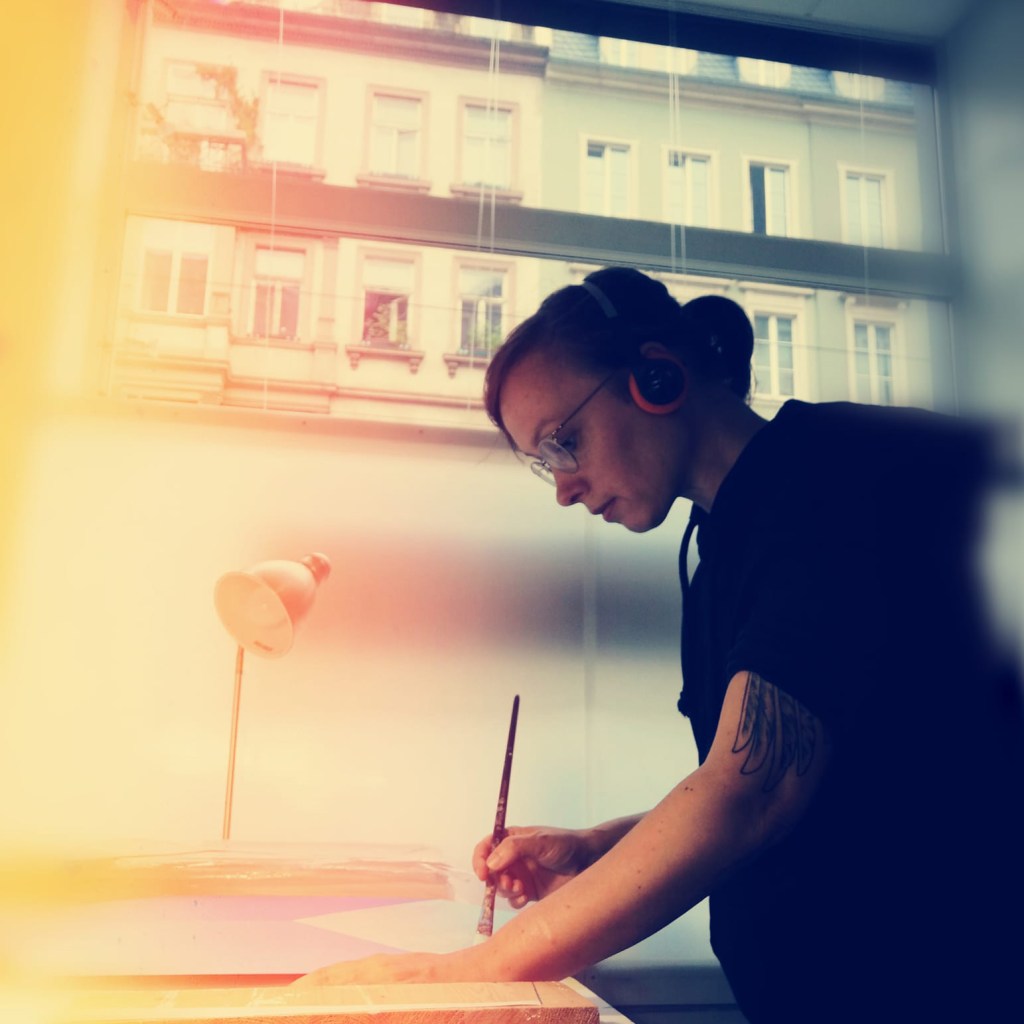
Antje Guske Ha studiato Belle Arti alla HfBK di Dresda. Studi post-laurea, master class con il Prof. Martin Honert. Assistente per la scultura nello studio del Prof. Martin Honert. Mentore per studenti di master presso la HfBK di Dresda. Docente per il servizio di carriera presso l’Università di Belle Arti di Dresda. Creazione e realizzazione della galleria producers |, Dresda. Vive e lavora in Germania, borsista del Kunstfonds Bonn.
•English text
Interview whit Antje Guske
#paroladartista #intervistaartista #artistinterview #antjeguske
Parola d’Artista: For most artists, childhood represents the golden age when the first symptoms of a certain propensity to belong to the art world begin to appear. Was that the case for you too? Tell me?
Antje Guske: Art and culture have been with me from the very beginning. I grew up with paintings, artists’ books, literature, museum and theatre visits. The talent and interest in drawing and painting also runs in the family and I started practising and trying it out at an early age. It was clear to me from the beginning that I would follow an artistic path. At the age of 12, I started to deepen my drawing skills at the youth art school and from then on I mainly focussed on studying nature.
P.d’A.: What studies have you done?
A.G.:I completed a year of evening studies at the Dresden Academy of Fine Arts. At the same time, I did a one-year internship in theatre painting at the Semperoper in Dresden to try out the direction I wanted to take as an artist. I then applied to the HfBK Dresden and studied fine arts there, specialising in painting/graphics/sculpture. After graduating, I completed a postgraduate programme as a master student.
P.d’A.: What role and what importance does drawing play for you?
A.G.:For me, drawing is the basis of all artistic work. Drawing opens up an understanding of the world. It teaches us to see and understand the things that surround us. For me, it is an important part of my work, even if drawing itself is not evident in my work. Sketches of ideas and objects pile up in my studio, which I sketch randomly on pieces of paper, often while travelling. These sketches and collections of notes are always the starting point for the realisation of an object. I sketch some ideas several times in different variations and over many years. Then they become more and more concrete and are realised as an object or remain an idea on paper.
P.d’A.: What importance does geometry have in your work?
A.G.:In the basic geometric shapes – circle, triangle and square – I see recurring elements that link everything together. By means of the basic geometric shapes, I make tangible what is superficially difficult to grasp. I search for a form for feeling, sensation and time. Simplification allows complex processes to be depicted and the essence of things to be captured without exaggeration.
P.d’A.: When you work on a set of works for an exhibition, which aspects of the work do you focus on?
A.G.:The experiential space is crucial for the work on my objects. I always visit the exhibition space beforehand to decide which works will be realised for it. The objects work with the space and the viewer. It is particularly important to me that the objects are not just objects of contemplation, but a space of experience and moment in one. In this sense, a physical confrontation takes place, but without touching the works.
P.d’A.: Are you interested in the contemplative dimension in your work? Where and how do you think the artist stands in relation to what he does?
A.G.:The geometric form serves the formal representation of content. Contemplation lies in the language of form. The artist is part of his work, the work is part of the artist and much more.
P.d’A.: I noticed that you favour the pastel technique what motivates you to use this technique? How important is colour in your work? Your colours live on subtle vibrations, are you interested in the painterly qualities of your work?
A.G.: Applying the pastel pigments to the geometric shapes gives the object a lively quality. The colour and the colour gradient play an important role. The colour pigments create a kind of light colour. The object takes on a life of its own, so to speak, an inner glow. I often combine acrylic paint with pastel or other techniques depending on the object.
P.d’A.: Your colours live on subtle vibrations, are you interested in the painterly qualities of your work?
A.G.:The representation of space and time are the content of my work. How can we capture the fleeting? A sunrise, waves crashing against the shore, a starry sky? I don’t see any point in painting them in today’s context. I am looking for a contemporary, multi-layered representation of landscape experience for myself. I’m thinking of an intersubjective space that takes on an attuning role.
Antje Guske Studied fine arts at the HfBK Dresden. Postgraduate studies, master class with Prof. Martin Honert. Assistant for sculpture in the studio of Prof. Martin Honert. Mentor for master students at the HfBK Dresden. Lecturer for the career service at the Dresden University of Fine Arts. Establishment and realization of the producers | gallery, Dresden. lives and work in Germany, scholarship holder of the Kunstfonds Bonn.
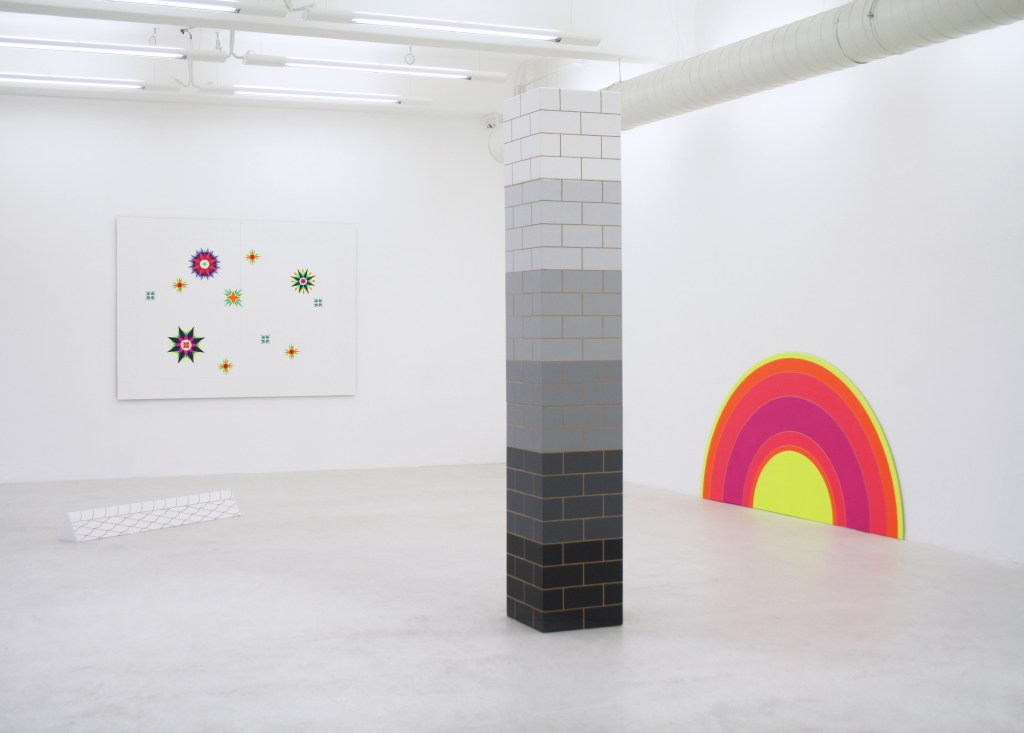
exibition view soloexibition geist ghost fantôme 2017
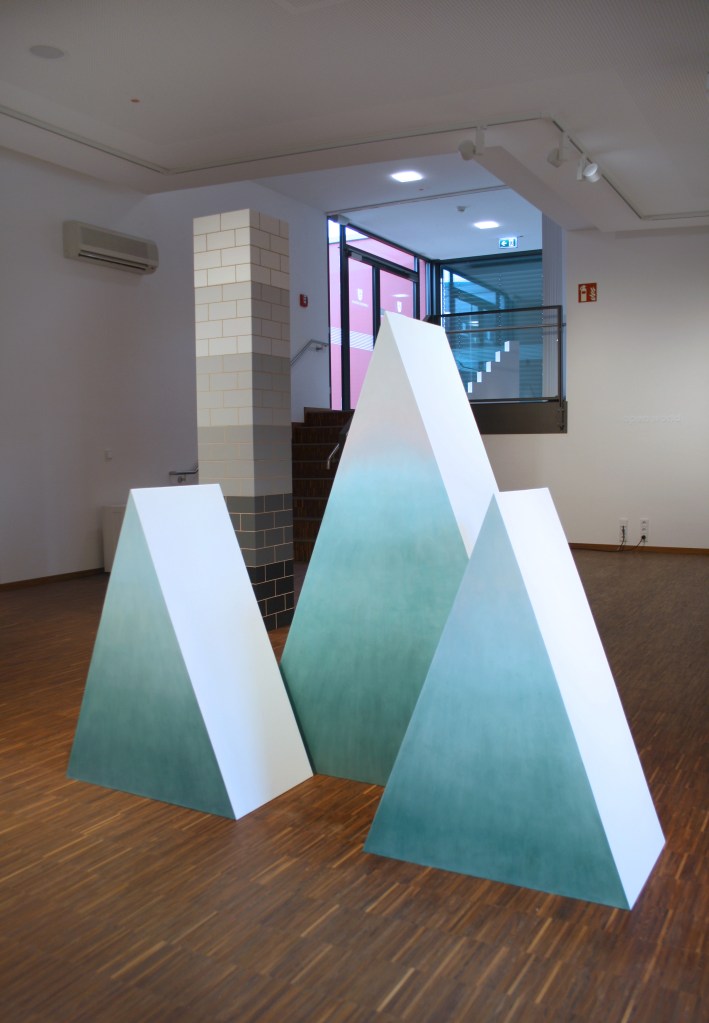
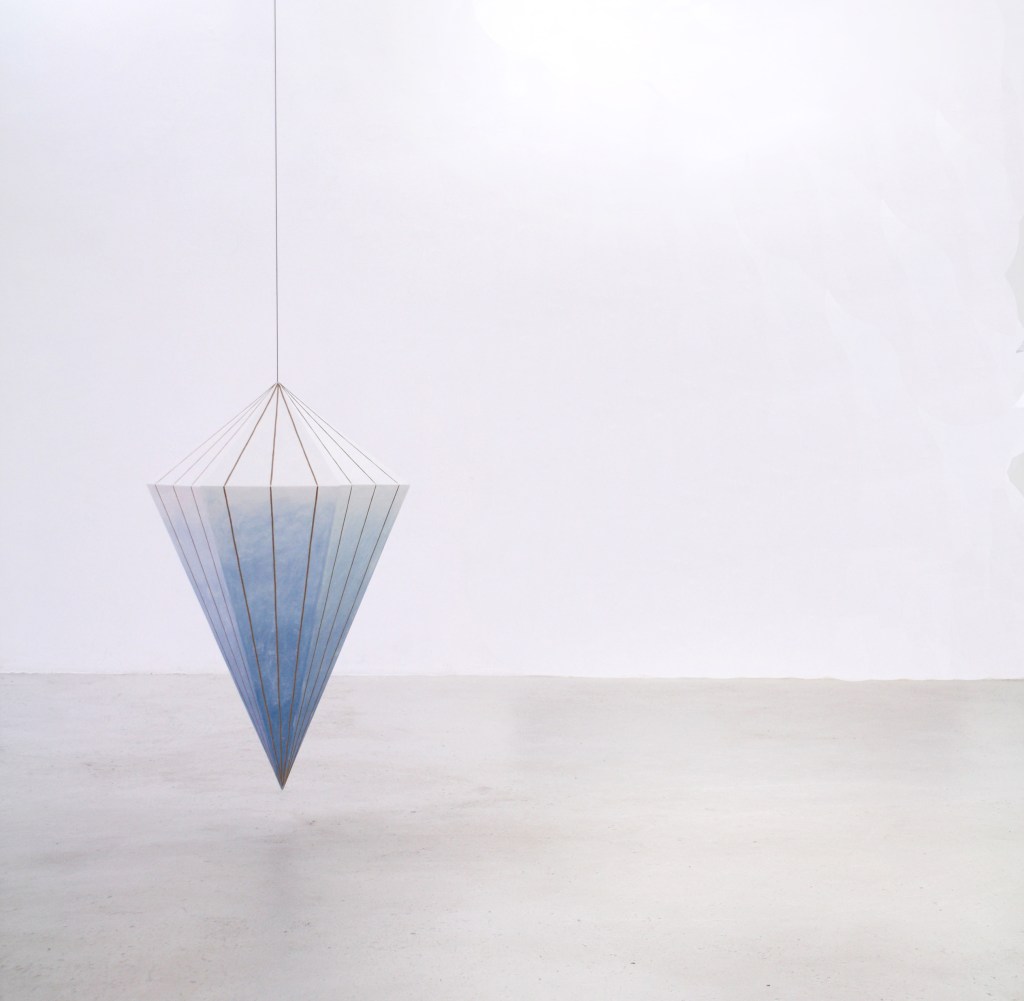
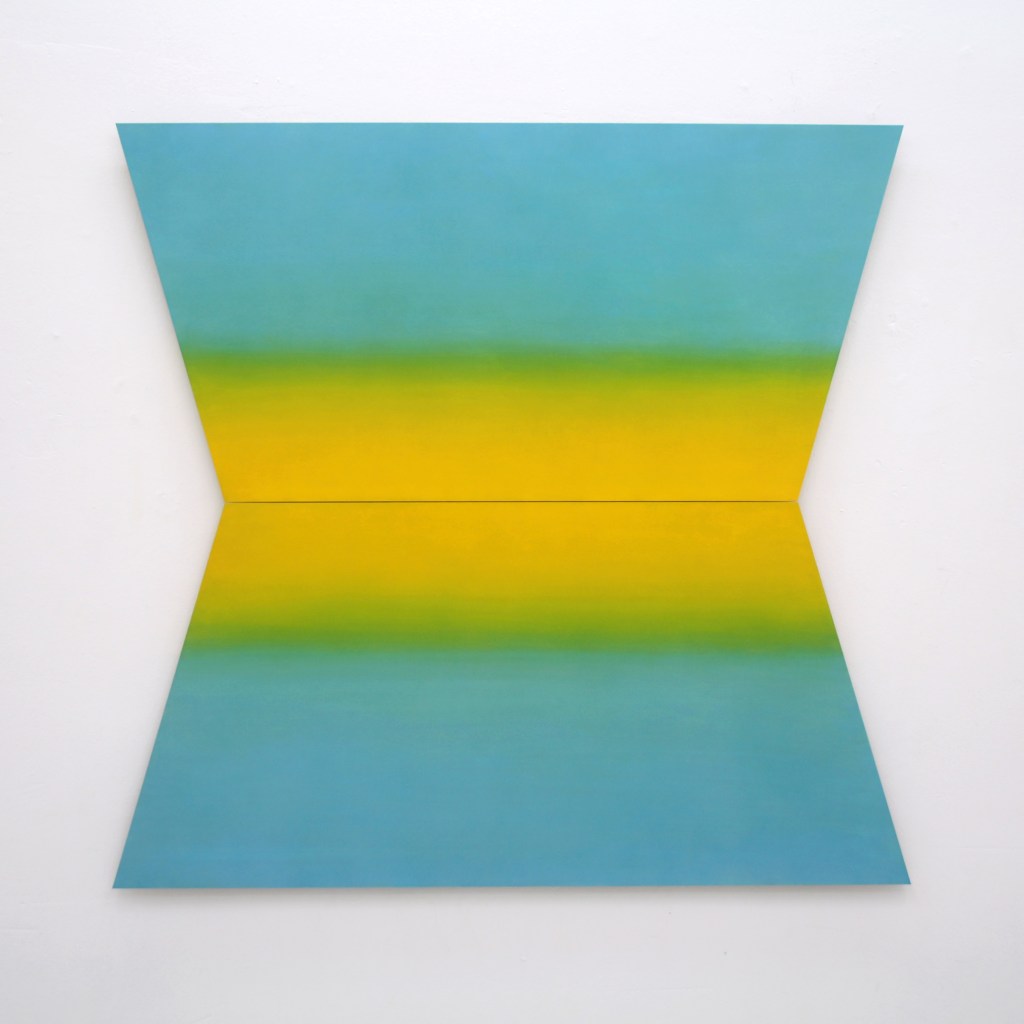
Pastel on
hardboard
 paroladartista.com