

(▼Scroll down for English version)
#paroladartista #sacro #sacred #federicarugnone
Parola d’Artista: Secondo te il sacro ha ancora una sua importanza nell’arte di oggi e nel mondo in cui viviamo?
Federica Rugnone: Nella società in cui viviamo dominata dal mercato, il sacro sembra una dimensione poco accessibile, nascosta, ma non del tutto assente.
Da sempre l’uomo ha sentito il bisogno di andare al di là della realtà presente, creando miti, rituali che unissero la collettività nel sostenere il senso della contraddittorietà dell’esistenza.
Oggi, almeno in Occidente, la parola “sacro” si lega immediatamente al religioso senza vedere che quello di cui parlano i credenti è un sacro svuotato del suo aspetto più potente e spaventoso, specchio di una visione dicotomica del mondo.
Nella sua accezione più profonda questa parola disegna un bisogno connaturato all’uomo stesso: quello di entrare in dialogo con l’imprevedibile, con l’indifferenziato, una dimensione che conosciamo nei primi nove mesi di vita e che poi abbandoniamo del tutto una volta entrati nell’età della ragione dove le cose iniziano a definirsi, a distinguersi e separarsi.
Il sacro è dunque definibile come l’ibrido, la compresenza degli opposti che provoca la vertigine e l’armonia. È il mondo dove si avventurano i matti e i poeti, dove le parole e le azioni acquistano contemporaneamente significati diversi.
Il lavoro quotidiano dell’uomo è fatto da un’incessante ricerca di equilibrio che può nascere dallo scorgere che i confini per definire la realtà delle cose sono labili, in continua ritrattazione e, a volte, nelle brevi epifanie che abbiamo, assenti.
L’arte aiuta in tale processo perché è per eccellenza un mezzo che suscita la compresenza di mondi, pone interrogativi mischiando i codici comunicativi.
Il focus del mio lavoro si incentra sull’idea di confine e del suo superamento. In particolare, l’ultimo corpus di opere del progetto “Sacer – La mostruosità del sacro” analizza due aspetti dell’idea di compresenz[1] [MOU2] a. Da un lato, quest’ultima può sembrarci spaventosa e irrazionale; dall’altro nasconde la possibilità di cambiare prospettiva nel modo di relazionarci, non più dicotomico ma multiforme.
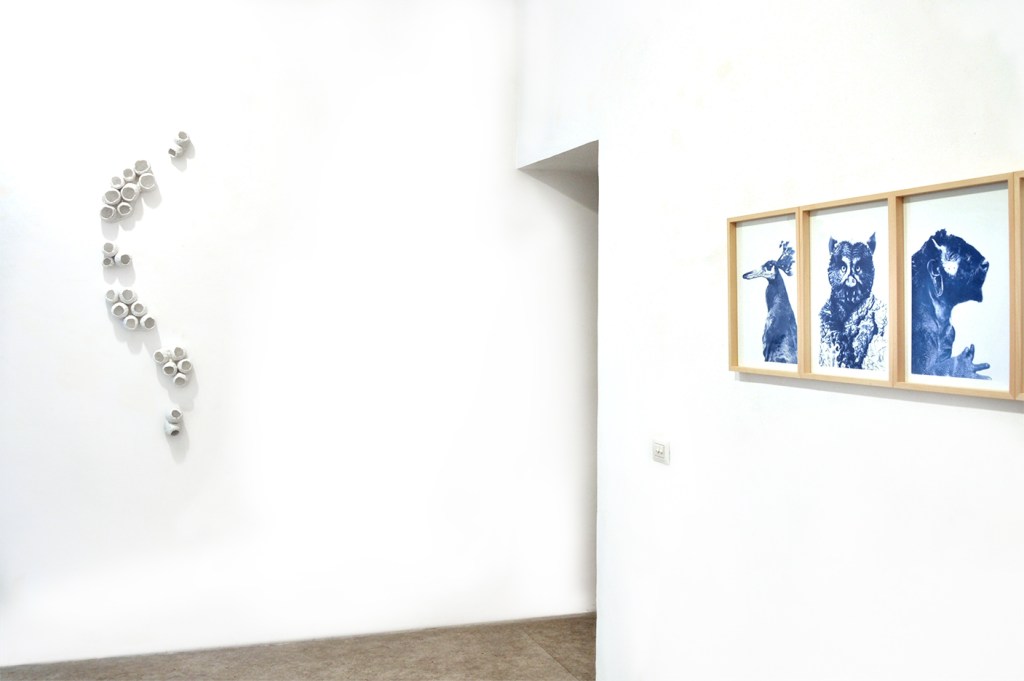
Così, per esempio, nelle opere “Teriomorfi”, collage stampati in cianotipia, i regni dei viventi ― – animali, funghi, vegetali ― convivono in un solo essere. Possiamo vedere queste creature come dei mostri completamente lontani da noi, oppure delle chimere fantastiche che pongono nuovi interrogativi, mettendo in discussione quello che consideriamo diverso. In quest’ultima prospettiva anche la dicotomia mostri-chimere perde significato, lasciando spazio alla sorpresa di condividere con queste creature parte della nostra natura.
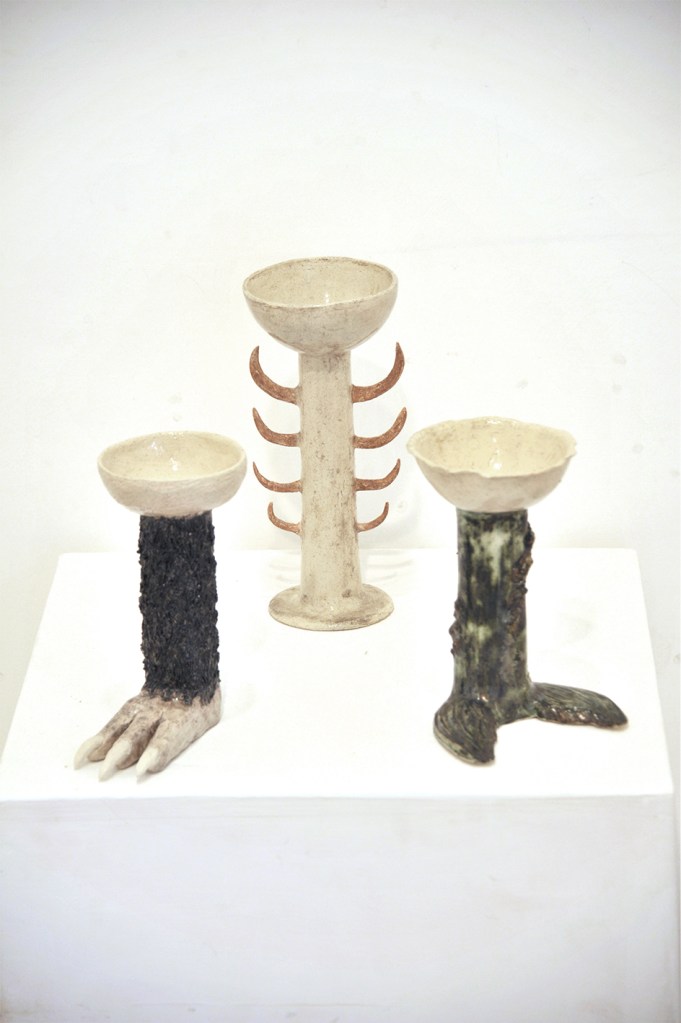
Le coppe totemiche della serie “Ierofanie”, invece, racchiudono elementi primitivi: ossa, conchiglie, squame, un arto dagli artigli pronunciati, una pinna su cui emergono incrostazioni. Questi oggetti in ceramica riprendono la coppa da libagione, usata nelle cerimonie religiose, e ne condividono lo spirito comunitario, un auspicio di una nuova alleanza tra gli esseri viventi.
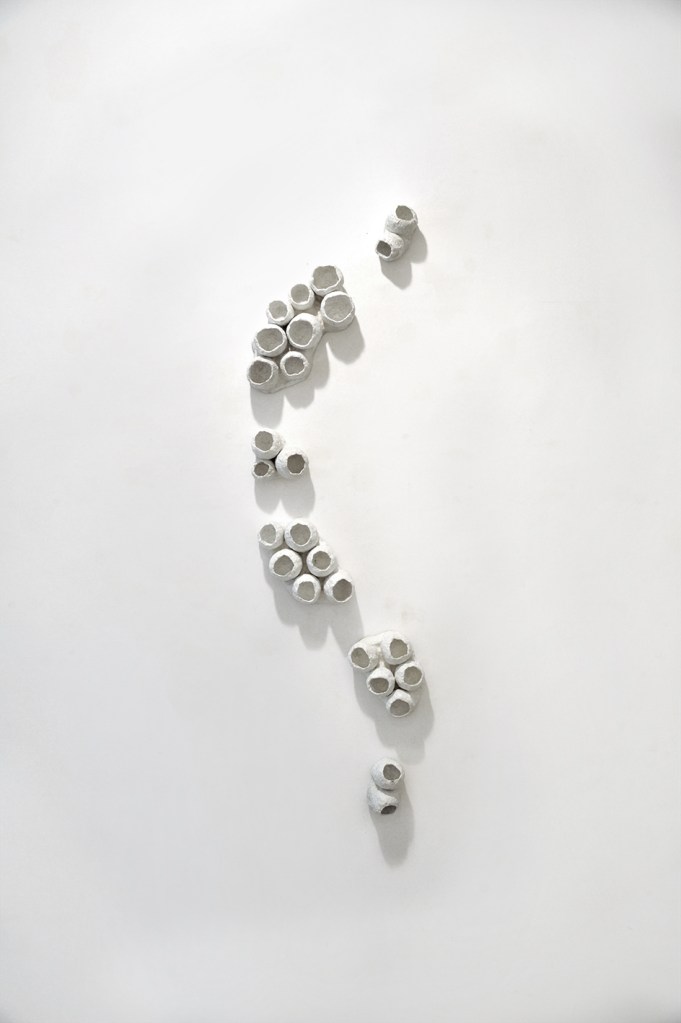
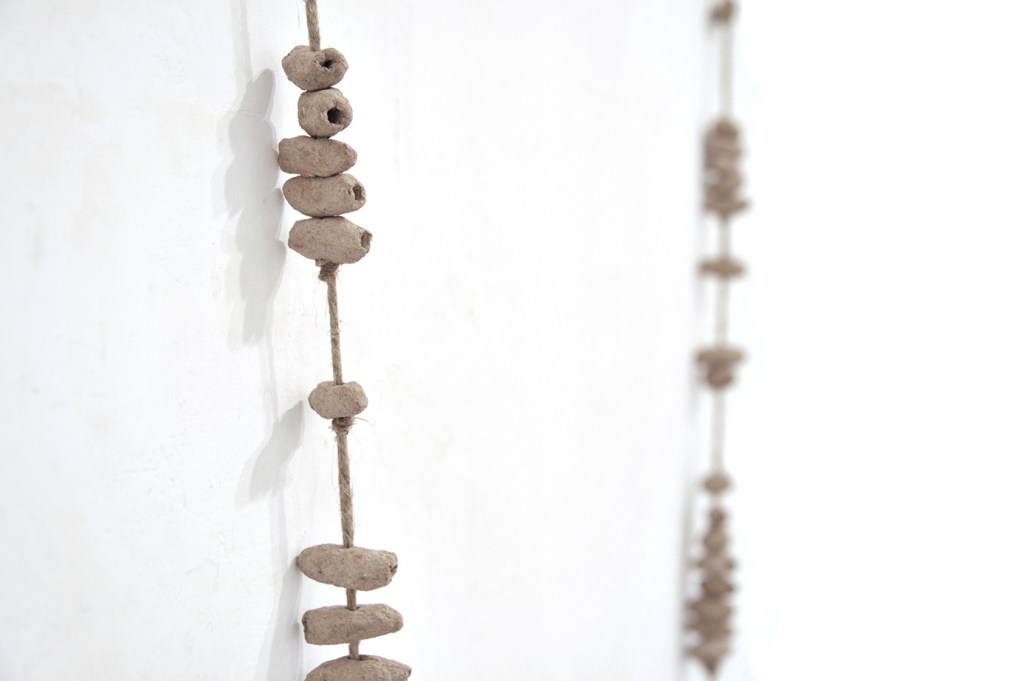
Le opere in papier mâché[3] create con carta, colla e stucco esplorano spazi metamorfici dove il vuoto diventa traccia della coesistenza di forme e nature diverse.
English text
On sacred Federica Rugnone
#paroladartista #sacro #sacred #federicarugnone
Parola d’Artista: In your opinion, does the sacred still have an importance in today’s art and in the world we live in?
Federica Rugnone: In the society in which we live dominated by the market, the sacred seems a dimension that is not very accessible, hidden, but not completely absent.
Man has always felt the need to go beyond the present reality, creating myths, rituals that would unite the community in sustaining the sense of the contradictory nature of existence.
Today, at least in the West, the word ‘sacred’ is immediately linked to the religious without seeing that what believers speak of is a sacred emptied of its most powerful and frightening aspect, a mirror of a dichotomous vision of the world.
In its deepest meaning, this word draws a need innate to man himself: that of entering into dialogue with the unpredictable, with the undifferentiated, a dimension that we know in the first nine months of life and then abandon altogether once we enter the age of reason where things begin to define themselves, to distinguish and separate.
The sacred can thus be defined as the hybrid, the co-presence of opposites that provokes vertigo and harmony. It is the world where madmen and poets venture, where words and actions simultaneously acquire different meanings.
Man’s daily work is made up of an incessant search for balance that can arise from realising that the boundaries for defining the reality of things are blurred, in constant retraction and, sometimes, in the brief epiphanies we have, absent.
Art helps in such a process because it is par excellence a medium that provokes the co-presence of worlds, poses questions by mixing communicative codes.
The focus of my work is on the idea of the border and its overcoming. In particular, the latest body of work in the project ‘Sacer – The Monstrosity of the Sacred’ analyses two aspects of the idea of co-presence. On the one hand, the latter may seem frightening and irrational to us; on the other, it conceals the possibility of a change of perspective in the way we relate to each other, no longer dichotomous but multiform.
Thus, for example, in the works ‘Theriomorphs’, collages printed in cyanotype, the kingdoms of the living – animals, fungi, plants – coexist in a single being. We can see these creatures as monsters completely removed from us, or as fantastic chimeras that pose new questions, questioning what we consider different. In the latter perspective, even the monster-chimera dichotomy loses its meaning, leaving room for the surprise of sharing part of our nature with these creatures.
The totemic cups of the ‘Hierophany’ series, on the other hand, contain primitive elements: bones, shells, scales, a limb with pronounced claws, a fin on which incrustations emerge. These ceramic objects echo the libation bowl, used in religious ceremonies, and share its communal spirit, a wish for a new alliance between living beings.
The works in papier mâché created with paper, glue and stucco explore metamorphic spaces where the void becomes a trace of the coexistence of different forms and natures.



 paroladartista.com