
(▼Scroll down for English version)
#paroladartista #intervistagallerista #caterinagualco
Parola d’Artista: Allora aspettando che tu finisca di cenare rilancio con un’altra domanda, un pezzo da novanta, proprio su Claudio Costa ti vorrei chiedere di parlare di lui del suo lavoro e del suo ruolo nel panorama artistico non solo Genovese?
Caterina Gualco: Non riusciremo mai a raggiungere Fluxus … Anche se proprio attraverso Costa io sono arrivata a incontrare alcuni dei componenti di questa “famiglia allargata”… Ma andiamo indietro nel tempo… L’unico critico professionista a Genova era allora Germano Beringheli, molto colto e molto attento a quanto stava succedendo, con un occhio particolare per le vicende genovesi e liguri. All’inizio del 1971, alcuni mesi dopo aver aperto la galleria, mi aveva suggerito di andar a Rapallo, a conoscere Italo Primi, uno scultore che stava facendo un lavoro straordinario, sconosciuto praticamente a tutti. Era un lavoro simile a quello che alcuni anni dopo avrebbe presentato Glattfelder, membro dei Concretisti Zurighesi, sculture da muro in legno di colori diversi, una geometria che già suggeriva l’immagine dell’arte astratto-cinetica. Ovviamente Primi non conosceva Glattfelder, come questo non conosceva lui. Ricordo che avevo scelto quella data perché nella bella cittadina ligure Argan veniva a presentare una mostra di Kokoschka… Avevo visitato lo studio di Primi, assistito alla conferenza di Argan e poi accettato la proposta di Primi di visitare lo studio di Costa. Ero davvero interessata … avevo già visto alcune sue opere, tele acide e colle, ed ero molto incuriosita. Ricordo lo studio, molto grande e molto luminoso e disordinato, praticamente senza opere… Ricordo il giovane artista (non aveva ancora 30 anni), completamente indifferente alla mia presenza e forse a tutto quanto lo circondava. Me ne ero andata abbastanza delusa. Negli anni a seguire ogni tanto avevo notizia di qualche sua mostra, più all’estero che in Italia. Il suo gallerista era Francesco Masnata, direttore della Galleria La Bertesca… quindi a Genova nessun altro gallerista avrebbe potuto occuparsi di lui. Trascorsero alcuni anni senza nessun contatto poi, nel gennaio del 1976 mi trovai a Palazzo Ducale dove si stava allestendo una mostra di beneficienza pro “Tribunale Russel contro la tortura”. Parecchi artisti avevano donato delle opere e io ero tra i galleristi che stavamo allestendo la mostra. Tra le opere c’era un lavoro di Costa sul tema dei Maori… era tanto che desideravo comprarne uno per me, ma non mi allettava l’idea di chiederlo a lui o al suo gallerista. Il lavoro apparteneva alla serie “Gli occhi dei Maori riflettono i colori latenti della foresta”, il prezzo era di 200.000 lire e io me l’ero portato trionfalmente a casa! Nel gennaio dell’anno successivo Costa, che nel frattempo aveva lasciato la Galleria Bertesca, aveva allestito una mostra alla Galleriaforma diretta da Paolo Minetti. Ero una bellissima installazione, intitolata “Il miele dell’ape d’oro” e io ero andata all’inaugurazione. Nello spazio c’era una stanza completamente buia e i visitatori erano invitati ad attraversarla dopo essersi liberati dei vestiti. Per chi lo avesse fatto c’era il premio di un sacchetto magico (contenente alcuni oggetti utili al viaggio, un’ocarina, un tozzo di pane, una specie di rosario laico)… io non mi ero spogliata, ma adesso uno di quei sacchetti (precisamente il numero 2) è ancora appeso nella mia stanza! Quello fu davvero un viaggio, che diede origine a una complicità di vita e di lavoro che terminò solo nel 1988. La causa della fine fu la stessa di quella di inizio: la galleria! Continuare a parlare di Costa, del suo lavoro e della nostra vita in comune richiederebbe un libro per conto suo… ho tanti ricordi, ma – prima che la minestra si freddi – ne voglio raccontare uno. Nell’estate del 1978 Wolf Vostell aveva invitato Claudio a un soggiorno di lavoro a Malpartida de Caceres, in Etremadura. Eravamo partiti per Madrid dove, con un caldo feroce di 40 gradi, avevamo visitato tutto il visitabile, persino lo zoo dove gli orsi giacevano svenuti su massi enormi. Dopo una settimana una nuova partenza per Caceres e quindi per Malpartida…Lì, accolti come personaggi regali dal “pueblo de Malpartida”, dal suo alcalde, e da Vostell e famiglia, avevamo trascorso una decina di giorni assolutamente magici, per illuogo, le persone e le opportunità e Claudio aveva realizzato una splendida opera all’aperto “El volcan durmiente – El pensamiento emigrante”. Adesso dovrai dirmi tu se continuare questo racconto o attraversare il piccolo stretto che ormai ci sta portando alla penisola Fluxus…
P.d’A.: Benissimo allora facciamo rotta sulla galassia Fluxus…! Dicevi che i contatti con alcuni dei protagonisti di Fluxus sono avvenuti proprio tramite Claudio Costa, racconta?
C.G.: In una bella giornata dell’estate 1977 Claudio Costa mi ha proposto di andare a trovare Ben Vautier. Claudio aveva conosciuto Ben, Vostell e Filliou perché avevano esposto insieme alla Galleria La Bertesca. Ben abitava già sulla Collina di Saint Pancrace, alle spalle di Nizza, dove vive tuttora… in una casa che è un’opera d’arte totale…Trovarla era stata davvero un’avventura. C’era un indirizzo, ma nessuno che potesse aiutare con delle indicazioni. Un po’ come le colline che coronano Genova… adesso sono molto abitate, ma 50 anni fa erano praticamente deserte. Dopo un vagabondaggio di mezza giornata, finalmente la casa è apparsa come una Morgana… già allora tutta tappezzata di opere sulle facciate, con un giardino pieno di water e di bidet a far da portafiori. Anche l’interno opere dappertutto, in un ordine incredibile da immaginare. In una stanza c’era ancora un cumulo di oggetti che facevano parte del negozio “Chez Cunengonde et Malbar” (primi nomi di Eva e François, i due figli) dove Ben vendeva e scambiava libri, dischi e ogni genere di cose. Ben invitava gli ospiti a fare uno scambio… Io avevo preso una bellissima bottiglia di Jack Daniel vuota, che ho tuttora e mi sembra di ricordare di avergli lasciato un fazzolettino ricamato. Posso dichiarare che questo incontro ha cambiato la mia vita… A casa di Ben ho respirato il senso di libertà totale, la passione assoluta per l’arte e per la conoscenza in generale. Il desiderio autentico dell’applauso oceanico, accompagnato da un senso di autocritica feroce. Ben ha fatto dell’ego la sua bandiera, ma lo ha dichiarato senza falsi pudori, continuando a divertirsi come un bambino che gioca facendo il proprio lavoro. Quel giorno la mia attività (e in qualche modo anche la mia vita) ha ricevuto l’input per una svolta totale. Il prossimo incontro sarà con Robert Filliou… ma questo lo lasciamo alla prossima puntata.
P.d’A.: Bene, allora raccontami di questo nuovo incontro
C.G.: Non ricordo esattamente la data, ma nell’autunno del 1977 Claudio e io siamo partiti per incontrare Robert Filliou a casa sua… Sembrava un tranquillo weekend di vacanza… in realtà è stato il secondo incontro (terzo con quello con Claudio) che ha cambiato la mia vita per sempre. Robert viveva allora, con la moglie Marianne e la figlia Marceline, in un vecchio mulino, a Flayosc, in Provenza. Questo grande artista, i cui lavori sono ora contesi tra pochi collezionisti e i principali musei a cifre decisamente alte, viveva allora praticamente in povertà. Marianne aveva tre capre e aveva imparato a fare il classico “chèvre” amato in tutto il mondo. La vendita delle formaggette, più qualche sporadico aiuto da parte di Gino di Maggio erano i proventi sui quali la famiglia poteva contare. Gino aveva regalato una macchina a Robert, ma la macchina era stata venduta per poter rifare il tetto del mulino da cui penetrava la pioggia. Erano stati due giorni straordinari, a parlare di arte, di poesia e di filosofia, in un clima di grande amicizia e di serenità. Tra i tanti discorsi, io ero riuscita a fare la più bella gaffe della mia vita con la lingua francese, il che mi era costato burle a non finire. Il letto dove avevo dormito era decisamente scomodo e al mattino si vedeva benissimo che avevo riposato poco. Alla domanda se stavo male, io avevo risposto “J’ai dormis très peu… sur un matelot très dur…” invece che matelas – materasso – era uscito questo matelot – marinaio!!! Indimenticabile… In ogni caso da questa visita molto conviviale era nato il progetto di un incontro con Marianne e Robert Filliou all’Unimedia, con la presentazione dell’evento “The eternal network presents”, una specie di comunicazione universale molto prima dell’invenzione di Internet e del Web. Avevamo anche fissato una data, il 9 maggio 1978… Robert e Marianne erano arrivati al mattino, li avevamo accompagnati nello studio di Claudio dove li ospitavamo con l’accordo di ritrovarci in galleria verso le 17. Ma, poiché la vita si diverte a fare delle sorprese (non sempre piacevoli), alle 15 era stata diffusa la notizia del ritrovamento del corpo di Aldo Moro ucciso dalle BR… La città si era immediatamente riempita con una dimostrazione spontanea… nello studio di Claudio non c’era il telefono… io ero travolta dall’ansia, ma in ogni caso alle 17 Robert e Marianne erano in galleria. I presenti erano loro due, Enrico Pedrini, Giorgio Teglio, Claudio Costa e io… che avevo chiesto a Robert cosa intendeva fare per sentirmi rispondere: “L’unica cosa che gli artisti possono fare è continuare il proprio lavoro”!
GL Caterina il clima socio politico di quegli anni in una città come Genova animata da forti tensioni sociali e politiche come si ripercuoteva sulla tua attività?
CG Domanda veramente interessante, soprattutto in questo momento! Andando indietro nel tempo la mia impressione è di essere sempre stata on the sunny side of the street nel senso che non ho mai permesso alla politica di interferire con la mia attività. Io sono nata di sinistra e di sinistra morirò, se questa dichiarazione ha ancora un senso… Erano anni turbolenti, ma c’era ancora l’idea che si potesse fare qualcosa per cambiare le sorti del mondo. Ebbene, quel qualcosa io tentavo di farlo con le mostre e con gli eventi che promuovevo… senza stendardi e senza bandiere! Ho dei ricordi, alcuni patetici altri che riescono a muovere la mia furia ancora oggi. Ai tempi di Craxi c’era questo movimento “Non sono socialista, ma…” che chiedeva la firma per gli incontri che promuoveva il PSI. Io avevo trovato il mio nome nell’elenco di uno di questi eventi e avevo preteso che fosse cancellato minacciando un’azione legale. Un altro ricordo che oggi mi fa un po’ sorridere… io che correvo per la galleria inseguita da un signore dai capelli rossi, molto potente a quel tempo, che mi diceva con un tono supplicante “Io ho a cuore il suo successo… si unisca a noi!”. Lo avevo mandato via dalla galleria e neanche tanto gentilmente. Quel soggetto se n’è andato tanti anni fa e oggi, proprio oggi, mi viene in mente la poesia di Totò “La livella”…
GL Dopo gli incontri con Ben e Filliou come è proseguita la tua esplorazione della galassia Fluxus?
CG Tral’incontroconBenVautiereconRobertFilliou(eilsuoeventoingalleria),èavvenuto qualcosa che mi interessa molto raccontare. Nel 1977 c’è stata la sesta edizione di Documenta a Kassel, la mostra internazionale che ha reso famosa la cittadina tedesca. In quell’edizione c’era una sezione intitolata “Archeologia degli umani” presentata dal curatore tedesco Gunter Metken. Tra gli altri artisti era stato invitato Claudio Costa e cito un breve testo dal racconto che ne fa in “Materiale e Metaforico” (Ed. Unimedia 1979) “…Documenta 6 ha concluso la stagione artistica del 1977 e, in un certo senso, ha concluso la mia stretta parentela con la Paleontologia e con l'Antropologia strutturale: ho fatto sei casse di legno dipinto color fango e ho sepolto nella terra gli oggetti dell'Agricoltura terrestre, quelli del passato remoto (delle grotte e delle caverne), e quelli del presente (delle case e delle cascine abbandonate), accomunandoli nella stessa avventura immobile della creta e dell'argilla. Il pezzo si intitola «Antropologia riseppellita…” La manifestazione mi aveva veramente colpito, come mi aveva colpito il lavoro di questi artisti che cercavano indubbiamente di creare un baluardo alla pitturaccia che stava riapparendo con la Transavanguardia… Di nuovo si era reso necessario un impegno notevole per trovare i lavori e, soprattutto, per trovare il denaro necessario a pubblicare un libro. Avevamo dato vita a una mostra curata da Giorgio Cortenova, mostra intitolata “La creazione volgeva alla fine” . Gli artisti presenti erano Bertholin, Claudio Costa, Nancy Graves, Nikolaus Lang, Antonio Paradiso, Anne & Patrick Poirier, Charles Simonds, Alan Sonfist, Dorothee von Windheim . Avevamo presentato il libro con un dibattito sul tema “Antropologia, Storia dell’Arte, Storia delle Cose” con interventi di Giorgio Cortenova, Antonio d’Avossa, Angelo Trimarco, Gun̈ ter Metken, Joachim Burmeister; moderatore Corrado Maltese, presso l’Istituto di Storia dell’Arte dell’Università di Genova. In collaborazione con il Goethe Institut. La mostra era straordinaria… con lavori bellissimi. Claudio e io eravamo andati a Oberammergau, in Germania, da Nikolaus Lang, un artista geniale che si presentava come una specie di uomo dei boschi. Lang ci aveva accolto con grande entusiasmo e molta partecipazione, Ricordo la notte passata in un albergo nel quale la doccia sembrava una cabina spaziale e, per contro, dalla finestra entrava un olezzo particolare e al mattino una mandria di mucche era passata proprio davanti a quella finestra… Avevamo avuto i lavori di Bertholin, Costa, Lang e Paradiso direttamente dagli artisti. Nancy Graves era arrivato dall’America, Dorothee von Windheim ci era stato imprestato da Joachim Burmeister, allora direttore di Villa Romana a Firenze, e Massimo Valsecchi, direttore della Galleria Valsecchi di Milano ci aveva messo a disposizione Anne & Patrick Poirier e Alan Sonfist. L’unica opera non presente in mostra era quella di Charles Simonds, artista che lavorava con la Samangallery di Genova e questa non aveva dato l’autorizzazione a esporlo… Le piccole storie cittadine continuavano a brillare nel panorama dell’arte che intanto per noi si allargava a vista d’occhio.
Adesso eravamo pronti a partire per la Galassia Fluxus!
Parola d’Artista: So, while you’re waiting for you to finish dinner, I’ll raise another question, a big one, just about Claudio Costa I’d like to ask you to talk about him, about his work and his role in the art scene not only in Genoa?
Caterina Gualco: We will never catch up with Fluxus … Although it was through Costa that I came to meet some of the members of this ‘extended family’… But let’s go back in time… The only professional critic in Genoa at the time was Germano Beringheli, very cultured and very attentive to what was going on, with a particular eye for events in Genoa and Liguria. At the beginning of 1971, a few months after opening the gallery, he suggested I go to Rapallo, to meet Italo Primi, a sculptor who was doing an extraordinary work, unknown to practically everyone. It was a work similar to what Glattfelder, a member of the Concretisti Zurighesi, would present a few years later: wall sculptures in wood of different colours, a geometry that already suggested the image of abstract-kinetic art. Obviously Primi did not know Glattfelder, just as this one did not know him. I remember that I had chosen that date because in the beautiful Ligurian town Argan was coming to present a Kokoschka exhibition… I had visited Primi’s studio, attended Argan’s lecture and then accepted Primi’s proposal to visit Costa’s studio. I was really interested … I had already seen some of his works, acid canvases and glues, and I was very intrigued. I remember the studio, very large and very bright and untidy, with practically no works…. I remember the young artist (he was not yet 30), completely indifferent to my presence and perhaps to everything around him. I left quite disappointed. In the years that followed I occasionally heard of some of his exhibitions, more abroad than in Italy. His gallerist was Francesco Masnata, director of Galleria La Bertesca… so no other gallery owner in Genoa could have dealt with him. A few years passed without any contact and then, in January 1976, I found myself at Palazzo Ducale where a charity exhibition for the ‘Russel Tribunal against Torture’ was being set up. Several artists had donated works and I was among the gallery owners who were setting up the exhibition. Amongst the works was a work by Costa on the theme of the Maoris… I had wanted to buy one for myself for a long time, but I was not keen on the idea of asking him or his gallery owner. The work belonged to the series ‘The eyes of the Maoris reflect the latent colours of the forest’, the price was 200,000 lire and I had triumphantly taken it home! In January of the following year, Costa, who in the meantime had left the Bertesca Gallery, mounted an exhibition at Galleriaforma directed by Paolo Minetti. It was a beautiful installation, entitled ‘The Honey of the Golden Bee’ and I had gone to the opening. There was a completely dark room in the space and visitors were invited to walk through it after having shed their clothes. For those who did so, there was the prize of a magic bag (containing some useful objects for the journey, an ocarina, a loaf of bread, a kind of secular rosary)… I had not taken off my clothes, but now one of those bags (precisely number 2) still hangs in my room! That was indeed a journey, which gave rise to a complicity of life and work that only ended in 1988. The cause of the end was the same as that of the beginning: the gallery! To go on talking about Costa, his work and our life together would require a book of its own…. I have many memories, but – before the soup gets cold – I want to recount one. In the summer of 1978 Wolf Vostell had invited Claudio on a working stay in Malpartida de Caceres, Etremadura. We had left for Madrid where, in the ferocious heat of 40 degrees, we had visited everything we could, even the zoo where bears lay unconscious on huge boulders. After a week, we left again for Caceres and then Malpartida… There, welcomed like royalty by the ‘pueblo de Malpartida’, its alcalde, and Vostell and family, we had spent ten absolutely magical days, in terms of the place, the people and the opportunities, and Claudio had created a splendid outdoor work ‘El volcan durmiente – El pensamiento emigrante’. Now you will have to tell me whether to continue this story or cross the little strait that is now taking us to the Fluxus peninsula…
P.d’A.: Very well then, let’s head for the Fluxus galaxy…! You were saying that your contacts with some of the protagonists of Fluxus came about through Claudio Costa, tell us?
C.G.: On a beautiful day in the summer of 1977 Claudio Costa suggested that I go and see Ben Vautier. Claudio had known Ben, Vostell and Filliou because they had exhibited together at La Bertesca Gallery. Ben already lived on the Colline de Saint Pancrace, behind Nice, where he still lives today… in a house that is a total work of art… Finding it had been quite an adventure. There was an address, but no one to help with directions. A bit like the hills that crown Genoa… now they are very inhabited, but 50 years ago they were practically deserted. After a half-day’s wandering, the house finally appeared like a Morgana even then all plastered with works on the facades, with a garden full of toilets and bidets as flower holders. Even the interior works everywhere, in an order incredible to imagine. In one room there was still a pile of objects that were part of the shop ‘Chez Cunengonde et Malbar’ (first names of Eva and François, the two children) where Ben sold and exchanged books, records and all sorts of things. Ben would invite guests to make an exchange…. I had taken a beautiful empty bottle of Jack Daniel’s, which I still have and I seem to remember leaving him an embroidered handkerchief. I can declare that this encounter changed my life…. At Ben’s house I breathed a sense of total freedom, an absolute passion for art and knowledge in general. The genuine desire for oceanic applause, accompanied by a sense of fierce self-criticism. Ben made ego his flag, but declared it without false modesty, continuing to enjoy himself like a child playing at his job. That day my business (and to some extent my life) received the input for a total turnaround. The next meeting will be with Robert Filliou…. but we’ll leave that for the next episode.
P.d.A.: Well, tell me about this new meeting then
C.G.: I don’t remember the date exactly, but in the autumn of 1977 Claudio and I went to meet Robert Filliou at his house… It seemed like a quiet holiday weekend… it was actually the second meeting (third with the one with Claudio) that changed my life forever. Robert was then living, with his wife Marianne and daughter Marceline, in an old mill in Flayosc, Provence. This great artist, whose works are now fought over by a few collectors and the major museums at very high prices, was then living practically in poverty. Marianne had three goats and had learnt how to make the classic ‘chèvre’, loved the world over. The sale of the cheese, plus some sporadic help from Gino di Maggio was the income the family could count on. Gino had given Robert a car, but the car had been sold so that he could redo the roof of the mill through which the rain was pouring. It had been an extraordinary two days, talking about art, poetry and philosophy, in an atmosphere of great friendship and serenity. Among the many speeches, I had managed to make the greatest gaffe of my life with the French language, which had cost me endless jokes. The bed where I had slept was decidedly uncomfortable and in the morning it was clear that I had had little rest. When asked if I was ill, I had replied ‘J’ai dormis très peu…. sur un matelot très dur…” instead of matelas – mattress – out came this matelot – sailor!!! Unforgettable… In any case, this very convivial visit had resulted in the plan for a meeting with Marianne and Robert Filliou at Unimedia, with the presentation of “The eternal network presents”, a kind of universal communication long before the invention of the Internet and the Web. We had even set a date, 9 May 1978…. Robert and Marianne had arrived in the morning, and we had accompanied them to Claudio’s studio where we were hosting them, with the agreement that we would meet in the gallery around 5pm. The city had immediately filled with a spontaneous demonstration… in Claudio’s studio there was no telephone… I was overwhelmed with anxiety, but in any case at 5pm Robert and Marianne were in the gallery. Those present were the two of them, Enrico Pedrini, Giorgio Teglio, Claudio Costa and myself… I had asked Robert what he intended to do, only to be told: ‘The only thing artists can do is continue their work’!
P.d’A.: Caterina how did the socio-political climate of those years in a city like Genoa animated by strong social and political tensions affect your activity?
C.G.: Really interesting question, especially at this time! Going back in time, my impression is that I have always been on the sunny side of the street in the sense that I have never allowed politics to interfere with my activity. I was born a leftist and I will die a leftist, if that statement still makes sense…. Those were turbulent years, but there was still the idea that something could be done to change the fate of the world. Well, I used to try to do that with the exhibitions and events I promoted… without banners and without flags! I have memories, some pathetic, others that manage to move my fury even today. In Craxi’s time there was this ‘I’m not a socialist, but…’ movement that asked for signatures for meetings that the PSI was promoting. I had found my name on the list of one of these events and had demanded that it be cancelled, threatening legal action. Another memory that makes me smile a little today… me running through the gallery chased by a red-haired gentleman, very powerful at the time, who said to me in a pleading tone: ‘I care about your success… join us! I had sent him away from the gallery, and not so kindly either. That person left many years ago and today, today of all days, Totò’s poem ‘La livella’ comes to mind…
P.d’A.: After your encounters with Ben and Filliou, how did your exploration of the Fluxus galaxy continue?
C.G.: Between the meetings with Ben Vautier and Robert Filliou (and his gallery event), something happened that I am very interested in recounting. In 1977 there was the sixth edition of Documenta in Kassel, the international exhibition that made the German town famous. In that edition there was a section entitled ‘Archaeology of Humans’ presented by the German curator Gunter Metken. Among other artists, Claudio Costa was invited and I quote a short text from his account of this in “Materiale e Metaforico” (Ed. Unimedia 1979) “… Documenta 6 concluded the artistic season of 1977 and, in a certain sense, ended my close relationship with palaeontology and structural anthropology: I made six crates of mud-coloured painted wood and buried in the earth the objects of terrestrial agriculture, those of the distant past (of caves and caverns), and those of the present (of abandoned houses and farmsteads), uniting them in the same motionless adventure of clay and clay. The piece is entitled “Anthropology reburied…” The event had really struck me, as had the work of these artists, who were undoubtedly trying to create a bulwark against the bad painting that was reappearing with the Transavantgarde… Again it had taken a lot of effort to find the work and, above all, to find the money to publish a book. We had started an exhibition curated by Giorgio Cortenova, an exhibition entitled ‘La creazione volgeva alla fine’ . The artists present were Bertholin, Claudio Costa, Nancy Graves, Nikolaus Lang, Antonio Paradiso, Anne & Patrick Poirier, Charles Simonds, Alan Sonfist, Dorothee von Windheim. We presented the book with a debate on the theme ‘Anthropology, History of Art, History of Things’ with talks by Giorgio Cortenova, Antonio d’Avossa, Angelo Trimarco, Gun̈ ter Metken, Joachim Burmeister; moderator Corrado Maltese, at the Institute of History of Art at the University of Genoa. In collaboration with the Goethe Institut. The exhibition was extraordinary… with beautiful works. Claudio and I had gone to Oberammergau, Germany, to see Nikolaus Lang, a brilliant artist who presented himself as a kind of man of the woods. Lang had welcomed us with great enthusiasm and a lot of participation, I remember the night we spent in a hotel where the shower looked like a space cabin and, on the other hand, a peculiar smell came in through the window and in the morning a herd of cows had passed right in front of that window We had gotten the works of Bertholin, Costa, Lang and Paradiso directly from the artists. Nancy Graves had arrived from America, Dorothee von Windheim had been loaned to us by Joachim Burmeister, then director of Villa Romana in Florence, and Massimo Valsecchi, director of the Galleria Valsecchi in Milan had provided us with Anne & Patrick Poirier and Alan Sonfist. The only work not in the exhibition was by Charles Simonds, an artist who was working with the Samangallery in Genoa and the latter had not given permission to exhibit it… The small town stories continued to shine in the art scene, which for us in the meantime was getting bigger by the day.
Now we were ready to leave for the Fluxus Galaxy!

Visita al Monumento Brion ad Altivole di Asolo
Foto Luigi Bonotto
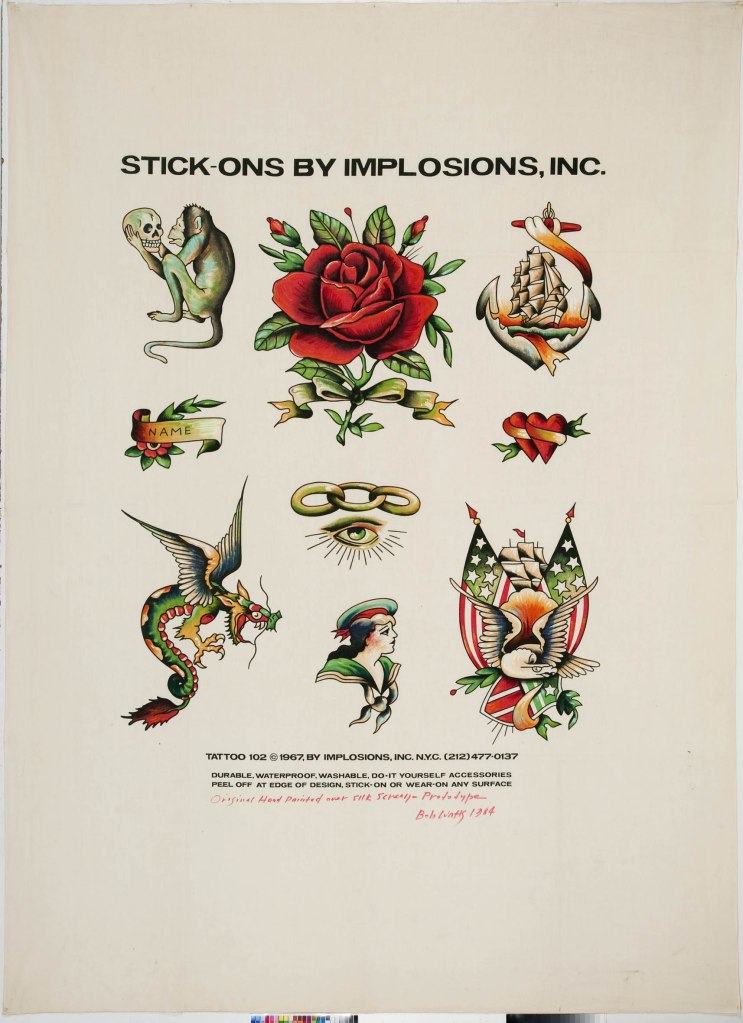
“Tattoo” 1984
Pittura su stampa serigrafica
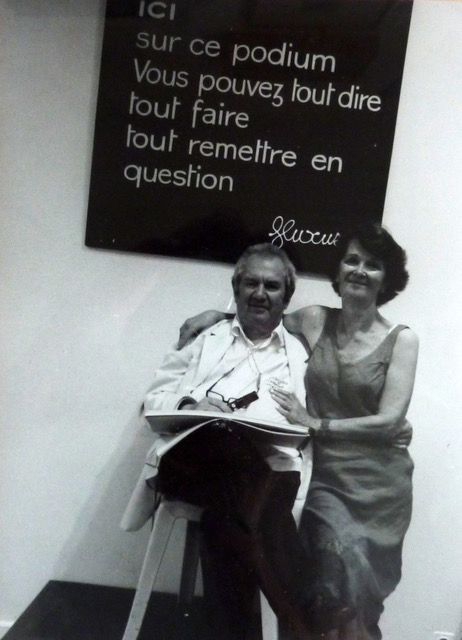
“Soudain l’été Fluxus”
Ben Vautier e Caterina Gualco

Daniel Spoerri mostra personale “Il bistrot di Santa Marta”
2014
Foto Clelia Belgrano
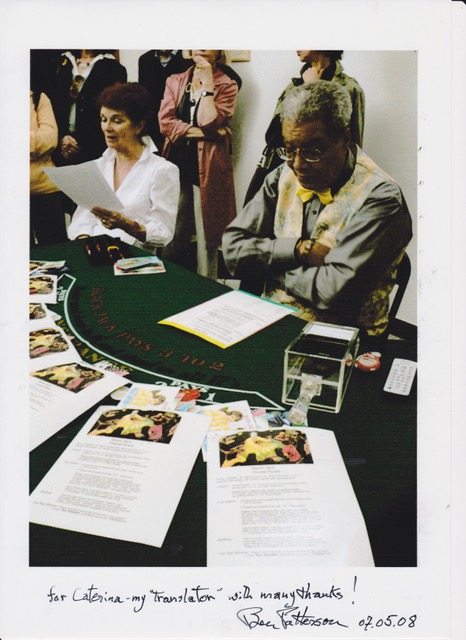
2008
Ben Patterson, performance da “La creazione” di Hayden
Caterina Gualco e Ben Patterson
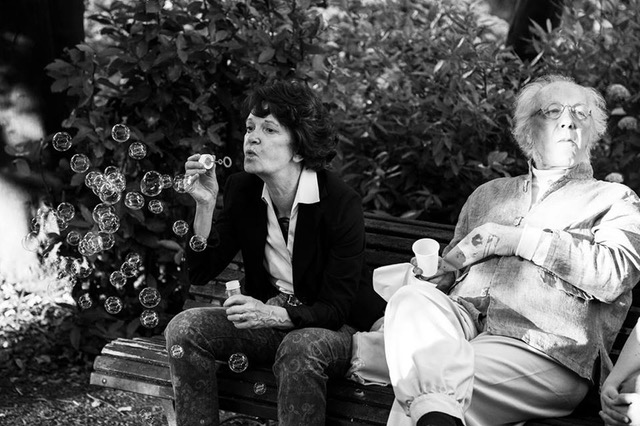
“More than Music”
Mostra personale di Philip Corner
Caterina Gualco e Philip Corner
Foto Fabio Mantegna
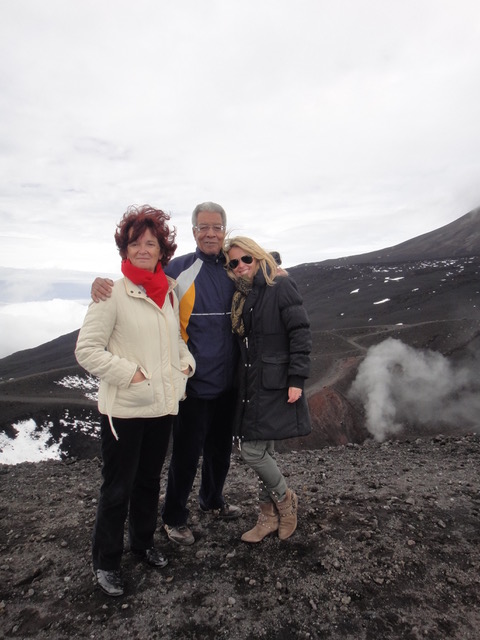
Gita sull’Etna durante la mostra di Patterson “The Animals Carnival” alla Galleria Orizzonti di Catania
2011

Mostra Daniel Spoerri
Tableau piège della serie
Restaurant Spoerri a Dusseldorf
1972

Unimedia, Genova
Ben Vautier e Caterina Gualco 1989
 paroladartista.com