
#paroladartista #intervistaartista #federicobranchetti
Parola d’Artista: Per la maggior parte degli artisti l’infanzia rappresenta l’età dell’oro quella in cui cominciano a manifestarsi i primi sintomi di una certa propensione ad appartenere al mondo dell’arte. E’ stato così anche per te? Racconta
Federico Branchetti: Ad essere sincero non ci sono stati, nel periodo dell’infanzia, momenti epifanici che mi avrebbero fatto pensare ad intraprendere il mondo dell’arte. Mi piaceva disegnare ma è successo tutto naturalmente quando ho iniziato a frequentare l’istituto d’arte di Reggio Emilia. Soprattutto per la presenza di un paio di figure che mi hanno trasmesso molto. Ma nulla di aneddotico o che valga la pena menzionare.
Parola d’Artista: Come mai hai deciso di iscriverti al Liceo Artistico, chi erano questi due insegnanti che hanno lasciato il segno?
Federico Branchetti: A dire il vero io ho – fortunatamente – frequentato l’Istituto d’Arte e non il meno pratico e più indolente Liceo artistico. Ad ogni modo penso sia successo, come avviene spesso, per caso; quell’età non ti permette di avere una chiara visione della tua proiezione nel futuro, anche immediato. Diciamo che sono stato fortunato.
In generale erano persone appassionate del loro lavoro, del fare creativo oltre che estremamente abili e capaci.
Parola d’Artista: In seguito hai frequentato l’Accademia?
Federico Branchetti: Esatto, dopo ho studiato presso l’Accademia di Belle Arti a Bologna, frequentando la cattedra di Scultura, sia al triennio che al biennio di specializzazione.
Parola d’Artista: Nel tuo iter di studi ci sono stati degli incontri importanti?
Federico Branchetti: Certamente, prima e dopo gli studi. Su tutti direi che l’incontro con l’artista Antonio Violetta è stato decisivo. Mi ha aiutato a riflettere in profondità sulla scultura, sul fare scultoreo sincero e originario. È stato ed è tutt’ora una figura molto importante per me.
Ho avuto la fortuna di conoscere anche persone come, tra le altre, Franco Bonetti, Alessandra Rizzi, Irene Biolchini, Dario Lasagni ed Emanuele Becheri con le quali penso di essere cresciuto molto.
Parola d’Artista: Nel tuo lavoro l’idea di piedistallo che importanza ha?
Federico Branchetti: Questo è un argomento complesso e incredibilmente vasto nello spazio e nel tempo della storia dell’Arte. Per quanto mi riguarda ora direi che ha un’importanza relativa, ma questo non significa che non abbia importanza. È chiaramente rilevante se una scultura ha necessità di essere posta ad una altezza piuttosto che un’altra per essere meglio fruita. Ma – per ora – cerca di sottrarsi dall’essere parte attiva della scultura. La scultura è il soggetto, la base la aiuta a manifestarsi nello spazio.
È altrettanto importante che la base non diventi un pretesto decorativo. Non deve sopperire visivamente a delle mancanze o lacune che potrebbe avere la scultura. Però vorrei dire che non bisogna temere di utilizzare un basamento. Se serve si usa e basta. Comunque è un tema ampio sul quale si potrebbe discorrere molto ma mi limito a poche righe qui scritte
Parola d’Artista: A che cosa è legata la tua scelta di lavorare principalmente con l’argilla?
Federico Branchetti: Perché la terra ha tutti gli elementi nel suo corpo. In un certo senso la terra ti permette di generare dal nulla. Lo spazio ora occupato dalla presenza della scultura era in origine spazio libero e vuoto. È un materiale che mi ricorda molto il pensiero: è silenziosa, è spontanea, e ti permette di avanzare poi arretrare o distruggere e ricominciare tutto daccapo in pochi gesti.
Mi piace poi pensare che da qualche decina di migliaia di anni l’uomo non muta l’affetto, verso questa terra, questo fango, questo fare sulla punta delle dita, la sera vicino ad un fuoco.
Parola d’Artista: L’idea di plasmare il corpo umano è figlia della stessa idea dell’utilizzare l’argilla un gesto biblico?
Federico Branchetti: Il mito della creazione dell’essere umano è estremamente affascinante non solo nel libro della Genesi della Bibbia, ma anche in molti altri culti più o meno lontani nel tempo e nello spazio. É abbastanza tipica la narrazione della nascita dell’uomo come essere generato dal nulla (póiēsis) nell’impasto ancestrale di terra (corpo, soma), di terra e sangue, terra animata (psychè) e soffio vitale (pnèuma) che sorge da laghi o colline fangose (non dimentichiamo che “Umano” etimologicamente viene da “Humus”, ossia la terra fertile e coltivabile). Se immaginiamo per un momento (fallendo), come poteva essere un mondo totalmente naturale libero da immagini, pubblicità, icone ecc. capiamo immediatamente la potenzialità della terra, del fango inteso come strumento di rappresentazione e come questo possa essere da subito divenuto metafora di creazione demiurgica.
Proprio questa potenzialità di espressione della terra di essere vicina ad ogni tempo e ogni luogo del mondo la rendono affascinante a mio modesto avviso. Modellare in generale ma ancora di più modellare una figura o una testa è come perdere le proprie mani nella storia, con fonderle con quelle di tutti coloro che hanno manipolato questo materiale.
Parola d’Artista: Ti interessa l’idea di metamorfosi ?
Federico Branchetti: Le metamorfosi, le variazioni sul tema, i cambi di direzione penso siano connaturati all’artista, al suo procedere, soprattutto in una fase di studio. A patto che si mantenga la traccia, la stessa invariata necessità che muove un pezzo piuttosto che un altro penso sia più che dovuto. In quest’ottica è necessario però dedicare tempo per un’accurata visione del lavoro in tutte le sue fasi e diversi momenti, al fine di entrare meglio e riflettere sui vari passaggi che hanno portato a quei nuovi risultati. Ma se la necessità è chiara all’artista sin da subito nel lavoro – anche se apparentemente differente nel risultato – questa si manifesterà sempre e coerentemente, e dunque sarà sempre evidente la traccia originaria.
Per quanto riguarda le “Metamorfosi” di Ovidio, se anche di questo mi chiedeva, nella loro traduzione visiva e formale sono un incredibile esempio di come una complessità narrativa dai molti risvolti viene risolta con una sintesi stilistica di estremo ingegno e forza.
Prometeo, Sisifo, Apollo e Dafne, Ercole e Lica per dirne pochi, possono anche oggi diventare pretesti su cui riflettere e avvicinare ad essi una propria idea di fare, la propria individualità, e vedere quindi rapportati due soggetti lontani nel tempo: il mito e l’artista.
Parola d’Artista: Ti interessa l’idea di messa in scena quando esponi i tuoi lavori?
Federico Branchetti: Esporre il proprio lavoro significa conferire un ordine alle cose. Questo conferire ordine è una delle principali caratteristiche che definiscono l’essere umano; basti pensare che le società civilizzate utilizzavano involontariamente la sezione aurea prima della scoperta della sezione aurea stessa. C’è quindi un istinto, più o meno consapevole, volto a percepire intuitivamente l’armonia fra le cose del mondo. È perciò forse in quest’ottica, senza molti fronzoli, che dobbiamo pensare all’organizzazione delle opere nello spazio, a dare un ordine ad una propria idea di poetica. L’ordine, in questo caso, è comprensione; nello specifico è la comprensione di una parentesi, più o meno dilatata nel tempo, del percorso di un artista. Di conseguenza anche il rapporto fra i lavori stessi all’interno dello spazio segue questa logica, una logica che aiuta a rafforzare l’energia dell’esposizione.
Federico Branchetti É nato a Reggio Emilia nel 1994. Nel 2013 si è diplomato all’Istituto d’Arte “G. Chierici” di Reggio Emilia. Ha studiato Scultura dagli artisti Davide Rivalta e Antonio Violetta presso l’Accademia di Belle Arti di Bologna, conseguendo nel 2019 il Diploma Accademico di II livello. Nel 2023 ha partecipato come finalista alla 62a edizione del Premio Faenza. Ha esposto in diverse collettive e personali in Italia. Articoli sul suo lavoro e sulla sua poetica sono pubblicati su Artribune (Gli artisti e la ceramica a cura di Irene Biolchini) e suInfoceramica (Spagna).
La poetica di Branchetti è incentrata sul fare scultoreo. La plastica, il modellato della figura umana ripresa dalle sue diverse manifestazioni nella storia dell’arte (ritratto, mezzobusto, figura intera ecc.) divengono giustificazione per un tentativo di analisi della grammatica stessa della Scultura: la gravità, il peso che affonda i volumi, la tensione fra lo spazio occupato e le masse della scultura stessa sono motivi di indagine tanto nella Scultura quanto nel Disegno.
English text
Artist’s Word: For most artists, childhood represents the golden age when the first symptoms of a certain propensity to belong to the art world begin to appear. Was that the case for you too? Tell us
Federico Branchetti: To be honest, there were no epiphanic moments in my childhood that would have made me think about entering the world of art. I liked drawing, but it all happened naturally when I started attending the art institute in Reggio Emilia. Mainly due to the presence of a couple of figures who passed on a lot to me. But nothing anecdotal or worth mentioning.
Parola d’Artista: Why did you decide to enrol at the Liceo Artistico, who were these two teachers who left their mark?
Federico Branchetti: Actually, I – fortunately – attended the Art Institute and not the less practical and more indolent Liceo artistico. In any case, I think it happened, as it often does, by chance; that age doesn’t allow you to have a clear vision of your projection in the future, even in the immediate future. Let’s say I was lucky.
In general they were people who were passionate about their work, about doing creative things, as well as extremely skilled and capable.
Parola d’Artista: Did you later attend the Academy?
Federico Branchetti: That’s right, I later studied at the Academy of Fine Arts in Bologna, attending the Sculpture Department, both the three-year and two-year specialisation courses.
Parola d’Artista: Were there any important encounters during your studies?
Federico Branchetti: Certainly, before and after my studies. Of all of them, I would say that the meeting with the artist Antonio Violetta was decisive. He helped me to think deeply about sculpture, about sincere and original sculptural making. He was and still is a very important figure for me.
I also had the good fortune to get to know people like, among others, Franco Bonetti, Alessandra Rizzi, Irene Biolchini, Dario Lasagni and Emanuele Becheri with whom I think I grew a lot.
Parola d’Artista: How important is the idea of a pedestal in your work?
Federico Branchetti: This is a complex topic and incredibly vast in space and time in the history of Art. As far as I am concerned right now, I would say that it has relative importance, but that does not mean that it does not matter. It is clearly relevant whether a sculpture needs to be placed at one height rather than another in order to be better enjoyed. But – for the time being – it tries to remove itself from being an active part of the sculpture. The sculpture is the subject, the base helps it to manifest itself in space. It is equally important that the base does not become a decorative pretext. It must not visually make up for any shortcomings or gaps that the sculpture might have. However, I would like to say that one should not be afraid to use a plinth. If you need it, you just use it. In any case, it is a broad subject on which much could be discussed, but I will limit myself to a few lines written here
Parola d’Artista: What is the reason for your choice to work mainly with clay?
Federico Branchetti: Because the earth has all the elements in its body. In a way, the earth allows you to generate from nothing. The space now occupied by the presence of the sculpture was originally free and empty space. It is a material that reminds me a lot of thought: it is silent, it is spontaneous, and it allows you to advance then retreat or destroy and start all over again in a few gestures.
I then like to think that for a few tens of thousands of years man has not changed his affection, towards this earth, this mud, this doing on his fingertips, in the evening by a fire.
Parola d’Artista: Is the idea of shaping the human body the same idea of using clay a biblical gesture?
Federico Branchetti: The myth of the creation of the human being is extremely fascinating not only in the book of Genesis of the Bible, but also in many other cults more or less distant in time and space. Quite typical is the narration of the birth of man as a being generated from nothing (póiēsis) in the ancestral mixture of earth (body, soma), earth and blood, animated earth (psychè) and life breath (pnèuma) rising from lakes or muddy hills (let us not forget that ‘Human’ etymologically comes from ‘Humus’, that is, the fertile and cultivable earth). If we imagine for a moment (failing) what a totally natural world free of images, advertisements, icons, etc. could be like, we immediately understand the potential of the earth, of mud as an instrument of representation, and how this could immediately become a metaphor for demiurgic creation.
It is precisely this potential of the earth’s expression to be close to every time and place in the world that makes it fascinating in my humble opinion. Modelling in general, but even more so modelling a figure or a head, is like losing one’s hands in history, merging them with those of all those who have manipulated this material.
Parola d’Artista: Are you interested in the idea of metamorphosis?
Federico Branchetti: Metamorphoses, variations on a theme, changes of direction I think are inherent to the artist, to his progress, especially in a studio phase. As long as you keep to the track, the same unchanging need that moves one piece rather than another, I think it is more than due. With this in mind, however, it is necessary to take the time to take a close look at the work in all its phases and different moments, in order to better enter and reflect on the various steps that led to those new results. But if the need is clear to the artist right from the start in the work – even if apparently different in the result – it will always and consistently manifest itself, and thus the original trace will always be evident.
As for Ovid’s ‘Metamorphoses’, if you were also asking me about this, in their visual and formal translation they are an incredible example of how a narrative complexity with many implications is resolved with a stylistic synthesis of extreme ingenuity and strength.
Prometheus, Sisyphus, Apollo and Daphne, Hercules and Lica to name but a few, can even today become pretexts on which to reflect and approach them with one’s own idea of doing, one’s own individuality, and thus see two subjects distant in time related: the myth and the artist.
Parola d’Artista: Are you interested in the idea of staging when you exhibit your works?
Federico Branchetti: Exhibiting your work means giving order to things. This conferring of order is one of the main defining characteristics of the human being; just think that civilised societies involuntarily used the golden section before it was discovered. There is therefore an instinct, more or less conscious, to intuitively perceive harmony between things in the world. It is therefore perhaps in this light, without many frills, that we must think about the organisation of works in space, to give an order to one’s own idea of poetics. Order, in this case, is understanding; specifically, it is the understanding of a parenthesis, more or less extended in time, of an artist’s path. Consequently, the relationship between the works themselves within the space also follows this logic, a logic that helps to reinforce the energy of the exhibition.
Federico Branchetti was born in Reggio Emilia in 1994. In 2013
he graduated from the ‘G. Chierici’ Art Institute in Reggio Emilia. He studied Sculpture
by artists Davide Rivalta and Antonio Violetta at the Academy of Fine Arts in
Bologna, obtaining his Level II Academic Diploma in 2019. In 2023 he
participated as a finalist in the 62nd edition of the Faenza Prize. He has exhibited in
several group and solo exhibitions in Italy. Articles on his work and poetics are
published in Artribune (Gli artisti e la ceramica edited by Irene Biolchini) and in
Infoceramica (Spain).
Branchetti’s poetics focus on sculptural making. The plastic, the modelling of the
human figure taken from its various manifestations in the history of art (portrait
mezzobust, full figure etc.) become justification for an attempt to analyse
of the very grammar of Sculpture: gravity, the weight sinking into volumes, the
tension between the space occupied and the masses of the sculpture itself are motifs of
investigation in both Sculpture and Drawing.

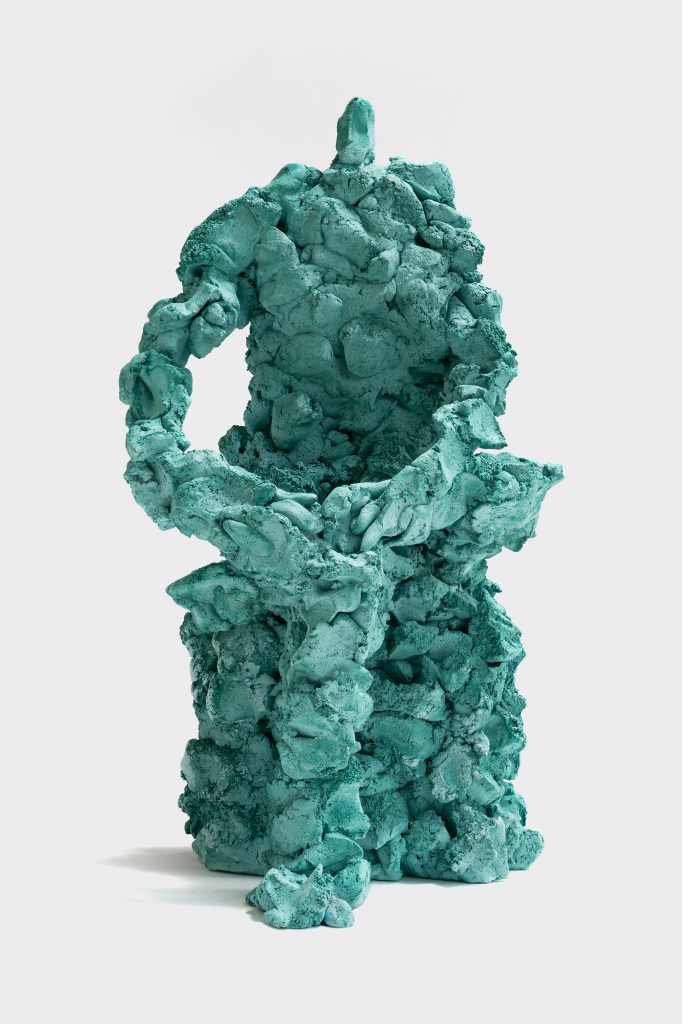
Ritratto di figura seduta con gamba accavallata, 2023 terracotta semi-refrattaria verde 28 x 13 x 16 cm
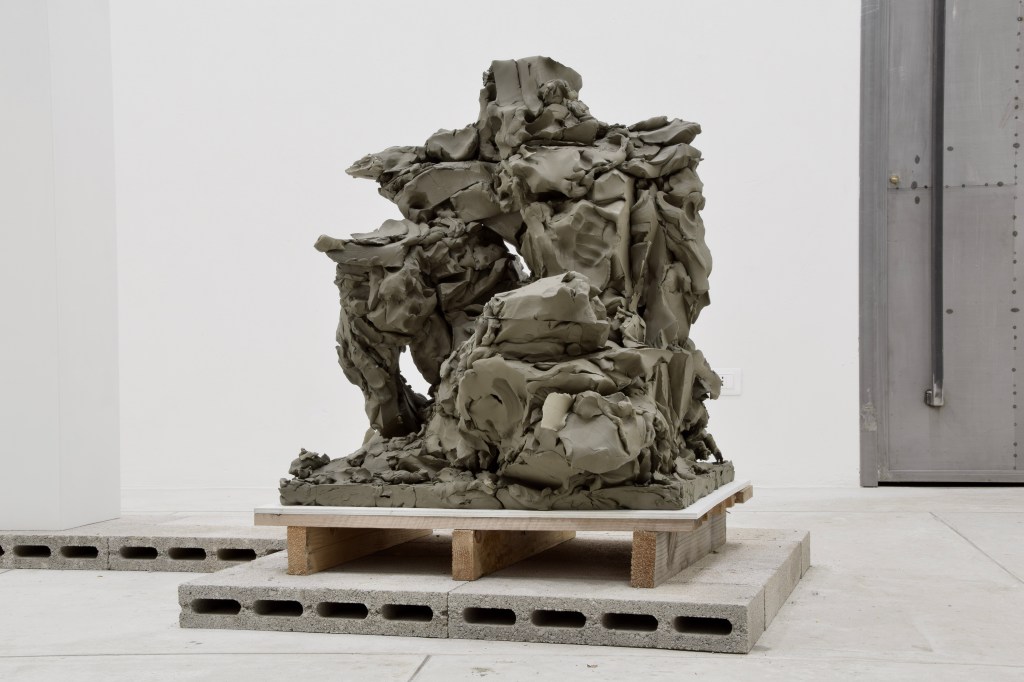
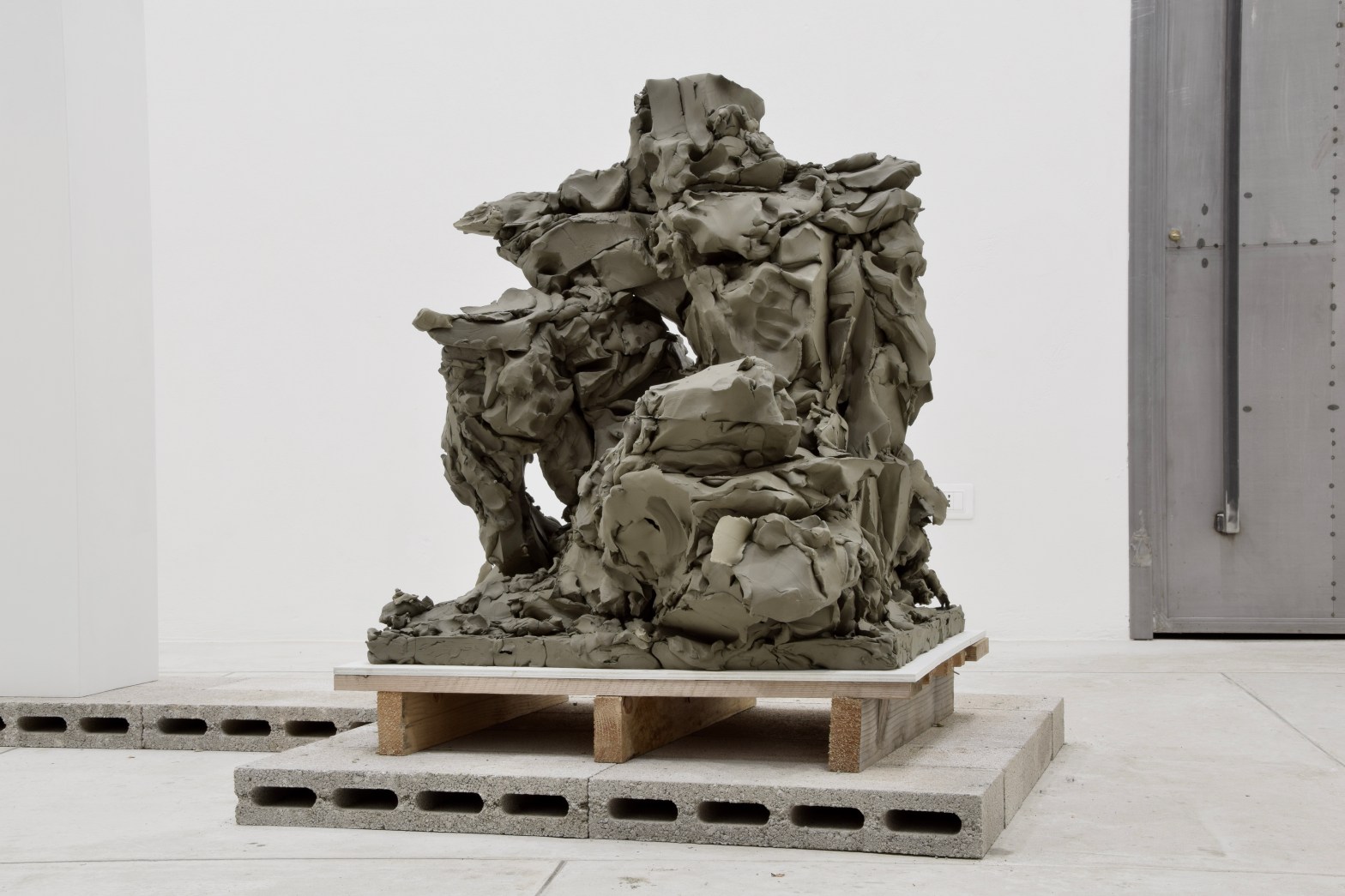
L’Uomo del Fiume, 2023 terra cruda 80 x 75 x 70 cm
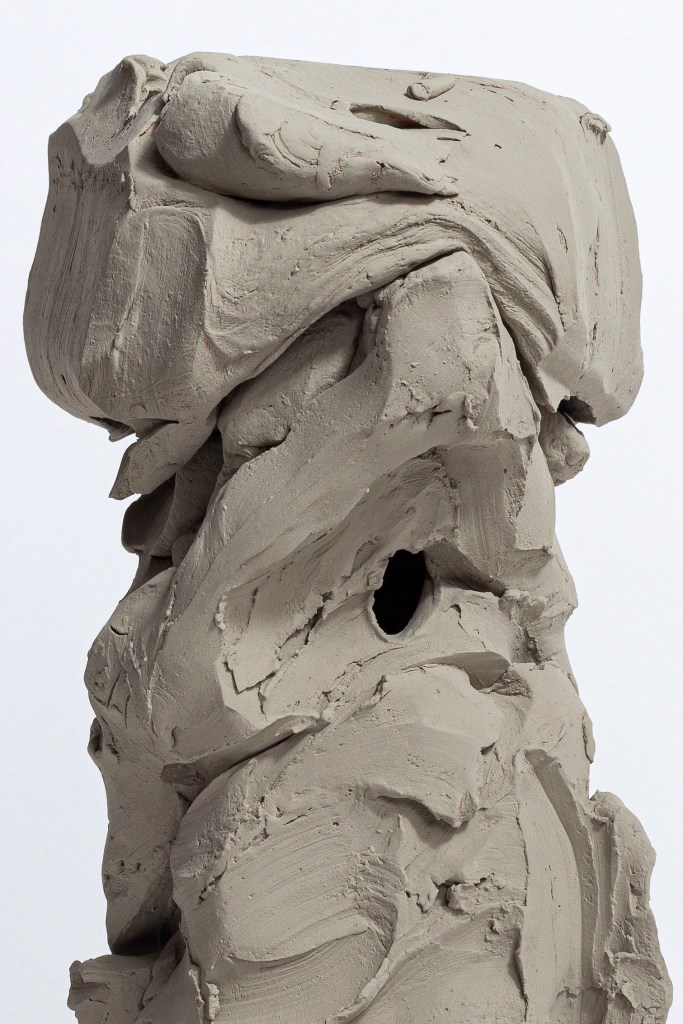
Atlas (I di IV) 2023, terracotta patinata 38 x 18 x 16 cm, dettaglio
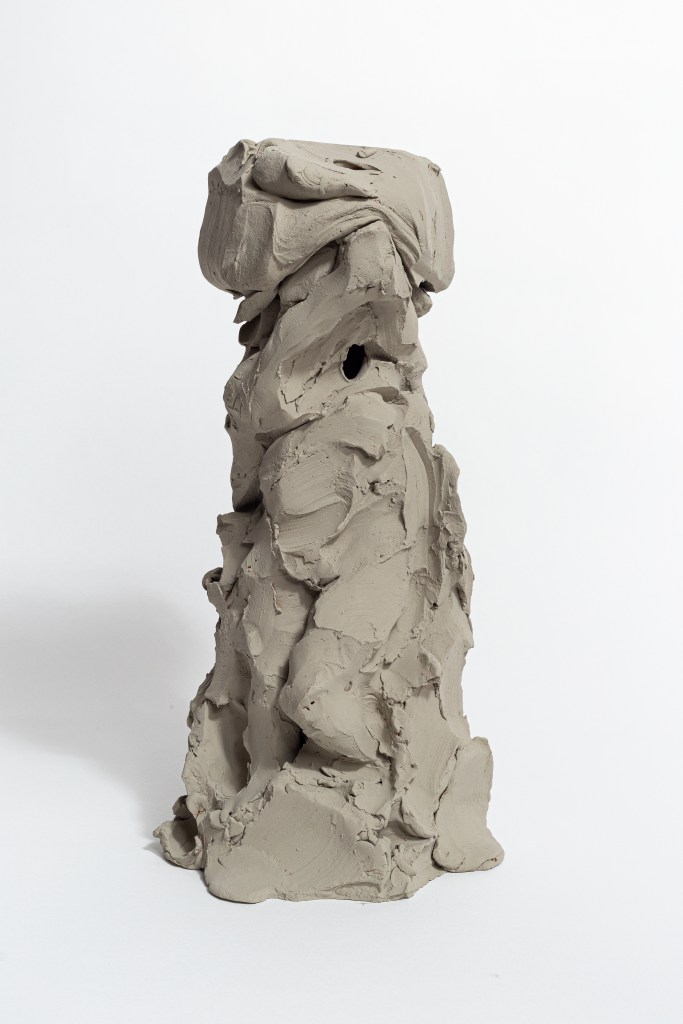
Atlas (I di IV) 2023, terracotta patinata 38 x 18 x 16 cm
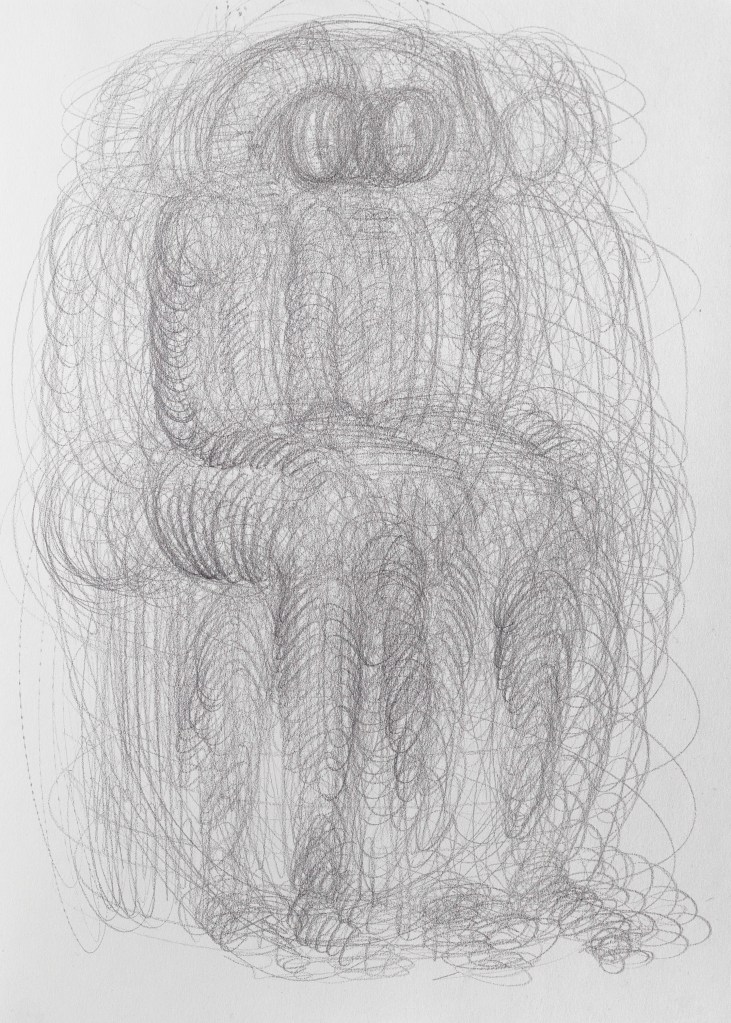
Campo di Energia I, 2023 Matita su carta 30×40 cm cm

 paroladartista.com