
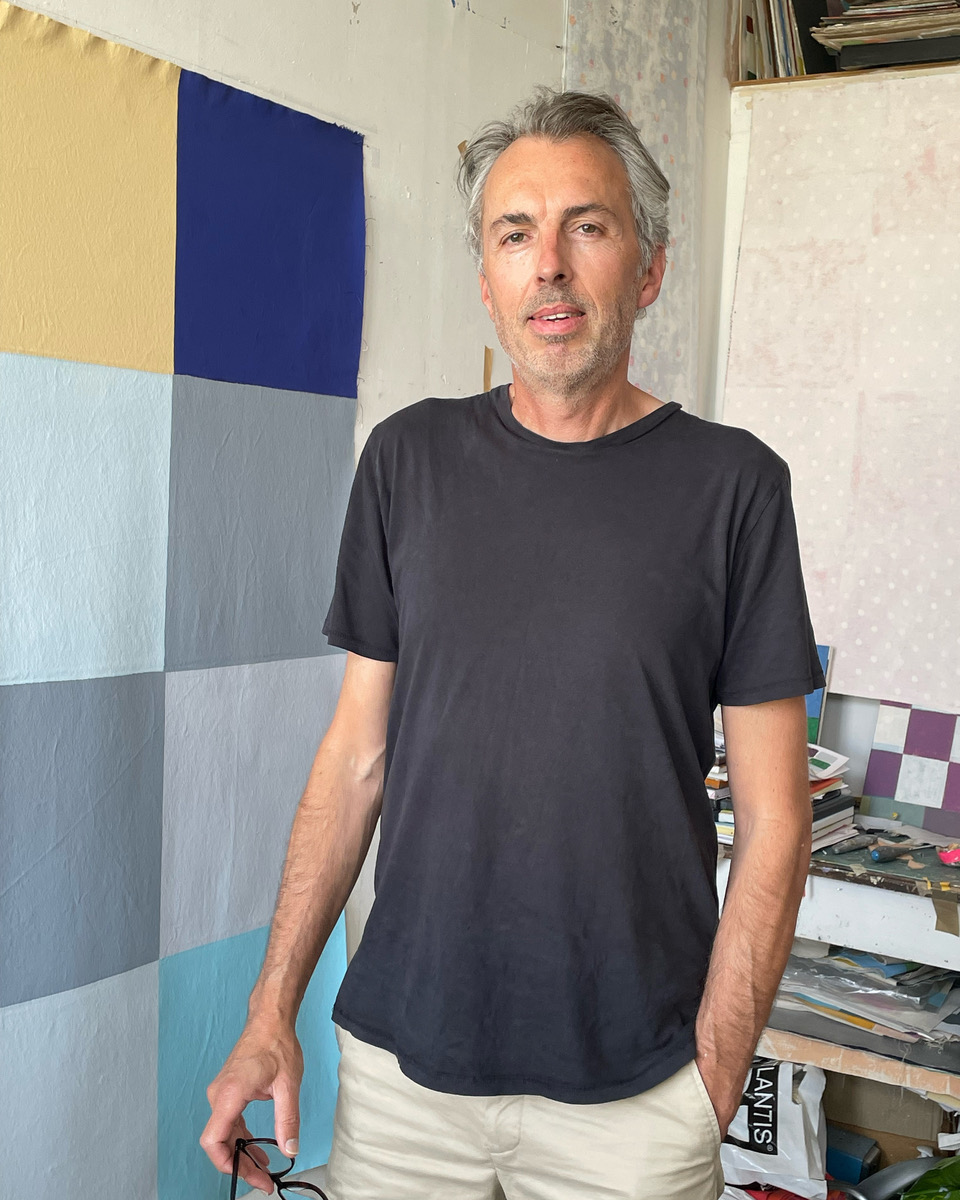
#paroladartista #intervistaartista #ruperthartley
Parola d’Artista: What studies have you done?
Ruper Hartley : After high school I studied a Foundation course in Art and Design, followed by a BA in printed textile design at the Glasgow school of Art and later studied an MA Art in Architecture at University of East London.
Parola d’Artista: What role does drawing play in what you do?
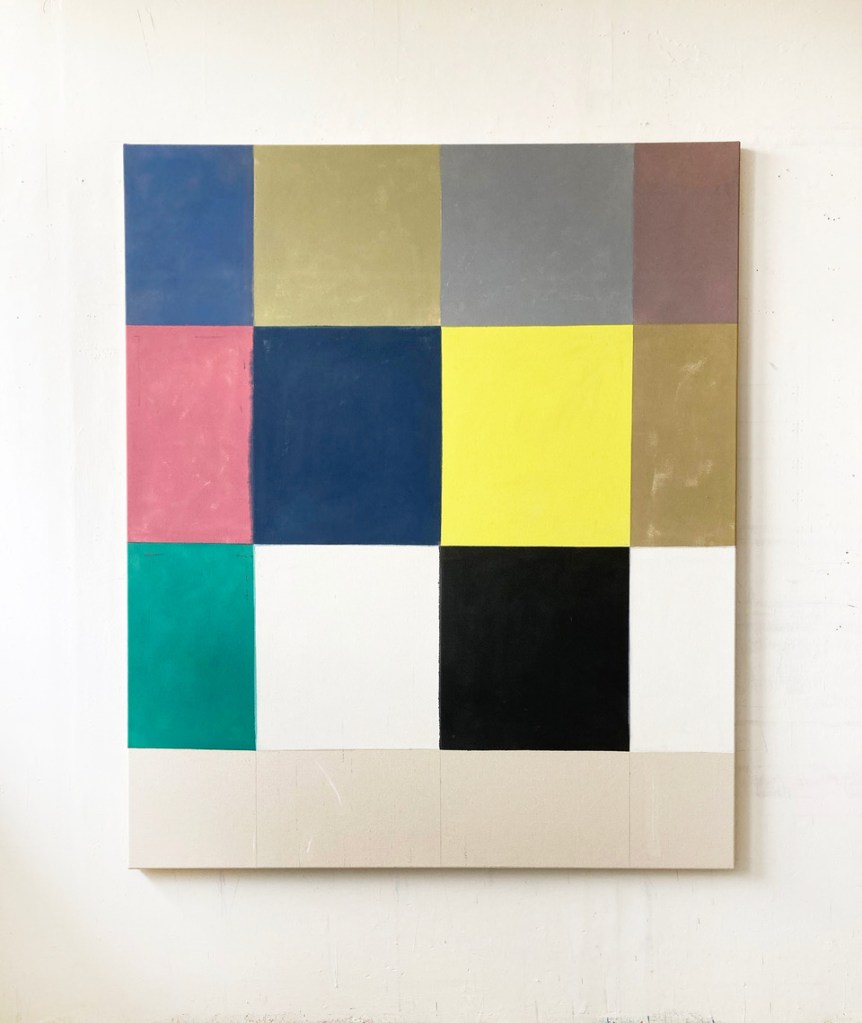
Ruper Hartley : That changes. For years I considerd everything I did to be drawing including sculpture and photography and then for a period not relating to drawing at all, and now it seems to be quite central again. I use drawing now in several ways, as a framework, a starting point, a method of revision, a system of repetition and variation. With my grid type works I sometimes work to definite measurements relating to the dimesions of the ground and at other times more freehand and estimated. Recently with larger works I have been using measurement and previously on a smaller scale I made numerous small (A5) freehand pencil drawings in preparation for paintings, these are linear and help me get a feel for composition, to preempt and plan layers before painting. I also use these small drawings to be freer and quickly explore possiblities.
Parola d’Artista: How important is geometry in your work?
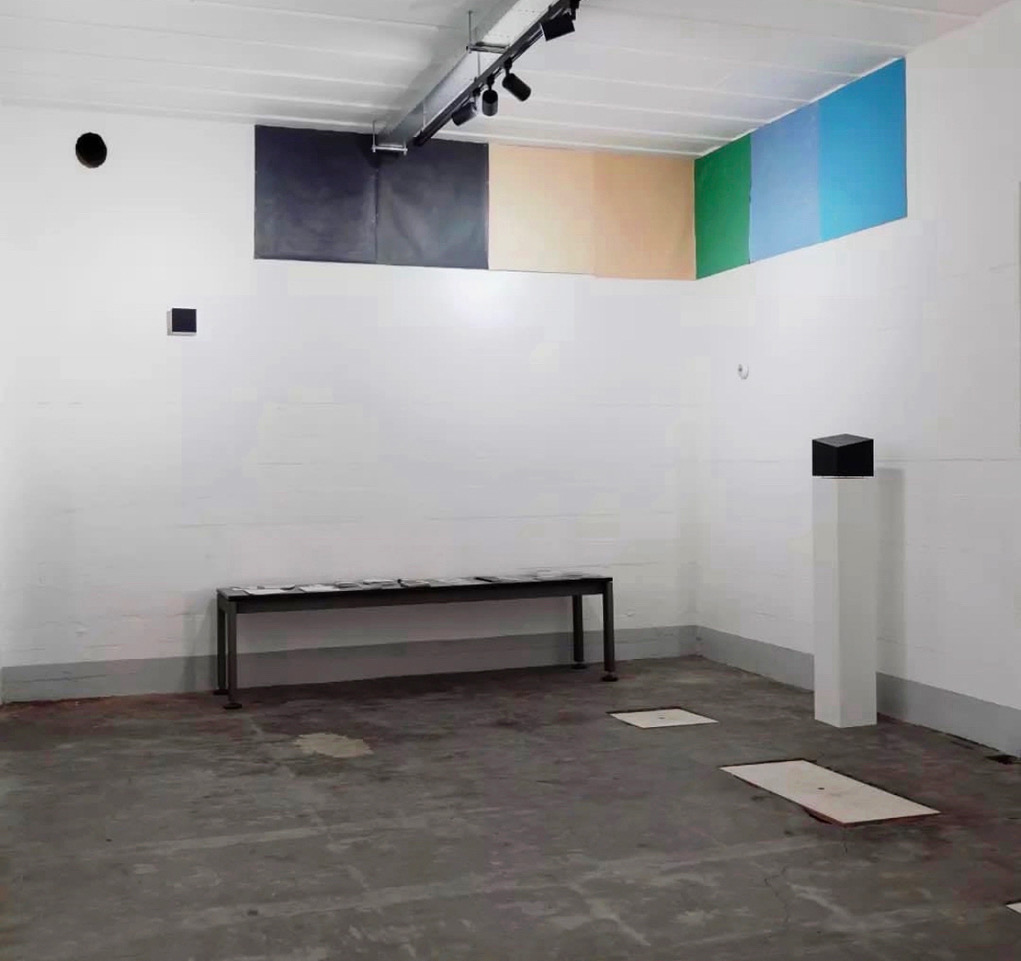
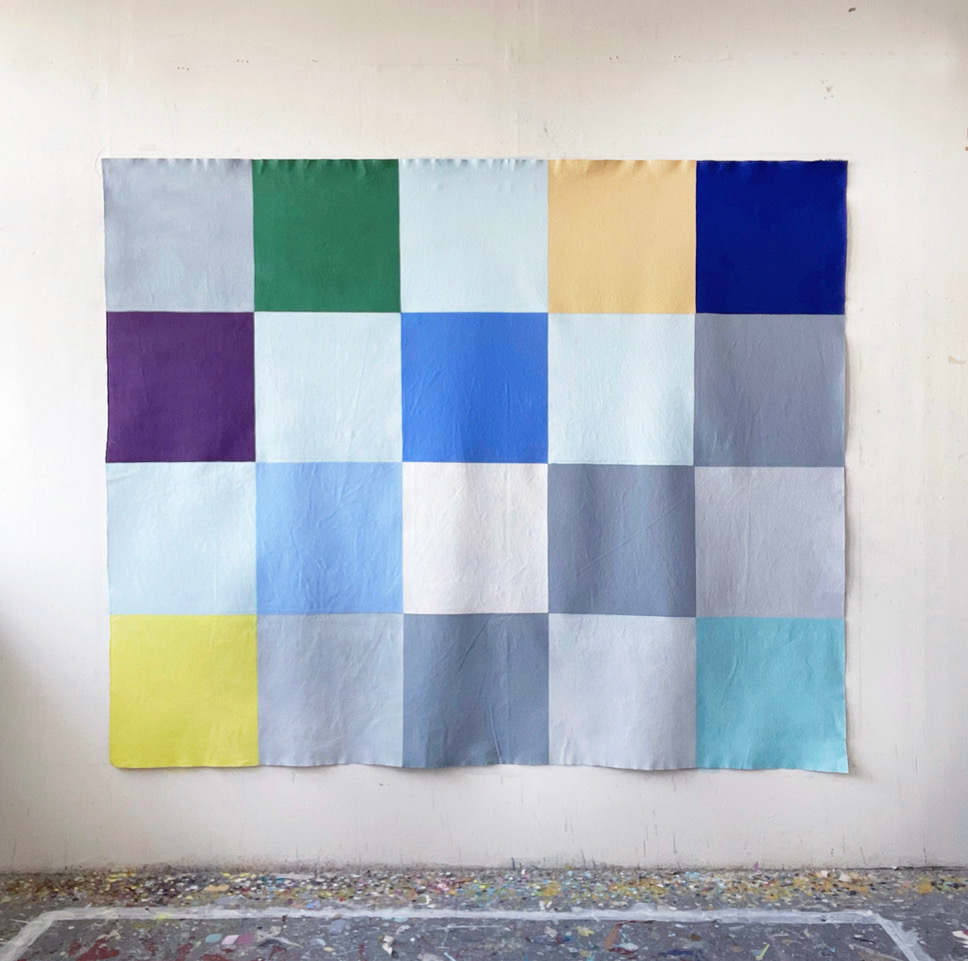
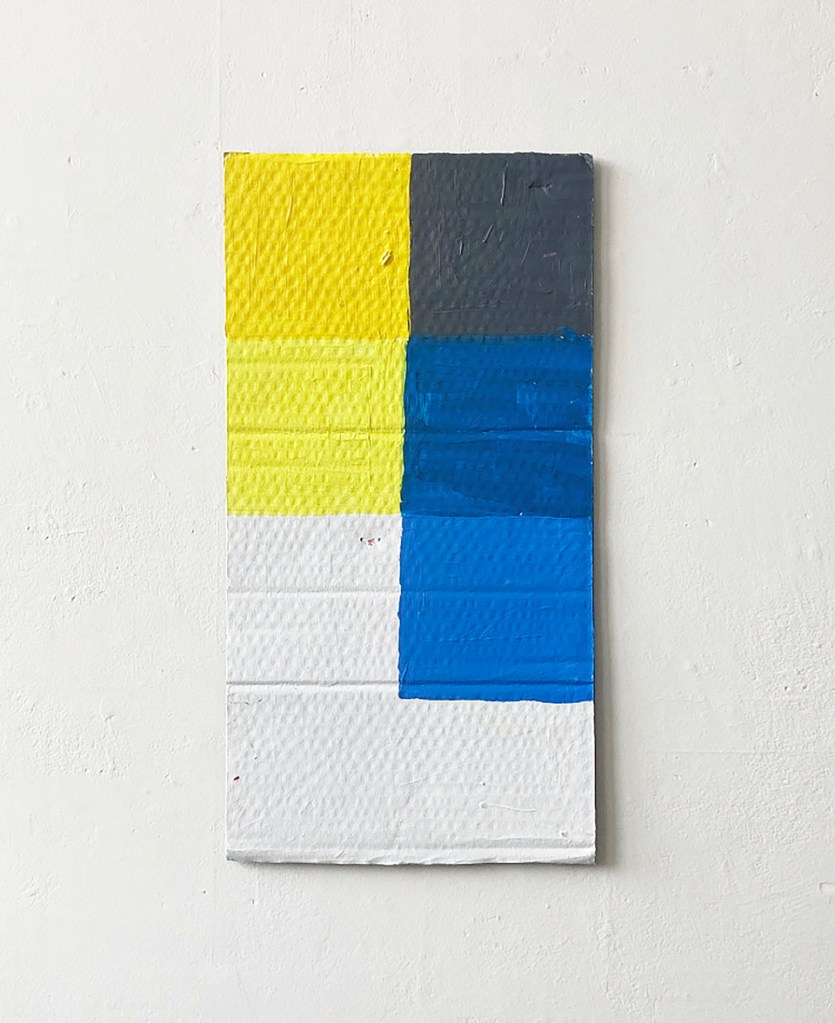
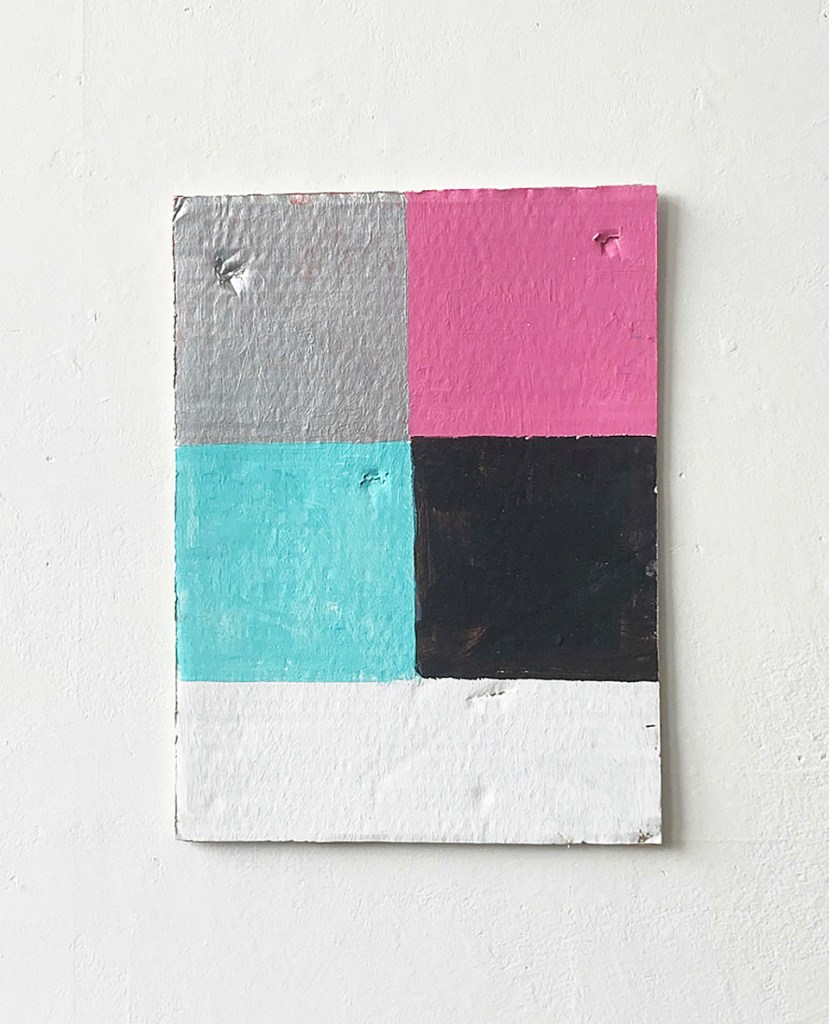
Ruper Hartley : That’s an odd one. Seemingly it is very important with the appearance of my recent paintings being very much dominated by the square/ rectangle/ grid type motifs. My intention though is to explore the formal with the hand made approach, that includes the way I prepare a surface, draw and paint a surface. I like the tension between the two aspects of my work. The geometries I adopt are important but increasingly I use them as a vehicle to explore colour, for example in a recent series of works I am using the same composition that allows me to work with and push the colour further.
Parola d’Artista: What kind of colours do you paint with?
Ruper Hartley : This varies. When I started painting in my practice, which was only about ten years ago, I gravitated towards using pastel colours, I saw it as a bit of a sugary palette. I also experimented a lot with systems and colour, playing with the colour wheel and arbitrary rules to choose and mix colours. I now continue with some of these approaches and try to have a non hierarchical view of the colours as I work. Through practice I have developed more complex pallettes and now have an evolving palette that goes from one painting or series of paintings to the next. In my process I have found colours suggest an opposite which I often play with reacting to both the palette and the painting as I add layers and colours, I have a series of mixing pots and it becomes like a game how I place these and order them and use them, I am always seeking unexpected colour relationships.
Parola d’Artista: Are you interested in the painterly qualities of your work?
Ruper Hartley : Yes and no. The process of the application of the paint is to me essentially what painting is, and the process is of great interest to me. I have quite a simple application method that I am not trying to refine or perfect, Typically I mask areas and I work fast using flat brushes. The complexity in my work comes from different thicknesses of paint I use, the layering of paint, and the at times random juxtapostions of previous paintings on the same surface. These aspects of the work interest me the most because I cannot anticipate them.
Parola d’Artista: Does the physicality of the material have any importance for you?
Ruper Hartley : Yes it is very important, the materials I use and the physical process of making are key to my work. I like to get a balance in the studio between physical making and looking/ thinking about work. I find too much looking is not productive, so I use process as a way to avoid this. I used to work a lot with cardboard in 3d and loved the hands on process of making. With my current work this comes from preparing the canvas and stretchers, taking work on and off stretchers, moving works in studio, masking areas, mixing colour, applying paint, and also packaging works for shipping, planning and installing works for exhibitions.
Parola d’Artista: When you start a painting do you already have a clear idea of how it will develop?
Ruper Hartley : Yes and no. I do plan some works like that. With my recent large off stretcher works, I planned the grid composition before working large scale. The colour evolves though more gradually responding to the actual work in the space and often re thinking how I may use the colours. I also use photography as a tool to try out colour ideas e.g. repeating and re configuring colours on a phone app, this can be a fast way to generate new ideas. With my on stretcher paintings it is often less clear how it will develop, and may take a longer time to develop through numerous re -paintings. I work in series and often at the beginning of a new series, you see something taking shape that you might want to try and continue in another painting. Sometimes you try and it just wont work, other times it will lead to a group.
Parola d’Artista: Is there a focus on landscape in your work?
Ruper Hartley : For a period yes, although I am coming out of that now I think. I made a large collection of paintings earlier this year for my solo show Inter-scenic at the Nordic Art Agency in Malmö which made a strong connection to my local environment and landscape. I think on the whole the connection is quite subtle though, most people see my paintings as abstract but the colours are effected by what I see and my experience. My use of the colour palette has been evolving and currently my focus is more related to previous works and art history as opposed to my local environment.
Parola d’Artista: Do you work on several paintings together or do you concentrate on one painting at a time?
Ruper Hartley : I work in series but I am often concentrating on one painting at a time. I have a small studio so with larger works its probably a question of space. If i feel it is finished or I cant find a way to continue with one I either turn them to the wall or take them off stretcher and staple to wall. One painting often leads to the next, and I keep a photographic record of work so I am able to read new works against previous ones . I create collections of works for exhibiting. For a period I worked mainly small and would create wall groupings in the studio, which involved working on multiple works at the same time, creating a wall installation. This is similar to when planning an exhibition but generally I tend to prioritise production in the studio of single works and then at a later date decide what is suitable for particular exhibitions/ submissions.
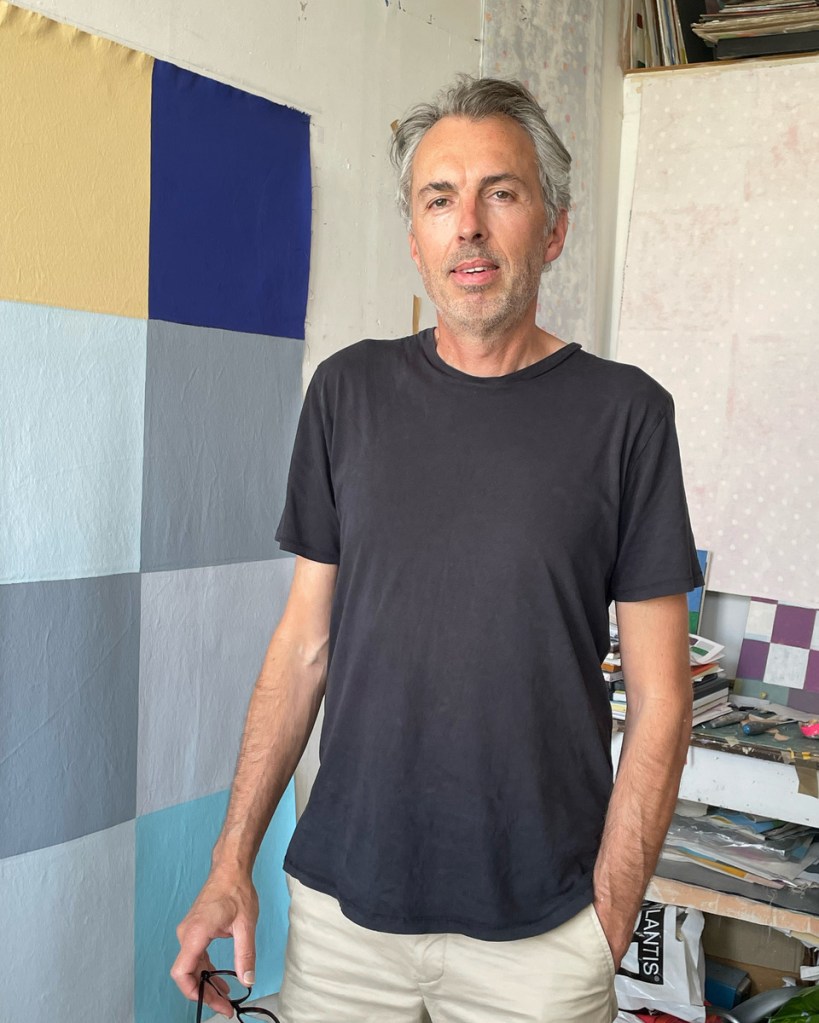
Rupert Hartley (Surrey, 1966) is a visual artist living and working between London and Hove,
East Sussex, UK. Trained originally in printed textile design at the Glasgow School of Art he later
studied an MA Art in Architecture at University of East London. His recent paintings focus on the
grid, colour and the repeated gesture, and include paintings on canvas, paintings on cardboard,
painted fabrics and installations. A constant interest and reference in his work has been
architecture and city space, from the ‘psychogeographic’ drawing and city-based projects of his
early work to the spaces he currently lives in and encounters on a daily basis. He has exhibited
both nationally and internationally.
Versione italiana
Intervista a Ruper Hartley
#paroladartista #intervistaartista #ruperthartley
Parola d’Artista: Quali studi ha fatto?
Ruper Hartley: Dopo la scuola superiore ho studiato un corso di base in Arte e Design, seguito da un BA in design tessile stampato alla Glasgow School of Art e successivamente ho studiato un MA Art in Architecture alla University of East London.
Parola d’Artista: Che ruolo ha il disegno nel suo lavoro?
Ruper Hartley: Questo cambia. Per anni ho considerato disegno tutto ciò che facevo, compresa la scultura e la fotografia, poi per un periodo non ho più avuto a che fare con il disegno, ma ora sembra essere di nuovo centrale. Ora uso il disegno in diversi modi, come struttura, punto di partenza, metodo di revisione, sistema di ripetizione e variazione. Con le mie opere a griglia a volte lavoro su misure definite relative alle dimensioni del terreno e altre volte più a mano libera e stimate. Di recente, con le opere più grandi, ho utilizzato la misurazione e in precedenza, su scala più piccola, ho realizzato numerosi piccoli disegni a matita (A5) a mano libera in preparazione dei dipinti; questi sono lineari e mi aiutano ad avere un’idea della composizione, a prevedere e pianificare gli strati prima di dipingere. Uso questi piccoli disegni anche per essere più libero ed esplorare rapidamente le possibilità.
Parola d’Artista: Quanto è importante la geometria nel tuo lavoro?
Ruper Hartley: È una domanda strana. Apparentemente è molto importante, visto che l’aspetto dei miei dipinti recenti è molto dominato da motivi di tipo quadrato/ rettangolo/griglia. La mia intenzione, però, è quella di esplorare il formale con un approccio artigianale, che comprende il modo in cui preparo una superficie, disegno e dipingo una superficie. Mi piace la tensione tra i due aspetti del mio lavoro. Le geometrie che adotto sono importanti, ma sempre più spesso le uso come veicolo per esplorare il colore, ad esempio in una recente serie di lavori sto usando la stessa composizione che mi permette di lavorare con il colore e di spingerlo oltre.
Parola d’Artista: Con quali colori dipinge?
Ruper Hartley: Questo varia. Quando ho iniziato a dipingere, circa dieci anni fa, mi sono orientato verso i colori pastello, che vedevo come una tavolozza un po’ zuccherosa. Ho anche sperimentato molto con i sistemi e il colore, giocando con la ruota dei colori e con regole arbitrarie per scegliere e mescolare i colori. Ora continuo con alcuni di questi approcci e cerco di avere una visione non gerarchica dei colori mentre lavoro. Con la pratica, ho sviluppato tavolozze più complesse e ora ho una tavolozza in evoluzione che passa da un dipinto o da una serie di dipinti all’altro. Nel mio processo ho scoperto che i colori suggeriscono un opposto con il quale spesso gioco a reagire sia alla tavolozza che al dipinto mentre aggiungo strati e colori. Ho una serie di vasi per la miscelazione e diventa un gioco come posizionarli, ordinarli e usarli, sono sempre alla ricerca di relazioni cromatiche inaspettate.
Parola d’Artista: Le interessano le qualità pittoriche del suo lavoro?
Ruper Hartley: Sì e no. Il processo di applicazione della pittura è per me essenzialmente ciò che è la pittura, e il processo è di grande interesse per me. Ho un metodo di applicazione piuttosto semplice, che non cerco di perfezionare, in genere maschero le aree e lavoro velocemente con pennelli piatti. La complessità del mio lavoro deriva dai diversi spessori di vernice che uso, dalla stratificazione della pittura e dalla giustapposizione, a volte casuale, di dipinti precedenti sulla stessa superficie. Questi aspetti del lavoro mi interessano di più perché non posso anticiparli.
Parola d’Artista: La fisicità del materiale ha una qualche importanza per lei?
Ruper Hartley: Sì, è molto importante, i materiali che uso e il processo fisico di realizzazione sono fondamentali per il mio lavoro. In studio mi piace trovare un equilibrio tra il fare fisico e il guardare e pensare al lavoro. Trovo che guardare troppo non sia produttivo, quindi uso il processo come un modo per evitarlo. In passato lavoravo molto con il cartone in 3D e mi piaceva molto il processo di realizzazione. Nel mio lavoro attuale, questo processo consiste nel preparare la tela e le barelle, nel mettere e togliere i lavori dalle barelle, nello spostare le opere in studio, nel mascherare le aree, nel mescolare i colori, nell’applicare la pittura e anche nell’impacchettare le opere per la spedizione, nel pianificare e nell’installare i lavori.
Parola d’Artista: Quando inizia un dipinto ha già un’idea chiara di come si svilupperà?
Ruper Hartley: Sì e no. Alcuni lavori li pianifico. Con le mie recenti opere di grandi dimensioni su barella, ho pianificato la composizione a griglia prima di lavorare su larga scala. Il colore si evolve invece in modo più graduale, rispondendo all’effettivo lavoro nello spazio e spesso ripensando a come potrei usare i colori. Uso anche la fotografia come strumento per sperimentare idee cromatiche, ad esempio ripetendo e configurando nuovamente i colori su un’applicazione del telefono: può essere un modo rapido per generare nuove idee. Per quanto riguarda i miei dipinti su tela, spesso è meno chiaro come si svilupperanno e possono richiedere più tempo per essere sviluppati attraverso numerose ridipinture. Lavoro in serie e spesso, all’inizio di una nuova serie, si vede qualcosa che sta prendendo forma e che si vorrebbe provare a continuare in un altro dipinto. A volte ci si prova e non funziona, altre volte si crea un gruppo.
Parola d’Artista: Il suo lavoro è incentrato sul paesaggio?
Ruper Hartley: Per un periodo sì, anche se ora credo di esserne uscito. All’inizio di quest’anno ho realizzato una grande collezione di dipinti per la mia mostra personale Inter-scenic alla Nordic Art Agency di Malmö, che ha creato un forte legame con l’ambiente e il paesaggio locale. Credo che nel complesso il legame sia piuttosto sottile: la maggior parte delle persone vede i miei dipinti come astratti, ma i colori sono influenzati da ciò che vedo e dalla mia esperienza. Il mio uso della tavolozza dei colori si è evoluto e attualmente la mia attenzione è più legata ai lavori precedenti e alla storia dell’arte che all’ambiente locale.
Parola d’Artista: Lavora a diversi dipinti insieme o si concentra su un quadro alla volta?
Ruper Hartley: Lavoro in serie, ma spesso mi concentro su un quadro alla volta. Ho uno studio piccolo, quindi per le opere più grandi è probabilmente una questione di spazio. Se ritengo che sia finito o non riesco a trovare un modo per continuare, lo giro verso la parete o lo tolgo dalla barella e lo pinzo al muro. Un dipinto spesso conduce al successivo e tengo una documentazione fotografica del lavoro, in modo da poter leggere i nuovi lavori rispetto ai precedenti. Creo collezioni di opere da esporre. Per un periodo ho lavorato soprattutto in piccolo e ho creato dei raggruppamenti di pareti nello studio, lavorando su più opere contemporaneamente e creando un’installazione a parete. Questo è simile alla pianificazione di una mostra, ma in genere tendo a dare la priorità alla produzione in studio di singole opere e poi, in un secondo momento, a decidere cosa è adatto a particolari mostre o presentazioni
Rupert Hartley (Surrey, 1966) è un artista visivo che vive e lavora tra Londra e Hove,
East Sussex, Regno Unito. Formatosi originariamente nel campo del design di tessuti stampati presso la Glasgow School of Art, ha successivamente
ha studiato un master in architettura presso la University of East London. I suoi dipinti recenti si concentrano sulla
griglia, il colore e il gesto ripetuto, e comprendono dipinti su tela, dipinti su cartone,
tessuti dipinti e installazioni. Un interesse e un riferimento costanti nel suo lavoro sono stati l’architettura e lo spazio urbano.
l’architettura e lo spazio urbano, dal disegno “psicogeografico” e dai progetti basati sulla città dei suoi primi lavori agli spazi in cui vive attualmente.
dei suoi primi lavori agli spazi in cui vive attualmente e che incontra quotidianamente. Ha esposto
a livello nazionale e internazionale.

 paroladartista.com