
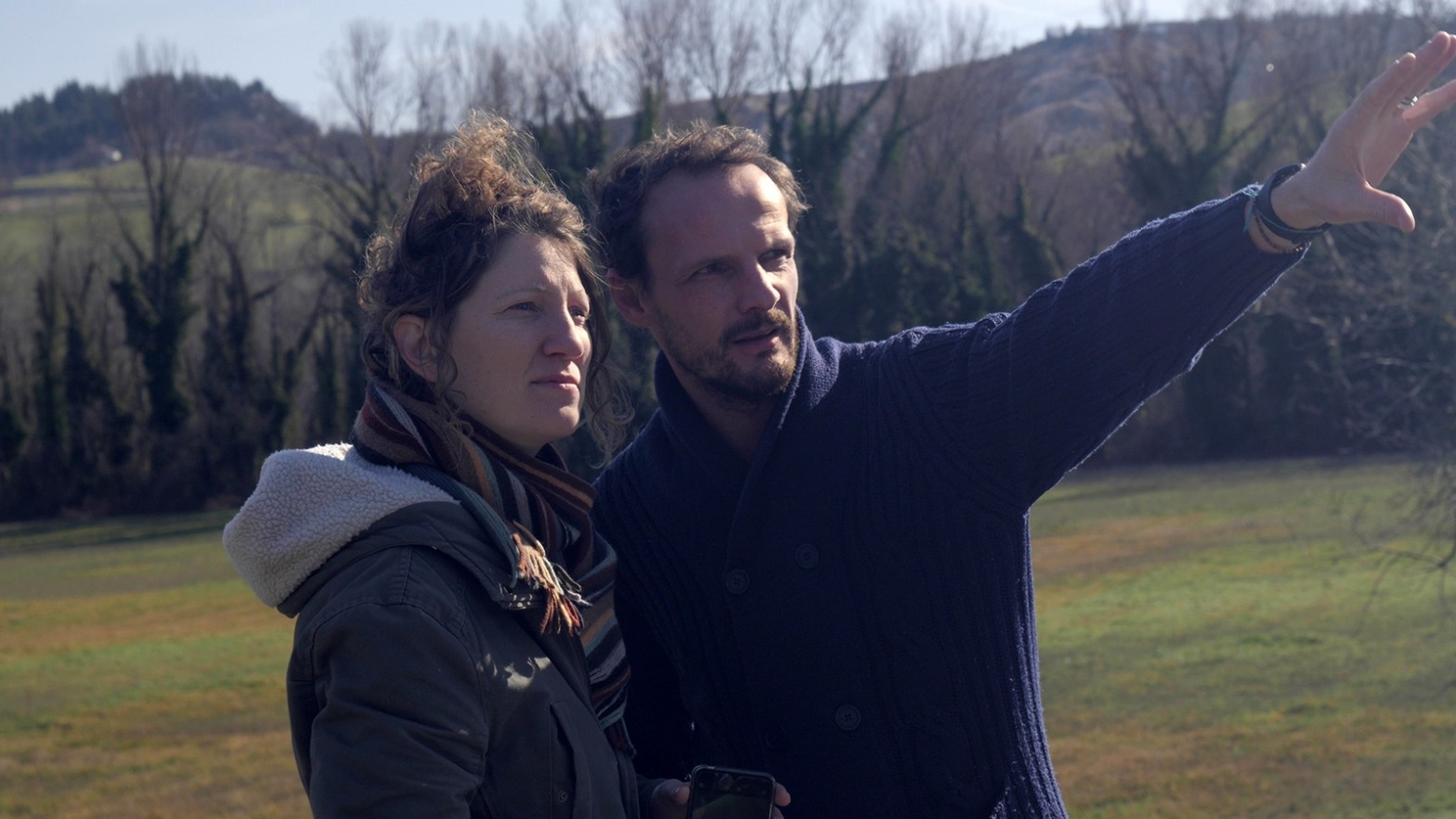
#paroladartista #intervsistaartista #antonelloghezzi
▼scroll for english text
Parola d’Artista: Ciao Nadia e Paolo, per iniziare volevo chiedervi di rispondere autonomamente a questa prima domanda. Per la maggior parte degli artisti l’infanzia rappresenta l’età dell’oro quella in cui cominciano a manifestarsi i primi sintomi di una certa propensione ad appartenere al mondo dell’arte. E’ stato così anche per voi? Raccontate?
Paolo Ghezzi : La mia infanzia si è svolta in campagna, in un paesino delle colline tra Bologna e Modena dove passavo le mie giornate più che altro all’aperto a giocare con gli amici, a perdere tempo nel podere dei miei nonni, o a studiare la musica. Ero un bambino molto timido che parlava poco, parlavo più che altro da solo, socializzavo bene solo con un pallone tra i piedi. Non è che disegnassi molto, però fantasticavo parecchio, ero sempre altrove con la mente e immaginavo sempre una realtà diversa da quella che vivevo, da quella che c’era. Quindi sì, non è molto diverso da quello che faccio ora solo che ora parlo sempre e non gioco più a pallone anche se vorrei farlo.
Nadia Antonello : Io sono nata e cresciuta nelle pianure padane, in provincia di Padova. Anche la mia infanzia è stata all’insegna della timidezza e della noia. Una noia tranquilla, allegra e generativa, che mi spingeva a passare i pomeriggi a costruire con materiali di fortuna case, tane e giacigli per le “bestioline” di casa, cioè i numerosi cani e gatti. Non saprei, se le potremmo chiamare le prime installazioni fatte di quel che trovavo! Il giorno dopo puntualmente sparivano e ne costruivo altre.
P.d’A. : Come è iniziata la vostra formazione, che scuole avete frequentato e quali incontri importanti avete avuto nel corso dei vostri studi?
N.A.: Alle scuole medie facevo dei disegni e acquerelli che avevano destato l’attenzione della professoressa, ma fu per merito del mio maestro di pianoforte che decisi di iscrivermi al Liceo Artistico di Vicenza. In seguito, mi iscrissi all’Accademia di Belle Arti di Bologna al Triennio di Pittura con Rinaldo Novali e terminai gli studi in Comunicazione e Didattica dell’Arte diplomandomi con Davide Benati, al quale sono molto legata. Per la nostra ricerca sono state fondamentali le frequentazioni con Mili Romano e Roberto Daolio e una conferenza al MAMbo di Cesare Pietroiusti che
mi colpì fortemente. Da lì iniziò una corrispondenza epistolare che mi portò a compiere il mio tirocinio formativo alla Galleria Civica di Treno a fianco di Andrea Viliani. Furono pochi mesi ma importanti, potei lavorare con Cesare, Alberto Garutti, Dora Garcia e l’allora giovanissimo Tris Vonna-Michell.
P.G.: Sono arrivato all’Accademia di Belle Arti un po’ più tardi del solito, avevo già 28 anni e il primo anno l’ho frequentato a Bergamo dove ho avuto la fortuna di avere come docente Eva Marisaldi. L’incontro con lei ma anche con i miei compagni di Accademia ha fatto nascere in me la convinzione che fosse un mondo che mi piaceva e un percorso che ho poi continuato all’Accademia di Bologna dove mi sono diplomato. Anche lì ho avuto la fortuna di incontrare persone speciali come Roberto Daolio, Mili Romano e Silvia Evangelisti. In quel secondo anno di Accademia poi incontrai Nadia e quindi posso dire che l’Accademia di Belle Arti sia uno dei luoghi che più mi piace al mondo e a cui sono più affezionato e grato.
P.d’A. : Quindi il vostro sodalizio artistico inizia all’Accademia di Bologna avete da subito iniziato a collaborare, come sono andate le cose?
A.G: Si, capitò che ci raccontammo le opere e i progetti che avremmo voluto realizzare e una di queste era proprio la stessa idea e così ci siamo detti, perché non lo facciamo insieme? Così abbiamo fatto e da lì non abbiamo più smesso.
Si trattava di un’incursione, un blitz non richiesto, nei bagni di Artefiera. Tralascio le vicissitudini mirabolanti per introdurci clandestinamente in fiera senza né biglietto né l’invito del giovedì. Ci mettemmo nella hall in cui ci si divide tra maschi e femmine del bagno prescelto, consegnando al pubblico un comunicato stampa di una fantomatica mostra all’interno dei servizi che raccontava in “critichese” null’altro che gli arredi del bagno stesso. Fu un esperimento molto divertente che suscitò reazioni divertenti.
P.d’A. : Da qui come sono procedute le cose?
A.G: Da qui siamo arrivati fino ad oggi, avendo sempre la stessa passione e un sogno da inseguire e realizzare che è quello che anche oggi cerchiamo di fare.
Sono passati 14 anni e ci sarebbe da scrivere tantissimo per rispondere bene a questa domanda, è stata un’avventura e lo sarà ancora speriamo per tanti anni, da quel bagno sono arrivate le mostre in Italia e all’estero, le collaborazioni con aziende e festival, le gallerie, lo studio e tantissime persone che abbiamo conosciuto e molte delle quali sono diventati nostri amici e ci supportano come i collezionisti o fornitori di
materiali, uno tra tutti il nostro vetraio Luigi e curatori con i quali si è instaurato un bel rapporto e con i quali succede di frequente di collaborare.
P.d’A. : Che importanza ha in quello che fate l’aspetto relazionale non solo fra voi ma con il pubblico che fruisce del vostro lavoro?
A.G: “Tutto è relazione” è il titolo di un progetto che abbiamo esposto lo scorso anno a Bologna in uno spazio pubblico e che continuerà, in un’altra declinazione, a Bergamo nella nostra prima mostra personale alla Traffic Gallery.
È evidente quanto pensiamo che sia importante la relazione nell’arte ma in generale in tutti gli aspetti della vita. Noi stessi come duo, facciamo nascere ogni nostra opera dal dialogo con l’altro, non abbiamo mai realizzato un’opera senza che ci fosse il confronto tra di noi, con il pubblico, con tutto ciò che sta al di fuori del nostro studio dove le nostre opere poi andranno una volta terminate e spesso anche con le persone che ci aiutano nella realizzazione. Produrre progetti complessi spesso ha intrinsecamente il valore della cooperazione e quindi della ricchezza di opinioni, di punti di vista, di riflessioni condivise.
Per ciascun lavoro, la speranza è che comunichi alle persone, che porti un cambiamento e se siamo fortunati un miglioramento dello stato attuale, vuoi per almeno un briciolo di riflessione che possiamo aver suscitato almeno in una persona nel mondo.
Crediamo profondamente che la relazione sia tutto, siamo in relazione con gli altri, con il passato ed il futuro, con la Natura e le cose che ci circondano e che ci accompagneranno nel tempo.
P.d’A. : La letteratura e la poesia che ruolo giocano nel vostro immaginario?
A.G: È innegabile quanta opera di Italo Calvino e Gianni Rodari sia presente nei nostri lavori e nella nostra ricerca.
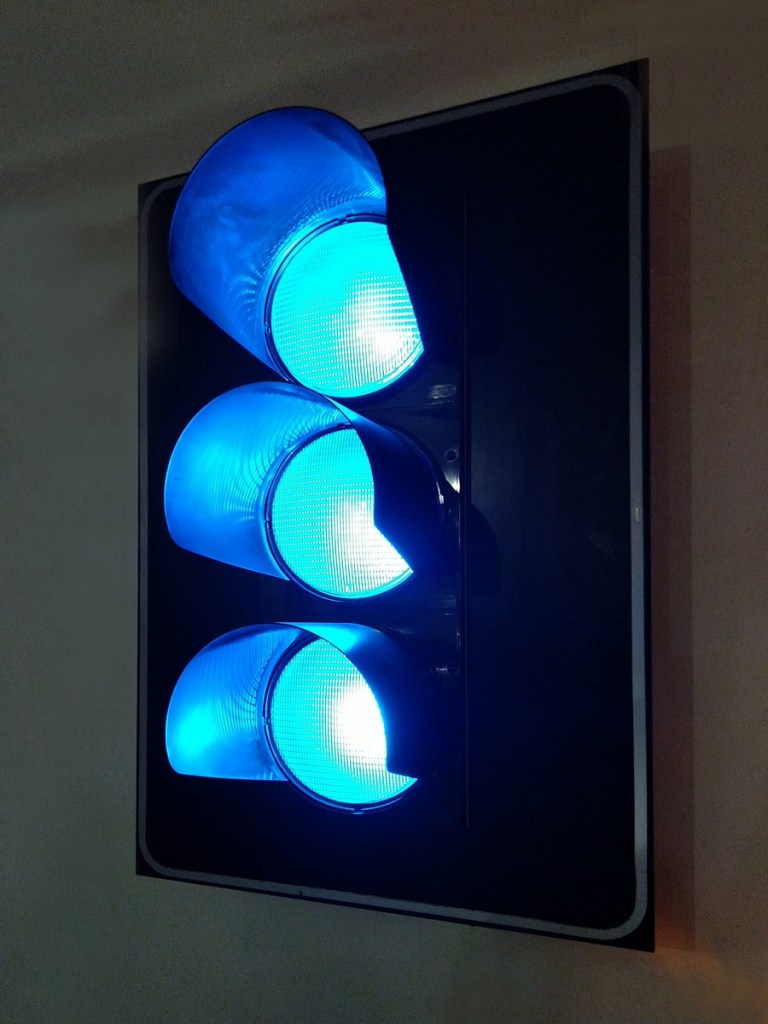
Dalle Favole al telefono è nato Via libera per volare, il nostro semaforo blu, dalle Città invisibili nasce il progetto “Cosa non è inferno” che quest’anno sarà a Bergamo e Beirut, l’anno scorso è stato presentato da Indigo di Perugia. Il barone rampante ha dato il via a Scalare il sogno, una scala che da sola in mezzo al lago di Tarzo (TV), sale fino al cielo e potremmo andare avanti ancora per molto. Sugli scritti di Calvino sulla leggerezza si fonda forse la nostra intera poetica.
Se non nascono da grandi maestri come quelli citati (senza contare tutte le arti che ci influenzano come il cinema, l’opera e la musica), a volte siamo noi stessi a scrivere dei racconti o delle filastrocche, uno dei modi che abbiamo trovato per raccontare le opere oppure, come nel caso del progetto per Villa Rospigliosi a Prato, inventare di sana pianta una nuova storia per un luogo stabilito.
Forse l’arte stessa non è altro che una nuova storia, sia essa da raccontare o vedere, o immaginare.
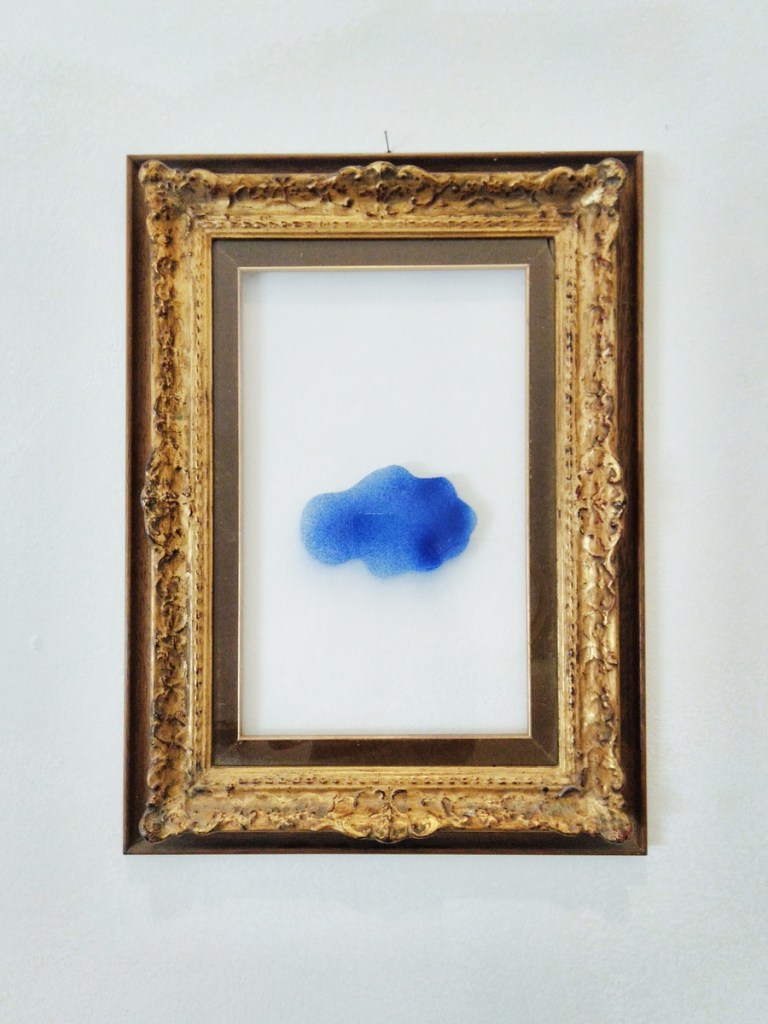
P.d’A. : Vi sono alcuni elementi nel vostro lavoro come la scala, l’altalena, il semaforo blu, la nuvola… che ritornano costantemente vi interessa stabilire una vostra iconografia?
A.G: Non c’è una vera intenzione di stabilire una nostra iconografia o di essere come si dice “riconoscibili”ma nel tempo ci accorgiamo che certi temi sono diventati ricorrenti. Abbiamo sempre subito il fascino di tematiche
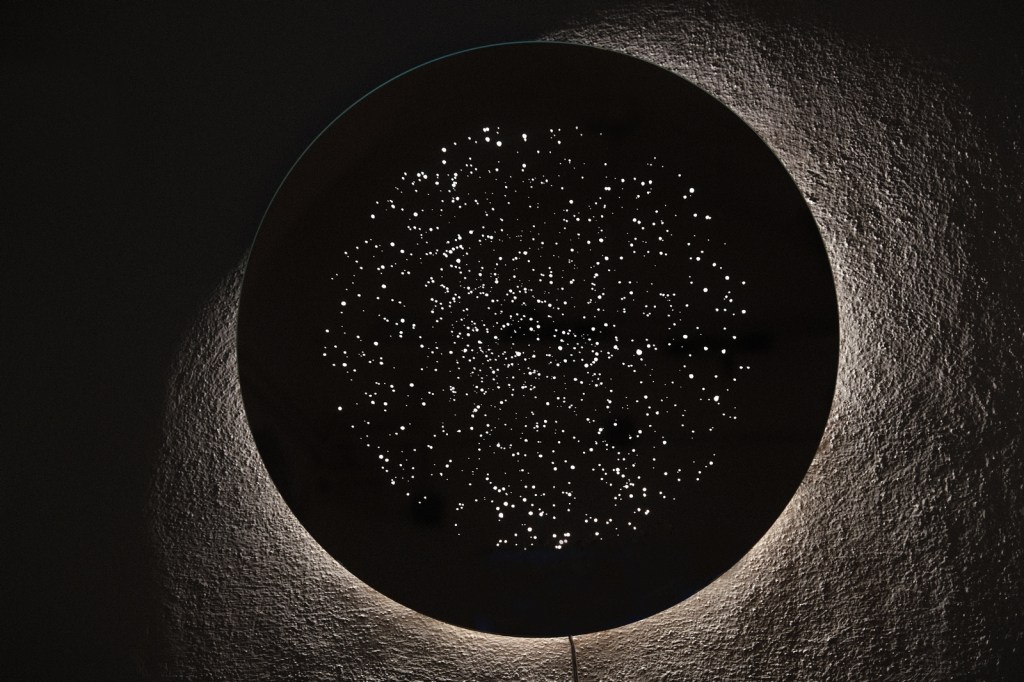
universali e del cielo stellato, del guardare le cose dall’alto e de lo spostare il punto di vista un po’ più su sollevando i piedi da terra. Ecco perché oltre alla volta celeste ci siamo “aggrappati” alle scale, alle altalene, alle nuvole e al colore blu.
P.d’A. : Vi interessa l’idea di messa in scena nel vostro lavoro?
A.G: Non ne siamo certi ma pensiamo che essendo le nostre opere il frutto di riflessioni nate dal nostro dialogo, quindi dal nostro racconto reciproco, le opere diventano una sorta di messa in scena del nostro immaginario o della nostra immaginazione.
P.d’A. : Seguite un metodo per coltivare le vostre “revȇrie”?
A.G: No, nasce dalla suggestione di uno dei due e giunge, attraverso il dialogo, a prendere forma. Grazie all’esperienza di questi anni insieme e di tutti i progetti precedenti, mano a mano che parliamo l’opera diventa sempre più evidente, fino a che entrambi non raggiungiamo con gli occhi della mente la stessa immagine, allora è pronta per essere realizzata. A volte è un processo lungo e fatto di cambiamenti, tutto viene messo in discussione e ripensato, a volte è più veloce.
P.d’A. : Per chiudere questa nostra conversazione volevo chiedervi di rispondere autonomamente a quest’ultima domanda. Vi trovate sempre d’accordo sul da fare o a volte avete voglia di realizzare individualmente dei progetti?
P.G.: Non siamo sempre d’accordo quando nasce un progetto ma lo siamo sempre quando è finito. Se non siamo d’accordo tutti e due vuol dire che l’opera non è finita, non è pronta, manca qualcosa. A volte c’è bisogno di ripensare tutto di nuovo, mettiamo tutto in discussione finché non siamo contenti del risultato proprio perché non vogliamo realizzare opere individualmente, anche quando capita che uno dei due sia convinto di un’idea che però non convince l’altro, si aspetta, si discute, si cerca di capire il punto di vista diverso perché é così da tanti anni e sappiamo che è il modo giusto per realizzare le nostre opere.
N.A.: Siamo d’accordo spesso ma non sempre. Immagino che sia quel “quasi sempre” a dare ricchezza al lavoro, che crea lo stimolo a pensare, combattere per difendere le proprie idee quando ci vuole, scavarle ulteriormente o ammorbidirsi e ritornar sui propri passi, quando serve. No, non credo di aver mai voluto realizzare individualmente un progetto da sola, condividere è bellissimo. Suppongo sia banale sottolineare
come una buona notizia, vissuta in due rende ancora più felici e che di contro, dividere le fatiche e le delusioni sia rigenerativo. L’unico aspetto negativo è che il fee d’artista va dimezzato!
Nadia Antonello (Cittadella, 1985) e Paolo Ghezzi (Bologna, 1980) si formano all’Accademia di Belle Arti di Bologna e nel 2009 fondano il duo artistico Antonello Ghezzi. La loro ricerca si focalizza sulla
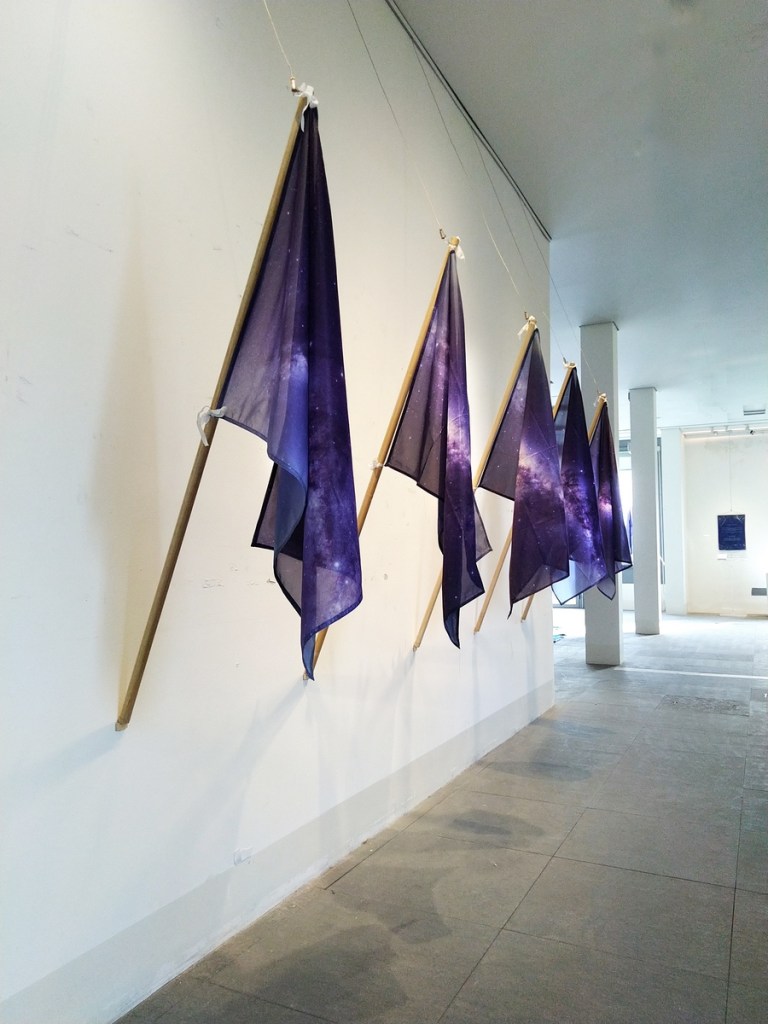
leggerezza e la magia. I progetti che li hanno visti esporre in tante parti del mondo, con il supporto di numerose Istituzioni, tentano di rendere tangibili le favole. Una porta che si apre solo se si sorride, bolle di sapone che abbattono i muri, una macchina per esprimere desideri con le stelle cadenti, piccole sculture tra amanti, cieli stellati del futuro. Scale, nuvole e semafori blu che – grazie a Gianni Rodari – danno all’osservatore il via libera per volare. Come fossero sandali alati oppure specchi che, come lo scudo di Atena, aiutano Perseo ad affrontare Medusa. Le loro installazioni fanno parte di numerose collezioni private e sono state presentate, unitamente alle performance, in contesti italiani ed internazionali, tra i quali: Istituto Italiano di Cultura di Madrid, Ambasciata Italiana ad Atene, WhiteSpaceBlack Box a Neuchâtel, Kunsthall di Bergen, Beit Beirut, Wayfarers di Brooklyn a New York, Parlamento Europeo di Bruxelles, Gnration di Braga in Portogallo, Museo per la Memoria di Ustica di Bologna, Miasto Ogródow di Katowice, Palazzina dei Bagni Misteriosi di Milano, Artbab Manama in Bahrain, Sound Design Festival di Hamamatsu in Giappone, Istituto Italiano di Cultura di Atene, Art Foundation di Atene, Museo Davia Bargellini di Bologna, Usina del Arte a Buenos Aires, Pinacoteca Nazionale di Bologna, Museo di Villa Croce di Genova, Moscow Biennale, Pitti Uomo di Firenze, Sarajevo Winter Festival, Blik Opener di Delft, Arsenale di Verona e CIFF di Copenhagen. Nel 2022 vincono il PAC2021 – Piano per l’Arte Contemporanea promosso dalla Direzione Generale Creatività Contemporanea del Ministero della Cultura e la loro bandiera raffigurante la Via Lattea viene acquisita dalla Fondazione Rocca dei Bentivoglio di Valsamoggia (BO). Il loro atelier si trova a Bologna, all’interno della Palazzina Liberty presso i Giardini Margherita.
Interview with Nadia Antonello and Paolo Ghezzi
#interviewartist #interviewartist #antonelloghezzi
english text
Parola d’Artista: Hello Nadia and Paolo, to begin with I wanted to ask you to answer this first question yourself. For most artists, childhood represents the golden age in which the first symptoms of a certain propensity to belong to the art world begin to appear. Was that the case for you too? Tell us about it?
Paolo Ghezzi : My childhood took place in the countryside, in a small village in the hills between Bologna and Modena, where I spent my days mostly outdoors playing with friends, spending time on my grandparents’ farm, or studying music. I was a very shy child who spoke very little, I spoke mostly to myself, I only socialised well with a ball between my feet. I didn’t really draw much, but I did fantasise a lot, I was always somewhere else in my mind and I was always imagining a different reality from the one I was living, from the one that was there. So yes, it’s not very different from what I do now, except that now I’m always talking and I don’t play football any more, even though I would like to.
Nadia Antonello : I was born and grew up in the Po Valley, in the province of Padua. My childhood was also marked by shyness and boredom. A quiet, cheerful and generative boredom, which drove me to spend my afternoons building houses, dens and beds out of makeshift materials for the ‘little beasts’ of the house, that is, the numerous dogs and cats. I don’t know, if we could call them the first installations made of what I found! The next day they would promptly disappear and I would build more.
P.d’A.. : How did your training begin, which schools did you attend and what important encounters did you have during your studies?
N.A.: In middle school, I did some drawings and watercolours that caught the teacher’s attention, but it was thanks to my piano teacher that I decided to enrol at the Liceo Artistico in Vicenza. Later, I enrolled at the Academy of Fine Arts in Bologna in the three-year course in Painting with Rinaldo Novali and finished my studies in Communication and Art Didactics, graduating with Davide Benati, to whom I am very close. The frequentations with Mili Romano and Roberto Daolio and a lecture at MAMbo by Cesare Pietroiusti that strongly impressed me were fundamental to our research.
impressed me strongly. From there began an epistolary correspondence that led me to do my training at the Galleria Civica di Treno alongside Andrea Viliani. They were a few months but important, I was able to work with Cesare, Alberto Garutti, Dora Garcia and the then very young Tris Vonna-Michell.
P.G.: I arrived at the Academy of Fine Arts a little later than usual, I was already 28 and I attended the first year in Bergamo where I was lucky enough to have Eva Marisaldi as a teacher. My meeting with her but also with my fellow students at the Academy gave me the conviction that it was a world I liked and a path I then continued at the Academy of Bologna where I graduated. There too I was lucky enough to meet special people like Roberto Daolio, Mili Romano and Silvia Evangelisti. In that second year at the Academy I then met Nadia and so I can say that the Academy of Fine Arts is one of the places I like most in the world and to which I am most attached and grateful.
P.d’A.. : So your artistic partnership began at the Academy in Bologna, you immediately started collaborating, how did things go?
A.G: Yes, it happened that we told each other about the works and projects we wanted to do and one of them was the very idea and so we said to each other, why don’t we do it together? So we did and we haven’t stopped since.
It was a raid, an unsolicited blitz, in the bathrooms of Artefiera. I leave out the miraculous vicissitudes of smuggling ourselves into the fair without a ticket or an invitation on Thursday. We placed ourselves in the hall where one divides between males and females in the chosen bathroom, handing over to the public a press release of a phantom exhibition inside the facilities that told in “criticalse” nothing but the furnishings of the bathroom itself. It was a very amusing experiment that provoked amusing reactions.
P.d.A. : How did things progress from here?
A.G: From here we have come so far, always having the same passion and a dream to pursue and realise, which is what we are still trying to do today.
It’s been 14 years and there would be a lot to write in response to this question, it has been an adventure and will hopefully still be so for many years.
materials, one among all our glassmaker Luigi, and curators with whom we have established a good relationship and with whom we frequently collaborate.
P.d’A.. : What importance does the relational aspect have in what you do, not only between you but with the public that enjoys your work?
A.G: “Everything is a relationship” is the title of a project we exhibited last year in Bologna in a public space and which will continue, in another form, in Bergamo in our first solo exhibition at the Traffic Gallery.
It is clear how important we think relationships are in art, but in general in all aspects of life. As a duo, we ourselves give birth to each of our works from a dialogue with the other, we have never created a work without there being a confrontation between us, with the public, with everything outside our studio where our works will then go once they are finished, and often also with the people who help us in the realisation. Producing complex projects often intrinsically has the value of cooperation and thus of a wealth of opinions, points of view, shared reflections.
For each work, the hope is that it communicates to people, that it brings about a change and if we are lucky an improvement in the current state, or at least an iota of reflection that we may have provoked in at least one person in the world.
We deeply believe that relationship is everything, we are in relationship with others, with the past and the future, with Nature and the things that surround us and that will accompany us in time.
P.d’A. : What role do literature and poetry play in your imagination?
A.G: It is undeniable how much work by Italo Calvino and Gianni Rodari is present in our work and research.
From Favole al telefono was born Via libera per volare, our blue light, from Città invisibili was born the project “Cosa non è inferno” (What is not hell) which this year will be in Bergamo and Beirut, last year it was presented by Indigo in Perugia. The Baron rampant started Scalare il sogno, a staircase that alone in the middle of the lake of Tarzo (TV), climbs up to the sky and we could go on for much longer. On Calvino’s writings on lightness is perhaps based our entire poetics.
If they do not originate from great masters such as those mentioned above (not to mention all the arts that influence us such as cinema, opera and music), sometimes we ourselves write short stories or nursery rhymes, one of the ways we have found to narrate the works or, as in the case of the project for Villa Rospigliosi in Prato, invent a new story for an established place from scratch.
Perhaps art itself is nothing more than a new story, whether to be told or seen, or imagined.
P.d’A.. : Are there certain elements in your work such as the staircase, the swing, the blue traffic light, the cloud… that constantly return, and are you interested in establishing your own iconography?
A.G: There is no real intention to establish our own iconography or to be as they say “recognisable” but over time we realise that certain themes have become recurring. We have always been fascinated by themes
universal themes and the starry sky, of looking at things from above and moving our point of view a little higher by lifting our feet off the ground. That is why, in addition to the vault of heaven, we have ‘clung’ to stairs, swings, clouds and the colour blue.
P.d.A. : Are you interested in the idea of staging in your work?
A.G: We are not sure, but we think that since our works are the fruit of reflections born out of our dialogue, therefore out of our mutual storytelling, the works become a kind of staging of our imagination or our imagination.
P.d’A. : Do you follow a method for cultivating your ‘revȇrie’?
A.G: No, it stems from the suggestion of one of us and comes, through dialogue, to take shape. Thanks to the experience of these years together and all the previous projects, as we talk the work becomes more and more evident, until we both reach the same image with our mind’s eye, then it is ready to be realised. Sometimes it is a long process of change, everything is questioned and rethought, sometimes it is faster.
P.d.A. : To close this conversation of ours, I wanted to ask you to answer this last question independently. Do you always agree on what to do or do you sometimes want to realise projects individually?
P.G.: We don’t always agree when a project is born, but we always agree when it is finished. If we don’t both agree, it means the work is not finished, it is not ready, something is missing. Sometimes we need to rethink everything again, we question everything until we are happy with the result precisely because we don’t want to make works individually, even when it happens that one of us is convinced of an idea that doesn’t convince the other, we wait, we discuss, we try to understand the different point of view because it has been like this for many years and we know that it is the right way to make our works.
N.A.: We agree often but not always. I guess it is that ‘almost always’ that gives richness to the work, that creates the stimulus to think, to fight to defend one’s ideas when it takes, to dig in further or to soften and retrace one’s steps when needed. No, I don’t think I have ever wanted to do a project alone, sharing is beautiful. I suppose it is trite to point out
how a good news, experienced in two makes one even happier and that conversely, sharing the hardships and disappointments is regenerative. The only downside is that the artist’s fee has to be halved!
Nadia Antonello (Cittadella, 1985) and Paolo Ghezzi (Bologna, 1980) trained at the Academy of Fine Arts in Bologna and founded the artistic duo Antonello Ghezzi in 2009. Their research focuses on lightness and magic. The projects that have seen them exhibit in many parts of the world, with the support of numerous institutions, attempt to make fairy tales tangible. A door that opens only if you smile, bubbles soap bubbles that break down walls, a machine for making wishes with shooting stars, small sculptures between lovers, starry skies of the future. Stairs, clouds and blue traffic lights that – thanks to Gianni Rodari – give the observer the green light to fly. As if they were winged sandals or mirrors that, like the Athena’s shield, help Perseus face Medusa. Their installations are part of numerous
private collections and have been presented, together with performances, in Italian and
international contexts, including: Italian Cultural Institute in Madrid, Italian Embassy in Athens, WhiteSpaceBlack Box in Neuchâtel, Kunsthall in Bergen, Beit Beirut, Wayfarers in Brooklyn, New York, European Parliament in Brussels, Gnration in Braga in Portugal, Museo per la Memoria di Ustica in Bologna, Miasto Ogródow in Katowice, Palazzina dei Bagni Misteriosi in Milan, Artbab Manama in Bahrain, Sound Design Festival of Hamamatsu in Japan, Italian Cultural Institute of Athens, Art Foundation in Athens, Museo Davia Bargellini in Bologna, Usina del Arte in Buenos Aires, Pinacoteca Nazionale in Bologna, Museo di Villa Croce in Genoa, Moscow Biennale, Pitti Uomo in Florence, Sarajevo Winter Festival, Blik Opener in Delft, Arsenale in Verona and CIFF in Copenhagen. In 2022 won the PAC2021 – Plan for Contemporary Art promoted by the General Directorate for Creativity Contemporary of the Ministry of Culture and their flag depicting the Milky Way is acquired by the Fondazione Rocca dei Bentivoglio in Valsamoggia (BO). Their atelier is located in Bologna, inside of the Palazzina Liberty at the Giardini Margherita.
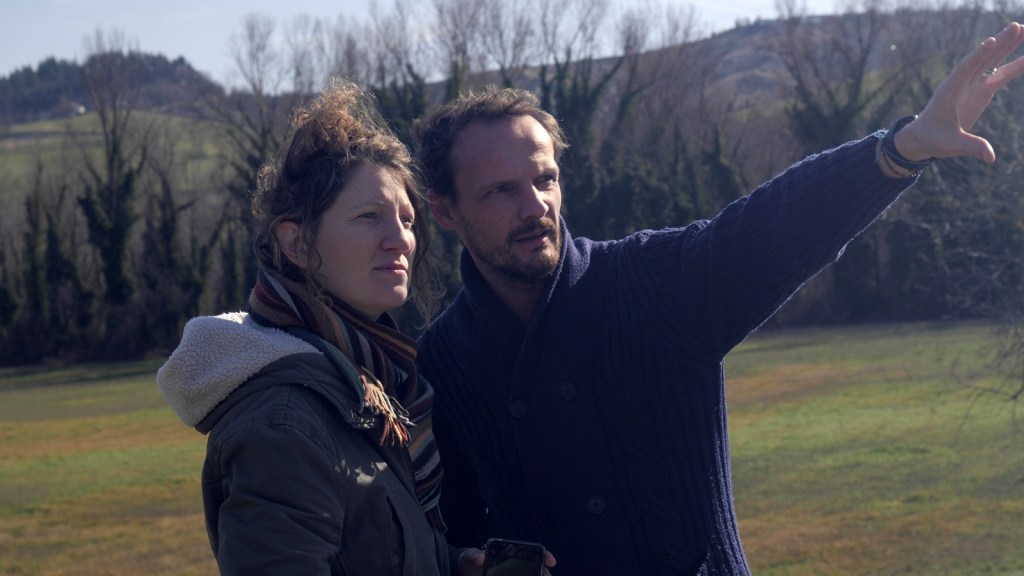
Ph. Carta bianca

 paroladartista.com