
#paroladartista #taniaciellini #intervistaartista
▼scroll for English text
Parola d’Artista: Ciao Tania, da dove e come nascono i personaggi che popolano il tuo lavoro?
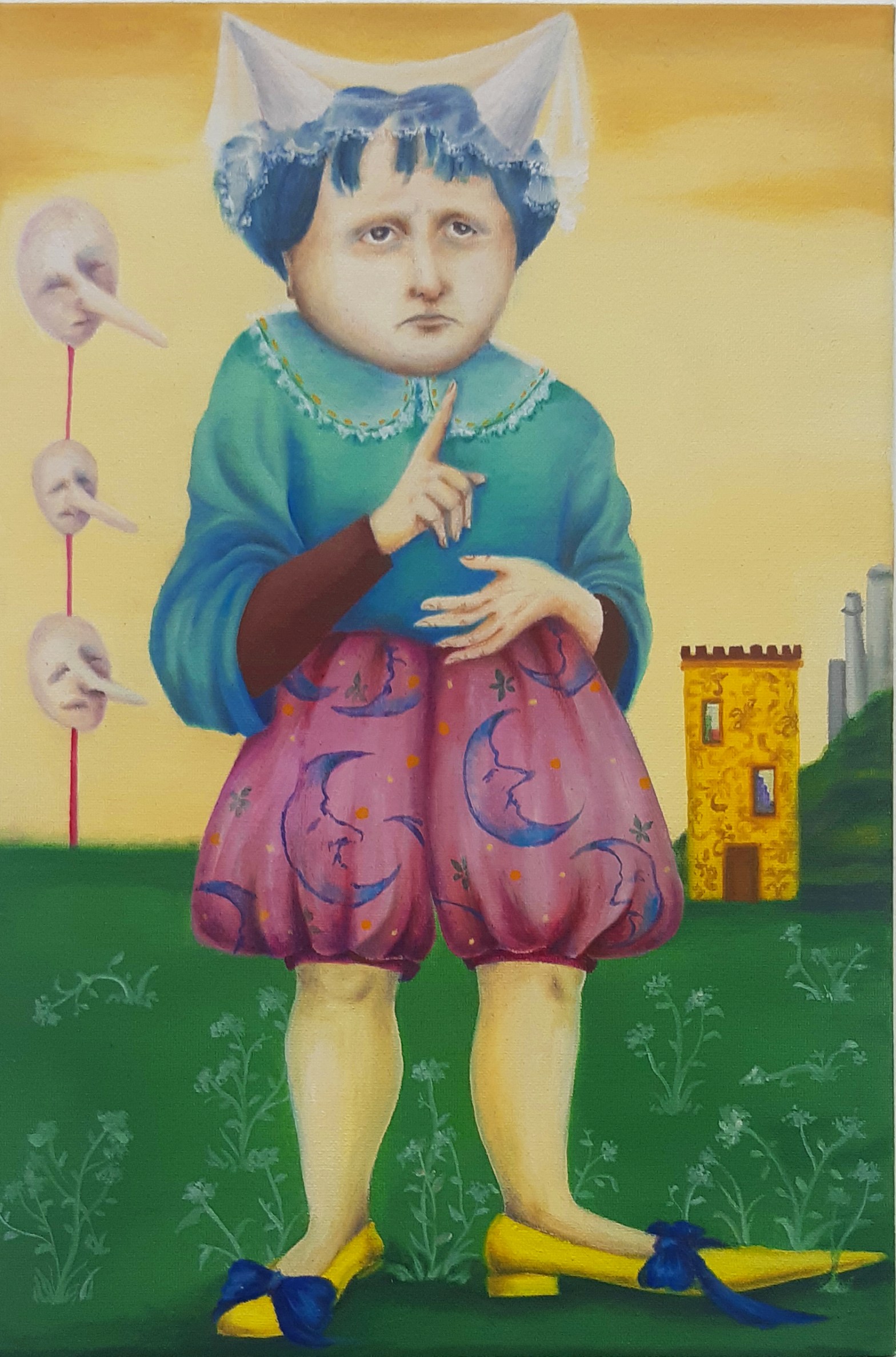
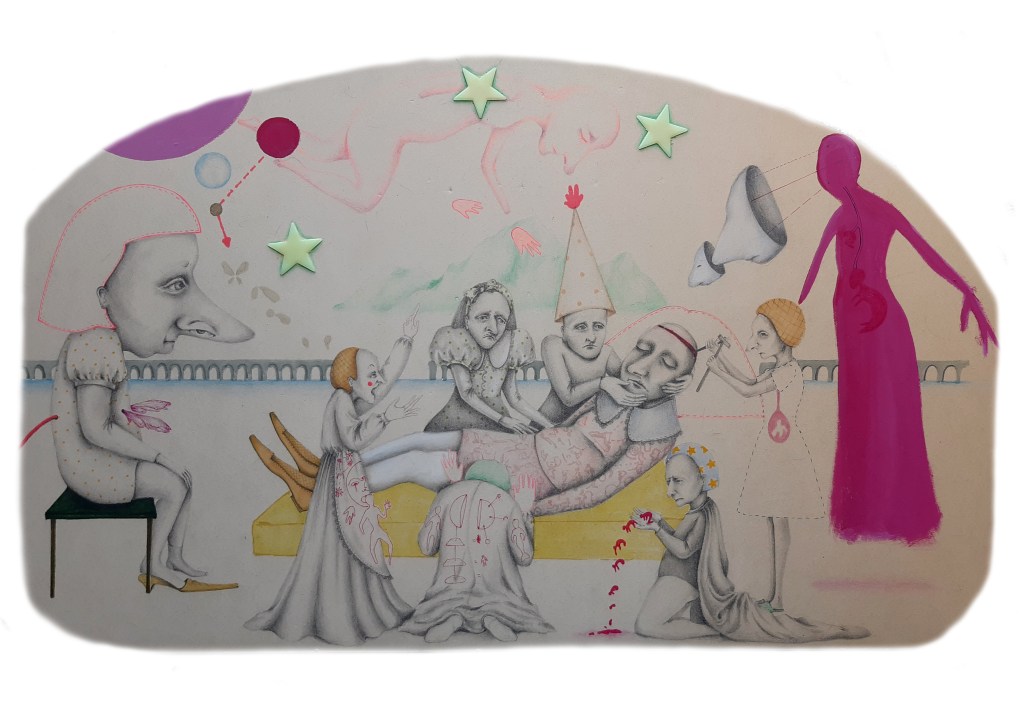
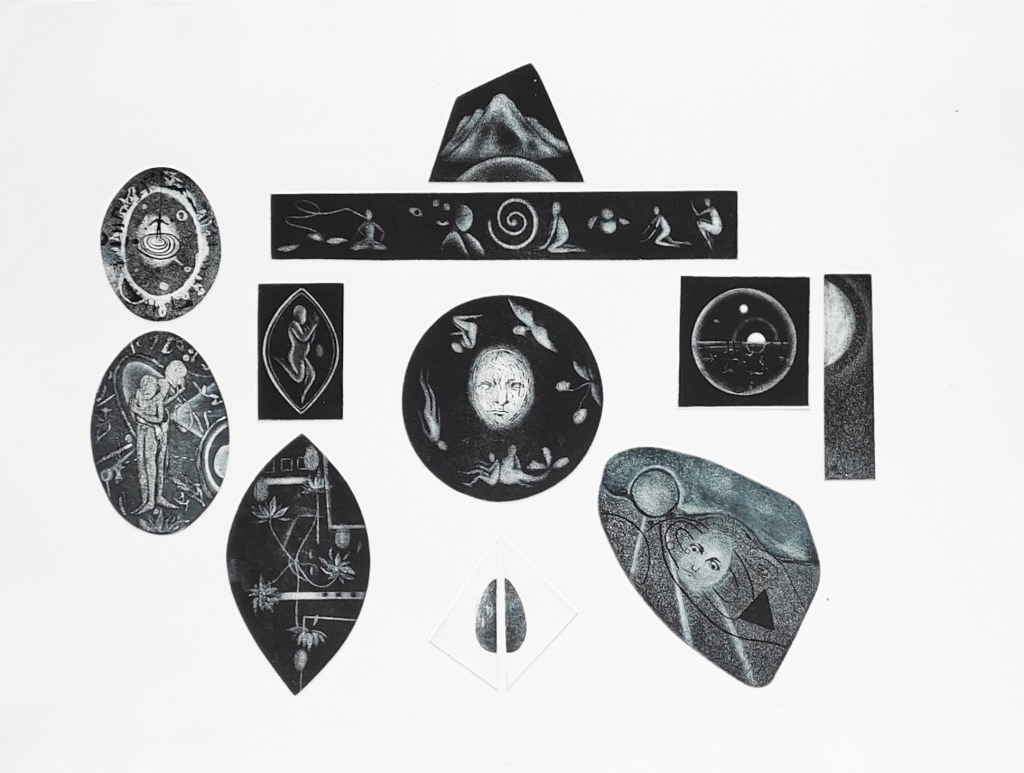
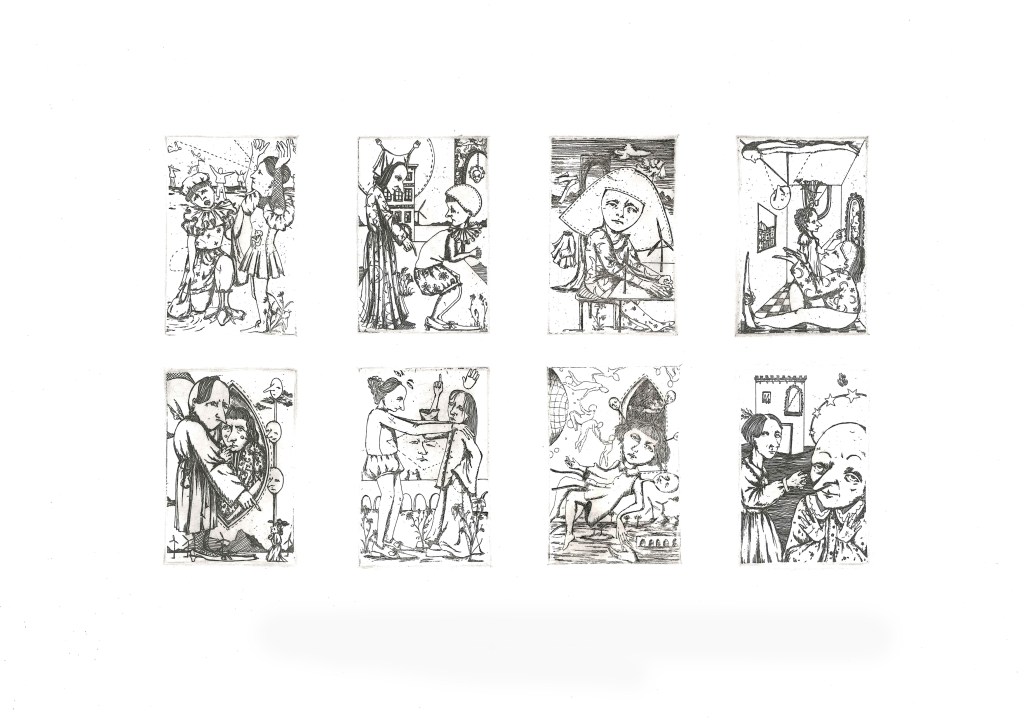
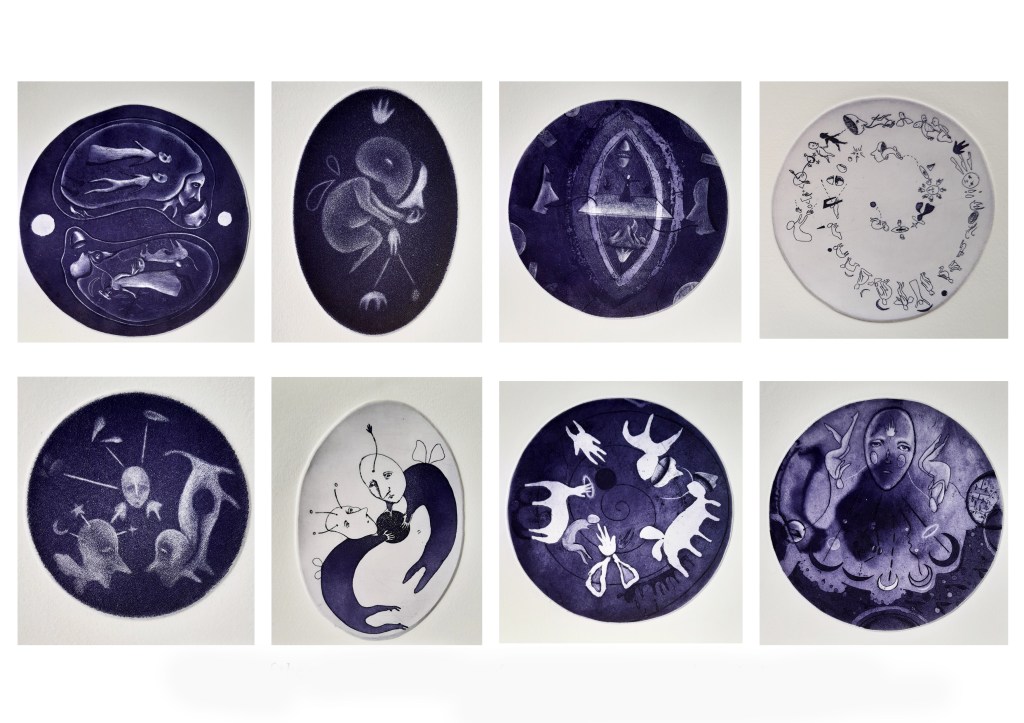
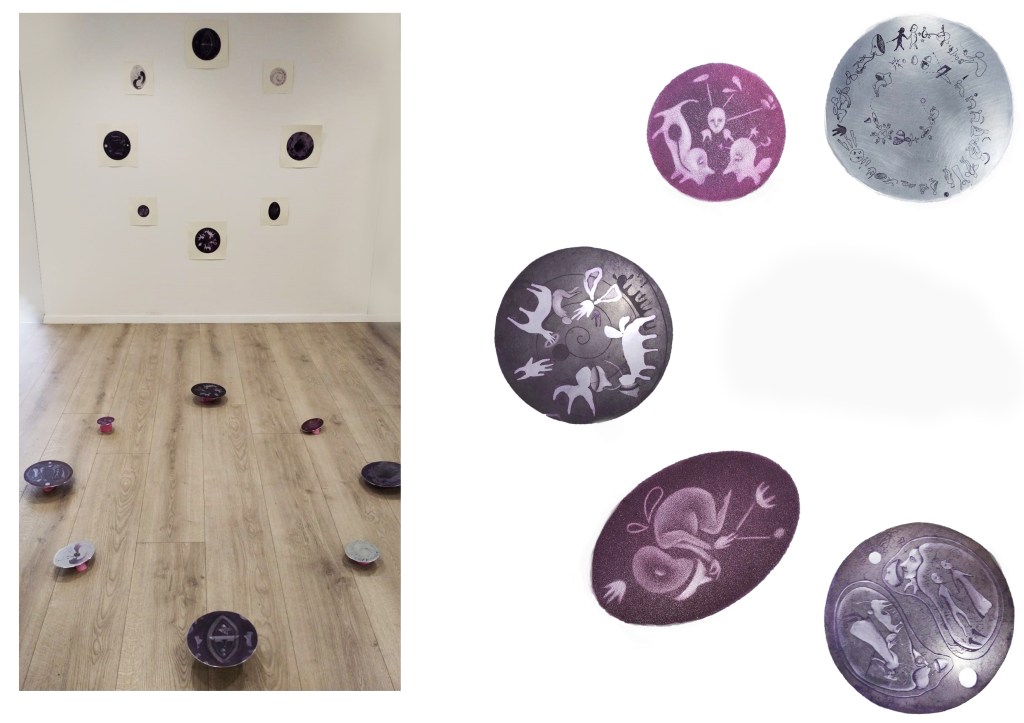
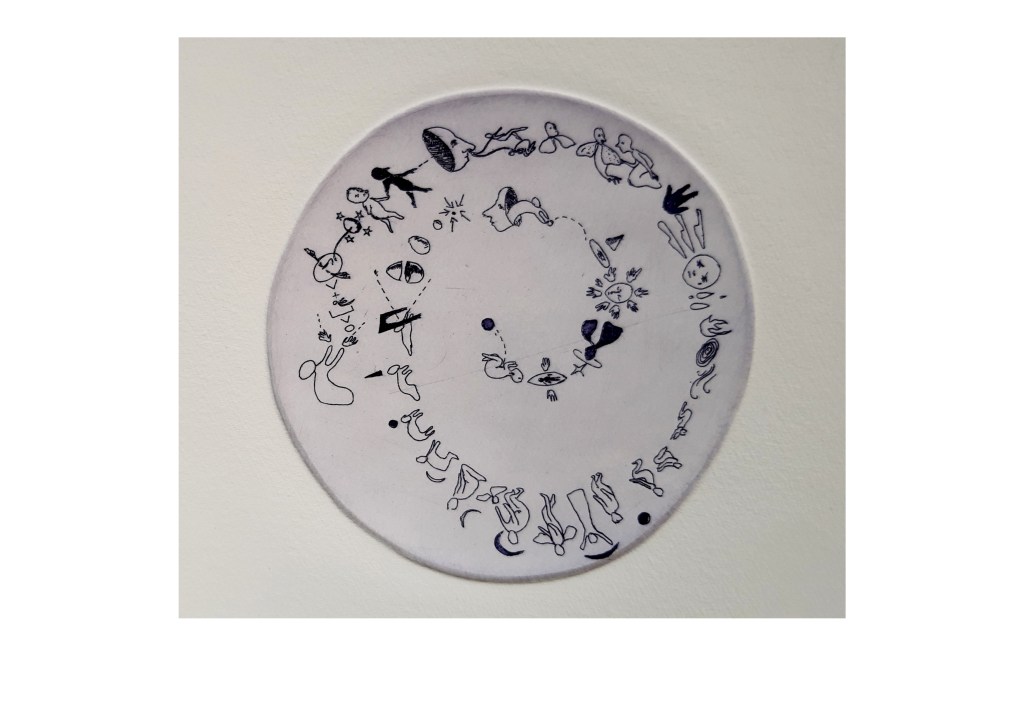
Tania Cellini: Questi personaggi mi accompagnano da molto tempo. Ho iniziato a disegnare da bambina e mia madre mi ricorda di come passassi tanto tempo a disegnare sui tovaglioli e la maggior parte erano appunto dei personaggi o dei figurini di moda. Ho continuato durante gli anni del liceo a disegnare una serie di personaggi surreali che custodisco ancora in una raccolta. Il mio rapporto con i personaggi si è evoluto nel corso degli anni. Ho cercato di analizzare profondamente la radice di queste figure, la creazione di un personaggio è per me quasi un gesto materno, ogni volta che ne disegno uno sento di aver dato vita a una creatura. Il legame emotivo con essa si evolve nel tempo, non è immediato, e stabilisco con loro un rapporto guardandoli e riguardandoli. Spero che questo stesso impatto venga trasmesso agli altri, creando un rapporto empatico tra lo spettatore e il personaggio. Questi personaggi non hanno un nome o una storia, sono più che altro interpreti dell’idea che ho in mente. Qualsiasi riflessione, domanda o pensiero prendono vita in questi esseri che si fanno attori di idee, dei fenomeni della vita e dei comportamenti umani. Ho trovato una profonda analogia con quella che è la definizione di ”avatar”. Sono profondamente interessata e influenzata dall’impatto tecnologico sulla nostra contemporaneità e un concetto molto affine al mio lavoro è quello della rappresentazione estesa di noi stessi. Nel mondo digitale siamo portati a fornire una rappresentazione di noi attraverso i vari profili social, è come se il nostro essere si espandesse su dispositivi esterni e prendesse nuove forme. L’avatar è il personaggio che possiamo incarnare nei mondi virtuali, e come degli avatar, i personaggi che popolano i miei lavori incarnano me stessa ma allo stesso tempo possono interpretare i pensieri di chi li guarda. Sono dei corpi “vuoti”, dei contenitori di pensiero che fungono da tramite tra me e lo spettatore. Questi personaggi traducono i miei pensieri rendendoli, spero, fruibili universalmente. La tristezza, il bisogno di affetto, lo stupore, la paura, la meraviglia, la rassegnazione; loro sono tutto questo. L’umanità sta vivendo un periodo di profonda trasformazione e il futuro, grazie anche alle nuove tecnologie, apre ipotesi inaspettate. Si parla di postumano e transumano, di ibridazione con le macchine, di potenziamento o di annullamento. Tutto questo mi fa pensare a una crisi ma soprattutto ad una ridefinizione dell’umano. Questi personaggi sono ibridi, deformi, fantastici, creature di un mondo metafisico che altro non è che una rielaborazione della nostra storia.
P.d’A.: Come arrivano le idee. In che modo nascono le situazioni che proponi in questo tuo mondo parallelo?
T.C.: Potrei dividere l’origine delle idee a metà: da una parte attingo molto dalla mia esperienza personale e dall’altra osservo ed elaboro la realtà che mi circonda. Sono molto curiosa e prendo ispirazione da quello che leggo, da quello che vedo sia dal vivo che virtualmente, dagli stimoli che ricevo ne consegue un’idea. A volte arrivano all’improvviso altre volte è come se aspettassi un momento magico di rivelazione, la musica mi aiuta molto a pensare, a creare un dialogo interiore e di conseguenza funziona da attivatore. Difficilmente riesco a lavorare senza ascoltare musica.
Dopo aver preso ispirazione e aver riflettuto su quello che voglio rappresentare cerco di condensare il tutto in una composizione. Faccio molti bozzetti, appunti veloci di queste riflessioni, li conservo segreti e spesso li dimentico, poi li riguardo dopo un po’ di tempo e recupero l’idea. Facendo così spesso lavori si collegano profondamente tra di loro anche senza volerlo.
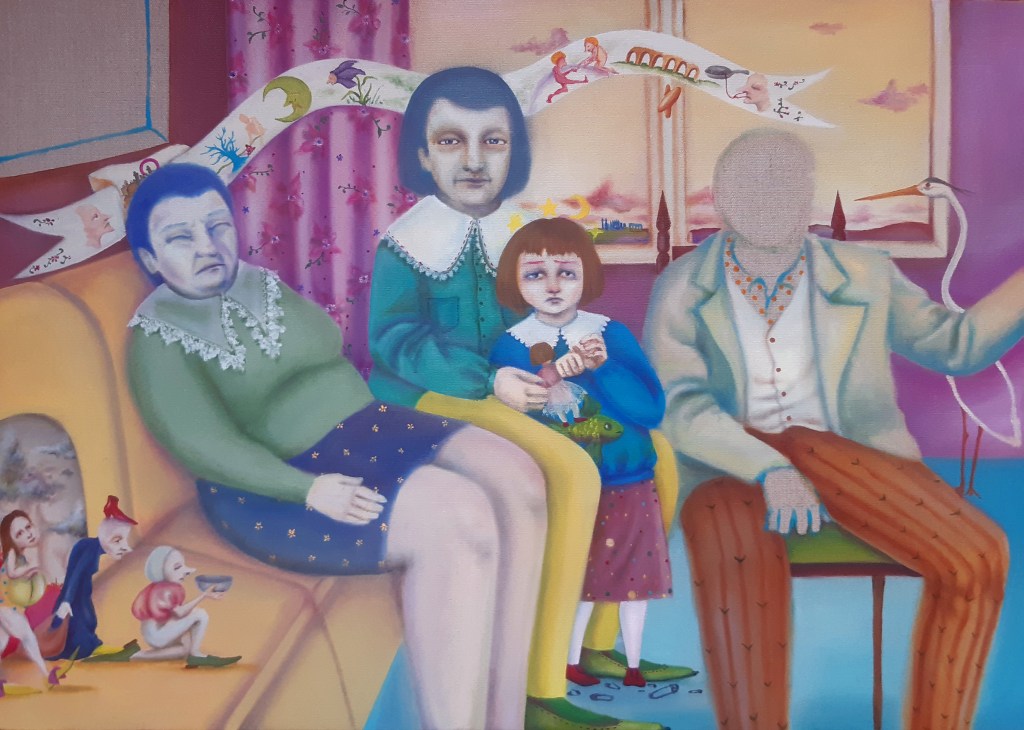
Anche se il punto di partenza è spesso un’esperienza personale cerco di allargare il soggetto fino a farlo diventare qualcosa di più generale e universale. Ad esempio al momento sto lavorando a delle tavole sul tema dell’abitazione, sono partita da quella che al momento è per me una grande preoccupazione, ovvero la situazione abitativa; i traslochi, il costo e la difficoltà nel trovare un affitto. Mentre riflettevo su questo ho scritto dei pensieri e delle parole chiave, quella che è una mia esperienza so essere l’esperienza di tante persone nella mia stessa situazione.
P.d’A.: Tu suoni Tania?
T.C.: No purtroppo non suono nessuno strumento, suonavo la chitarra classica durante le medie ma non ho portato avanti. Vorrei tantissimo imparare a suonare uno strumento, spero di riuscirci appena avrò più tempo libero da dedicarci, non è mai troppo tardi per iniziare!
Ascoltare musica mentre lavoro mi aiuta a connettermi con la memoria, con la parte più intima e personale. Non c’è un espressione diretta della musica nei lavori, ma risuona attraverso gli stati d’animo.
P.d’A.: L’immaginario musicale in che modo riverbera nel tuo lavoro?
T.C.: Già da piccola mi piaceva molto passare il tempo ad ascoltare la musica, passavo ore a guardare i video musicali su MTV e soprattutto durante le scuole medie dopo essere tornata da scuola ascoltavo molta musica classica. Durante il liceo mi sono avvicinata all’indie rock, al punk, al grunge e allo psychobilly e a gruppi come i Verdena e le Cocorosie che ho continuato ad ascoltare negli anni. A 17 anni ho avuto l’occasione di ascoltare un album di Robert Wyatt, tuttora uno dei miei musicisti preferiti in assoluto, e con lui mi sono innamorata profondamente del progressive rock e in generale delle varie declinazioni e sperimentazioni del rock tra gli anni ’60 e ’70. Per anni ho cercato di scoprire più gruppi possibili della scena prog italiana e internazionale; quindi gruppi come i Van der Graaf Generator, Gentle Giant, Renaissance, Soft Machine, Comus, Banco del mutuo soccorso etc. Oltre quel periodo amo moltissimo la musica degli anni ’90: trip hop, grunge, shoegaze. Negli ultimi anni mi sono avvicinata al rap sia italiano che americano anni ’90 e al metal, soprattutto ai Death e ad alcuni gruppi black metal come i Darkthrone e Burzum. Potrei scrivere ancora molto, sono molto curiosa a livello musicale mi piace leggere la storia dei musicisti e del contesto storico in cui si sono sviluppati i vari generi musicali, ma anche scoprire la musica underground contemporanea e quella di altre nazioni, ultimamente ad esempio ho scoperto la musica turca degli anni ’70 e alcuni musicisti greci che mi hanno colpita molto.
P.d’A.: Che importanza ha l’idea di messa in scena nel tuo lavoro?
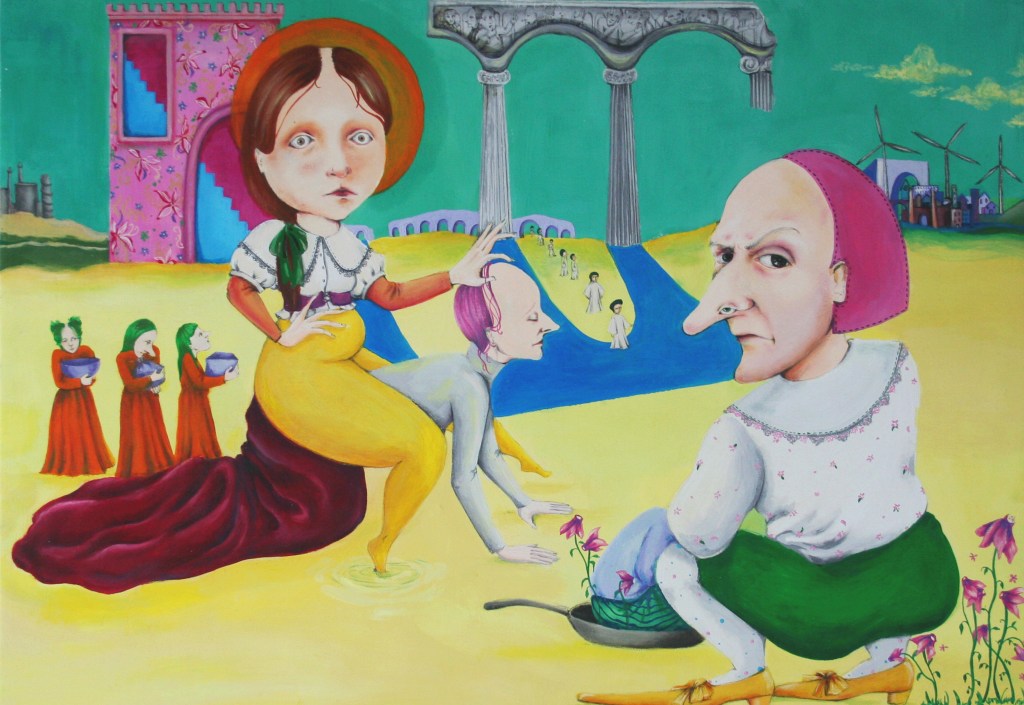
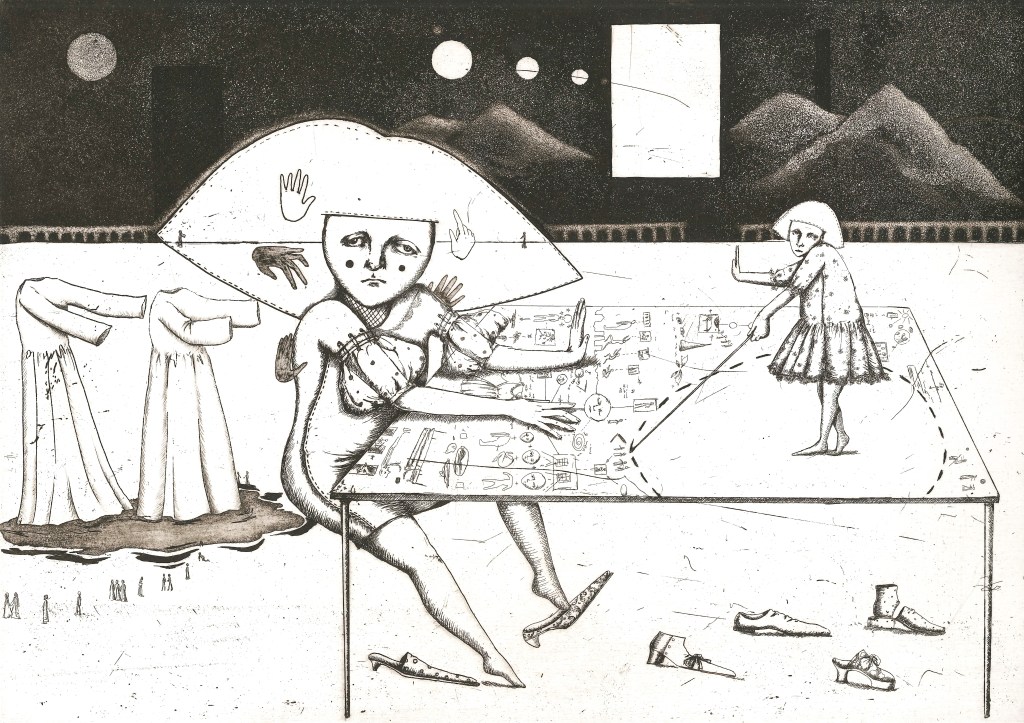
T.C.: Non so se posso parlare di messa in scena nella costruzione compositiva dei miei lavori, ma sicuramente ricerco una certa teatralità ed esasperazione. Quando progetto un nuovo lavoro cerco di studiare ogni elemento all’interno e ogni personaggio, oggetto, paesaggio ha una precisa funzione comunicativa, è un simbolo. In questo caso la messa in scena è la costruzione stessa, che ha per me una grande funzione catartica perché rappresenta appunto un messaggio che viene interpretato figurativamente dai personaggi e condensato all’interno della rappresentazione. Questo mi porta a cercare di allestire delle scene di una realtà staccata dal reale.
P.d’A.: Esiste una vena narrativa in quello che fai?
T.C.: Sicuramente l’elemento narrativo è presente, anche la lettura stessa dei lavori richiede tempo e quel tipo di predisposizione analogo alla lettura. Quando lavoro di solito ho una storia in mente, anche a livello temporale la scena potrebbe esistere nel passato e nel futuro, ma io posso rappresentarne solo un momento. Dentro di me forse è tutto parte di un’unica grande storia composta da episodi collegati in modo invisibile ma che magari un giorno riuscirò a connettere.
Tania Cellini nasce a Frosinone nel 1996 e attualmente vive e lavora tra Firenze e Torino. La sua formazione inizia presso l’Accademia Costume e Moda di Roma. Nel 2019 la sua collezione Coconut viene presentata ad Altaroma e alla Graduate Fashion Week di Londra. Prosegue gli studi con un biennio specialistico in pittura presso l’Accademia di Belle Arti di Carrara, dove si laurea nel 2022 con la tesi Fantarealtà. Il ritorno del fantastico nel mondo contemporaneo con il prof. Fabio Cavallucci. Contemporaneamente ottiene il diploma di specializzazione in grafica d’arte presso la Fondazione il Bisonte di Firenze. Durante gli studi ha partecipato a residenze artistiche (Urban Nation Museum di Berlino nel 2019 e Magazzeno Art Gallery a Filetto (RA) nel 2020), mostre personali e collettive.
English text
Interview with Tania Cellini
#paroladartista #taniaciellini #interviewartist
Parola d’Artista: Hi Tania, where and how do the characters that populate your work come from?
Tania Cellini: These characters have been with me for a long time. I started drawing as a child and my mother remembers how I used to spend a lot of time drawing on napkins and most of them were just characters or fashion figures. I continued during my high school years to draw a series of surreal characters that I still keep in a collection. My relationship with the characters has evolved over the years. I have tried to deeply analyse the root of these figures, the creation of a character is almost a maternal gesture for me, every time I draw one I feel I have given birth to a creature. The emotional bond with it evolves over time, it is not immediate, and I establish a relationship with them by looking at them and seeing them again. I hope that this same impact is transmitted to others, creating an empathetic relationship between the viewer and the character. These characters do not have a name or a story, they are more like interpreters of the idea I have in mind. Any reflection, question or thought comes to life in these beings who become actors of ideas, the phenomena of life and human behaviour. I have found a profound analogy with the definition of ‘avatar’. I am deeply interested in and influenced by the impact of technology on our contemporary world, and a concept very much akin to my work is that of the expanded representation of ourselves. In the digital world we are led to provide a representation of ourselves through various social profiles, it is as if our being expands on external devices and takes on new forms. The avatar is the character we can embody in virtual worlds, and like avatars, the characters that populate my works embody myself but at the same time can interpret the thoughts of the viewer. They are ‘empty’ bodies, containers of thought that act as an intermediary between me and the viewer. These characters translate my thoughts, making them, I hope, universally usable. Sadness, the need for affection, astonishment, fear, wonder, resignation; they are all this. Humanity is going through a period of profound transformation and the future, thanks also to new technologies, opens up unexpected hypotheses. There is talk of posthuman and transhuman, of hybridisation with machines, of empowerment or annihilation. All this makes me think of a crisis but above all of a redefinition of the human. These characters are hybrids, deformed, fantastic, creatures of a metaphysical world that is nothing but a reworking of our history.
P.d’A.: How do ideas come about. How do the situations you propose in this parallel world of yours come about?
T.C.: I could divide the origin of ideas in half: on the one hand I draw a lot from my personal experience and on the other I observe and process the reality around me. I am very curious and I take inspiration from what I read, what I see both live and virtually, from the stimuli I receive an idea follows. Sometimes they come out of the blue, other times it’s as if I’m waiting for a magical moment of revelation, music helps me a lot to think, to create an inner dialogue and consequently it works as an activator. I can hardly work without listening to music.
After taking inspiration and thinking about what I want to represent, I try to condense it into a composition. I make a lot of sketches, quick notes of these reflections, keep them secret and often forget them, then look at them again after a while and recover the idea. By doing this, works often connect deeply with each other even without meaning to.
Although the starting point is often a personal experience, I try to broaden the subject until it becomes something more general and universal. For example, at the moment I am working on some panels on the subject of housing, I started from what is currently a great concern for me, namely the housing situation; the moving, the cost and the difficulty in finding a rent. While reflecting on this I wrote down some thoughts and key words, what is my experience I know is the experience of many people in the same situation as me.
P.d.A.: Do you play Tania?
T.C.: No unfortunately I don’t play any instruments, I played classical guitar during middle school but I didn’t pursue it. I would very much like to learn to play an instrument, I hope to do it as soon as I have more free time to devote to it, it’s never too late to start!
Listening to music while I work helps me to connect with my memory, with my most intimate and personal part. There is no direct expression of music in the work, but it resonates through moods.
P.d.A.: How does musical imagery reverberate in your work?
T.C.: Even as a child I loved spending time listening to music, I spent hours watching music videos on MTV and especially during middle school after coming home from school I listened to a lot of classical music. During high school I got into indie rock, punk, grunge and psychobilly and bands like Verdena and Cocorosie that I have continued to listen to over the years. When I was 17, I had the chance to listen to an album by Robert Wyatt, still one of my favourite musicians ever, and with him I fell deeply in love with progressive rock and in general with the various declinations and experimentations of rock between the 60s and 70s. For years I tried to discover as many bands as possible from the Italian and international prog scene; hence bands like Van der Graaf Generator, Gentle Giant, Renaissance, Soft Machine, Comus, Banco del mutuo soccorso etc. Beyond that period I love a lot of 90s music: trip hop, grunge, shoegaze. In recent years I have been getting into both Italian and American 90s rap and metal, especially Death and some black metal bands like Darkthrone and Burzum. I could write a lot more, I am very curious about music, I like to read about the history of musicians and the historical context in which the various musical genres developed, but also to discover contemporary underground music and music from other countries, most recently
for example, I discovered Turkish music from the 1970s and some Greek musicians who impressed me a lot.
P.d’A.: How important is the idea of staging in your work?
T.C.: I don’t know if I can speak of staging in the compositional construction of my work, but I certainly seek a certain theatricality and exasperation. When I design a new work, I try to study every element inside and every character, object, landscape has a precise communicative function, it is a symbol. In this case the staging is the construction itself, which for me has a great cathartic function because it represents a message that is figuratively interpreted by the characters and condensed within the performance. This leads me to try to stage scenes of a reality detached from reality.
P.d’A.: Is there a narrative vein in what you do?
T.C.: Certainly the narrative element is present, even the reading of the work itself requires time and that kind of predisposition similar to reading. When I work I usually have a story in mind, even on a temporal level the scene could exist in the past and in the future, but I can only represent a moment of it. Inside me perhaps it is all part of one big story made up of episodes that are invisibly connected but that I may one day be able to connect.
Tania Cellini was born in Frosinone in 1996 and currently lives and works between Florence and Turin. Her training began at the Accademia Costume e Moda in Rome. In 2019, her Coconut collection was presented at Altaroma and Graduate Fashion Week in London. She continued her studies with a two-year specialist course in painting at the Academy of Fine Arts in Carrara, where she graduated in 2022 with the thesis Fantarealtà. The return of the fantastic in the contemporary world with Prof. Fabio Cavallucci. At the same time, he obtained a specialisation diploma in graphic art at the Fondazione il Bisonte in Florence. During his studies, he participated in art residencies (Urban Nation Museum in Berlin in 2019 and Magazzeno Art Gallery in Filetto (RA) in 2020), solo and group exhibitions.
(dimensione lastre)

 paroladartista.com