
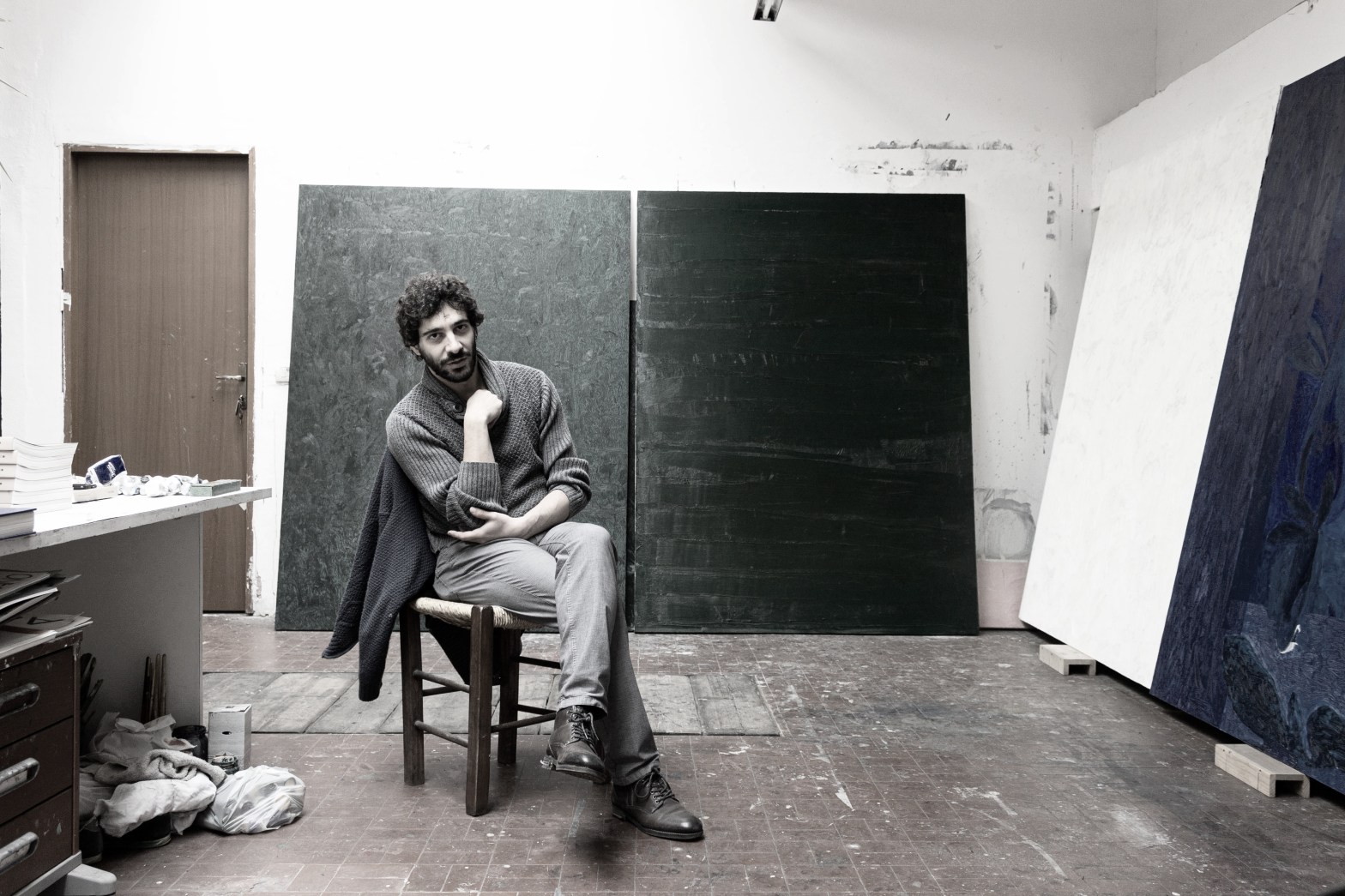
#paroladartista #intervistaartista #lorenzodilucido
▼scroll down for English text
Parola d’Artista: Ciao Lorenzo, Per la maggior parte degli artisti l’infanzia rappresenta l’età dell’oro quella in cui cominciano a manifestarsi i primi “sintomi” di una certa propensione ad appartenere al mondo dell’arte. E’ stato così anche per te? Racconta?
Lorenzo Di Lucido: Ciao, la mia infanzia è stata del tutto normale e apparentemente lontana da qualsiasi epifania o sintomo, ero un ragazzo di strada. Ho vissuto la mia infanzia tra le vie del mio paese natale e del mio quartiere in particolare in totale serenità. Avevo però la tendenza a fantasticare, moltissimo, all’inizio questo andare con la mente oltre e ovunque era di carattere soprattutto letterario. In me da ragazzo è nata prima la passione per la lettura e la letteratura. Mi piacevano i libri, come oggetto fisico, mi affascinavano molto, avevano per me qualcosa di misterioso e bellissimo, avevo con loro , in particolare con quelli che avevo in casa un rapporto molto fisico, mi piacevano gli odori delle pagine e il loro frusciare. Ero inoltre molto stimolato e incuriosito da mio padre che era un ebanista e intagliatore di rara qualità e di una umiltà esagerata. Di tanto in tanto parlava di arte, degli artisti che gli erano rimasti impressi nella testa e nel cuore negli anni in cui frequentava un istituto d’arte statale di cui mi parlava con passione. Questo edificio era poi stato abbandonato. Avevano costruito una nuova scuola d’arte più “moderna” in linea con la mentalità dei fine anni 70.
Io andavo a riguardarla quella vecchia scuola e ci fantasticavo sopra. Ogni tanto di nascosto ci entravo in quei corridoio abbandonati. Mi immaginavo le aule, il cortile con le piante di cui spesso mio padre mi parlava. Le magie dei migliori disegnatori che aveva incontrato. In quella scuola tra gli altri era passato Riccieri che è poi diventato un grande scenografo in America.
Furono quelle le prime scintille tutte o quasi fantastiche e intellettuali.
Poi fu l’adolescenza e in particolare qualcosa accadde tra la fine delle scuole medie e i primi anni delle superiori. Ma insomma io in qualche modo amo il ritardo, amo un certo tipo di lentezza attualmente
assolutamente fuori tempo massimo. Sono estremamente puntuale nella vita ma nell’ arte no, arrivo alle cose a modo mio in un modo credo piuttosto particolare e mai o quasi mai lineare. Sono paradossale…sin da bambino credo.
Parola d’Artista: Questo modo legato all’affabulazione alla fantasticheria lo hai trasferito nel tuo lavoro artistico?
Lorenzo Di Lucido: Sì assolutamente , soprattutto all’inizio il fantasticare mi ha aiutato moltissimo. Quando ero in seconda media vidi un mio compagno di classe armeggiare in cartella con alcuni suoi disegni che traevano ispirazione dal fumetto, soprattutto quello di stampo americano. Non so perché ma in me ci fu quasi un cortocircuito. Saper disegnare, sapere disegnare come Riccieri o come quel mio compagno di classe che si chiamava Luca era per me qualcosa di importante. Più importante che saper scrivere o fare di conto o essere bravo in scienze. Un potere, il potere di fare luogo fisico alla propria immaginazione a quello che si sognava. Il disegno all’inizio per me fu questo, una sorta di super potere. Dal giorno in cui avevo visto i quei disegni in classe era diventato per me un ossessione imparare a disegnare!
Negli anni seguenti tra i tredici e i diciotto anni il mio fu un andamento ondivago che aveva come perno sperimentare tramite il disegno. Spesso i miei erano studi astrusi, astratti o quasi, soprattutto agli occhi dei miei coetanei che spesso non capivano cosa disegnavo ( di solito erano corpi o parti anatomiche oppure ballerine meccaniche cyborg) i docenti invece li capivano almeno graficamente anche se non apprezzavano. Iniziai comunque così a formarmi da un punto di vista grafico o se vogliamo tecnico da autodidatta nel campo delle fantasticherie, tra fumetto e illustrazione. Parallelamente leggevo moltissimo. Moltissima poesia, tanti romanzi, molte biografie di artisti e tanto fumetto di qualsiasi tipo. Spesso mi indebitavo con giornalai e librai che per fortuna erano pazienti con i miei arretrati. Nel disegno o nel Dio Segno per dirla alla Zuccari avevo iniziato a trovare una strada che portava però ad un luogo in realtà per me ancora oscuro, un luogo che avrei scoperto più tardi e che era la pittura. Il dipingere pittura.
Parola d’Artista: Raggiunta la maggiore età hai frequentato l’Accademia di Belle Arti?
Lorenzo Di Lucido: Sì, ho lasciato l’Abruzzo e mi sono iscritto all’Accademia di belle Arti di Bologna. Ho frequentato Pittura presso la cattedra del prof. Massimo Pulini. Per me Massimo e moltissimi compagni pittori sono stati fondamentali in quegli anni di appassionato apprendistato. Ricordo esattamente il giorno in cui ho
preso in mano il primo pennello per dipingere un quadro. Ricordo le centinaia di dipinti iniziati, portati avanti e distrutti, le sperimentazioni giornaliere, le chiacchierate con i tanti amici pittori o con altri iscritti. Vivevo tutti i giorni in Accademia e il fine settimana erano due giorni in cui aspettavo che
arrivasse il lunedì per poter tornare a dipingere. Il mio studio era costituito da un muro e da un cavalletto su cui erano accatastati i quadri. Sono stati anni straordinari e per me molto importanti. Quello che so o credo di poter fare in ambito pittorico è certamente frutto anche di quanto appreso lì.
Molti di quei pittori e molti maestri incontrati a Bologna in quegli anni sono ancora punti di riferimento per me. Hanno costituito parte del mio immaginario. Poi negli anni ovviamente ho cercato una strada, un percorso mio, più intimo e personale con tutto ciò che questo comporta.
Parola d’Artista: Dopo questo periodo di formazione come inizia a svilupparsi il tuo lavoro?
Lorenzo Di Lucido: Il periodo di formazione è già parte integrante del mio percorso dentro il solco della pittura che si è sviluppato per cicli a volte durati mesi o anni altri solo una manciata di quadri. Inizialmente ho utilizzato un vecchio repertorio di foto di famiglia che reinterpretavo in modo molto libero in chiave pittorica. Erano immagini in qualche modo neutre che mi permettevano un buon grado di libertà e qualche piccola violenza iconoclasta. Fondamentalmente erano quadri solo all’apparenza legati alla figurazione in cui in realtà le forme erano recipienti di pittura. Concettualmente il risultato non era molto distante rispetto a certa pop art inglese anche se con le dovute differenze…con il passare del tempo ho trovato piccole strade forse un po’ più mie, più personali. Subito dopo la fine dell’accademia ho prodotto una serie di quadri neri dove questo colore ricopriva quadri con figure e paesaggi precedentemente dipinti.
Era un lavoro questo che ragionava sulla distruzione e sulla sopravvivenza delle immagini. Subito dopo ho dipinto questi esclusivamente con una gamma di grigi piccoli ritratti, paesaggi, figure, esplosioni atomiche su piccole dimensioni. Il discorso era sempre legato al farsi e al disfarsi della pittura. Ad un quadro che è l’ultimo risultato di una serie di possibilità vagliate in potenza e accantonate ma comunque presenti nello stomaco del dipinto finale. Ho sempre dipinto e ridipinto più volte le stesse superfici a volte per anni anche dopo che alcuni quadri erano stati esposti
Qualche giorno fa lavoravo su un quadro che mi segue da una decina di anni.
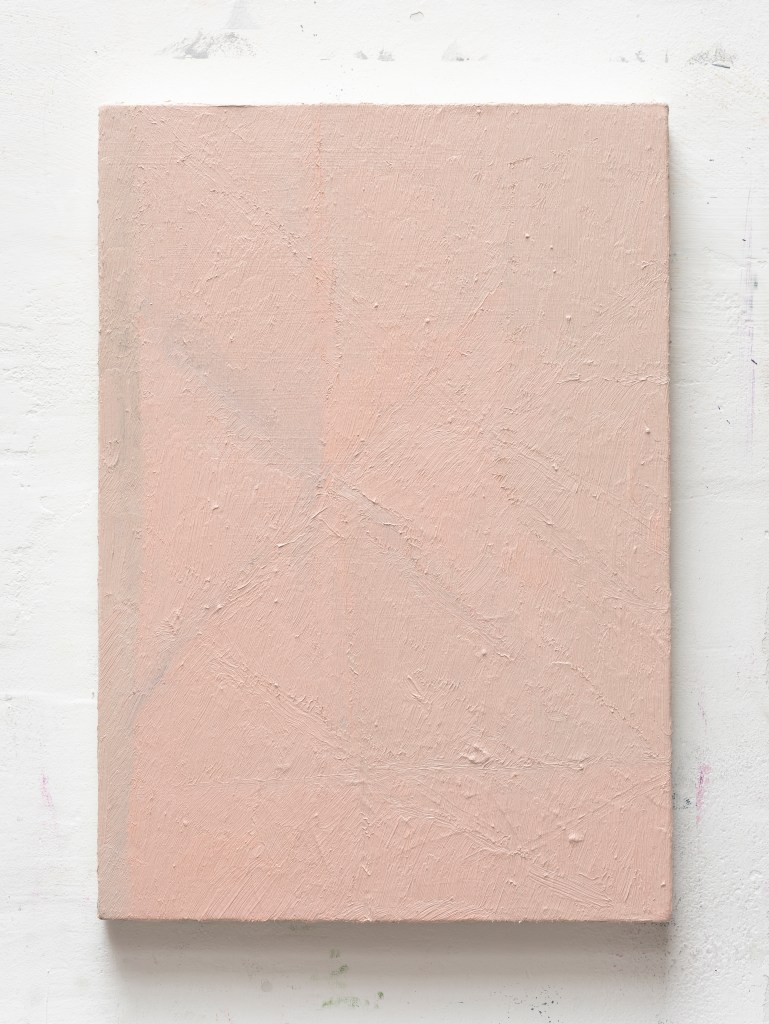
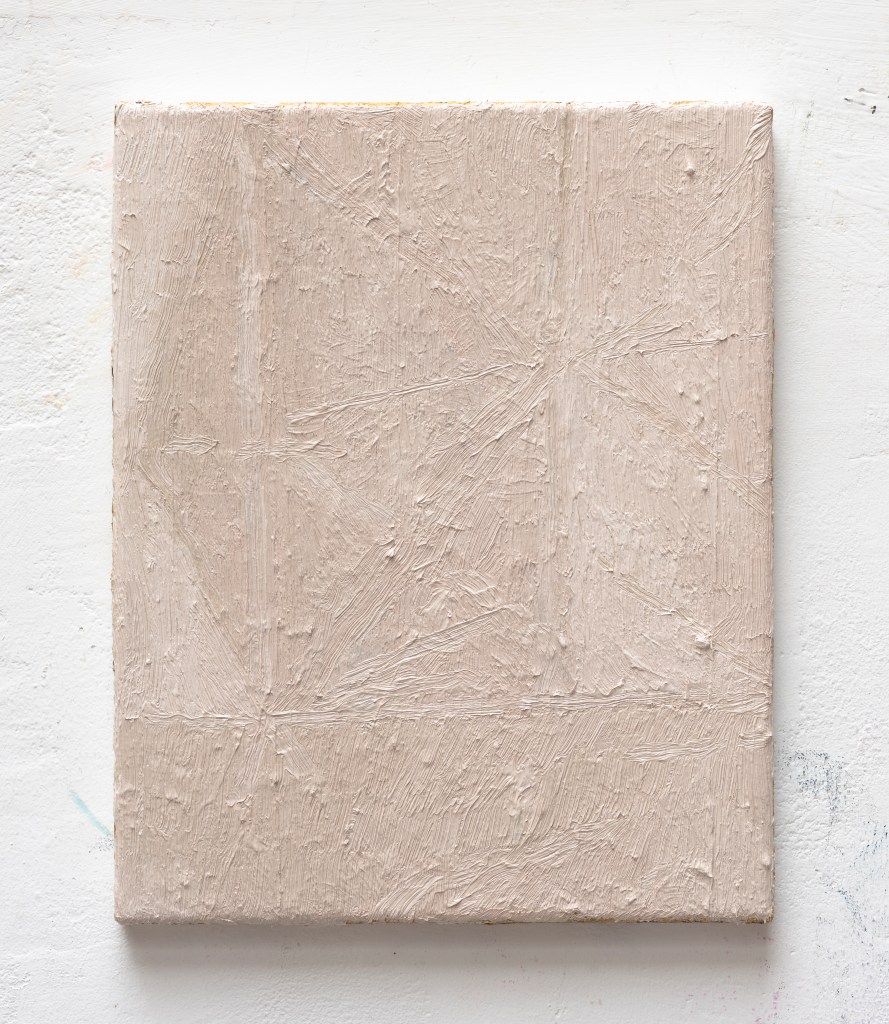
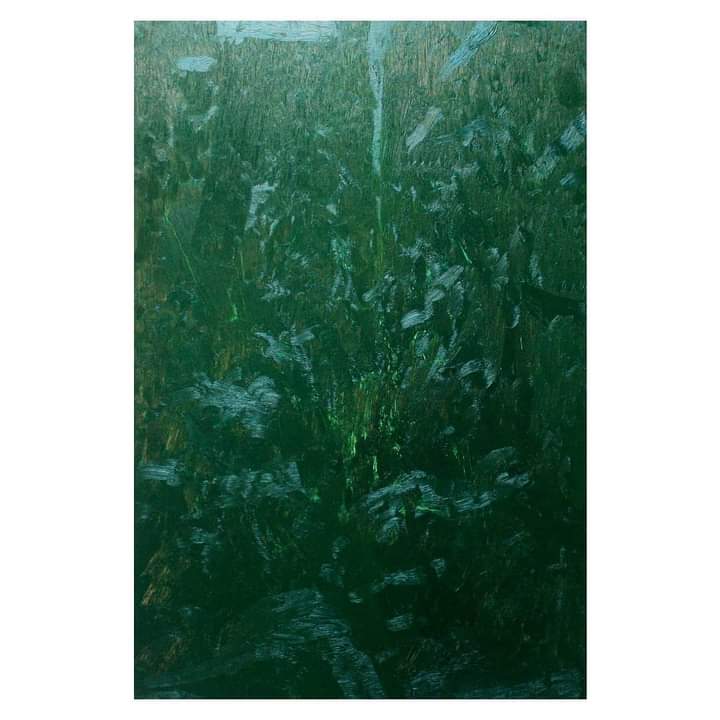
Quando dopo una serie di spostamenti e cambiamenti nella mia vita privata sono arrivato a Milano il mio lavoro è cambiato nuovamente…rimanendo in qualche modo sempre lo stesso. Da alcuni anni lavoro su quelli che agli occhi dei molti sono monocromi. Per lo più ho lavorato principalmente su una serie di quadri verdi, a cui alterno quadri che si attestano su piccole variazioni attorno a colori instabili, alcuni rosa, grigi,
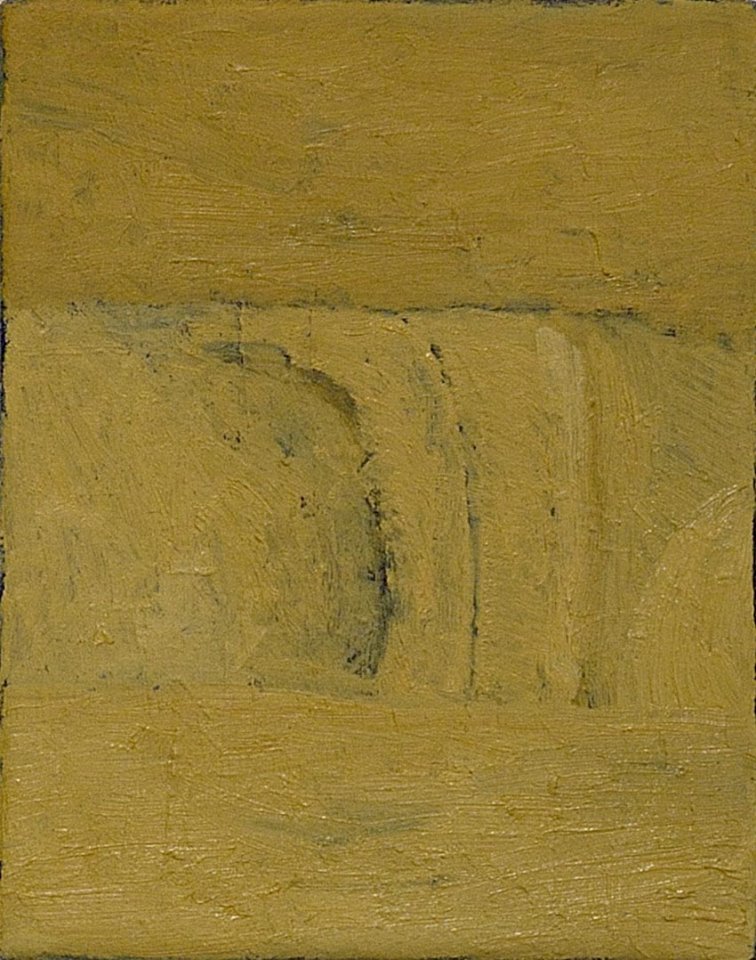
ocra. Mantengo ancora viva una parte della mia pittura che rappresenta piccole nature morte, ritratti, fiori…cerco di rimanere instabile e aperto. Può accadere di tutto nella mia pittura e sono certo, perché lo sento che un’altra sterzata è alle porte. Io faccio esclusivamente quello di cui sento il bisogno. Sono estremamente egoista in pittura. Non ascolto nessuno se non me stesso. Questo a volte credo mi esponga a rimanere ai margini…ad essere un po’ un eterno outsider o uno sfigato. Un minore. Me ne prendo con serenità tutto il peso. Io sono io e nel bene e nel male non vorrei essere nessun altro. Dipingo quello che sento quando lo sento, non sono un produttore, non ho il dovere di produrre nulla per nessuno. Sono l’unico vero committente di ciò che dipingo, l’unico giudice. L’unico che ha potere di vita o di morte su quello che dipinge.
Parola d’Artista: Senti questa faccenda di dipingere ridipingere… anche a distanza di molto tempo sopra ad uno stesso quadro lascia delle tracce leggibili di vari passaggi?
Lorenzo Di Lucido: Si certo le tracce dei vari passaggi sono leggibili, entrano a fare parte della superficie dipinta. La pittura in generale quasi tutta è fatta di vari passaggi leggibili ad un occhio attento o a chi semplicemente dipinge. Il ripensamento è uno dei modi in cui ad esempio spesso si può distinguere un quadro antico originale da una copia. È un dato naturale in una pittura che raramente non porta sotto la pelle finale altre superfici. Ovviamente ci sono quadri dipinti alla prima o che semplicemente non richiedono ridipinture e questo vale anche per me. Ho dipinto quadri in modo molto veloce e senza ripensamenti ma il più delle volte tendo a ridipingere più volte la stessa superficie. Questo è evidente e riscontrabile ed entra a fare parte del modo in cui io guardo, osservo e sento la pittura. Almeno in un certo ciclo di lavori dove cerco una certa dose di ruvidezza, una superficie quasi fastidiosa, cruda e diamantina al tempo stesso, piena di inciampi…una zona rossa di Verdun sotto forma di pittura. Un terreno accidentato, lacerato, ferito eppure composto e fermo, duro, scultoreo.
Parola d’Artista: Sei interessato ad un’idea di messa in scena nel tuo lavoro?
Lorenzo Di Lucido: Potrei essere interessato a documentare i vari passaggi ma a dire il vero non in pittura, ma nel disegno. Attualmente sarebbe interessante documentare come si forma un mio disegno e credo che un giorno lo farò. Per quanto riguarda la pittura invece no. Voglio assolutamente salvaguardare quello che è il risultato che si mostra allo spettatore solo dopo l’avventura del dipingere e attualmente trovo fastidioso anche mostrare il mio lavoro mentre avviene. Sono abbastanza contrario agli studio visit perché per forza di cose devi quasi sempre trasformare e forzare la natura dello studio come spazio di lavoro e ricerca
pura, quindi confusa e caleidoscopica…poco chiara. Ma per me la pittura è questo è anche l’attività di una scimmia in gabbia, che si muove senza un senso apparente in cattività. La ricerca in pittura come in molti altri campi non muove in linea retta. La messa in scena del mio lavoro è quando questo viene esposto ed è questa la parte più difficile perché attualmente il mio dipingere per essere percepito a pieno avrebbe bisogno di spazio e tempo. Si legge con difficoltà in una collettiva. Avrei bisogno di una mostra in cui mostrare una buona parte di un ciclo credo. Di un ampio spazio e di una luce il più possibile simile a quella natura in cui nascono le opere. Una luce naturale e mai artificiale.
Parola d’Artista: L’aspetto narrativo ha una sua importanza in quello che fai?
Lorenzo Di Lucido: No, almeno non nel senso comune del termine. Hanno una storia ma non in senso strettamente narrativo. Non raccontano, ma sono e il loro racconto, quello che raccontano può essere colto da uno sguardo curioso che ha voglia di immergersi lentamente nell’ osservare un dipinto. Ecco tutto i quadri hanno bisogno di essere osservati con attenzione per un certo periodo di tempo. Allora dentro ci trovi tutte le storie e le narrazioni che vuoi anche quelle a cui l’autore non ha pensato e che sono ugualmente legittime in fondo . Ma l’aspetto narrativo in sé stesso a me non interessa non devo raccontare nessun storiella nemmeno se dipingo un quadro con figure, almeno io credo così, ma posso sbagliarmi. Posso sbagliarmi sul mio lavoro.
Parola d’Artista: Quando lavori ad un ciclo di opere ne dipingi diverse insieme o lavori su una per volta?
Lorenzo Di Lucido: Lavoro da sempre a più opere contemporaneamente. Su molteplici superfici, di solito almeno una decina ma spesse volte anche di più. Alcune le riguardo per molto tempo prima della stesura finale altre vengono terminate più rapidamente. Molte mi accompagnano e rimangono in uno stato di letargo pittorico per molto tempo. Mesi a volte anni.Mi piace avere in studio diverse possibilità di lavoro anche su carta. Spesso lavoro su collage o accostamenti di carte dipinte ad olio o acrilico. Invece non disegno quasi mai in studio di solito per il disegno preferisco un luogo ancora più intimo e di solito disegno in casa ma sempre in un posto tranquillo e con un gran silenzio.
Parola d’Artista: Che importanza ha il disegno nel tuo lavoro?
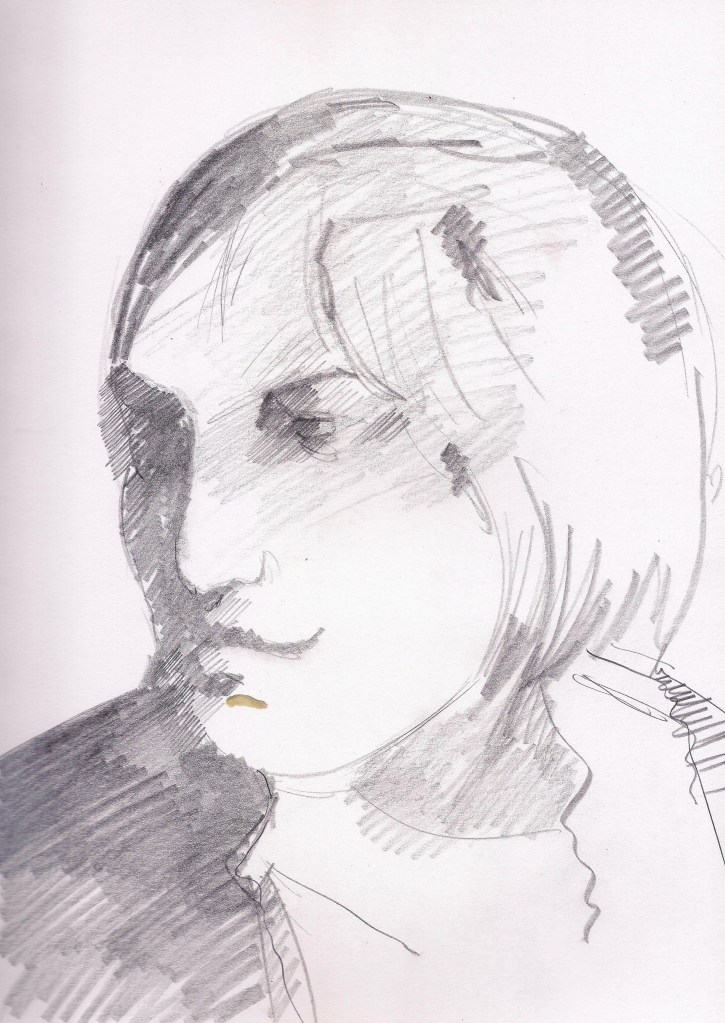
Lorenzo Di Lucido: Il disegno o Dio Segno per omaggiare Zuccari è qualcosa per me di straordinario. Dolce, struggente,lenitivo. È ciò a cui ricorro sempre nei momenti di blocco sul lavoro pittorico, ma anche per appuntare nuove idee, nuove strade possibili. Nel disegno mi è più semplice e naturale la più libera sperimentazione e spesso il disegnare anticipa spunti che germineranno poi in pittura ma solo più tardi. In pittura bisogna giustificare tutto, centimetro per centimetro, nel disegno questo non accade. Un gesto, un segno…è così semplice e genuino il disegno e come un buon pane. Nutriente e semplice…essenziale e come le mele puoi stiparlo nella dispensa per l’inverno . Mi ha salvato, mi salva e mi aiuta sempre.
Lorenzo di Lucido Sono nato nel 1983 a Penne (Pe).
Dopo una prima formazione come maestro d’arte e maestro d’arti applicate con una specializzazione in tecnica dell’ oreficeria e della microfusione terminata nel 2002 presso l’ istituto d’ arte Mario Dei Fiori. Mi sono iscritto al corso di pittura del prof. Massimo Pulini presso l’accademia di belle arti di Bologna, dove ho terminato gli studi nel 2008. Nell’ ultimo periodo in accademia sono stato tutor della docente Giovanna Caimmi nel corso di tecniche e tecnologie della pittura.
Dal 2002 ho iniziato ad esporre in mostre di pittura , personali e collettive in Italia e all’estero. Ho avuto il piacere di partecipare al progetto di ricerca sulla pittura italiana yellow artist run space nato da un idea e dalla volontà di vera Portatadino assieme a Luca De Angelis, Lucia Veronesi e Marco Salvetti. Vivo e lavoro tra Milano e L’Abruzzo.
English Text
Conversation with Lorenzo Di Lucido
#paroladartista # interviewartist #lorenzodilucido
Parola d’Artista: Hi Lorenzo, For most artists, childhood represents the golden age when the first ‘symptoms’ of a certain propensity to belong to the art world begin to appear. Was that the case for you too? Do tell?
Lorenzo Di Lucido: Hello, my childhood was completely normal and apparently far from any epiphany or symptom, I was a street kid. I lived my childhood in the streets of my hometown and my neighbourhood in particular in total serenity. I did, however, have a tendency to fantasise, a great deal, at first this going with the mind beyond and everywhere was mainly literary in character. In me as a boy, a passion for reading and literature was born first. I liked books, as a physical object, they fascinated me a lot, they had something mysterious and beautiful about them, I had a very physical relationship with them, especially with those I had at home, I liked the smell of the pages and their rustling. I was also very stimulated and intrigued by my father who was a cabinetmaker and carver of rare quality and exaggerated humility. From time to time he would talk about art, about the artists who had been impressed in his head and heart during the years when he attended a state art institute about which he spoke to me with passion. This building had then been abandoned. They had built a new, more ‘modern’ art school in line with the mentality of the late 1970s.
I used to go and look at that old school and fantasise about it. Every now and then I would sneak into those abandoned corridors. I imagined the classrooms, the courtyard with the plants my father often told me about. The magic of the best draughtsmen he had met. Riccieri, who went on to become a great set designer in America, had passed through that school, among others.
Those were the first sparks that were all or almost all fantastic and intellectual.
Then came adolescence and in particular something happened between the end of middle school and the early years of high school. But in short I somehow love the delay, I love a certain kind of slowness that is currently
absolutely out of time. I am extremely punctual in life but not in art, I get to things in my own way in a way I think is rather peculiar and never or almost never linear. I am paradoxical… ever since I was a child, I think.
Parola d’Artista: Have you transferred this way, linked to fable and reverie, into your artistic work?
Lorenzo Di Lucido: Yes absolutely, especially at the beginning the fantasy helped me a lot. When I was in seventh grade, I saw a classmate of mine tinkering in his folder with some of his drawings that were inspired by comics, especially American comics. I don’t know why but there was almost a short circuit in me. Knowing how to draw, knowing how to draw like Riccieri or like that classmate of mine called Luca was something important to me. More important than being able to write or do arithmetic or be good at science. A power, the power to make a physical place in one’s imagination for what one dreamed of. That’s what drawing was for me in the beginning, a kind of super power. From the day I had seen those drawings in class, it had become an obsession for me to learn how to draw!
In the following years between the ages of thirteen and eighteen, mine was an undulating progression that had as its pivot experimenting through drawing. Often my studies were abstruse, abstract or almost abstract, especially in the eyes of my peers who often did not understand what I drew (usually bodies or anatomical parts or cyborg mechanical dancers). So I began to train myself from a graphic or, if you like, technical point of view as a self-taught artist in the field of fantasy, between comics and illustration. At the same time I read a lot. Lots of poetry, lots of novels, lots of biographies of artists and lots of comics of all kinds. I often got into debt with newsagents and booksellers who were fortunately patient with my back issues. In drawing, or in the God Sign as Zuccari put it, I had begun to find a way that led, however, to a place that was actually still obscure to me, a place I would later discover and that was painting. Painting painting.
Parola d’Artista: When you came of age, did you attend the Academy of Fine Arts?
Lorenzo Di Lucido: Yes, I left Abruzzo and enrolled at the Academy of Fine Arts in Bologna. I attended painting at the chair of Prof. Massimo Pulini. For me, Massimo and many fellow painters were fundamental during those years of passionate apprenticeship. I remember exactly the day I
picked up my first paintbrush to paint a picture. I remember the hundreds of paintings started, continued and destroyed, the daily experiments, the chats with the many painter friends and other members. I lived every day at the Academy and the weekends were two days where I waited for
Monday to arrive so I could go back to painting. My studio consisted of a wall and an easel on which paintings were stacked. They were extraordinary years and very important to me. What I know or believe I can do in painting is certainly also the result of what I learnt there.
Many of those painters and masters I met in Bologna during those years are still points of reference for me. They formed part of my imagination. Then, over the years, I obviously sought a path of my own, more intimate and personal with all that this entails.
Parola d’Artista: After this training period, how does your work begin to develop?
Lorenzo Di Lucido: The training period is already an integral part of my journey into the groove of painting, which developed in cycles that sometimes lasted months or years, others just a handful of paintings. Initially, I used an old repertoire of family photos that I reinterpreted very freely in a pictorial key. They were somewhat neutral images that allowed me a good degree of freedom and some minor iconoclastic violence. Basically, they were paintings only apparently related to figuration in which the forms were actually containers of paint. Conceptually, the result was not far removed from certain English pop art, although with due differences…with the passing of time, I found small paths that were perhaps a little more my own, more personal. Immediately after the end of the academy I produced a series of black paintings where this colour covered pictures with previously painted figures and landscapes.
This was a work that reasoned about the destruction and survival of images. Immediately afterwards I painted these exclusively with a range of greys small portraits, landscapes, figures, atomic explosions on a small scale. The discourse was always about the making and unmaking of painting. To a painting that is the last result of a series of possibilities sifted in power and set aside but still present in the stomach of the final painting. I have always painted and repainted the same surfaces several times, sometimes for years even after some paintings had been exhibited
A few days ago I was working on a painting that has been with me for a decade.
When, after a series of moves and changes in my personal life, I arrived in Milan, my work changed again…somehow remaining the same. For some years now I have been working on what in the eyes of many are monochromes. Mostly I have been working on a series of green paintings, to which I alternate paintings with small variations around unstable colours, some pink, grey
ochres. I still keep alive a part of my painting that represents small still lifes, portraits, flowers…I try to remain unstable and open. Anything can happen in my painting and I am certain, because I feel it, that another turn is just around the corner. I only do what I feel the need for. I am extremely selfish in painting. I don’t listen to anyone but myself. This sometimes I think exposes me to being on the margins…to being a bit of an eternal outsider or a loser. A minor. I calmly take the full weight of it. I am me and for better or worse I would not want to be anyone else. I paint what I feel when I feel it, I am not a producer, I don’t have to produce anything for anyone. I am the only real commissioner of what I paint, the only judge. The only one who has life or death power over what he paints.
Parola d’Artista: Listen, this business of painting repainting… even after a long time on the same painting, do you leave legible traces of various passages?
Lorenzo Di Lucido: Yes, the traces of the various passages are legible, they become part of the painted surface. Almost all painting in general is made up of various passages that are legible to an attentive eye or to someone who simply paints. Re-painting is one of the ways in which, for example, one can often distinguish an original antique painting from a copy. It is a natural fact in a painting that rarely does not bring other surfaces under the final skin. Of course there are paintings that were painted the first time or that simply do not require repainting and this is also true for me. I have painted pictures very quickly and without second thoughts but most of the time I tend to repaint the same surface several times. This is evident and noticeable and becomes part of the way I look, observe and feel painting. At least in a certain cycle of works where I look for a certain amount of roughness, a surface that is almost annoying, raw and diamond-like at the same time, full of stumbling…a red zone of Verdun in the form of paint. A bumpy, torn, wounded and yet composed and firm, hard, sculptural terrain.
Parola d’Artista: Are you interested in staging in your work?
Lorenzo Di Lucido: I might be interested in documenting the various steps but actually not in painting, but in drawing. At the moment, it would be interesting to document how one of my drawings is formed and I think I will one day. As far as painting is concerned, however, no. I absolutely want to safeguard the result that is only shown to the viewer after the adventure of painting, and at the moment I also find it annoying to show my work as it happens. I am quite against studio visits because you almost always have to transform and force the nature of the studio as a space for work and research
pure, therefore confusing and kaleidoscopic… unclear. But for me painting is also the activity of a monkey in a cage, moving without apparent meaning in captivity. Research in painting as in many other fields does not move in a straight line. The staging of my work is when it is exhibited and this is the most difficult part because at present my painting would need space and time to be fully perceived. It is difficult to read in a group show. I would need an exhibition where I could show a good part of a cycle I think. Of a large space and light as close as possible to the nature in which the works are created. A natural and never artificial light.
Parola d’Artista: Does the narrative aspect have an importance in what you do?
Lorenzo Di Lucido: No, at least not in the common sense of the term. They have a story but not in a strictly narrative sense. They do not tell a story, but they are and their story, what they tell can be grasped by a curious eye that wants to slowly immerse itself in observing a painting. That is all paintings need to be observed carefully over a period of time. Then inside you find all the stories and narratives you want, even those that the author has not thought of and that are equally legitimate after all. But the narrative aspect in itself does not interest me, I do not have to tell any stories even if I paint a picture with figures, at least I believe so, but I can be wrong. I can be wrong about my work.
Parola d’Artista: When you work on a cycle of works do you paint several together or do you work on one at a time?
Lorenzo Di Lucido: I have always worked on several works at once. On multiple surfaces, usually at least a dozen but often more. Some I consider for a long time before the final draft, others are finished more quickly. Many accompany me and remain in a state of pictorial hibernation for a long time. Months sometimes years.I like to have different possibilities in the studio to work also on paper. I often work on collages or combinations of papers painted in oil or acrylic. On the other hand, I almost never draw in the studio I prefer an even more intimate place for drawing and I usually draw at home but always in a quiet place with a lot of silence.
Parola d’Artista: How important is drawing in your work?
Lorenzo Di Lucido: The drawing or God Sign to pay homage to Zuccari is something extraordinary for me. Sweet, poignant, soothing. It is what I always resort to in moments of blockage in my pictorial work, but also to jot down new ideas, new possible paths. In drawing, I find it easier and more natural to experiment more freely and often drawing anticipates ideas that will germinate in painting but only later. In painting you have to justify everything, inch by inch, in drawing this does not happen. A gesture, a sign…drawing is so simple and genuine and like good bread. Nutritious and simple…essential and like apples you can store it in the larder for the winter. It saved me, it saves me and it always helps me.
Lorenzo di Lucido I was born in 1983 in Penne (Pe).
After an initial training as a master of art and master of applied arts with a specialisation in goldsmithing and investment casting techniques completed in 2002 at the Mario Dei Fiori art institute. I enrolled in Prof. Massimo Pulini’s painting course at the Academy of Fine Arts in Bologna, where I finished my studies in 2008. During my last period at the academy, I was tutor to teacher Giovanna Caimmi in the painting techniques and technologies course.
Since 2002, I have been exhibiting in painting exhibitions, solo and group exhibitions in Italy and abroad. I had the pleasure of participating in the research project on Italian painting yellow artist run space born from an idea and will of Vera Portatadino together with Luca De Angelis, Lucia Veronesi and Marco Salvetti. I live and work between Milan and Abruzzo.

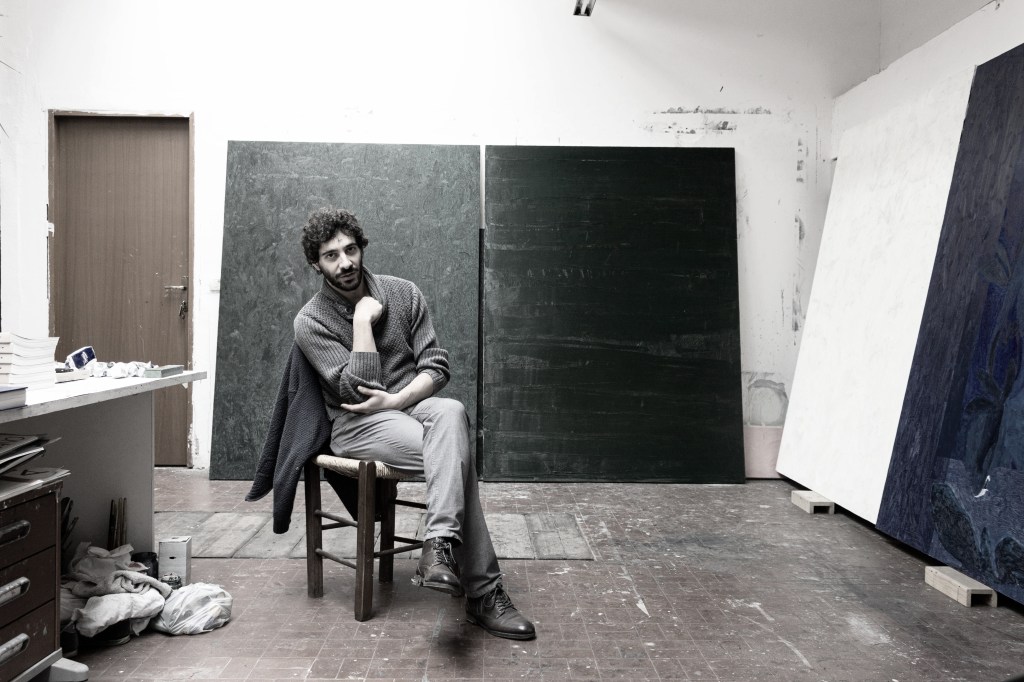

Lorenzo Di Lucido
 paroladartista.com