
#paroladartista #disegno #vannicuoghi
▼scroll for english version
Parola d’Artista: Che importanza e che ruolo ha nel tuo lavoro il disegno?
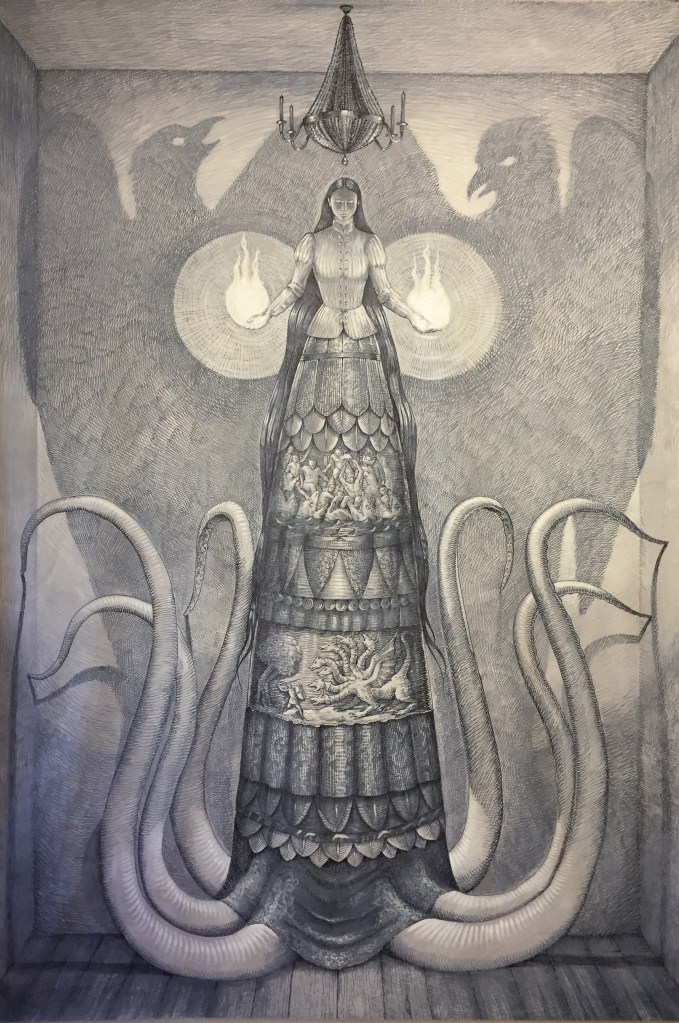
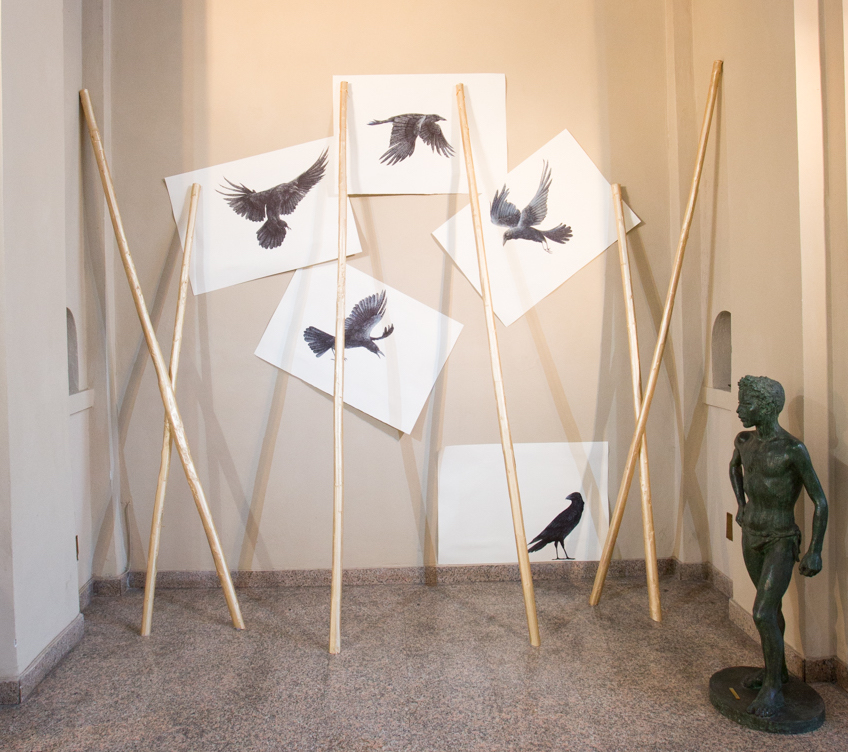
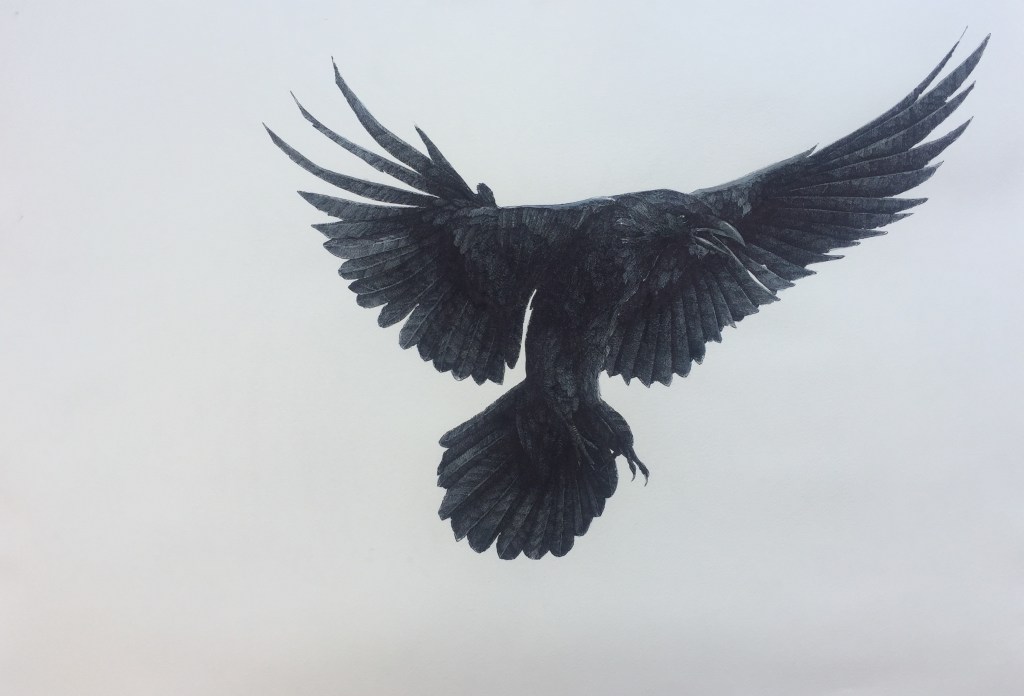
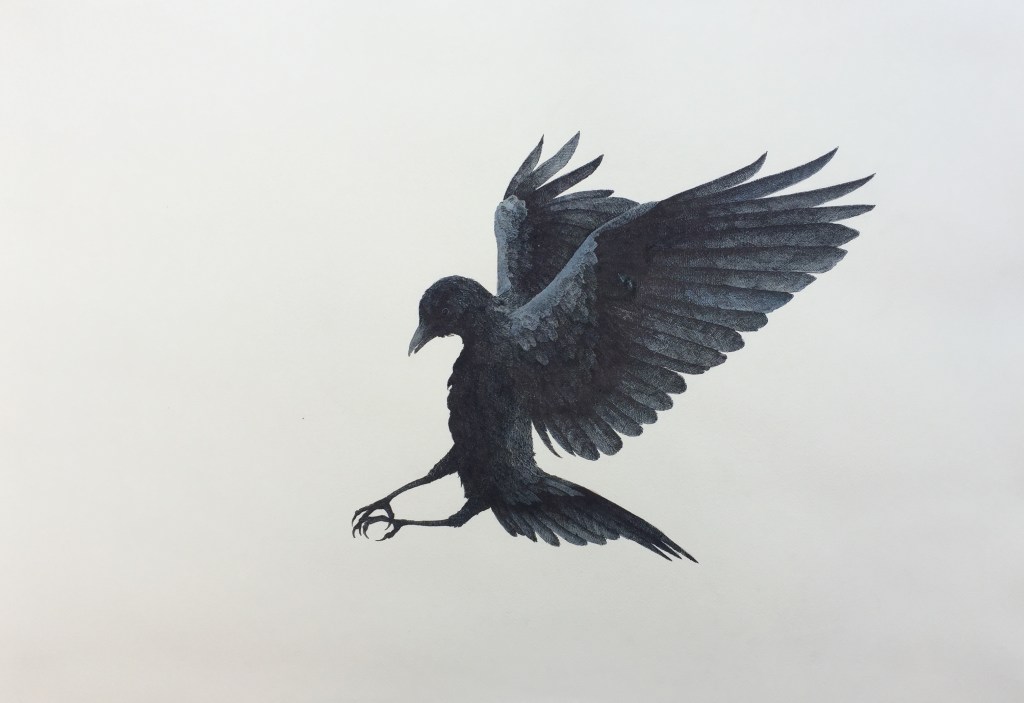
Vanni Cuoghi: Il disegno per me è fondamentale.
É, in primo luogo, un dialogo con me stesso, perché è il momento in cui le idee prendono una forma che successivamente verrà modificata più volte fino ad un risultato finale che è sempre inaspettato.
Ma il disegno, oltre ad essere un linguaggio, é anche lingua universale.
Prima della parola stessa.
É il momento in cui io comunico con l’altro in modo preciso e puntuale.
Anni fa mia moglie ed io appena arrivati nello Yunnan, in Cina, ci accorgemmo che nessuno parlava inglese. Al ristorante, per farmi capire, disegnavo su un blocco gli ingredienti che avrei voluto nella mia zuppa di noodles e barrai con una croce quelli che non volevo.
Nessuno si stupì e ottenemmo ciò che volevamo.
Addirittura riuscii, con lo stesso sistema, a commissionare ad un artigiano un sigillo in giada con l’effige dei miei due gatti.
Il disegno è molto spesso considerato come “linguaggio stampella” atto a supportare, in fase progettuale, altre forme espressive come la Pittura, l’Architettura, la Scultura ecc. proprio perché è il primo momento in cui l’idea prende forma. È un passaggio obbligato.
Si dice che Caravaggio non utilizzasse il disegno, né quello preparatorio su carta, né quello sulla tela.
In realtà non credo fosse così.
Caravaggio disegnava col pennello o con la punta del manico direttamente sulla tela, perché il disegno organizza lo spazio nei pieni e nei vuoti, ne delimita i volumi e le proporzioni e “organizza” le idee.
Il disegno è una modalità d’azione e di pensiero.
English text
On drawing Vanni Cuoghi
#paroladartista #drawing #vannicuoghi
Parola d’Artista: What importance and role does drawing play in your work?
Vanni Cuoghi: Drawing for me is fundamental.
It is, first and foremost, a dialogue with myself, because it is the moment when ideas take a shape that will later be modified several times until a final result that is always unexpected.
But drawing, besides being a language, is also a universal language.
Before the word itself.
It is the moment when I communicate with the other in a precise and timely manner.
Years ago, as soon as my wife and I arrived in Yunnan, China, we noticed that nobody spoke English. At the restaurant, to make myself understood, I drew on a pad the ingredients I wanted in my noodle soup and crossed out those I didn’t want.
Nobody was surprised and we got what we wanted.
I even managed, with the same system, to commission a craftsman to make a jade seal with the effigy of my two cats.
Drawing is very often considered as a ‘crutch language’ to support other forms of expression such as Painting, Architecture, Sculpture, etc. in the design phase, precisely because it is the first moment in which the idea takes shape. It is an obligatory passage.
It is said that Caravaggio did not use drawing, neither the preparatory drawing on paper nor the drawing on canvas.
Actually, I don’t think he did.
Caravaggio drew with the brush or the tip of the handle directly on the canvas, because drawing organises space in solids and voids, delimits volumes and proportions and ‘organises’ ideas.
Drawing is a mode of action and thought.

 paroladartista.com