
(English version available)
#paroladartista #conversazionisullemostre #fourteenarttellaro #debacle #zoyashokoohi #danielaspeletra
▼Scroll for English version
Parola d’Artista: Come nasce la frase “e se i fiori rossi sentissero freddo?”
Zoya: È novembre 2019, sono a Firenze, dove da cinque anni vivo e lavoro da sola. Da qualche ora non riesco contattare mia madre, in Iran; mi informo, vengo a sapere che c’è un blackout internet imposto dal governo perché le persone stanno protestando. La stessa sera devo partire per Lubiana, un viaggio di svago fissato da prima, per tutta la durata penso a ciò che sta succedendo nel mio paese. Le poche notizie che escono dall’Iran sono scarse ma drammatiche, fanno intendere che sta avvenendo un massacro. Mi appare un’immagine, che è anche un desiderio: volere avere più fiori rossi possibile sul pianeta, per poter far fronte a tutta la brutalità che c’è, anche se ormai, direi dalla caduta del muro di Berlino, sembra che sia passato il tempo delle grandi narrazioni in occidente. Faccio due conti e arrivo al numero 48, da pittrice, se mi mettesi interrottamente a disegnare dei fiori rossi, in 24 ore riuscirei a farne 48, in una settimana 336. Mentre nello stesso periodo di tempo, una settimana, in Iran sono stati uccisi circa 1500 civili. Dunque serve dell’altro per avere più fiori rossi, così da sopravanzare il numero degli omicidi commessi in Iran, e idealmente in tutto il mondo, dai governi, ai danni di cittadini considerati “colpevoli” di aver manifestato un qualsiasi dissenso politico. Penso che chi sa in qualche modo fare un fiore rosso, può insegnare agli altri. Così all’interno del progetto Aizarcomed – Democrazia (allo spazio 16 Civico, a Pescara, da marzo ad aprile 2023) ho inviato delle mail a quasi tutte le persone del mio circuito, chiedendo di registrare dei video tutorial su “come fare i fiori rossi”. L’insieme dei contributi è diventato un archivio che si implementerà progressivamente nel tempo. Inoltre è stato formato un gruppo di lavoro per progettare e costruire in modo effettivo una scuola nella regione, particolarmente povera, del Belucistan: dove si insegnerà, appunto, anche a fare i fiori rossi.
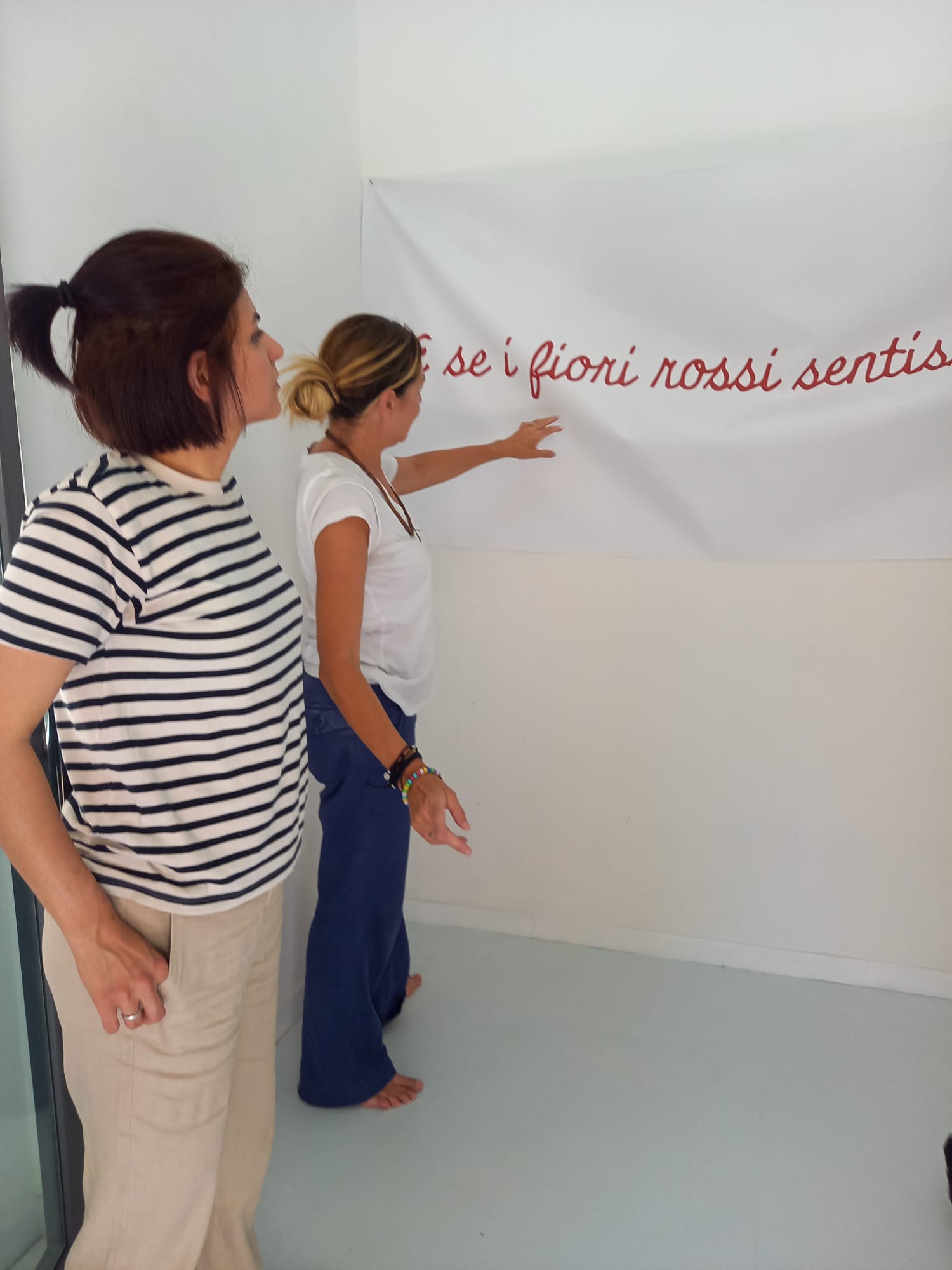
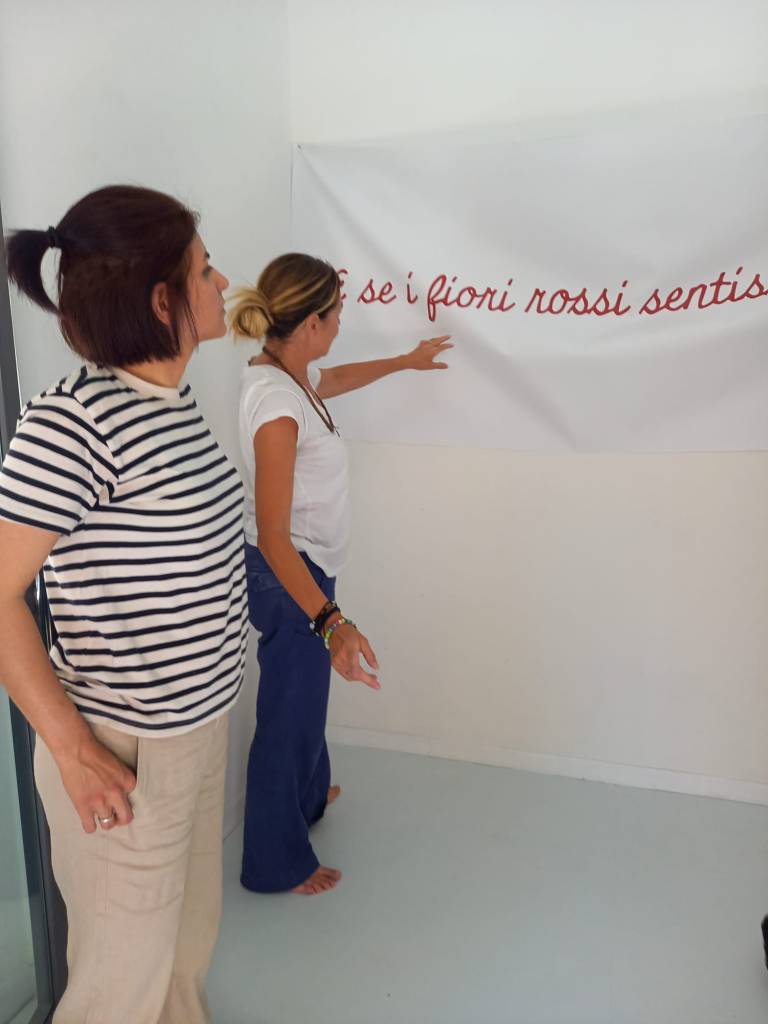
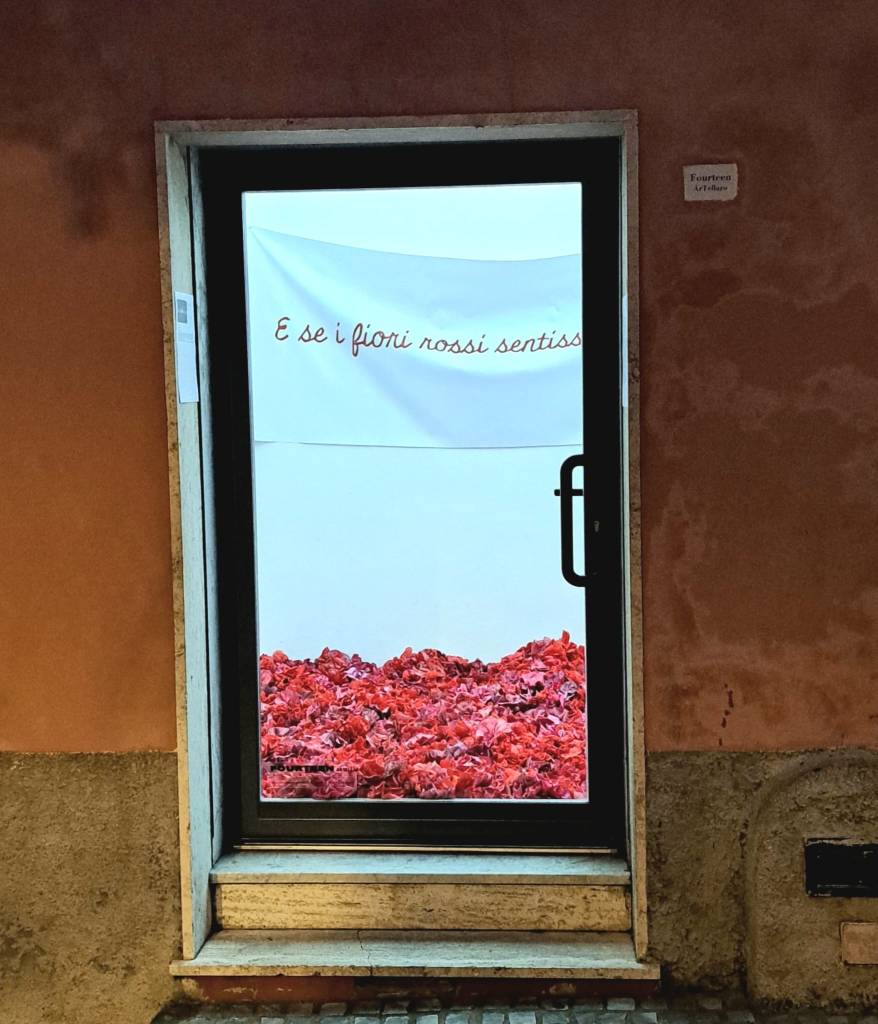
Una delle persone che mi ha inviato il tutorial è stata Daniela Spaletra, che non conoscevo prima. Il suo video mostra dei fiori di garza che, dopo esser stati immersi nel colore, diventano rossi. Solo in seguito ho saputo che quei fiori fanno parte di un’opera che Daniela aveva già realizzato, in relazione a una storia specifica. Quando abbiamo iniziato a ragionare su una nostra insieme a FuorteenArtellaro, il centro non poteva che essere il fiore rosso! Fiori rossi, tra simbolo e specie botanica, caricati, spesso anche in modo eccessivo, di nozioni e significati. La frase “e se i fiori rossi sentissero freddo?” fa parte di un discorso, dialogico, sulla fragilità e sulla vulnerabilità di ciò che diventa simbolo.
Daniela: Dimora, il progetto comune con Zoya per FourteenArtellaro, nasce da un incontro, da un sentire comune, da due progetti artistici differenti che avevamo realizzato precedentemente, ma legati da un comune denominatore, il fiore rosso.
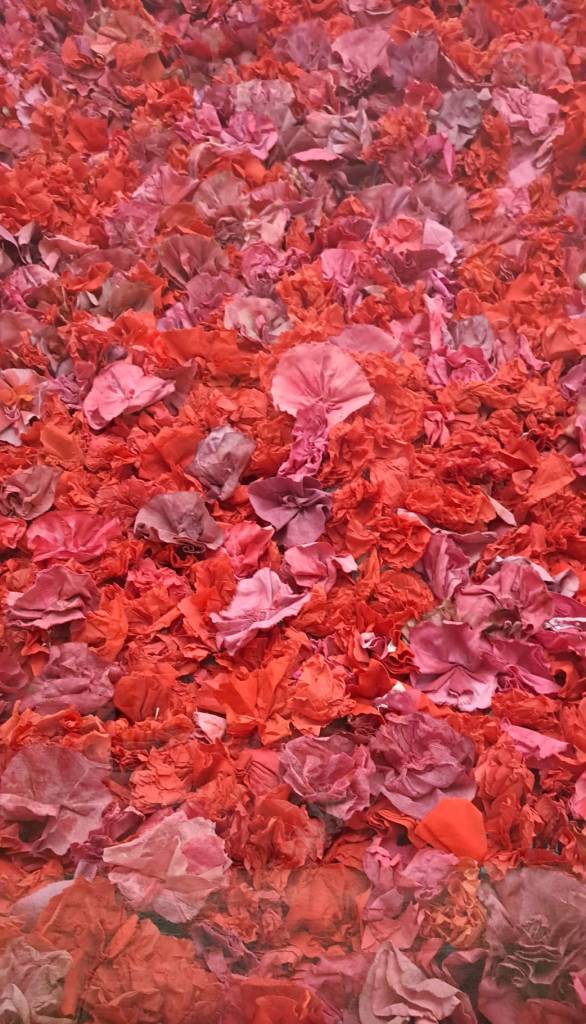
Il mio, In Pectore, del 2021, prende avvio dal doloroso fatto avvenuto nel 1921, dove Il “casus belli” fu lo sfoggio di un fiore rosso portato in petto dalla giovane Claretta Lazzeri, gesto letto come un moto di sfida da un gruppo di squadristi fascisti, che degenerò nell’uccisione del fratello e della madre che tentarono di salvare la ragazza. Dopo una ricerca storica durata anni, la restituzione avviene tramite un’installazione site-specific nella Chiesa della Madonna delle Lacrime, a Carrara, città dove avvenne il fatto stesso: tanti fiori di garza rossa nel porticato, e all’interno il video di un impianto processuale, svolto in un’aula di tribunale senza reale dibattimento ma comunque efficace per consegnare, almeno metaforicamente, il tremendo accadimento alla memoria collettiva e nelle mani della giustizia. Una storia iniqua che ne racconta tante altre, avvenute nel contesto storico singolare del fascismo; è una riflessione sul senso di impotenza che l’ingiustizia genera, sul dolore indelebile che macchia i sopravvissuti, costretti per tutta il resto della vita a fare i conti con il vuoto che ogni forma di sopraffazione sempre comporta.
Parola d’Artista: Che cosa succederebbe “se i fiori rossi sentissero freddo?”
Daniela: Una frase romantica, poetica, quasi struggente che rimanda a una riflessione più profonda, spesso trascurata, sul simbolo in generale e in questo caso su quello del fiore rosso. I simboli, atti a suscitare nella mente un significato “altro” da quello proprio, vengono usati spesso senza troppe riflessioni profonde e senza tener conto della loro fragilità intrinseca. Sono potenti, evocativi ma anche vulnerabili, abusati, negati, incompresi.
Il simbolo del fiore rosso rimanda a un’ideale di autodeterminazione, di lotta, di resistenza; la corposità del colore al sangue, alla passione, alla seduzione, alla rabbia, all’amore, sta tra gli estremi dalla potenza alla caducità. I fiori hanno inoltre breve vita, hanno bisogno di cure come ne hanno bisogno certi simboli che rimandano a ideali di libertà e solidarietà. Viviamo ancora nell’incertezza, in società complicate, che, seppur dichiaratamente democratiche, sono incapaci di gestire qualsiasi tipo di complessità culturale e sociale. Non sono inclusive ma discriminanti, razziste, non accoglienti. Il nostro è ancora un mondo pieno di rivolte, di guerre, di ingiustizie sociali. Se i fiori sentissero freddo verrebbe meno il bisogno di combattere tutto ciò, l’umanità molto probabilmente si rassegnerebbe allo stato dei fatti senza lottare, senza resistere, senza proteggere più la memoria, il passato, la storia dell’umanità. Sta a tutti noi, proteggere i fiori rossi dal freddo, salvarli da qualsiasi grado di congelamento.
Zoya: Penso che i fiori abbiano già sentito freddo, almeno, pur in modo diverso, quelli in Iran oggi, e nella contemporaneità dell’occidente. Probabilmente ciò che sto dicendo non è percepibile, almeno a un livello di comprensione letterale, se lo è ne sono felice. Lo spazio e il tempo in cui i fiori hanno sentito freddo è per me proprio il vuoto, intraducibile con il linguaggio, che c’è tra l’Iran di oggi, l’Italia del fascismo e altri totalitarismi europei: se consideriamo il fiore rosso simbolo di libertà, mentre nel contesto occidentale esso rimane un segno ideale a corrispettivo di un’esperienza rivoluzionaria e radicale, collocata nel passato o in un futuro possibile, in paesi come l’Iran, l’Afghanistan, la Palestina e tanti altri esso è un fattore cruciale del presente. “e se i fiori rossi sentissero freddo?” è un richiamo a una riflessione e interrogazione che ognuno può fare in sé, rispetto a un sentimento tangibile, e comune tra tutti gli esseri viventi, che mette in risalto la nostra vulnerabilità. Questo freddo in una certa geografia c’è già stato, in altre è il presente e in altre ancora avverrà.
Parola d’Artista: Che cosa succederà dopo “se i fiori rossi sentissero freddo?”
Daniela: Il dopo “se i fiori rossi sentissero freddo” potrebbe essere una collaborazione tra noi per intensificare la nostra riflessione, per dare vita a progetti comuni e condivisi, corrispondenti ad una sostanziale affinità di interessi e sentimenti.
Zoya: Concordo. Questa frase ha trovato una possibilità di enunciazione con la mostra, ma non un termine. Successivamente potremo continuare a confrontarci con le questioni profonde ed essenziali che essa pone.
English version
Conversation with Zoya Shokoohi and Daniela Spaletra on the exhibition “Dimora” (Dwelling).
#paroladartista #conversationabouttheexhibitions #fourteenartshows #debacle #zoyashokoohi #danielaspeletra
Parola d’Artista: How did the phrase “what if the red flowers felt cold?” come about?
Zoya: It is November 2019, I am in Florence, where I have lived and worked alone for five years. For a few hours, I have been unable to contact my mother, in Iran; I find out that there is an internet blackout imposed by the government because people are protesting. The same evening I have to leave for Ljubljana, a leisure trip I had planned beforehand; all the while I think about what is happening in my country. The little news coming out of Iran is sparse but dramatic, it suggests that a massacre is taking place. An image appears to me, which is also a desire: to want to have as many red flowers as possible on the planet, to be able to cope with all the brutality there is, even though by now, I would say since the fall of the Berlin Wall, it seems that the time for grand narratives in the West has passed. I do the math and arrive at the number 48, as a painter, if I were to intermittently draw red flowers, in 24 hours I would be able to do 48, in one week 336. While in the same period of time, one week, about 1500 civilians were killed in Iran. So more is needed to have more red flowers, so as to outnumber the number of murders committed in Iran, and ideally all over the world, by governments, against citizens considered ‘guilty’ of expressing any political dissent. I think that those who can somehow make a red flower can teach others. So as part of the Aizarcomed – Democracy project (at space 16 Civico, in Pescara, from March to April 2023) I sent emails to almost everyone in my circuit, asking them to record video tutorials on ‘how to make red flowers’. The collection of contributions has become an archive that will be progressively implemented over time. In addition, a working group has been formed to effectively design and build a school in the particularly poor region of Belucistan: where they will also teach how to make red flowers.
One of the people who sent me the tutorial was Daniela Spaletra, whom I did not know before. Her video shows gauze flowers that turn red after being dipped in colour. Only later did I learn that those flowers were part of a work that Daniela had already done, in connection with a specific story. When we started thinking about one of our own together with FuorteenArtellaro, the focus could only be the red flower! Red flowers, between symbol and botanical species, loaded, often excessively so, with notions and meanings. The phrase “what if red flowers felt cold?” is part of a discourse, dialogical, on the fragility and vulnerability of what becomes a symbol.
Daniela: In Pectore, the joint project with Zoya for FourteenArtellaro, was born from an encounter, from a common feeling, from two different artistic projects we had previously realised, but linked by a common denominator, the red flower.
Mine, In Pectore (In Pectore, 2021), takes its starting point from the painful event that took place in 1921, where the ‘casus belli’ was the wearing of a red flower on the chest of the young Claretta Lazzeri, a gesture read as a gesture of defiance by a group of fascist squadrists, which degenerated into the killing of her brother and mother who tried to save the girl. After years of historical research, the restitution takes place through a site-specific installation in the Church of the Madonna delle Lacrime, in Carrara, the town where the event itself took place: many red gauze flowers in the portico, and inside the video of a trial set-up, carried out in a courtroom without a real hearing, but nonetheless effective in consigning, at least metaphorically, the terrible event to collective memory and into the hands of justice. An iniquitous story that recounts many others, which took place in the singular historical context of fascism; it is a reflection on the sense of impotence that injustice generates, on the indelible pain that stains the survivors, forced for the rest of their lives to come to terms with the emptiness that every form of oppression always entails.
Parola d’Artista: What would happen “if the red flowers felt cold?”
Daniela: A romantic, poetic, almost poignant phrase that refers to a deeper reflection, often overlooked, on the symbol in general and in this case on that of the red flower. Symbols, capable of arousing in the mind a meaning ‘other’ than their own, are often used without too much deep reflection and without taking into account their intrinsic fragility. They are powerful, evocative but also vulnerable, abused, denied, misunderstood.
The symbol of the red flower refers to an ideal of self-determination, of struggle, of resistance; the full-bodied colour to blood, to passion, to seduction, to anger, to love, it lies between the extremes of power and transience. Moreover, flowers are short-lived, they need care as do certain symbols that refer to ideals of freedom and solidarity. We still live in uncertainty, in complicated societies, which, although avowedly democratic, are incapable of handling any kind of cultural and social complexity. They are not inclusive but discriminating, racist, not welcoming. Ours is still a world full of riots, wars, social injustice. If the flowers felt cold, there would be no need to fight this, humanity would most likely resign itself to the state of affairs without fighting, without resisting, without protecting the memory, the past, the history of humanity any longer. It is up to all of us to protect the red flowers from the cold, to save them from any degree of frostbite.
Zoya: I think the flowers have already felt cold, at least, albeit in a different way, those in Iran today, and in the contemporary West. Probably what I am saying is not perceptible, at least on a literal level of understanding, if it is, I am happy about it. The space and time in which the flowers felt cold is for me precisely the void, untranslatable by language, that exists between Iran today, the Italy of fascism and other European totalitarianisms: if we consider the red flower as a symbol of freedom, while in the western context it remains an ideal sign to correspond to a revolutionary and radical experience, located in the past or in a possible future, in countries like Iran, Afghanistan, Palestine and many others it is a crucial factor of the present. “what if the red flowers felt cold?” is a call for reflection and questioning that everyone can do for themselves, with respect to a tangible feeling, and common among all living beings, that highlights our vulnerability. This cold in some geography has already been there, in others it is the present, and in others it will happen.
Parola d’Artista: What will happen after “if the red flowers feel cold?”
Daniela: The aftermath of “if the red flowers felt cold” could be a collaboration between us to intensify our reflection, to create common and shared projects, corresponding to a substantial affinity of interests and feelings.
Zoya: I agree. This sentence has found a possibility of enunciation with the exhibition, but not a term. Afterwards, we can continue to confront the profound and essential questions it raises.
FourteenarTellaro

FourteenarTellaro
FourteenarTellaro
FourteenarTellaro
 paroladartista.com